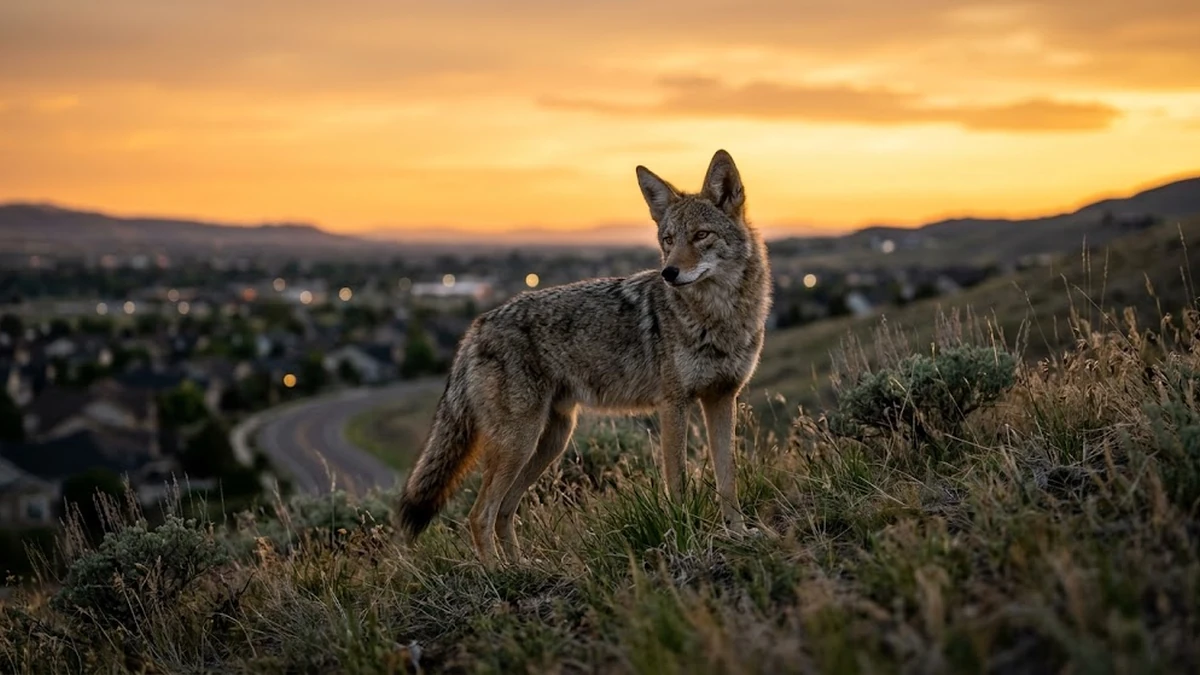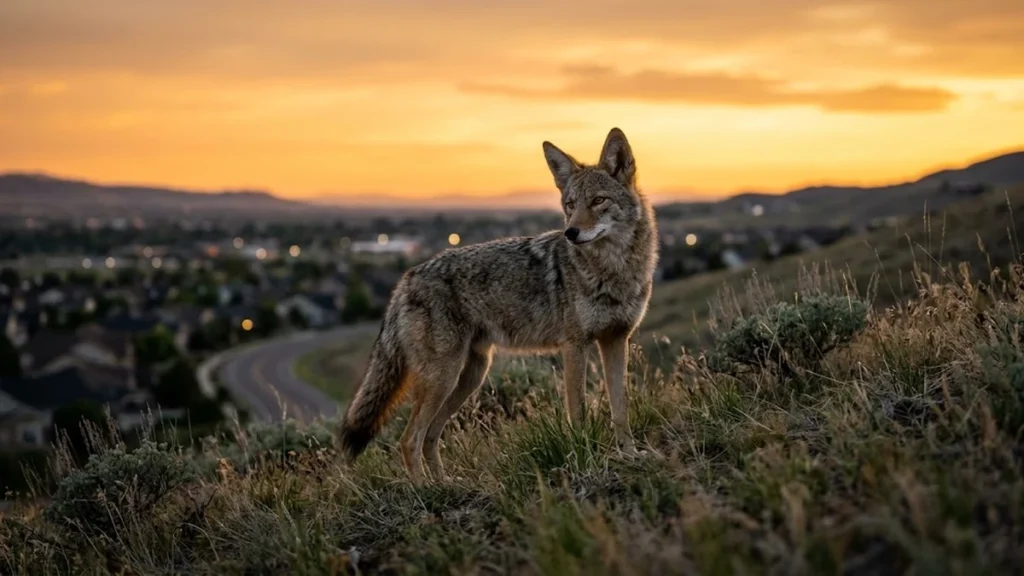
A quiet neighborhood street, a patch of woodland behind a shopping center, or a field just beyond the last row of houses can all become part of a coyote’s territory. At dusk, a slender animal with pointed ears and a bushy tail may slip between the shadows, pause to listen, and disappear before anyone gets a clear look.
Coyotes are among North America’s most adaptable wild mammals. They hunt small animals, eat fruit when it is available, communicate through a remarkable range of calls, and survive in landscapes that have changed dramatically because of people.
But what exactly is a coyote? Is it dangerous, what does it eat, and why is it showing up in so many places where people live?
What Is a Coyote?
The coyote (Canis latrans) is a wild canine native to North America. It belongs to the same family as wolves, domestic dogs, foxes, and jackals.
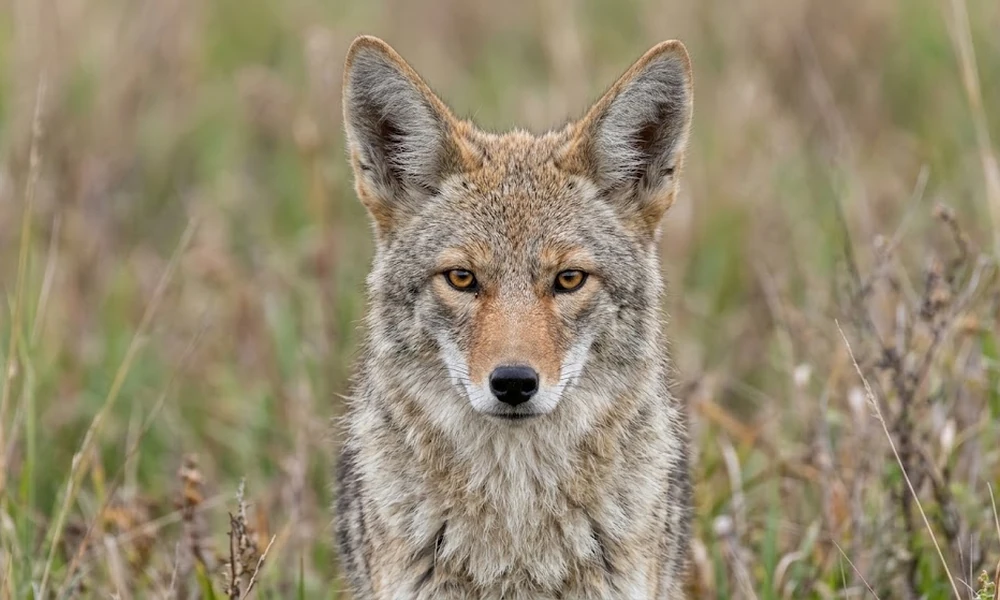
Coyotes are known for their narrow muzzles, upright ears, pointed faces, and bushy tails, which often hang downward when the animal is relaxed. Their fur can range from gray and tan to reddish brown, usually with lighter fur underneath.
Most coyotes are smaller and more lightly built than gray wolves, although size varies by region. Their long legs and lean bodies help them travel across open ground, while their sharp senses make them effective hunters.
Coyotes were once strongly associated with open plains and deserts. Over time, they expanded across much of North America, adapting to forests, farmland, suburbs, and even some large cities.
Their success comes from flexibility. A coyote can change its diet, hunting strategy, and daily activity to match the environment around it.
What Does a Coyote Look Like?
Coyotes are sometimes mistaken for wolves, large dogs, or foxes. Looking at their proportions can help distinguish them.
Pointed ears and a narrow face
Coyotes usually have relatively large, upright ears and a slender muzzle. Their faces look more delicate than those of many gray wolves, whose heads and shoulders are generally broader.
A bushy tail
A coyote’s tail is thick and often dark-tipped. When walking, it usually carries the tail low rather than curled tightly over its back like many domestic dogs.
Gray, tan, or reddish fur
Their coats vary with geography and season. Gray and tan are common, but some coyotes appear more reddish or nearly black. The underside is often lighter.
A lean, long-legged body
Adult coyotes commonly weigh around 20 to 45 pounds, although individuals outside this range occur. Coyotes in northern regions may be larger on average than those in some southern regions.
Their slim build helps them move efficiently over long distances while searching for food.
Where Do Coyotes Live?
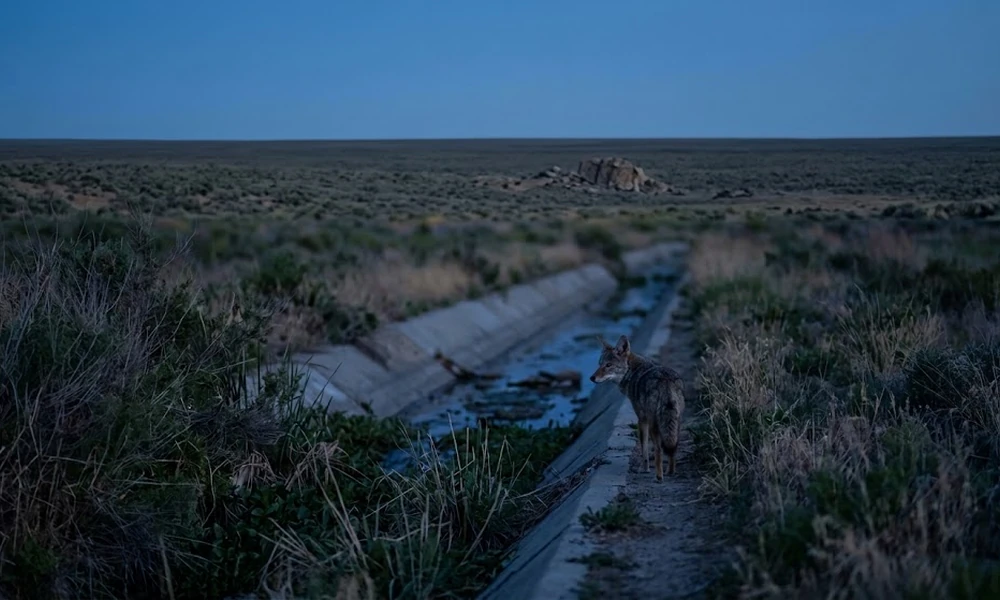
Coyotes live across much of Canada, the United States, and Mexico, with their range extending into parts of Central America.
They occupy an impressive variety of habitats, including:
- Deserts and dry scrublands
- Grasslands and prairies
- Forest edges and open woodlands
- Agricultural fields
- Mountains and foothills
- Suburban neighborhoods and some urban areas
Coyotes do not need untouched wilderness to survive. They need access to food, water, shelter, and places where they can rest or raise pups.
In developed areas, they may use greenbelts, drainage corridors, parks, railway edges, and undeveloped land between buildings. These routes can allow them to move through neighborhoods without spending much time in open streets.
Coyotes often become more active around dawn, dusk, or at night, especially where human activity is high. Seeing one during daylight, however, does not automatically mean it is sick or dangerous.
What Do Coyotes Eat?
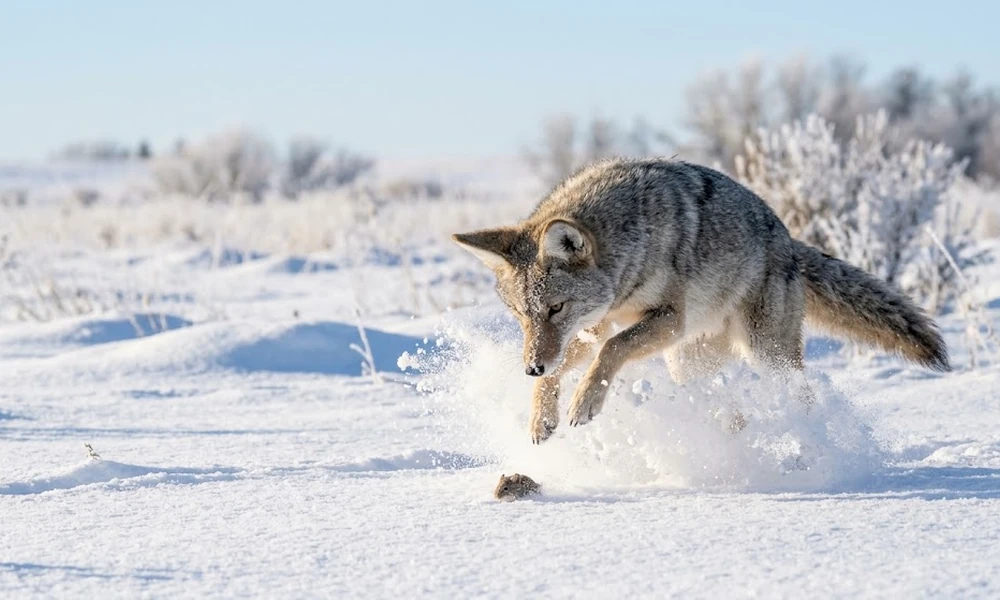
Coyotes are omnivores, meaning they eat both animal and plant material. Their diet changes according to season, location, and availability.
Common foods include:
- Mice, voles, and other small mammals
- Rabbits and hares
- Squirrels and other small wildlife
- Birds and eggs
- Insects
- Fruits and berries
- Carrion, or animals that have already died
In areas near people, coyotes may also eat discarded food, pet food left outdoors, and unsecured garbage. They can occasionally prey on small domestic animals, including cats, and may attack small dogs.
How does a coyote hunt?
A coyote often hunts by listening for movement, watching for prey, and moving quietly through its surroundings. It may stalk a small mammal before making a quick pounce or short chase.
Coyotes can hunt alone, in pairs, or sometimes in family groups. Larger prey may require cooperation, while small rodents are often caught by an individual animal.
They are also opportunistic feeders. If hunting is difficult, a coyote may rely more heavily on fruit, insects, or carrion rather than waste energy pursuing prey.
This flexible diet is one reason coyotes can thrive in such different environments.
Are Coyotes Dangerous to Humans?
Coyotes generally avoid people, and attacks on humans are uncommon. However, they are wild predators, and their behavior can become risky when they lose their fear of people or begin associating humans with food.
The safest approach is to give any coyote space and never try to feed, touch, corner, or approach it.
If you encounter a coyote at close range:
- Stay calm and face the animal.
- Do not run, as running can encourage pursuit.
- Make yourself appear larger and use a firm voice.
- If the coyote approaches or behaves boldly, make noise and actively discourage it from coming closer.
- Back away slowly while leaving the animal an escape route.
If a coyote is following you, approaching people repeatedly, or acting aggressively, contact local wildlife authorities for advice.
Children should be taught not to approach wild canines, even when the animal appears calm.
Are Coyotes Dangerous to Dogs and Cats?
Coyotes can pose a genuine risk to pets, especially small dogs and outdoor cats. A coyote may see a small animal as prey, perceive a dog as a territorial threat, or approach an animal that has been left unattended.
To reduce the risk, keep dogs on a leash during walks, supervise pets outdoors, and bring cats inside. Avoid leaving pet food outside, and secure garbage and compost that might attract wildlife.
During coyote breeding and pup-rearing seasons, adults may become more defensive around their territories or dens. Extra caution is sensible in areas where coyotes are regularly seen.
A fence can help, but its effectiveness depends on its height, construction, and whether coyotes can dig beneath or climb over it. Do not assume an ordinary yard fence will always keep wildlife out.
Why Do Coyotes Howl?
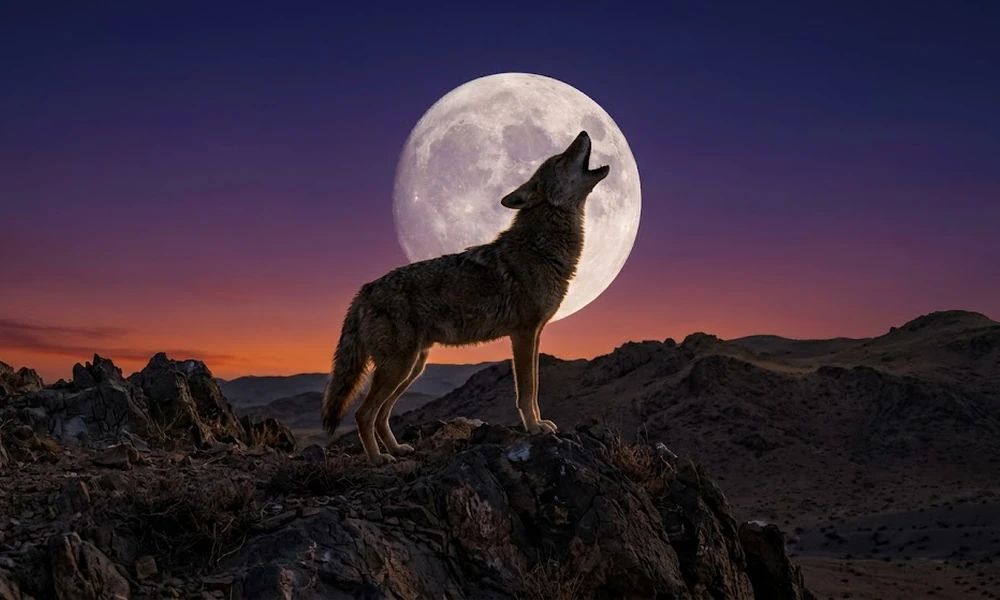
A coyote’s howl can sound surprisingly close to a human scream when heard in the dark. Their vocal range includes howls, yips, barks, and sharp, high-pitched calls.
Coyotes vocalize for several reasons:
- Communication: Calls help animals communicate across long distances.
- Territory: Vocalizations can signal that an area is occupied.
- Family contact: Parents and pups use sounds to maintain contact.
- Group coordination: Calls may help family members locate one another.
Several coyotes calling together can sound like a much larger group than is actually present. Their overlapping yips and howls create a chorus that carries across open terrain.
Hearing coyotes at night is normal behavior and does not, by itself, mean that they are preparing to attack people.
Do Coyotes Live in Packs?
Coyotes do not form large, stable packs in the same way wolves often do. Their social structure is flexible.
Many live as a mated pair, sometimes with offspring that remain nearby. Family groups may cooperate in raising pups or defending territory. Other coyotes travel alone, especially when dispersing to find a new territory.
The size of a coyote’s territory depends on the habitat, food supply, and number of neighboring coyotes. In areas with abundant resources, territories may be smaller; in less productive environments, animals may need more space.
Coyotes also adjust their activity around human presence. In busy neighborhoods, they may shift toward nighttime movement to avoid people.
Coyote vs. Wolf: What’s the Difference?
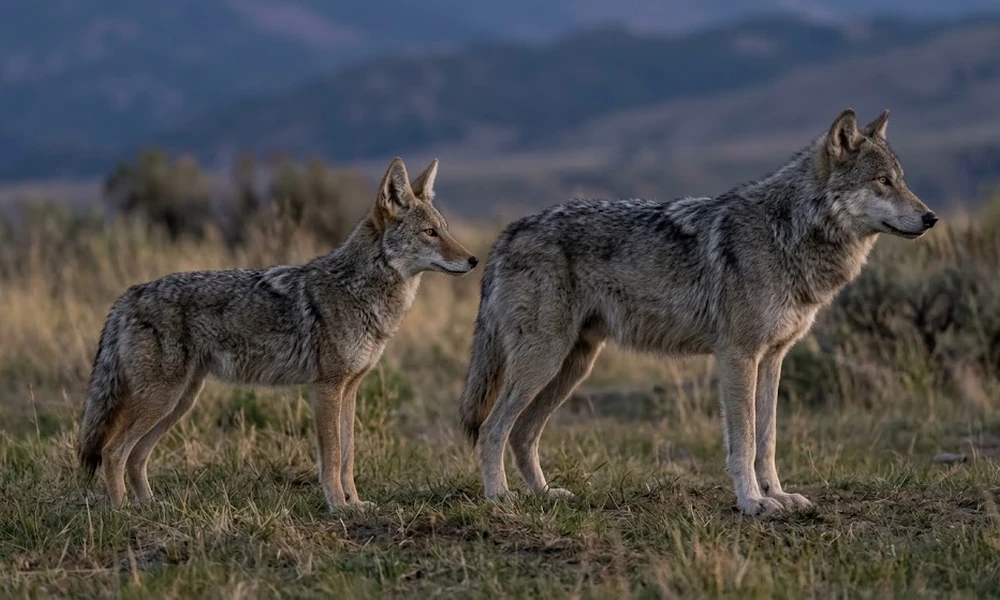
Coyotes and wolves share a family resemblance, but several physical features can help distinguish them.
| Feature | Coyote | Gray wolf |
| Body shape | Usually lean and narrow | Generally larger and more robust |
| Head | Narrow muzzle and relatively large ears | Broader head and heavier muzzle |
| Tail | Bushy, often carried low | Bushy, generally carried low |
| Typical weight | Often around 20–45 pounds | Commonly much heavier, often 60–145 pounds depending on region and sex |
| Social structure | Often pairs or smaller family groups | Frequently organized around a family pack |
| Diet | Small mammals, fruit, insects, carrion, and other available foods | Often includes larger ungulates, alongside smaller prey and other foods |
Size alone is not a perfect identification tool. Young wolves, unusually large coyotes, and domestic dog hybrids can complicate visual identification. Location and the animal’s overall proportions are useful clues, but photographs or sightings may not always allow a certain answer.
Do Coyotes Have Predators?
Adult coyotes face relatively few natural predators, but wolves, cougars, and bears can kill them in some circumstances. Eagles and other large predators may threaten very young pups, depending on the region.
People are also a major source of coyote mortality through hunting, trapping, vehicle collisions, and wildlife-control programs.
Coyotes may compete with foxes and other carnivores for food and territory. Their relationships with other predators vary by ecosystem, and changes in one species’ population can affect the behavior and distribution of others.
Despite these pressures, coyotes often remain successful because they reproduce relatively quickly and can adapt to a wide range of conditions.
How Do Coyotes Raise Their Pups?
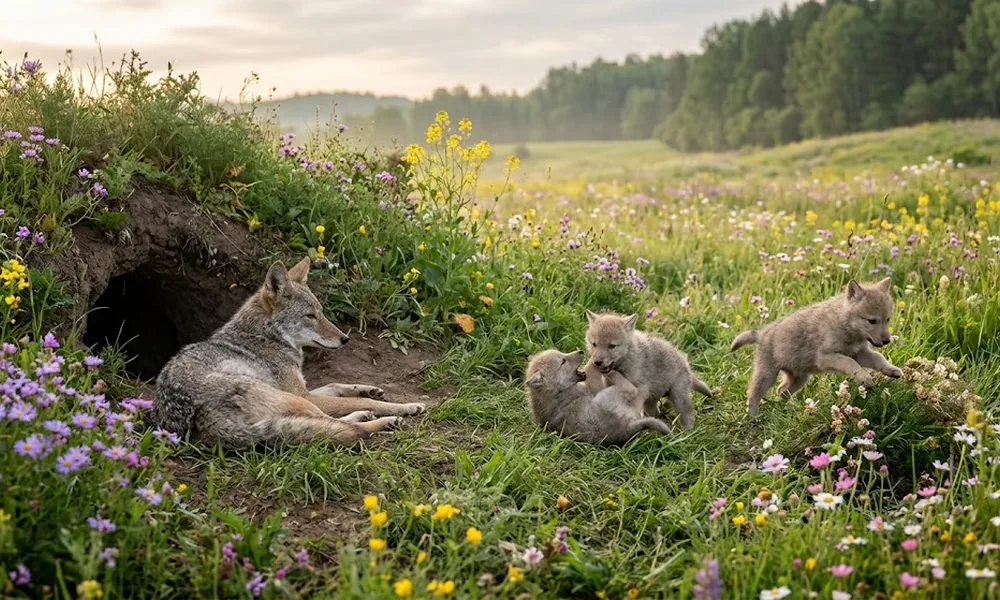
Coyotes usually breed in late winter, with pups arriving in spring. The female gives birth in a den, which may be located in a burrow, a sheltered hollow, or another protected spot.
A litter commonly contains several pups, although litter size varies with food availability, the mother’s condition, and local conditions.
During the early weeks, the pups depend on their mother for milk and protection. Both parents may contribute to raising the young, and older offspring sometimes help care for a new litter.
As the pups grow, adults bring them food and gradually introduce them to the skills they will need to survive. Young coyotes eventually begin exploring beyond the den and learning how to hunt.
A coyote near a den may act more defensively than one simply passing through a neighborhood. If you discover a suspected den, keep your distance and contact local wildlife authorities if there is a safety concern.
Why Are Coyotes So Successful?
Coyotes have expanded into many areas because they are adaptable rather than dependent on one particular food source or habitat.
They can eat a wide variety of foods, travel long distances, raise young in different environments, and change their activity patterns when people are nearby.
Human development has also created opportunities. Roadsides, farmland, landscaped areas, and urban green spaces can support rodents and rabbits, which provide food for coyotes. Unfortunately, garbage and pet food can also draw them closer to homes.
That does not mean coyotes need people to survive. Their natural range and adaptability long predate modern cities. Instead, it shows how wildlife can take advantage of new environments, sometimes creating challenges for both animals and residents.
The best way to live alongside coyotes is to avoid feeding them, protect pets, secure attractants, and allow wild animals to maintain a healthy distance from people.
Frequently Asked Questions
Do coyotes attack people?
Attacks are uncommon, but coyotes can become dangerous if they lose their fear of people or behave aggressively. Never approach or feed one.
Can coyotes climb fences?
Some coyotes can climb or jump over certain fences, and they may dig underneath others. Fence design matters, so a standard backyard fence is not always sufficient.
Are coyotes active during the day?
Yes. They are often most active around dawn, dusk, and nighttime in developed areas, but daytime sightings are normal.
Can a coyote breed with a dog?
Yes. Coyotes and domestic dogs can produce hybrids, sometimes called coydogs, although such breeding is not the norm for most wild coyote populations.
What should I do if a coyote follows me?
Do not run. Face the animal, make yourself look larger, speak firmly, and move away slowly. If it continues approaching, use noise and assertive hazing to discourage it.
Do coyotes eat cats?
Yes, coyotes may prey on cats, particularly outdoor cats that are small or unattended. Keeping cats indoors is the safest protection.
Are coyotes good or bad for the environment?
Coyotes play important ecological roles by hunting rodents and rabbits, consuming carrion, and influencing other wildlife populations. Their effects vary by ecosystem, but they are a natural part of many North American landscapes.
A Wild Neighbor That Knows How to Adapt
The coyote is not the biggest canine, the strongest predator, or the animal that most people expect to find near their homes. Yet few wild mammals have demonstrated such an ability to live through changing landscapes.
From a remote desert to a greenbelt behind a busy neighborhood, the coyote keeps finding ways to survive. It listens, learns, hunts, and moves when conditions change.
Understanding this animal does not mean ignoring the risks. It means recognizing that safe coexistence depends on simple choices: keep pets protected, never offer food, respect wildlife boundaries, and leave coyotes room to remain wild.
Sometimes the most successful survivor is not the animal that dominates its environment, but the one that learns how to live in it.
Desclaimer: This article is only for informational purposes. We are not promoting or advertising any product.