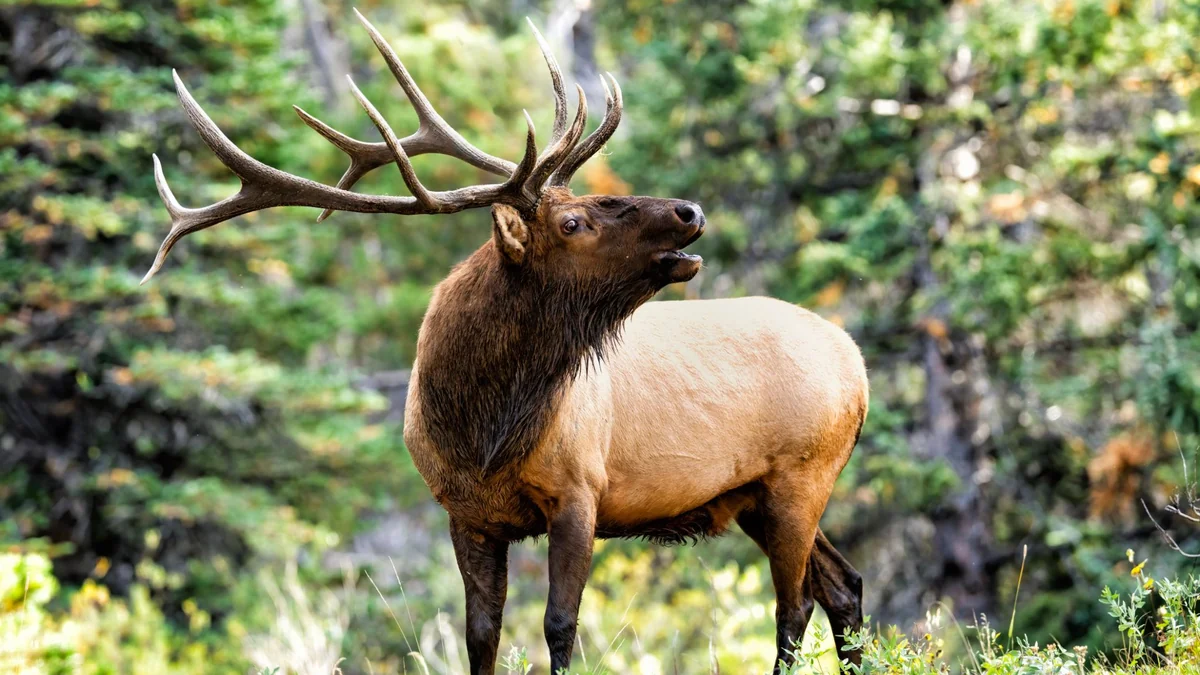
As the last light of summer fades across a mountain valley, a deep, echoing call rises from the forest. It begins as a low note, climbs into a piercing whistle, and ends with a series of rough grunts. Another call answers from farther up the hillside.
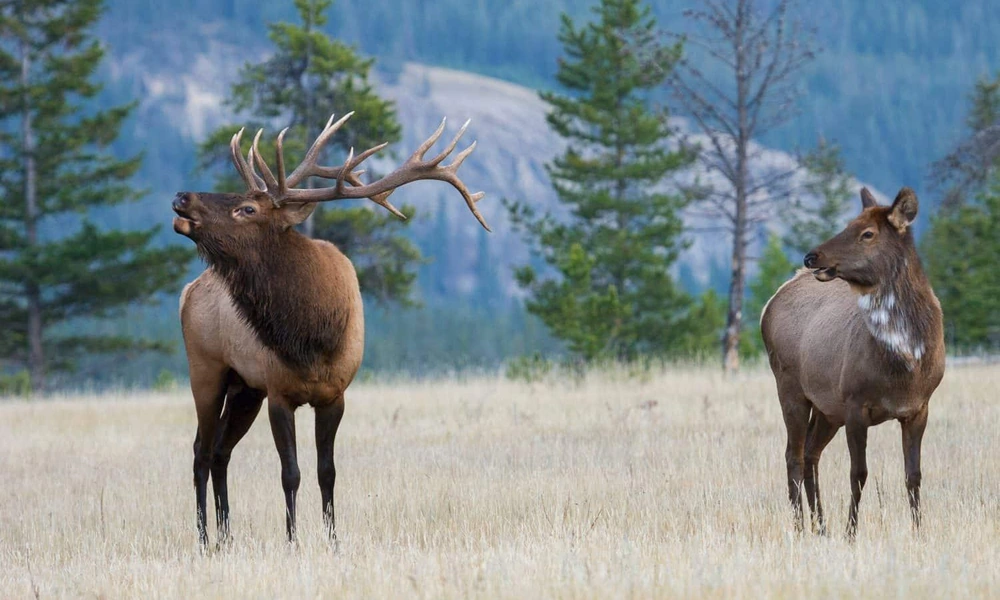
The sound belongs to a bull elk, announcing his presence during the breeding season. Nearby, females move through a meadow, calves remain close to their mothers, and rival males listen for signs of competition.
The elk is one of North America’s most impressive wild mammals. Its powerful body, enormous antlers, seasonal migrations, and haunting calls make it a defining animal of mountain forests and open grasslands.
Also known as the wapiti, the elk belongs to the deer family. It is much larger than familiar species such as the white-tailed deer and mule deer, yet it shares many of their adaptations, including seasonal feeding patterns, rumination, and the annual growth of antlers.
Understanding elk means exploring a life shaped by changing seasons, social relationships, and the constant search for food and shelter.
What Is an Elk?
The elk, scientifically known as Cervus canadensis, is a large member of the deer family, Cervidae. It is native to North America and also has populations in parts of Asia.
In North America, elk are especially associated with the Rocky Mountains, western forests, mountain meadows, and open landscapes where grass and woody vegetation are available. Smaller or reintroduced populations also occur in parts of the eastern United States.
The animal is sometimes called a wapiti, a name derived from a Shawnee word commonly translated as “white rump.” This refers to the pale patch on its hindquarters.
One important naming distinction can prevent confusion: in North America, elk usually means wapiti, the species Cervus canadensis. In much of Europe, the word “elk” refers to the animal called a moose in North America.
Elk at a Glance
- Scientific name: Cervus canadensis
- Animal group: Mammal
- Family: Cervidae
- Diet: Herbivore
- Native North American range: Primarily western North America, with additional populations elsewhere
- Typical habitat: Forests, meadows, grasslands, shrublands, and mountain valleys
- Male: Bull
- Female: Cow
- Young: Calf
- Distinctive feature: Large branching antlers on males
- Social behavior: Often lives in groups
- Breeding season: Usually autumn
- Characteristic sound: The bull’s bugling call
What Does an Elk Look Like?
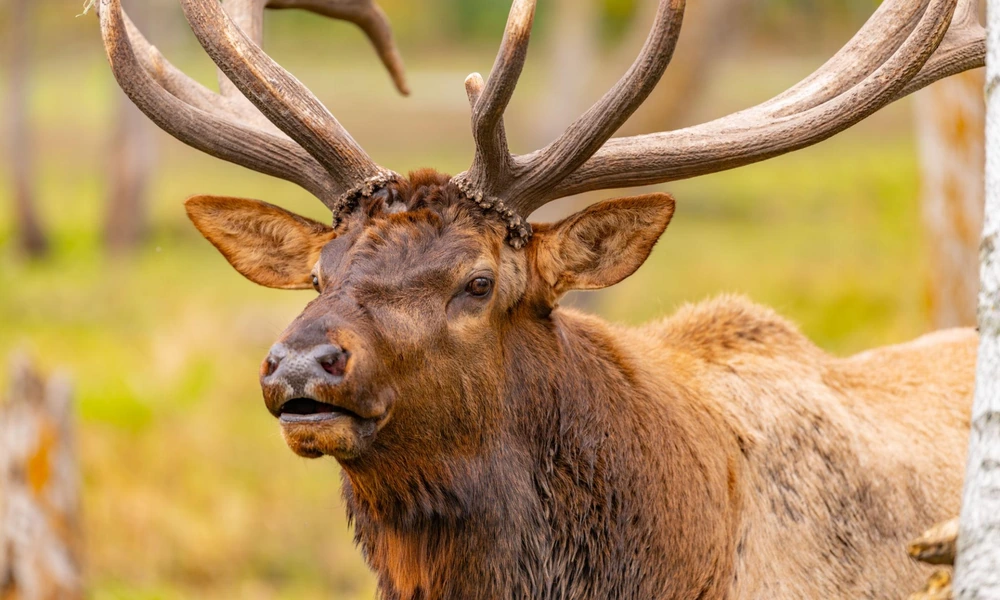
Elk have long legs, powerful shoulders, a relatively narrow head, and a large body built for traveling across varied terrain.
Their coat changes with the seasons. In summer, it is often reddish-brown or tan. Winter coats tend to appear darker and thicker, providing insulation in cold conditions.
A pale yellowish or cream-colored rump patch contrasts with the darker tail. Bulls also develop a thick, dark mane around the neck, especially noticeable during the breeding season.
Adult elk vary considerably in size according to sex, subspecies, age, and nutrition. Mature bulls are substantially larger than cows and can weigh several hundred kilograms. In many North American populations, large bulls weigh approximately 300–450 kilograms, while cows commonly weigh around 200–270 kilograms, though individuals can fall outside these ranges.
Elk Antlers
The antlers of a mature bull elk are among the animal’s most striking features. They grow outward and upward from the head, forming long beams with multiple branching points called tines.
A large set can span several feet from tip to tip. Antlers are not permanent structures: they are made of bone and are shed and regrown each year.
Young males usually begin with smaller antlers. As they mature, their antlers may become larger and more elaborate, although nutrition, genetics, and health also affect development.
Females generally do not grow antlers.
How Is an Elk Different From a Deer?
Elk are deer, but they are much larger than familiar species such as white-tailed deer and mule deer.
Their size, long legs, pale rump, dark mane on males, and large branching antlers help distinguish them.
Mule deer are famous for their oversized ears and forked antlers, while white-tailed deer are recognized by the bright white underside of their tails. Elk generally have a smaller tail and a more prominent pale rump patch.
Elk also tend to form larger social groups in many habitats, particularly when feeding conditions allow.
Where Do Elk Live?
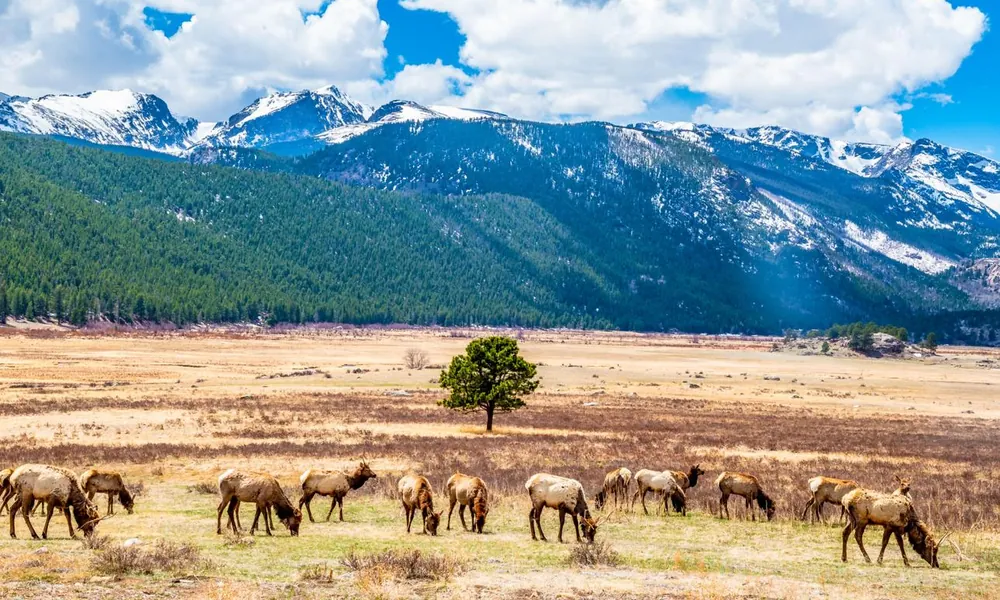
Elk inhabit a range of environments, including mountain forests, open meadows, grasslands, shrublands, and wooded valleys.
They often benefit from landscapes that combine open feeding areas with forested cover. Meadows supply grasses and herbs, while nearby trees provide shelter from weather and places to rest.
Mountain Forests
Mountain forests provide elk with shade, shelter, and access to seasonal vegetation.
During warmer months, some populations move to higher elevations, where cooler temperatures and fresh plant growth provide favorable feeding conditions.
Forested areas also offer protection from wind, heat, and disturbance. Elk may use openings within the forest to feed while retreating into denser vegetation when resting.
Meadows and Grasslands
Elk are well adapted to grazing. Open meadows and grasslands can provide abundant food, especially during spring and summer.
A meadow may look quiet from a distance, but an elk herd can be highly alert while feeding. Animals periodically lift their heads, watch their surroundings, and listen for signs of danger.
When disturbed, the group may move toward nearby trees, hillsides, or other protective terrain.
Rivers and Wetlands
River valleys, streamside forests, and wetland edges can provide food and relief from summer heat.
Elk may feed in moist areas where vegetation remains green, especially when surrounding grasslands become dry.
They also use different slopes and elevations to manage changing temperatures and weather conditions.
Do Elk Migrate?
Many elk populations move seasonally between summer and winter ranges, although not all herds migrate.
In mountainous regions, elk may travel uphill during spring as snow melts and vegetation begins growing. In autumn, some move toward lower elevations to escape deep snow and find accessible food.
These journeys can follow traditional routes used repeatedly across generations. Some migrations cover relatively short distances, while others extend for many miles.
Roads, fences, urban development, and other barriers can interrupt these movements. Protecting migration corridors helps elk reach the habitats they need during different parts of the year.
What Do Elk Eat?
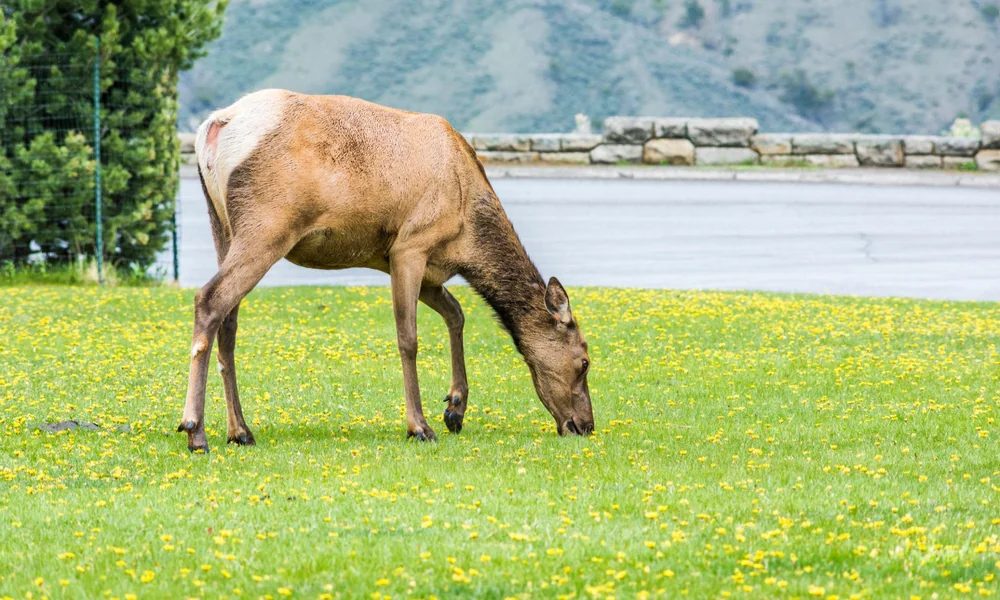
Elk are herbivores with a flexible diet. They eat grasses, flowering plants, leaves, shrubs, tree shoots, and other vegetation, adjusting their choices as seasons change.
Although elk are often described as grazers, they are not limited to grass. They can browse on woody plants when grasses and other soft vegetation become scarce.
Spring and Summer Diet
Spring brings fresh growth, providing elk with access to nutritious vegetation after winter.
During these months, their diet commonly includes:
- Grasses and sedges
- Wildflowers and other herbaceous plants
- Fresh leaves and shoots
- Young tree growth
- Shrubs and seasonal fruits where available
Fresh vegetation helps elk rebuild body condition after winter. It also supports the nutritional demands of pregnancy, lactation, and calf growth.
Autumn Feeding
In autumn, elk continue grazing while using other seasonal foods where available.
The exact diet depends on the habitat. Some populations feed heavily on grasses, while others consume more shrubs, leaves, or agricultural vegetation.
During this period, elk need to maintain adequate energy reserves before colder weather limits access to food.
Winter Diet
Winter can dramatically change the elk’s feeding opportunities.
Snow may cover grass and other low-growing plants, forcing elk to rely more heavily on woody browse. They may consume twigs, bark, tree seedlings, shrubs, and other vegetation that remains accessible.
In severe conditions, elk can lose body mass because searching for food requires energy while the available diet may provide fewer nutrients.
Their winter survival depends partly on the body reserves accumulated during warmer months and the quality of their winter habitat.
How Do Elk Digest Grass?
Elk are ruminants, like cattle, sheep, and deer. Their stomach has four compartments that help break down plant material.
Microorganisms in the digestive system help process fibrous vegetation. Elk also regurgitate partially digested food and chew it again, a process known as chewing cud.
This digestive system allows them to obtain nutrients from plant material that many other mammals cannot use as efficiently.
Elk Behavior and Social Structure
Elk are social animals, although group size and composition change throughout the year.
Females and calves often form groups, while males may gather in separate groups outside the breeding season. During autumn, the sexes come together as bulls compete for mating opportunities.
Their behavior is shaped by food availability, predators, weather, and human activity.
Do Elk Live in Herds?
Yes. Elk commonly live in herds, sometimes numbering dozens or even hundreds of animals where conditions are favorable.
Female groups often include calves and younger animals. These groups can provide opportunities for social learning and collective vigilance.
Outside the breeding season, adult bulls may form smaller groups. Some older males spend more time alone.
Herds are not necessarily permanent collections of the same individuals. Elk can move between groups as seasons change and feeding areas shift.
When Are Elk Most Active?
Elk are often particularly active around dawn and dusk, although they can feed and move throughout the day and night.
During hot weather, they may seek shaded forests, cooler slopes, or streamside areas. In colder conditions, sunny slopes and sheltered locations can offer more favorable resting places.
Human disturbance also affects activity. Elk living near heavily visited areas may shift their feeding times or move into less accessible terrain.
How Do Elk Communicate?
Elk communicate through sounds, scent, and body language.
Cows use calls to maintain contact with calves and other herd members. Calves make sounds when seeking their mothers or responding to distress.
Bulls become especially vocal during the breeding season, producing the distinctive bugle associated with elk.
Posture is also important. A bull may hold his head high, display his antlers, or move toward another male to signal dominance. These behaviors can sometimes resolve a contest without a physical fight.
The Elk Bugle: Why Do Bulls Make This Sound?
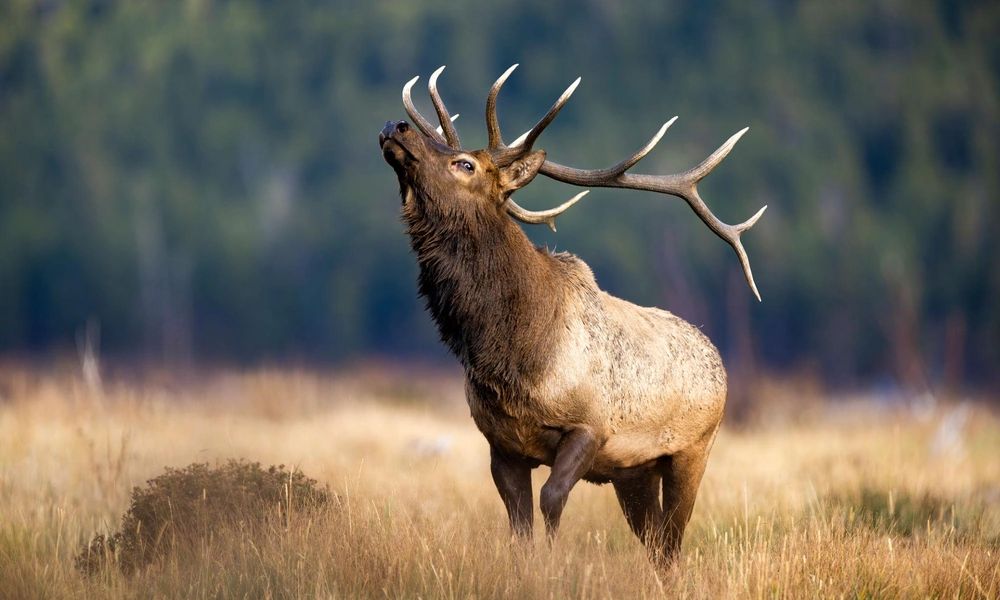
The elk bugle is one of the most recognizable sounds of the North American wilderness.
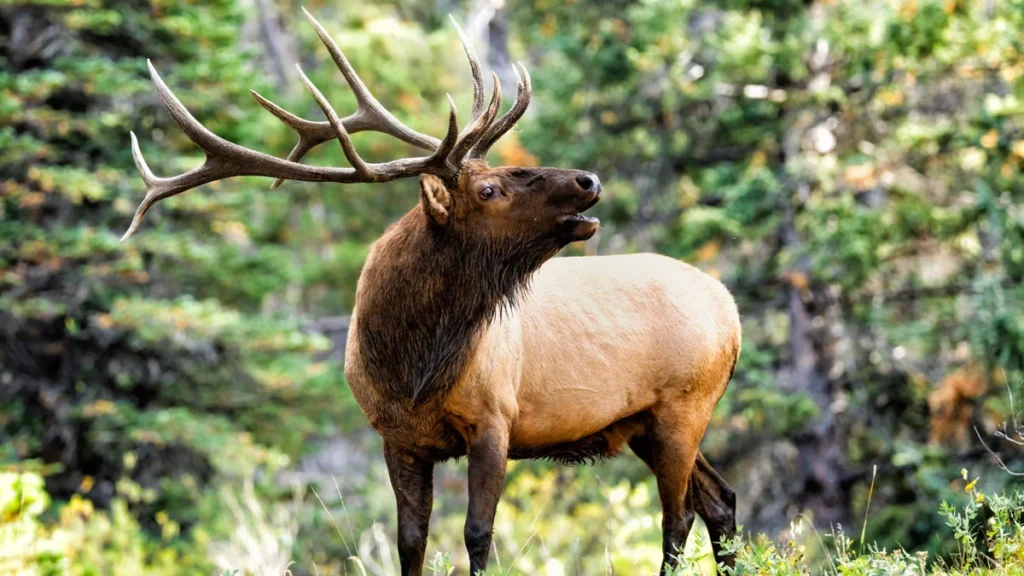
During autumn, a bull may produce a high-pitched call that rises sharply before descending into lower grunts. The sound can carry across a valley or through a forest, allowing other elk to hear it from a considerable distance.
What Does an Elk Bugle Mean?
Bugling serves several purposes during the rut.
A bull can advertise his presence to females, signal his readiness to breed, and communicate with rival males. The sound may also help establish dominance without requiring direct physical contact.
When another bull answers, the two animals may approach each other, assess their size and behavior, or begin displaying.
Not every bugle leads to a confrontation. Sometimes, a rival responds from far away but never approaches.
Why Is the Bugle So High-Pitched?
The sound’s unusual combination of a high whistle and lower grunts makes it especially effective at attracting attention across open landscapes.
The call is also associated with the bull’s physical condition and reproductive behavior during the breeding season.
For wildlife watchers, hearing a bugle can be one of the most memorable signs of autumn in elk country.
However, approaching a calling bull is dangerous. During the rut, males may be highly focused on rivals and mating opportunities, and their behavior can become unpredictable.
Elk Antlers: Growth, Competition, and Shedding
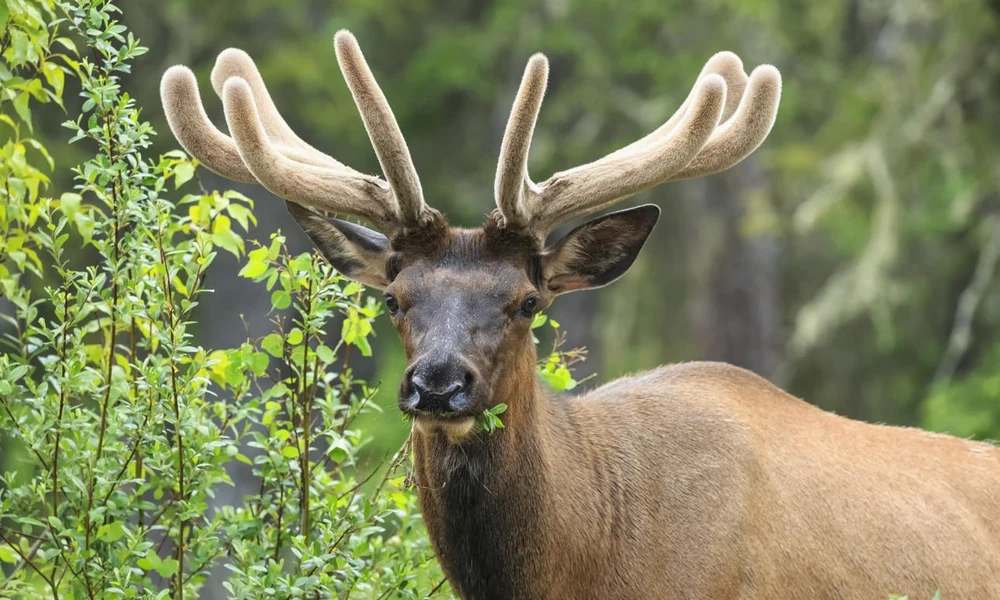
Antlers are central to the seasonal life of male elk. They grow rapidly during spring and summer, harden before the breeding season, and are shed the following year.
How Do Elk Grow Antlers?
After the previous antlers are shed, new growth begins from specialized structures on the skull called pedicles.
Initially, the developing antlers are covered in velvet, a soft layer of skin containing blood vessels that deliver oxygen and nutrients.
As the antlers grow, bone forms and hardens. Near the end of the growth period, the velvet dries and is rubbed away as the bull brushes his antlers against trees and other vegetation.
By autumn, mature bulls typically have hard antlers ready for the breeding season.
Why Do Bulls Fight With Antlers?
During the rut, bulls compete for access to females. Antlers allow males to push against rivals and test one another’s strength.
A contest may begin with displays, parallel walking, or posturing. If neither male retreats, they may lock antlers and push forcefully.
These contests can cause injuries, but many encounters end when one bull backs away.
A large set of antlers may be advantageous, yet success depends on more than antler size. Body condition, age, strength, experience, and the behavior of rivals also matter.
When Do Elk Shed Their Antlers?
Bulls commonly shed their antlers in late winter or early spring, although the timing varies.
After shedding, they begin growing a new set. The cycle repeats annually.
The shed antlers can provide minerals to other wildlife. Rodents and other animals may gnaw on them to obtain calcium and other nutrients.
Elk Breeding Season and Calves
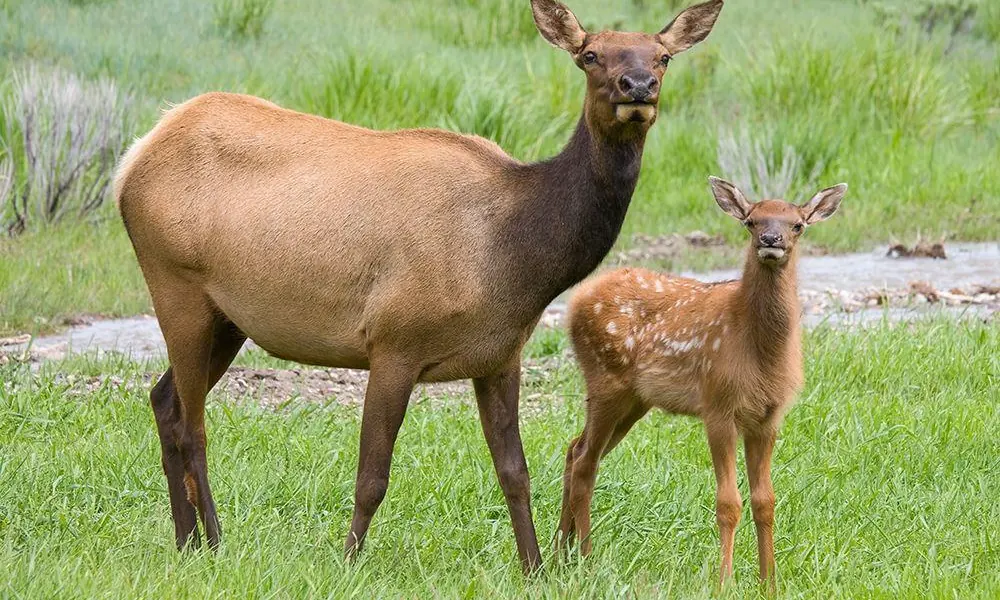
Elk breeding season, known as the rut, usually takes place in autumn. The timing varies by region, but activity commonly peaks in September or early October in many North American populations.
During this period, bulls become more vocal, spend less time feeding, and compete for opportunities to mate.
How Do Bulls Gather Females?
A dominant bull may gather and defend a group of females, sometimes called a harem.
He tries to keep rival males away while remaining close to the females in his group. Younger or less dominant bulls may attempt to approach or challenge him.
Maintaining a group requires energy. Bulls may lose substantial body mass during the rut because of increased movement, competition, and reduced feeding.
How Long Is an Elk Pregnant?
An elk’s pregnancy generally lasts around 240–262 days, or approximately eight months.
Most calves are born in late spring or early summer, when fresh vegetation is becoming abundant.
A cow usually gives birth to one calf. Twins occur but are uncommon.
Newborn calves weigh several kilograms and are capable of standing and walking relatively soon after birth, although they remain vulnerable during their early weeks.
Why Are Elk Calves Spotted?
Young elk have pale spots on their reddish-brown coats. These markings help them blend into grass, leaves, and patches of sunlight.
During their first weeks, calves often remain hidden while their mothers feed nearby. This behavior reduces the chance of attracting predators.
As calves grow, they become more mobile and begin spending more time with their mothers and other herd members.
What Eats Elk?
Elk are large animals, but they still face natural predators.
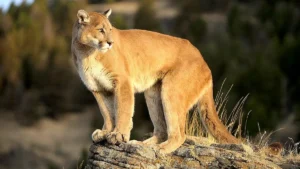
Wolves and mountain lions are important predators in parts of their range. Bears may prey on calves, and coyotes can pose a threat to very young animals. Predator pressure varies according to location and ecosystem.
Adult elk benefit from their size, speed, alertness, and tendency to gather in groups. However, calves are particularly vulnerable during their first weeks.
Humans also affect elk populations through hunting, road collisions, habitat loss, and changes to migration routes.
Predators can influence where elk feed and how they move. The relationship between elk and predators is one part of a wider ecological system that also includes vegetation, weather, and competing herbivores.
The Ecological Importance of Elk
Elk help shape the environments they inhabit.
By grazing on grasses and browsing on shrubs and tree shoots, they influence plant growth and the distribution of vegetation. Their feeding can affect the structure of meadows and forests, particularly where herds are large.
Elk also provide food for predators and scavengers. Their movement between seasonal habitats can connect different parts of an ecosystem.
However, large herds can affect vegetation and agriculture when food is concentrated in particular areas. Elk may damage crops or compete with domestic livestock for forage.
Their ecological impact depends on population density, habitat quality, predator presence, weather, and the availability of alternative food sources.
A balanced approach to wildlife management considers both the ecological role of elk and the needs of the communities that share their landscapes.
Are Elk Endangered?
Elk are not generally considered endangered as a species, and many populations are stable or well established. Their current distribution, however, is different from their historical range.
Before extensive settlement and commercial hunting transformed North American landscapes, elk occupied a much wider area. Heavy hunting and habitat changes caused severe declines in many regions.
Conservation and reintroduction programs helped restore elk to some areas. Today, populations occur across much of western North America, with additional herds in selected parts of the central and eastern United States.
Challenges remain. Habitat fragmentation, vehicle collisions, disease, drought, and conflicts with agriculture can affect local populations.
Protecting seasonal habitats and migration corridors remains important because elk often depend on different landscapes during different times of year.
Elk and Human Encounters
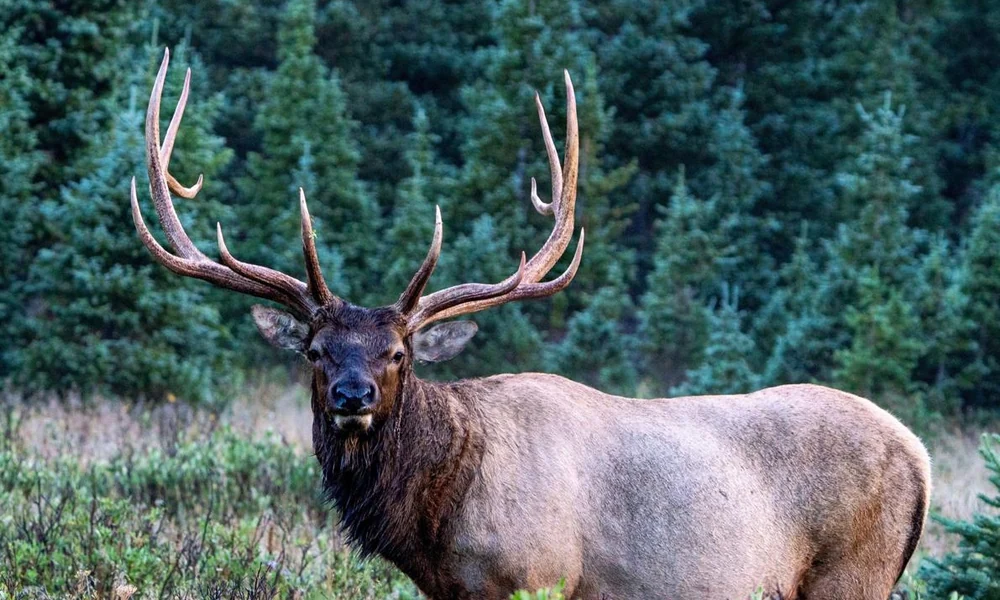
Seeing elk in the wild can be an extraordinary experience, especially when a herd moves across a meadow or a bull bugles from a distant ridge.
However, elk are large, powerful wild animals. Their calm appearance should never be mistaken for domestication.
During the rut, bulls can become aggressive toward perceived rivals. Cows may also defend calves if they feel threatened.
Visitors should observe elk from a safe distance, follow local wildlife guidance, and never attempt to feed or touch them. In parks and protected areas, recommended viewing distances may vary according to local rules and conditions.
Drivers should slow down in areas where elk are common, especially around dawn, dusk, and during seasonal movements. Their large bodies can cause serious injuries and vehicle damage in a collision.
Giving elk space protects both wildlife and people.
Fascinating Facts About Elk
- Elk are also called wapiti. The name refers to their pale rump and is widely used to distinguish them from the European use of the word “elk” for moose.
- Bulls grow enormous antlers. Mature males can develop antlers several feet wide, with multiple branching points.
- Elk bugles can carry across valleys. Their calls are especially prominent during autumn breeding season.
- They are skilled seasonal travelers. Some herds migrate between high-elevation summer ranges and lower winter habitats.
- Their diet changes throughout the year. Elk eat fresh grasses and herbs when available and rely more on woody vegetation when winter reduces access to soft plants.
- Calves can stand soon after birth. This early mobility helps them remain close to their mothers as they develop.
- Shed antlers feed other wildlife. Rodents and other animals sometimes gnaw on fallen antlers to obtain minerals.
- Elk once occupied a much wider range. Hunting and habitat changes reduced their distribution in many parts of North America, while conservation efforts later helped restore populations.
Frequently Asked Questions About Elk
What is the scientific name of the elk?
The North American elk, also called the wapiti, has the scientific name Cervus canadensis.
What is the difference between an elk and a moose?
In North America, elk and moose are different species. Elk are generally smaller, often form large herds, and have branching antlers. Moose are larger, usually more solitary, and adult males have broad, flattened antlers. In much of Europe, however, the word “elk” is used for moose.
What do elk eat?
Elk eat grasses, sedges, flowering plants, leaves, shrubs, and woody vegetation. Their diet changes with the seasons and the food available in their habitat.
Where do elk live?
Elk live in forests, meadows, grasslands, shrublands, and mountain valleys. In North America, they are especially associated with western regions, although reintroduced populations occur elsewhere.
Why do elk bugle?
Bulls bugle mainly during the breeding season to advertise their presence, attract females, and communicate with rival males.
How big can an elk get?
Mature bulls can weigh around 300–450 kilograms in many North American populations, with variation by subspecies, habitat, and individual condition. Cows are generally smaller.
Do female elk have antlers?
Female elk generally do not grow antlers. Antlers are characteristic of males and are shed and regrown annually.
How long is an elk pregnant?
Pregnancy usually lasts approximately eight months, or around 240–262 days. Most calves are born in late spring or early summer.
How fast can elk run?
Elk are capable of running rapidly over short distances, but their speed varies with terrain and individual condition. They can also travel considerable distances during seasonal migrations.
Are elk dangerous to humans?
Yes, they can be dangerous if approached too closely. Bulls may become aggressive during the rut, and cows may defend their calves. Observing them from a safe distance is essential.
Conclusion
The elk is a powerful symbol of North America’s wild landscapes, but its importance goes beyond its impressive size and spectacular antlers.
Its seasonal migrations connect mountain forests with lower valleys. Its grazing influences vegetation, while its calls and social behavior reveal a complex system of communication and competition. Even the antlers that fall to the ground each year become a source of nutrients for other animals.
Elk have survived major changes to their historical range, supported by conservation and wildlife management in many regions. Their continued future depends on healthy habitats, connected migration routes, and responsible interactions with people.
Whether heard bugling across an autumn valley or seen quietly grazing in a summer meadow, the elk offers a powerful reminder of how closely wildlife is connected to the land.
Disclaimer: This article is provided for general educational and wildlife-awareness purposes. Elk behavior, size, habitat, breeding patterns, and conservation status vary by region. Never approach, feed, or attempt to touch wild elk, particularly bulls during the rut or females with calves; follow local wildlife guidance and consult qualified authorities when an animal appears injured or in danger.