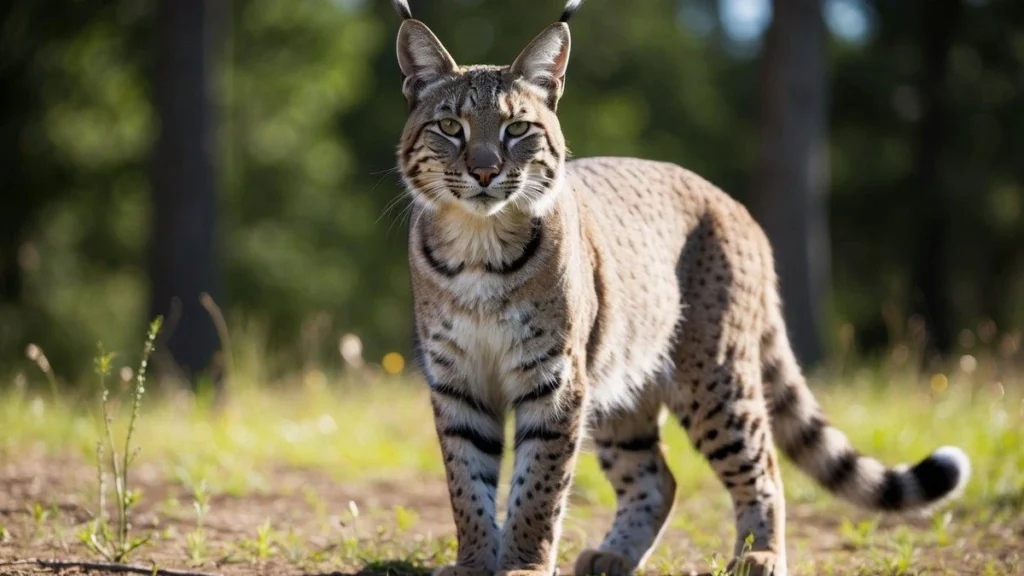
In the quiet hours before sunrise, a small shape moves through the undergrowth. Its spotted coat disappears among the leaves, its tufted ears turn toward the faintest sound, and its short tail flicks behind it as it approaches a trail. Somewhere nearby, a rabbit pauses to listen. The hunter has already noticed it.
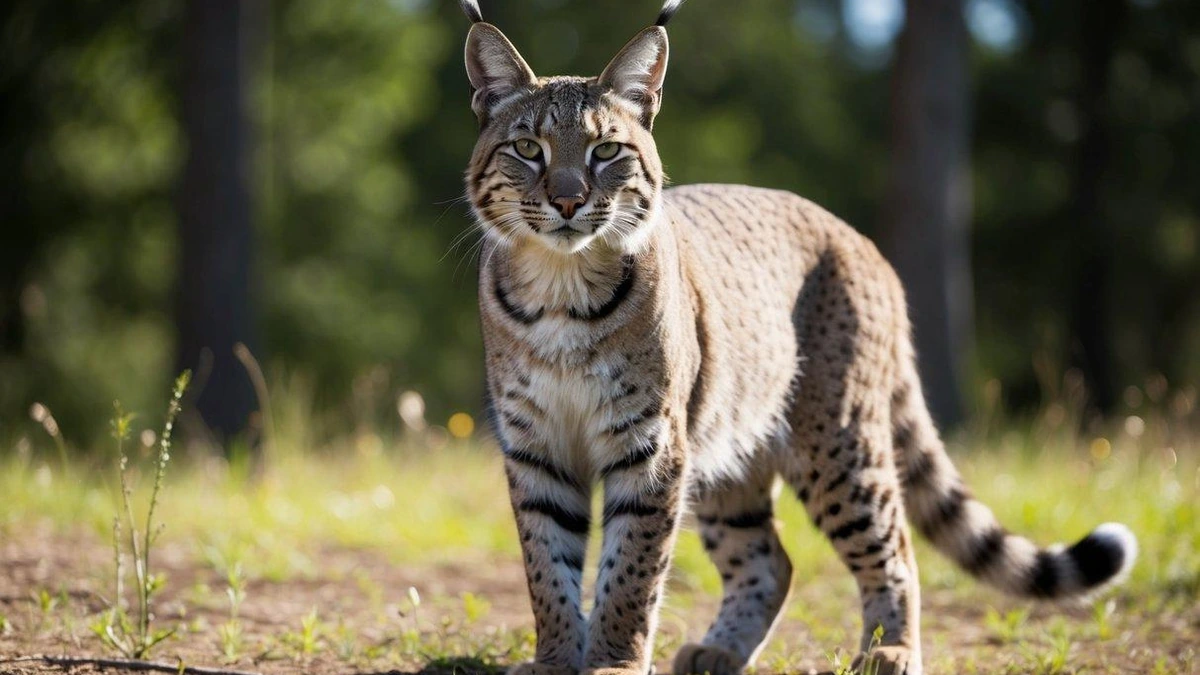
This is the bobcat, one of North America’s most adaptable wild cats. Known scientifically as Lynx rufus, the bobcat is a medium-sized predator recognized by its spotted coat, pointed ears, facial ruff, and distinctive short tail. Although it is often mistaken for a miniature mountain lion or a close relative of the Canada lynx, the bobcat is a separate species with its own characteristic appearance and behavior.
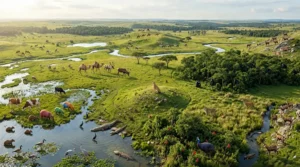
Bobcats live across much of the United States, southern Canada, and parts of Mexico. They can survive in forests, deserts, swamps, rocky canyons, brushlands, and some landscapes close to human communities. Their success comes from a combination of patience, keen senses, flexible hunting strategies, and an ability to make use of different prey.
Despite being widespread, bobcats are rarely seen by people. They tend to avoid unnecessary contact, move quietly through cover, and hunt with remarkable precision. Learning about them reveals how a relatively small predator can thrive across such a wide range of environments.
What Is a Bobcat?
The bobcat is a wild mammal belonging to the cat family, Felidae. It is one of the four living species commonly classified in the genus Lynx, alongside the Canada lynx, Eurasian lynx, and Iberian lynx.
Its scientific name, Lynx rufus, refers to the species’ often reddish-brown coloring. However, bobcats are not always red. Their fur can range from pale gray and sandy brown to warm reddish tones, depending on the individual and its environment.
Bobcats are carnivores. They hunt mainly small and medium-sized mammals, particularly rabbits and hares, but they can also catch rodents, birds, reptiles, and other animals. In certain circumstances, they may prey on young deer.
Unlike lions, bobcats do not live in prides. Adults generally lead solitary lives, with males and females coming together briefly to mate. Females raise their kittens without forming permanent family groups with adult males.
Their combination of stealth, adaptability, and relatively modest size allows them to occupy habitats where larger predators may struggle to survive.
What Does a Bobcat Look Like?
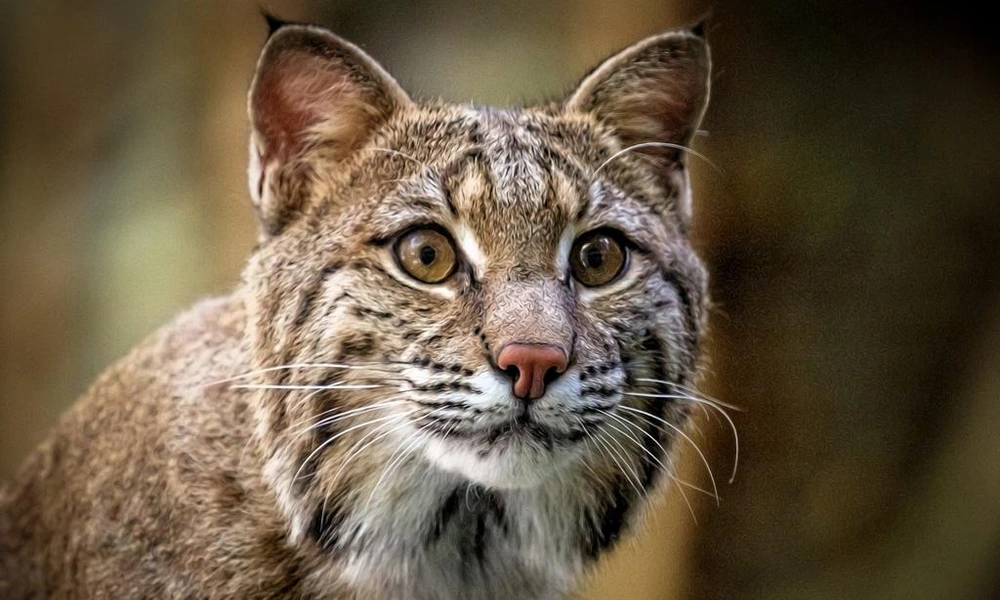
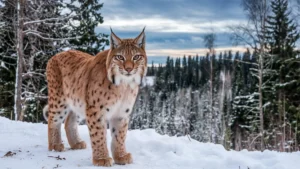
A bobcat has a compact, muscular body, long legs, broad paws, and a short tail. Its appearance resembles that of a larger domestic cat at first glance, but its facial markings, ear tufts, spotted coat, and powerful build make it distinctly wild.
The fur is usually brown, grayish-brown, or reddish, often covered with dark spots and bars. The markings are especially visible along the legs, sides, and underside. The pale belly may have dark spots, while the face features contrasting lines around the eyes and cheeks.
A thick ruff of fur frames the sides of the face, creating the appearance of short whiskered sideburns. The ears are pointed and often have small black tufts at their tips.
Why Does a Bobcat Have a Short Tail?
The bobcat’s short tail is one of its defining features. The upper surface is typically dark near the tip, while the underside is pale with a dark marking near the end.
Unlike the long tail of a mountain lion, the bobcat’s tail appears stubby and compact. Its short length makes it an easy identification feature when the animal is seen clearly.
The origin of the name “bobcat” is connected to this shortened, bobbed-looking tail.
How Big Is a Bobcat?
Bobcats are considerably smaller than mountain lions, although their size varies across their geographic range.
Adults commonly weigh around 4 to 15 kilograms, with some individuals outside that range. Their body length is often roughly 60 to 100 centimeters, excluding the short tail, and they generally stand around 46 to 64 centimeters at the shoulder.
Males are typically larger than females. Individuals living in different climates and habitats may also differ in size.
Their relatively small body does not make them weak. Bobcats have strong forelimbs, sharp retractable claws, powerful jaws, and the agility needed to catch prey and climb trees.
Can You Identify a Bobcat by Its Tracks?
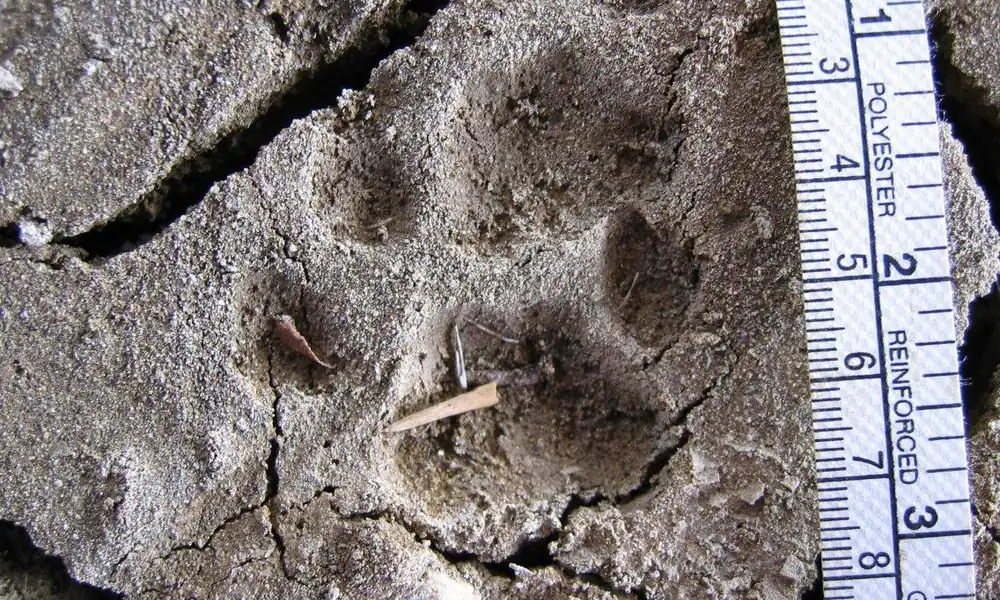
Bobcat tracks usually show four toes and a broad paw pad. Because cats can retract their claws, claw marks are often absent unless the animal is running, slipping, or moving over a surface that exposes them.
Their tracks are generally smaller than mountain lion tracks and may resemble those of a large domestic cat. Track size alone is not always enough for confident identification, especially when prints are incomplete or the ground is soft.
Where Do Bobcats Live?
Bobcats occupy a broad range stretching from southern Canada through much of the United States and into Mexico. Their ability to adapt to different environments has helped them remain one of North America’s most widespread wild cats.
They need access to prey, places to rest, and enough cover to approach animals without being detected. The exact combination of habitat features differs from one region to another.
Forests and Woodlands
Forests provide bobcats with cover for hunting, resting, and raising kittens. Fallen logs, thick shrubs, rocky openings, and woodland edges create useful places to hide while watching for prey.
Both coniferous and deciduous forests can support bobcats when food and shelter are available.
Deserts and Rocky Canyons
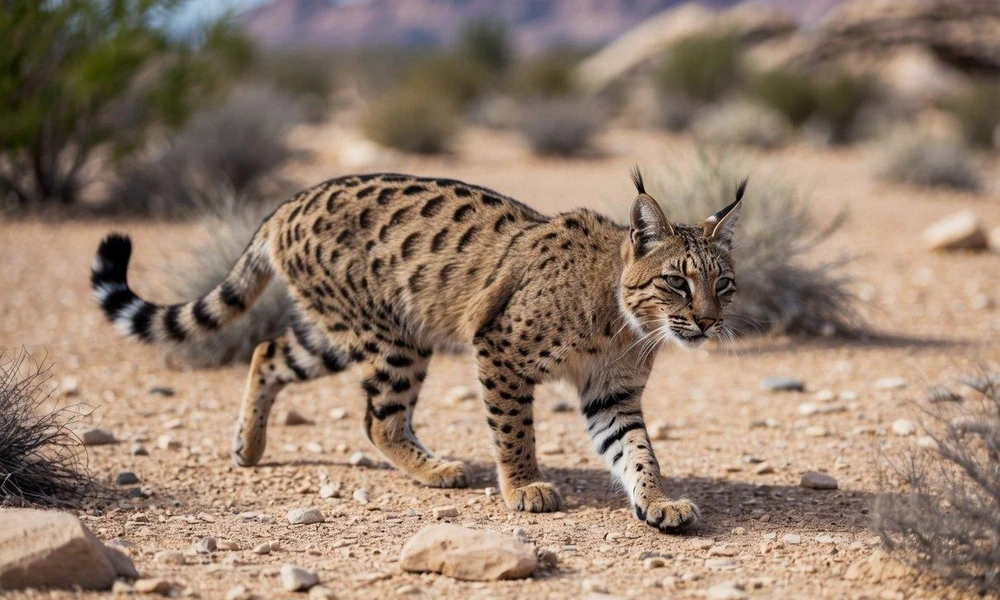
Bobcats also live in dry regions, including scrublands, deserts, and rocky canyons. In these environments, shrubs, rock crevices, and shaded slopes provide cover from heat and potential threats.
Small mammals and birds can remain abundant in certain desert habitats, offering the cat opportunities to hunt even where vegetation is sparse.
Swamps and Wetlands
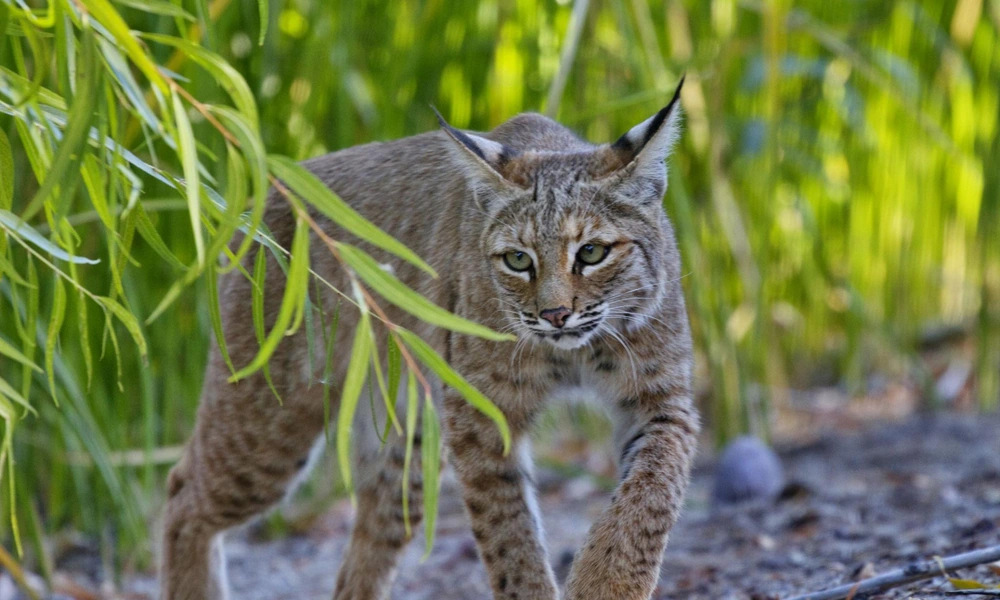
In the southeastern United States, bobcats inhabit swamps, bottomland forests, and other wet environments. Thick vegetation provides excellent concealment, while the surrounding habitat supports birds, rodents, amphibians, and other prey.
Their presence in these environments shows that bobcats are not restricted to dry or mountainous landscapes.
Can Bobcats Live Near People?
Yes. Bobcats sometimes use rural landscapes, woodland fragments, suburban green spaces, and areas near farms. They may travel along stream corridors or through patches of vegetation connecting larger natural areas.
However, they generally benefit from places where people are not constantly present. Highly developed areas with little cover may be unsuitable, even if occasional food sources are available.
A bobcat seen near a home is not automatically dangerous or sick. It may simply be moving through its territory or hunting small animals. Keeping pets secure and avoiding feeding wildlife helps reduce conflict.
What Do Bobcats Eat?
Bobcats are carnivores with a flexible diet. Rabbits and hares are among their most important prey across much of their range, but they will hunt other animals when opportunities arise.
Their diet can include:
- Rabbits and hares
- Mice, voles, rats, and other rodents
- Squirrels and chipmunks
- Birds, including ground-dwelling species
- Snakes, lizards, and amphibians
- Insects and other small animals
- Young deer and other larger prey in certain circumstances
The exact menu depends on what is available locally. A bobcat in a wetland may catch different prey from one living in a dry canyon or northern forest.
How Bobcats Hunt
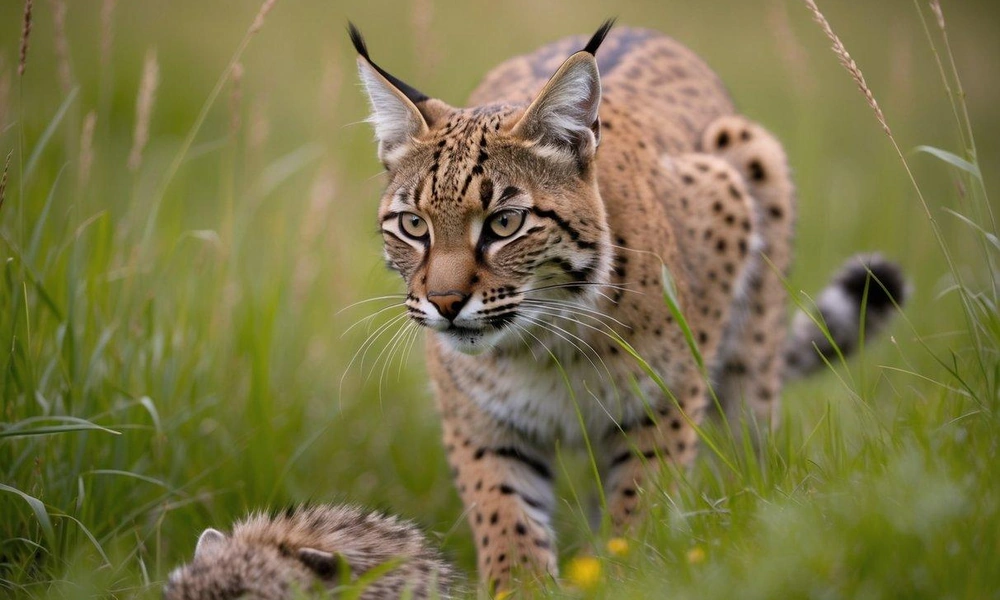
Bobcats are ambush predators. Rather than pursuing prey across long distances, they usually move quietly through vegetation, pause to listen, and wait for an opportunity to strike.
Their eyesight and hearing help them detect movement. Once a potential meal is located, the cat may crouch low and approach through cover before making a sudden leap.
A successful attack can happen within seconds. The bobcat uses its claws and jaws to seize and subdue prey, then feeds in a secluded location.
Can Bobcats Catch Deer?
Yes. Although small mammals are more typical prey, bobcats occasionally kill deer, especially fawns. Such opportunities depend on the animal’s size, local conditions, and the availability of other food.
A bobcat is not built to regularly hunt large adult deer in the same way that a mountain lion does. Its hunting strategy generally favors smaller animals that can be captured with less risk.
What Happens to Uneaten Food?
If a bobcat catches more food than it can eat at once, it may cover the remains with leaves, grass, snow, or other material and return later.
This behavior, called caching, allows the cat to make use of a kill over time and can help reduce the chance of other animals discovering it immediately.
The remains may eventually become food for scavengers if the bobcat does not return or leaves part of the carcass behind.
Bobcat Behavior and Daily Life
Bobcats are secretive, territorial animals that spend much of their time alone. Their behavior is shaped by the need to find food, avoid danger, defend access to resources, and locate potential mates.
They are not usually aggressive toward people and generally prefer to remain hidden. Their ability to move quietly through vegetation makes them difficult to observe, even in places where they are relatively common.
Are Bobcats Nocturnal?
Bobcats are often most active around dawn and dusk, a pattern known as crepuscular activity. However, they can also hunt during the day or at night, depending on habitat, temperature, prey movements, and human disturbance.
A bobcat might rest beneath a fallen tree during daylight, then begin hunting as evening approaches. In quieter areas, it may be active during the morning or afternoon.
Rather than following a rigid schedule, bobcats adjust their movements to the conditions around them.
Are Bobcats Good Climbers?
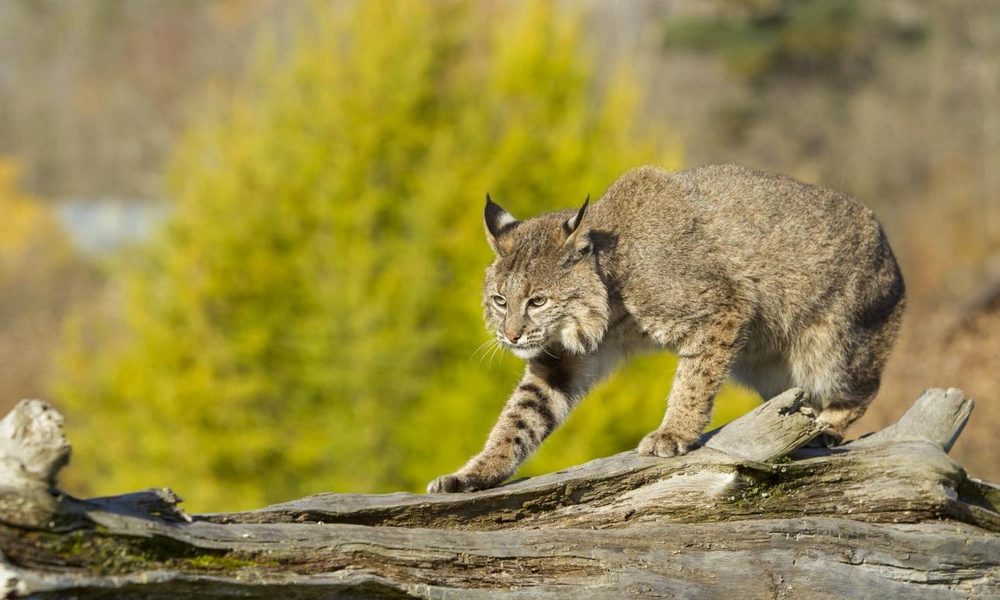
Yes. Bobcats are capable climbers and can scramble up trees, rocky slopes, and other structures. Climbing may help them escape threats, reach resting places, or move through difficult terrain.
They spend much of their time hunting on the ground, but their climbing ability gives them additional options when navigating their surroundings.
They are also capable runners and can reach speeds of approximately 48 kilometers per hour in short bursts. Their greatest hunting advantage, however, is usually stealth rather than sustained speed.
How Do Bobcats Communicate?
Bobcats communicate through scent, body language, facial expressions, and vocalizations.
They mark their territories using urine, feces, glandular scents, and scrapes in the ground. These signals provide information to other bobcats and can help reduce unnecessary encounters between neighboring animals.
Their vocalizations include growls, hisses, chirps, and yowls. During the breeding season, their calls can sound surprisingly similar to the cries of a distressed domestic cat.
Although they can make noise, bobcats generally rely heavily on scent marking and visual signals rather than constant vocal communication.
Bobcat Territories and Social Structure
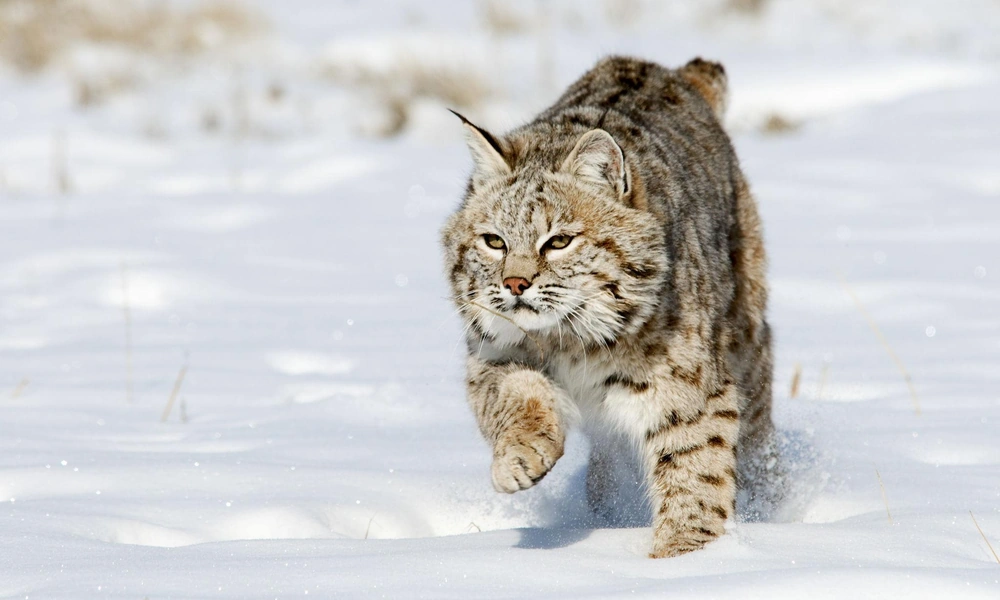
Adult bobcats usually maintain individual home ranges. The size of a range depends on food availability, habitat quality, sex, and the presence of other bobcats.
Males generally occupy larger areas than females, and one male’s range may overlap with the ranges of several females. Female territories tend to be more separate, although the degree of overlap varies.
Territories help bobcats distribute themselves across a landscape where food and shelter may be unevenly available.
Do Bobcats Live in Groups?
Not usually. Outside the breeding season and the period when females raise their young, bobcats are predominantly solitary.
This does not mean they never encounter one another. Neighboring animals may cross paths, and scent marks allow them to exchange information without needing to meet directly.
Females with kittens form temporary family groups. The young remain dependent on their mother while they develop the skills needed to hunt and eventually establish territories of their own.
Bobcat Reproduction and Kittens
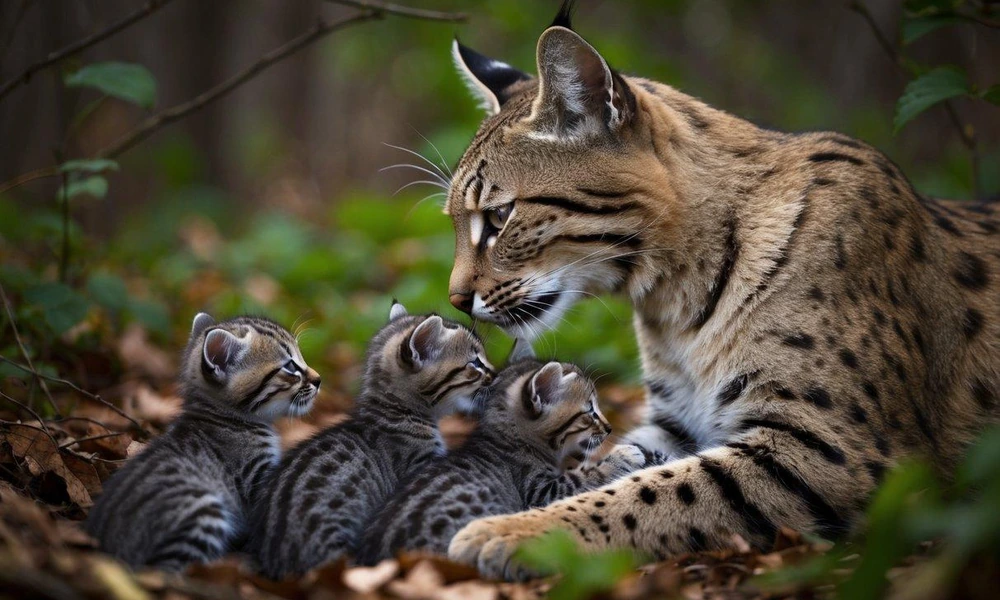
Bobcat breeding generally occurs during winter and spring, although timing can vary by region. Males and females come together for courtship and mating but do not form long-term pairs.
After mating, the female selects a sheltered den where her kittens can grow with less exposure to weather and disturbance.
Pregnancy and Birth
A female bobcat is pregnant for approximately 60 to 70 days. She commonly gives birth to two to four kittens, although litter size can vary.
Suitable dens may include hollow logs, rocky crevices, caves, dense brush, or protected spaces beneath fallen trees. The mother chooses a location that offers concealment and protection.
Newborn kittens are small, helpless, and dependent on their mother for warmth and milk. Their eyes open as they develop, and their coordination improves over the following weeks.
How Bobcat Kittens Grow
Young bobcats have spotted coats that provide camouflage among leaves, grasses, and shadows. Their markings are often more noticeable than those of adults.
As they grow, kittens begin exploring around the den and practicing movements that will later help them hunt. Their mother brings them food and gradually introduces them to the behaviors needed for survival.
Kittens are generally weaned at around two months of age, although they may remain with their mother for several additional months.
During this time, they develop stalking skills, improve their coordination, and learn to recognize prey and potential threats. Eventually, they separate from their mother and begin life independently.
How Long Do Bobcats Live?
Wild bobcats may live around five to 15 years, although many die younger because of starvation, disease, predators, hunting, or vehicle collisions.
Food availability is especially important for young animals. A kitten may be physically capable of hunting but still struggle to survive if prey is scarce or it lacks sufficient experience.
Natural Predators of the Bobcat
Adult bobcats are skilled hunters, but they can still be threatened by larger predators.
Depending on the region, mountain lions, coyotes, wolves, and bears may kill bobcats. Young kittens face additional risks from large owls and other predators.
Competition with larger carnivores can also influence where bobcats hunt and rest. A bobcat may avoid an area where another predator is especially active or shift its movements to reduce the chance of an encounter.
Humans create additional risks through road traffic, habitat changes, trapping, and hunting in places where these activities are permitted.
The bobcat’s survival depends not only on its ability to catch prey but also on choosing places where it can avoid becoming prey itself.
Why Bobcats Matter to the Ecosystem
Bobcats play an important role as medium-sized predators. Their influence extends beyond the animals they kill, affecting food webs and the movement of smaller wildlife.
Helping Regulate Small Mammal Populations
By hunting rabbits, hares, and rodents, bobcats contribute to natural predator-prey relationships. The extent of their influence varies with the local abundance of prey and the presence of other predators.
They do not control every population on their own, but they are one part of a wider ecological system involving food availability, disease, habitat, and other wildlife.
Connecting Different Parts of the Food Web
A bobcat may kill prey, abandon a carcass, or leave remains after feeding. Those remains can provide food for scavengers and insects.
At the same time, bobcats themselves can become prey for larger carnivores. Their position in the food web connects smaller mammals, medium-sized predators, and larger hunters.
Why Habitat Diversity Matters
Bobcats benefit from landscapes that combine cover with open areas where prey can be found. Forest edges, rocky openings, brushy fields, and stream corridors can provide different resources within a relatively small area.
Protecting a variety of connected habitats helps maintain the prey populations and shelter bobcats need to survive.
Are Bobcats Endangered?
Bobcats are widespread across much of North America and are not generally considered globally endangered. However, their local conservation status varies, and some populations face substantial pressure.
Habitat loss and fragmentation are important concerns. Roads, housing developments, intensive agriculture, and other land changes can separate suitable habitat into smaller patches.
Other threats include:
- Vehicle collisions: Bobcats may be killed while crossing roads, particularly where highways divide natural habitats.
- Habitat fragmentation: Isolated populations may have fewer opportunities to find mates and exchange genes.
- Human conflict: Bobcats may occasionally prey on poultry or unsecured pets, leading to retaliation.
- Hunting and trapping: In some regions, regulated harvests are permitted; management practices vary by jurisdiction.
- Declining prey availability: Changes in habitat can reduce access to the animals bobcats depend on.
Conservation measures include maintaining wildlife corridors, protecting natural cover, monitoring local populations, and securing domestic animals where they might attract predators.
Bobcats generally benefit from the preservation of healthy habitats rather than from constant human intervention. Giving them space and allowing them to remain wild can help minimize conflict.
Bobcat vs. Mountain Lion: What Is the Difference?
Bobcats and mountain lions share parts of North America, but they are easy to distinguish when seen clearly.
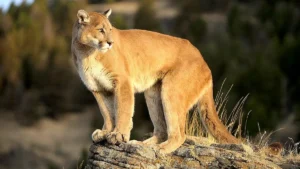
The mountain lion is much larger, has a plain tawny coat, and carries a long tail that may reach a substantial length. The bobcat is smaller, usually spotted or barred, and has a short tail with a dark tip.
Mountain lions commonly hunt deer and other large mammals. Bobcats primarily hunt rabbits, hares, rodents, and other small or medium-sized animals, although they sometimes take young deer.
Their behavior also differs in scale. Both are solitary hunters, but mountain lions require much larger territories and can travel over extensive landscapes in search of prey and mates.
Bobcat vs. Canada Lynx
The bobcat and Canada lynx are closely related species, and their ranges overlap in parts of North America. Both have tufted ears and relatively short tails, which can make identification challenging.
Several features help distinguish them.
- Feet: Canada lynx have especially large, furry paws adapted for traveling over snow.
- Legs: Canada lynx generally have longer hind legs, giving them a somewhat elevated rear profile.
- Coat: Bobcats often have more distinct spots and bars, while Canada lynx commonly have a lighter, more uniform coat.
- Habitat: Bobcats use a broad range of environments, including deserts and swamps. Canada lynx are more strongly associated with northern forests and snow-rich habitats.
- Diet: Snowshoe hares are particularly important to Canada lynx, while bobcats have a broader range of common prey.
Their ranges and appearance vary, so several characteristics should be considered together rather than relying on a single feature.
Are Bobcats Dangerous to Humans?
Bobcats are wild predators, but they generally avoid people. Attacks on humans are uncommon, and most encounters end with the animal moving away.
Nevertheless, bobcats should never be approached, cornered, handled, or fed. A frightened or injured animal may defend itself, and any wild mammal can behave unpredictably when threatened.
If you encounter a bobcat, remain calm, give it room to escape, and do not attempt to approach it for a photograph. Keep children close and bring pets indoors or under direct supervision.
If a bobcat repeatedly approaches people, appears seriously ill, or behaves unusually aggressively, contact local wildlife authorities for guidance.
How to Protect Pets and Poultry
Bobcats may occasionally hunt domestic animals, especially small pets or poultry that are left outside without protection.
Useful precautions include keeping cats indoors, supervising small dogs outdoors, securing chickens in sturdy enclosures, and removing food sources that attract rodents and other prey.
These measures reduce opportunities for conflict without requiring people to disturb wildlife unnecessarily.
Interesting Facts About Bobcats
- Their name describes their tail. The short, bobbed-looking tail is one of their most recognizable features.
- They are excellent ambush hunters. Bobcats often wait patiently before making a short, powerful attack.
- They can climb trees. Their climbing ability helps them navigate difficult terrain and escape some threats.
- Their coats provide camouflage. Spots and bars break up the outline of the body among vegetation and shadows.
- They live in many environments. Forests, deserts, swamps, and brushlands can all support bobcats.
- They are mostly solitary. Adults generally meet to breed rather than forming permanent groups.
- They communicate through scent. Scent marks help identify territories and provide information to neighboring animals.
- Their kittens are spotted. Young bobcats have distinctive markings that become less prominent as they mature.
- They can run quickly. Short bursts of speed complement their stealth and ability to leap.
- They are rarely seen despite their wide range. Their secretive behavior allows them to remain hidden in many landscapes.
Frequently Asked Questions About Bobcats
What is a bobcat?
A bobcat is a medium-sized wild cat native to North America. Its scientific name is Lynx rufus, and it is recognized by its spotted coat, tufted ears, facial ruff, and short tail.
What do bobcats eat?
Bobcats mainly eat rabbits, hares, rodents, and other small mammals. They may also hunt birds, reptiles, amphibians, and occasionally young deer, depending on what is available.
Where do bobcats live?
Bobcats live across much of the United States, southern Canada, and parts of Mexico. They occupy forests, deserts, swamps, rocky canyons, scrublands, and some rural or suburban areas.
Are bobcats dangerous to humans?
Bobcats generally avoid people, and attacks are uncommon. However, they are wild animals and should never be approached, cornered, or fed.
How big is a bobcat?
Adult bobcats commonly weigh around 4 to 15 kilograms. Males are generally larger than females, and size varies by region.
Can bobcats climb trees?
Yes. Bobcats are capable climbers and may climb to escape danger, reach resting places, or move through their habitat.
How many kittens does a bobcat have?
A female commonly gives birth to two to four kittens after a pregnancy lasting approximately 60 to 70 days. She raises the kittens in a sheltered den and teaches them how to survive.
Are bobcats endangered?
Bobcats remain widespread across much of North America and are not generally considered globally endangered. Some local populations nevertheless face threats from habitat loss, roads, hunting, and conflict with people.
How can you tell a bobcat from a mountain lion?
A bobcat is much smaller, usually has a spotted coat, and has a short tail. A mountain lion is considerably larger, typically has a plain tawny coat, and has a long tail.
The Bobcat: Small, Secretive, and Remarkably Adaptable
The bobcat proves that survival does not always depend on being the largest predator in the landscape. Its success comes from choosing the right moment, listening carefully, moving quietly, and adapting to whatever prey and shelter the environment provides.
From northern forests to dry canyons and southern swamps, this elusive cat has found ways to survive across an extraordinary variety of habitats. It can live near human communities without becoming dependent on them, provided that suitable cover and food remain available.
Protecting bobcats means maintaining the connected landscapes that support their lives, reducing unnecessary conflicts, and allowing them to continue performing their natural role as predators.
The next time a faint set of tracks appears beside a forest trail, remember that a bobcat may have passed through without being seen. In many places, its quiet presence is one of the clearest signs that wildlife continues to adapt and survive beyond our view.
Disclaimer: This article is provided for general informational and educational purposes only and is not intended as professional wildlife, veterinary, or conservation advice. Information may change as research advances, and no guarantee is made as to its completeness or accuracy.