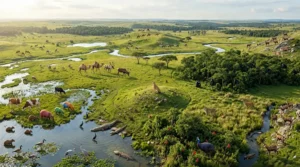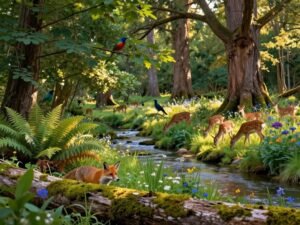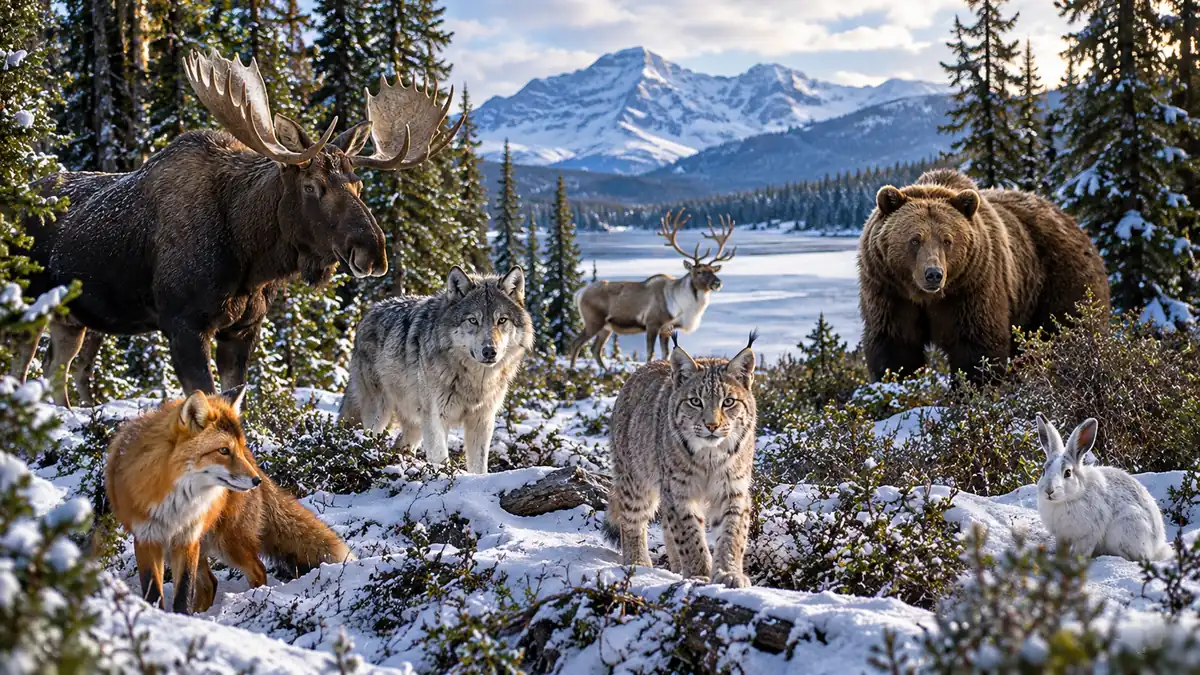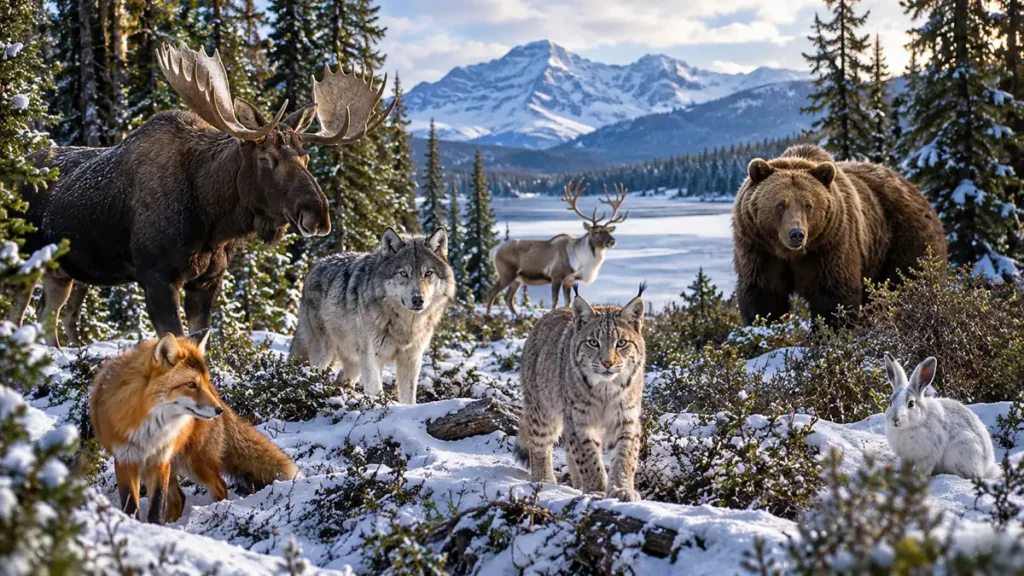
The taiga is one of the largest forest biomes on Earth, stretching across vast regions of Canada, Alaska, Scandinavia, and Russia. Its landscape is dominated by evergreen trees, long winters, frozen lakes, and summers that can feel surprisingly alive with insects, birds, and wildlife.
Despite the harsh climate, the taiga supports an extraordinary range of animals. Moose move through snowy forests in search of food, wolves travel across large territories, lynxes hunt beneath dense branches, and bears prepare for winter when food becomes scarce.
These animals have developed remarkable adaptations for living in cold conditions, finding food beneath snow, and surviving seasonal changes. Here are 25 animals that live in the taiga, along with facts about their habitats, diets, and survival strategies.
What Is the Taiga Biome?
The taiga, also known as the boreal forest, is a northern biome characterized by extensive forests of coniferous trees such as spruce, fir, and pine. It lies south of the Arctic tundra and stretches across parts of North America, Europe, and Asia.
Winters are generally long and cold, while summers are relatively short. Snow covers much of the landscape during winter, and many lakes and rivers freeze.
Taiga wildlife includes large mammals, small rodents, predators, birds, and insects. Some animals remain active throughout winter, while others migrate, hibernate, or change their behavior as temperatures drop.
25 Animals That Live in the Taiga
1. Moose
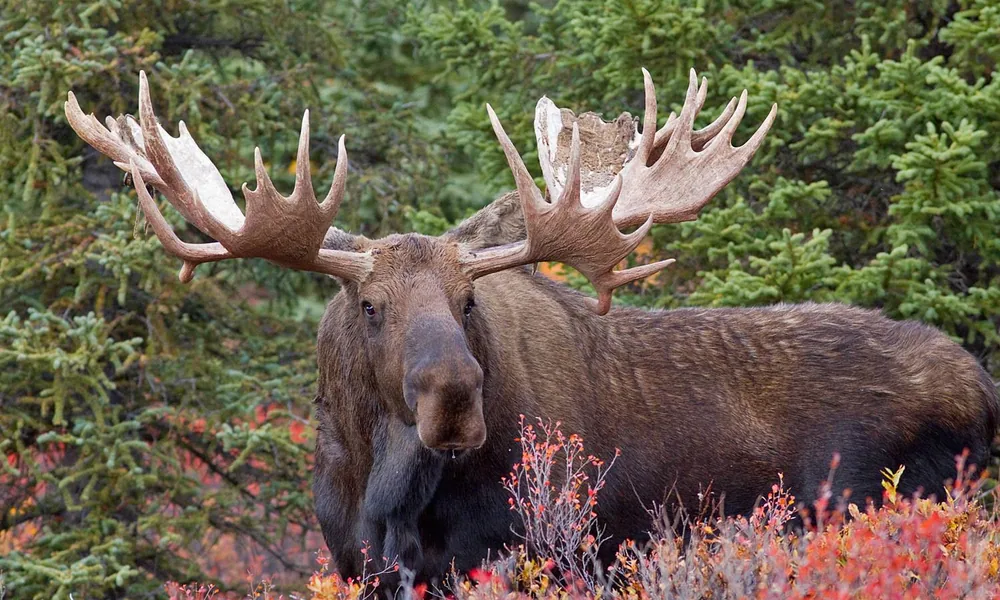
The moose is one of the largest mammals found in the taiga. Its long legs help it move through deep snow and uneven forest terrain, while its broad muzzle allows it to feed on leaves, twigs, and aquatic plants.
Moose are commonly found in boreal forests near lakes, rivers, and wetlands. During winter, they browse on woody vegetation when grasses and other plants are covered by snow.
2. Gray Wolf
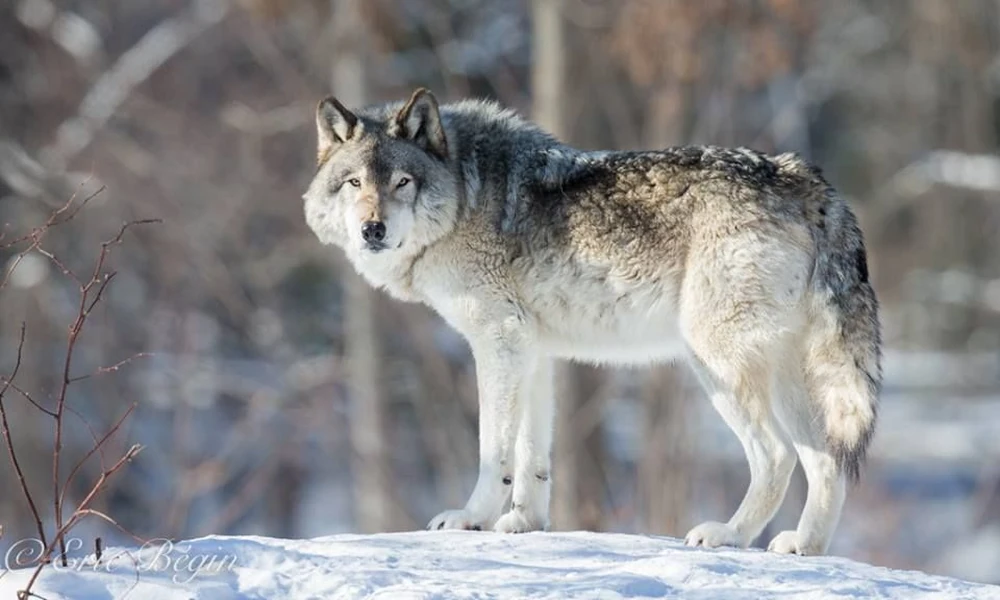
Gray wolves are important predators in many taiga ecosystems. They often live in family groups and may travel long distances while searching for prey.
Their diet can include moose, deer, caribou, and smaller mammals, depending on the region. Thick fur helps wolves withstand cold weather, while cooperative hunting can help them pursue large animals.
3. Brown Bear
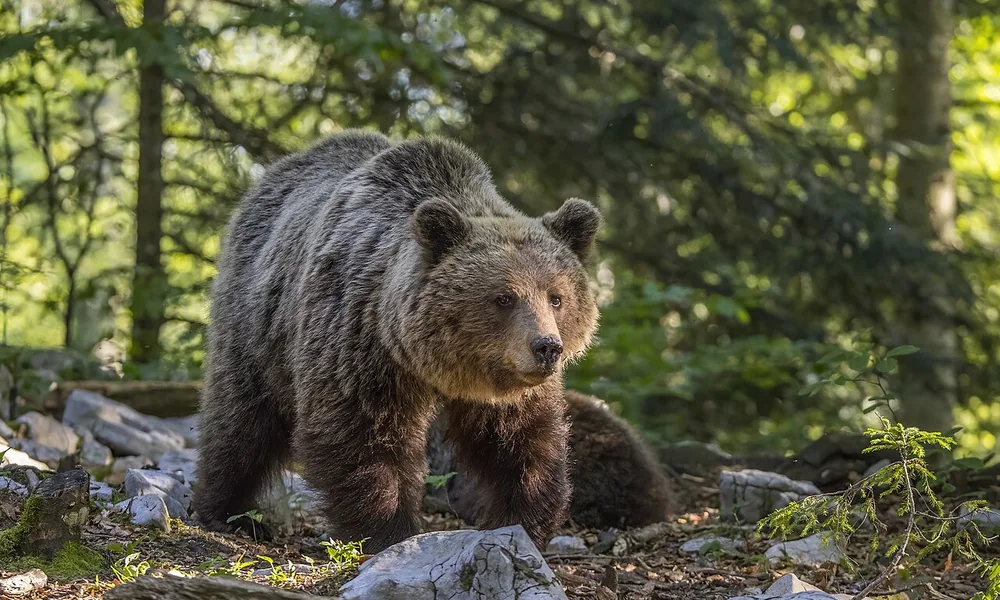
Brown bears inhabit parts of the boreal forest across northern Europe, Asia, and North America. They are omnivores, eating berries, roots, insects, fish, and other available foods.
Before winter, many brown bears consume large amounts of food to build fat reserves. In colder regions, they spend extended periods in winter dens, where their activity and metabolism decrease.
4. Canadian Lynx
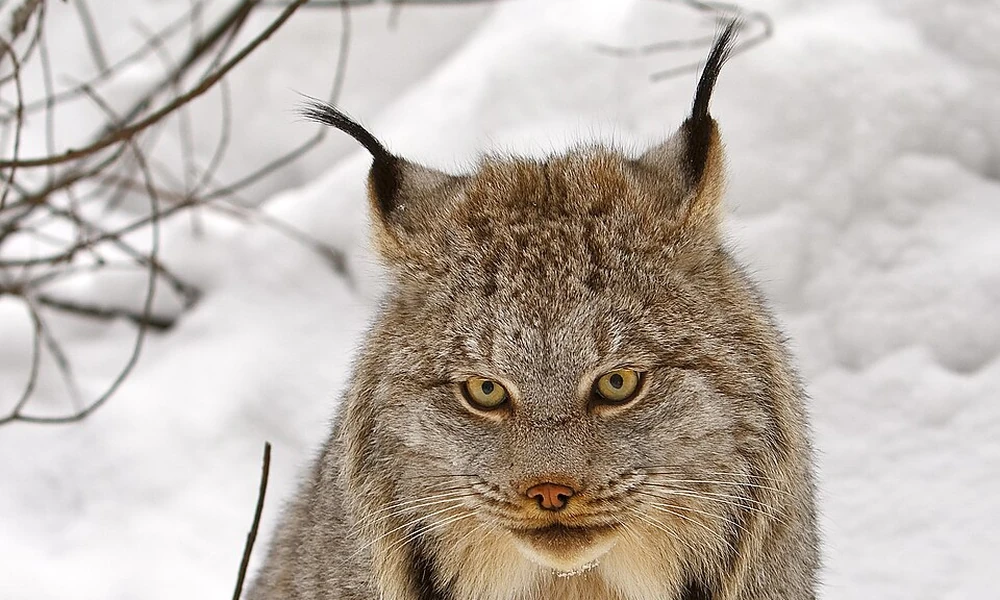
The Canadian lynx is a wild cat adapted to snowy forests. Its large, furry paws help distribute its weight across soft snow, making movement easier in winter conditions.
Snowshoe hares are a major part of its diet. Lynx populations often rise and fall in response to changes in hare populations, creating one of the best-known predator-prey cycles in northern forests.
5. Wolverine
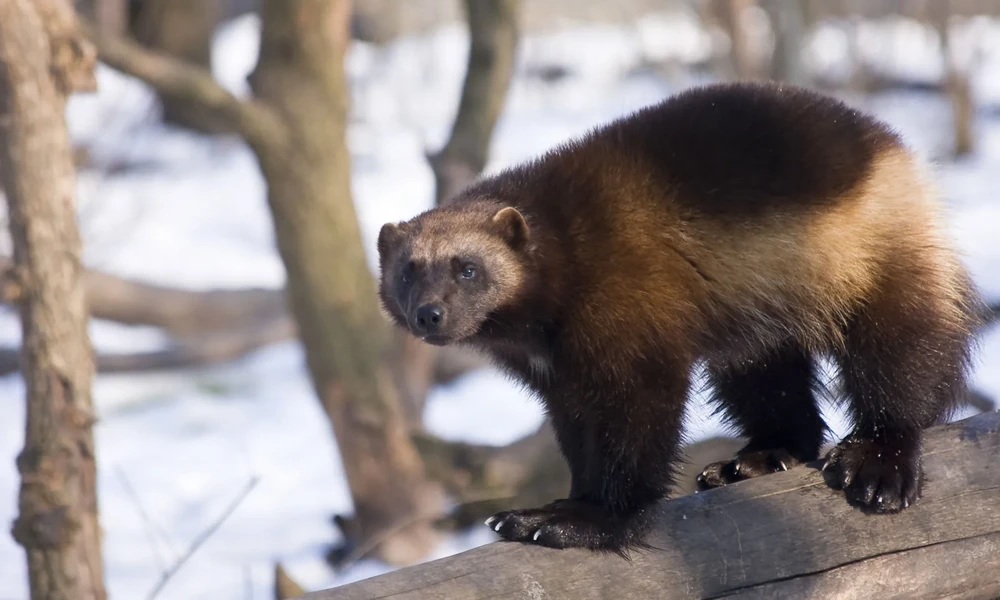
The wolverine is a powerful member of the weasel family that inhabits remote northern forests and other cold environments.
Despite its relatively compact body, it has strong jaws, large paws, and a thick coat. Wolverines eat small mammals, birds, and carrion, and may sometimes challenge other predators over food.
6. Red Fox
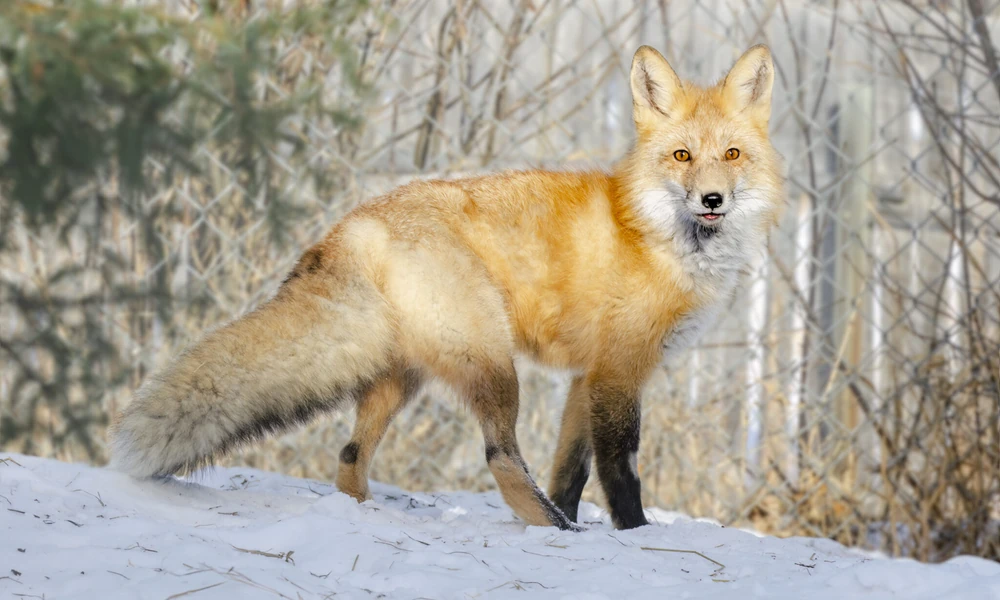
Red foxes are adaptable predators found in many habitats, including the taiga. Their thick seasonal coats provide insulation during cold weather.
They feed on rodents, birds, insects, and fruit. When snow covers the ground, foxes can use their sensitive hearing to locate small animals moving beneath the surface.
7. Snowshoe Hare
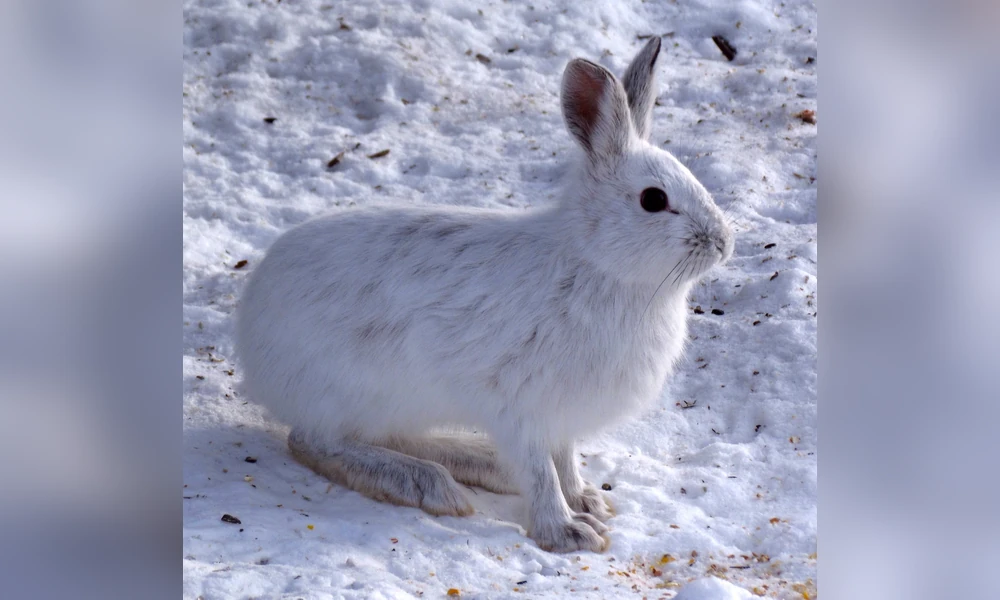
The snowshoe hare is well adapted to snowy forests of North America. Its broad hind feet help it move over snow, while its fur often changes from brown in warmer months to white during winter.
This seasonal color change provides camouflage against changing backgrounds. Snowshoe hares eat grasses, leaves, twigs, and bark, depending on what is available.
8. Caribou
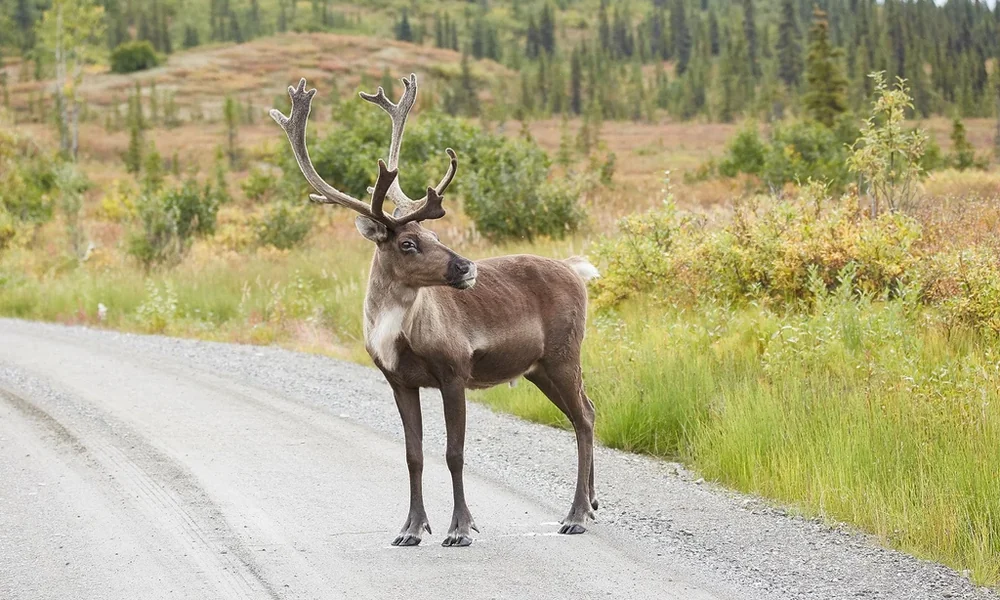
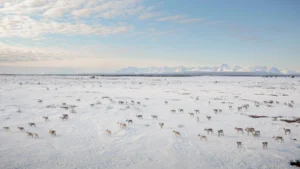
Caribou, known as reindeer in Eurasia, inhabit northern environments that include boreal forests and tundra. Some populations migrate over long distances between seasonal feeding grounds.
Their broad hooves help them travel over snow and soft ground. Caribou feed on a variety of plants, including lichens, grasses, and shrubs, with their diet changing throughout the year.
9. Eurasian Brown Bear
The Eurasian brown bear occurs across parts of northern and eastern Europe and Asia, including boreal forest regions.
It feeds on plant material, berries, insects, fish, and small or large animals when opportunities arise. Its diet varies with season and location, allowing it to take advantage of different food sources throughout the year.
10. Siberian Tiger
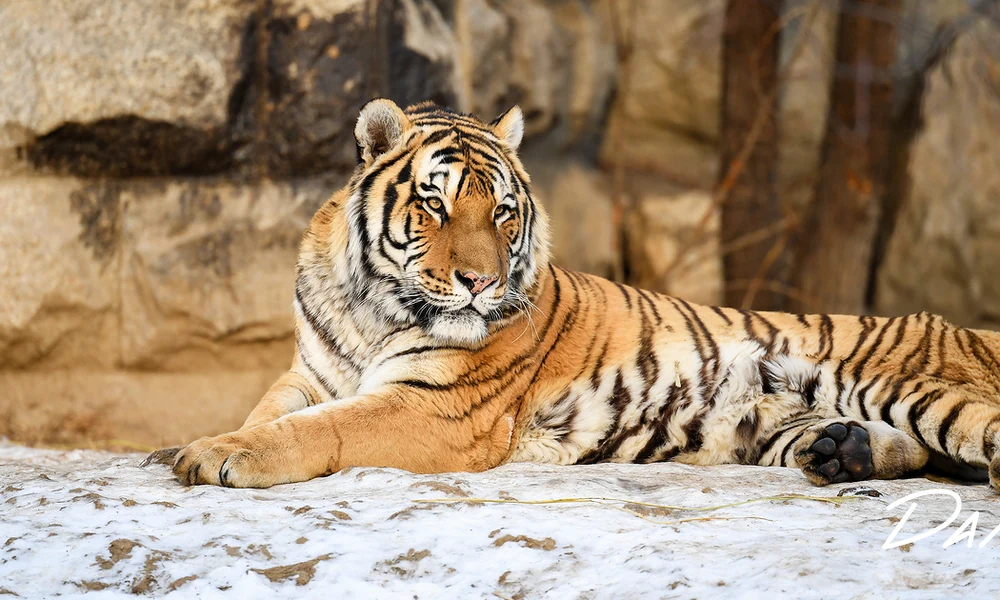
The Siberian tiger, also called the Amur tiger, inhabits the Russian Far East, including forest landscapes with cold winters. Its range includes temperate forests as well as areas influenced by boreal conditions.
It hunts animals such as deer and wild boar. Thick fur and a substantial body help it cope with cold temperatures, although it depends on sufficient prey and connected habitat to survive.
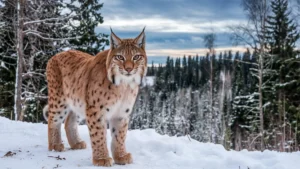
11. Eurasian Lynx
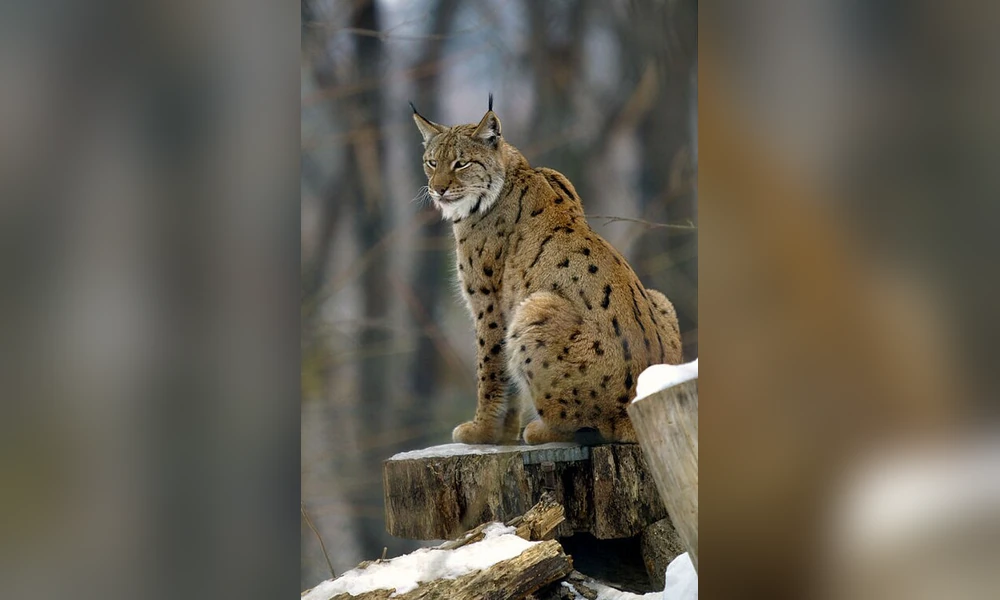
The Eurasian lynx is a medium-to-large wild cat found across northern and eastern Europe and parts of Asia.
It has tufted ears, a short tail, and large paws suited to moving through snowy landscapes. Its prey includes hares, rodents, and deer, depending on its size and the animals available locally.
12. Siberian Flying Squirrel
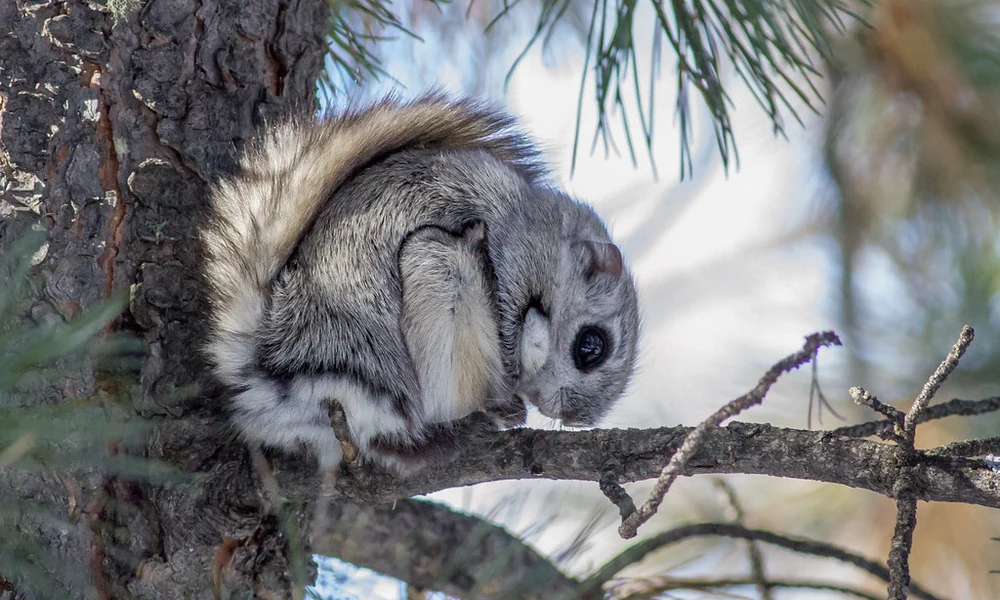
The Siberian flying squirrel lives in northern Eurasian forests, including parts of the boreal zone. A membrane between its front and hind legs allows it to glide from tree to tree.
It feeds on buds, leaves, seeds, and other plant material. Its gliding ability helps it move through the forest canopy while reducing the need to travel along the ground.
13. Eurasian Red Squirrel
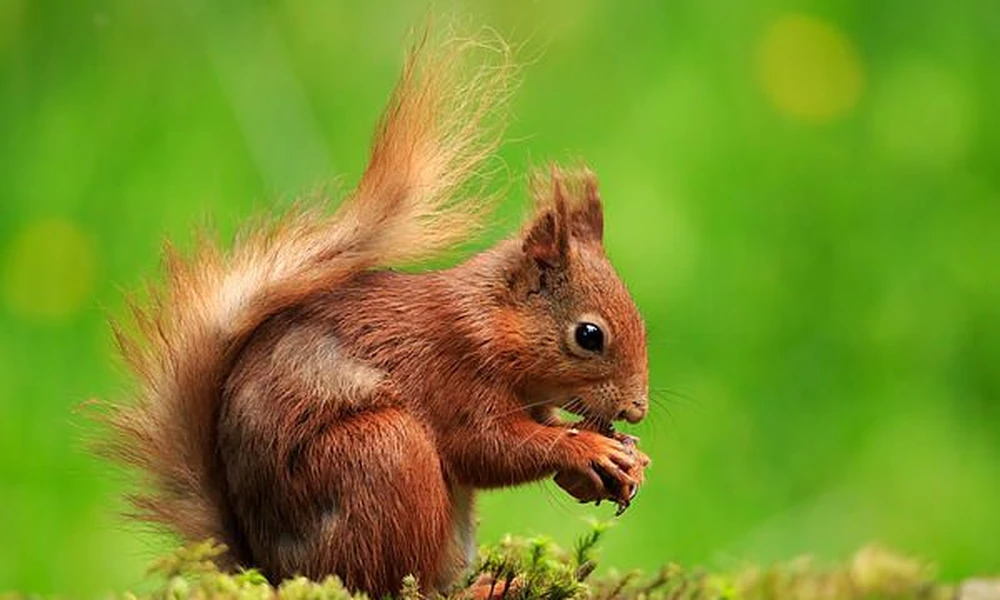
The Eurasian red squirrel is a small tree-dwelling rodent found in forests across Europe and northern Asia.
It eats seeds, nuts, fungi, buds, and other plant material. Squirrels often store food for later use, an important behavior when winter limits access to fresh vegetation.
14. Beaver
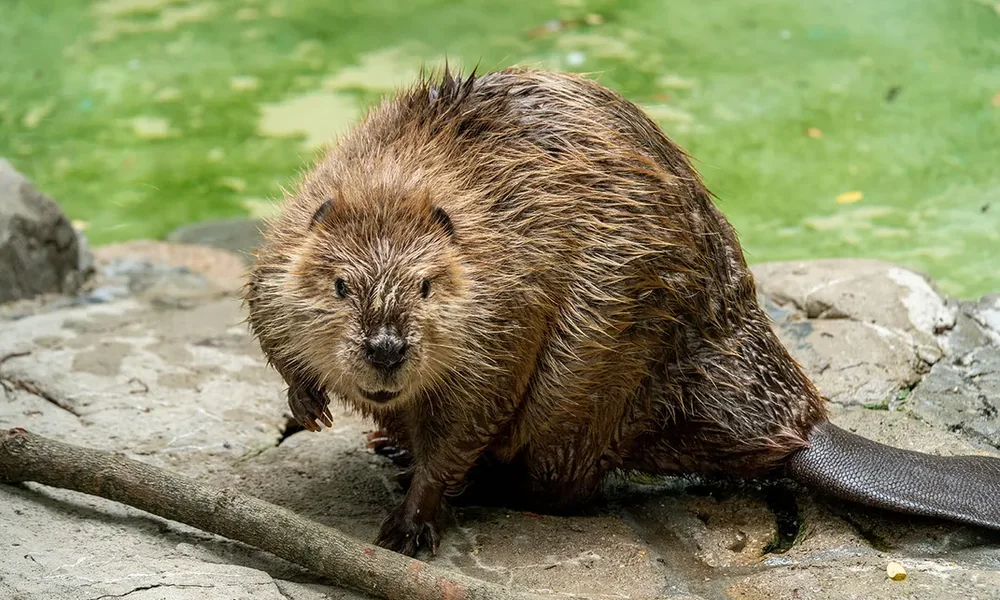
Beavers inhabit lakes, rivers, and wetlands within many boreal forest regions. They are famous for building dams and lodges using branches, mud, and other materials.
Their activities can create ponds and wetlands that provide habitat for fish, amphibians, birds, and other wildlife. Beavers eat bark, twigs, leaves, and aquatic vegetation.
15. American Black Bear
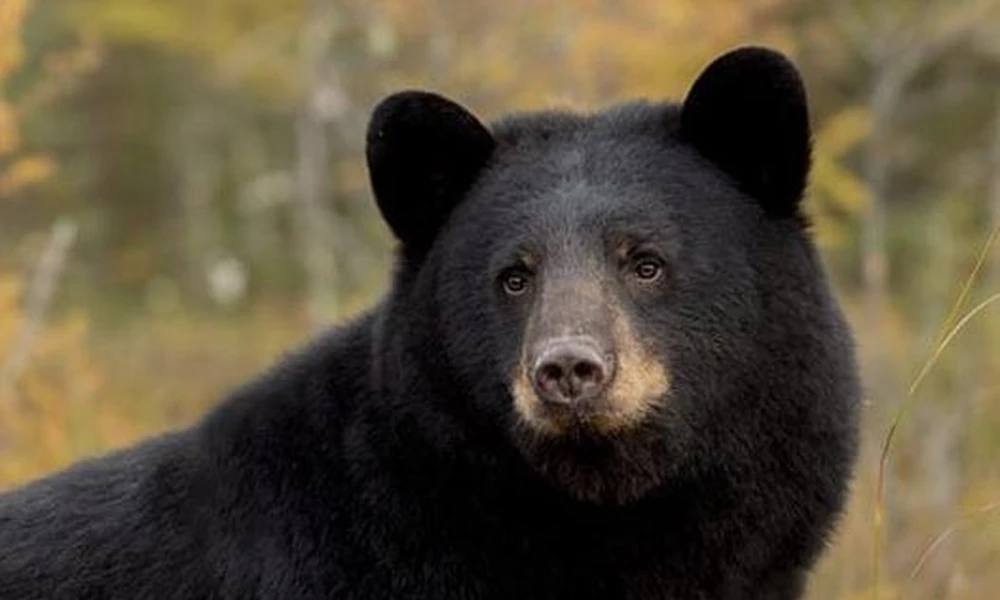
The American black bear occurs across large parts of North America, including the Canadian boreal forest and Alaska.
Despite its name, its fur can be black, brown, cinnamon, or other shades. It eats berries, nuts, insects, roots, and small animals, and may also feed on carrion. Many populations become much less active during winter.
16. Great Gray Owl
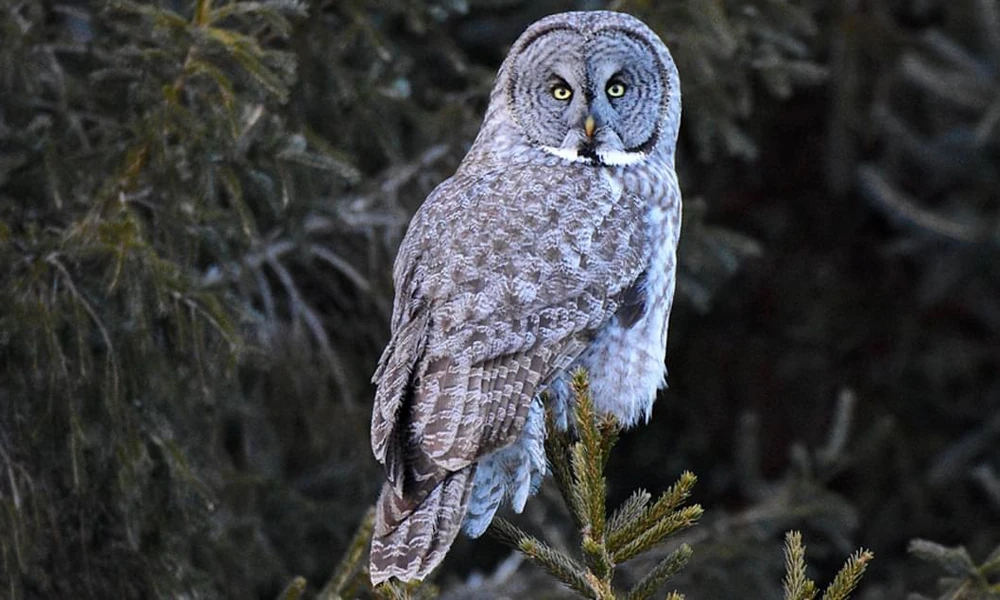
The great gray owl is a large owl associated with boreal forests across northern North America and Eurasia.
Its broad facial disk helps direct sound toward its ears, allowing it to detect small mammals beneath snow. It can then plunge through the snow to catch prey, especially voles and other rodents.
17. Boreal Chickadee
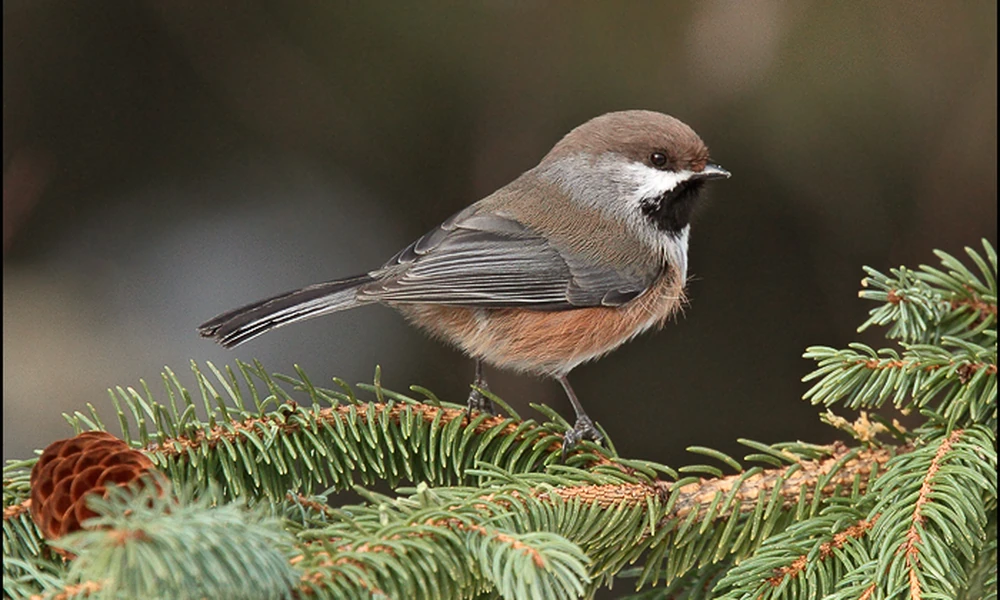
The boreal chickadee is a small songbird that lives in northern coniferous forests of North America.
It remains active during winter and searches for insects, seeds, and other food among tree branches. Its ability to tolerate cold and use food sources available in winter helps it survive year-round in the boreal forest.
18. Snowy Owl
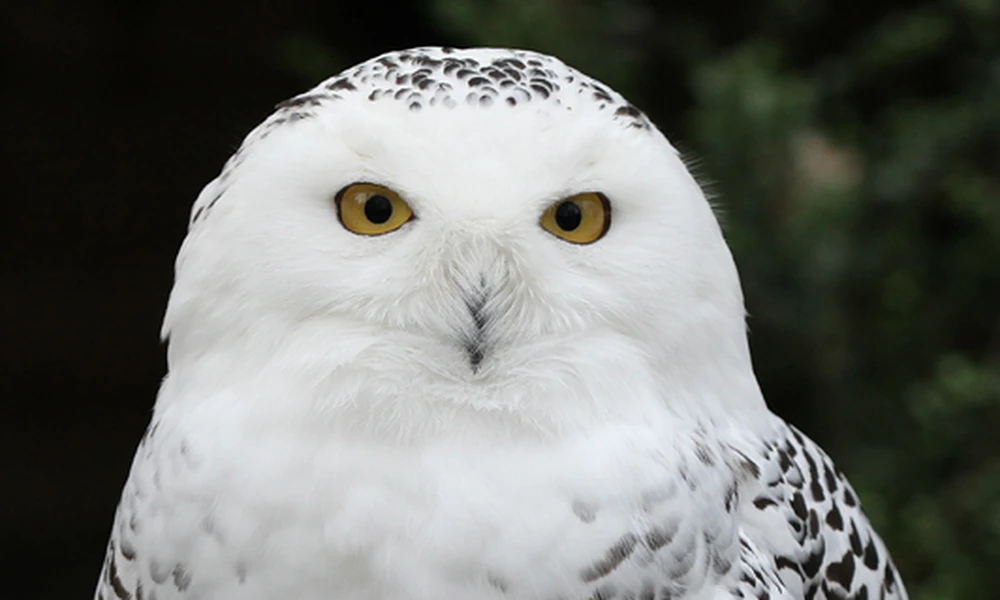
The snowy owl is famous for its white plumage and association with Arctic landscapes. Although it is primarily a bird of open tundra, it may also visit areas near the northern edge of the taiga.
Its main prey includes lemmings and other small mammals. Snowy owls may move farther south during some winters when food availability and population conditions influence their movements.
19. Great Horned Owl
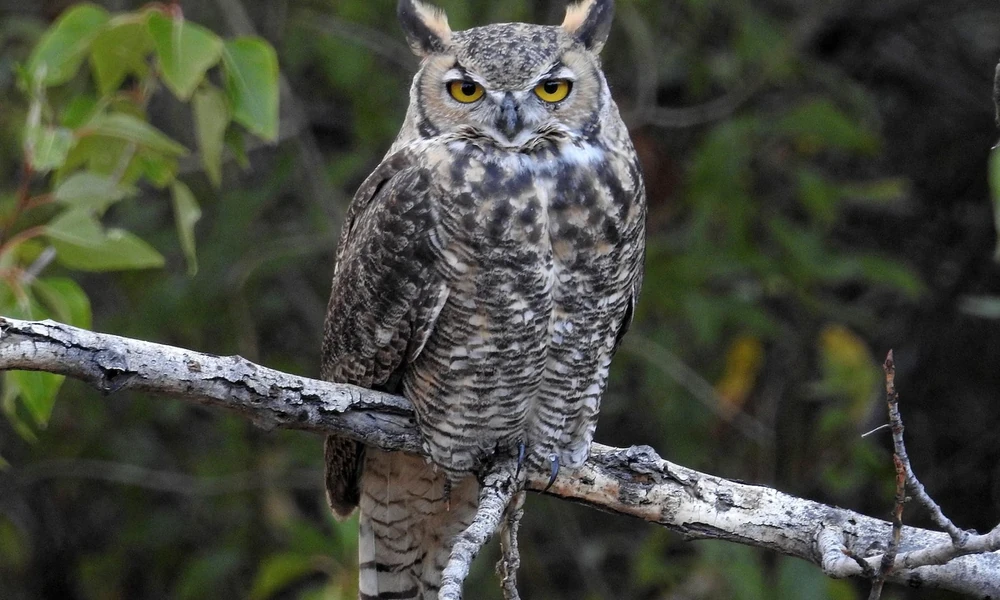
The great horned owl inhabits a wide range of North American environments, including forest edges and some boreal regions.
It hunts rodents, rabbits, birds, and other animals. Its excellent night vision, sensitive hearing, and powerful talons make it an effective predator after dark.
20. Black-Billed Magpie
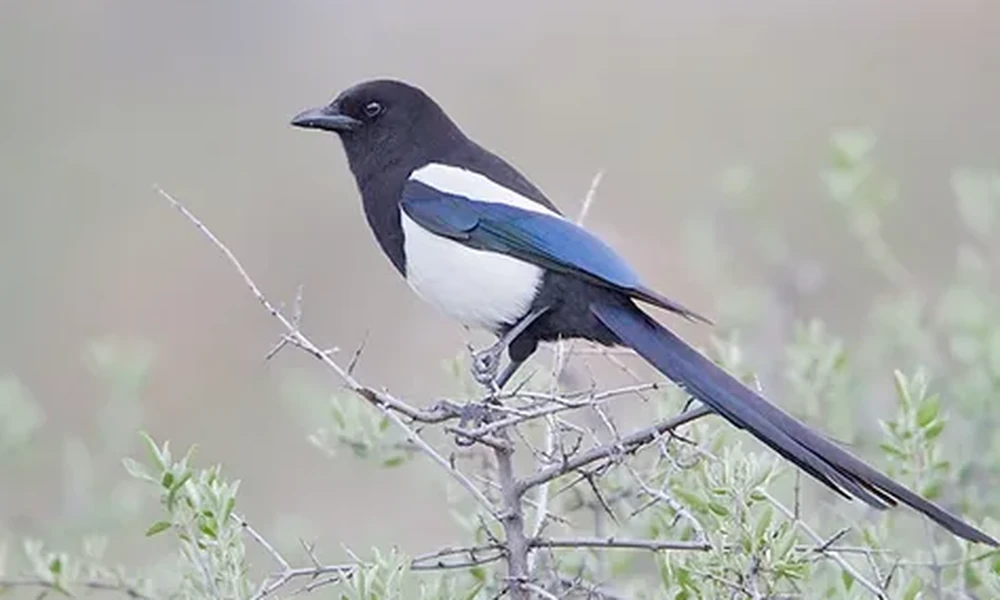
The black-billed magpie is found in parts of western and northern North America, including some open woodland and forest-edge habitats.
It eats insects, seeds, fruit, small animals, and carrion. Magpies are intelligent, adaptable birds that can benefit from a variety of food sources across changing seasons.
21. Red Squirrel of North America
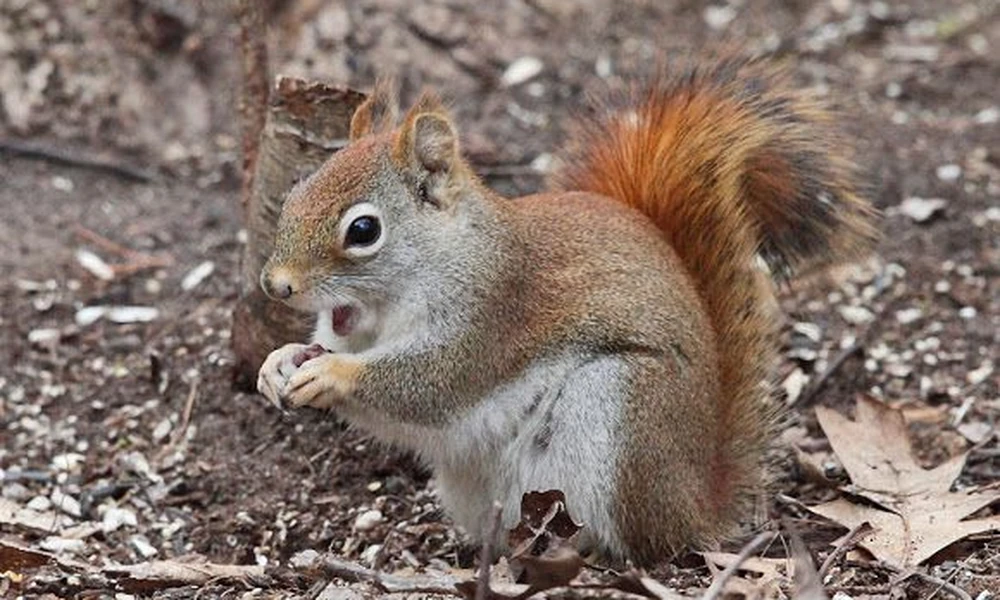
North American red squirrels live in coniferous forests, where they depend heavily on seeds from spruce, pine, and other trees.
They often create food caches and defend areas around productive food sources. Their sharp calls can alert other animals to the presence of predators, making them a familiar part of northern forest soundscapes.
22. Marten
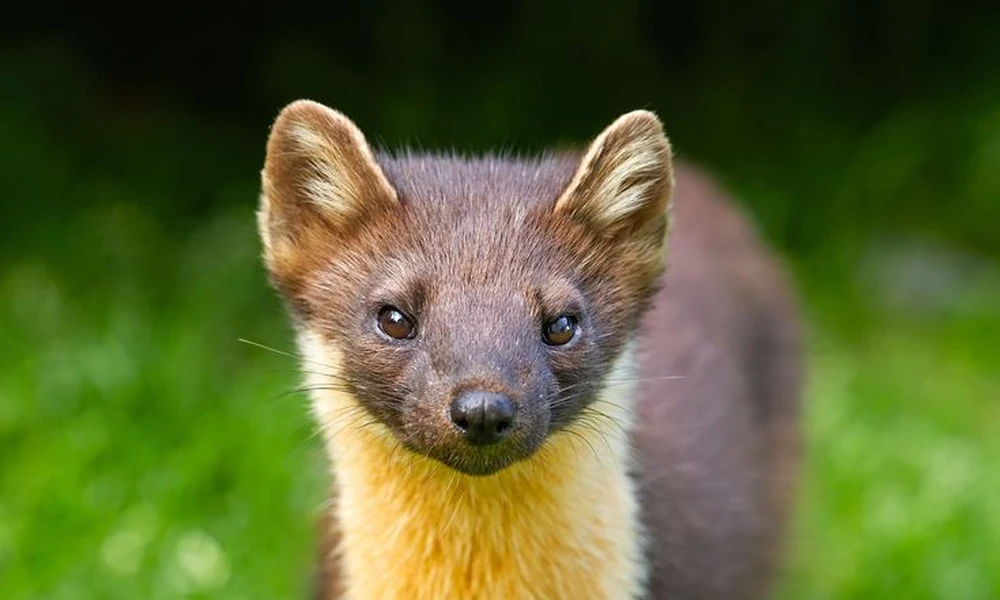
Martens are members of the weasel family that inhabit forested regions of North America and Eurasia. Depending on the species, they can be found in boreal forests with dense trees and abundant small prey.
They eat rodents, birds, insects, and fruit. Their agile bodies and climbing abilities help them hunt in trees as well as on the forest floor.
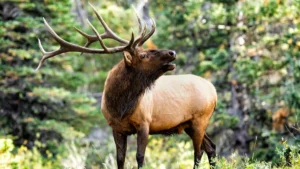
23. Elk
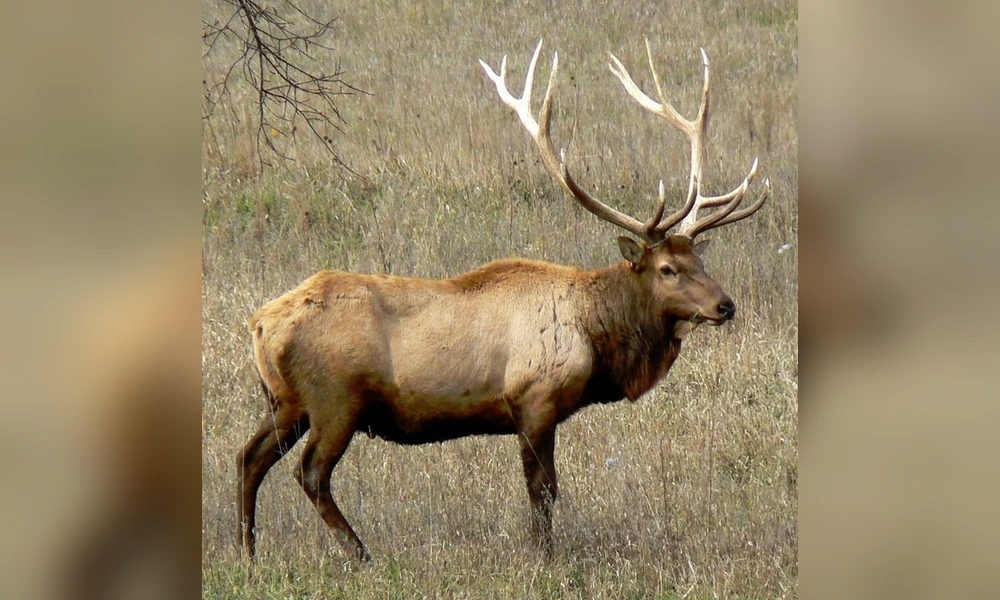
Elk, also called wapiti, inhabit parts of North America and have also been introduced to other regions. Some populations live in or near boreal forests, particularly where open meadows and woodland occur together.
They graze on grasses and browse on leaves and shrubs. Their seasonal movements often follow changing food availability and breeding needs.
24. Snow Bunting
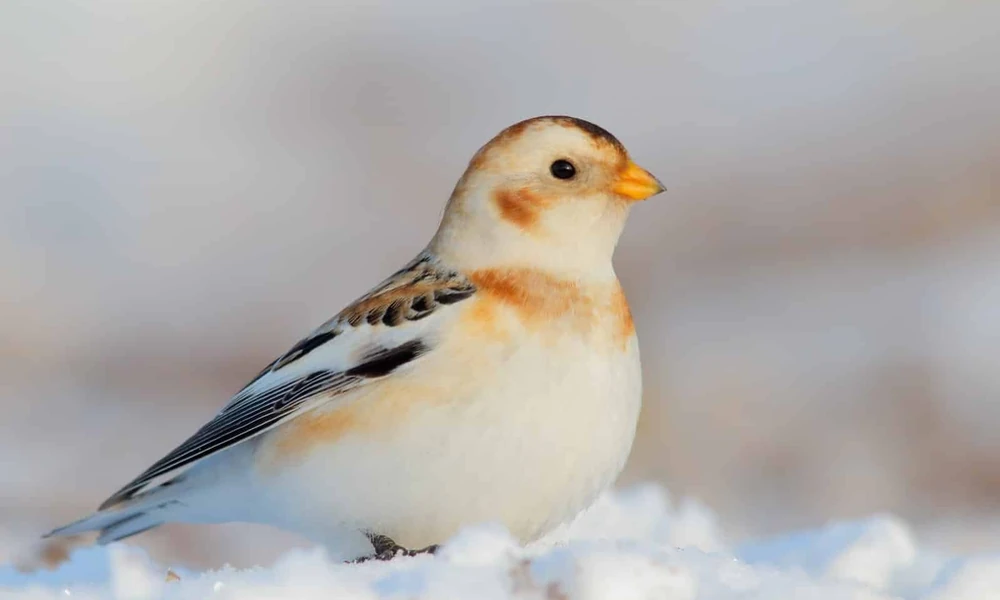
Snow buntings are birds of northern regions that breed in Arctic habitats and may visit open areas near the taiga during migration or winter.
They feed mainly on seeds and insects, depending on the season. Their movements allow them to take advantage of food resources across a broad northern landscape.
25. Vole
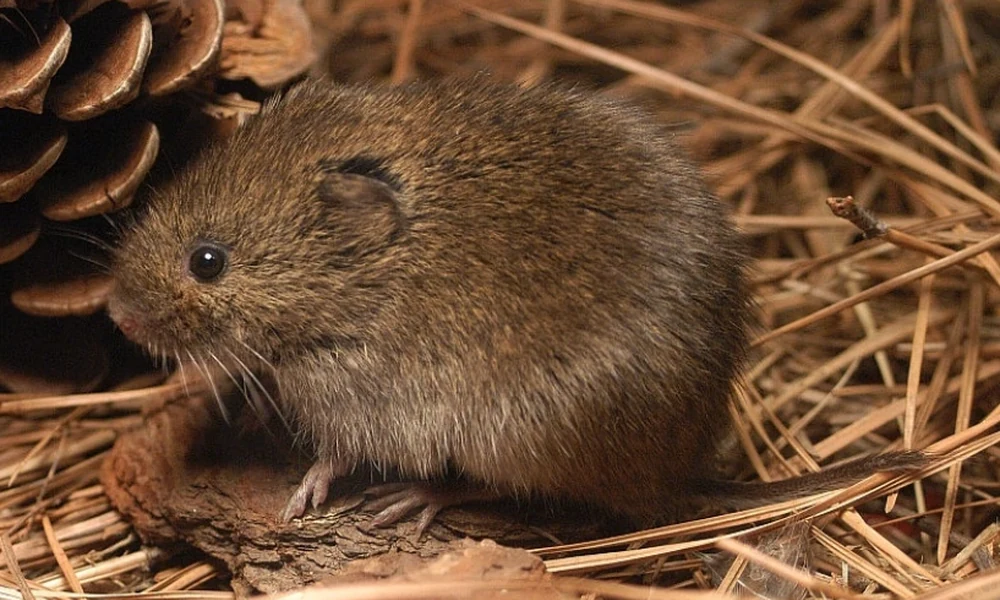
Voles are small rodents found in many boreal forest environments. They feed on grasses, roots, seeds, and other plant material, often moving through tunnels beneath snow during winter.
Although small, voles are vital prey for owls, foxes, martens, and other predators. Their populations can fluctuate considerably, influencing the availability of food for animals higher in the food chain.
How Do Taiga Animals Survive Winter?
Surviving winter in the taiga requires strategies for coping with freezing temperatures, deep snow, and limited food.
Thick fur and insulation: Wolves, foxes, and many other mammals grow dense winter coats that reduce heat loss.
Seasonal color changes: Animals such as snowshoe hares change their coat color to blend into seasonal surroundings.
Hibernation or reduced activity: Some bears spend much of winter in dens, conserving energy when food is scarce.
Food storage: Squirrels gather and hide seeds during periods when food is plentiful.
Migration: Some birds and caribou populations move to different regions as seasons change.
Movement beneath snow: Small mammals use spaces beneath the snow as shelter, where temperatures can be less extreme than the exposed air.
Not every animal uses the same strategy. Many remain active throughout winter, relying on adaptations that help them find food and withstand the cold.
What Do Taiga Animals Eat?
The taiga supports a complex food web, with different animals occupying different roles.
- Herbivores: Moose, caribou, hares, and some rodents feed on plants.
- Carnivores: Wolves, lynxes, and owls hunt other animals.
- Omnivores: Bears and foxes eat a mixture of plant and animal foods.
- Seed eaters: Squirrels and several bird species depend on conifer seeds and other plant material.
- Scavengers: Various animals feed on carcasses, helping recycle nutrients.
These relationships connect plants, prey animals, and predators. A change in one population can influence many others within the ecosystem.
Why Are Taiga Animals Important?
Taiga animals help maintain the ecological balance of boreal forests. Herbivores influence plant growth, predators affect prey populations, and beavers create wetlands that support other species.
Birds and mammals can disperse seeds, while insects and small organisms contribute to decomposition and nutrient cycling. These processes help keep forest ecosystems functioning.
However, taiga wildlife faces growing pressures from logging, roads, mining, wildfires, climate change, and habitat fragmentation. Warmer conditions can also change snow cover, vegetation, and the availability of food.
Protecting large connected forest areas and managing natural resources responsibly are important steps toward conserving these animals.
Frequently Asked Questions
What is the most common animal in the taiga?
There is no single animal that is most common across the entire taiga. Small mammals, including voles and squirrels, can be abundant in suitable habitats, while moose, caribou, and predators vary greatly by region.
Do polar bears live in the taiga?
Polar bears primarily inhabit Arctic marine environments and sea ice rather than the taiga forest. They may travel across land in some regions, but they are not considered typical taiga animals.
Are taiga animals active during winter?
Yes. Wolves, foxes, moose, hares, and many birds remain active during winter. Other species reduce their activity, spend time in dens, or migrate to more favorable environments.
What is the largest animal in the taiga?
The moose is among the largest land mammals commonly associated with the boreal forest. Large bears also inhabit some taiga regions, and animal size varies by species and population.
What is the difference between the taiga and the tundra?
The taiga is dominated by forests, especially coniferous trees, while the tundra has very few or no trees because of its cold climate and growing conditions. The tundra generally lies farther north or at higher elevations.
Final Thoughts
The taiga may be cold and challenging, but it supports a remarkable variety of wildlife. From moose and wolves to tiny voles and boreal chickadees, its animals have evolved different ways to find food, avoid predators, and survive long winters.
Understanding these species reveals how closely connected the boreal forest is. Protecting its habitats helps preserve not only individual animals but also the natural systems on which they depend.
Disclaimer: This content is for informational and entertainment purposes only and reflects our personal opinions and experiences. We just love to write and share what we observe along the way.