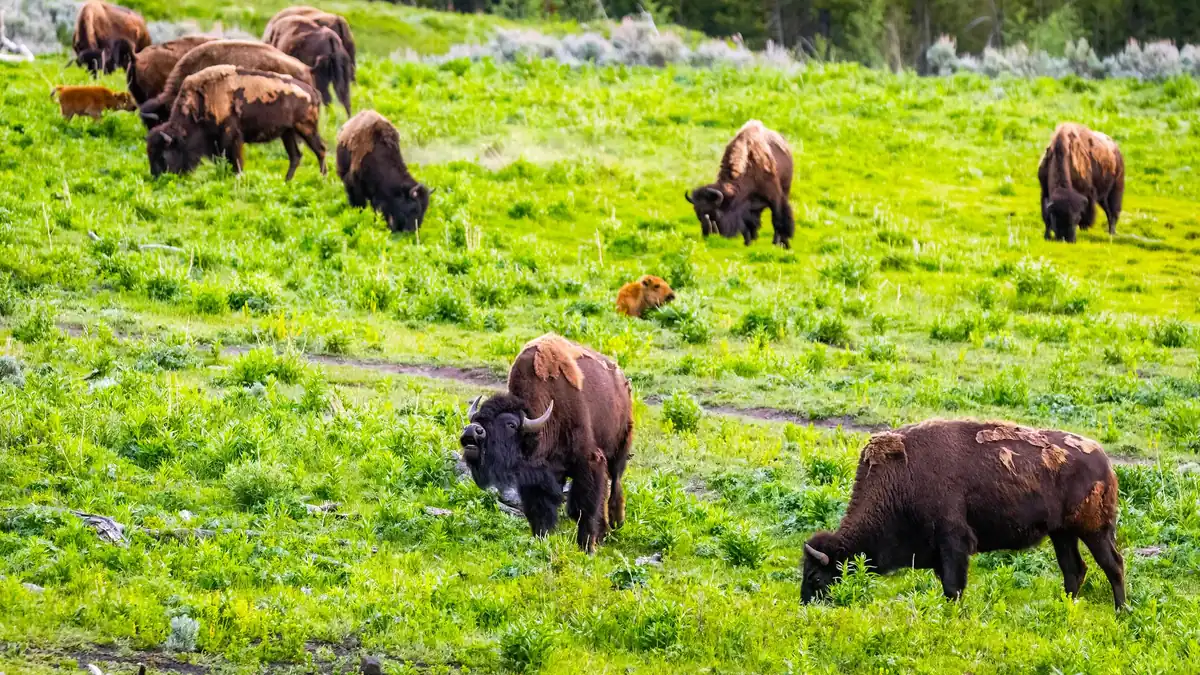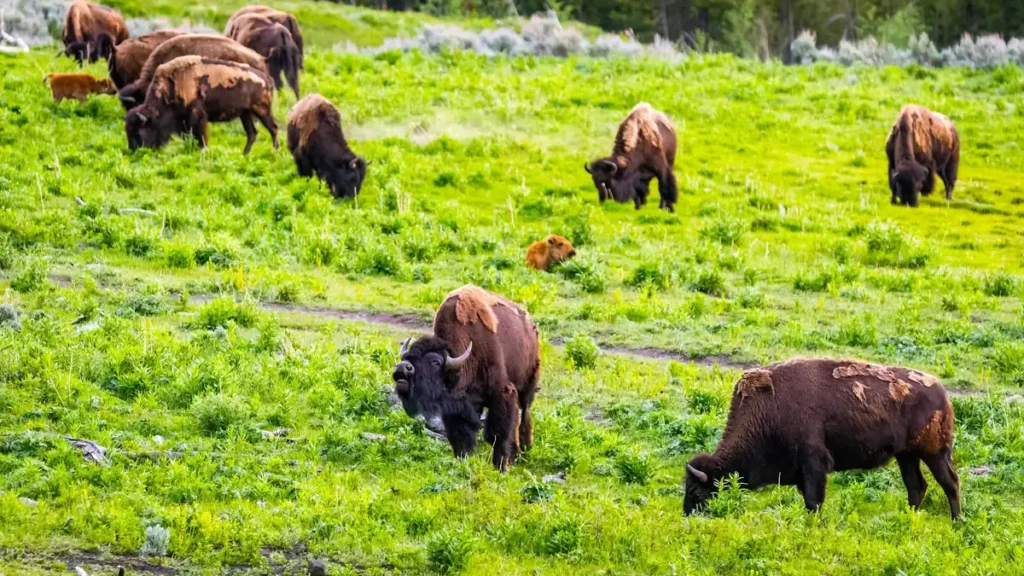
Across the sweeping grasslands of North America, few animals leave a stronger impression than the bison. Its enormous shoulders rise above the prairie grass, its shaggy head moves steadily through the wind, and its heavy hooves press deep marks into the earth. A bison may appear slow and unhurried, but this powerful mammal is built for survival in a landscape shaped by changing seasons, harsh winters, and long distances.
The American bison is the largest land mammal in North America. It is a plant-eating, herd-dwelling animal known for its distinctive shoulder hump, thick coat, curved horns, and remarkable ability to endure cold weather. Bison are also important ecosystem engineers: their grazing, movement, and wallowing help shape grasslands and create opportunities for other wildlife.
Yet their story is about more than size. Bison once moved across enormous stretches of the continent in vast herds. During the nineteenth century, commercial hunting and other human pressures brought them close to extinction. Their survival today represents one of North America’s most significant wildlife conservation stories.
What Is a Bison?
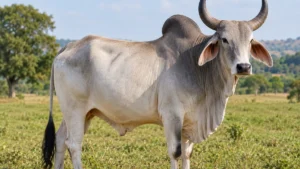
The American bison (Bison bison) is a large mammal in the cattle family, Bovidae. Although commonly called a buffalo, it is not the same animal as the African buffalo or Asian water buffalo. The word “buffalo” remains widely used in North America, including in cultural contexts important to many Indigenous communities.
Bison are herbivores, meaning their diet consists of plants. They are ruminants, like cattle, and have a specialized digestive system that allows them to extract nutrients from fibrous vegetation.
Two commonly recognized forms of American bison are the plains bison and the wood bison. Plains bison are associated with the Great Plains and other open landscapes, while wood bison are found farther north in Canada and are generally larger-bodied.
European bison are a separate species, despite their close relationship to their American relatives.
What Does a Bison Look Like?
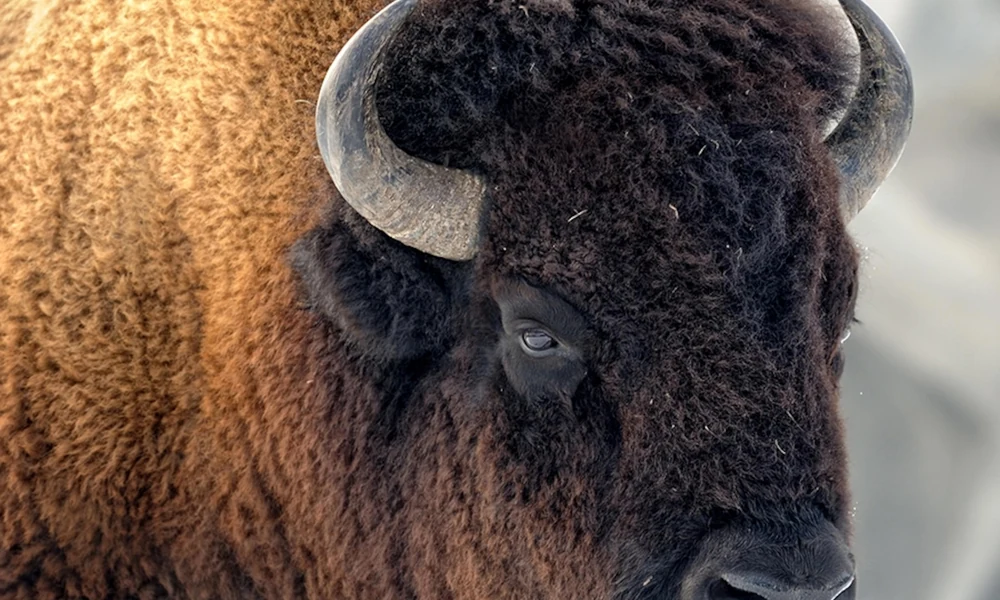
A bison’s appearance is unmistakable. Its most noticeable feature is the massive hump over its front shoulders, which gives the animal a powerful, forward-heavy silhouette. The hump is supported by strong muscles and elongated vertebral spines that help carry the weight of its large head.
The head, neck, shoulders, and front legs are covered in thick, shaggy hair. The coat becomes especially dense during winter, helping the animal withstand freezing temperatures and blowing snow. The rear half of the body has shorter hair, creating a striking contrast with the heavily insulated front.
Both male and female bison grow short, curved horns. Their dark horns can be used for defense, competition, and displays of dominance. Mature males, called bulls, are usually larger than females, known as cows, and often have a more pronounced beard beneath the chin.
Adult bulls can weigh around 900 kilograms or more, with some exceeding 1,000 kilograms. Females are generally smaller, although they remain extremely powerful animals.
Bison also have strong legs, broad hooves, and a sturdy frame. Despite their bulk, they can accelerate quickly and are capable of running at speeds of around 50 to 65 kilometers per hour under suitable conditions.
Where Do Bison Live?
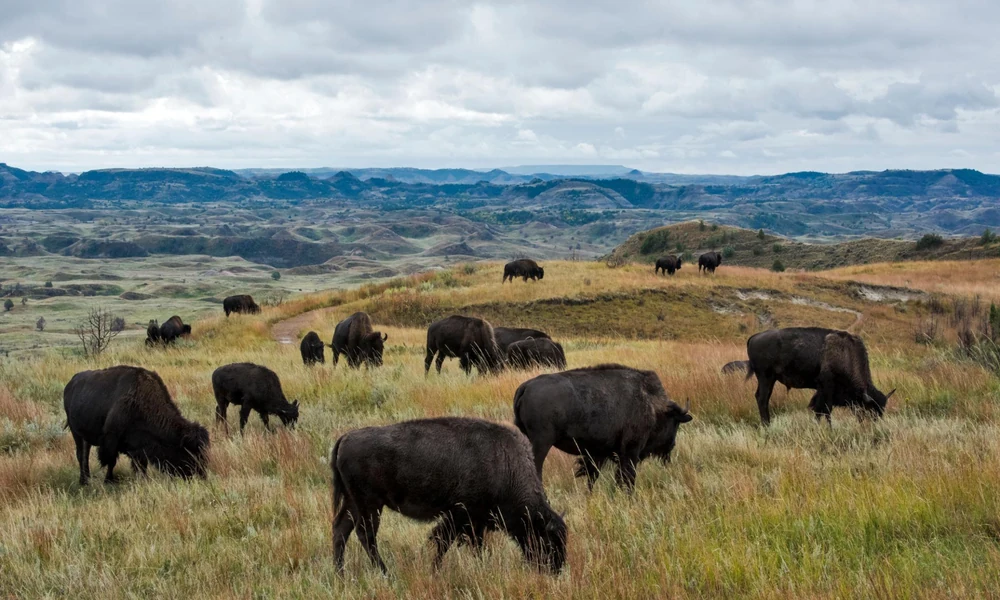
Historically, American bison occupied a vast range stretching from parts of Alaska and western Canada to northern Mexico, and from the western grasslands toward areas farther east. Their movements connected grasslands, river valleys, and other habitats across much of the continent.
Today, their distribution is much more restricted and fragmented. Wild and conservation-managed herds live in parts of the United States and Canada, including protected grasslands, national parks, reserves, and selected restoration areas.
Grasslands and Prairies
Open grasslands provide bison with the vegetation they need to feed. These landscapes allow herds to move across large areas while searching for fresh grass and water. Their grazing patterns can change with rainfall, temperature, and the growth cycles of plants.
Northern Woodlands and Open Forests
Wood bison inhabit northern regions where open forests, meadows, wetlands, and grass-rich areas form a varied landscape. These habitats can experience long, severe winters, making the animals’ thick coats and ability to uncover vegetation beneath snow especially valuable.
How Bison Survive Winter
Winter does not automatically force bison into sheltered woodland. Their dense coats provide insulation, and their strong heads and necks help them push snow aside to reach plants beneath it.
They may move to areas where wind has exposed the ground or where vegetation remains accessible. When deep snow, drought, or other difficult conditions reduce available food, however, survival becomes more challenging.
What Do Bison Eat?
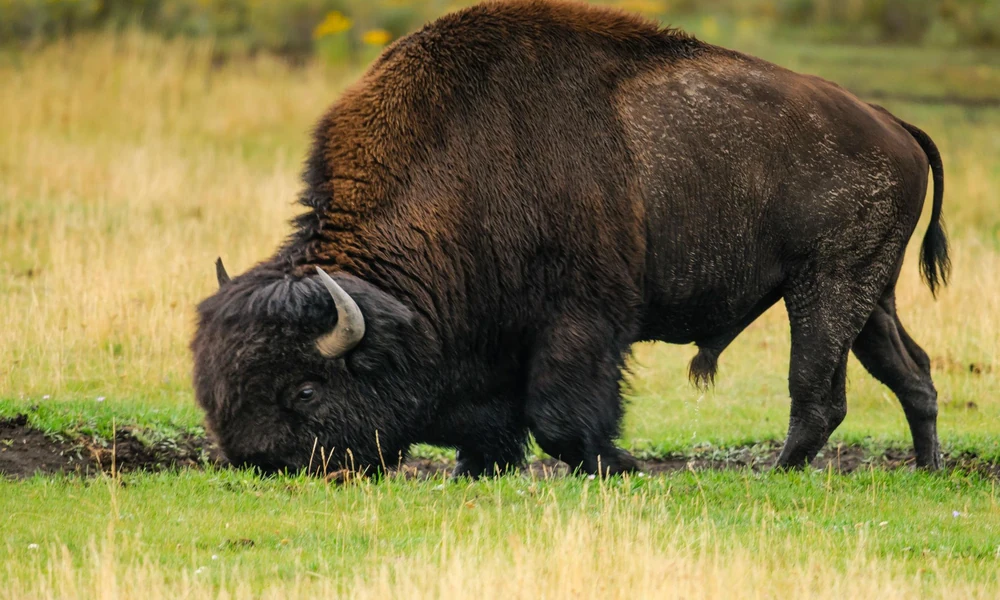
Bison are grazing herbivores that feed primarily on grasses and sedges. Depending on the habitat and season, they may also consume flowering plants, leaves, and other available vegetation.
Their diet changes throughout the year as plants grow, mature, and become less accessible. Fresh spring growth can provide nutritious forage, while winter feeding may require searching through snow for remaining vegetation.
Bison are ruminants. After swallowing food, they bring it back up to chew again before digesting it more fully. This process helps them obtain nutrients from tough plant material that many animals cannot use as efficiently.
How Bison Find Food
Bison spend substantial portions of the day grazing, resting, and chewing their cud. Rather than relying on a single feeding location, herds move as food conditions change.
During winter, a bison may sweep its large head from side to side to clear snow from a patch of grass. In other seasons, herds can spread across broad grazing areas, selecting vegetation according to its availability and quality.
Their feeding behavior influences which plants flourish in a landscape. By grazing selectively and moving between areas, bison can contribute to a changing mosaic of vegetation rather than a uniform field of grass.
Bison Behavior and Social Life
Bison are social animals, but their groups are not always enormous, tightly packed herds. Group size and composition vary according to season, age, sex, habitat, and local conditions.
Females often form groups with their calves, while younger males may gather separately. Mature bulls can spend periods alone or in small groups, joining female groups more frequently during the breeding season.
How Bison Communicate
Bison communicate through body posture, scent, and vocal sounds. They may grunt, snort, bellow, or make other noises to maintain contact or respond to a perceived threat.
A lowered head, a paw scraping the ground, or a direct approach can signal agitation. During the breeding season, bulls may make loud calls and display their strength to rivals.
Their behavior can change quickly. A bison that appears calm may suddenly charge if it feels threatened, is startled, or is protecting a calf.
Why Bison Roll in the Dirt
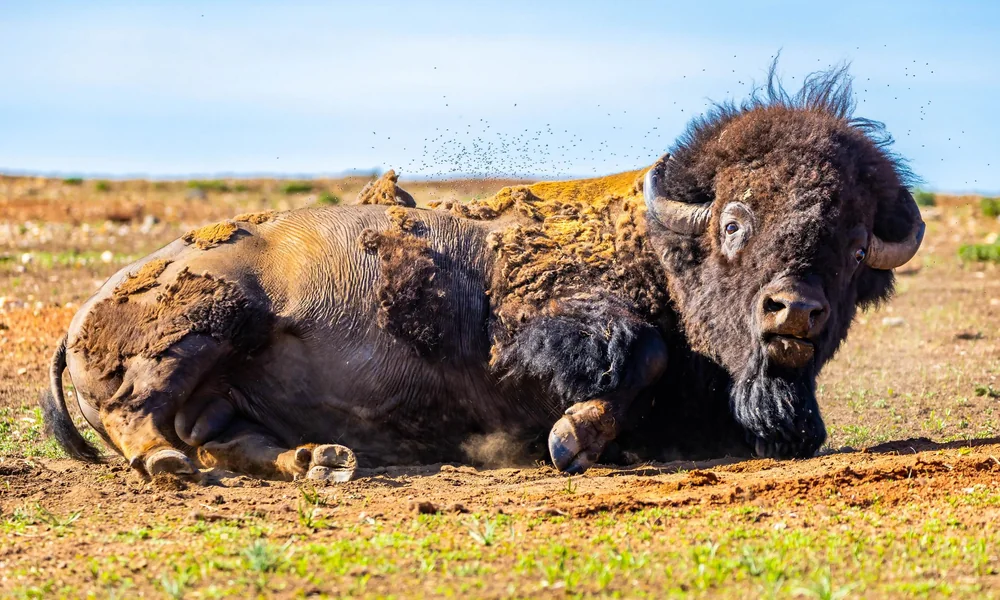
One distinctive behavior is wallowing: rolling in loose soil or dust, sometimes leaving a shallow depression in the ground.
Wallowing may help bison manage biting insects, loosen shedding hair, and perform social or display behaviors. Repeated wallowing also changes the ground itself, creating small depressions that can hold moisture and become useful microhabitats for insects and other organisms.
Bison may also rub their heads and horns against trees or shrubs. These actions can help remove loose hair and may serve other behavioral purposes.
Can Bison Swim?
Yes. Bison are capable swimmers and can cross rivers and other bodies of water when conditions allow. Their strength and broad bodies help them move through water, although currents, steep banks, and other hazards can still pose risks.
Bison Reproduction and Calves
The breeding season, often called the rut, usually takes place during summer, particularly from July through September. During this period, mature bulls compete for access to females.
Rival bulls may lower their heads, posture, charge, or collide with their horns and foreheads. These encounters can look dramatic, but they are part of the competition that determines which males get opportunities to mate.
Pregnancy and Birth
After a pregnancy lasting roughly nine months, a female typically gives birth to a single calf in spring. The timing allows the newborn to grow during warmer months, when food is generally more available.
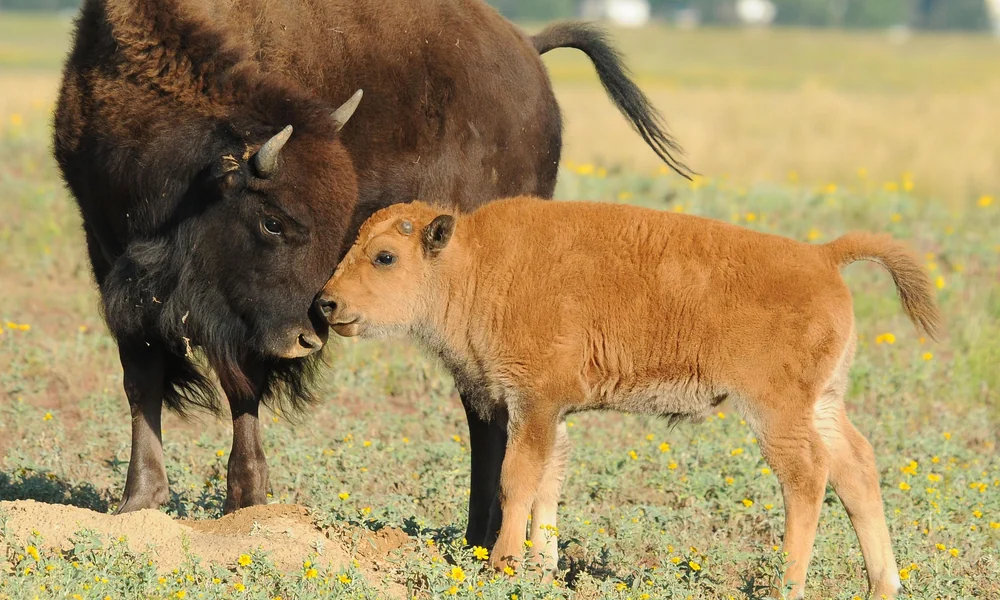
Newborn bison are often reddish or yellowish-brown rather than the dark brown of adults. This lighter coloring gives them the familiar appearance sometimes described as a “red dog.”
A calf can usually stand and begin walking soon after birth. Its mother provides milk, protection, and close attention, while the calf gradually develops the strength and coordination needed to move with the herd.
As the young animal grows, its coat darkens and it begins eating more vegetation. Calves may continue nursing for several months, with weaning occurring during their first year.
How Long Do Bison Live?
Wild bison commonly live around 12 to 20 years, although lifespan varies with environmental conditions, disease, injuries, and access to food. Predators can kill calves and occasionally vulnerable adults, while harsh winters and drought may increase the risks facing an entire herd.
The Role of Bison in the Ecosystem
Bison are more than large grazers. Their presence can influence the structure and diversity of grassland ecosystems, which is why they are often described as an ecologically important or keystone species.
Grazing Shapes Grasslands
As bison feed, they influence plant growth and competition. Their grazing can prevent some plants from becoming dominant, while leaving other areas less disturbed. The result is a patchwork of vegetation at different heights and stages of growth.
This variation can provide food and shelter for different insects, birds, and other wildlife. The effects depend on local conditions, including herd density, rainfall, soil, and the availability of other grazers.
Wallowing Creates Small Habitats
A bison wallow can leave a shallow depression in the soil. Rainwater may collect there, and the altered ground can provide small habitat features that would not otherwise exist in a flat grassland.
Repeated wallowing also changes soil structure and vegetation. These small disturbances can contribute to the diversity of prairie habitats.
Nutrient Recycling and Seed Movement
Bison dung returns nutrients to the soil and supports insects and microorganisms that break down organic matter. Their movements can also transport seeds caught in their coats or carried through their digestive systems.
Together, grazing, wallowing, movement, and nutrient recycling help connect different parts of the grassland ecosystem.
Bison and Their Natural Predators
An adult bison is a formidable animal, and its size, strength, and horns discourage many predators. Nevertheless, bison are not invulnerable.
Wolves may hunt calves or target weakened animals, sometimes working together to separate an individual from the herd. Grizzly bears and other large predators may also prey on young or vulnerable bison in areas where their ranges overlap.
For calves, remaining close to their mothers and other herd members offers an important layer of protection. Adult bison can respond aggressively to perceived danger, and their combined presence makes approaching a healthy herd risky for a predator.
Humans have had a far greater historical effect on bison populations than natural predators. Hunting, habitat changes, and the loss of open migration routes transformed their numbers and distribution across North America.
Why Did Bison Almost Become Extinct?
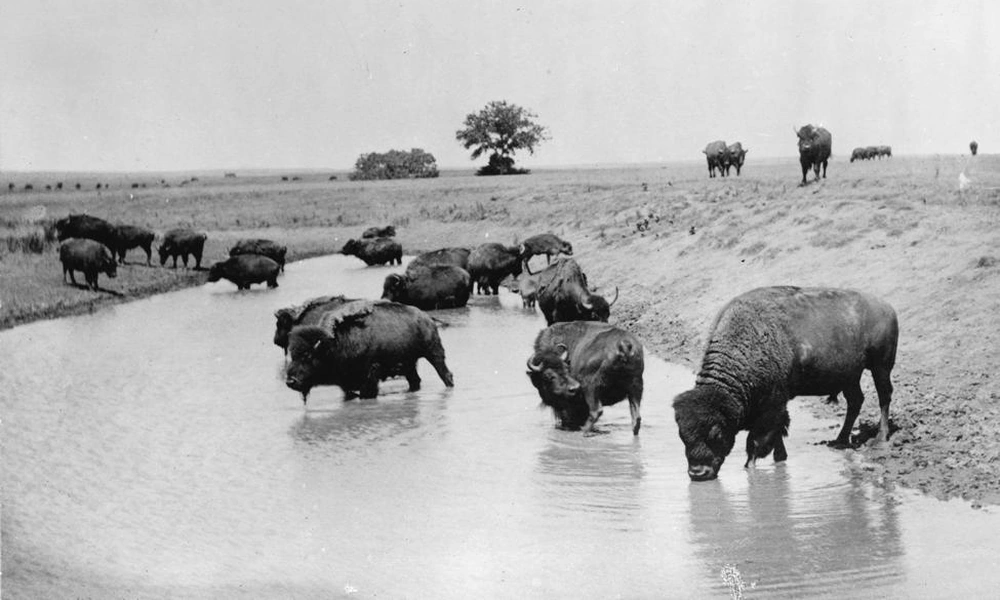
For thousands of years, bison were central to the ecology and human history of North America. Indigenous peoples developed diverse cultural, spiritual, and practical relationships with the animals, using bison for food, clothing, shelter materials, tools, and trade.
The arrival and expansion of European settlement brought profound changes. During the nineteenth century, commercial hunting and deliberate mass slaughter caused bison populations to collapse. Their decline was also connected to settlement expansion, changes in land use, and the disruption of Indigenous communities whose livelihoods and cultures were closely linked to the herds.
By the late 1800s, only a few hundred wild plains bison remained in some estimates, a staggering decline from the tens of millions that had once roamed the continent.
The loss was not simply a wildlife crisis. It transformed grassland ecosystems and inflicted enormous harm on many Indigenous Nations.
How Bison Were Saved
A small number of animals survived through private efforts, protected herds, and later conservation programs. Governments, conservationists, Indigenous communities, and wildlife managers helped establish populations that could reproduce and recover.
Over the following century, bison numbers increased substantially. The species is no longer on the brink of demographic extinction, but recovery remains incomplete. Many conservation herds are relatively small, isolated, or confined by fences, and they occupy only a small fraction of the animal’s historic range.
Restoring bison therefore involves more than increasing numbers. Conservation efforts also focus on maintaining genetic diversity, protecting suitable habitat, allowing natural behavior, and strengthening Indigenous-led stewardship.
Are Bison Endangered Today?
American bison are no longer at the edge of extinction in the way they were during the late nineteenth century. However, their conservation status depends on which populations are being considered and how the animals are managed.
Hundreds of thousands of bison are raised in commercial herds, while a much smaller number are managed specifically for wildlife conservation and ecological restoration. These populations serve different purposes and should not be treated as interchangeable measures of wild bison recovery.
Important challenges include:
- Limited habitat: Much of the original range has been converted or divided by roads, fences, agriculture, and development.
- Small, isolated herds: Separation limits natural movement and exchange of genes between populations.
- Genetic concerns: Some managed herds have experienced cattle gene introgression or reduced genetic diversity.
- Disease management: Wildlife managers must balance animal health, livestock concerns, and the long-term viability of wild herds.
- Restricted natural processes: Fences and other barriers can prevent bison from moving freely across landscapes in response to food, weather, and seasonal conditions.
Conservation programs increasingly work with Indigenous Nations and other partners to restore herds to appropriate parts of their ancestral range. Such projects can support grassland health while strengthening cultural connections that have endured despite the historical devastation of bison populations.
Bison vs. Buffalo: What Is the Difference?
The terms bison and buffalo are often used for the same North American animal, but scientifically they refer to different animals.
American bison belong to the genus Bison. African buffalo and Asian water buffalo belong to different groups within the cattle family.
The American bison is recognized by its large shoulder hump, heavy front coat, broad head, and relatively slim hindquarters. African buffalo and water buffalo have different body shapes and evolved in different environments.
Although “American buffalo” remains a familiar name, American bison is the more precise scientific common name. The word “buffalo” also carries important cultural meaning for many Indigenous communities and should not be dismissed as simply incorrect in every context.
Interesting Facts About Bison
- They are North America’s largest land mammals. Large adult males can weigh more than a metric ton.
- Both sexes have horns. Bison use them in defense, displays, and competition.
- They can run surprisingly fast. Their speed makes approaching them dangerous, even when they appear calm.
- Their winter coats are highly insulating. Bison can withstand severe cold and may continue feeding through snow.
- Calves begin life with a reddish coat. Their color gradually changes as they mature.
- They are powerful swimmers. Bison can cross rivers and streams when conditions permit.
- They were named the national mammal of the United States in 2016. The designation recognizes their ecological, historical, and cultural significance.
- Their recovery is still in progress. Increasing numbers alone do not restore the vast landscapes and ecological relationships that once supported them.
Frequently Asked Questions About Bison
What is a bison?
A bison is a large, plant-eating mammal in the cattle family. The American bison is native to North America and is known for its shoulder hump, shaggy coat, curved horns, and role in grassland ecosystems.
Where do bison live?
American bison live in parts of the United States and Canada, mainly in national parks, protected areas, reserves, and managed conservation herds. Historically, their range extended across a much larger part of North America.
What do bison eat?
Bison eat mainly grasses and sedges. They may also consume other plants depending on the season and habitat. Their specialized digestive system helps them process fibrous vegetation.
Are bison dangerous to humans?
Yes. Bison are powerful wild animals that can run quickly, charge suddenly, and cause severe injuries. They should never be approached or touched. In areas where park authorities provide guidance, visitors should follow the required viewing distance and stay inside vehicles when advised.
How fast can a bison run?
Bison can reach speeds of approximately 50 to 65 kilometers per hour. Their ability to accelerate quickly means people should never assume that an animal is too large or slow to pose a danger.
How long are bison pregnant?
A bison pregnancy lasts about nine months. Females generally give birth to one calf in spring.
What is the difference between a bison and a buffalo?
The American bison is a different animal from the African buffalo and Asian water buffalo. Although people commonly call bison “buffalo” in North America, bison is the more precise scientific name.
Why are bison important to grasslands?
Bison influence vegetation through grazing, create soil depressions through wallowing, disperse seeds, and return nutrients to the ground through their waste. These activities help create varied habitats that support other plants and animals.
Are bison endangered?
American bison have recovered from near extinction, but conservation remains important. Wild herds are limited in range and often isolated, and maintaining genetic diversity and ecological function remains a major part of long-term recovery.
The Enduring Importance of the Bison
The bison’s story stretches from ancient grasslands to the edge of extinction and, finally, to the determined work of restoration. Its recovery demonstrates that wildlife populations can rebound when people protect surviving animals and invest in conservation.
But the return of bison is not measured only by how many animals exist. It also depends on whether herds can live as wildlife, move through suitable landscapes, maintain genetic diversity, and continue shaping the grasslands where they evolved.
These remarkable mammals remain a living connection to North America’s natural and cultural history. Protecting them means preserving not just a symbol of the prairie, but the ecological relationships that make the prairie a living, changing ecosystem.
Disclaimer: This article is provided for general informational and educational purposes only and is not intended as professional wildlife, veterinary, or conservation advice. Information may change as research advances, and no guarantee is made as to its completeness or accuracy.