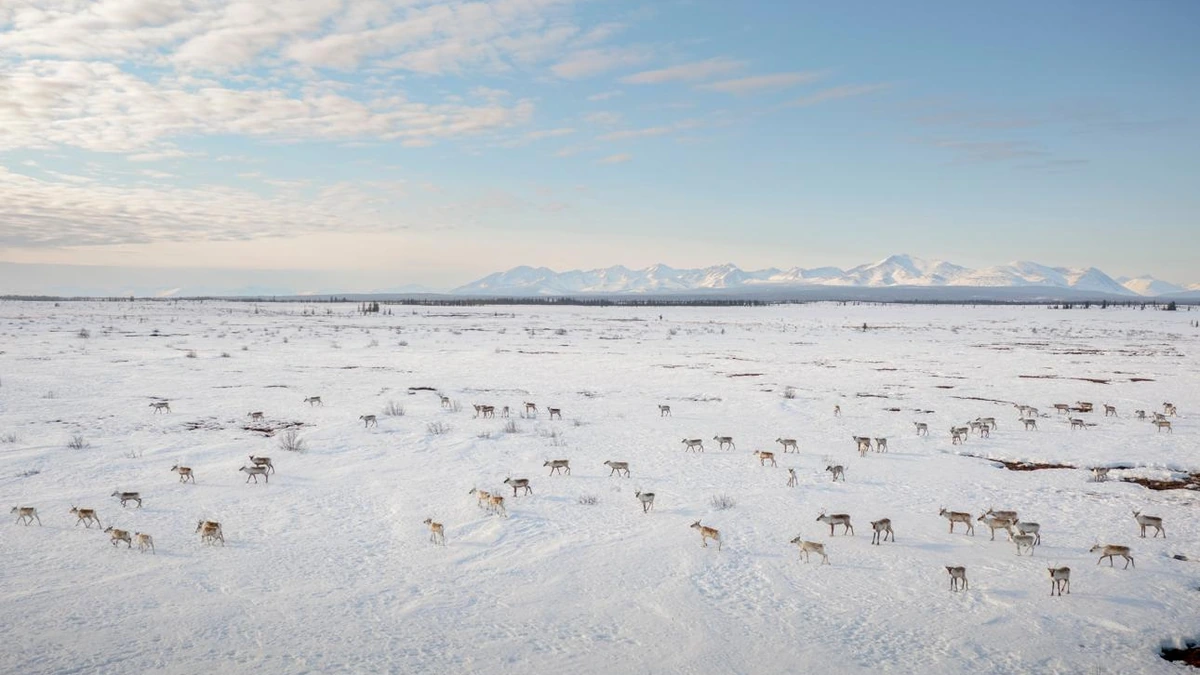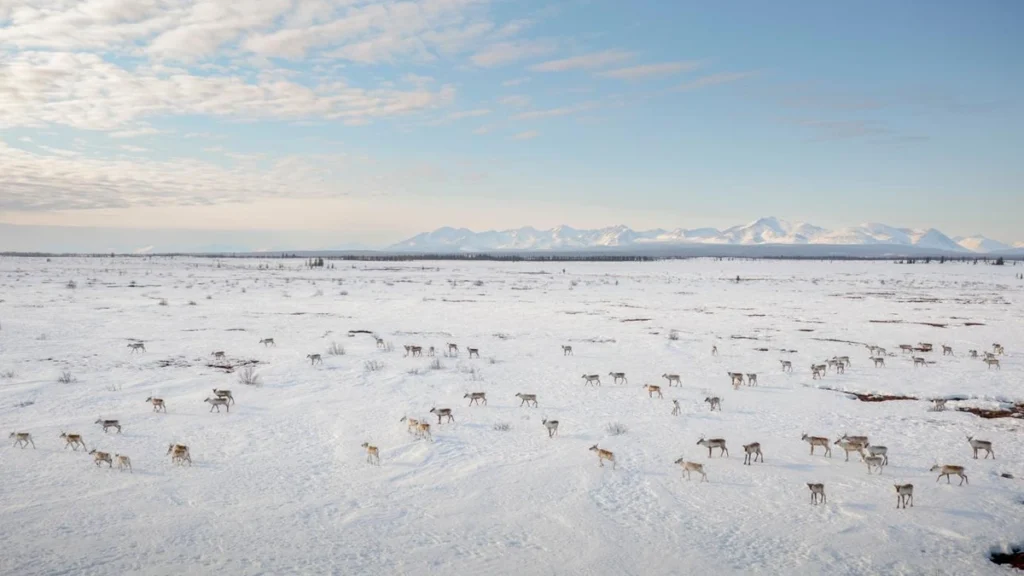
Across the frozen landscapes of the Arctic, a herd of caribou moves steadily over the tundra. Snow stretches toward the horizon, icy winds sweep across the open ground, and the animals press forward in search of food. Their broad hooves spread over soft snow, while thick coats protect them from temperatures that would challenge many other mammals.
For these animals, survival depends on movement. As the seasons change, some caribou travel hundreds of miles between summer feeding grounds, winter habitats, and traditional calving areas. Their journeys connect entire ecosystems and have shaped northern landscapes for thousands of years.
Caribou are among the most remarkable members of the deer family. They are exceptionally well adapted to cold environments, capable swimmers, and the only deer species in which both males and females normally grow antlers.
Known as reindeer in much of Europe and Asia, these animals are important not only to Arctic ecosystems but also to Indigenous cultures and northern communities.
What Is a Caribou?
The caribou, scientifically known as Rangifer tarandus, is a hoofed mammal belonging to the deer family, Cervidae. It lives across Arctic, subarctic, and northern boreal regions of North America, Europe, and Asia.
In North America, wild populations are generally called caribou. In Europe and Asia, the name reindeer is more common. In North America, reindeer usually refers to domesticated or semi-domesticated animals, although the terminology varies by region.
Caribou and reindeer belong to the same species, but different populations have developed distinct characteristics. Some migrate over enormous distances across open tundra, while others inhabit forests and make shorter seasonal movements.
Their appearance, size, coat color, antler shape, and behavior can differ depending on their subspecies, habitat, and local conditions.
Caribou at a Glance
- Scientific name: Rangifer tarandus
- Animal group: Mammal
- Family: Cervidae
- Diet: Herbivore
- Typical habitat: Arctic tundra, boreal forests, mountain regions, and northern shrublands
- Common names: Caribou and reindeer
- Male: Bull
- Female: Cow
- Young: Calf
- Distinctive feature: Both males and females normally grow antlers
- Special adaptations: Thick insulating fur, broad hooves, and seasonal changes in feeding and movement
- Major threats in some regions: Habitat disturbance, climate change, industrial development, and changes to food availability
What Does a Caribou Look Like?
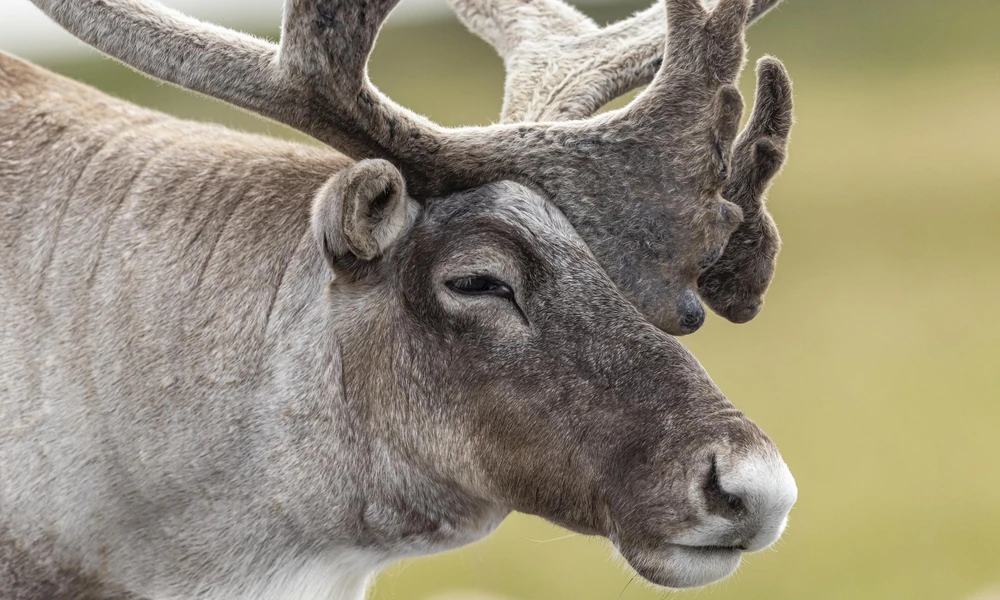
Caribou have sturdy bodies, relatively long legs, broad muzzles, and thick coats adapted to cold weather.
Their appearance changes with the seasons. Summer coats may look darker or more brown, while winter coats often appear lighter or grayer. Some populations have striking white markings around the neck, rump, and legs.
Body size also varies considerably. Large males can weigh several hundred pounds, while females are generally smaller. Animals living on Arctic islands may be noticeably smaller than caribou from some mainland populations.
Why Do Caribou Have Thick Fur?
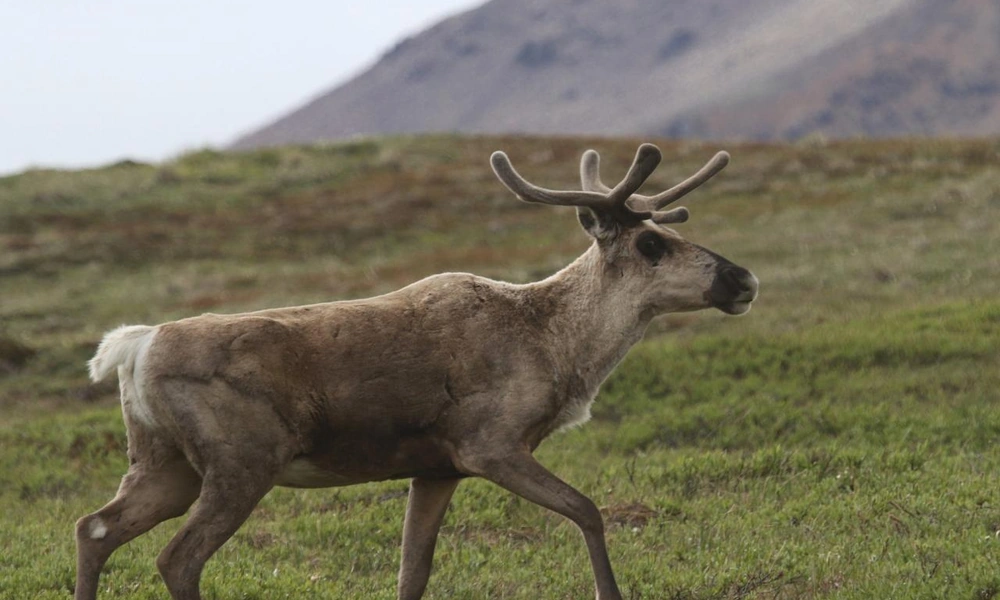
Caribou fur helps them retain body heat during long, cold winters.
Their coats contain a dense underlayer and longer guard hairs. In many populations, the guard hairs are partly hollow, helping trap insulating air close to the body.
This combination reduces heat loss and helps the animals withstand harsh weather.
The coat also provides some protection from wind and moisture. However, even a well-insulated animal can face serious challenges when freezing rain, deep snow, or changing winter conditions make food difficult to reach.
Why Are Caribou Hooves So Broad?
Caribou have large, spreading hooves that help distribute their weight over snow and soft ground.
This reduces how deeply their feet sink, making movement across tundra and snow-covered terrain more efficient.
Their hooves are also useful on wet ground and rocky surfaces. The shape and edges provide traction, while the feet can spread as the animal steps onto softer terrain.
Caribou are strong swimmers, too. Their bodies and broad feet help them cross rivers and lakes during seasonal movements.
The Unusual Caribou Nose
A caribou’s nose is covered with fur, an unusual characteristic among deer.
Its nasal passages also help warm and humidify cold air before it reaches the lungs. This is valuable in Arctic environments, where breathing very cold, dry air can increase heat and moisture loss.
Their sense of smell helps them investigate their surroundings and locate food, including vegetation hidden beneath snow.
Caribou Antlers: Why Both Males and Females Grow Them
One of the most remarkable characteristics of caribou is their antlers.
In most deer species, antlers are primarily associated with males. Caribou are different: both males and females normally grow them.
Male antlers are usually larger and more elaborate, while female antlers tend to be smaller and more slender.
What Are Caribou Antlers Used For?
Antlers serve several purposes, including competition between males during the breeding season.
Bulls may use them when challenging rivals for access to females. Antlers can also help establish dominance within social groups.
Female caribou use their antlers in social interactions and may use them to compete for access to feeding areas, particularly when food is limited.
Caribou also dig and scrape through snow to reach vegetation beneath it. Their broad hooves are especially important for this task, while antlers can assist with clearing snow or moving vegetation in some circumstances.
How Do Caribou Grow Antlers?
Antlers grow from specialized structures on the skull and are covered in velvet during development.
This soft tissue contains blood vessels that deliver nutrients to the growing bone. As the antlers mature, they harden and the velvet dries and is shed.
The annual cycle varies with sex, age, reproductive condition, and population.
Adult males generally shed their antlers after the autumn breeding season. Females often retain theirs through winter and may shed them around the time of calving or afterward.
The timing is not identical for every animal, but this difference is a particularly interesting feature of caribou biology.
Where Do Caribou Live?

Caribou inhabit northern regions of North America, Europe, and Asia. Their habitats range from treeless Arctic tundra to extensive boreal forests.
The different populations are adapted to different environments. Some travel across vast open landscapes, while others live among mature forests and make more localized movements.
Arctic Tundra
The Arctic tundra is a vast, open environment with low-growing vegetation, cold temperatures, and a short growing season.
During summer, the tundra produces fresh grasses, sedges, flowering plants, and shrubs. These provide important food for caribou, particularly females preparing to give birth and nursing calves.
Open terrain can also offer visibility, allowing animals to detect approaching predators.
However, tundra weather can change rapidly. Strong winds, snowstorms, and large numbers of biting insects can make conditions difficult even during the warmer months.
Boreal Forests
Boreal forests are dominated by cold-tolerant trees, including spruce and other conifers.
Woodland caribou use forest habitats where lichens, shrubs, and other suitable vegetation are available. Some rely heavily on ground lichens, while others feed on lichens growing on trees.
These forest-dwelling populations may move shorter distances than the large migratory herds associated with open tundra.
Their survival can depend on extensive areas of mature forest and relatively undisturbed habitat.
Mountain Habitats
Some caribou occupy mountainous regions where elevation, snow conditions, and vegetation influence seasonal movements.
Mountain caribou may use different forest types and elevations throughout the year. Their movement patterns depend on the local environment and the availability of suitable forage.
Roads, logging, mining, and other forms of development can fragment these habitats and make it more difficult for animals to reach essential feeding or breeding areas.
Caribou Migration: One of Nature’s Great Journeys
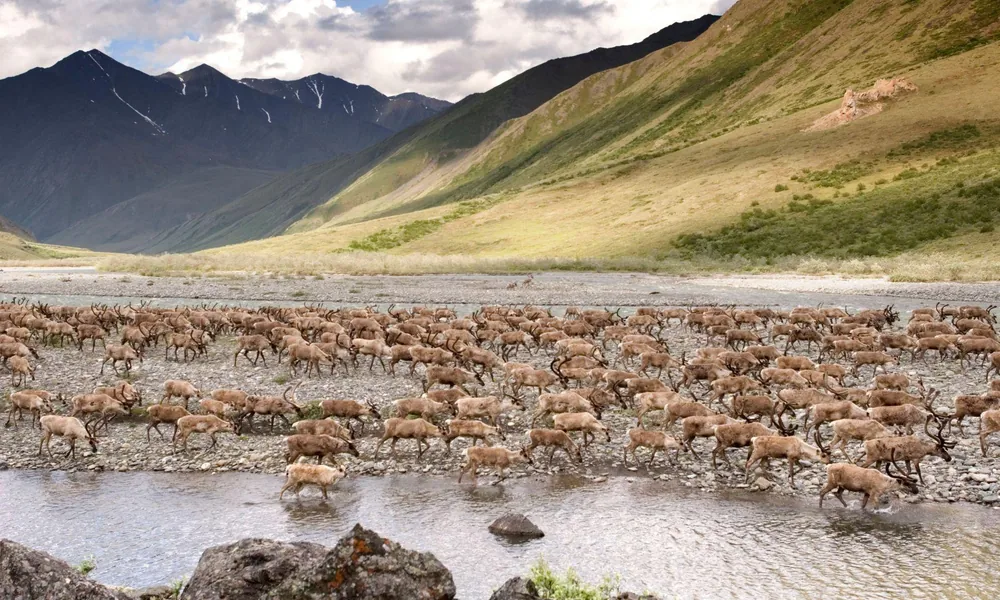
Caribou migration is one of the most extraordinary examples of seasonal movement among land mammals.
Some populations travel hundreds of miles each year between winter ranges and summer calving grounds. Their routes can cross rivers, lakes, mountain passes, and broad stretches of tundra.
Not every caribou population undertakes such long journeys. Some woodland populations are comparatively sedentary, moving shorter distances between feeding and shelter areas.
Why Do Caribou Migrate?
Migration helps caribou follow seasonal food supplies and reach areas suitable for raising calves.
During spring, many migratory herds move toward northern calving grounds. As summer arrives, fresh vegetation provides nutrients that help females recover from pregnancy and produce milk.
Later in the year, the animals move toward winter ranges where food remains accessible and conditions may be more suitable for surviving deep snow and cold temperatures.
The precise timing and route depend on the herd, weather, vegetation, and other environmental factors.
How Far Can Caribou Travel?
Some herds cover hundreds of miles annually, and certain individuals have been documented traveling extraordinary distances over the course of a year.
The longest journeys vary between populations and years. Migration should not be treated as a fixed distance for every caribou.
Their movements can change with snow conditions, food availability, insects, and human disturbance.
Why Are Migration Routes Important?
Caribou need access to more than one habitat type to complete their annual life cycle.
A calving ground may provide the right conditions for newborn calves, while a separate winter range supplies food during colder months. The routes connecting these areas are essential parts of the habitat.
Roads, industrial development, fences, and other barriers can disrupt movement. Even when individual feeding areas remain intact, the loss of a travel corridor can separate caribou from resources they need elsewhere.
Protecting migration routes is therefore a major part of conserving migratory herds.
What Do Caribou Eat?
Caribou are herbivores with a diet that changes according to the season and their habitat.
They eat grasses, sedges, leaves, flowering plants, shrubs, fungi, mosses, and lichens. The availability of these foods determines where animals feed and how far they travel.
Summer Diet
During the brief Arctic summer, plants grow rapidly, creating a seasonal abundance of nutritious food.
Caribou feed on:
- Grasses and sedges
- Willow and birch leaves
- Flowering tundra plants
- Young shoots and shrubs
- Mushrooms and other fungi
- Mosses and lichens
Fresh vegetation supports rapid growth in calves and helps females maintain the energy needed for nursing.
The summer feeding period is especially important because the animals must build and maintain body reserves before winter returns.
Winter Diet: The Importance of Lichens
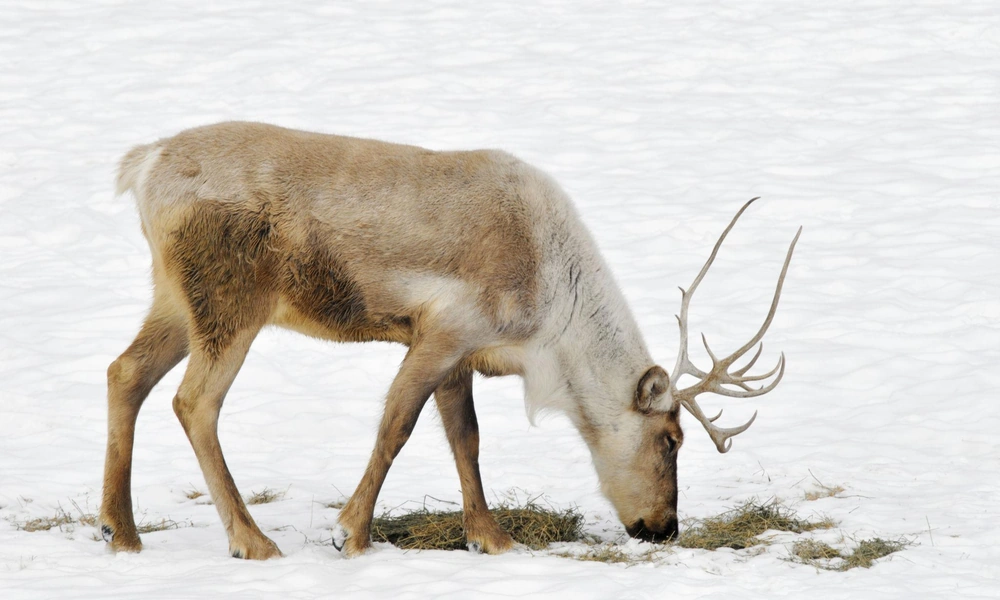
Lichens become especially important to many caribou populations during winter.
Often called reindeer moss, certain lichens can grow across the ground or on trees and remain available beneath snow. Despite their common name, lichens are not true mosses; they are organisms formed through a partnership between fungi and photosynthetic partners.
Caribou use their hooves to scrape away snow and reach vegetation beneath it.
Lichens provide energy, but they do not supply every nutrient an animal needs in ideal proportions. Caribou therefore benefit from a varied diet whenever other foods are available.
Winter feeding becomes difficult when snow is deep, crusted, or covered by ice.
How Does Climate Affect Their Food?
Changing weather can alter the availability of caribou food.
Warmer temperatures may change when plants grow and when snow melts. Winter thaw-and-freeze events can create hard ice layers that prevent caribou from reaching vegetation beneath the snow.
Drought, wildfire, and shifts in vegetation can also affect food resources, particularly in forest habitats.
The consequences differ among populations. A change that benefits one habitat or season may create problems elsewhere, making local monitoring essential.
Caribou Behavior and Social Life
Caribou are social animals that often travel and feed in groups.
The size and structure of these groups vary by season. Females and calves may gather in nursery groups after birth, while larger herds form during migration or at other times of the year.
Group living can help animals respond to danger and remain in contact across large landscapes.
How Do Caribou Communicate?
Caribou communicate through body posture, scent, and vocalizations.
Mothers and calves use sounds to maintain contact, particularly during the period around birth. Adults may also vocalize during social interactions or when disturbed.
Movement is another form of communication. Animals often respond to the behavior of nearby herd members, following their direction or reacting when the group becomes alert.
This coordination can be especially important when herds travel across open tundra in poor visibility.
How Do Caribou Escape Predators?
Caribou rely on vigilance, speed, endurance, and group behavior to reduce the risk of predation.
When threatened, they can run across uneven ground and swim through waterways that may block terrestrial predators.
Their migration patterns also help them reach seasonal feeding areas, although movement does not eliminate danger.
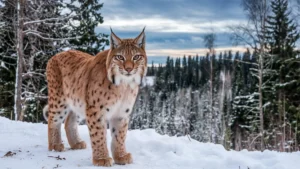
Predators include wolves, bears, and lynx, with the risks depending on the region and the age of the caribou.
Calves are particularly vulnerable during their first weeks of life.
Caribou Breeding Season and Calves
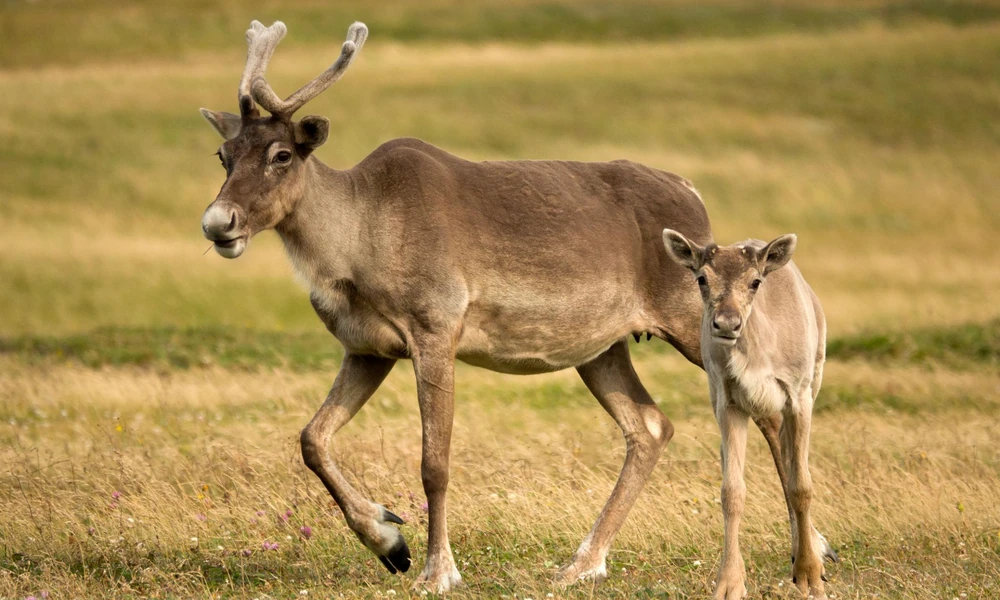
The breeding season, known as the rut, usually occurs in autumn, although the exact timing varies by population.
During this period, bulls compete with other males for access to females. They may display their antlers, chase rivals, or engage in physical contests.
Unlike some deer species in which males defend a group of females, the social and mating arrangements of caribou vary, and males do not always maintain a traditional harem.
How Long Is a Caribou Pregnant?
Pregnancy lasts approximately seven to eight months.
Most calves are born in spring or early summer, when seasonal plant growth begins to provide better feeding opportunities.
Females in many migratory populations return to traditional calving grounds, where births may be concentrated within a relatively short period.
This timing can help calves benefit from the seasonal food supply, although weather and predators still pose significant risks.
How Quickly Can a Calf Walk?
Caribou calves develop quickly compared with many other mammals.
A healthy newborn can usually stand and begin moving within a short time after birth. Within the following days, it becomes increasingly capable of traveling with its mother.
This early mobility is important because many populations move across large areas and cannot remain in one place indefinitely.
Calves nurse while gradually beginning to eat vegetation. They continue growing as they learn to move with the herd and respond to their surroundings.
What Threatens Caribou?
Caribou face different challenges depending on their population, habitat, and geographic range. Some herds remain relatively healthy, while others have experienced substantial declines.
Habitat Loss and Fragmentation
Industrial development, roads, mining, logging, and other human activities can alter caribou habitat.
In forest regions, the loss of mature woodland may reduce access to important lichen supplies. Disturbance can also change predator movements and affect the way caribou use the landscape.
For migratory populations, development near calving grounds or along travel routes can disrupt seasonal movements.
Climate Change
Climate change affects caribou through several pathways.
Changes in snow cover can make food easier or harder to reach. Unusual winter thaw-and-freeze cycles may create ice layers over vegetation, while changing temperatures can influence plant growth and the distribution of insects.
Warmer conditions can also alter the timing of seasonal events, potentially creating mismatches between the needs of calves and the availability of nutritious plants.
These effects vary by region and population.
Predators and Insects
Wolves are important natural predators in many caribou habitats. Bears and other predators can also threaten calves.
During summer, biting insects may cause considerable stress. Caribou sometimes seek windy ridges, snow patches, or water to reduce exposure to insects.
The combined effects of predation, insects, weather, food availability, and disturbance can influence survival and reproduction.
Are Caribou Endangered?
There is no single conservation status that accurately describes every caribou population worldwide.
The species contains distinct populations and subspecies, each facing different conditions. Some populations are relatively stable, while particular woodland and mountain populations have been classified as threatened or endangered under regional conservation systems.
Habitat fragmentation, climate change, and declining access to suitable food are important concerns for some populations.
Conservation measures may include protecting calving grounds, maintaining mature forest habitat, restoring disturbed landscapes, monitoring population trends, and limiting damaging development in important areas.
The most effective response depends on the specific herd and the pressures it faces.
The Cultural Importance of Caribou
Caribou have supported northern communities for thousands of years.
For many Indigenous Peoples across Arctic and subarctic North America, caribou have provided food, clothing materials, tools, and other essential resources. Knowledge of seasonal movements and habitat conditions has been passed between generations.
Caribou also hold cultural, historical, and spiritual significance for many communities. Their migrations influence traditional activities and connections to the land.
Changes in herd numbers and movement patterns can therefore affect much more than wildlife populations. They can influence food security, cultural practices, and the ability of communities to maintain longstanding relationships with their environment.
Conservation efforts benefit from incorporating Indigenous knowledge alongside scientific monitoring and local experience.
Fascinating Facts About Caribou
- Both sexes grow antlers. Caribou are the only deer species in which females as well as males normally develop antlers.
- They are also known as reindeer. The names usually reflect geography and whether the animals are wild or domesticated.
- Some herds migrate enormous distances. Certain populations travel hundreds of miles between seasonal habitats, although others move relatively little.
- Their hooves act like natural snowshoes. Broad feet distribute their weight across snow and soft ground.
- They are excellent swimmers. Caribou can cross rivers and lakes during migration.
- Their winter diet can depend heavily on lichens. They use their hooves to uncover food buried beneath snow.
- Their fur is built for cold weather. Dense underfur and longer guard hairs help retain heat.
- Calves become mobile quickly. Newborns can stand and walk soon after birth, helping them keep up with their mothers.
- Females may retain antlers through winter. Many adult males shed their antlers after the rut, while females often keep theirs until around calving time.
- Different populations behave differently. A migratory tundra herd and a forest-dwelling population may have very different movement patterns and conservation needs.
Frequently Asked Questions About Caribou
What is the scientific name of the caribou?
The scientific name is Rangifer tarandus. The same species is commonly called reindeer in Europe and Asia.
What is the difference between caribou and reindeer?
They are the same species. In North America, wild animals are generally called caribou, while domesticated or semi-domesticated animals are often called reindeer. In Europe and Asia, reindeer is the usual name.
What do caribou eat?
Caribou eat grasses, sedges, leaves, shrubs, flowering plants, fungi, mosses, and lichens. Lichens are particularly important to many populations during winter.
Where do caribou live?
They inhabit Arctic tundra, subarctic landscapes, boreal forests, and mountain regions across northern North America, Europe, and Asia.
Why do female caribou grow antlers?
Females normally grow antlers, an unusual trait among deer. Antlers can be used in social interactions and competition for feeding access, although their precise role varies with season and population.
How far do caribou migrate?
Some populations travel hundreds of miles each year between summer and winter ranges. Others are more sedentary and make shorter seasonal movements.
How long is a caribou pregnant?
Pregnancy usually lasts around seven to eight months. Most calves are born in spring or early summer.
What predators hunt caribou?
Wolves are important predators in many regions. Bears and lynx may also prey on caribou, especially young animals, depending on the local ecosystem.
Are caribou endangered?
Conservation status varies among populations and jurisdictions. Some herds are relatively stable, while certain woodland and mountain populations face serious threats from habitat disturbance, climate change, and other pressures.
Can caribou survive extreme cold?
Yes. Their insulating coats, specialized noses, broad hooves, and seasonal feeding behavior help them survive cold northern environments. However, severe weather and changing snow conditions can still threaten their survival.
Conclusion
The caribou is one of the northern world’s most remarkable mammals. Its thick coat, broad hooves, unusual antlers, and ability to travel across immense landscapes reveal an animal finely adapted to life in cold environments.
Yet these adaptations do not make caribou immune to change. Their survival depends on access to seasonal food, safe calving grounds, connected migration routes, and habitats that continue to support them through increasingly variable conditions.
For northern communities, caribou also represent a deep connection between wildlife, culture, and the land. Protecting these animals means preserving not only a remarkable species but also the ecosystems and traditions associated with it.
As a herd moves across the tundra, every step reflects a long relationship between animal and environment—one that depends on having enough space, food, and freedom to continue.
Disclaimer: This article is provided for general educational and wildlife-awareness purposes. Caribou behavior, diet, migration, and conservation status vary by population and region. Do not approach, feed, or disturb wild caribou, especially during calving or migration; consult local wildlife authorities for region-specific conservation guidance.