Key Takeaways
- Deer belong to the Cervidae family.
- More than 50 deer species exist worldwide.
- This guide covered 35 well-known deer species.
- The moose is the largest deer species.
- The southern pudu is the smallest deer species.
- Habitat, antlers, ears, and tail shape are key identification features.
- Deer are essential for healthy ecosystems and biodiversity.
Quick Answer
Deer belong to the Cervidae family and include more than 50 recognized species worldwide. Common examples are the whitetail deer, mule deer, red deer, roe deer, elk, moose, and reindeer. They are herbivorous mammals known for their antlers, excellent hearing, and ability to adapt to a wide range of habitats.
How to Identify Deer Species
Although every deer species is unique, several features make identification easier.
Body Size
Some deer are tiny enough to stand below an adult’s knee, while others grow taller than many horses. Size is often the first clue when identifying a species.
Antlers
Most male deer grow antlers that are shed and regrown every year. Their shape, branching pattern, and size differ from one species to another.
Coat Color
A deer’s coat changes with the seasons. Many species develop darker winter coats and lighter summer fur, making seasonal identification important.
Habitat
Knowing where a deer lives can quickly narrow down the possibilities. Some species prefer dense forests, while others thrive in open plains or snowy mountains.
35 Deer Species Around the World
1. Whitetail Deer
Scientific Name: Odocoileus virginianus
The whitetail deer is one of the most common deer species in North America. It gets its name from the bright white underside of its tail, which it raises when alarmed.
Habitat: Forests, farmland, grasslands, and suburban areas.
Identification: Reddish-brown summer coat, gray winter coat, white tail, and medium-sized antlers.
Interesting Fact: Whitetail deer can run at speeds of nearly 30 miles per hour and are excellent swimmers.
2. Mule Deer
Scientific Name: Odocoileus hemionus
Mule deer are famous for their oversized ears, which resemble those of a mule. They are commonly found across western North America.
Habitat: Mountains, deserts, shrublands, and open woodlands.
Identification: Large ears, black-tipped tail, and forked antlers.
Interesting Fact: Mule deer perform a unique bouncing movement called stotting when escaping predators.
3. Red Deer
Scientific Name: Cervus elaphus
The red deer is one of Europe’s largest deer species. Mature males are well known for their impressive antlers and loud roaring calls during the breeding season.
Habitat: Woodlands, hills, and open grasslands.
Identification: Reddish-brown coat, large body, and wide branching antlers.
Interesting Fact: Red deer have been featured in European history, folklore, and wildlife conservation programs for centuries.
4. Roe Deer
Scientific Name: Capreolus capreolus
Roe deer are small, graceful animals commonly seen across Europe. They adapt well to farmland and mixed forests.
Habitat: Woodlands, fields, and forest edges.
Identification: Small body, short antlers, and a white rump patch.
Interesting Fact: Roe deer can leap over six feet high when avoiding danger.
5. Elk
Scientific Name: Cervus canadensis
Also known as wapiti, the elk is among the world’s largest members of the deer family. Adult bulls develop enormous antlers each year.
Habitat: Mountain forests, meadows, and valleys.
Identification: Massive body, dark neck, pale rump, and long antlers.
Interesting Fact: During autumn, male elk produce loud bugling calls that can be heard over long distances.
6. Moose
Scientific Name: Alces alces
The moose is the largest living member of the deer family. Its long legs help it move through deep snow and wetlands with ease.
Habitat: Boreal forests, marshes, and northern woodlands.
Identification: Huge body, long nose, broad antlers, and a shoulder hump.
Interesting Fact: Moose are surprisingly strong swimmers and can dive underwater to feed on aquatic plants.
7. Reindeer
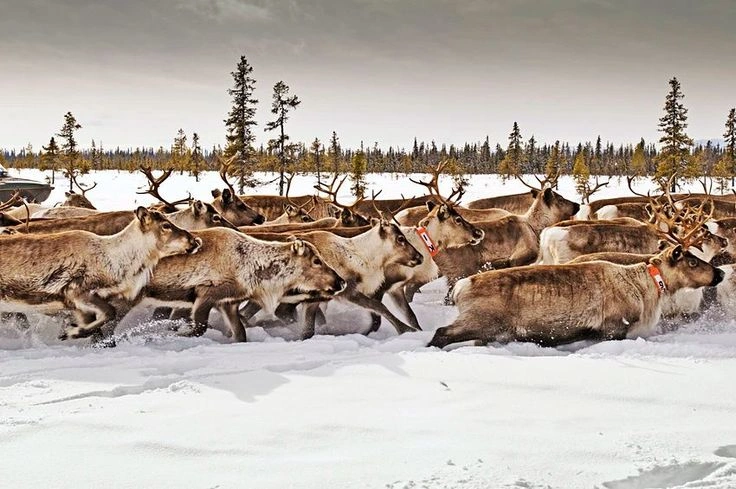
Scientific Name: Rangifer tarandus
Reindeer, also called caribou in North America, are perfectly adapted to cold climates. Unlike most deer, both males and females can grow antlers.
Habitat: Arctic tundra, boreal forests, and northern plains.
Identification: Thick fur, broad hooves, and antlers on both sexes.
Interesting Fact: Some reindeer migrate hundreds of miles each year, making them one of the world’s greatest long-distance travelers.
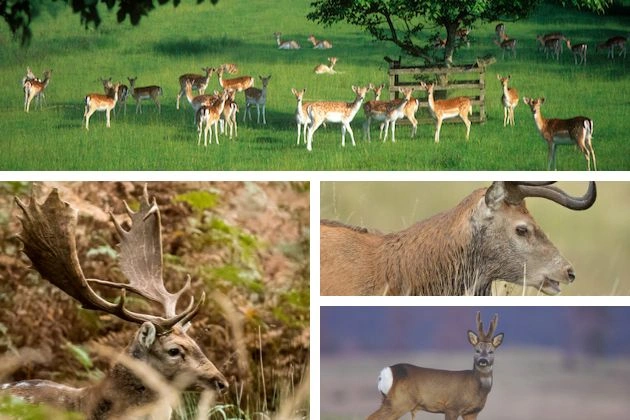
8. Fallow Deer
Scientific Name: Dama dama
Fallow deer are admired for their elegant appearance and spotted coats. They are common in parks and woodlands throughout Europe.
Habitat: Deciduous forests and open grasslands.
Identification: White spots, broad palm-shaped antlers, and a black-striped tail.
Interesting Fact: Coat colors vary greatly, ranging from white to nearly black.
9. Sika Deer
Scientific Name: Cervus nippon
Native to East Asia, sika deer have successfully adapted to several countries after being introduced outside their natural range.
Habitat: Forests, wetlands, and mountainous regions.
Identification: Brown coat with white spots and slender antlers.
Interesting Fact: Unlike many deer, sika often keep their spots throughout adulthood.
10. Chital
Scientific Name: Axis axis
Also called the axis deer, the chital is considered one of the most beautiful deer species because of its striking spotted coat.
Habitat: Tropical forests and open grasslands.
Identification: Reddish coat with permanent white spots and elegant antlers.
Interesting Fact: Chital often live alongside monkeys, benefiting from fruit dropped from the trees above.
11. Barasingha
Scientific Name: Rucervus duvaucelii
The barasingha is known as the swamp deer because it prefers wet environments. Mature males can grow antlers with many branches.
Habitat: Marshes, floodplains, and grasslands.
Identification: Golden-brown coat and large, multi-tined antlers.
Interesting Fact: The name “barasingha” means “twelve-tined,” referring to its impressive antlers.
12. Hog Deer
Scientific Name: Axis porcinus
Unlike many deer that leap over obstacles, hog deer usually run with their heads lowered, much like wild pigs.
Habitat: Tall grasslands and river plains.
Identification: Short legs, stocky body, and brown coat.
Interesting Fact: Their unusual running style helps them move quickly through dense vegetation.
13. Père David’s Deer
Scientific Name: Elaphurus davidianus
Once extinct in the wild, Père David’s deer survives today thanks to successful conservation and breeding programs.
Habitat: Wetlands and protected reserves.
Identification: Long tail, unique antlers, and horse-like body shape.
Interesting Fact: It is considered one of the world’s greatest wildlife conservation success stories.
14. Tufted Deer
Scientific Name: Elaphodus cephalophus
This small Asian deer is easily recognized by the tuft of dark hair growing on its forehead.
Habitat: Mountain forests in China and Myanmar.
Identification: Dark tuft of hair, short antlers, and visible canine teeth.
Interesting Fact: Males rely more on their sharp canine teeth than their small antlers during fights.
15. Chinese Water Deer
Scientific Name: Hydropotes inermis
Unlike most deer species, the Chinese water deer has no antlers. Instead, males possess long canine tusks.
Habitat: Marshes, wetlands, and riverbanks.
Identification: Small body, rounded ears, and tusk-like canine teeth.
Interesting Fact: It is often called the “vampire deer” because of its unusual tusks.
16. Indian Muntjac
Scientific Name: Muntiacus muntjak
The Indian muntjac is commonly called the barking deer because of the loud alarm calls it makes when threatened.
Habitat: Tropical forests and dense woodlands.
Identification: Small body, short antlers, and reddish-brown coat.
Interesting Fact: Its bark can continue for several minutes if a predator is nearby.
17. Reeves’s Muntjac
Scientific Name: Muntiacus reevesi
Originally native to China, Reeves’s muntjac has established wild populations in several other countries.
Habitat: Woodlands, forests, and dense vegetation.
Identification: Compact body, small antlers, and dark facial markings.
Interesting Fact: These deer are active throughout the day and night, depending on local conditions.
18. Siberian Roe Deer
Scientific Name: Capreolus pygargus
The Siberian roe deer is larger than its European relative and is well adapted to harsh winters across northern Asia.
Habitat: Forests, grasslands, and mountain slopes.
Identification: Gray-brown winter coat, white rump patch, and short antlers.
Interesting Fact: These deer can travel long distances in search of food during winter.
19. Philippine Spotted Deer
Scientific Name: Rusa alfredi
This rare deer is found only in the Philippines. Its beautiful spotted coat helps it blend into forest vegetation.
Habitat: Tropical forests.
Identification: Dark brown coat with small cream-colored spots.
Interesting Fact: It is one of the world’s most endangered deer species.
20. Visayan Spotted Deer
Scientific Name: Rusa alfredi
Native to the Visayan Islands, this shy deer spends much of its time hidden in dense forests.
Habitat: Rainforests.
Identification: Compact body with bright white spots.
Interesting Fact: Most wild populations survive in protected forest areas.
21. Javan Rusa
Scientific Name: Rusa timorensis
The Javan rusa is widely distributed across Indonesia and has also been introduced to several other countries.
Habitat: Forests, grasslands, and coastal areas.
Identification: Dark brown coat and sturdy antlers.
Interesting Fact: It adapts well to different environments.
22. Sambar Deer
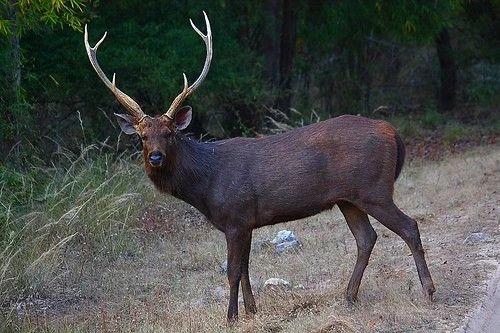
Scientific Name: Rusa unicolor
The sambar is the largest deer native to Asia. It is known for its powerful build and excellent sense of smell.
Habitat: Forests and mountain regions.
Identification: Dark brown coat, large ears, and rugged antlers.
Interesting Fact: Tigers are among its main natural predators.
23. Bawean Deer
Scientific Name: Axis kuhlii
The Bawean deer lives only on Indonesia’s Bawean Island.
Habitat: Tropical forests.
Identification: Small body with short antlers.
Interesting Fact: Its limited range makes conservation especially important.
24. Calamian Deer
Scientific Name: Axis calamianensis
This species is native to a few islands in the Philippines.
Habitat: Forests and shrublands.
Identification: Brown coat and relatively small antlers.
Interesting Fact: Habitat loss remains its biggest challenge.
25. Pampas Deer
Scientific Name: Ozotoceros bezoarticus
The pampas deer is a graceful species found across South America’s open grasslands.
Habitat: Pampas and savannas.
Identification: Light brown coat with white underparts.
Interesting Fact: It is an excellent runner in open landscapes.
26. Marsh Deer
Scientific Name: Blastocerus dichotomus
The marsh deer is the largest deer in South America.
Habitat: Wetlands and floodplains.
Identification: Long legs, reddish coat, and broad hooves.
Interesting Fact: Its long legs help it move through deep water.
27. South Andean Deer
Scientific Name: Hippocamelus bisulcus
Also called the huemul, this deer lives in the Andes Mountains.
Habitat: Mountain forests and rocky slopes.
Identification: Thick brown coat and compact body.
Interesting Fact: It is a national symbol of Chile.
28. North Andean Deer
Scientific Name: Hippocamelus antisensis
This rare species survives at high elevations in the Andes.
Habitat: Alpine grasslands.
Identification: Stocky build and dense fur.
Interesting Fact: It thrives in cold mountain climates.
29. Southern Pudu
Scientific Name: Pudu puda
The southern pudu is the world’s smallest deer species.
Habitat: Temperate rainforests.
Identification: Tiny body, short legs, and rounded ears.
Interesting Fact: Adults are only about knee-high to humans.
30. Northern Pudu
Scientific Name: Pudu mephistophiles
Slightly smaller than many household dogs, this tiny deer lives high in the Andes.
Habitat: Cloud forests.
Identification: Short dark coat and compact body.
Interesting Fact: It prefers dense vegetation for protection.
31. Brocket Deer
Scientific Name: Mazama americana
Brocket deer are widespread across Central and South America.
Habitat: Tropical forests.
Identification: Reddish coat and simple antlers.
Interesting Fact: They are usually solitary animals.
32. Gray Brocket Deer
Scientific Name: Mazama gouazoubira
This adaptable species lives in forests, scrublands, and grasslands.
Habitat: South America.
Identification: Grayish-brown coat and slim body.
Interesting Fact: It feeds on fruits, leaves, and flowers.
33. Yucatán Brown Brocket
Scientific Name: Mazama pandora
Found only on Mexico’s Yucatán Peninsula, this deer is rarely seen in the wild.
Habitat: Tropical forests.
Identification: Dark brown coat and small antlers.
Interesting Fact: It is most active around dawn and dusk.
34. Amazon Brown Brocket
Scientific Name: Mazama nemorivaga
This shy species lives deep within the Amazon rainforest.
Habitat: Rainforests.
Identification: Brown coat and compact body.
Interesting Fact: It depends on dense forest cover for survival.
35. White-Lipped Deer
Scientific Name: Cervus albirostris
The white-lipped deer inhabits the high-altitude grasslands of the Tibetan Plateau.
Habitat: Alpine meadows and mountain valleys.
Identification: Large body with a distinctive white muzzle and throat.
Interesting Fact: Its thick coat protects it from freezing temperatures.
Deer Species Comparison
| Species | Main Region | Habitat | Unique Feature |
|---|---|---|---|
| Whitetail Deer | North America | Forests | White tail |
| Mule Deer | North America | Mountains | Large ears |
| Red Deer | Europe, Asia | Woodlands | Large branching antlers |
| Roe Deer | Europe | Forest edges | Small size |
| Moose | Northern Hemisphere | Boreal forests | Largest deer species |
| Reindeer | Arctic | Tundra | Both sexes grow antlers |
| Sambar Deer | Asia | Forests | Largest Asian deer |
| Southern Pudu | South America | Rainforests | Smallest deer species |
Why Deer Matter to Ecosystems
Deer play an important role in healthy ecosystems. They spread seeds, shape plant growth, and provide food for predators such as wolves, tigers, and mountain lions.
At the same time, balanced deer populations help maintain biodiversity. However, when deer become too numerous, they can damage forests by eating young trees and vegetation.
Expert Tips for Deer Identification
- Look at the tail before anything else.
- Compare ear size and antler shape.
- Notice the coat color and body size.
- Pay attention to the habitat.
- Consider the geographic location.
- Observe behavior, especially how the deer runs.
Common Mistakes
- Confusing mule deer with whitetail deer.
- Assuming all deer have antlers.
- Mistaking elk or moose for separate animal families.
- Ignoring seasonal coat changes.
- Identifying deer without considering their habitat.
Frequently Asked Questions
How many deer species are there?
Scientists recognize more than 50 deer species worldwide, although classifications may change as new research becomes available.
Which is the largest deer species?
The moose is the largest living member of the deer family.
Which is the smallest deer species?
The southern pudu is widely recognized as the world’s smallest deer.
Do female deer have antlers?
In most species, only males grow antlers. Reindeer are a notable exception because females also develop antlers.
What do deer eat?
Deer are herbivores that feed on grasses, leaves, shrubs, fruits, bark, and young shoots.
Conclusion
Deer are incredibly diverse animals, ranging from the tiny southern pudu to the towering moose. Each species has evolved to survive in its own environment, whether that’s a tropical rainforest, an alpine mountain, or the frozen Arctic tundra.
Learning about these 35 deer species not only improves wildlife identification but also highlights the importance of protecting the habitats they depend on. As conservation efforts continue around the world, understanding these remarkable animals is one small step toward ensuring their future.
