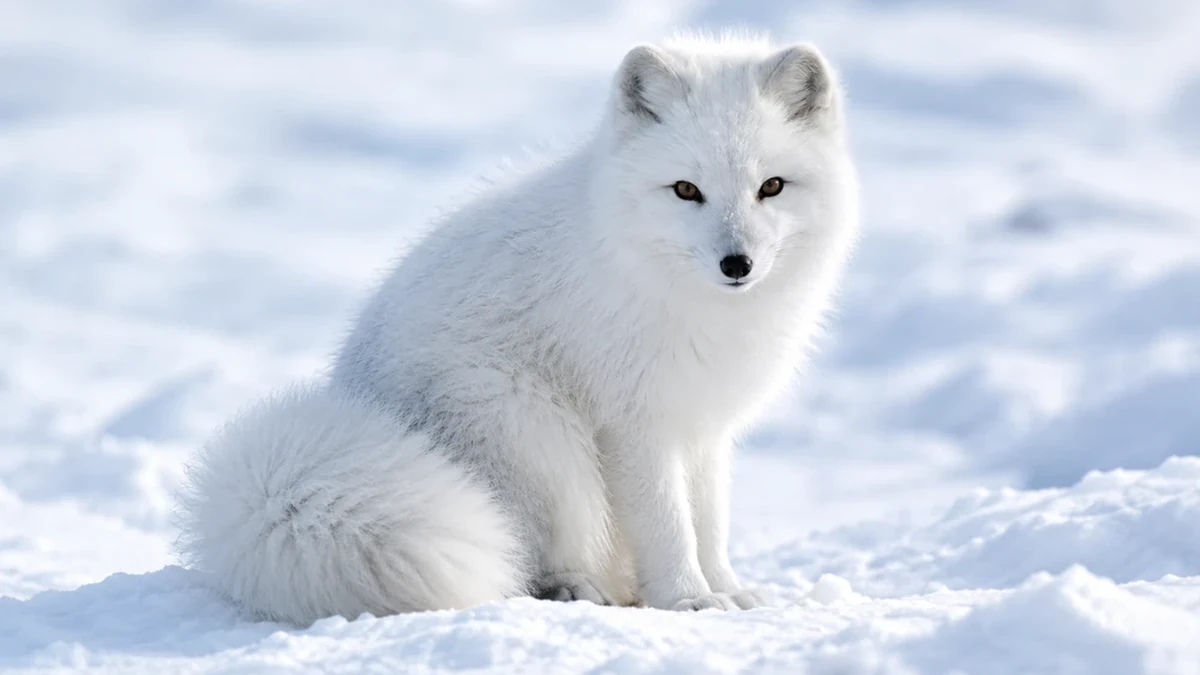
Living in the frozen Arctic is no easy task, but the Arctic fox has several adaptations that make it possible. Its compact body and heavy insulating fur help it withstand severe cold. Arctic fox looks like a small white dog, but it is built for extreme survival. Weighing about the same as a domestic house cat, this little fox lives in places so cold that most animals would freeze in minutes.
Even when winter temperatures drop below −50°C (−58°F), its body stays a warm 38°C (100.4°F). It does not hibernate or run south. Instead, it relies on super-thick fur, built-in leg heaters, and smart food storage to thrive in the polar cold.
Key Takeaways
- Arctic foxes survive extreme cold through dense fur, compact bodies and specialized heat-conserving adaptations.
- Their diet changes with the season, from lemmings and birds to eggs, marine food and scavenged remains.
- Arctic foxes can cache food and reuse nutrient-rich dens for generations, helping them survive unpredictable Arctic conditions.
- Their white or blue coat provides seasonal camouflage while their hearing and smell help locate prey beneath snow.
- Climate change, red fox competition, changing sea ice and unstable prey cycles are creating growing challenges for some Arctic fox populations.
Arctic Fox Quick-Facts
| Metric / Attribute | Value & Details |
| Common Name | Arctic Fox, Polar Fox, White Fox, Blue Fox |
| Scientific Name | Vulpes lagopus (Family: Canidae; lagopus translates to “hare-footed”) |
| Taxonomic Classification | Kingdom: Animalia, Phylum: Chordata, Class: Mammalia, Order: Carnivora |
| Head-and-Body Length | 50 to 60 cm (20 to 24 in) |
| Tail Length (Bushy Plume) | 30 cm (12 in) |
| Shoulder Height | 25 to 30 cm (10 to 12 in) |
| Body Weight | 3 to 8 kg (6.6 to 17.6 lbs) (Fluctuates seasonally by up to 50% due to autumn fat deposition) |
| Wild Lifespan | 3 to 6 years (High juvenile mortality during lemming crash years) |
| Average Litter Size | 5 to 10 pups; up to 18 to 25 pups during peak lemming years (highest among wild carnivores) |
| Lower Critical Temperature | Active down to −40°C to −50°C without increasing metabolic heat production |
| Subspecies Count | 8 recognized subspecies across global circumpolar ranges |
| Global Conservation Status | Least Concern |
| Regional Status (Norway) | Critically Endangered (Mainland Scandinavian populations) |
Where Do Arctic Foxes Live?
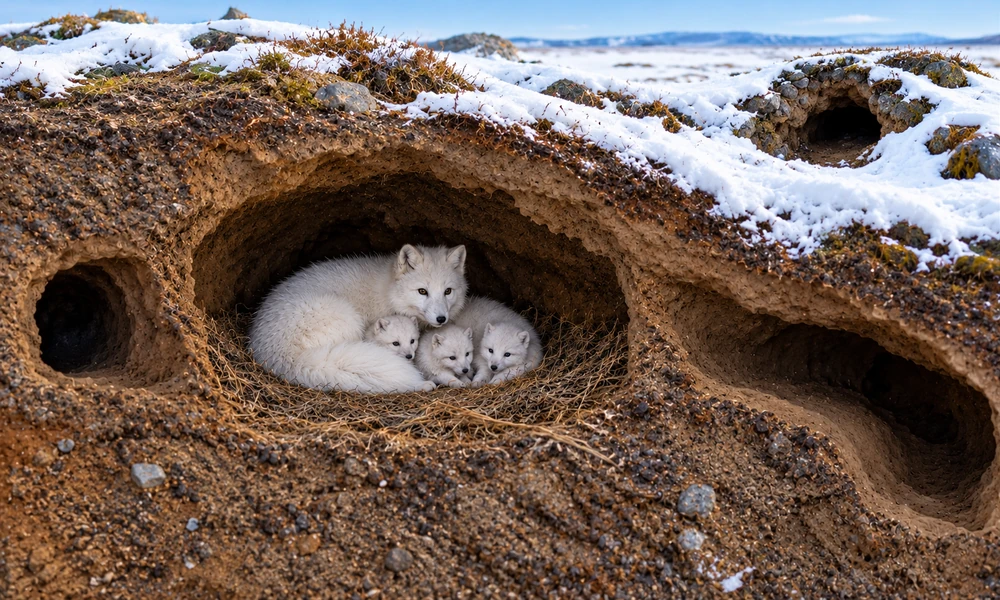
Arctic foxes often shelter in underground dens with tunnels and multiple entrances to stay safe from the cold and predators. Arctic foxes live across the icy top of the planet, adapting to harsh conditions on both land and sea ice. They are native to the high tundra across northern and southern edges of North America, Europe, and Asia. They are also Iceland’s only native land mammal. Their southern range stops where the tundra meets the forest, mostly because larger red foxes push them out of warmer lands.
What Are The Two Types of Arctic Foxes?
Inland Foxes (“Lemming Foxes”):
These foxes live deep inside continental tundra. Their lives depend almost entirely on lemming population booms and busts.
Coastal Foxes (“Blue Foxes”):
These foxes live along open coastlines. They eat seabirds, fish, and seal remains, making them less dependent on small rodents.
What Makes the Arctic Fox’s Appearance Unique?
The Arctic fox is designed from nose to tail to trap heat, move quietly across snow, and spot hidden prey. Every physical feature serves a purpose in the harsh polar cold.
Unlike red foxes with long noses and large ears, the Arctic fox has a stubby snout, short legs, and small, rounded ears. This compact shape keeps warm blood close to the core and cuts body heat loss down to about 22%, compared to 33% in red foxes.
Its 30 cm (12 in) bushy tail is not just for balance. When sleeping in howling winds, the fox curls into a tight ball and wraps its tail over its nose and face to protect exposed skin from frostbite.
How Does the Arctic Fox’s Two Color Coat System Work?
Winter Fur:
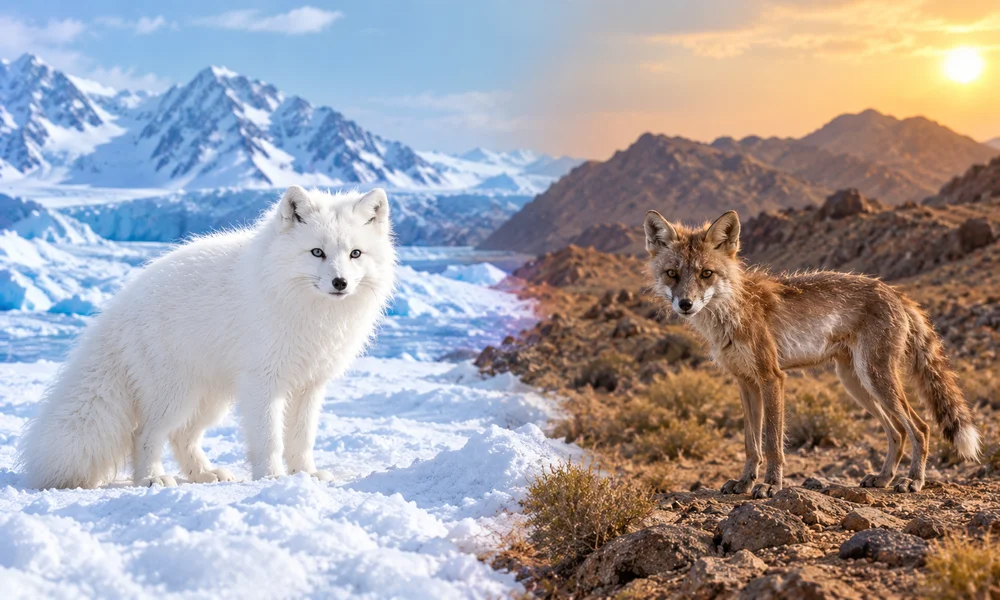
The Arctic fox grows a thick, two-layer winter coat as temperatures drop. Its dense underfur traps a layer of warm air close to the skin, while longer guard hairs help protect that insulation from snow, wind and moisture.
The winter coat is usually white, giving the fox excellent camouflage against snow and ice. Fur also grows over much of its paws, helping reduce heat loss when it walks or rests on frozen ground.
Summer Fur:
What are the Snow Hunting Senses of the Arctic Fox?
Snow-Piercing Hearing:
Its short, forward-facing ears act like dish receivers, catching the low-frequency rustles of lemmings moving under deep snowbanks.
Long-Distance Smell:
Its sharp sense of smell can detect food buried under meters of hard snow or spot frozen sea carcasses miles away.
How Do Arctic Foxes Move and Use Their Dens?
Long-Distance Sea-Ice Journeys
When local food runs out, these small foxes travel vast distances over frozen oceans. Satellite tracking recorded one young female walking 3,506 km (2,178 miles) across sea ice from Svalbard to Canada in just 76 days. She averaged 46 km a day and reached speeds of 155 km a day across the Greenland ice sheet.
Dens: Centuries-Old Tundra Gardens
Gigantic Underground Complexes:
Digging into frozen permafrost is extremely difficult, so generations of foxes reuse and expand the same dens for hundreds of years. Some dens grow into huge underground mazes with over 100 entrances.
Natural Ecosystem Engineers:
Decades of leftover prey, feces, and urine fertilize the dry soil with vital nitrogen and phosphorus.
Green Tundra Islands:
This nutrient boost turns brown den mounds into bright green patches of grass and flowers visible in satellite images, drawing birds and lemmings back to the site.
How Does the Arctic Fox Hunt and Store Its Food?
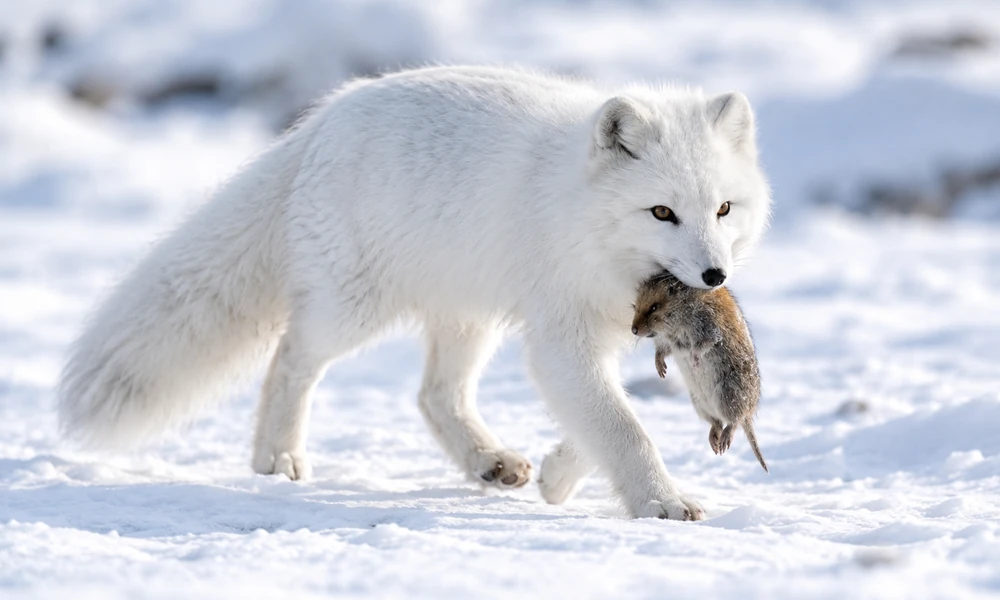
The Arctic fox is an opportunistic hunter that eats whatever the polar landscape provides. It relies on a mix of strategic hunting, food preservation, and scavenging to survive times of severe food shortages.
The Lemming Boom-and-Bust Cycle
Inland populations rely heavily on lemming numbers, which cycle through dramatic peaks and crashes every three to five years. During peak lemming years, female foxes can give birth to litters of 18 to 25 pups, the largest litter size of any wild carnivore. However, when lemming numbers crash, foxes often skip breeding altogether and travel hundreds of miles across the tundra to find food.
Permafrost Food Vaults
During summer nesting seasons, foxes collect thousands of goose and seabird eggs within a short three-week window. They dig down into the permafrost layer, burying the eggs in natural freezer conditions. The natural enzymes in egg whites combined with sub-zero soil temperatures preserve these food caches for up to a year, providing vital calories when winter prey is scarce.
Hunting Under the Snow
To capture rodents hiding beneath hard snowpack, the fox uses a specialized technique called subnivean mousing. It tilts its head to pinpoint low-frequency rustling under the snow, leaps up to two meters into the air, and dives headfirst through the ice crust to grab the prey underneath.
Winter Scavenging
When land prey is unavailable, foxes head onto the frozen ocean. They regularly follow polar bears to feed on leftover seal blubber and carcasses. In early spring, they hunt ringed seal pups hidden inside snow lairs on the sea ice. During periods of severe starvation, they will even eat polar bear or seal dung to digest leftover fats and stay alive.
How Does the Arctic Fox Survive Extreme Cold?
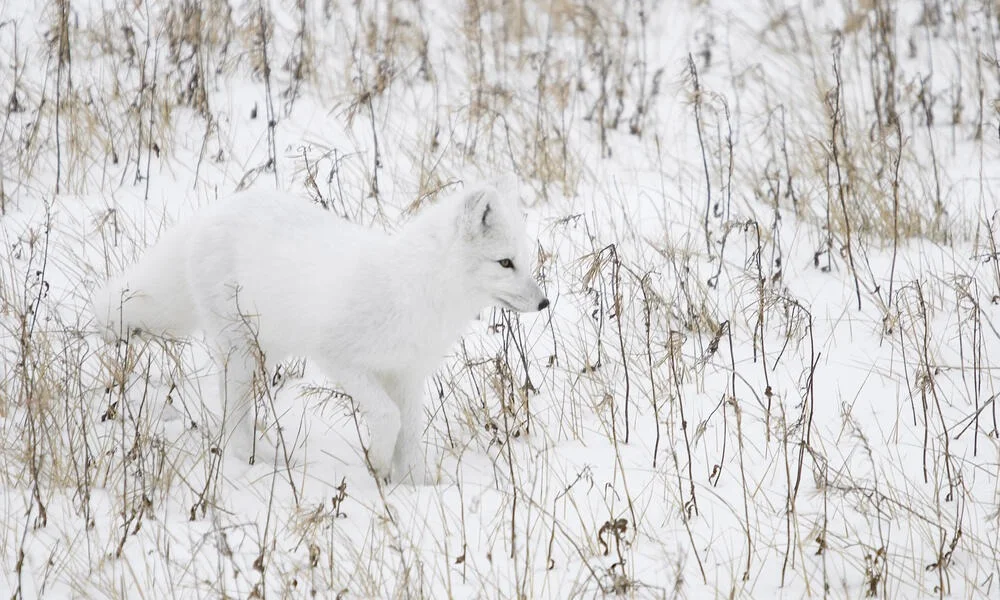
Surviving Arctic conditions requires a combination of high-grade insulation, advanced blood circulation, and metabolic control.
Advanced Insulation and Color-Changing Coats
The fox’s double coat consists of a dense underfur that makes up 70% of its fur density, trapping still air against the body to prevent heat loss. It is also the only wild canine species that changes its coat color seasonally, switching from white in winter to brown-grey in summer. A rare genetic variation known as the “blue fox” maintains a dark charcoal color in summer and a slate-grey coat in winter, offering camouflage along rocky, ice-free coastlines.
Built-in Leg Warmers and Paws
To walk across ice without freezing, the Arctic fox has fur covering the bottoms of its paw pads, which also gives it grip on slippery surfaces. Its legs use a countercurrent heat exchange system where warm blood flowing down from the body heats up cold blood returning from the feet. This keeps footpad temperatures around −1°C, just warm enough to prevent frostbite, but cool enough to stop ice from melting onto its paws and freezing into ice balls.
Energy Conservation and Snow Shelters
Before winter arrives, a fox builds up fat reserves that can account for up to 50% of its total body weight. In deep winter, it can lower its baseline metabolic rate to conserve energy without fully hibernating.
When severe blizzards strike, the fox curls into a tight ball, wrapping its bushy tail over its face to protect its exposed nose. If conditions grow too harsh, it digs temporary snow lairs directly into snowdrifts, riding out polar storms underneath a protective insulating blanket.
What Are the Threats and Conservation Status of Arctic Fox?
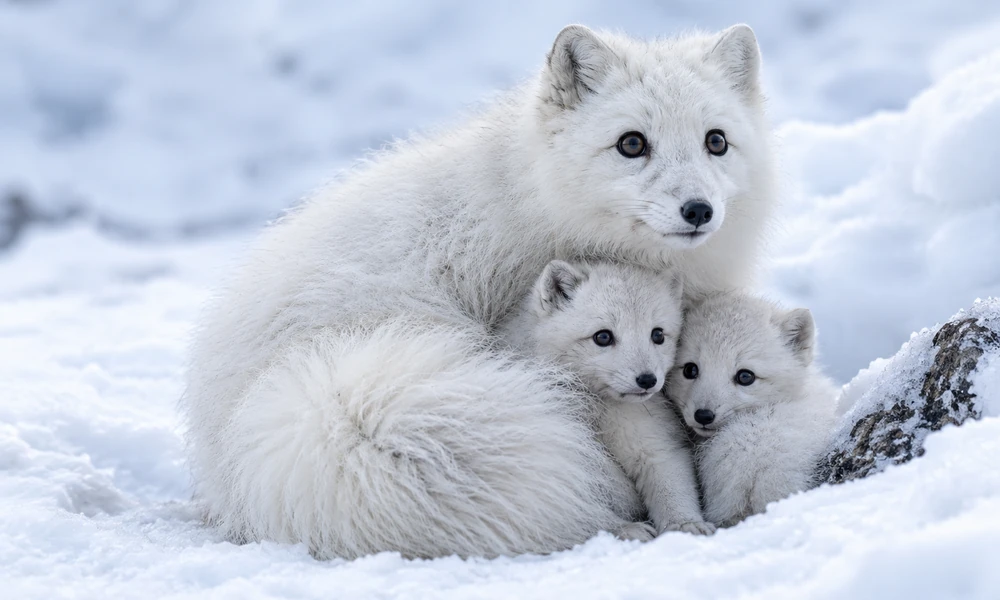
While the Arctic fox is classified as a species of Least Concern globally, rising temperatures and shifting ecosystems create serious challenges for regional populations.
Red Fox Competition
As polar winters warm, larger red foxes (Vulpes vulpes) are moving further north into tundra territories. Red foxes outcompete Arctic foxes for limited food, take over their ancient den complexes, and even attack and kill young Arctic fox pups.
Shrinking Sea Ice Routes
Warmer winters cause sea ice to melt earlier and freeze later. This loss of ice severs key travel highways across frozen oceans, leaving isolated island populations without new genetic traits and cutting off access to sea ice scavenging routes.
Unstable Lemming Cycles
Changing weather patterns bring rain-on-snow events during polar winters. When rain freezes into solid ice layers over the ground, it crushes the underground snow tunnels lemmings rely on for survival. This collapses lemming populations, leaving inland foxes without their primary food source.
Frequently Asked Questions
Why don’t an Arctic fox’s paws freeze to the ice?
Arctic foxes have a specialized blood-vessel system that limits heat loss through their legs and paws. This countercurrent heat exchange keeps their feet cold enough to reduce heat loss while still protecting the tissue from freezing.
How can Arctic foxes keep food fresh in frozen ground?
When food is buried in cold or frozen soil, low temperatures slow bacterial activity and decomposition. These food caches can therefore remain usable for extended periods, helping foxes survive when fresh prey is scarce.
Can Arctic foxes eat polar bear droppings during winter?
Arctic foxes are highly opportunistic feeders and may consume unusual food sources when normal prey is difficult to find. During periods of severe food shortage, animal remains and other nutrient-rich material can become important emergency food.
Why do old Arctic fox dens create greener patches of tundra?
Fox dens can be reused for generations. Droppings, leftover prey and other organic material enrich the surrounding soil, allowing plants to grow more densely around old den sites.
How does an Arctic fox catch prey beneath the snow?
An Arctic fox can detect movement beneath the snow and then leap and plunge headfirst into the snow to reach hidden prey such as lemmings. This hunting technique is one of its most recognizable winter adaptations.
How does an Arctic fox survive temperatures near −40°C to −50°C?
Its dense fur, compact body shape and other adaptations greatly reduce heat loss. These features allow the Arctic fox to remain active in temperatures that would be dangerous for many other mammals.
