Key Takeaways
- Bears in Norway are brown bears, scientifically known as Ursus arctos.
- Most are found near Norway’s eastern borders with Sweden, Finland and Russia.
- At least 185 individual bears were detected in Norway in 2025 through DNA monitoring.
- Many animals cross national borders and do not remain in Norway throughout the year.
- Young male bears can travel thousands of square kilometers.
- Berries are an important part of the Norwegian brown bear diet.
- Brown bears spend roughly six to seven months in winter dens.
- Encounters with people are rare, and Norwegian authorities describe the risk of injury as extremely small.
- If you see a bear, stay calm, keep your distance and never run.
- Norway’s brown bear population remains nationally threatened even though the species is not globally threatened.
Quick Answer
Bears in Norway are brown bears (Ursus arctos). They are concentrated mainly in five areas close to Sweden, Finland and Russia: Pasvik, Anárjohka, inner Troms, eastern Nord-Trøndelag and eastern Hedmark.
Rovdata’s latest annual monitoring found at least 185 individual brown bears in Norway in 2025, identified through DNA analysis. Of these, 80 were females and 105 were males. Many of these animals also spend part of the year in neighboring countries.
For people, the important point is simple: bears in Norway are potentially dangerous, but encounters are rare and serious incidents are extremely uncommon. Norwegian environmental authorities specifically describe the risk of injury as very small.
Where Do Bears in Norway Live?
Bears in Norway are not evenly spread across the country. Their strongest presence is in border regions where Norwegian bear habitat connects with much larger populations in Sweden, Finland and Russia.
The main areas identified by Rovdata are:
| Area | General location | Why it matters |
|---|---|---|
| Pasvik | Far northeastern Norway | Connected with bear populations across the Russian and Finnish borders |
| Anárjohka | Finnmark | Part of the northern bear range |
| Inner Troms | Northern Norway | Important area for female bears |
| Eastern Nord-Trøndelag | Central Norway | One of the main southern-central areas |
| Eastern Hedmark | Southeastern Norway | Connected to the larger Scandinavian bear population |
Female brown bears generally remain within established home ranges associated with these border populations. Males, however, travel much farther.
According to Rovdata, young males can wander across several thousand square kilometers during dispersal. In practical terms, this means a male bear can occasionally appear far outside the areas where bears are normally concentrated.
That is one reason a bear sighting in an unexpected part of Norway does not automatically mean that a permanent bear population exists there.
How Many Bears Are in Norway?
The latest available DNA monitoring data provide a much clearer picture than occasional public sightings.
In 2025, at least 185 brown bears were identified in Norway. The figure included 80 females and 105 males. In comparison, 191 bears were identified in 2024 and at least 178 in 2023.
It is important to understand what these figures mean. They are not simply a headcount of every bear living permanently inside Norway.
Many Norwegian bears cross international borders. In fact, Rovdata notes that numerous individuals detected in Norway probably spend part of the year in neighboring countries.
This cross-border movement is particularly important because Norway’s brown bear population is part of a wider Scandinavian and northern European population rather than an isolated group.
How Are Bears Counted?
Norway uses DNA monitoring to identify individual brown bears.
Researchers collect biological material such as hair and droppings. DNA analysis can then help determine whether different samples came from the same animal and whether the animal was male or female.
This method is much more reliable for population monitoring than simply counting sightings. In addition, it helps researchers understand where bears are found and how populations change from year to year. Rovdata is responsible for Norway’s national brown bear monitoring.
What Kind of Bear Lives in Norway?
The species found on mainland Norway is the brown bear, scientifically known as Ursus arctos.
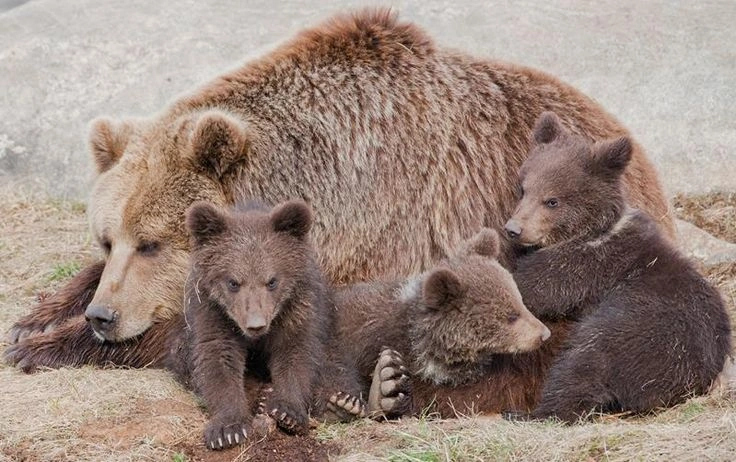
It is the largest land predator on mainland Norway. Brown bears have a powerful build, strong neck and shoulders, rounded ears and a short tail. Their fur can range from pale grayish-brown to very dark brown.
Despite their name, not every brown bear looks exactly the same. Color can vary considerably between individuals.
Around the world, brown bears occupy a remarkably wide range of habitats. They occur across parts of Europe, Asia and North America and are one of the most widely distributed bear species. Globally, the species is classified as Least Concern on the IUCN Red List, although individual populations can face much greater risks.
Norway is a different story. The Norwegian population is classified as Endangered (EN) on Norway’s 2021 national Red List because of its small population size and restricted area.
What Do Bears in Norway Eat?
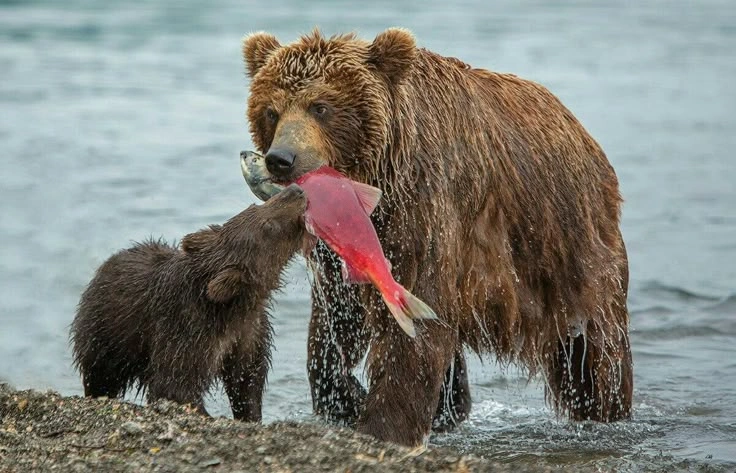
Brown bears are omnivores, and their diet changes with the season.
In Norway, berries are especially important because they provide energy that bears need to build fat reserves before winter. Bears also eat ants, grasses, herbs and various animal foods. Calves of moose and reindeer can provide valuable protein, while sheep may also be taken when the opportunity arises.
Their diet therefore does not fit the simple image of a bear constantly hunting large animals.
In spring and early summer, animal foods and ants can help bears rebuild muscle after winter. Later in the year, berries become particularly important as bears prepare for the winter period.
When Are Bears in Norway Active?
Brown bears spend the winter in dens and become much less active during this period.
Norwegian wildlife information states that bears typically remain in their dens for around six to seven months. During winter, they live largely from stored body fat. Their body temperature drops, but not dramatically, which means they can react relatively quickly if disturbed.
Females give birth inside the den during winter. Cubs are tiny at birth, usually weighing only around 0.3 to 0.6 kilograms, and remain with their mother until they emerge from the den in spring.
Consequently, spring and summer hikers can encounter bears that are actively searching for food after leaving their winter dens.
Are Bears in Norway Dangerous?
Yes, a brown bear can seriously injure a person. However, that does not mean hiking in Norway is generally dangerous because of bears.
Norway’s Environment Agency says that the probability of encountering a bear is very low, while the risk of being injured is extremely small. Most bears prefer to avoid people rather than confront them.
The situation can change when a bear feels threatened.
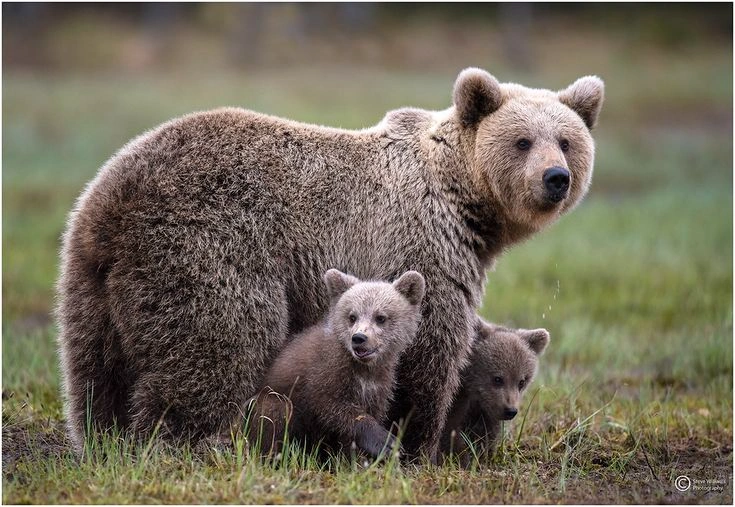
A bear may become defensive if it is surprised at close range, protecting cubs, guarding food or responding to another situation it considers threatening. For that reason, the safest approach is not to approach, chase or attempt to photograph a bear at close range.
When Is an Encounter More Risky?
Certain situations deserve extra caution:
| Situation | Why caution matters |
| A female with cubs | The mother may react defensively if she believes her cubs are threatened |
| A bear near food | The animal may defend an important food source |
| A sudden close encounter | A surprised bear may react defensively |
| Following a bear | The animal may feel pressured or trapped |
| Trying to approach for a photo | Closing the distance removes the bear’s opportunity to move away |
The Norwegian Environment Agency specifically advises people not to move around a bear that is refusing to leave. Instead, calmly retreat along the route you came from and avoid getting closer to whatever the bear may be protecting.
What Should You Do If You See a Bear?
The first rule is simple: stay calm and do not run.
If the bear has not noticed you, move away quietly. If it has noticed you, speak calmly so it can recognize you as a person.
If the bear remains in the area, slowly go back the way you came. Do not try to pass it from the side if doing so could bring you closer to the animal or something it is protecting.
If the bear follows you, continue to avoid running. Norwegian guidance recommends speaking calmly and trying to appear uninteresting while gradually creating distance.
The U.S. National Park Service gives similar general advice for brown bear country: keep your distance, avoid surprising bears, travel in groups when possible and never run from a bear.
What If a Bear Attacks?
A genuine attack is extremely rare in Norway.
Norwegian guidance says that if a brown bear actually attacks and physical contact occurs, playing dead can be appropriate as a last resort. Lie on your stomach or curl into a protective position, cover your neck and remain still until the bear leaves.
However, this is not something to do simply because a bear walks toward you. The Norwegian Environment Agency specifically warns against playing dead before the bear shows signs of attacking.
For that reason, following current local guidance is more important than relying on a single rule that applies to every bear encounter.
Bears in Norway Compared With Other Bear Regions
Norway has a relatively small brown bear population compared with several other parts of the world.
| Region | Brown bear situation |
| Norway | Small, concentrated population mainly near eastern borders |
| Sweden | Much larger Scandinavian population |
| Finland | Established brown bear population |
| Russia | Large areas of brown bear habitat |
| North America | Brown bears occur across parts of Alaska and western Canada and the United States |
| Central Asia | Brown bears occur in several mountain and desert regions |
The key difference is that Norway’s bears live within a much broader cross-border population.
Rovdata notes that most Norwegian bears are associated with border regions, while many animals move between Norway and neighboring countries.
Globally, brown bears occupy forests, mountains, coastal ecosystems and even harsh high-latitude and desert environments. Their ability to use very different habitats is one reason the species has such a broad distribution.
Why Are Bears Still Important in Norway?
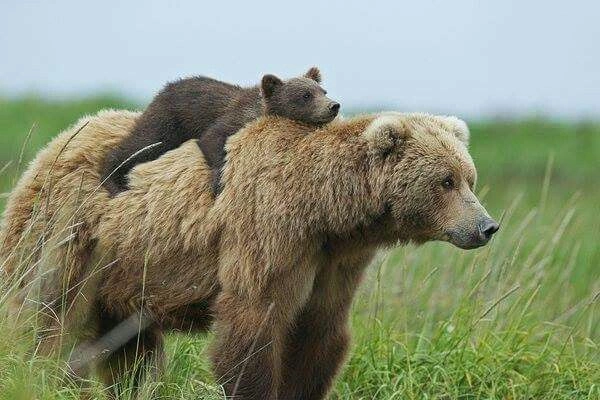
Bears are part of Norway’s native wildlife, but their history in the country has been difficult.
The original Norwegian brown bear population was eliminated during the 20th century after prolonged hunting pressure. Today’s animals are connected to populations in Sweden, Finland and Russia.
Norway now manages brown bears as part of its wider large carnivore policy. The government says the country has four large terrestrial carnivores: brown bear, wolf, lynx and wolverine. The national management system aims to maintain viable populations while also considering livestock and reindeer grazing.
The national target for brown bears is currently 13 annual litters. In 2025, Rovdata estimated 10.3 litters based on the number of female bears detected.
This management system involves national authorities as well as regional carnivore management bodies. The Norwegian term viltnemnda refers to a municipal wildlife committee, although large carnivore management operates within a broader national and regional framework.
Common Mistakes to Avoid in Bear Country
Visitors sometimes worry about bears without knowing what actually increases the risk.
Avoid these mistakes:
- Do not approach a bear for a photograph.
- Do not chase a bear to get a better view.
- Do not run if you encounter one.
- Do not try to walk around a bear that is guarding an area.
- Do not separate a mother bear from her cubs.
- Do not assume a standing bear is automatically preparing to attack.
- Do not ignore official local warnings or temporary restrictions.
- Do not treat a wild bear like a tame animal.
Instead, give the animal space and allow it an escape route.
Bear Encounter Checklist
-
Stay calm.
-
Keep your distance.
-
Do not run.
-
Speak calmly if the bear has noticed you.
-
Move away slowly.
-
Never approach cubs.
-
Avoid moving toward food or a carcass.
-
Follow current local wildlife instructions.
-
Report significant observations when appropriate.
Conclusion
Bears in Norway are best understood as rare wild neighbors rather than animals that hikers need to fear at every turn.
Their numbers remain small, their main range is concentrated along Norway’s eastern borders, and many individuals move between Norway and neighboring countries. At the same time, these are powerful wild animals that deserve plenty of space and respect.
For most people exploring Norway’s forests and mountains, the chance of a dangerous encounter is exceptionally low. Nevertheless, knowing how to react makes an already unlikely situation much safer.
The best approach is straightforward: stay alert, follow local advice, give bears room to move away and enjoy Norway’s wildlife without trying to get too close.
Frequently Asked Questions
Are there bears all over Norway?
No. Bears in Norway are concentrated mainly in eastern border regions near Sweden, Finland and Russia. However, young male bears can travel enormous distances and may occasionally appear far outside the usual areas.
How many bears are in Norway?
Rovdata detected at least 185 individual brown bears in Norway in 2025 through DNA monitoring. The number changes from year to year, and many bears cross international borders.
Can tourists see bears in Norway?
It is possible, but a wild sighting is not something visitors should expect. The animals are relatively scarce, widely dispersed and generally avoid people.
Are brown bears in Norway aggressive?
Brown bears can be dangerous, particularly when surprised or when they are protecting cubs or food. However, Norwegian authorities say the risk of a person being injured is extremely small.
Should you run from a bear in Norway?
No. Norwegian guidance says not to run. Stay calm, speak quietly and gradually move away.
What do bears in Norway eat?
They eat a mixture of plant and animal foods. Berries are particularly important for building fat reserves, while ants, grasses, herbs and animal prey also form part of the diet.
Are bears in Norway endangered?
The brown bear is classified as Endangered (EN) on Norway’s 2021 national Red List because of its small population and restricted distribution in Norway. Globally, however, the species is classified as Least Concern by the IUCN.
