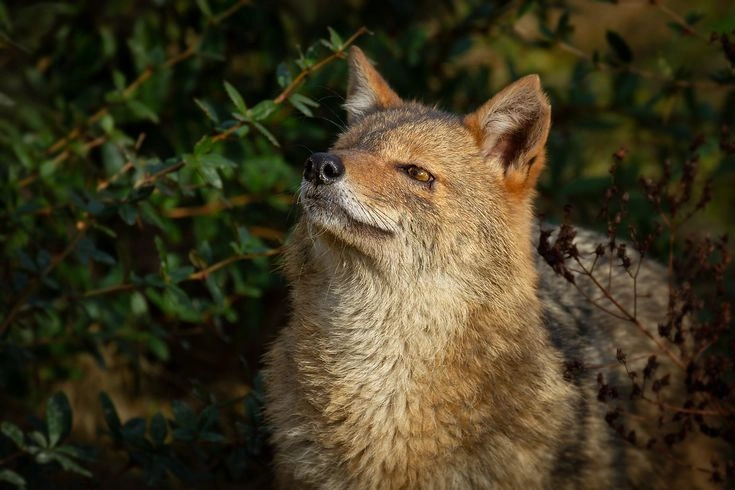
Jackal Facts are often described as small wild dogs, but that simple comparison does not tell the whole story. These adaptable members of the dog family have survived across dry grasslands, savannas, wooded areas, farmland, and even landscapes close to people. They can hunt, scavenge, eat fruit, and change their feeding habits when conditions change.
When people search for Jackal Facts, they often expect a quick list of unusual details. The more interesting story, however, is how different jackal species have developed different ways of living. Their appearance, habitat, diet, communication, and hunting methods can vary considerably.
Modern classification generally recognizes three animals commonly called jackals: the golden jackal, black-backed jackal, and side-striped jackal. The black-backed and side-striped jackals are now placed in the genus Lupulella, while the golden jackal remains in Canis.
Key Takeaways
- There are three commonly recognized jackal species.
- Golden jackals live across parts of Europe, Asia, and Africa.
- Black-backed and side-striped jackals are native to Africa.
- Jackals are opportunistic omnivores rather than strict meat-eaters.
- Their food can include mammals, birds, reptiles, insects, fruit, carrion, and other available resources.
- Some jackals hunt alone, while pairs or family groups can improve hunting success.
- Jackals are important scavengers and predators within their ecosystems.
- Their ability to adjust their diet and behavior helps them survive in changing environments.
What Is a Jackal?
A jackal is a medium-sized wild canid belonging to the family Canidae, the same broader family that includes wolves, foxes, coyotes, and domestic dogs.
Jackals usually have slim bodies, pointed ears, long legs, narrow muzzles, and bushy tails. Their build gives them a useful combination of speed, endurance, and agility. They are not built to overpower large prey like lions or other major predators, so their survival depends heavily on flexibility.
That flexibility is one of the most important Jackal Facts to understand. A jackal does not necessarily wait for one particular type of prey. It can hunt a small animal, eat insects, consume fruit, or take advantage of a carcass when an opportunity appears.
Jackal Facts: The Three Main Jackal Species
Golden Jackal
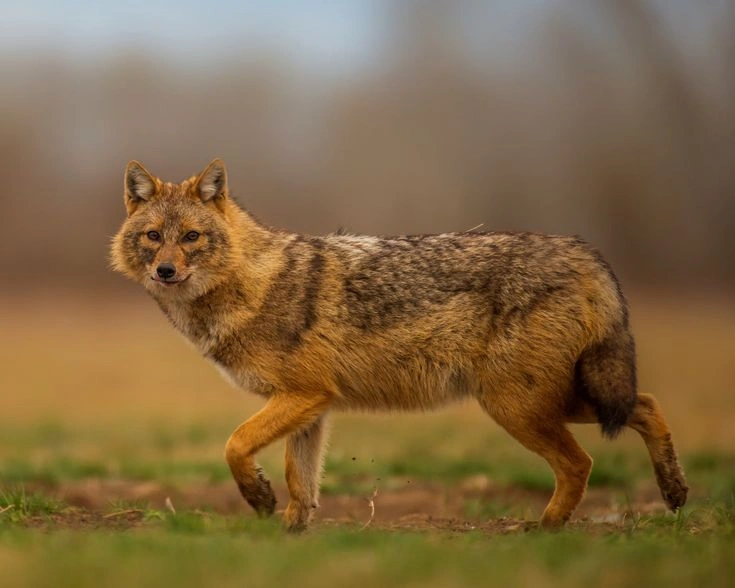
The golden jackal (Canis aureus) has the widest distribution of the three commonly recognized jackal species. It occurs across parts of southeastern Europe, Asia, and Africa, with its range extending through varied environments.
Its coat can range from golden or yellowish shades to darker tones depending on the season and location. Golden jackals are highly adaptable and can live in dry open country, grasslands, wetlands, agricultural landscapes, and areas near human settlements.
They are also known for a remarkably varied diet. Rodents, hares, birds, eggs, reptiles, frogs, fish, insects, fruit, carrion, and other food sources can all become part of their diet.
Black-Backed Jackal
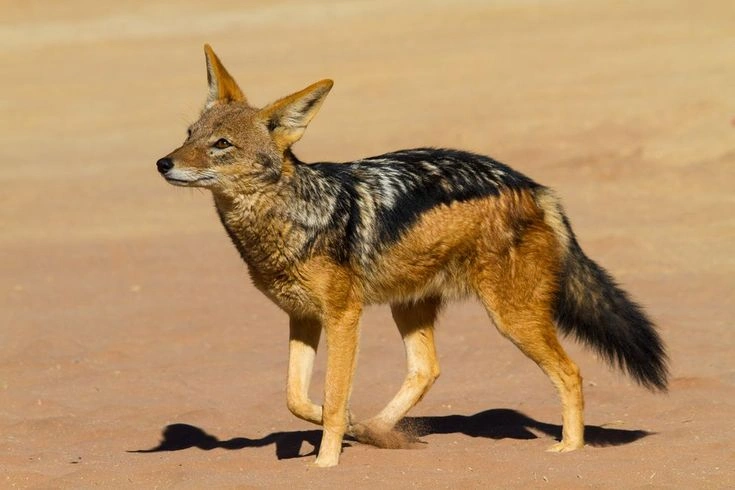
The black-backed jackal (Lupulella mesomelas) is easily recognized by the dark saddle-like marking running from the back of the neck toward the tail.
It is native to Africa and occurs in separate populations in eastern and southern parts of the continent. The species is strongly associated with open landscapes, including savannas, grasslands, and dry regions.
Black-backed jackals are opportunistic feeders. Recent research has shown that their diets can change significantly according to habitat, prey availability, land use, season, and the presence of larger carnivores.
Side-Striped Jackal
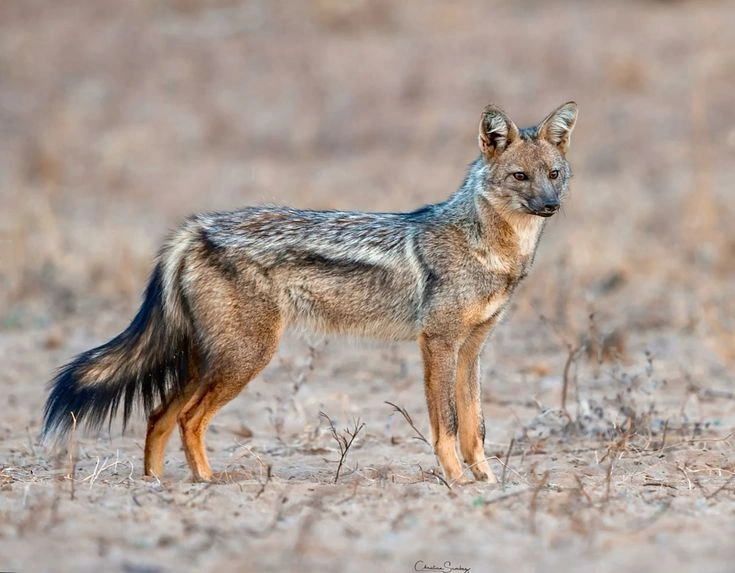
The side-striped jackal (Lupulella adusta) gets its name from the lighter stripe running along each side of its body. It is found across much of sub-Saharan Africa and generally favors wetter environments than the black-backed jackal. Its habitats can include wooded savannas, bushland, grassland, marshes, farmland, and areas around human settlements. Some populations occur at elevations reaching about 2,700 meters.
This species is particularly flexible in its feeding habits. Its diet can include insects, small mammals, birds, fruit, carrion, and plant material.
Where Do Jackals Live?
Jackals do not depend on one specific type of landscape. Golden jackals can occupy dry grasslands, steppe-like environments, agricultural areas, wetlands, and other habitats where food and cover are available. Their broad distribution demonstrates how well they can adapt to different conditions.
Black-backed jackals are commonly associated with relatively open environments. They can also live around agricultural landscapes and areas influenced by people, particularly where food remains accessible.
Side-striped jackals generally favor more moist habitats, including wooded areas, bushland, grasslands, marshes, and farmland. They can also appear around rural buildings and the edges of towns.
This wide habitat range explains another important Jackal Fact: there is no single “typical” jackal habitat. Different species have adapted to different ecological conditions.
What Do Jackals Eat?
Jackals are best described as opportunistic omnivores. Their diet changes according to what is easiest and safest to obtain. Small mammals are important prey for many jackals. Depending on the species and location, they may also eat birds, eggs, reptiles, amphibians, insects, fish, fruit, and other plant-based foods. Carrion can provide another valuable source of nutrition.
Their ability to switch between food sources is a major survival advantage. If a particular prey species becomes scarce, a jackal can often turn to something else instead of depending entirely on one food.
Research on black-backed jackals has also shown that their diet can respond to differences in land use and prey availability. In some landscapes, rodents become particularly important, while other environments provide different prey opportunities.
How Do Jackals Hunt?
Jackal hunting is usually based on opportunity, speed, patience, and good senses rather than brute strength. A jackal may quietly search through vegetation before suddenly rushing toward a small mammal or bird. Some prey can be caught through a quick dash or pouncing movement. Side-striped jackals, for example, have been observed catching insects and small animals using these fast attacks.
Golden jackals can also hunt cooperatively. Pairs can work together when pursuing prey, and research summarized by Animal Diversity Web indicates that pairs have higher hunting success than individuals in some situations. Family members may also cooperate around larger food resources.
Jackals are not limited to active hunting, though. Scavenging is an important part of their survival strategy. They may investigate carcasses left behind by larger predators and take advantage of food that would otherwise be wasted.
Do Jackals Hunt in Groups?
Not always. Jackals can hunt alone, in pairs, or with family members depending on the species, food source, and circumstances. Golden jackals are particularly known for pair and family cooperation. Working together can make it easier to catch certain prey or defend access to valuable food.
However, the image of every jackal traveling in a large hunting pack is misleading. Their social behavior is more flexible than that.
A jackal’s strategy often depends on what the environment offers. When small prey is easy to catch alone, there may be little reason to form a large hunting group. When a larger food opportunity appears, cooperation can become more useful.
Jackal Communication and Social Behavior
Jackals communicate using vocal sounds, body language, scent marking, and physical contact. Golden jackals are particularly famous for their howling. Their calls can help individuals locate one another, while coordinated howling can also strengthen the bond between members of a pair.
Scent marking is another important part of jackal behavior. Urine can be used to mark territories and communicate information to other animals. Golden jackals often form strong pair bonds, and members of a family may cooperate in raising young and obtaining food.
Why Are Jackals Important to the Ecosystem?
Jackals play more than one role in nature. As predators, they help control populations of smaller animals such as rodents and other small prey. As scavengers, they consume carrion and help return nutrients to the ecosystem.
Their flexible feeding behavior also means they can respond quickly when the availability of different foods changes. Golden jackals, for example, can benefit from agricultural landscapes because rodents and other small animals may provide accessible food.
This makes jackals an interesting example of ecological adaptability. They are neither purely hunters nor simply scavengers. They can be both, depending on what the environment provides.
Are Jackals Dangerous?
Jackals are wild predators and should always be treated as wild animals, but they are generally not animals that seek out people as prey.
Their typical food consists largely of smaller animals, insects, fruit, carrion, and other available resources. Golden jackals, for example, normally do not attack larger animals as prey.
Problems can occur when wild jackals become accustomed to human food or when people approach, feed, corner, or otherwise disturb them. The safest approach is to observe them from a respectful distance and avoid feeding or attempting to handle them.
Final Thoughts
The most impressive thing about jackals is not their size or strength. It is their ability to adapt. They can hunt small prey, cooperate with family members, scavenge from larger predators, eat fruit and insects, and adjust their behavior to different habitats. The three main jackal species show this adaptability in different ways, from the widely distributed golden jackal to the African black-backed and side-striped jackals.
For viltnemnda, these Jackal Facts offer a useful reminder that successful wildlife is not always the biggest or strongest. Sometimes, survival belongs to the animal that can make the most of whatever the environment provides.
Frequently Asked Questions
How many jackal species are there?
Three species are commonly referred to as jackals today: the golden jackal, black-backed jackal, and side-striped jackal. Modern taxonomy places the latter two in the genus Lupulella.
Are jackals carnivores or omnivores?
Jackals are opportunistic omnivores. They eat animal prey but can also consume fruit, insects, plant material, and other available foods.
Where are jackals found?
Jackals occur mainly across Africa, Europe, and Asia, depending on the species. Golden jackals have the broadest distribution, while black-backed and side-striped jackals are African species.
Do jackals hunt alone?
They can. Some jackals hunt individually, while pairs or family groups may cooperate when doing so provides an advantage. Golden jackals are well known for cooperative hunting.
Do jackals eat dead animals?
Yes. Carrion is an important food opportunity for jackals, allowing them to benefit from kills made by larger predators and other animals.
Are jackals related to wolves and dogs?
Yes. Jackals are members of the Canidae family, making them relatives of wolves, domestic dogs, foxes, and other canids. However, modern genetic research shows that the different jackal species do not form one single closely related group.
