Imagine taking out the trash after dark and spotting a gray animal with a pointed nose, bright eyes, and a long, hairless tail balancing along a fence. You freeze. It freezes, too. Then, instead of running away like you expect, it bares its teeth, makes a strange hissing sound, or simply collapses into an apparently lifeless heap.
You may have just met an opossum.
In the United States, the animal people commonly call a possum is usually the Virginia opossum, North America’s only native marsupial. It looks unusual, behaves in ways that surprise many homeowners, and has a reputation for playing dead when threatened.
But this misunderstood nighttime visitor is not simply a backyard nuisance. It is a wild animal with a fascinating survival strategy, a flexible diet, and an important place in its ecosystem.
What Is a Possum?
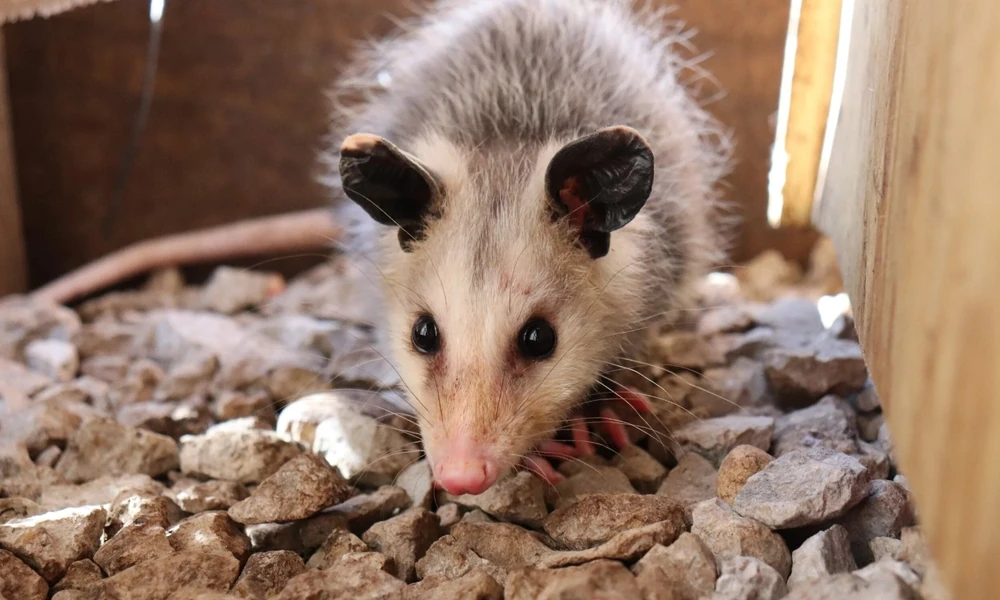
The word possum is commonly used in North America to describe the Virginia opossum (Didelphis virginiana). Technically, the Virginia opossum is an opossum, a marsupial native to North America.
True possums belong to a different group of marsupials found mainly in Australia and nearby regions. Although the names sound similar, American opossums and Australian possums are not the same animals.
Virginia opossums are related to other marsupials, including kangaroos and koalas, through their shared reproductive biology. Females give birth to extremely underdeveloped young that continue developing while attached to a teat, usually inside a pouch.
Unlike kangaroos, however, opossums are small, mostly solitary animals that often forage at night.
What Does a Possum Look Like?

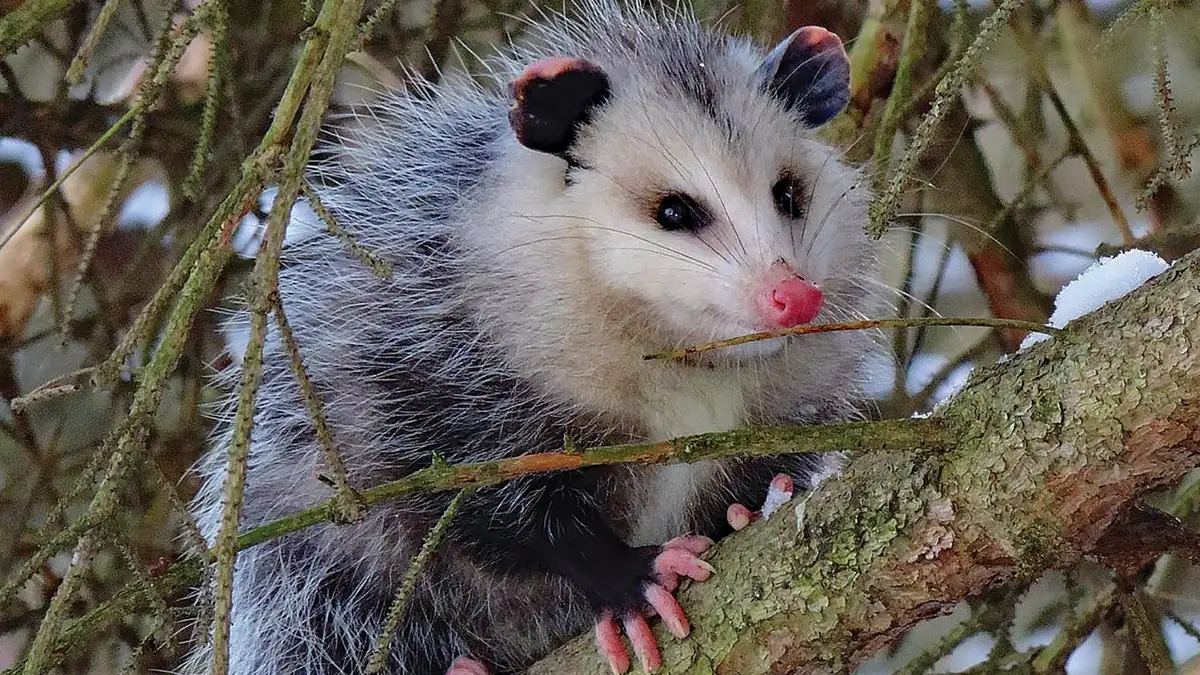
The Virginia opossum has a distinctive appearance that is difficult to confuse with most other North American mammals once you know what to look for.
A pale face and pointed nose
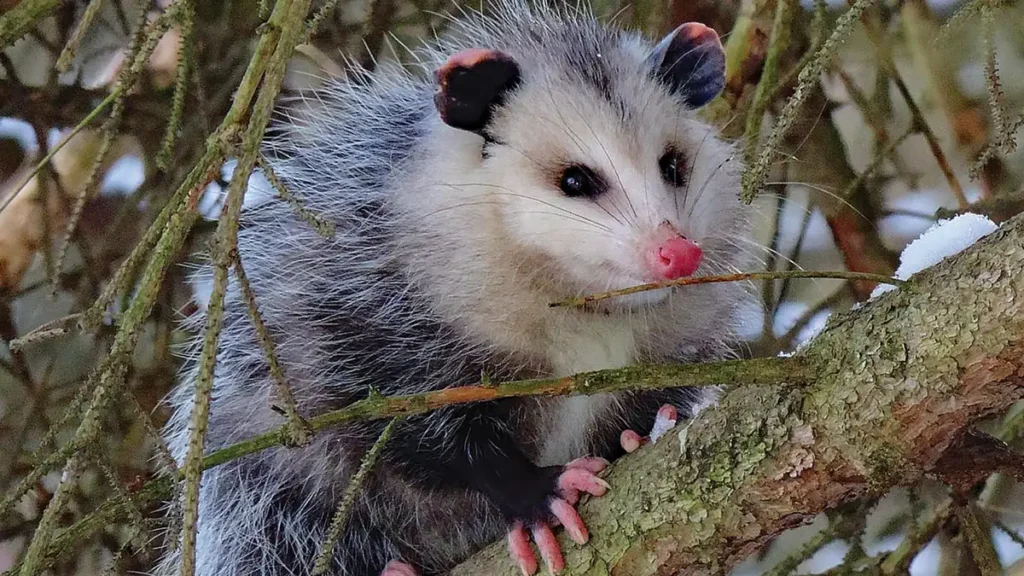
Its face is usually white or pale gray, with a long, narrow snout, dark eyes, and rounded, nearly hairless ears. Its mouth contains many small teeth, giving it a surprisingly toothy appearance when it opens its jaws defensively.
Gray fur and a bare tail
The body is covered in coarse grayish fur, often with darker guard hairs. Its long, mostly hairless tail can grip and wrap around objects to help with balance.
Young opossums may briefly use their tails to hang while climbing, but the popular image of adults routinely hanging upside down by their tails is misleading. An adult’s tail is better suited to gripping, balancing, and supporting movement than carrying its full body weight for extended periods.
Small feet with grasping toes
Opossums have five toes on each foot. Their hind feet have an opposable, clawless big toe that works somewhat like a thumb, helping them grip branches and climb.
This feature makes them capable climbers, even when they appear awkward while moving on the ground.
Where Do Possums Live?
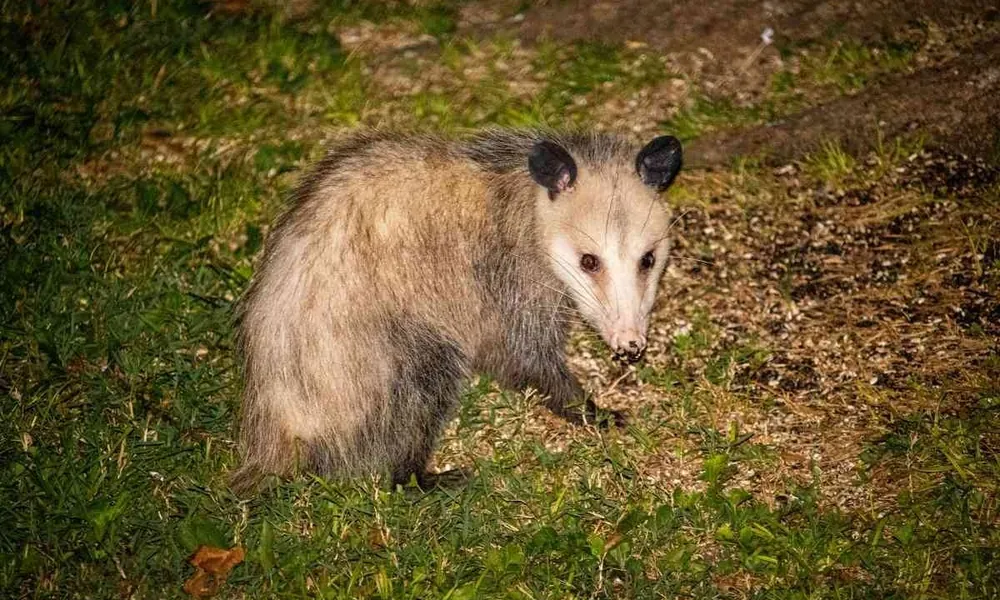
Virginia opossums are found across much of the eastern and central United States, extending into parts of the western United States and south through Mexico and Central America.
They occupy a wide range of habitats, including:
- Woodlands and forest edges
- Wetlands and areas near streams
- Farmland and brushy fields
- Suburban neighborhoods
- Parks, gardens, and other developed areas
Opossums are adaptable. They may shelter in hollow trees, abandoned burrows, brush piles, spaces beneath buildings, or other protected locations.
Their ability to use both natural and human-altered environments helps explain why they are frequently seen near homes. A backyard can provide shelter, fallen fruit, insects, pet food, and access to garbage—all resources that an opportunistic animal may investigate.
Opossums are generally nocturnal, meaning they are most active at night. A daytime sighting is not automatically a sign of illness, especially during cold weather or when the animal has been disturbed.
What Do Possums Eat?
Opossums are omnivores. They eat a wide variety of animal and plant foods, changing their diet according to what is available.
Their food may include:
- Insects and other invertebrates
- Beetles, caterpillars, and earthworms
- Mice and other small animals
- Frogs and other small vertebrates
- Eggs
- Fallen fruit and berries
- Nuts and other plant material
- Carrion
- Human food waste when accessible
This flexible diet allows opossums to forage in forests, fields, and residential areas.
Do possums eat ticks?
Opossums can consume ticks while grooming or feeding, but their reputation as major tick-destroying machines is overstated. The idea that they reliably eliminate enormous numbers of ticks from the environment is not supported as strongly as popular claims suggest.
They do eat many insects and other invertebrates, which can be useful in some settings, but they should not be treated as a dependable method of controlling ticks.
Do possums eat garbage?
Yes. Opossums may raid unsecured trash cans, compost piles, or pet food left outside. They can also feed on naturally available foods, such as insects and fallen fruit.
Keeping garbage securely covered and bringing pet food indoors can reduce unwanted visits without harming wildlife.
Why Do Possums Play Dead?
One of the most famous opossum behaviors is playing possum. When severely frightened, an opossum may enter an involuntary state that makes it appear dead.
This response is known as thanatosis, or death-feigning behavior. It is not simply a deliberate acting performance. The animal may become motionless, fall onto its side, stiffen, and show an open mouth with its tongue extended. Its breathing can become shallow, and it may release unpleasant-smelling fluid from its anal glands.
The response can last minutes or, in some cases, much longer. The animal typically returns to normal behavior when the perceived danger passes.
Why would pretending to be dead help? Some predators lose interest in prey that appears dead, especially if it does not move. For an animal that cannot overpower a larger attacker, an involuntary defensive response may create an opportunity to survive.
If you encounter an opossum that appears lifeless, do not poke it or try to pick it up. Give it space and time. If it remains unresponsive for an unusual period, appears injured, or is in immediate danger, contact a licensed wildlife rehabilitator or local animal-control service.
Are Possums Dangerous to Humans?
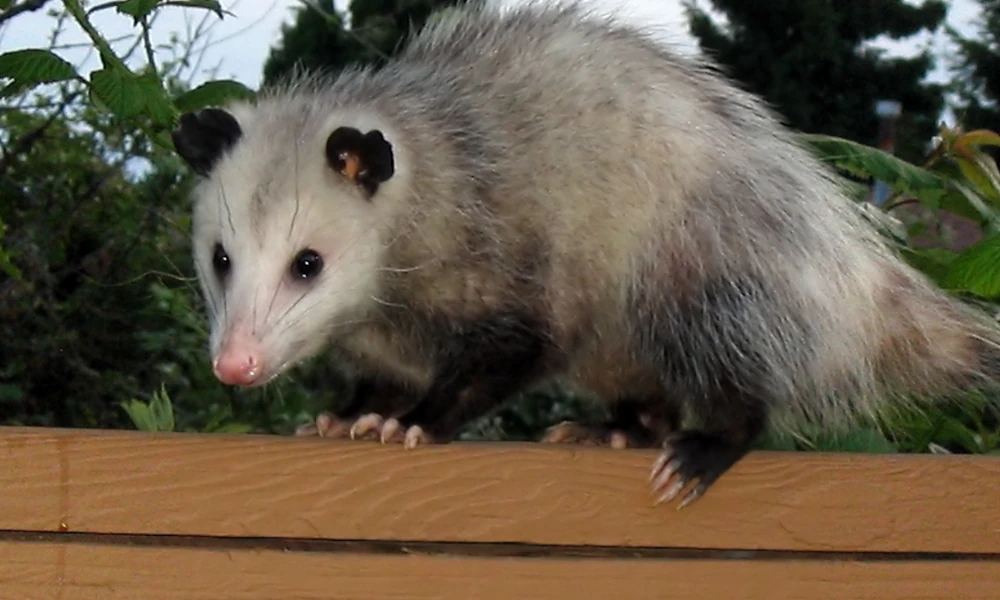
Virginia opossums are generally shy and avoid confrontation. They are not usually aggressive toward people, and they are more likely to flee, freeze, hiss, or show their teeth when frightened than to initiate an attack.
However, they are still wild animals. A cornered or injured opossum may bite or scratch if someone tries to handle it.
For safety:
- Never pick up an opossum with bare hands.
- Keep children and pets at a respectful distance.
- Do not try to feed or tame wild individuals.
- Avoid contact with saliva, blood, urine, or feces.
- Seek medical advice after a bite or scratch.
Opossums can carry parasites and certain diseases, although rabies is relatively uncommon in opossums compared with some other wild mammals. Their unusual body temperature and other biological factors may make infection less likely, but they are not immune to rabies.
If an opossum behaves unusually, appears severely disoriented, or shows signs of serious illness, avoid contact and ask local wildlife professionals for guidance.
Do Possums Bite?
Yes, an opossum can bite if it feels threatened or is handled. Its mouth contains many teeth, and a defensive bite can break the skin.
An opossum that opens its mouth and hisses is often attempting to scare away a perceived threat. This display does not necessarily mean it intends to attack.
The safest response is to stop approaching and allow the animal an escape route. Never corner an opossum just to get a closer look or take a photograph.
If a bite occurs, wash the wound thoroughly with soap and running water and seek prompt medical advice. A healthcare professional can assess infection risk and whether rabies evaluation or tetanus protection is needed.
Do Possums Carry Diseases?
Like many wild mammals, opossums can carry parasites and certain infectious organisms. Their feces may also create health concerns, depending on the environment and the pathogens present.
That does not mean every opossum is sick or dangerous. The practical rule is to avoid direct contact with wild animals and their waste.
If an opossum enters a garage or shed, keep people and pets away and provide a safe exit if possible. For droppings or a suspected nest in an enclosed space, use appropriate protective measures or contact a wildlife-removal professional.
Never handle a wild opossum simply because it seems calm or accustomed to people.
Do Possums Make Good Pets?
Opossums are wild animals, not domesticated pets. Even a young animal raised by people has specialized dietary, housing, and veterinary needs that can be difficult to meet in a household.
Wildlife ownership laws vary by state and locality, and keeping an opossum without the required authorization may be illegal.
If you find a baby opossum alone, do not automatically assume it has been abandoned. Young opossums may become separated from their mother, and some may be old enough to move independently.
If a baby is visibly injured, cold, weak, or in immediate danger, contact a licensed wildlife rehabilitator. Avoid feeding it cow’s milk, forcing food or water into its mouth, or attempting to raise it yourself.
How Do Possums Have Babies?
Opossums are marsupials, meaning their young complete much of their early development outside the uterus, usually in a pouch.
After a short pregnancy, a female gives birth to tiny, extremely underdeveloped young. They crawl toward the pouch and attach to teats, where they continue growing.
The number of young born can exceed the number that successfully attach and survive. Those that do survive spend several weeks developing in the pouch before gradually spending more time outside it.
As the young become larger, they may ride on their mother’s back or follow her closely while she forages. Eventually, they become independent.
This unusual reproductive strategy is one of the most distinctive features separating opossums from most familiar North American mammals.
Possum vs. Raccoon: How Can You Tell Them Apart?
Opossums and raccoons both visit backyards, eat a wide range of foods, and may search through garbage. Their appearances, however, are quite different.
| Feature | Virginia opossum | Raccoon |
| Face | Pale face with a pointed snout | Dark mask around the eyes |
| Tail | Long, mostly hairless | Bushy tail with dark rings |
| Feet | Grasping feet with an opposable big toe on each hind foot | Dexterous paws with long fingers |
| Fur | Usually grayish and coarse | Usually grayish with a denser appearance |
| Common behavior | Often moves slowly and climbs well | Frequently manipulates objects and explores containers |
If you see a pale-faced animal with a bare tail, it is likely an opossum. A dark eye mask and ringed tail are strong clues that the visitor is a raccoon.
What Should You Do If You Find a Possum in Your Yard?
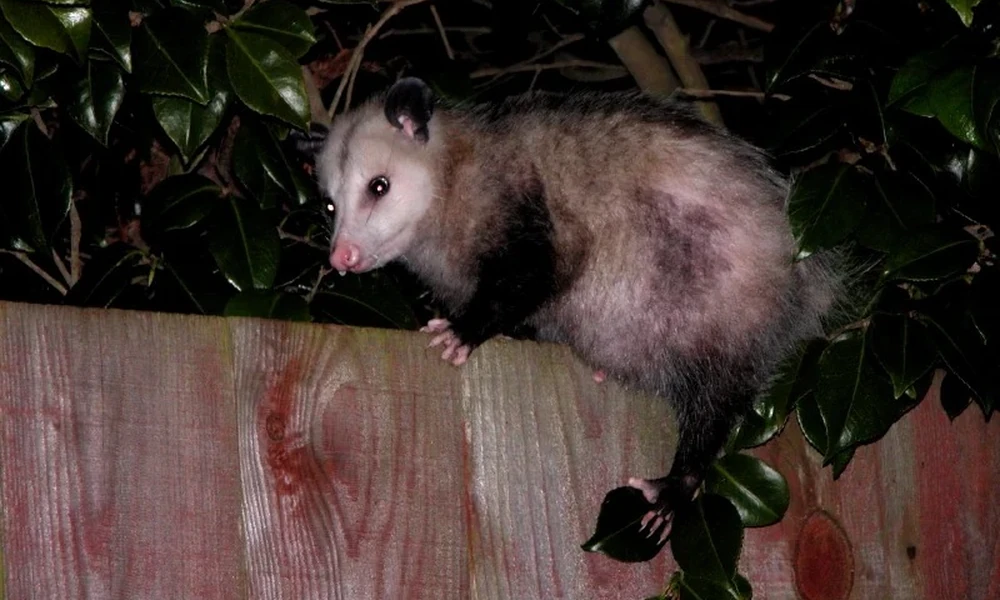
In most situations, the best response is to leave it alone. Opossums usually move on when they finish foraging or find another place to rest.
If one is visiting frequently, remove easy food sources, secure garbage, bring pet food indoors, and block access to crawl spaces only after confirming that no animal or dependent young are trapped inside.
Do not use poison or attempt to kill an opossum simply because it visits your yard. If it is inside a living space or appears injured, contact a qualified wildlife professional.
A healthy opossum wandering through a garden is usually just doing what wild animals do: looking for food and shelter.
Frequently Asked Questions
Do possums really play dead?
Yes. When severely frightened, an opossum may enter an involuntary state that makes it appear lifeless. This defense can discourage some predators.
Are possums aggressive?
They are generally shy and avoid people. They may hiss, show their teeth, or bite if cornered or handled.
Can possums climb trees?
Yes. Their grasping feet, opposable hind toes, and long tails help them climb trees, fences, and other structures.
Do possums eat snakes?
They may eat small snakes when the opportunity arises, but snakes are only one possible food among many in their varied diet.
Are possums rodents?
No. Opossums are marsupials, not rodents. Their reproductive biology is fundamentally different from that of mice, rats, and squirrels.
How long do possums live?
Virginia opossums generally have short lives compared with many similarly sized mammals. Wild individuals often live only a few years, although lifespan varies with habitat, injuries, predators, and other conditions.
Should I remove a possum from my yard?
Usually, no. If it is healthy and outside, leaving it alone is often the simplest solution. Remove food attractants and seek professional help if it is injured or trapped.
The Unusual Visitor That Deserves a Little Respect
The Virginia opossum is easy to misunderstand. Its bare tail, pale face, and rows of teeth can make it look threatening, while its habit of playing dead has given it a reputation as nature’s strangest actor.
Yet this small marsupial has survived by doing something remarkably effective: adapting. It climbs, forages, scavenges, and raises its young in landscapes that have changed around it.
The next time an opossum shuffles across your yard after dark, remember that it is not necessarily looking for trouble. It is probably looking for its next meal.
Give it space, keep food waste secured, and let this unusual North American native continue its quiet nighttime journey.
Disclaimer: This article is only for informational purposes. We are not advertising any product.