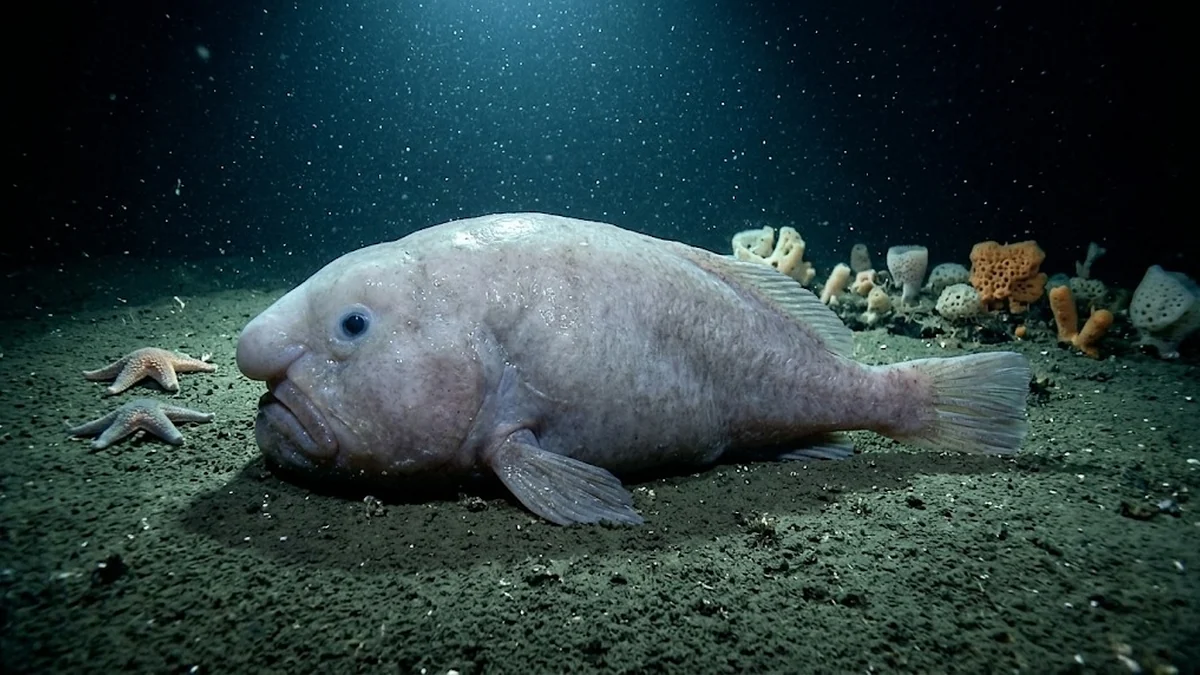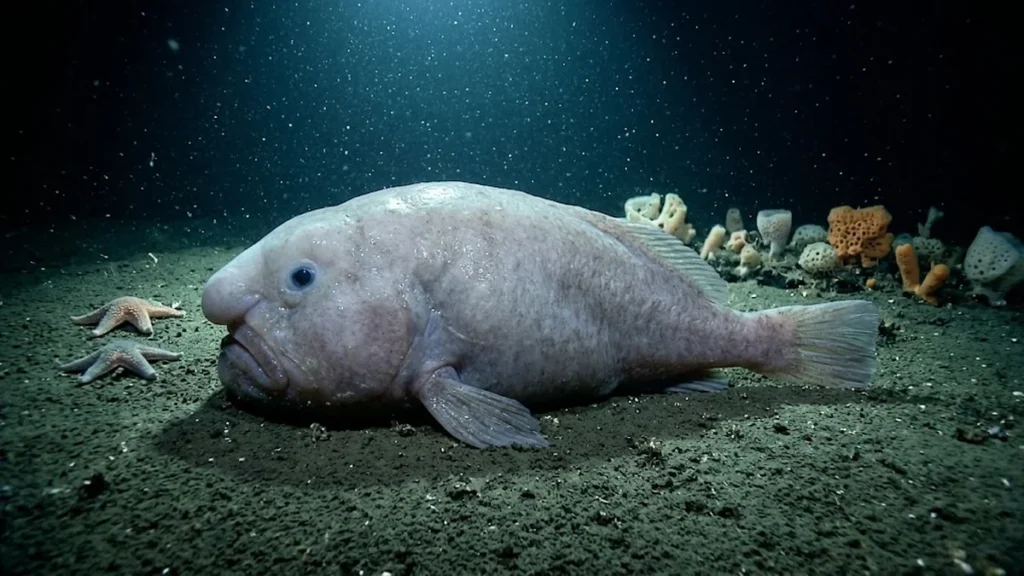
Imagine pulling a fish out of the deep ocean and finding a creature with a drooping face, a bulbous nose, and an expression that looks permanently disappointed. It barely resembles the sleek, streamlined fish people expect to see swimming through the sea.
Meet the blobfish, one of the most unusual-looking animals on Earth.
Its appearance has made it an internet celebrity, but there is much more to this deep-sea fish than its famous face. The blobfish is adapted to life in a world of crushing pressure, almost complete darkness, and scarce food. The very features that look strange to us make sense in the environment where it belongs.
So what is a blobfish, where does it live, and why does it look so different when it is brought to the surface?
What Is a Blobfish?
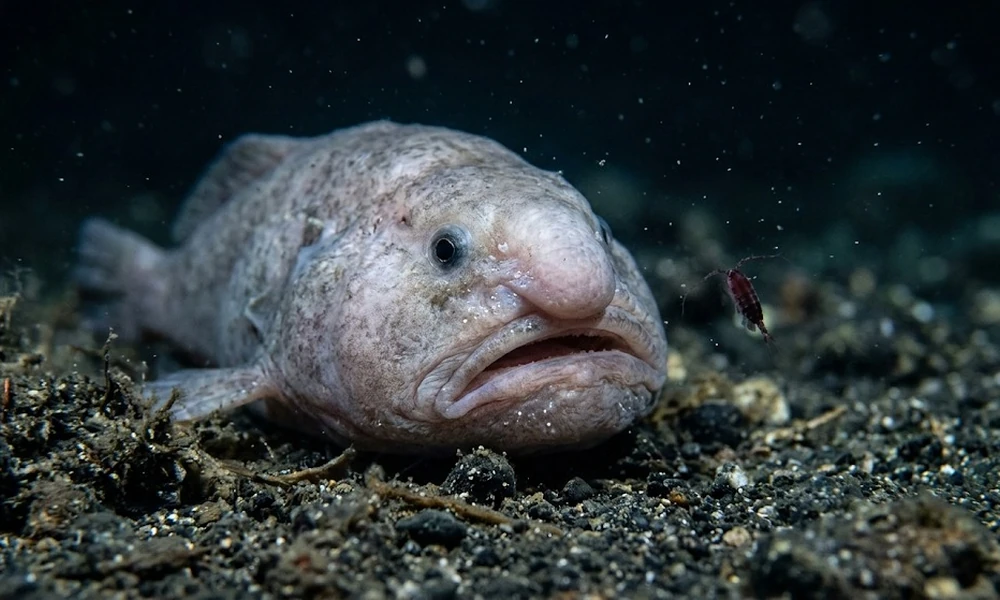
The name blobfish commonly refers to deep-sea fishes in the family Psychrolutidae, particularly the species Psychrolutes marcidus, often associated with the waters around Australia and New Zealand.
Blobfishes are marine fish adapted to life near the ocean floor. They inhabit deep water, where pressure is far greater than at the surface and sunlight cannot reach them.
Unlike many familiar fish, a blobfish does not have the firm, muscular body shape associated with fast swimming. Its body is relatively soft, with a gelatinous consistency that helps it exist under deep-sea conditions.
The name became famous because photographs of blobfish brought to the surface show a sagging, almost humanlike face. However, that familiar appearance is not a perfect representation of how the fish looks in its natural habitat.
Why Does the Blobfish Look So Weird?
The blobfish’s unusual face is the result of its body structure and the dramatic change in pressure that occurs when it is brought out of deep water.
Its body is soft and gelatinous
A blobfish has relatively little dense muscle compared with many fish. Its body contains watery, gelatinous tissue that contributes to its low-density structure.
This helps the fish live near the seabed without needing a heavily muscular body to maintain its position. It does not mean the fish is simply a shapeless blob underwater.
Its face changes out of water
The famous drooping face appears most dramatically when a blobfish is removed from its deep-sea environment. At depth, the surrounding water pressure supports the fish’s body structure.
When the fish is brought rapidly to the surface, that pressure drops enormously. Its soft tissues can expand and deform, leaving it with the sagging appearance seen in photographs.
In other words, the blobfish’s internet-famous face is partly a consequence of being taken out of the environment for which it evolved.
It does not need a typical fish’s streamlined shape
Many fish are built for speed, with strong muscles and streamlined bodies. Blobfishes live in a different world, where conserving energy and finding food near the seabed can matter more than chasing prey over long distances.
Their unusual body structure reflects that lifestyle.
Where Do Blobfish Live?

Blobfish are associated with deep marine waters around Australia and New Zealand. The species Psychrolutes marcidus is commonly reported from deep waters in this region.
They live near the ocean floor, far below the sunlit surface waters familiar to swimmers and divers. Depending on the species and location, blobfish relatives occupy different depths, so one depth range should not be applied to every fish called a blobfish.
The deep sea is a demanding habitat. Temperatures are cold, sunlight is absent, and food can be unpredictable. Many animals living there rely on organic material sinking from the upper ocean or on smaller animals they encounter near the bottom.
Blobfishes are adapted to this low-energy environment, where a slow, efficient lifestyle can be more practical than constant movement.
What Do Blobfish Eat?
Blobfish are thought to feed on small animals and other edible material found near the seabed. Their diet can include small crustaceans and other invertebrates, depending on the species and what is available.
Deep-sea animals cannot always afford to waste energy chasing food. Instead, many rely on patience, proximity, and opportunistic feeding.
A blobfish may remain near the bottom and consume suitable prey that comes within reach. Its soft body and low-energy lifestyle fit an environment where meals may be separated by long periods of waiting.
Because blobfish are difficult to observe alive in their natural habitat, some details of their feeding behavior remain less well understood than those of more accessible fish.
How Deep Can Blobfish Live?
Blobfish are associated with deep-water habitats, often hundreds of meters below the surface. The exact depth depends on the species and the location.
At these depths, pressure rises dramatically. For every 10 meters of seawater, pressure increases by roughly one atmosphere. A fish living hundreds of meters down experiences pressure many times greater than the pressure at the surface.
Deep-sea animals have adaptations that allow their bodies to function under these conditions. For blobfish, a soft body and tissues suited to deep water are part of that adaptation.
The important distinction is that a blobfish is not simply a surface fish that happens to swim deep. It is adapted to a habitat where pressure, temperature, light, and food availability are very different from those near the shore.
Can Blobfish Swim?
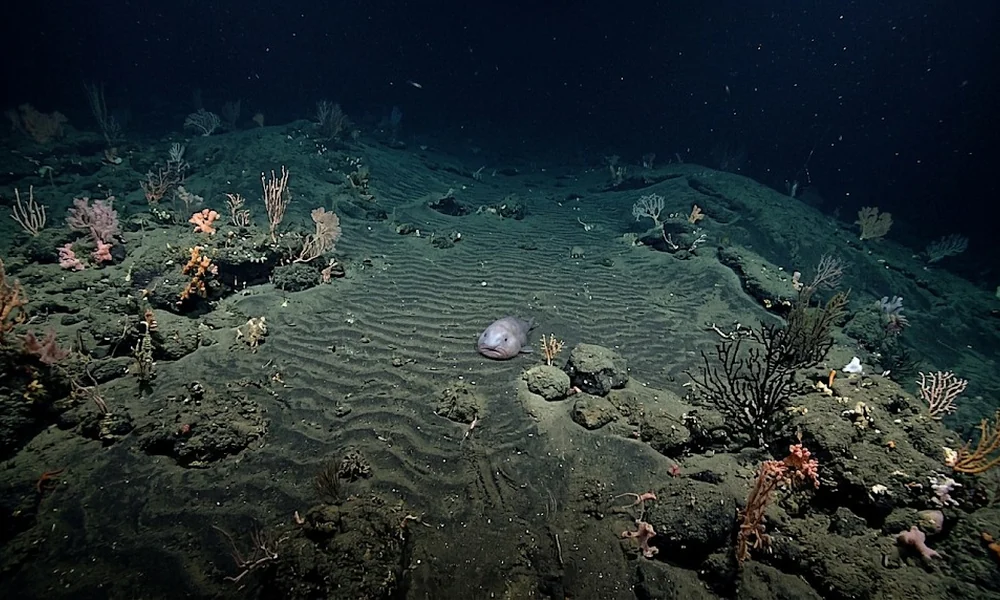
Yes. Blobfish are fish, and they can move through the water, although they are not built for fast pursuit like tuna or many predatory reef fish.
Their lifestyle is generally associated with the seabed, where they can remain close to food sources without constantly swimming through open water.
The blobfish’s soft body may look awkward outside water, but judging its movement by how it appears on a deck is misleading. A deep-sea fish should be understood in the environment where it evolved, not by how it behaves after being removed from that environment.
Researchers still have much to learn about the everyday movement and behavior of blobfish in the wild because observing them in their natural habitat is difficult.
Are Blobfish Dangerous?
No. Blobfish are not considered dangerous to humans.
They are deep-sea fish, not large predators that pursue people. Their diet and lifestyle do not make them a threat to swimmers or divers, and they are rarely encountered by people outside fishing operations or scientific work.
Their unusual appearance may look unsettling, but they are simply animals adapted to a habitat most humans will never experience firsthand.
If a blobfish is caught or brought to the surface, the greater concern is its welfare, since the change in pressure can seriously affect its body.
Are Blobfish Endangered?

The conservation status of a particular blobfish species depends on which species is being discussed and what information is available about its population.
The popular name blobfish is used broadly, so it is inaccurate to assume every fish given that name has the same conservation status. For some deep-sea species, population data are limited because researchers cannot easily observe or count them in their natural habitat.
One potential concern is deep-sea fishing. Bottom trawling and other fishing activities can affect seabed habitats and catch animals that are not the intended target.
Deep-sea ecosystems often recover slowly from disturbance, making habitat protection and better information about these species important.
However, a fish becoming famous online does not automatically mean it is endangered. Reliable conservation assessments require species-specific evidence rather than appearance or internet popularity alone.
Why Did the Blobfish Become an Internet Meme?
The blobfish became famous largely because photographs of specimens brought to the surface show an exaggerated, drooping face. Its expression looks so unusual that people began sharing the image as a symbol of sadness, exhaustion, or disappointment.
The internet turned the fish into a character: a creature that seems to have had the worst day imaginable.
But the meme leaves out an important scientific detail. The fish’s appearance changes because it is taken from a high-pressure environment into air at surface pressure. The image that made it famous does not necessarily show how it looks when living normally at depth.
This is why the blobfish is a useful reminder that appearances can be misleading. An animal can look awkward or fragile outside its habitat while being well suited to life within it.
Blobfish vs. Other Deep-Sea Fish
Blobfish are not the only animals with unusual appearances. The deep ocean is home to fish with oversized mouths, transparent bodies, glowing organs, and other adaptations to darkness and scarcity.The difference between Blobfish, anglerfish and viperfish is shown below
| Feature | Blobfish | Anglerfish | Viperfish |
| Best-known feature | Soft body and drooping appearance out of water | Many species use a light-producing lure to attract prey | Large teeth and a long, narrow body |
| Typical lifestyle | Near the seabed in deep water | Varies by species; many live in deep water | Predatory deep-water lifestyle |
| Feeding strategy | Opportunistic feeding on available prey | Often attracts or ambushes prey | Hunts smaller animals |
| Main adaptation | Body suited to deep-water conditions | Lures and other adaptations vary by species | Large teeth and specialized predatory features |
These animals evolved different solutions to the challenges of deep-sea life. There is no single body shape that works for every animal living far below the surface.
Interesting Facts About Blobfish
- They are real fish, not mythical creatures. Their unusual appearance is entirely natural, although the famous surface photographs exaggerate it.
- Their bodies are adapted to deep water. They are not built like fast-swimming fish that live near the surface.
- They are difficult to study. Their remote habitat makes direct observation challenging.
- The name covers more than one species. Not every fish called a blobfish is necessarily the same species.
- They are not dangerous to people. Their strange faces have created a reputation that has little to do with actual risk.
Frequently Asked Questions
Why does a blobfish look sad?
Its drooping face is most noticeable when it is brought to the surface, where the pressure is far lower than in its deep-sea habitat.
Do blobfish live in the United States?
The best-known blobfish, Psychrolutes marcidus, is associated with deep waters around Australia and New Zealand, not the US coastline. Other related fishes have different distributions.
Can you keep a blobfish as a pet?
No practical home aquarium can replicate the conditions needed by a deep-sea blobfish. It is not a suitable pet.
Does a blobfish have bones?
Yes. Like other fish, blobfish have a skeleton, but their bodies are relatively soft and gelatinous compared with many familiar fish.
How big is a blobfish?
Size varies by species. The best-known blobfish is generally described as a relatively small deep-sea fish rather than a giant ocean predator.
Does a blobfish have teeth?
Blobfish are not known for large, prominent teeth like those of some deep-sea predators. Their feeding anatomy and diet differ from those of specialized hunters such as viperfish.
Why is the blobfish famous?
Its unusual appearance in photographs taken after capture made it an internet meme. The same images helped make it one of the world’s most recognizable deep-sea animals.
The Blobfish Is More Than Its Famous Face
It is easy to laugh at the blobfish’s drooping expression. Its face looks like a cartoon character, and its appearance is so unusual that it seems almost invented.
But the real story is far more interesting. This fish belongs to a world of crushing pressure, cold water, darkness, and limited food. Its soft body and slow lifestyle make sense in an environment where the rules of survival differ from those at the ocean’s surface.
The blobfish does not need to look elegant to succeed. It needs to be suited to the place where it lives.
And that is the most fascinating thing about this strange little fish: what looks like a flaw to us may be an adaptation to a world we can barely imagine.