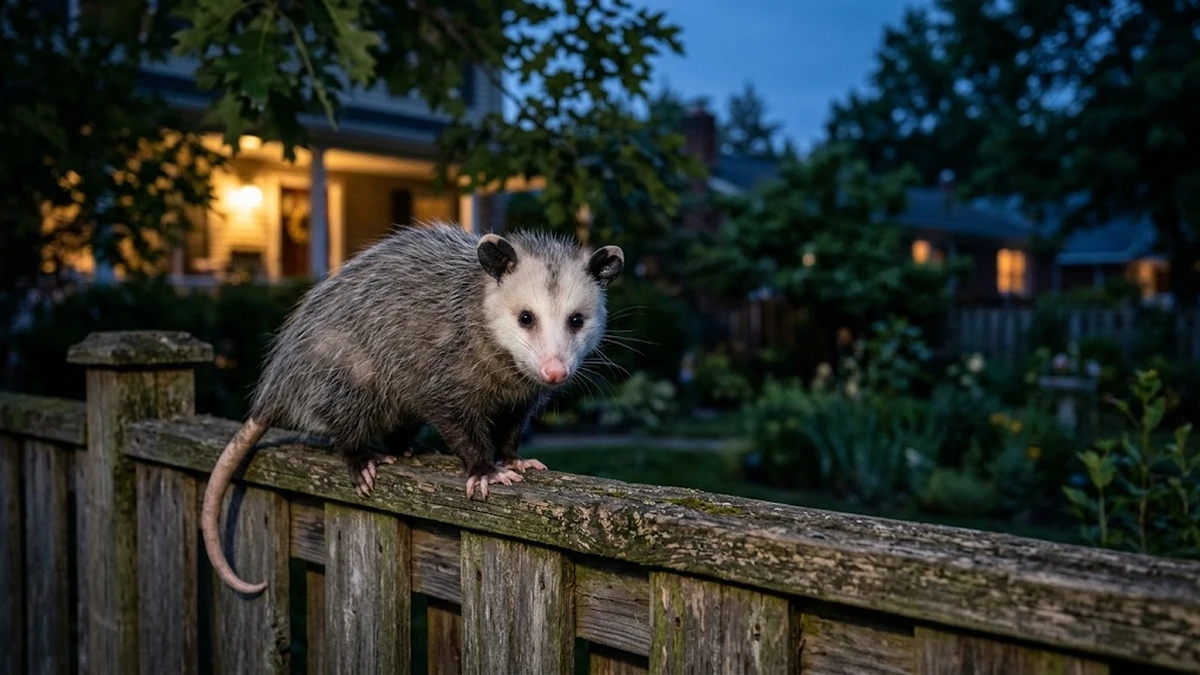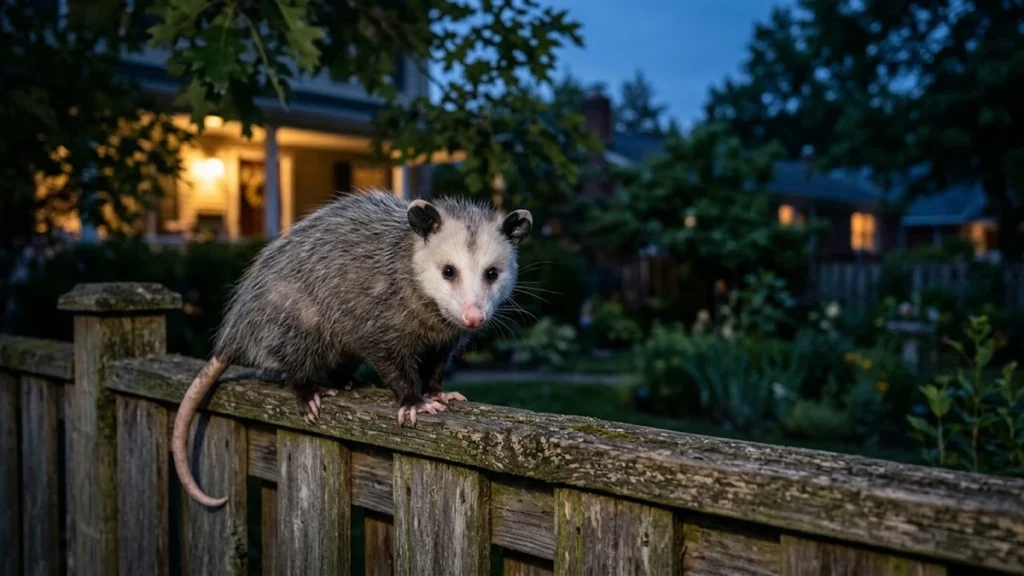
When an opossum appears in a backyard after dark, its pale face, hairless tail, and slow, cautious movements can make it look unusual. Some people mistake it for a giant rat, while others assume it is dangerous. In reality, the opossum is a fascinating mammal with an unusual survival strategy, a flexible diet, and an important role in many ecosystems.
Opossums are best known for playing dead when threatened, but that behavior is only one part of what makes these animals remarkable.
What Is an Opossum?
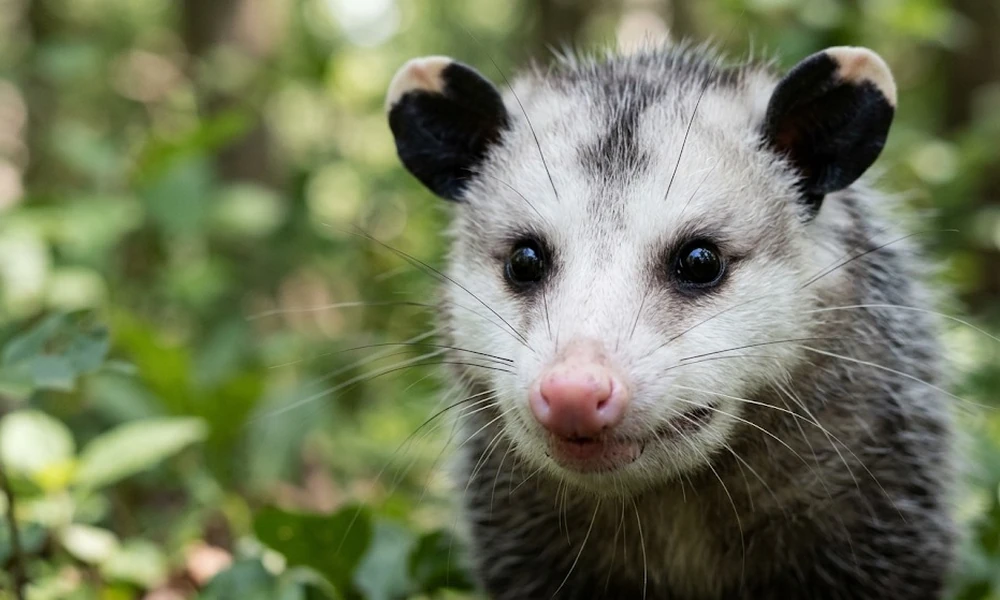
An opossum is a marsupial, a type of mammal whose young develop partly inside a pouch or attached to their mother’s teats. The Virginia opossum (Didelphis virginiana) is the only marsupial native to the United States and Canada, although other opossum species live throughout Central and South America.
Despite their rat-like appearance, opossums are not rodents. They belong to a different mammalian group and have distinctive biological features, including opposable hind thumbs in many species and a reproductive system adapted to raising very small newborns.
Opossums are generally solitary and mostly active at night. They can live in forests, grasslands, wetlands, suburbs, and cities, provided they can find food and shelter.
Opossum Quick Facts
- Scientific name: Didelphis virginiana for the Virginia opossum
- Animal group: Mammal
- Classification: Marsupial
- Native range: North America, with other opossum species found farther south
- Diet: Omnivorous
- Activity: Primarily nocturnal
- Typical lifespan: Often around one to two years in the wild for Virginia opossums, although survival varies
- Distinctive features: Pointed snout, rounded ears, opposable hind thumbs, and a mostly hairless tail
Where Do Opossums Live?
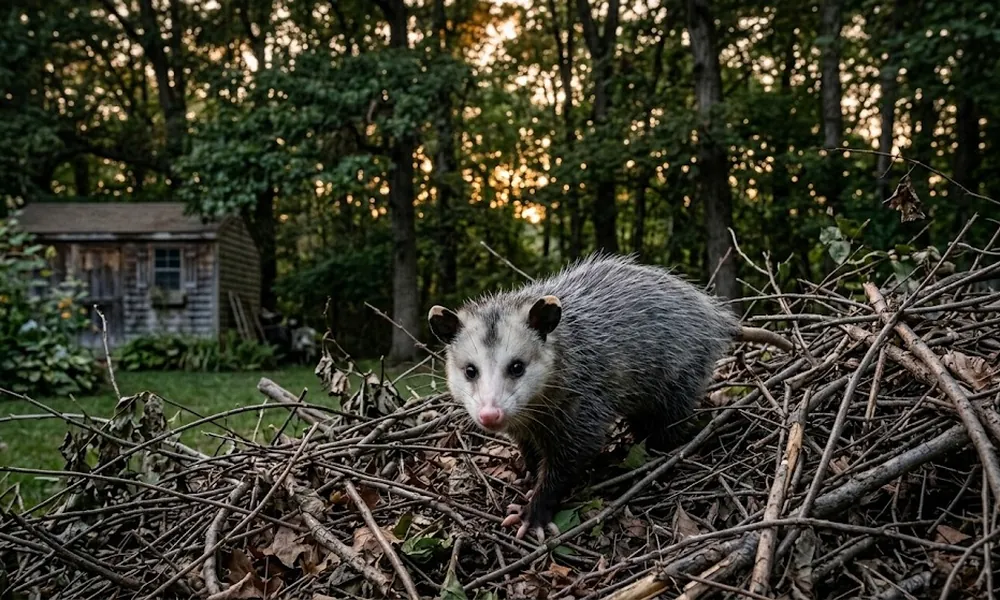
Opossums occupy a wide range of habitats across the Americas. The Virginia opossum is found in much of the United States, as well as parts of southern Canada and Central America. Other species inhabit tropical forests, scrublands, agricultural areas, and other environments in Central and South America.
These animals are adaptable. They may shelter in hollow trees, abandoned burrows, brush piles, rock crevices, or quiet spaces beneath buildings. In towns and suburbs, sheds, garages, and decks can provide suitable hiding places.
Access to food and safe shelter often matters more than a particular type of landscape. This flexibility helps explain why opossums can live close to people.
What Do Opossums Eat?
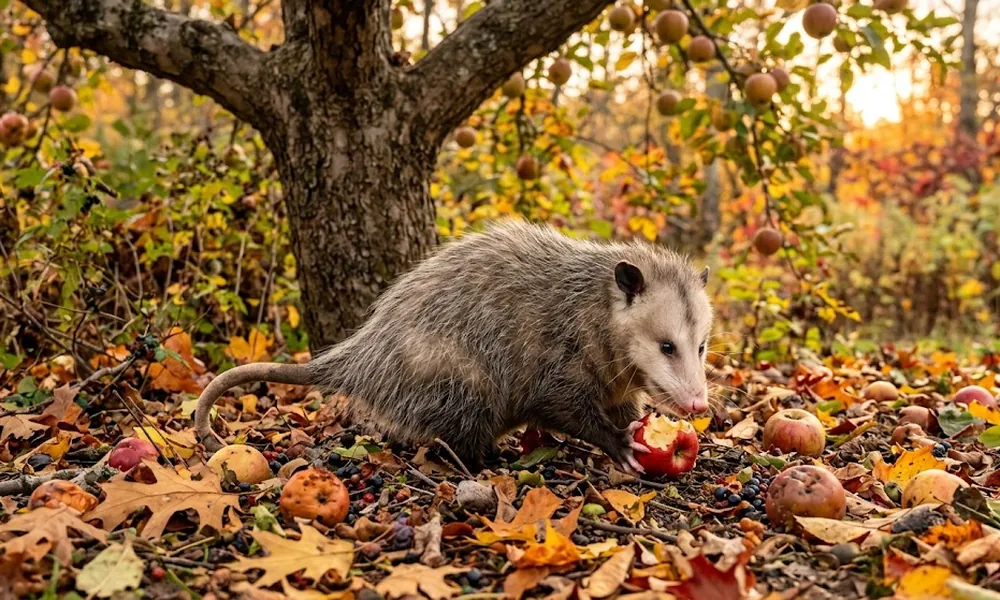
Opossums are omnivores, meaning they eat both plant and animal matter. Their diet changes with the season, habitat, and availability of food.
Common foods include:
- Insects and other invertebrates
- Earthworms and slugs
- Fruits and berries
- Eggs and small animals
- Carrion, or animals that have already died
- Food scraps they encounter around human settlements
Their willingness to eat different foods allows them to take advantage of changing conditions. By consuming fallen fruit, insects, and carrion, opossums contribute to natural food webs and the breakdown of organic material.
However, feeding wild opossums is generally unnecessary. Leaving pet food, unsecured rubbish, or other food waste outdoors can attract wildlife and create avoidable conflicts.
Why Do Opossums Play Dead?
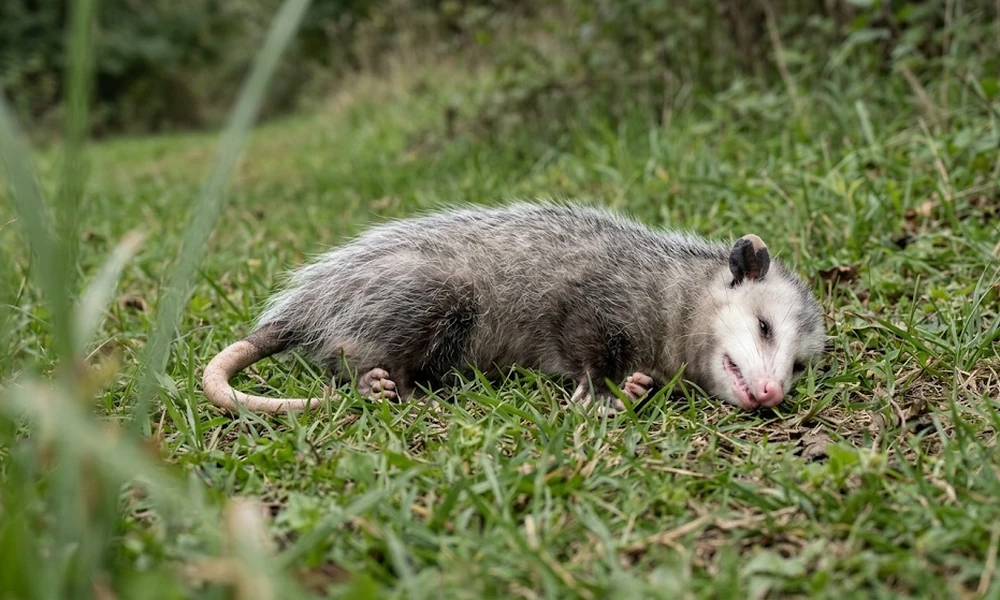
One of the best-known opossum behaviors is called playing possum. When an animal feels severely threatened, it may enter an involuntary, death-like state. It can become motionless, with its mouth open and its body appearing limp.
This response is not simply a clever performance; the animal deliberately starts and stops whenever it wants. It is a defensive reaction associated with intense stress.
The behavior may discourage a predator that prefers live prey. An opossum in this state can also produce a foul-smelling secretion, adding to the impression that it is dead or unappealing.
The response can last from minutes to longer periods, depending on the circumstances. It is not guaranteed to work against every predator.
Are Opossums Dangerous to Humans?
Opossums generally avoid confrontation and are not normally aggressive toward people. Like any wild mammal, however, they may bite if cornered, handled, or otherwise threatened.
The safest approach is to observe an opossum from a distance and give it a clear route to leave. Do not attempt to pick one up, even if it appears weak or motionless.
Opossums can carry parasites and may occasionally carry diseases, so direct contact should be avoided. Although their body temperature and biology may make them less susceptible to some infections than certain other mammals, they are not disease-proof.
If an opossum appears seriously injured, trapped, or unusually disoriented, contact a qualified wildlife rehabilitator or local animal-control service rather than handling it yourself.
What Role Do Opossums Play in Nature?
Opossums are part of the food web, serving as both consumers and prey. They eat insects, fruits, carrion, and other available foods, while larger predators may hunt them.
Their scavenging can help remove animal remains from the environment. Eating fruit may also contribute to seed dispersal, although the extent of that contribution varies by species and habitat.
Opossums are sometimes described as natural pest controllers because they eat certain insects and other small invertebrates. Their diet is broad, though, and it would be misleading to treat them as a guaranteed solution for any particular pest problem.
Their ecological value comes from being one part of a wider, interconnected ecosystem.
How Do Baby Opossums Grow?
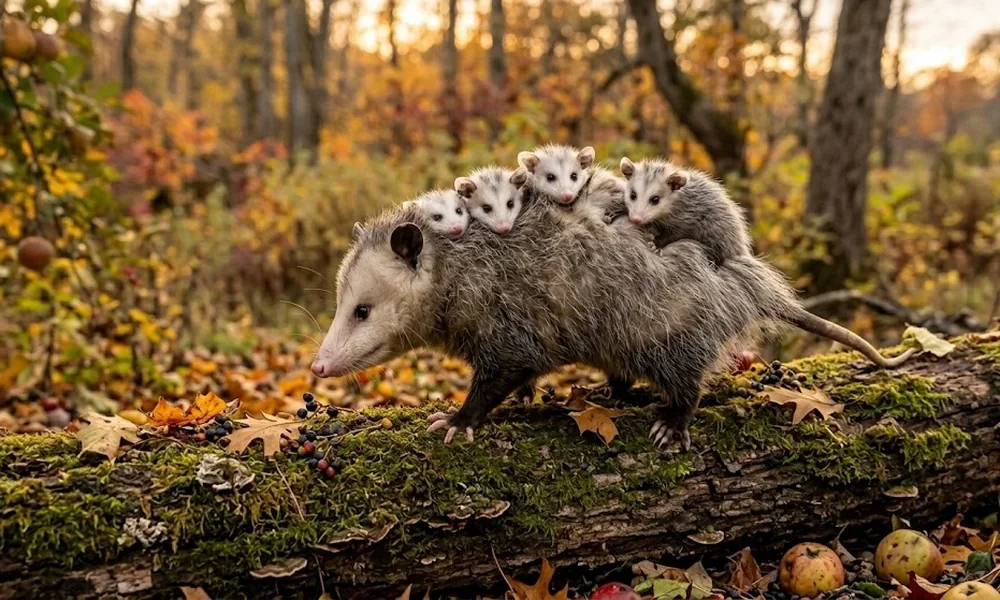
Opossum newborns are extremely small and underdeveloped. After birth, they make their way to the mother’s pouch, where they attach to a teat and continue developing.
In species such as the Virginia opossum, the pouch provides protection during this vulnerable stage. As the young grow, they eventually spend more time outside it, often riding on their mother’s back before becoming independent.
This reproductive strategy is a defining feature of marsupials. It also means that a female opossum carrying young may need particular care if she is injured or found in danger.
A small opossum seen alone is not always abandoned. If you find one, avoid touching it and seek advice from a wildlife professional before deciding what to do.
Opossum vs. Possum: What Is the Difference?
The names opossum and possum are often used interchangeably in casual conversation, but they commonly refer to different animals.
In North America, “opossum” usually means the Virginia opossum or another member of the American opossum group. In Australia and nearby regions, “possum” commonly refers to different marsupials, such as brushtail possums and ringtail possums.
Both groups are marsupials, but they are not the same animals. Their appearances, habitats, and evolutionary histories differ.
The spelling difference can cause confusion in wildlife articles and everyday conversations, particularly when information about one animal is mistakenly applied to another.
How Can You Help Opossums Around Your Home?
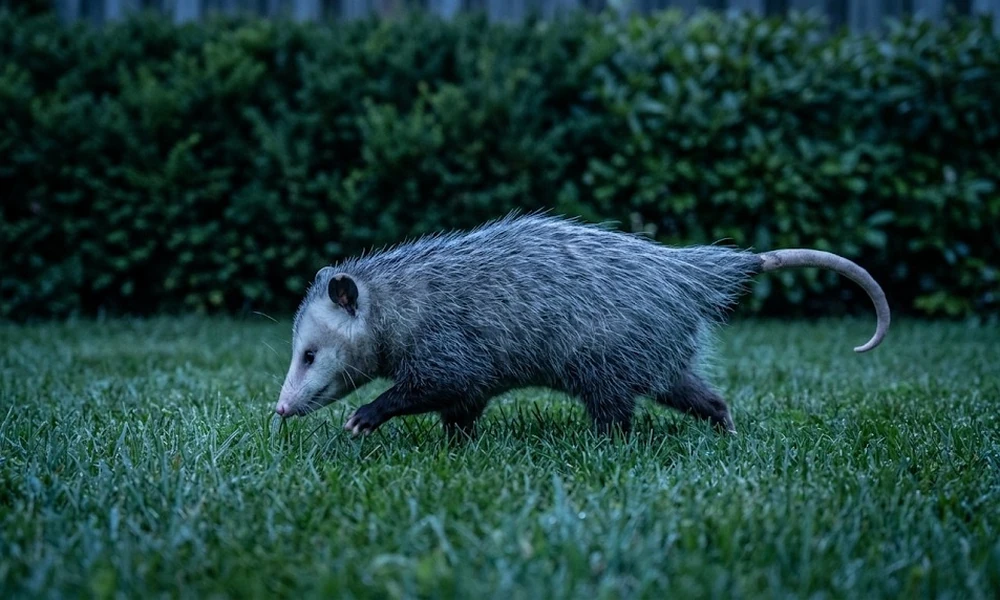
If an opossum visits your yard, the most useful response is usually to let it move on without interference.
Keep rubbish bins securely closed, bring pet food indoors overnight, and avoid deliberately feeding wild animals. Check sheds and other spaces before sealing openings, making sure no animal is trapped inside.
If an opossum is living beneath a deck or shed, use humane exclusion methods only after confirming that the animal and any dependent young can leave safely. A local wildlife professional can help determine the appropriate approach.
Most importantly, do not mistake unusual appearance for dangerous behavior. Giving wildlife space is often the simplest way to prevent conflict.
Frequently Asked Questions
Is an opossum a rat?
No. Opossums are marsupial mammals, while rats are rodents. Their similar size and hairless tails can make them look alike, but they belong to different mammalian groups.
Do opossums really play dead?
Yes. Some opossums respond to extreme threats with an involuntary, death-like state. The behavior may discourage predators, but it does not work in every situation.
Are opossums active during the day?
They are mainly nocturnal, so they are most active after dark. Seeing one during daylight does not automatically mean it is sick, although obvious injury, severe weakness, or unusual disorientation warrants professional advice.
Do opossums eat ticks?
Opossums may eat ticks encountered while grooming or feeding, but claims about how many ticks they remove from the environment can be exaggerated. They should not be relied on as a dependable tick-control method.
Can an opossum climb trees?
Yes. Many opossums are capable climbers, and some species use trees for shelter, feeding, or escape. Their climbing ability depends on the species and its physical adaptations.
Should I remove an opossum from my yard?
Usually, there is no need if the animal is healthy and can leave safely. Secure food waste, keep pets away, and avoid handling it. If it is injured or trapped, contact a wildlife professional.
Final Thoughts
Opossums are more than nocturnal visitors with unusual faces and bare tails. Their marsupial biology, flexible diet, and distinctive defensive behavior make them an important part of the wildlife communities they inhabit.
Understanding them helps replace fear with sensible caution. In most cases, the best way to coexist with an opossum is simple: secure potential food sources, give it room, and let a wild animal remain wild.
Desclaimer: This article is for informational purposes only.