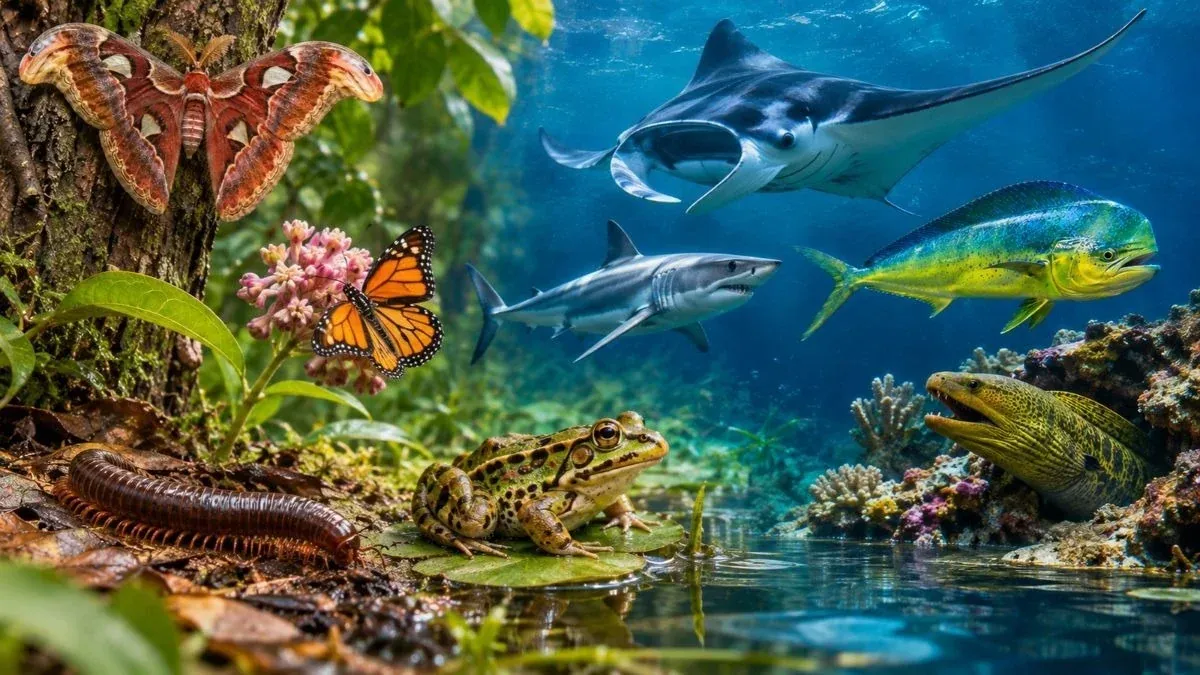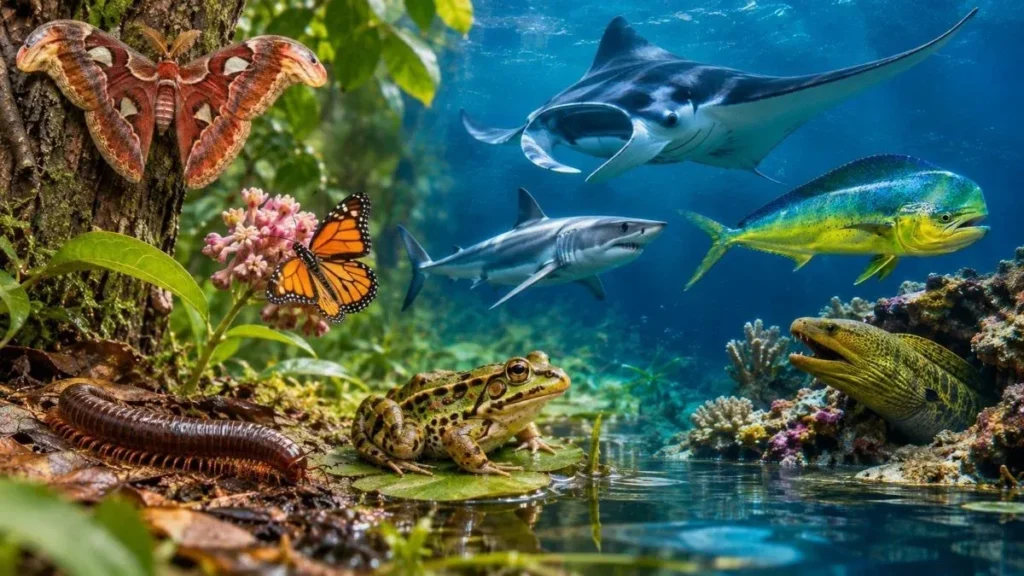
Animals beginning with M can be found in forests, mountains, grasslands, deserts, oceans, rivers, and wetlands. Some are powerful predators, while others are peaceful herbivores, colorful birds, unusual reptiles, and tiny insects.
This guide explores animals that start with M from different parts of the natural world. It includes mammals, birds, reptiles, amphibians, fish, and other invertebrates. Each entry provides information about its scientific name, family, habitat, geographic range, size, diet, lifespan, conservation status, and special features where available.
Key Takeaways
- Animals beginning with M include mammals, birds, reptiles, amphibians, fish, and insects.
- Moose, meerkats, manatees, and mountain gorillas are among the best-known M mammals.
- Birds that start with M include macaws, mallards, magpies, and macaroni penguins.
- Marine animals beginning with M include manta rays, moray eels, and mako sharks.
- Some M animals, including mountain gorillas and Malayan tapirs, face significant conservation challenges.
- Different M animals have unique adaptations that help them survive in their natural habitats.
Animals That Start With M: Mammals
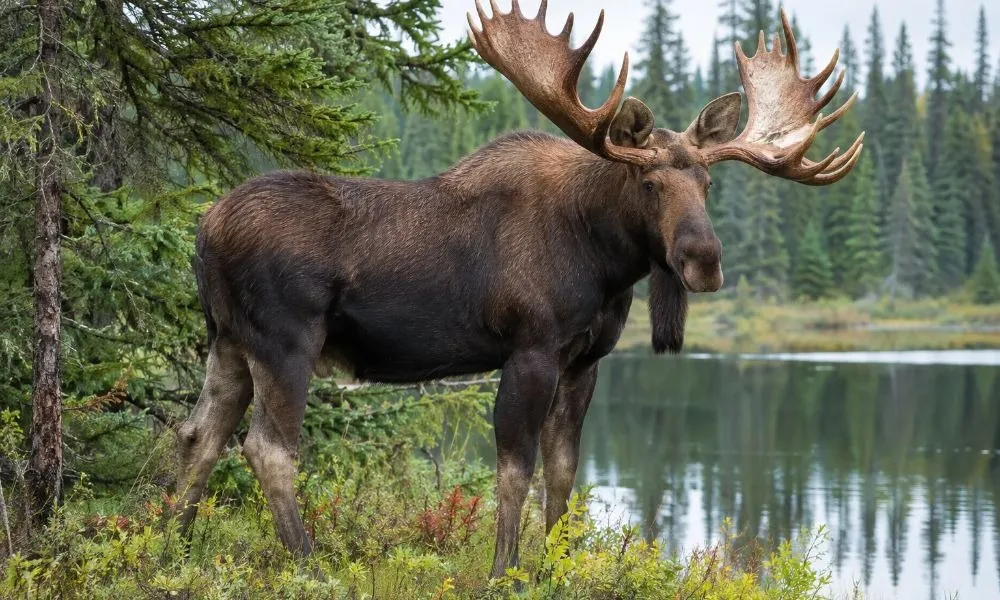
1. Moose
- Scientific Name: Alces alces
- Family: Cervidae
- Habitat: Boreal forests, wetlands, and mixed woodlands
- Range: North America, Europe, and northern Asia
- Size and Weight: About 2.4–3.2 m long; 200–700 kg
- Diet: Leaves, twigs, bark, aquatic plants, and shrubs
- Lifespan: Around 15–20 years in the wild
- Conservation Status: Least Concern globally
- Key Fact: Moose are the largest living members of the deer family. Male moose develop enormous antlers that they shed and regrow each year.
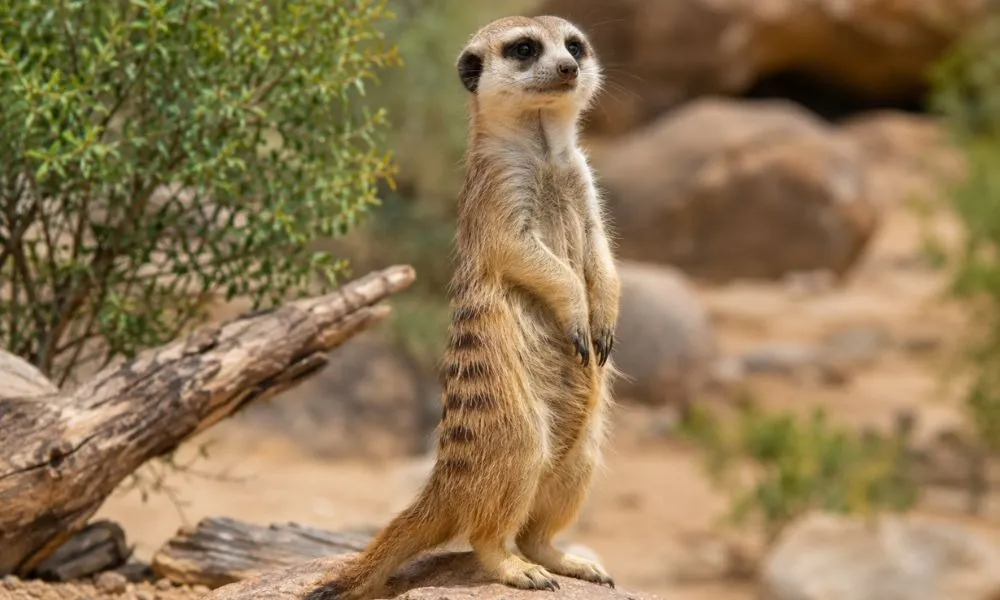
2. Meerkat
- Scientific Name: Suricata suricatta
- Family: Herpestidae
- Habitat: Dry grasslands, open deserts, and scrublands
- Range: Southern Africa
- Size and Weight: About 25–35 cm body length; 600–900 g
- Diet: Insects, spiders, scorpions, small reptiles, and other tiny animals
- Lifespan: Around 6–10 years in managed care
- Conservation Status: Least Concern
- Key Fact: Meerkats often stand upright on their hind legs to watch for approaching predators while other members of their group search for food.
3. Manatee

- Scientific Name: Family Trichechidae; several species
- Family: Trichechidae
- Habitat: Shallow coastal waters, rivers, estuaries, and freshwater springs
- Range: Caribbean, Gulf of Mexico, Amazon Basin, and West Africa
- Size and Weight: About 2.5–4 m long; 200–600 kg, depending on species
- Diet: Seagrass, aquatic vegetation, and freshwater plants
- Lifespan: Around 40–60 years
- Conservation Status: Varies by species; several populations face conservation threats
- Key Fact: Manatees are gentle aquatic mammals that breathe air through their nostrils and regularly come to the water’s surface.
5. Mountain Gorilla
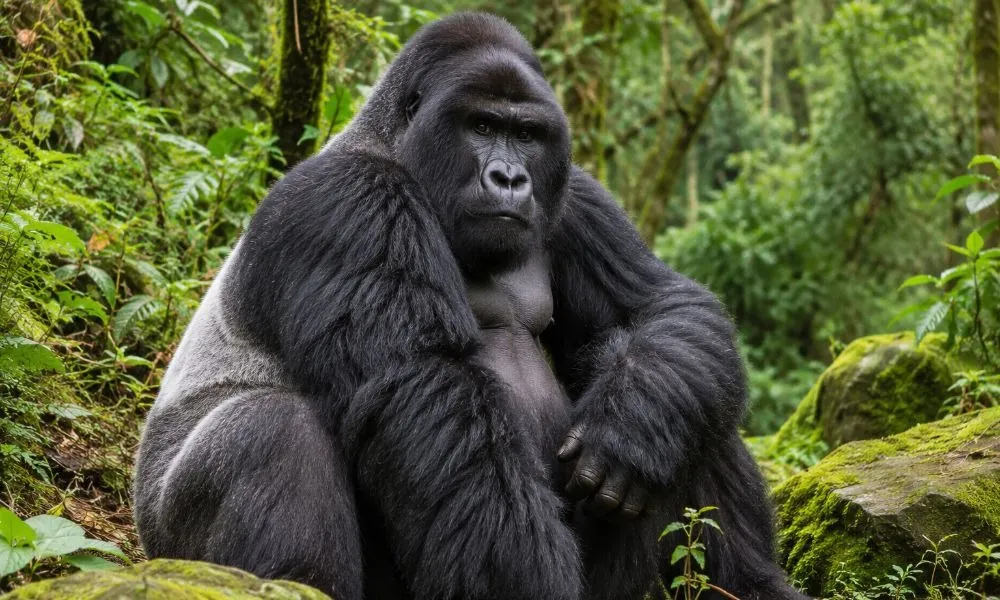
- Scientific Name: Gorilla beringei beringei
- Family: Hominidae
- Habitat: Mountain forests and high-altitude tropical woodlands
- Range: Virunga Mountains and Bwindi region of Central Africa
- Size and Weight: About 1.2–1.8 m tall; 70–220 kg
- Diet: Leaves, stems, shoots, roots, and fruits
- Lifespan: Around 35–40 years in the wild
- Conservation Status: Endangered
- Key Fact: Adult male mountain gorillas develop a distinctive silver-colored patch of fur across their backs, earning them the name silverbacks.
6. Mongoose
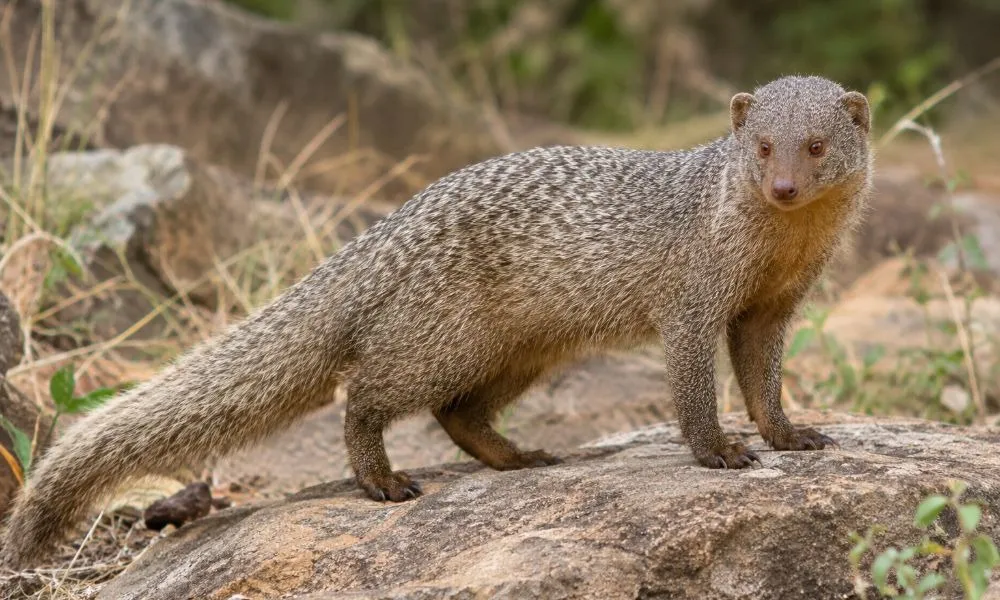
- Scientific Name: Family Herpestidae; numerous species
- Family: Herpestidae
- Habitat: Grasslands, forests, scrublands, and rocky environments
- Range: Africa, Asia, and parts of southern Europe
- Size and Weight: About 18–60 cm long, depending on species
- Diet: Insects, rodents, reptiles, eggs, and small animals
- Lifespan: Around 6–12 years, depending on species
- Conservation Status: Varies by species
- Key Fact: Some mongoose species are known for their agility and ability to defend themselves against venomous snakes.
7. Maned Wolf
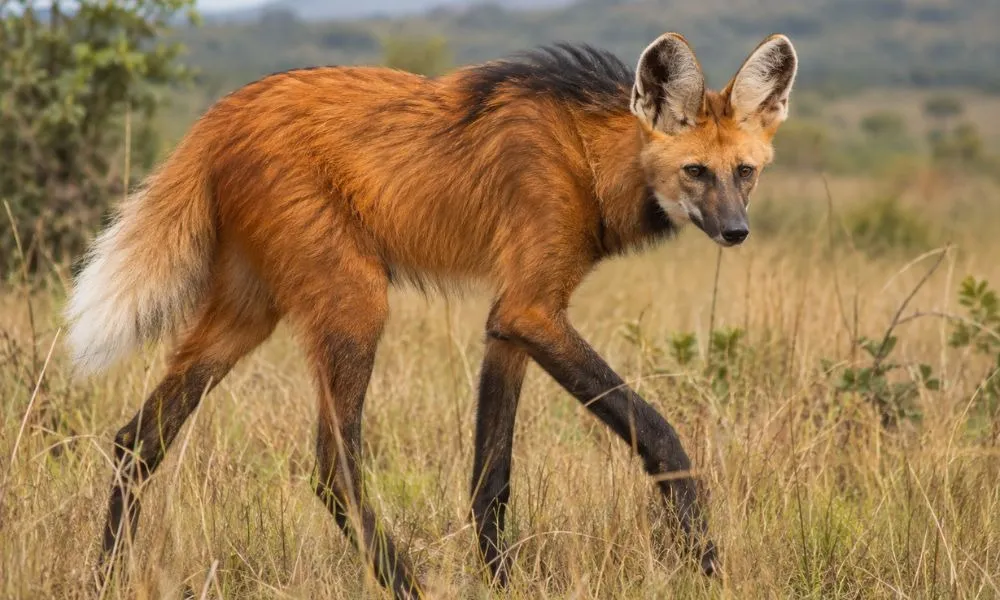
- Scientific Name: Chrysocyon brachyurus
- Family: Canidae
- Habitat: Grasslands, savannas, and open scrublands
- Range: Central and eastern South America
- Size and Weight: About 1–1.3 m body length; 20–30 kg
- Diet: Fruits, small mammals, birds, insects, and other small animals
- Lifespan: Around 12–15 years in managed care
- Conservation Status: Near Threatened
- Key Fact: The maned wolf has exceptionally long legs that help it move through tall grass and spot potential threats.
8. Markhor
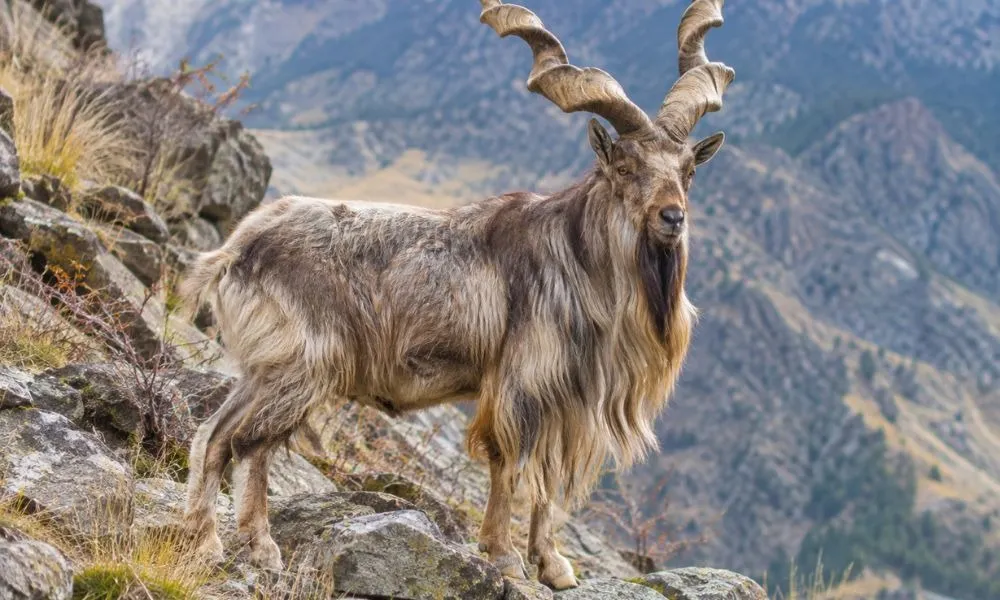
- Scientific Name: Capra falconeri
- Family: Bovidae
- Habitat: Rocky mountains, steep cliffs, and mountainous scrublands
- Range: Pakistan, Afghanistan, and parts of Central Asia
- Size and Weight: About 1.3–1.8 m long; 32–110 kg
- Diet: Grasses, leaves, shrubs, and other vegetation
- Lifespan: Around 10–13 years in the wild
- Conservation Status: Near Threatened
- Key Fact: The markhor is famous for its impressive spiral-shaped horns. It is also Pakistan’s national animal.
Birds That Start With M
9. Macaw
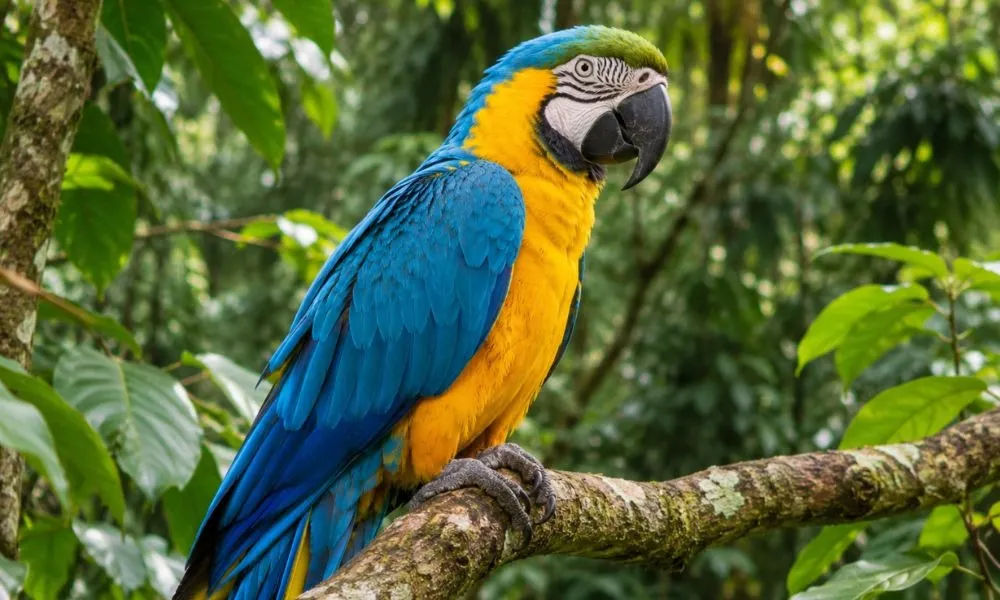
- Scientific Name: Family Psittacidae; several species
- Family: Psittacidae
- Habitat: Tropical rainforests, woodlands, and savannas
- Range: Central and South America
- Size and Weight: About 30–100 cm long, depending on species
- Diet: Fruits, nuts, seeds, and vegetation
- Lifespan: Around 30–60 years or longer in managed care
- Conservation Status: Varies by species
- Key Fact: Macaws have powerful curved beaks and strong feet that help them crack hard nuts and climb trees.
10. Mallard
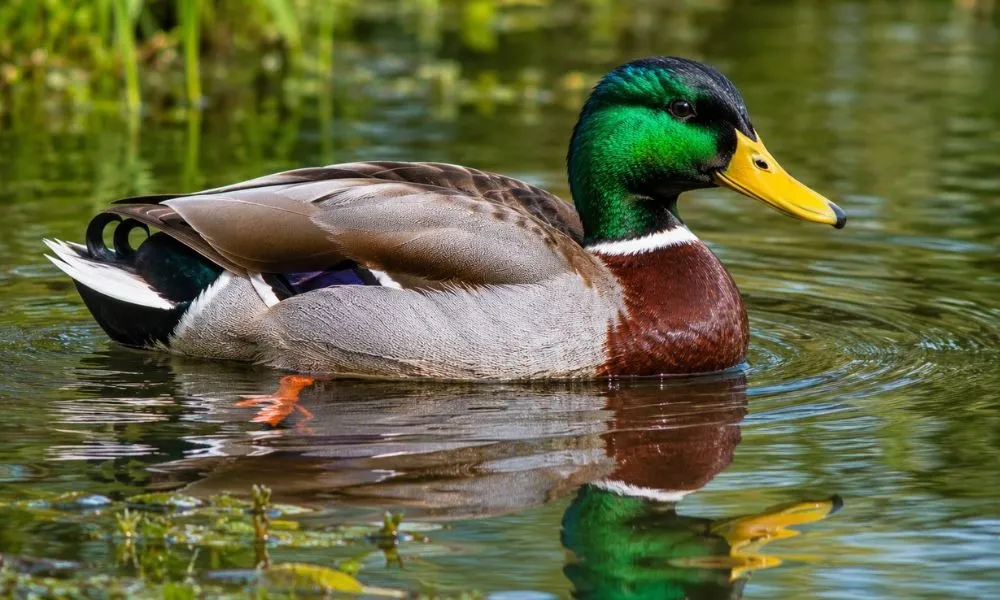
- Scientific Name: Anas platyrhynchos
- Family: Anatidae
- Habitat: Ponds, lakes, wetlands, rivers, and marshes
- Range: North America, Europe, Asia, and other regions
- Size and Weight: About 50–65 cm long; 0.7–1.6 kg
- Diet: Aquatic plants, seeds, insects, and small aquatic animals
- Lifespan: Around 5–10 years in the wild
- Conservation Status: Least Concern
- Key Fact: Male mallards have a distinctive glossy green head, while females usually have mottled brown feathers.
11. Magpie
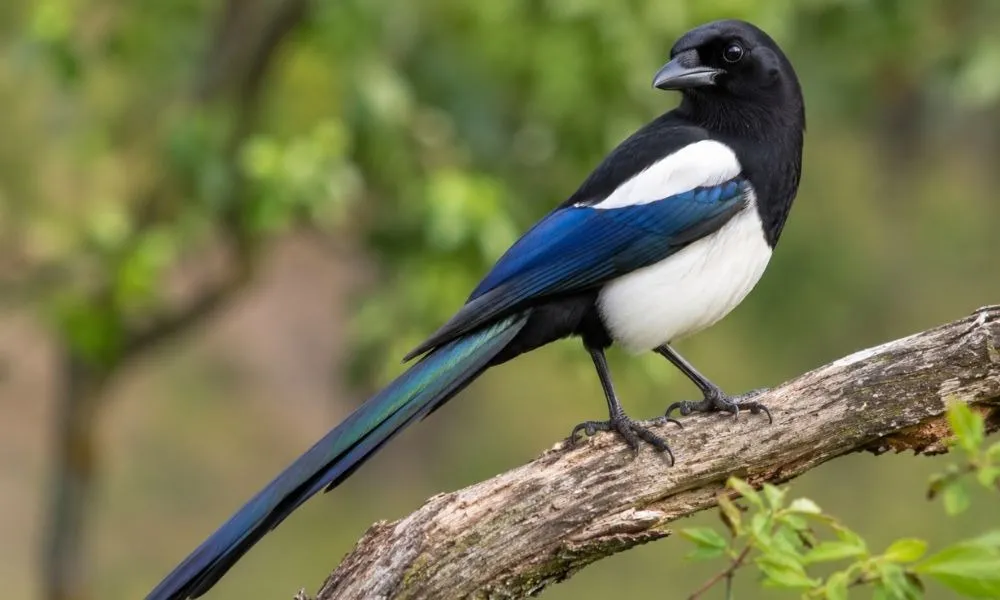
- Scientific Name: Pica pica
- Family: Corvidae
- Habitat: Woodlands, grasslands, farmland, and urban environments
- Range: Europe, North Africa, and much of Asia
- Size and Weight: About 40–50 cm long, including the tail
- Diet: Insects, seeds, fruits, eggs, and small animals
- Lifespan: Around 3–7 years in the wild, sometimes longer
- Conservation Status: Least Concern
- Key Fact: Magpies are intelligent birds known for their problem-solving abilities and striking black-and-white plumage.
12. Macaroni Penguin
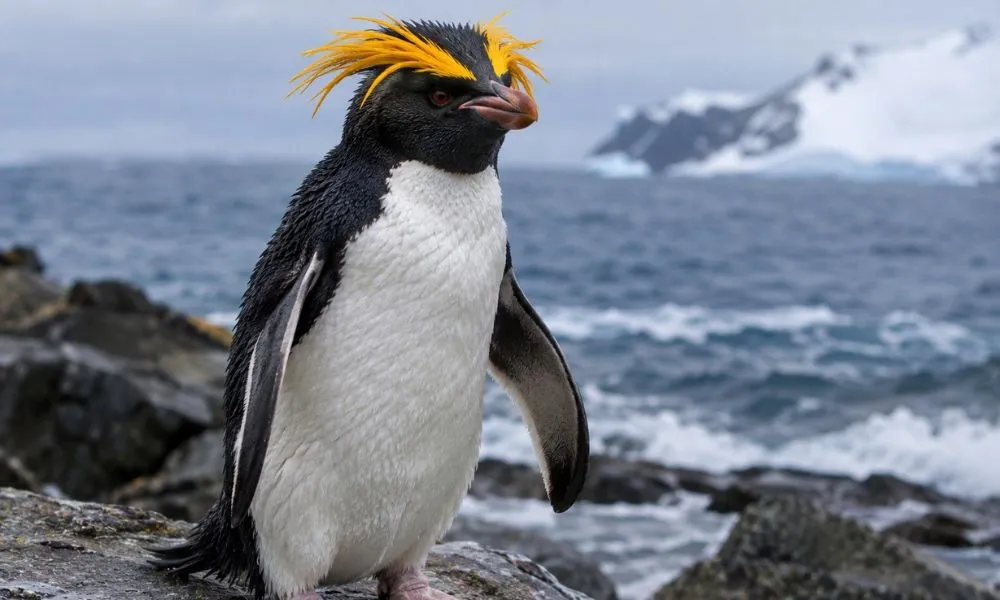
- Scientific Name: Eudyptes chrysolophus
- Family: Spheniscidae
- Habitat: Subantarctic islands and rocky coastal breeding areas
- Range: Southern Ocean and surrounding subantarctic islands
- Size and Weight: About 65–75 cm tall; 3–6 kg
- Diet: Krill, squid, and small fish
- Lifespan: Around 8–15 years in the wild
- Conservation Status: Vulnerable
- Key Fact: Among penguin species, the macaroni penguin stands out for the distinctive yellow-orange crest feathers above its eyes.
13. Marabou Stork
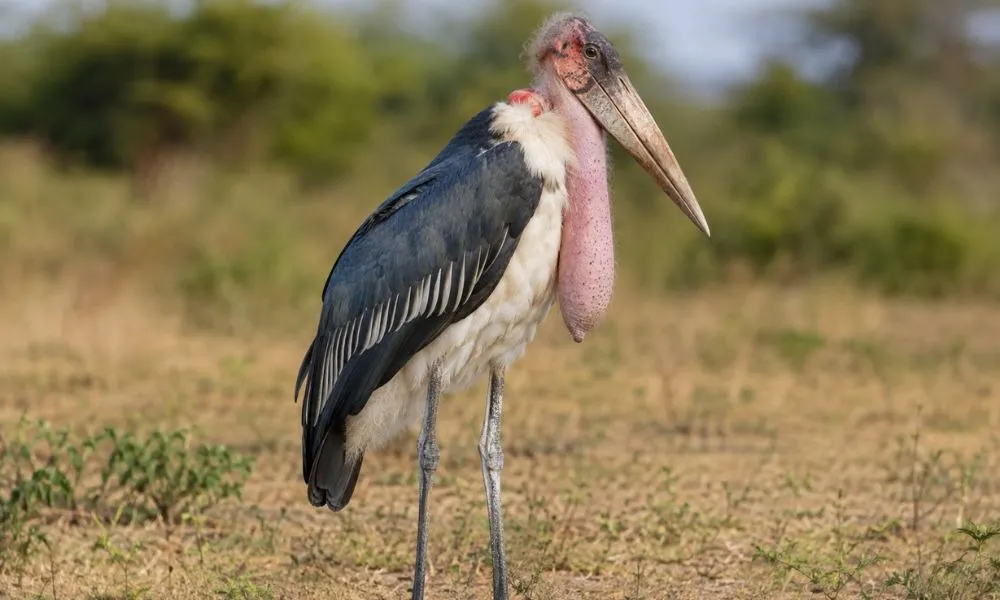
- Scientific Name: Leptoptilos crumenifer
- Family: Ciconiidae
- Habitat: Savannas, wetlands, grasslands, and open areas near water
- Range: Sub-Saharan Africa
- Size and Weight: About 1.2–1.5 m tall; 4–9 kg
- Diet: Carrion, fish, insects, and small animals
- Lifespan: Around 20–25 years in managed care
- Conservation Status: Least Concern
- Key Fact: Marabou storks have enormous bills, long legs, and a distinctive bare head and neck.
14. Mute Swan
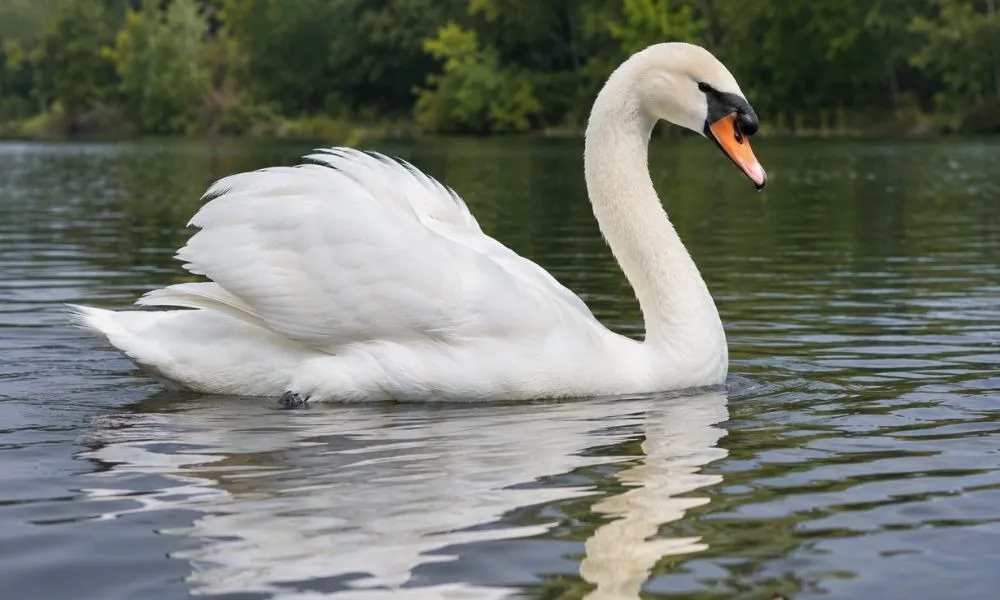
- Scientific Name: Cygnus olor
- Family: Anatidae
- Habitat: Lakes, ponds, rivers, and wetlands
- Range: Europe and parts of Asia; introduced populations elsewhere
- Size and Weight: About 1.2–1.7 m long; 8–15 kg
- Diet: Aquatic plants, algae, and other vegetation
- Lifespan: Around 10–20 years in the wild
- Conservation Status: Least Concern
- Key Fact: Mute swans are recognized by their elegant curved necks, white feathers, and orange bills with black markings.
Reptiles and Amphibians That Start With M
15. Marine Iguana
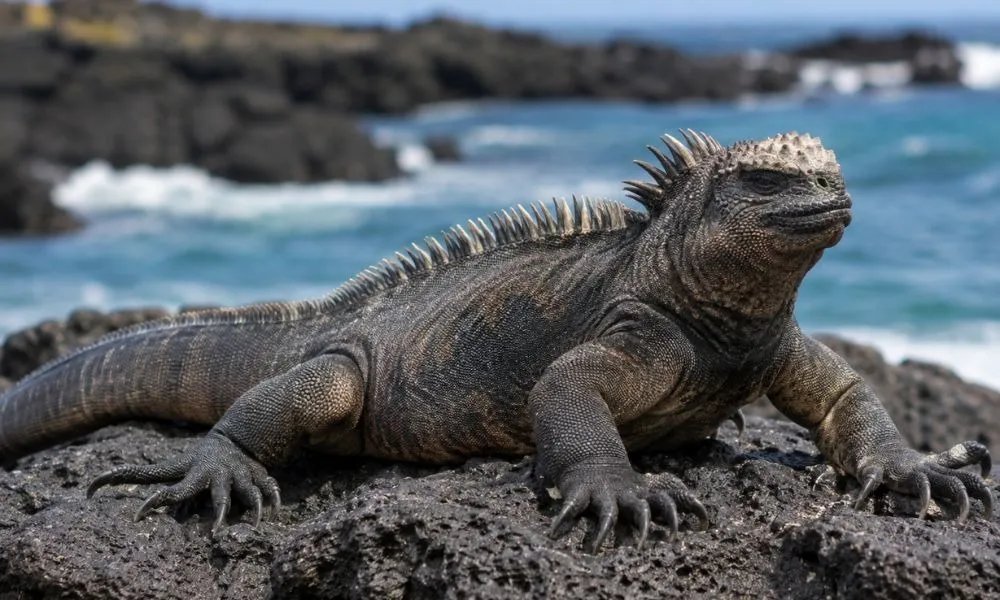
- Scientific Name: Amblyrhynchus cristatus
- Family: Iguanidae
- Habitat: Rocky coastlines and marine environments
- Range: Galápagos Islands, Ecuador
- Size and Weight: About 60–150 cm long, including the tail
- Diet: Marine algae and seaweed
- Lifespan: Around 5–12 years in the wild
- Conservation Status: Vulnerable
- Key Fact: Marine iguanas are the only modern lizards known to forage in the sea, diving underwater to feed on marine algae.
16. Monitor Lizard
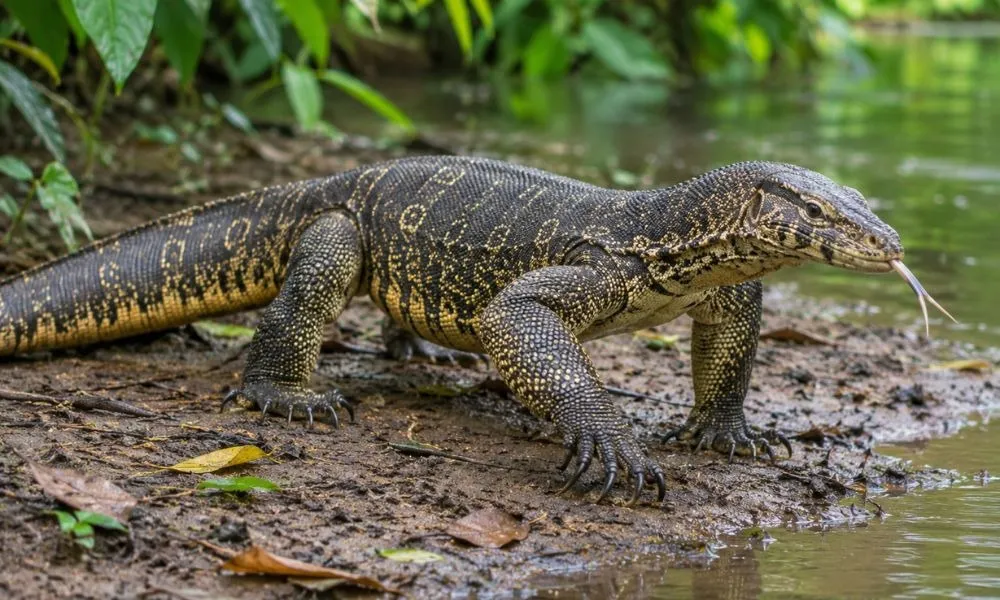
- Scientific Name: Family Varanidae; numerous species
- Family: Varanidae
- Habitat: Forests, grasslands, wetlands, and rocky environments
- Range: Africa, Asia, and Australia
- Size and Weight: About 20 cm to over 3 m long, depending on species
- Diet: Insects, eggs, birds, small mammals, and other animals
- Lifespan: Around 10–20 years, depending on species
- Conservation Status: Varies by species
- Key Fact: Monitor lizards have forked tongues that help them detect chemical signals in their surroundings.
17. Milk Snake
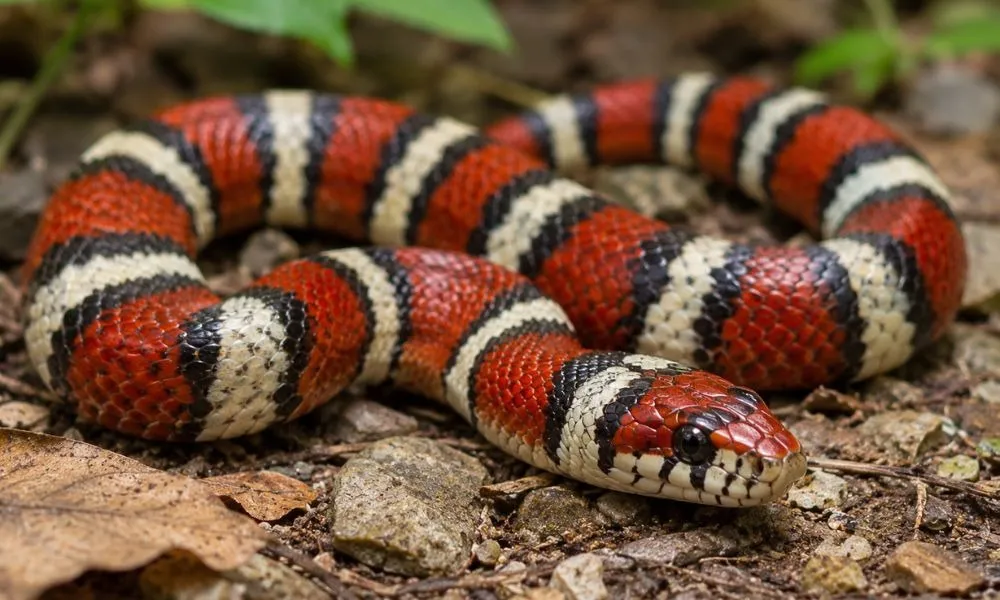
- Scientific Name: Genus Lampropeltis; several species
- Family: Colubridae
- Habitat: Forests, grasslands, rocky hillsides, and agricultural areas
- Range: North America and parts of Central America
- Size and Weight: About 60–180 cm long, depending on species
- Diet: Rodents, lizards, birds, and other small animals
- Lifespan: Around 10–20 years in managed care
- Conservation Status: Varies by species
- Key Fact: Milk snakes are nonvenomous constrictors recognized for their colorful red, black, and pale-colored body bands.
18. Marsh Frog
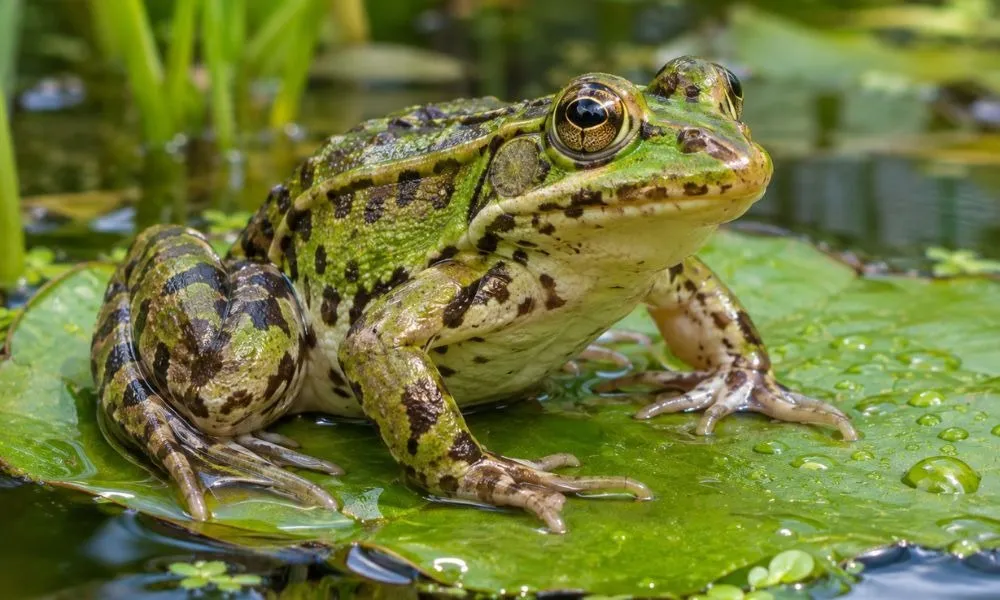
- Scientific Name: Pelophylax ridibundus
- Family: Ranidae
- Habitat: Marshes, ponds, lakes, rivers, and wetlands
- Range: Europe and western Asia
- Size and Weight: About 8–15 cm long
- Diet: Insects, worms, small fish, and other invertebrates
- Lifespan: Around 5–10 years
- Conservation Status: Least Concern
- Key Fact: Marsh frogs are strong swimmers and often remain close to freshwater environments where they can quickly escape predators.
Fish That Start With M
19. Manta Ray
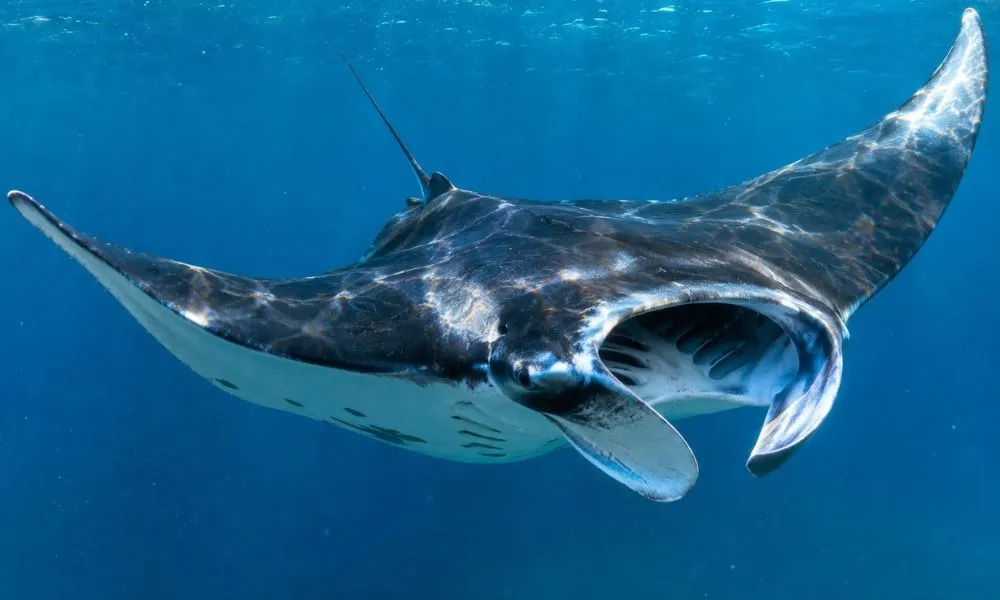
- Scientific Name: Genus Mobula; includes manta ray species
- Family: Mobulidae
- Habitat: Tropical and subtropical oceans, coastal waters, and offshore reefs
- Range: Tropical and temperate oceans worldwide
- Size and Weight: About 3–7 m across the wingspan, depending on species
- Diet: Plankton and small marine organisms
- Lifespan: Around 40–50 years, depending on species
- Conservation Status: Varies by species; giant manta ray is Endangered
- Key Fact: Manta rays have enormous wing-like pectoral fins and specialized cephalic fins that help direct plankton-rich water into their mouths.
20. Mako Shark
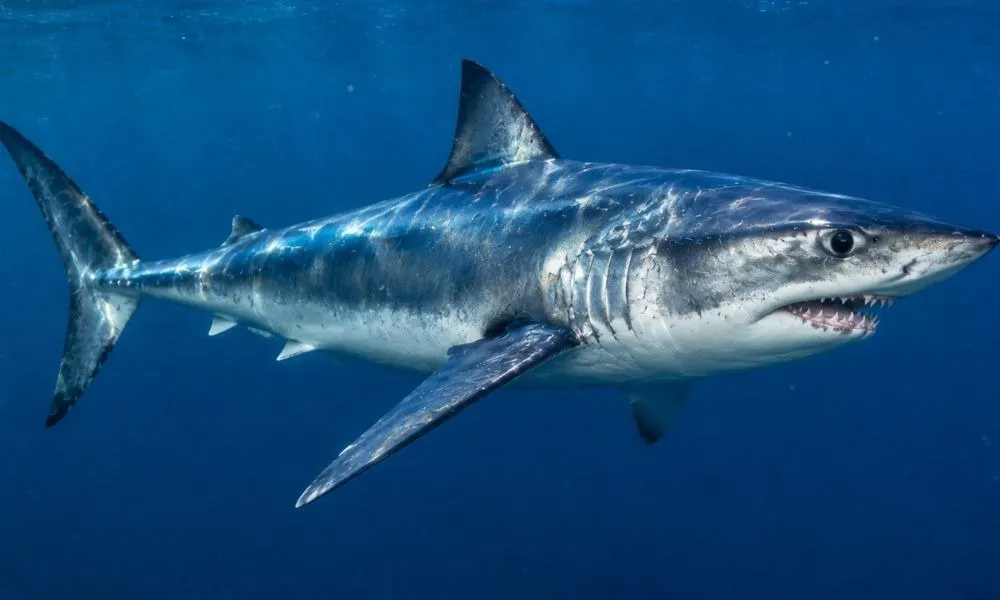
- Scientific Name: Isurus oxyrinchus
- Family: Lamnidae
- Habitat: Open ocean and offshore marine waters
- Range: Tropical and temperate oceans worldwide
- Size and Weight: About 2–4 m long; 60–500 kg
- Diet: Fish, squid, and other marine animals
- Lifespan: Around 20–30 years
- Conservation Status: Endangered
- Key Fact: The shortfin mako shark is one of the fastest shark species, with a streamlined body built for powerful swimming.
21. Moray Eel
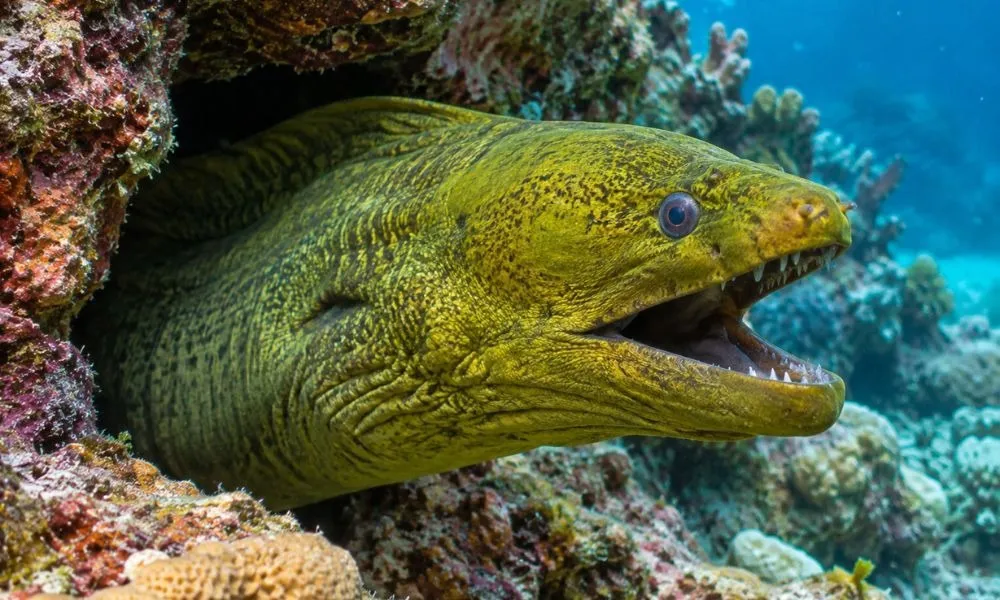
- Scientific Name: Family Muraenidae; numerous species
- Family: Muraenidae
- Habitat: Coral reefs, rocky crevices, and coastal marine environments
- Range: Tropical and temperate oceans worldwide
- Size and Weight: About 30 cm to 4 m long, depending on species
- Diet: Fish, crustaceans, and octopuses
- Lifespan: Around 10–30 years, depending on species
- Conservation Status: Varies by species
- Key Fact: Moray eels have elongated bodies and powerful jaws. They frequently keep their mouths open to move water across their gills.
22. Mahi-Mahi
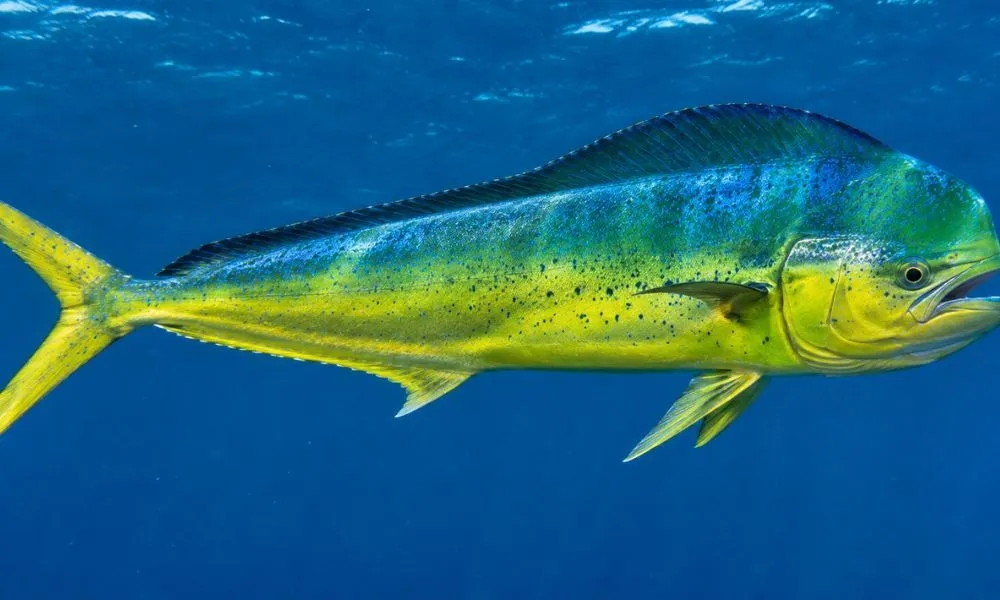
- Scientific Name: Coryphaena hippurus
- Family: Coryphaenidae
- Habitat: Warm tropical and subtropical open oceans
- Range: Worldwide in tropical and subtropical seas
- Size and Weight: About 1–1.5 m long; 5–20 kg commonly
- Diet: Flying fish, squid, crustaceans, and smaller fish
- Lifespan: Around 3–5 years
- Conservation Status: Least Concern
- Key Fact: Mahi-mahi are fast-swimming fish known for their distinctive blunt foreheads and striking natural coloration.
Insects and Other Invertebrates That Start With M
23. Monarch Butterfly
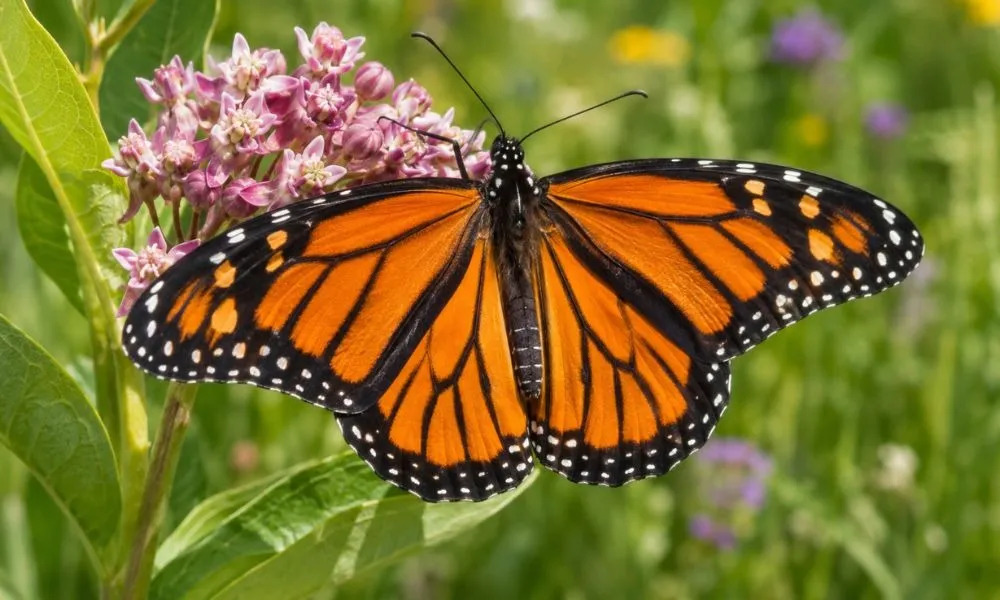
- Scientific Name: Danaus plexippus
- Family: Nymphalidae
- Habitat: Meadows, gardens, grasslands, and open fields
- Range: North and Central America, with populations elsewhere
- Size and Weight: About 8.5–10.5 cm wingspan
- Diet: Adults feed on flower nectar; caterpillars feed mainly on milkweed
- Lifespan: Around 2–6 weeks for many adults; migratory generations can live several months
- Conservation Status: Least Concern globally in the IUCN assessment; some migratory populations face serious threats
- Key Fact: Monarch butterflies are famous for one of the most remarkable examples of animal migration: a long-distance seasonal journey across North America.
24. Millipede
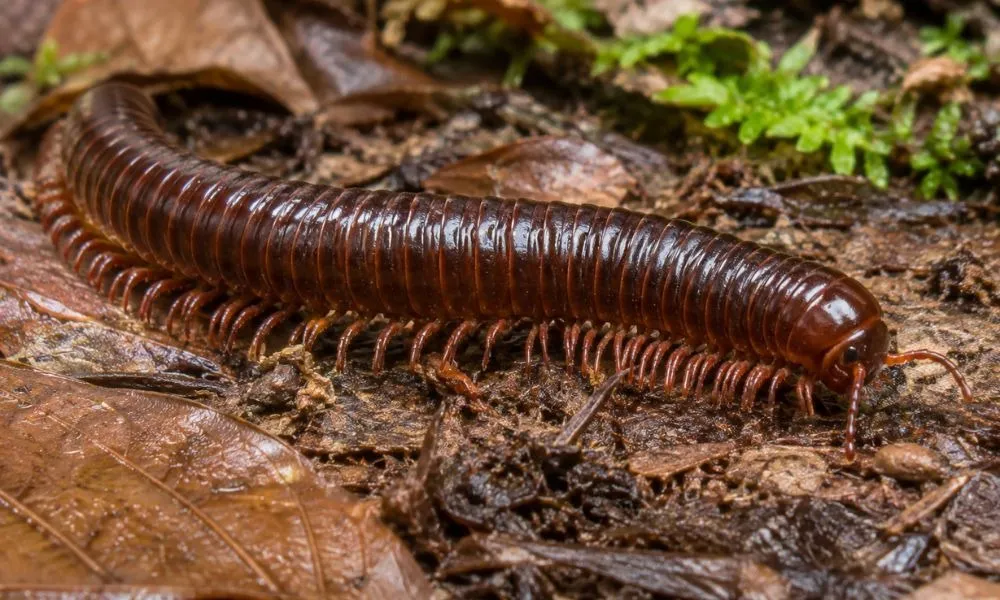
- Scientific Name: Class Diplopoda
- Family: Varies by species
- Habitat: Moist forests, leaf litter, soil, and decaying vegetation
- Range: Worldwide except Antarctica
- Size and Weight: A few millimetres to approximately 30–40 cm, depending on species
- Diet: Decaying leaves, rotting wood, and other organic material
- Lifespan: Around 1–10 years, depending on species
- Conservation Status: Varies by species
- Key Fact: Millipedes have long segmented bodies and usually possess two pairs of legs on most body segments.
25. Moth
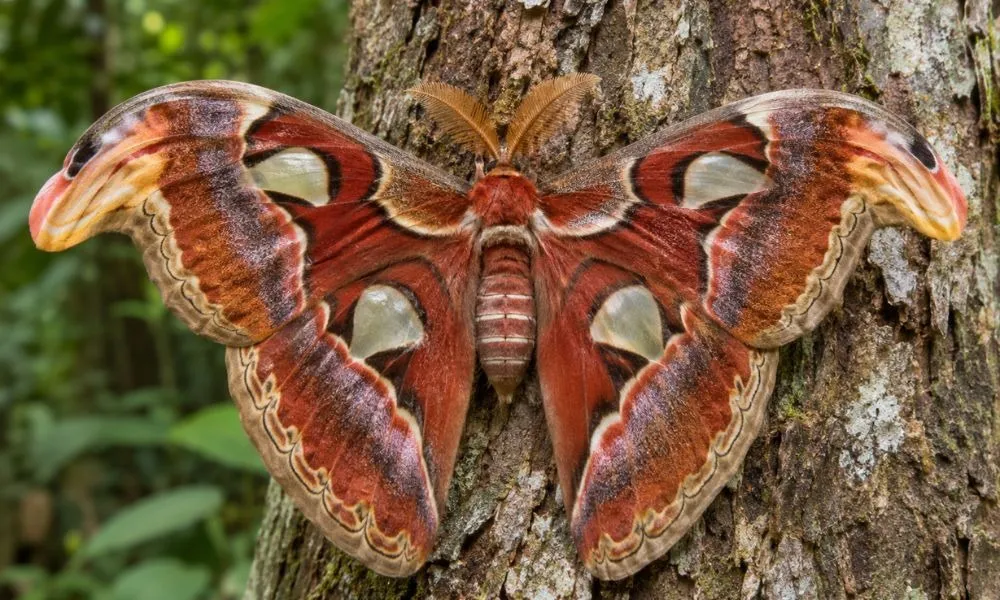
- Scientific Name: Order Lepidoptera; numerous species
- Family: Varies by species
- Habitat: Forests, grasslands, gardens, and agricultural environments
- Range: Worldwide
- Size and Weight: Wingspan ranges from a few millimetres to over 25 cm, depending on species
- Diet: Adults feed on nectar or other liquids; caterpillars feed on leaves and other plant material
- Lifespan: Varies from several days to several months as adults, depending on species
- Conservation Status: Varies by species
- Key Fact: Many moths are nocturnal and use sensitive antennae to detect chemical signals and find potential mates.
How to Identify an Animal That Starts With M
An animal’s common name is a useful starting point, but identifying its exact species requires more than its name. Physical characteristics, habitat, behavior, and scientific classification can help distinguish one animal from another.
The M Animal Identification Checklist
Use this checklist when researching or identifying an M animal:
- Check the common name: Confirm that the animal’s accepted English common name begins with M.
- Find its scientific name: Scientific names help identify the exact species.
- Identify its animal group: Determine whether it is a mammal, bird, reptile, amphibian, fish, or invertebrate.
- Check its habitat: Identify whether it lives in forests, grasslands, deserts, freshwater, or oceans.
- Compare its physical features: Observe its body shape, size, markings, feathers, scales, and other characteristics.
- Verify its conservation status: Check the latest species-level assessment to understand whether the animal faces conservation threats.
This approach makes animal research more accurate and helps avoid confusion between different species.
Frequently Asked Questions
1. What is the largest animal that starts with M?
The manta ray is among the largest animals beginning with M. Giant manta rays can reach wingspans of approximately 7 metres, making them some of the largest rays in the ocean.
2. Which M animal is known for its colorful face?
The mandrill is famous for its brightly colored face, featuring distinctive blue cheek ridges and red markings along its nose. Adult males display particularly striking facial colors.
3. Which animal that starts with M is Pakistan’s national animal?
The markhor is Pakistan’s national animal. It is recognized for its impressive spiral-shaped horns and ability to navigate steep, rocky mountain environments.
4. Which M animal is famous for standing upright?
The meerkat is well known for standing upright on its hind legs. It uses this position to watch for predators while other members of its group search for food.
5. Which animal that starts with M is known for long-distance migration?
The monarch butterfly is famous for its seasonal migration across North America. Some generations travel thousands of kilometres to reach their wintering locations.
Final Thoughts
Animals that start with M demonstrate the incredible diversity of the animal kingdom. Some M animals live in dense tropical forests, while others are mountain animals like the markhor.
From the enormous moose and powerful mountain gorilla to the colorful macaw, graceful manta ray, and delicate monarch butterfly, each animal has unique characteristics that help it survive in its natural environment.
Their different adaptations, feeding habits, and behaviors make them fascinating subjects for wildlife research. If you are working through the alphabet, you can go back to animals that start with L or continue with animals that start with N.