The moose is the largest deer in the world, a towering animal of the northern forests that stands up to two metres at the shoulder and carries antlers like open hands. If you are wondering what a moose is, where it lives and what it eats, the short answer is this: it is a giant deer of the cold forests of Europe, Asia and North America, it eats leaves, twigs and water plants, and it is most often seen at dawn and dusk beside forest lakes and roads.
In Norway the moose is called the elk, and it is the country’s most familiar large wild animal. This guide covers how big moose grow, where they live, what they eat through the seasons, how they behave, and how to watch them safely without disturbing them.
Key takeaways
- The moose is the world’s largest deer, standing up to 2 metres at the shoulder and weighing up to 700 kg.
- Bull moose grow broad, palmate antlers each year and shed them in winter; cows have no antlers.
- Moose live in boreal forest across Norway, Sweden, Finland, Russia, Canada and Alaska.
- They eat leaves, twigs, bark and water plants, and can dive to feed on plants below the surface.
- Moose are usually calm but can be dangerous, especially a cow with calves or a bull in the autumn rut.
What is a moose?
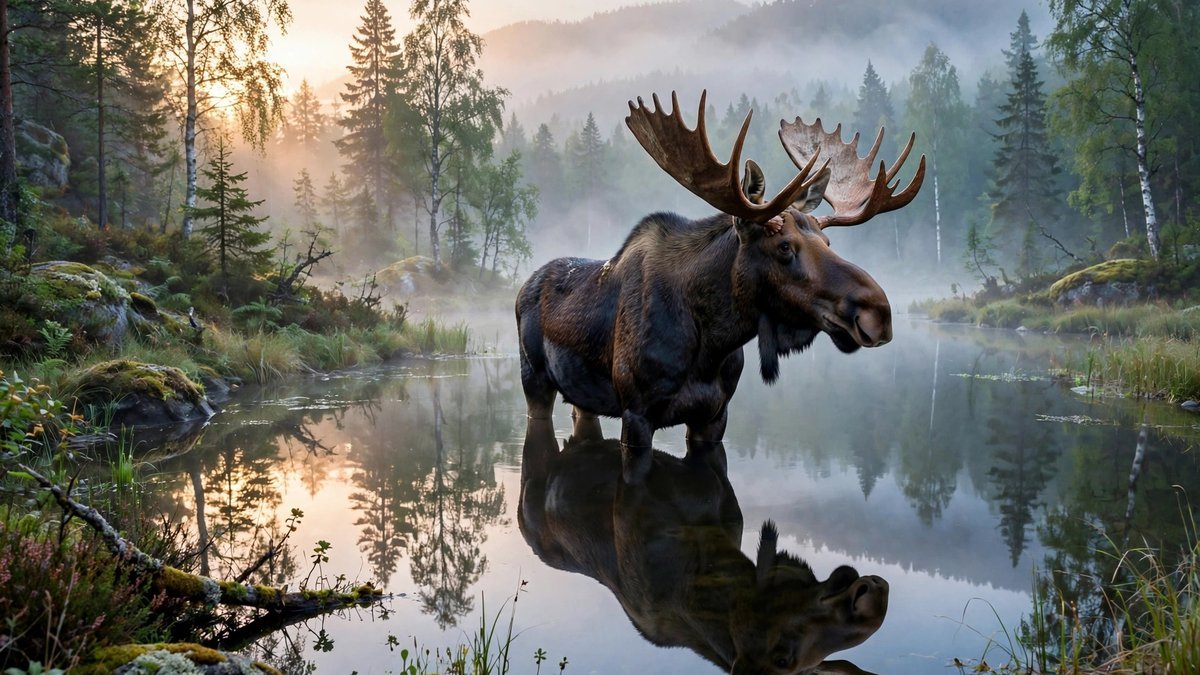
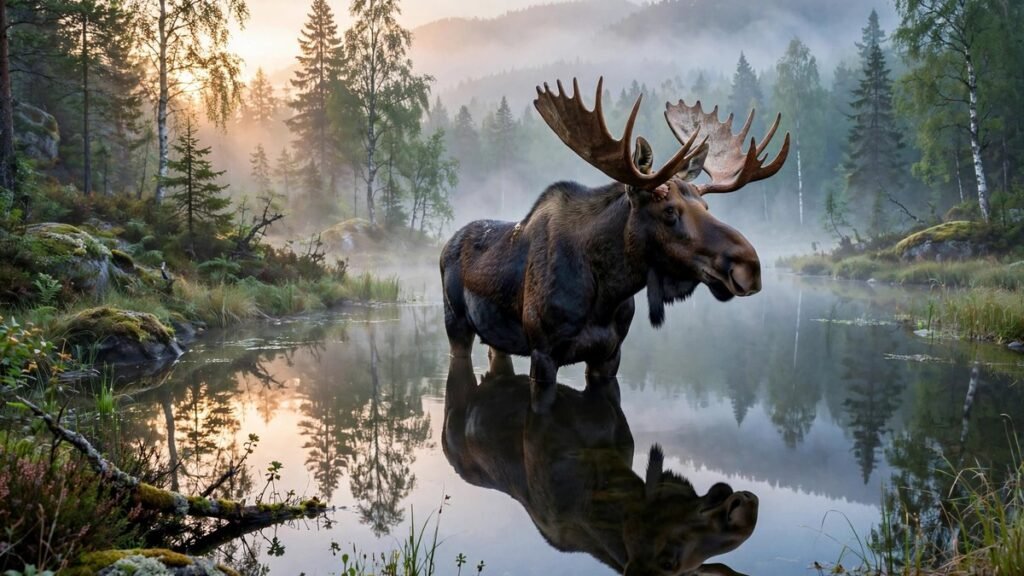
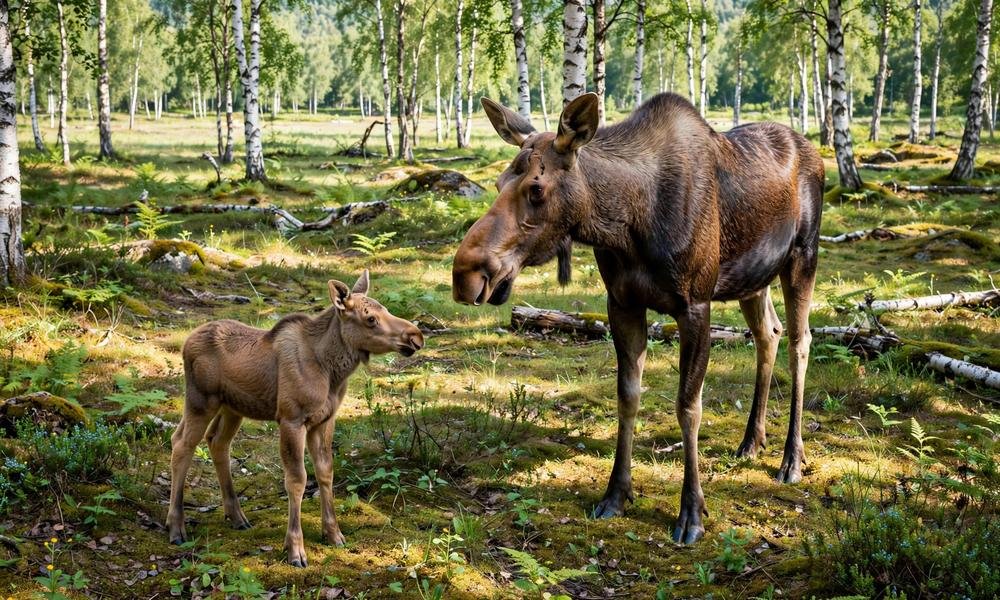
The moose (Alces alces) is a member of the deer family and the largest of all deer. A big bull can stand two metres at the shoulder, measure three metres from nose to tail and weigh 600 to 700 kg, while cows are smaller, usually 400 to 500 kg. The long legs, the high shoulder hump, the drooping muzzle and the small flap of skin under the throat, known as the bell, make the moose easy to recognise.
The coat is dark brown to grey-brown, with paler grey-brown legs, and it thickens in winter against the cold. Moose have poor eyesight but an excellent sense of smell and hearing, and they can run at up to 55 km/h in short bursts despite their size.
Like other herbivore animals, the moose is a browser rather than a grazer: it feeds on leaves, shoots and twigs from trees and shrubs rather than on grass. Its long legs and flexible upper lip let it reach high branches and strip leaves cleanly, and it can stand on its hind legs to reach food other deer cannot.
Habitat and range
Moose live in the boreal forest belt that rings the northern hemisphere, from Norway and Sweden through Finland and Russia to Siberia, and across Canada and Alaska. In Norway they are found through most of the country south of Finnmark, wherever there is forest, and they are most numerous in the south and east, in the counties around the great lakes and the Swedish border.
The ideal moose habitat is young forest mixed with wetlands, lakes and clearings. Moose need dense forest for shelter in winter and open, food-rich ground in summer, and they move between the two through the year. Clear-felled areas and young plantations suit them well, because the regrowing birch, willow and rowan provide abundant food, which is one reason moose numbers have stayed high in managed forests.
In winter they gather in sheltered valleys where the snow is shallower and the browse is within reach, while in summer they spread out to lakes and wetlands. Like the forest animals of the north, they are most active at dawn and dusk, resting in thick cover during the middle of the day.
What moose eat
A moose eats around 20 to 30 kg of plant food a day in summer, and its diet changes with the seasons. In spring and summer it feeds on fresh leaves, shoots and herbs, favouring birch, willow, rowan and aspen. It also eats water plants, wading into lakes and ponds and dipping its head below the surface to pull up pondweed and water lilies, which are rich in minerals.
In autumn the diet shifts to twigs, bark and the last of the leaves, and in winter the moose lives almost entirely on twigs and bark from birch, pine, spruce and willow. Winter food is poor in energy, so moose lose weight through the cold months and regain it in spring.
Moose need salt and minerals, and they seek out natural salt licks and roadside salt in winter, which is one reason they are often seen near roads. They drink large amounts of water and are never far from a lake or stream in summer. A moose’s stomach is a four-chambered ruminant stomach, and like other deer it chews the cud, re-chewing food to extract as much energy as possible from tough plant matter.
Antlers, rut and behaviour
Bull moose grow new antlers every year. The antlers start growing in spring, covered in soft velvet, and harden by late summer into broad, flat, palmate shapes that can span up to two metres. The bull rubs the velvet off on trees in early autumn, and the antlers are shed in winter, usually in December or January. Antler size shows the bull’s age and condition, and the largest antlers belong to bulls in their prime, around five to ten years old.
The rut, or mating season, runs through September and October. Bulls become restless and aggressive, calling with deep grunts, thrashing bushes with their antlers and searching for cows in heat. Rival bulls may fight, locking antlers and pushing until one gives way, and these fights can cause serious injury. During the rut a bull eats little and loses a great deal of weight.
Outside the rut, moose are solitary animals. Cows stay with their calves, and bulls live alone for most of the year. They communicate with grunts, bellows and body language, and they warn other moose of danger with a loud snort. Moose are generally calm and will walk away from people, but a surprised moose, a cow with calves or a rutting bull can charge, and a kick from those long legs can cause serious injury.
Calves and family life
Moose calves are born in late spring, usually in May or June, after a pregnancy of about eight months. A cow usually gives birth to one calf, though twins are common in good years and in areas with rich food. The calf weighs around 10 to 15 kg at birth and can stand within hours, and it stays close to its mother, hidden in thick cover for the first weeks of life.
The cow is fiercely protective. She will defend her calf against wolves, bears and people, and she is most dangerous in the first weeks after birth. The calf grows fast on its mother’s milk, doubling its weight in the first month, and it starts eating leaves and shoots within a few weeks. By autumn it weighs over 100 kg, and it stays with its mother through the winter.
Young moose leave their mothers in the following spring, when the cow is about to give birth again. They disperse to find their own range, and young bulls may wander a long way. Moose can live for 15 to 20 years in the wild, though few reach that age, because hunting, road accidents and predators take many animals young.
Moose and people
Moose are a familiar part of life in Norway. They are hunted in the autumn, and the hunt is an important tradition and a source of meat, with strict quotas set by the authorities. Moose meat is lean and dark, and it is a valued food in Norway, Sweden and Finland. Hunting also keeps the population in balance with the forest, because too many moose damage young trees and cause more road accidents.
Roads are the moose’s greatest danger in Norway. Thousands of moose are killed on the roads every year, most often at dawn and dusk in autumn, when the animals are moving and the light is poor. Drivers are warned by road signs in moose country, and the advice is simple: slow down, watch the forest edge, and be ready for a second animal following the first. Moose are dark, tall and hard to see, and a collision with one can be fatal.
For visitors, the best way to see a moose is a guided evening safari in the forests of the south and east, or a quiet drive at dusk along a forest road. Keep your distance, stay in the car or behind cover, and never approach a moose on foot. If you meet one on a path, back away calmly and give it a clear way out.
| Species | Shoulder height | Weight | Antlers | Where it lives |
|---|---|---|---|---|
| Moose | Up to 2.0 m | 400–700 kg | Broad, palmate, bulls only | Forests across Norway |
| Red deer | 1.2–1.5 m | 100–250 kg | Branching, stags only | West coast and valleys |
| Roe deer | 0.6–0.75 m | 20–30 kg | Small, bucks only | Farmland and forest edges |
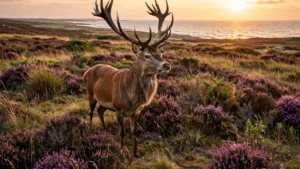
| Reindeer | 0.9–1.4 m | 60–180 kg | Branching, both sexes | Mountains and far north |
Moose watching checklist
- Go out at dawn or dusk, when moose are feeding in clearings and beside lakes.
- Scan forest edges, young birch stands and lakeshores, and watch for movement rather than shape.
- Bring binoculars and keep your distance — at least 50 metres, and far more from a cow with calves.
- Never walk between a cow and her calf, and never approach a bull in the autumn rut.
- Drive slowly in moose country at dawn and dusk, and expect a second moose behind the first.
- Stay quiet and downwind, and never use food or calls to lure a moose closer.
Frequently asked questions
How big is a moose?
A bull moose can stand up to two metres at the shoulder and weigh 600 to 700 kg, making it the largest deer in the world. Cows are smaller, usually 400 to 500 kg, and a newborn calf weighs around 10 to 15 kg.
What is the difference between a moose and an elk?
In Europe, the animal called the moose in North America is called the elk, so the two words describe the same species, Alces alces. The animal Americans call the elk is a different species, the wapiti, which is a large red deer relative.
What do moose eat?
Moose eat leaves, shoots, twigs, bark and water plants. In summer they favour birch, willow, rowan leaves and pond plants, and in winter they live on twigs and bark. An adult eats around 20 to 30 kg of plant food a day in summer.
Are moose dangerous?
Moose are usually calm and avoid people, but they can be dangerous. A cow with calves, a bull in the autumn rut or a surprised moose can charge and kick, and moose cause serious road accidents every year in Norway. Keep your distance and never approach one on foot.
Where is the best place to see moose in Norway?
The forests of the south and east, around Elverum, Trysil and the lake districts, are the best places. Evening moose safaris run in summer, and quiet forest roads at dawn and dusk are good places to spot them feeding in clearings.
Do moose swim?
Yes, moose are strong swimmers. They cross lakes and rivers regularly, can swim several kilometres, and dive to feed on water plants, holding their breath and using their long legs to push along the lake bed.
Conclusion
The moose is the largest deer in the world, yet it asks little of us beyond distance and patience. Give it both, and dusk may reward you. The next step is simple: book an evening moose safari in the south or east, and watch the lakeshores as light fades.