The reindeer is the deer of the far north, a tough, shaggy animal that lives on the Arctic tundra and the high mountain plateaus, and the only deer in which both males and females grow antlers. If you are wondering what a reindeer is, where it lives and what it eats, the short answer is this: it is a medium-sized deer of the Arctic, it eats lichen, moss and plants, it migrates between summer and winter grazing grounds, and it has been herded by the Sami people for centuries.
In Norway the reindeer is both a wild animal and a working animal. Wild herds roam the mountain plateaus of the south, while semi-domesticated herds are kept by Sami families across the north. This guide covers the reindeer’s appearance, habitat, diet, migration and its deep place in Norwegian life.
Key takeaways
- Reindeer are medium-sized Arctic deer, standing 0.9 to 1.4 metres at the shoulder and weighing 60 to 180 kg.
- Both males and females grow antlers, which is unique among deer.
- Their main winter food is lichen, which they dig out from under the snow with their broad hooves.
- Reindeer migrate between summer and winter grazing grounds, sometimes over hundreds of kilometres.
- Norway holds both wild reindeer on the southern plateaus and semi-domesticated herds kept by Sami herders.
What is a reindeer?
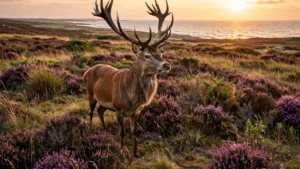
The reindeer (Rangifer tarandus) is a deer of the Arctic and subarctic, found across Norway, Sweden, Finland, Russia, Canada, Alaska and Greenland. In North America the wild reindeer is called the caribou, but it is the same species. Reindeer stand 0.9 to 1.4 metres at the shoulder and weigh 60 to 180 kg, with males larger than females and northern animals larger than southern ones.
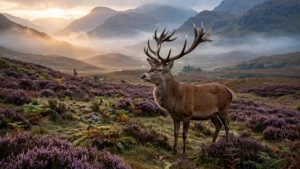
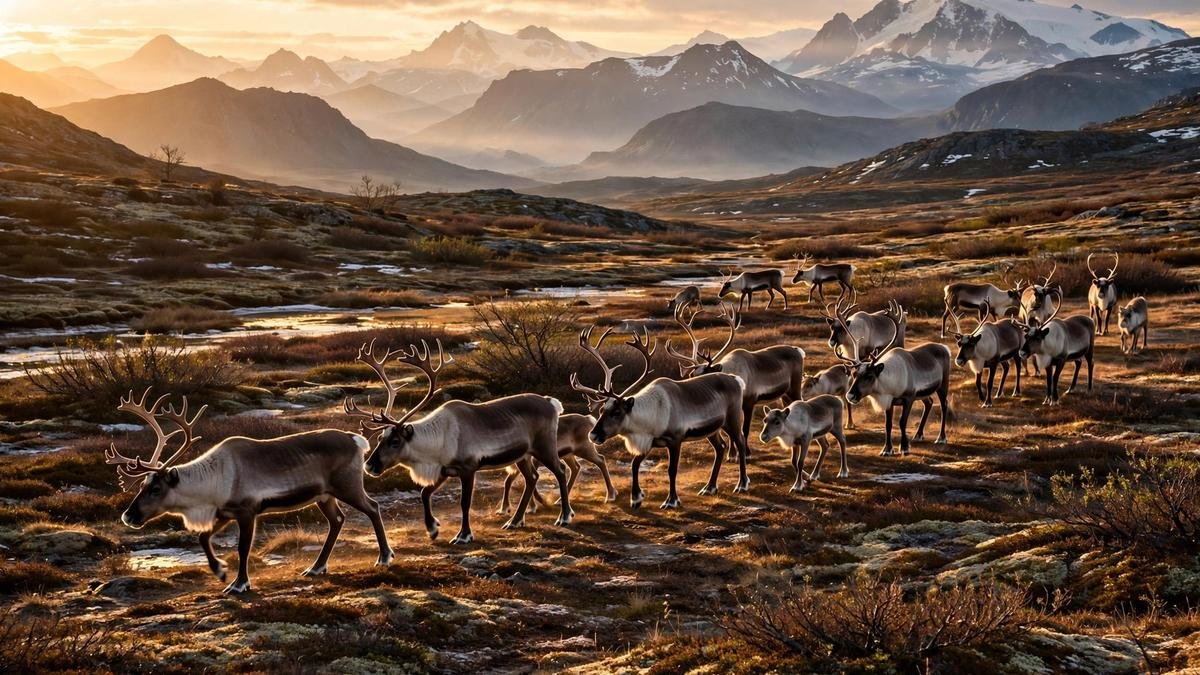
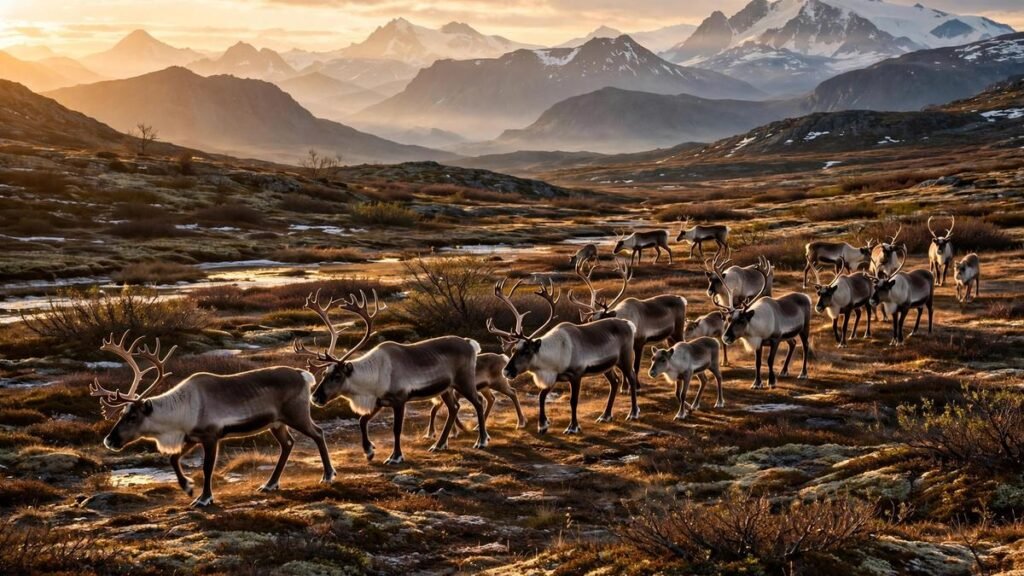
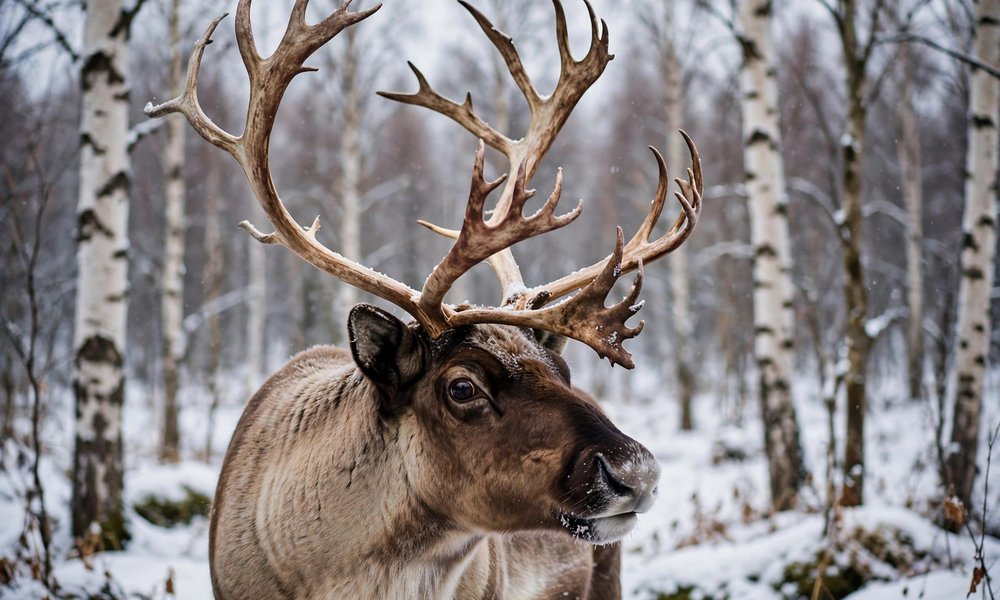
The coat is thick and shaggy, brown-grey in summer and paler in winter, with a white patch on the neck and rump. The hair is hollow, which traps air and insulates the animal against the cold, and the legs are short and sturdy. The hooves are broad and splayed, spreading the animal’s weight on snow and soft ground like snowshoes, and they make a clicking sound as the reindeer walks, which helps the herd stay together in fog and darkness.
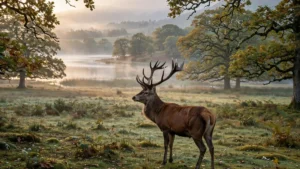
Reindeer are the only deer in which females as well as males grow antlers. The antlers are branching and impressive, and they are shed and regrown every year: males shed theirs after the autumn rut, while females keep theirs through winter and shed them in spring after giving birth. The antlers are used for digging in snow, for defence and for contests between males. Like other herbivore animals, reindeer are ruminants, chewing the cud to extract energy from tough plant food.
Habitat and range
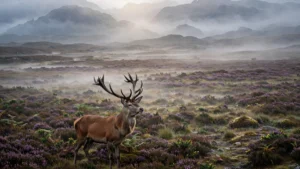
Reindeer live in the Arctic tundra and the boreal forest, from the high mountains of southern Norway to the far north of Canada and Russia. In Norway, wild reindeer live on the mountain plateaus of the south and centre, including Hardangervidda, the largest mountain plateau in northern Europe, which holds the largest wild herd in Europe. Semi-domesticated reindeer range across Finnmark, Troms and Nordland, and in the mountains of Trøndelag.
The wild herds of the southern plateaus are the last truly wild reindeer in Europe, and they are managed as a precious resource. They live at altitudes of 1,000 metres and more, on open, windswept ground where the snow is shallow and the lichen is within reach. In summer they move to higher ground to escape the heat and the biting insects, and in winter they come down to sheltered valleys where the snow is softer.
Like other tundra animals, reindeer are built for open country and long distances. They are strong swimmers, crossing rivers and lakes during migration, and they can run at up to 80 km/h in short bursts. Their sense of smell is excellent, and they can smell lichen buried under a metre of snow, which is how they find food in the depths of winter.
What reindeer eat
Lichen is the reindeer’s most important food, especially in winter. The pale, branching lichen that carpets the mountain plateaus is rich in carbohydrates and can be dug out from under the snow with the broad front hooves. A reindeer may eat several kilograms of lichen a day in winter, and it can survive for months on little else, though lichen is poor in protein and the animals lose condition through the cold season.
In summer the diet is much richer. Reindeer eat grasses, sedges, herbs, leaves and the shoots of willow and birch, and they seek out mushrooms, which are rich in protein and minerals. They also eat moss, and they will gnaw shed antlers and bones for calcium. The summer feeding builds up the fat reserves that carry the animal through the winter, and a reindeer that feeds well in summer will survive the cold far better than one that does not.
Reindeer need water and salt, and they lick salt from rocks and from the ground, and drink from streams and lakes. In winter they eat snow for water, which costs energy, so they prefer to drink from open water when they can find it. The rumen, the first chamber of the stomach, holds bacteria that break down lichen and tough plants, and the reindeer re-chews its food as cud, like other deer.
Migration
Reindeer are famous migrants. In spring, the herds move from their winter grazing grounds to the summer pastures, and in autumn they return, following routes used for generations. Some herds travel only a few dozen kilometres, while others, such as the great caribou herds of Canada and Alaska, travel more than a thousand kilometres a year, one of the longest land migrations of any animal.
In Norway, the semi-domesticated herds are moved by their herders, who follow the animals on snowmobiles, quad bikes and skis, guiding them between seasonal pastures. The spring migration is the hardest, as the herds must cross rivers swollen with meltwater and ground still deep in snow. Calves are born on the spring migration, and the herders time the move so the calves are born on the summer pastures, where the food is richest.
Migration is driven by food, snow and insects. In summer, the reindeer move to high ground and windy ridges to escape the clouds of mosquitoes and warble flies that torment them in the lowlands. In winter, they move to where the snow is shallow and the lichen is easy to reach. Climate change is now disrupting these patterns, as warmer winters bring rain that freezes into ice, locking the lichen away from the animals that need it.
Calves and family life
Reindeer calves are born in late spring, usually in May or June, after a pregnancy of about seven and a half months. A cow gives birth to a single calf, which weighs around 5 to 7 kg and can stand and walk within an hour of birth. The calf follows its mother from the first day, and it must, because the herd keeps moving and a calf left behind will not survive.
The calf grows fast on its mother’s milk, which is very rich in fat, and it starts eating plants within a few weeks. By autumn it weighs 40 kg or more, and it stays with its mother through the winter, learning the migration routes and the feeding grounds. Young reindeer stay with the herd for life, and the herd is a close-knit group, with cows, calves and young animals travelling together and older bulls often on the edges.
The autumn rut is the dramatic season of the reindeer year. Bulls gather harems of cows and fight rival bulls, clashing antlers and bellowing, and they eat little for weeks. After the rut, the bulls shed their antlers and the herds settle into their winter routine. Reindeer can live for 12 to 15 years in the wild, though many die younger from predators, disease and hard winters.
Reindeer and the Sami
Reindeer herding is at the heart of Sami culture in Norway, Sweden, Finland and Russia. The Sami have herded reindeer for centuries, and the animals provide meat, hides, antlers and milk, and once pulled sleds and carried loads. Today herding is a modern business, with snowmobiles, GPS collars and helicopters, but the knowledge of the animals, the land and the seasons is still passed down through families.
In Norway, reindeer herding is protected by law, and only Sami people may own and herd reindeer. The herds are counted in the hundreds of thousands, and the meat is a valued food, lean and rich in flavour. Herding is also a way of life that keeps Sami language and culture alive in the far north, and the annual events of the herding year, the calving, the marking and the slaughter, are central to Sami communities.
Wild reindeer and herded reindeer are the same species, but they are managed differently. Wild herds are hunted under strict quotas, while herded animals are owned and slaughtered by their herders. The two sometimes mix, and herders work with the authorities to keep the wild herds wild and the domestic herds separate, because the wild herds are a unique part of Norway’s natural heritage.
| Species | Shoulder height | Weight | Antlers | Main winter food |
|---|---|---|---|---|
| Reindeer | 0.9–1.4 m | 60–180 kg | Both sexes | Lichen |
| Moose | Up to 2.0 m | 400–700 kg | Bulls only | Twigs and bark |
| Red deer | 1.2–1.5 m | 100–250 kg | Stags only | Grass and twigs |
| Roe deer | 0.6–0.75 m | 20–30 kg | Bucks only | Leaves and buds |
Reindeer watching checklist
- Look for wild reindeer on the high plateaus of Hardangervidda and Dovrefjell in summer.
- Use binoculars and keep your distance — wild herds are shy and easily disturbed.
- Go out in the early morning, when the herds are feeding in the open.
- Never approach a herd on foot, and never drive a vehicle into a herd.
- Respect Sami herding areas: do not disturb herds, fences or corrals, and keep dogs on a lead.
- Visit in winter to see herded reindeer near Tromsø and in Finnmark, where sled rides and feeding visits are offered.
Frequently asked questions
Do female reindeer have antlers?
Yes. Reindeer are the only deer in which both males and females grow antlers. Males shed theirs after the autumn rut, while females keep theirs through winter and shed them in spring after giving birth.
What do reindeer eat in winter?
Lichen is the main winter food. Reindeer dig it out from under the snow with their broad hooves, using their excellent sense of smell to find it. They also eat moss, twigs and whatever plants they can reach.
How far do reindeer migrate?
It varies. Norwegian herds may move a few dozen kilometres between seasonal pastures, while the great caribou herds of North America travel more than a thousand kilometres a year, one of the longest land migrations of any animal.
Are reindeer and caribou the same animal?
Yes. Reindeer and caribou are the same species, Rangifer tarandus. The name caribou is used for the wild animals of North America, while reindeer is used in Europe and Asia for both wild and semi-domesticated animals.
Where can I see wild reindeer in Norway?
Hardangervidda holds the largest wild herd in Europe, and Dovrefjell and the other southern plateaus hold smaller herds. Summer is the best season, and the animals are shy, so bring binoculars and be patient.
Can I feed reindeer in Norway?
Wild reindeer should never be fed, as it disturbs them and can make them dependent on people. Herded reindeer may be fed at organised visitor experiences near Tromsø and in Finnmark, where feeding is part of a managed visit.
Conclusion
Watch reindeer at dawn, keep distance.