Portugal animals range from Iberian wolves in the mountains of the north to bottlenose dolphins in the Sado estuary, and the country holds one of Europe’s most varied collections of wildlife for its size. If you are wondering which animals live in Portugal and where to see them, the short answer is this: wolves, Iberian lynx, wild horses, deer and wild boar roam the mountains, forests and cork oak woodlands, flamingos, eagles and vultures fill the wetlands and cliffs, and dolphins, whales and seals live along the Atlantic coast and around the islands.
Portugal is one of the best places in Europe to watch wildlife, because the country packs mountains, river valleys, lagoons, cliffs and ocean into a small area. This guide covers the species you are most likely to meet, where each one lives, the best seasons, and how to watch them safely.
Key takeaways
- Portugal’s most iconic land animals are the Iberian wolf, Iberian lynx, Garrano wild horse, red deer, roe deer, wild boar and Iberian ibex.
- Portugal has one of Europe’s best places to see wild dolphins, with a resident bottlenose dolphin group in the Sado estuary near Setúbal.
- The north is the land of wolves and wild horses, while the south holds flamingos, wetlands and rich birdlife around the Algarve lagoons.
- Early morning and late evening are the best times to spot large mammals, and spring and autumn are the best seasons for birds.
- Keep your distance, never feed wild animals, and follow local rules in national parks and nature reserves.
What makes Portugal’s wildlife special
Portugal stretches from the cool, wet mountains of the north to the warm, dry plains of the Alentejo and the lagoons of the Algarve in the south. That range covers Atlantic forest, cork oak woodland, river gorges, salt marshes and deep ocean.
The population is small for much of the interior, and large areas of the north and centre remain wild and thinly settled. That space, along with protected areas such as Peneda-Gerês National Park, is why wolves and lynx still survive here. Like other forest animals, many Portuguese species depend on quiet woodland and clean rivers.
The great mammals of Portugal
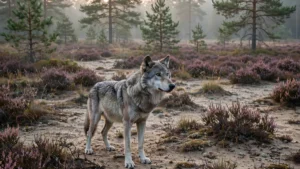
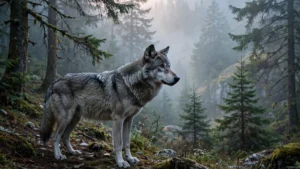
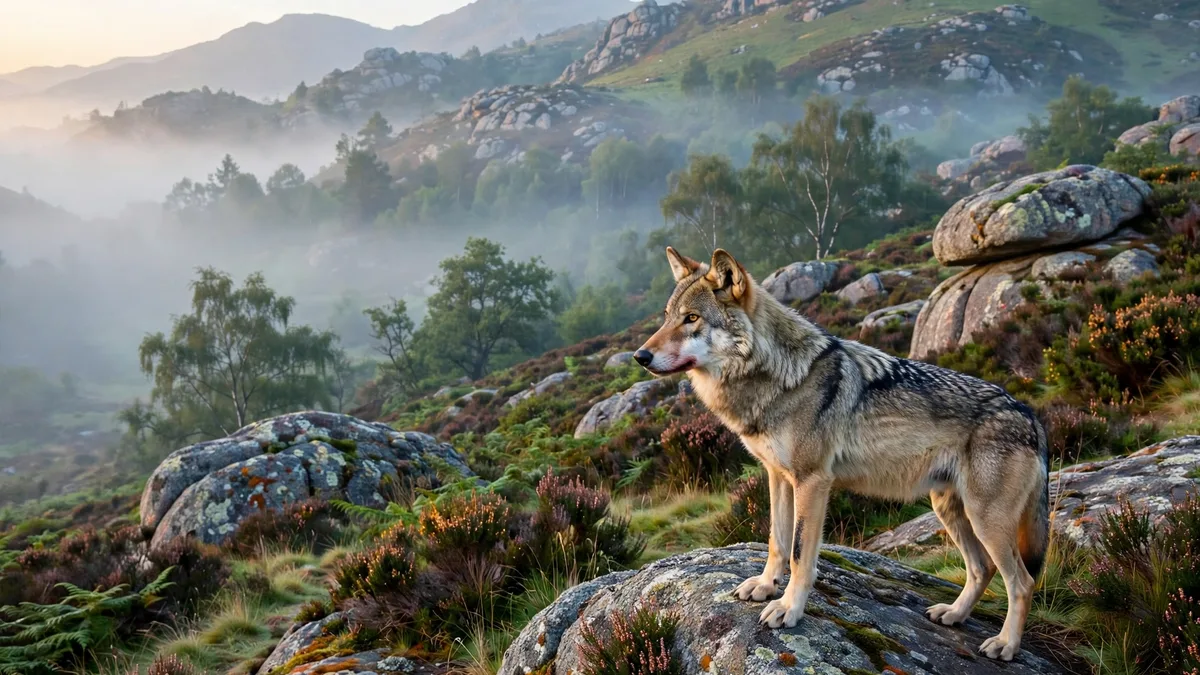
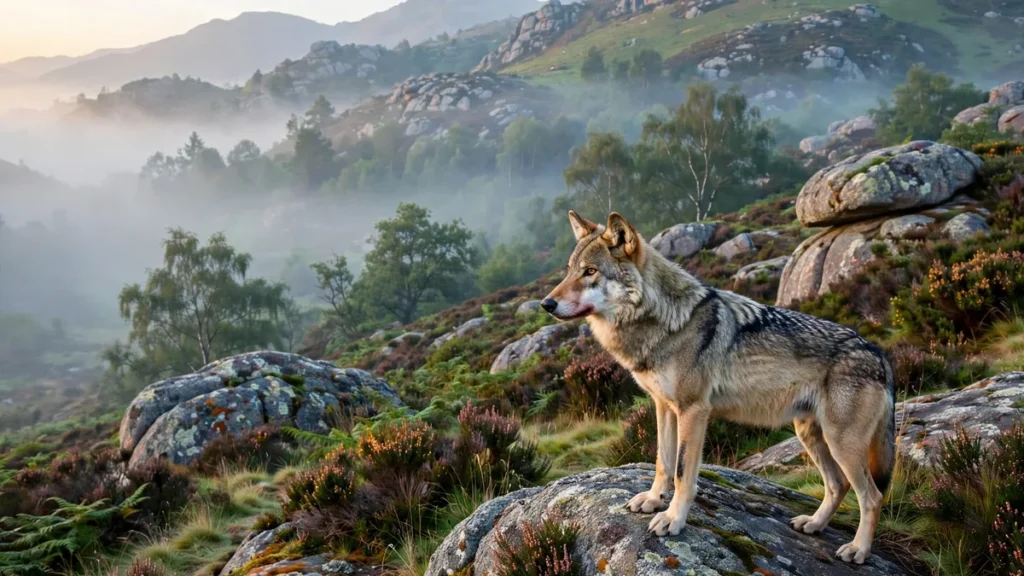
The Iberian wolf is Portugal’s most famous predator, a subspecies of the grey wolf that lives in the mountains of the north and centre. Wolves are most numerous in the Peneda-Gerês and Montesinho areas, where they hunt roe deer and wild boar. They are shy and mainly active at night, so a sighting is rare.
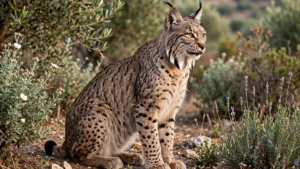
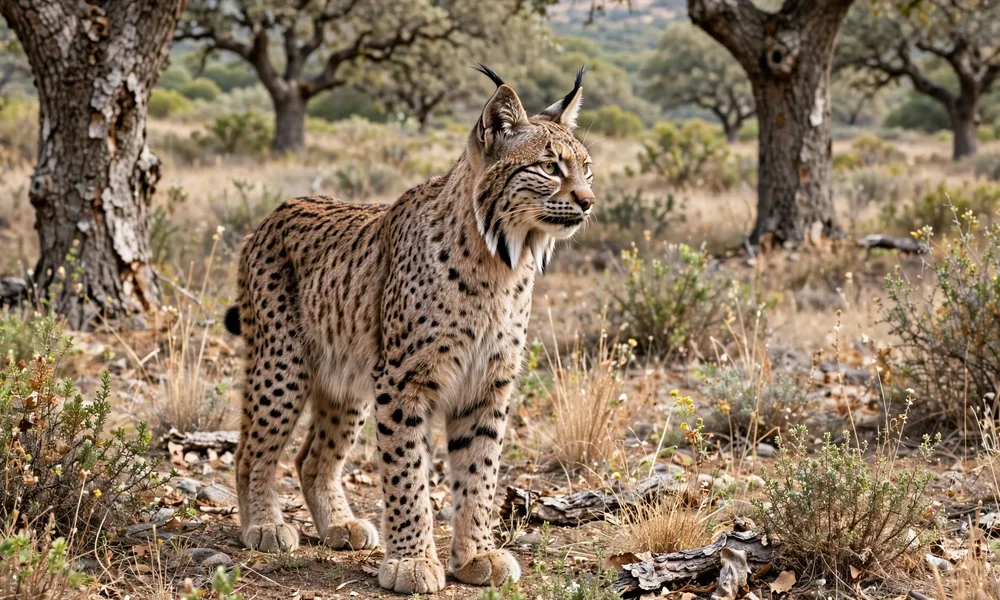
The Iberian lynx is rarer still, and one of Europe’s most precious animals. It lives mainly in the Guadiana valley in the south-east, where a reintroduction programme has brought it back to the scrub and cork oak country along the Spanish border. The lynx hunts rabbits above all, and it is seldom seen outside guided tracking work.
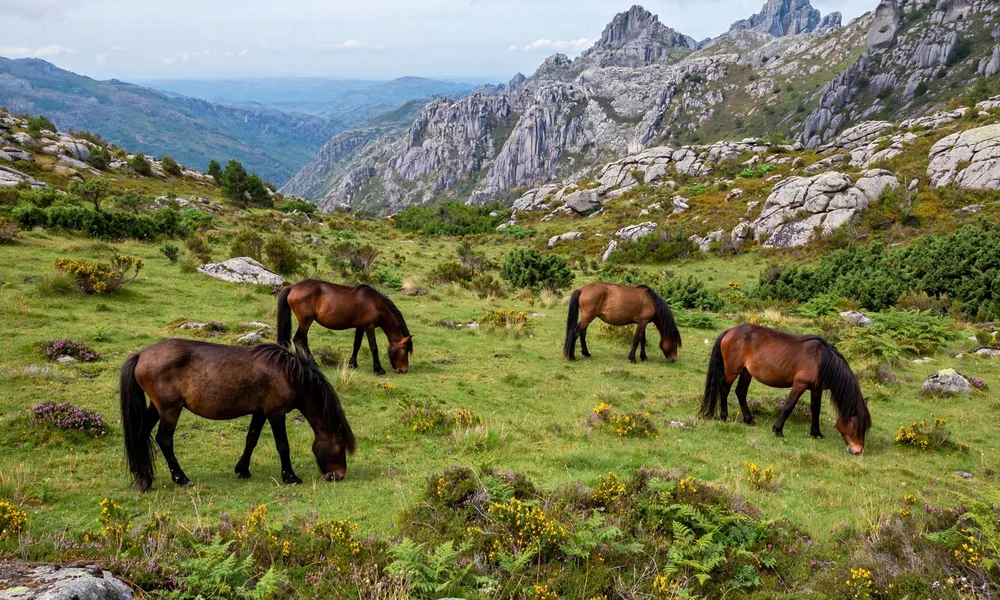
The Garrano is Portugal’s wild horse, a small, sturdy breed that roams free in the mountains of Peneda-Gerês. Garranos graze the high pastures in herds, with dark coats and thick manes, and they are easiest to see in summer. They are owned and rounded up at times, but they live free for most of the year.
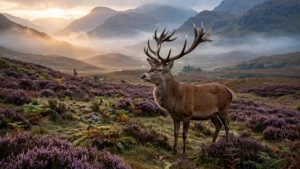
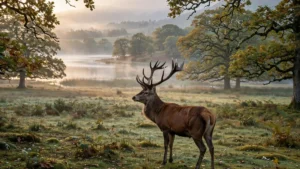
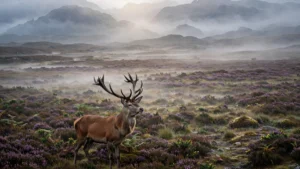
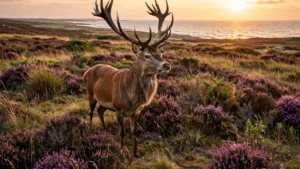
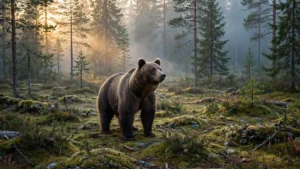
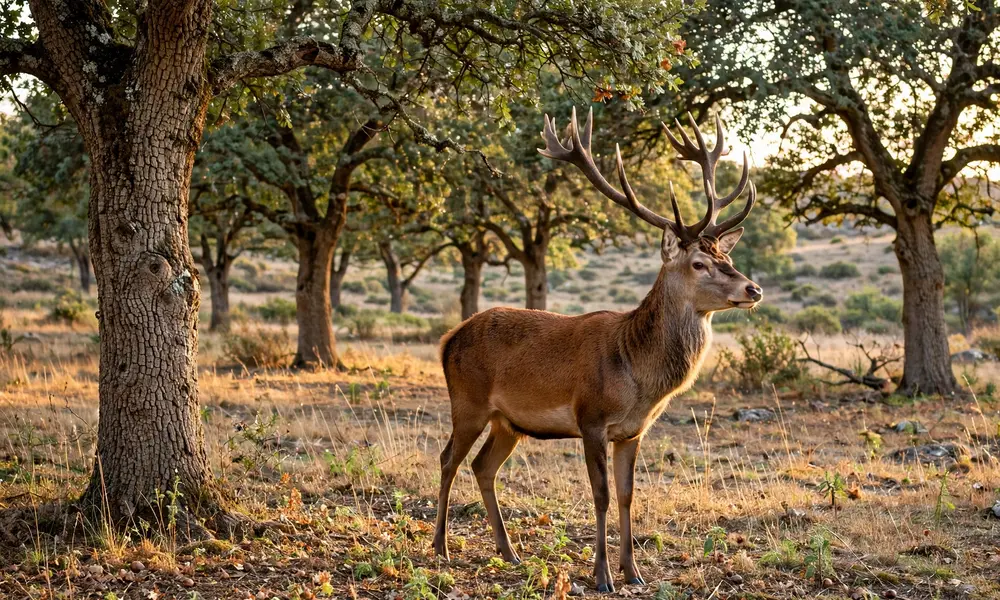
Red deer are Portugal’s largest deer, most numerous in the Alentejo and the north-east, where the stags roar during the autumn rut. Roe deer are smaller and more widespread, living in forest edges and river valleys across the country. Wild boar are common in the forests and scrub of the north and centre, most often seen at night. The Iberian ibex, a wild goat with long curved horns, lives on steep rocky slopes in Peneda-Gerês and other northern mountains.
Birds of the wetlands, cliffs and cork oak woodlands
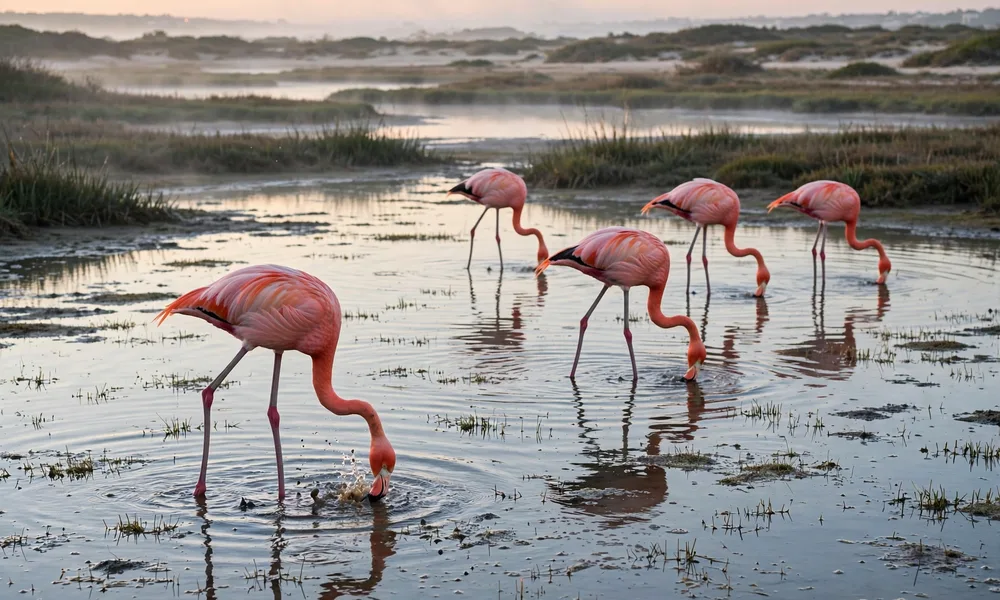
The greater flamingo is one of the great sights of the Algarve, feeding in the shallow lagoons of the Ria Formosa and the salt pans around Castro Marim. Flamingos gather in large pink flocks, and they are easiest to see in spring and autumn.
Griffon vultures soar over the river gorges of the Douro and the Guadiana, riding the warm air above steep cliffs. Golden eagles and Bonelli’s eagles hunt over the same country. The black stork nests in remote river valleys in the east, while white storks are common across the Alentejo, nesting on chimneys, poles and church towers.
The cork oak woodlands of the Alentejo, known as montado, hold hoopoes, azure-winged magpies and great bustards on the open plains. The great bustard, one of the heaviest flying birds in the world, is a special bird of the Alentejo grasslands, and the males display in spring. In the north, the forests hold goshawks, tawny owls and woodpeckers, and the coast holds gannets, shearwaters and waders.
Dolphins, whales and life along the Atlantic coast
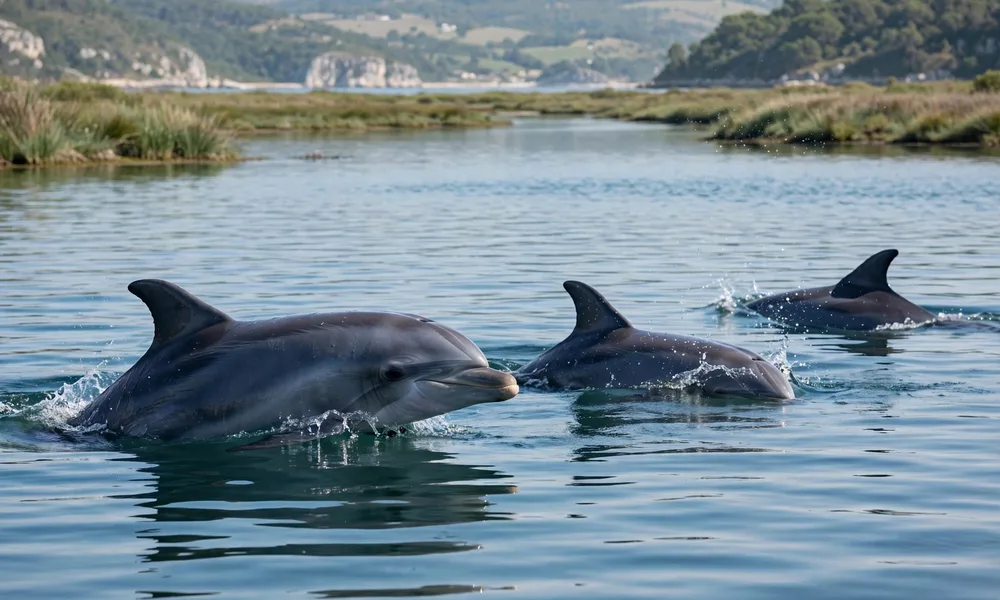
The Sado estuary near Setúbal is home to a resident group of bottlenose dolphins, one of the few resident dolphin groups in Europe. The dolphins live in the estuary all year, and they are often seen from boats leaving Setúbal and Tróia.
Around the Azores, the deep Atlantic holds sperm whales, blue whales, fin whales and several dolphin species, and the islands are one of the best whale-watching places in the world. On the mainland coast, common dolphins are seen offshore, especially in summer. The monk seal, once common along the Portuguese coast, now survives mainly around Madeira, where a small colony is protected.
Smaller animals and Portugal’s endemic species
Not all of Portugal’s wildlife is large. The Iberian hare and the European rabbit are key species of the scrub and farmland, and they are the main prey of lynx, eagles and wolves. The rabbit population has fallen in places because of disease, which has made life harder for the predators that depend on it. Genets hunt at night in woodland and scrub, and Egyptian mongooses are common in the south.
Portugal has several endemic species, animals found only on the Iberian Peninsula. The Iberian lynx and the Iberian wolf are the best known, but the list also includes the Iberian ibex, the Iberian hare and the Iberian mole. The Iberian midwife toad, a small toad that carries its eggs on its back, lives in the damp north-west. Bats are common in caves and old buildings.
Where to see Portugal’s wildlife
The best place depends on the species. Wolves and Garrano horses are easiest in Peneda-Gerês National Park in the north-west, and Montesinho in the north-east is also good for wolves, deer and wild boar. The Iberian lynx is best sought in the Guadiana valley, where guided visits run from Mértola, and the Douro International Natural Park is the place for vultures and eagles.
For birds, the Ria Formosa in the Algarve is the classic destination for flamingos and waders, while the Alentejo plains around Castro Verde are best for great bustards. For dolphins, the Sado estuary near Setúbal is the obvious choice.
| Species | Where to look | Best season | How likely is a sighting |
|---|---|---|---|
| Iberian wolf | Peneda-Gerês and Montesinho mountains | All year, at night | Low |
| Iberian lynx | Guadiana valley near Mértola | Autumn to spring | Low |
| Garrano wild horse | Peneda-Gerês high pastures | Summer | Good |
| Greater flamingo | Ria Formosa and Castro Marim lagoons | Spring and autumn | Good in season |
| Bottlenose dolphin | Sado estuary near Setúbal | All year | Good from a boat |
| Great bustard | Alentejo plains around Castro Verde | Spring | Good in season |
Best seasons for wildlife watching
Spring is the best season for birds, when flamingos fill the lagoons and great bustards display on the Alentejo plains. Summer is the easiest season for mammals and for the sea, with Garrano horses on the high pastures and dolphins in the Sado estuary. Plan outings for dawn and dusk, as the Alentejo plains are fierce by midday.
Autumn brings the deer rut, when red deer stags roar in the valleys of the Alentejo and the north-east, and it is also a good season for lynx tracking. Winter is quieter, but wolves are most active by day in the north, and wintering birds fill the estuaries of the south.
Staying safe around Portugal’s wildlife
Portugal’s large animals are usually calm, but they deserve respect. Keep your distance from wolves, wild boar and deer, never approach a wild horse herd or walk between a mare and her foal, and never try to feed or touch any wild animal. If you meet a wild boar, back away slowly and give it a clear escape route, and never corner one with piglets.
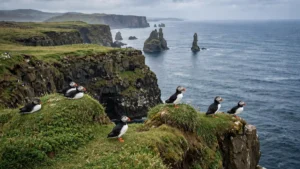
On the coast, keep well back from cliff edges when watching seabirds. In the mountains, carry water and sun protection in summer, and check the weather before walking in Peneda-Gerês, where mist can close in fast. Like predators elsewhere in Europe, Portugal’s wolves and lynx avoid people if you keep your distance.
Wildlife watching checklist
- Book a local guide for wolves, lynx and whales — they know where the animals are and how to watch them safely.
- Go out at dawn or dusk for mammals, and plan flamingo trips for spring and autumn at the Ria Formosa.
- Bring binoculars, warm layers for the mountains and sun protection for the Alentejo, even in spring.
- Keep at least 50 metres from dolphins, nesting birds and grazing deer, and far more from wolves, wild boar with piglets and wild horses.
- Never feed wild animals, and never use food or calls to lure them closer for a photograph.
- Leave no trace: take your rubbish home and keep to marked paths in sensitive habitats.

Frequently asked questions
What is the most famous animal in Portugal?
The Iberian wolf is the most famous wild animal in Portugal, and the Iberian lynx is the rarest. The Garrano horse and the Sado dolphins are the animals most visitors actually see.
Are there wolves in Portugal?
Yes. Iberian wolves live in the mountains of the north and centre, mainly in Peneda-Gerês and Montesinho. They are shy, mainly active at night, and rarely seen.
Where can I see dolphins in Portugal?
The Sado estuary near Setúbal has a resident group of bottlenose dolphins that lives there all year. Boat trips run from Setúbal and Tróia, and the Azores are best for whales.
When is the best time to see flamingos in Portugal?
Flamingos are easiest to see in spring and autumn, when numbers are highest in the Ria Formosa and the salt pans around Castro Marim.
Can I see the Iberian lynx in Portugal?
It is possible, but hard. The lynx lives mainly in the Guadiana valley near Mértola, and guided tracking visits give the best chance. Sightings are never certain.
Do I need a guide to see wildlife in Portugal?
Not for common species such as flamingos, deer and Garrano horses. For wolves, lynx and whales, a local guide greatly improves your chances and keeps you safe.
Conclusion
Portugal’s wildlife rewards patience: wolves in the north, flamingos in the Algarve and dolphins in the Sado estuary are all within reach if you plan around the seasons and keep your distance.
The next step is to pick one species and one season — a summer trip to Peneda-Gerês, a spring visit to the Ria Formosa, or a boat trip from Setúbal — and plan your visit around it.