What Are Forest Animals?
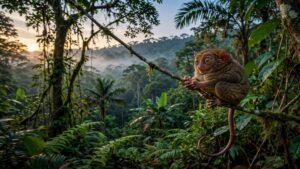
Forest animals are the mammals, birds, reptiles, amphibians, insects and other creatures that live, feed, shelter and breed in woodland. They range from large predators such as lynx to tiny beetles and ants that work unseen in leaf litter and dead wood. What links them is dependence on trees for food, cover, nesting sites or protection.
So how does a forest ecosystem work? It works as a stack of habitats, each layer feeding and sheltering different species, all connected through food, decay and the soil below.
Key Takeaways
- Forest animals use every layer, from the canopy to the forest floor and soil.
- Mammals, birds, insects and fungi-linked species all depend on trees.
- Dead wood, old trees and varied tree ages support more species than a uniform plantation.
- Predators, prey, pollinators and decomposers each help keep the forest balanced.
- In Norway, moose, lynx, pine martens and capercaillie are well-known forest species.
- See forest animals quietly, at dawn or dusk, without feeding them.
What Counts as a Forest Animal?
Any animal that relies on forest for a central part of its life counts as a forest animal, even if it also visits fields, lakes or gardens. A moose may graze a meadow and a fox may hunt along a forest edge, but each still needs woodland for shelter, breeding or winter cover.
Some live in trees almost all the time, including squirrels, pine martens and many birds. Others live mainly on the ground but depend on shade, leaf litter and fallen logs, including badgers, wild boar, shrews and beetles. A third group lives underground or in dead wood. For a fuller picture, the forest animal list shows how broad the group is.
The Layers of a Forest Habitat
A mature forest has a clear vertical structure, and each layer has its own light, temperature and food. The canopy, formed by the crowns of the tallest trees, catches most sunlight and wind. Birds such as crossbills, tits and woodpeckers feed there, along with squirrels and insects that live on leaves, buds and seeds.
Below the canopy sits the shrub layer, a denser zone that suits warblers and thrushes nesting in bushes, and roe deer and hares browsing young shoots. It also gives cover to stealthy hunters such as lynx and pine martens. The forest floor is the busiest layer: fallen leaves, moss, fungi and rotting logs shelter shrews, voles, frogs, beetles, ants and spiders, while wild boar root through it for food. Underground, earthworms break down dead leaves, and fungi link tree roots, helping trees share water and nutrients.
Forest Mammals: From Moose to Pine Martens
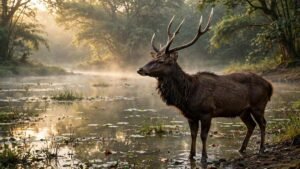
Moose, the largest deer in Europe, browse young trees and shrubs, especially willow, birch and rowan, and use forest lakes in summer to cool down and feed on aquatic plants. Learn more in our guide to moose in Norway.
Red deer favour forest edges and clearings, while roe deer prefer mixed woodland with shrubs and young growth. Both are important prey for large predators, and their grazing shapes which young trees survive. Red squirrels feed on seeds, buds, fungi and berries, pine martens hunt in trees and on the ground, and badgers feed at night on earthworms, roots and berries.
The Eurasian lynx is Norway’s only wild big cat and a specialist hunter of roe deer, though it also takes hares and grouse. It needs large, quiet forest with good cover and avoids people whenever it can. Our profile of the lynx explains how it hunts and why it is rarely seen.

Birds, Reptiles and Amphibians of the Forest
Forest birds are often easier to hear than to see. Woodpeckers drum on dead trees and dig for insects in bark, creating nest holes other birds later use. Tits and treecreepers search bark for insects and seeds. Capercaillie, the largest grouse in Europe, live in old conifer forest and feed on pine needles in winter, buds in spring and berries in summer and autumn. Owls hunt voles at night, while jays bury acorns and seeds, helping new trees grow.
Reptiles and amphibians need damp, sheltered spots. Frogs and toads breed in forest ponds, then spend much of the year in leaf litter and under logs. Adders, Norway’s only venomous snake, bask in sunny clearings and hunt voles and frogs. Slow worms, legless lizards that look like small snakes, hide under stones and logs and feed on slugs and worms.
Insects and the Small Life That Keeps Forests Working
Insects do much of the quiet work in a forest. Pollinators such as bees, hoverflies and butterflies help plants set seed. Bark beetles and wood-boring larvae break down dead trees, ants carry seeds and aerate soil, spiders control insect numbers, and millipedes and woodlice shred fallen leaves.
Dead wood deserves special attention. A fallen log or standing dead tree can support hundreds of species over decades: fungi soften the wood, beetles tunnel through it, and birds nest in the holes. Old, varied forests hold more species than young, even-aged plantations because they offer more layers, more dead wood and more food.
How a Forest Food Web Works
A forest food web links producers, herbivores, predators and decomposers. Plants capture sunlight and turn it into leaves, seeds, berries and wood. Herbivores such as deer, hares, voles and caterpillars eat that plant material, predators such as foxes, owls, lynx and pine martens eat the herbivores, and scavengers and decomposers break down what is left.
When one part changes, the effects spread: a good berry year feeds more voles, which supports more owls and foxes, while a harsh winter can leave deer short of food. Adaptation lets each species hold its place, through thick winter coats, colour change, hibernation, food caching and migration. Our guide to animal adaptations covers how animals cope with cold, darkness and scarce winter food.
Forest Animals Compared
| Animal | Main habitat layer | Main food | Active mainly |
|---|---|---|---|
| Moose | Forest floor and wetlands | Young trees, shrubs, aquatic plants | Dawn and dusk |
| Lynx | Forest floor and shrub layer | Roe deer, hares, grouse | Dawn, dusk and night |
| Pine marten | Canopy and forest floor | Squirrels, birds, eggs, berries | Night and dusk |
| Red squirrel | Canopy | Seeds, buds, fungi, berries | Day |
| Capercaillie | Forest floor and canopy | Pine needles, buds, berries | Day |
| Wild boar | Forest floor | Roots, fungi, invertebrates, acorns | Night |
Table: A comparison of common forest animals, the layer they use most, their main food and when they are most active.
Forest Animals in Norway
Norway’s forests are mainly boreal, dominated by Norway spruce and Scots pine, with birch, rowan and other broadleaf trees mixed in, especially in the south and along the coast. This is taiga forest, the same broad belt that stretches across northern Europe and Asia. The taiga animals that live here are adapted to long, cold winters and snow that can lie for months.
In the far north and at higher altitudes, forest gives way to mountain birch woodland and then open tundra. Animals near that edge, such as mountain hares and willow grouse, turn white in winter for camouflage. Norway’s national parks give forest animals room to roam and breed, and national parks and wildlife in Norway are among the best places to see them naturally.
Forest Animals Through the Seasons
Spring is the busiest season: birds sing and nest, frogs gather in ponds to spawn, and mammals give birth to young that must grow fast before winter. Summer brings long days, abundant insects and berries, and the best chance to see young animals, though ticks are also most active then.
Autumn is preparation: squirrels and jays cache seeds and nuts, bears feed heavily before hibernation, and fungi appear in large numbers. Winter is the hardest test, with deep snow and frozen ground limiting food and movement. Moose and deer shelter in dense forest, grouse burrow into snow, and small mammals live in tunnels under it. Some hibernate, some migrate, and some endure on thick fur and stored fat, as explained in our guide to animal migration.
Threats to Forest Animals
The main threat is loss and fragmentation of habitat. When forest is cleared, split by roads or replaced by uniform plantations, animals lose shelter, food and safe routes between breeding areas. Large predators such as lynx need connected forest over wide areas, and even small animals struggle to cross open ground and busy roads. Climate change adds pressure: rain on snow can form ice that blocks food, and changing spring timing can leave nesting birds out of step with their chicks’ food. Disturbance matters too, especially during breeding and winter, when dogs off the lead, noise near a den, or feeding wild animals can cause real harm.
How to See Forest Animals Responsibly
Seeing forest animals well takes patience and quiet, usually at dawn or dusk. Move slowly, stop often, watch for movement, and listen for alarm calls and birdsong. Binoculars help, and a still, downwind position near a clearing or water source is often better than walking for hours.
Forest Wildlife Watching Checklist
- Visit at dawn or dusk, when most forest mammals and birds are active.
- Move slowly and quietly, stopping often to watch and listen.
- Use binoculars and stay downwind so animals do not catch your scent.
- Look for signs: tracks, droppings, feeding marks and nests.
- Stay on paths in sensitive areas and keep dogs on a lead.
- Never feed wild animals or approach nests, dens or young animals.
- Dress for the weather and check for ticks after your walk.
- Leave no litter, and take only photographs home.
If you want a broader starting point, our guide to animals in Norway covers where different species live and when they are easiest to see.
Frequently Asked Questions
What is the most common forest animal in Norway?
It depends on the forest and season, but red squirrels, roe deer, woodpeckers, tits and voles are among the most widespread. Small mammals and birds are far more numerous than large predators.
Do lynx live in Norwegian forests?
Yes. The Eurasian lynx lives in forest across much of Norway, though it is shy, nocturnal and rarely seen. It needs large areas of quiet forest with good cover.
Are forest animals dangerous to people?
Most avoid people and pose little risk if left alone. Moose can be dangerous if cornered or protecting a calf, and adders can bite if stepped on. Give wild animals space.
Why is dead wood important for forest animals?
Dead wood provides food, shelter and breeding sites for fungi, beetles, woodpeckers, owls and bats. A fallen log can support hundreds of species over decades.
A Forest Is More Than Its Trees
Forest animals show that a forest is not a collection of trees with animals added on top. It is a working system in which trees, plants, fungi, insects, birds and mammals depend on each other through food, shelter, pollination and decay. Remove one layer and the effects reach species that seem unrelated.
Protecting forest wildlife is practical: keep varied, connected forest with old trees and dead wood, give animals quiet space to breed, and watch them without feeding them. Start with a quiet dawn walk, binoculars in hand, and a simple goal: find three signs of forest animals, such as tracks or a nest hole, before you look for the animals themselves.
Safety note: keep a respectful distance from all wild animals, especially moose with calves. Do not feed wildlife, keep dogs on a lead, and contact the relevant authorities if you find an injured animal.