Animal names are the first step into the natural world, and this list gives you 200 of them, from aardvark to zebra, each with one short fact. The question is simple: how many animal names can you learn, and which ones do you already know? This complete A–Z list covers mammals, birds, fish, reptiles, amphibians and insects, so whether you need animal names for a quiz, a school project or a game, you will find them here.
Key takeaways
- This list has exactly 200 animal names, from A to Z, each with one short fact.
- Every animal is real — mammals, birds, fish, reptiles, amphibians and insects.
- The letters with the most animal names are C, M, O and S, with 11 each.
- The hardest letters are X and U, with only a few animals each.
- Use the list for quizzes, teaching, word games or learning the alphabet.
Animal Names A–B
The first two letters give 20 animal names, from the aardvark to the blue whale. For more single-letter lists, see our guides to animals that start with O and animals that start with V.
- African elephant — largest land animal.
- Aardvark — nocturnal burrower eating ants and termites.
- Albatross — seabird with the widest wingspan.
- Alligator — armoured reptile of freshwater wetlands.
- Alpaca — gentle camelid kept for wool.
- Anaconda — heaviest snake in the world.
- Antelope — swift grazer of Africa and Asia.
- Arctic fox — white-coated fox of polar winters.
- Armadillo — armoured mammal that rolls into a ball.
- Axolotl — Mexican salamander that keeps its gills.
- Baboon — ground-living monkey with a dog-like face.
- Badger — nocturnal digger living in underground setts.
- Bald eagle — white-headed raptor, emblem of the United States.
- Barracuda — fast predatory fish with fang-like teeth.
- Beaver — dam-building rodent with a flat tail.
- Bengal tiger — orange-striped big cat of India.
- Bison — massive horned grazer of North American plains.
- Blackbird — songbird with a rich, fluting call.
- Blue whale — largest animal ever known.
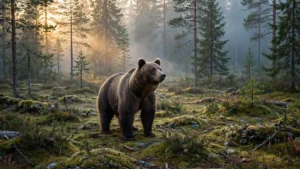
- Brown bear — powerful omnivore of northern forests.
Animal Names C–D
C and D give 19 animal names, including the cheetah, the cobra and the dolphin.
- Camel — desert mammal storing fat in its hump.
- Capybara — world’s largest rodent, a strong swimmer.
- Cardinal — bright red songbird of North American gardens.
- Cat — small domesticated hunter descended from wildcats.
- Caterpillar — larva of a butterfly or moth.
- Cheetah — fastest land animal, reaching 60 mph.
- Chimpanzee — intelligent great ape that uses tools.
- Chipmunk — striped squirrel storing food in cheek pouches.
- Cobra — venomous snake that spreads a hood.
- Crocodile — ancient armoured predator of tropical rivers.
- Cuckoo — bird laying eggs in other birds’ nests.
- Dalmatian — spotted dog once used as a carriage dog.
- Dolphin — intelligent marine mammal hunting in pods.
- Donkey — hardy working animal related to the horse.
- Dormouse — small rodent hibernating through winter.
- Dragonfly — fast-flying insect with two pairs of wings.
- Duck — waterbird with webbed feet and waterproof feathers.
- Dugong — gentle sea cow grazing on seagrass.
- Dingo — wild Australian dog with a sandy coat.
Animal Names E–F
E and F give 16 animal names, from the eagle to the fruit bat. The emu is one of the best-known E animals, and our guide to forest animals covers many animals in this group.
- Eagle — powerful bird of prey with keen eyesight.
- Eel — long snake-like fish of rivers and seas.
- Elephant seal — huge seal; the male has a trunk-like nose.
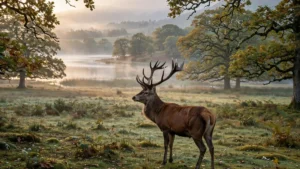
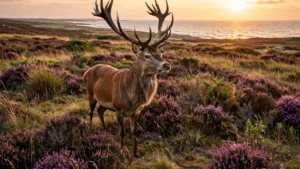
- Elk — large deer also known as wapiti.
- Emu — flightless Australian bird, second tallest of all.
- Echidna — spiny egg-laying mammal, a spiny anteater.
- Ermine — stoat in its white winter coat.
- Earthworm — burrowing worm that enriches soil.
- Falcon — swift raptor diving at great speed.
- Ferret — playful domesticated relative of the polecat.
- Finch — small seed-eating songbird with a strong beak.
- Firefly — beetle that glows to attract a mate.
- Flamingo — pink wading bird feeding upside down.
- Fox — clever red-coated hunter of woods and fields.
- Frog — amphibian beginning life as a tadpole.
- Fruit bat — large bat eating fruit and nectar.
Animal Names G–H
G and H give 16 animal names, including the giraffe and the gorilla. Our guide to herbivore animals explains how the grazers in this group feed.
- Gazelle — graceful antelope outrunning most predators.
- Gecko — small lizard climbing walls with sticky toes.
- Gerbil — desert rodent living in deep burrows.
- Giant panda — black-and-white bear eating bamboo.
- Giraffe — tallest land animal, its neck reaches two metres.
- Goat — hardy farm animal and skilled climber.
- Gorilla — largest ape, living in African forest groups.
- Grasshopper — jumping insect rubbing its legs to sing.
- Hamster — small rodent storing food in cheek pouches.
- Hare — long-eared runner of open fields and moorland.
- Hedgehog — spiny mammal that rolls into a ball.
- Heron — tall wading bird with a spear-like beak.
- Hippopotamus — huge river mammal spending days in water.
- Honey badger — fearless small predator with loose skin.
- Horse — domesticated grazer ridden for thousands of years.
- Hummingbird — tiny bird hovering, beating its wings rapidly.
Animal Names I–J
I and J give 12 animal names, from the ibis to the Javan rhinoceros. The jaguar is the best-known J animal, and one of the great predator animals.
- Ibis — long-billed wading bird of wetlands and mudflats.
- Iguana — large lizard with a spiny crest.
- Impala — leaping antelope jumping three metres.
- Indian elephant — smaller Asian elephant with small ears.
- Indri — largest lemur, known for its loud calls.
- Inchworm — caterpillar moving by looping its body.
- Jackal — slender wild dog hunting at night.
- Jaguar — powerful spotted big cat of the Americas.
- Jellyfish — stinging sea creature with no brain or heart.
- Jerboa — desert rodent with long hind legs for jumping.
- Jay — colourful noisy member of the crow family.
- Javan rhinoceros — rare one-horned rhino of Indonesia.
Animal Names K–L
K and L give 16 animal names, from the kangaroo to the lynx. The lynx lives in Norway, as our guide to animals in Norway explains.
- Kangaroo — Australian marsupial hopping on powerful hind legs.
- King cobra — world’s longest venomous snake.
- Kingfisher — bright blue bird diving for fish.
- Kiwi — flightless New Zealand bird with a long beak.
- Koala — tree-dwelling marsupial eating eucalyptus leaves.
- Koi — ornamental carp bred for its colours.
- Komodo dragon — largest lizard, found on Indonesian islands.
- Kookaburra — Australian bird famous for its laughing call.
- Ladybird — spotted beetle eating garden aphids.
- Lemur — primate found only on Madagascar.
- Leopard — spotted big cat and skilled climber.
- Lion — social big cat known as king of the beasts.
- Lizard — scaly reptile found in almost every habitat.
- Llama — South American camelid kept for wool and carrying loads.
- Lobster — long-bodied sea creature with large claws.
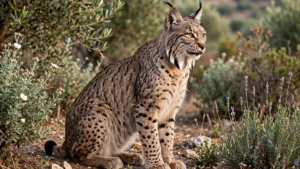
- Lynx — tuft-eared wild cat of northern forests.
Animal Names M–N
M and N give 17 animal names, from the macaw to the nuthatch. The moose is the largest animal in this group, and the Syrian hamster shows how small a pet mammal can be.
- Macaw — large colourful parrot with a powerful beak.
- Magpie — bold black-and-white bird collecting shiny objects.
- Manatee — gentle sea cow grazing in warm waters.
- Mandrill — brightly coloured African baboon.
- Manta ray — huge graceful ray with wing-like fins.
- Marmoset — tiny monkey with tufted ears.
- Meerkat — social desert mammal standing guard.
- Mole — burrowing mammal with shovel-like front paws.
- Monkey — tree-dwelling primate of tropical forests.
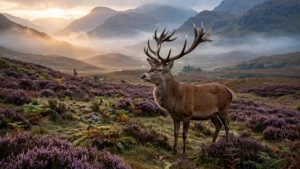
- Moose — largest deer, with broad palmate antlers.
- Mouse — small rodent found almost everywhere on Earth.
- Narwhal — Arctic whale with a long spiral tusk.
- Newt — small amphibian with a flattened tail.
- Nightingale — brown songbird famous for its night song.
- Numbat — striped Australian marsupial eating termites.
- Nutria — large South American rodent also called coypu.
- Nuthatch — small bird climbing down trees head first.
Animal Names O–P
O and P give 21 animal names, the joint largest group in this list. Our black and white animals guide covers the orca, the penguin and the panda family.
- Ocelot — small spotted wild cat of the Americas.
- Octopus — eight-armed sea animal changing colour.
- Okapi — forest relative of the giraffe with striped legs.
- Olm — blind cave salamander of Europe.
- Opossum — marsupial famous for playing dead.
- Orangutan — great ape living in Asian rainforest trees.
- Oryx — desert antelope with long straight horns.
- Osprey — fish-eating raptor also called the sea hawk.
- Ostrich — world’s largest bird, a fast flightless runner.
- Otter — playful swimmer eating fish and shellfish.
- Owl — silent night hunter with large forward-facing eyes.
- Parrot — colourful talking bird with a curved beak.
- Peacock — bird with a dazzling train of iridescent feathers.
- Pelican — large waterbird with a huge throat pouch.
- Penguin — flightless seabird swimming with wing-like flippers.
- Pigeon — common city bird also known as a dove.
- Platypus — egg-laying Australian mammal with a duck-like bill.
- Polar bear — white bear hunting seals on Arctic ice.
- Porcupine — rodent protected by sharp quills.
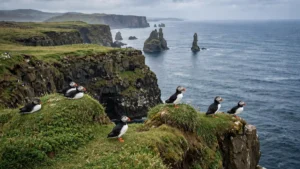
- Puffin — colourful-beaked seabird nesting in burrows.
- Puma — large American wild cat also called a cougar.
Animal Names Q–R
Q and R give 12 animal names, from the quail to the robin. Q is one of the hardest letters for animal names, with only four in this list.
- Quail — small ground bird with a speckled breast.
- Quokka — smiling Australian marsupial from Rottnest Island.
- Quelea — African weaver bird gathering in huge flocks.
- Quetzal — bright green bird of Central American cloud forests.
- Rabbit — burrowing mammal with long ears and a short tail.
- Raccoon — masked North American mammal washing its food.
- Rat — adaptable rodent found in cities worldwide.
- Raven — large black crow known for its intelligence.
- Red fox — most widespread fox, with a white-tipped tail.
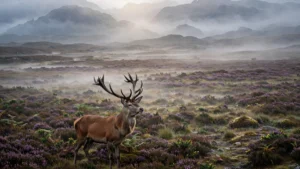
- Reindeer — Arctic deer; both sexes grow antlers.
- Rhinoceros — thick-skinned mammal with one or two horns.
- Robin — small red-breasted garden bird.
Animal Names S–T
S and T give 21 animal names, the joint largest group in this list. The toucan, below, is one of the most colourful birds in it. For the grassland animals in this group, see our guides to savanna animals and tundra animals.
- Salamander — amphibian with a long tail and smooth skin.
- Salmon — fish swimming upstream to spawn.
- Scorpion — arachnid with a stinging tail.
- Seahorse — small fish swimming upright, gripping with its tail.
- Seal — marine mammal coming ashore to rest and breed.
- Shark — cartilaginous fish with rows of sharp teeth.
- Sheep — woolly farm animal kept for meat and fleece.
- Skunk — black-and-white mammal famous for its spray.
- Sloth — slow tree-dwelling mammal of Central and South America.
- Snake — legless reptile swallowing prey whole.
- Sparrow — small brown songbird common in towns and gardens.
- Tapir — forest mammal with a short trunk-like nose.
- Tarantula — large hairy spider hunting at night.
- Tasmanian devil — stocky marsupial with a powerful bite.
- Termite — social insect building huge mounds.
- Tiger — largest big cat, with bold orange stripes.
- Toad — warty amphibian returning to water to breed.
- Tortoise — land reptile protected by a hard shell.
- Toucan — rainforest bird with an oversized colourful bill.

- Turkey — large game bird native to North America.
- Turtle — shelled reptile of seas, rivers and land.
Animal Names U–V
U and V give 10 animal names, from the uakari to the vulture. For more single-letter lists, see our guides to animals that start with W and animals that start with Z.
- Uakari — short-tailed monkey with a bright red face.
- Umbrella bird — black rainforest bird with an umbrella-like crest.
- Urial — wild sheep of Central Asia with curved horns.
- Unicornfish — tropical reef fish with a horn-like forehead.
- Vampire bat — small bat feeding on the blood of animals.
- Vervet monkey — grey African monkey with a black face.
- Vicuña — wild South American camelid with fine wool.
- Viper — venomous snake with hinged fangs.
- Vole — small grassland rodent related to mice.
- Vulture — soaring scavenger cleaning up carcasses.
Animal Names W–X
W and X give 10 animal names, from the walrus to the Xenopus frog. X is the hardest letter of all, with only two animals in this list. Our guide to animal adaptations explains how animals such as the walrus and the wombat survive in extreme places.
- Walrus — Arctic mammal with long tusks and whiskers.
- Warthog — African pig with curved tusks and warts.
- Wasp — stinging insect building paper nests.
- Weasel — small slender hunter of mice and voles.
- Whale shark — largest fish, a gentle filter feeder.
- Wildebeest — migrating African antelope of the great herds.
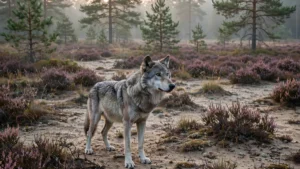
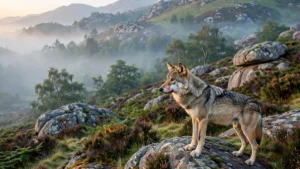
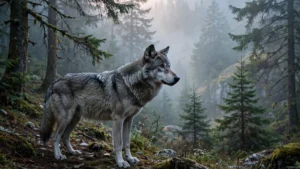
- Wolf — social wild dog hunting in packs.
- Wombat — burrowing Australian marsupial with a pouch facing backwards.
- X-ray fish — transparent South American fish, the Pristella tetra.
- Xenopus frog — African clawed frog used in scientific research.
Animal Names Y–Z
Y and Z give the final 10 animal names, ending with the zebra. The hobo spider is a reminder that small animals count too, and our animal facts collection has more surprising facts about animals from every group.
- Yak — long-haired mountain ox of the Himalayas.
- Yellowhammer — yellow-headed farmland bunting with a bright song.
- Yellowfin tuna — fast ocean fish prized by fishermen.
- Yabby — Australian freshwater crayfish also called a blue yabby.
- Zebra — striped African horse, each pattern unique.
- Zebu — humped cattle of tropical Asia and Africa.
- Zorilla — striped African polecat spraying like a skunk.
- Zander — large pike-perch of European lakes and rivers.
- Zokor — burrowing mole-rat of Central Asia.
- Zebra shark — spotted shark of Indo-Pacific reefs.
Animal Names by Letter: How the 200 Are Shared Out
The table below shows how the 200 animal names are shared across the letter groups, so you can see which letters are richest and which are hardest.
| Letter group | Animal names | Notes |
|---|---|---|
| A–B | 20 | Includes the blue whale and the African elephant |
| C–D | 19 | Includes the cheetah, cobra and dolphin |
| E–F | 16 | Includes the emu and the flamingo |
| G–H | 16 | Includes the giraffe, gorilla and hippopotamus |
| I–J | 12 | Includes the jaguar and the Javan rhinoceros |
| K–L | 16 | Includes the kangaroo, koala and lion |
| M–N | 17 | Includes the moose, meerkat and narwhal |
| O–P | 21 | Joint largest group, with the ostrich and penguin |
| Q–R | 12 | Includes the quokka and the reindeer |
| S–T | 21 | Joint largest group, with the sloth and toucan |
| U–V | 10 | Includes the uakari and the vulture |
| W–X | 10 | Includes the wolf and the X-ray fish |
| Y–Z | 10 | Ends with the zebra |
The table shows a clear pattern: the middle letters are the richest, with O–P and S–T giving 21 animal names each, while the ends of the alphabet are thinner. Q, U, X, Y and Z together give only 26 animal names, which is why word games often ask for an animal that starts with X or U.
How to Use This List
This list works for learning, teaching and games. Children can use it to learn the alphabet with real animals, and quiz players can use it to prepare for animal rounds. The animal migration of the monarch butterfly shows how much one name can lead to.
Checklist: Using This Animal Names List
- Pick one letter and learn all its animals, starting with the letter of your own name.
- Learn one fact for each animal you pick, so the name means something.
- Find each animal’s home on a map, and note which continent it lives on.
- Sort the animals into groups — mammals, birds, fish, reptiles, amphibians and insects.
- Use the list for a quiz: name an animal for each letter from A to Z.
- Compare two animals from the same letter, such as the ostrich and the owl.
- Draw or photograph an animal from the list, and label its most distinctive feature.
- Keep the list handy, and add a new animal name each time you learn one.
Frequently Asked Questions
How many animal names are in this list?
Exactly 200 animal names, from aardvark to zebra, each with one short fact. No name is repeated, and every animal is real.
What is the most famous animal name on the list?
The lion, the elephant, the tiger and the penguin are among the most famous, and they are also among the first animal names most children learn. The blue whale is the largest animal on the list, and the cheetah is the fastest.
Which letter has the most animal names?
The letters C, M, O and S each have 11 animal names, the most of any single letter. The letter groups O–P and S–T each have 21 names, the most of any group.
What animals start with X?
Only two in this list: the X-ray fish, a transparent South American fish also called the Pristella tetra, and the Xenopus frog, an African clawed frog. X is the hardest letter for animal names.
Which animals on this list live in Norway?
The moose, wolf, lynx, reindeer, fox, hare, badger, otter, seal, owl and robin all live in Norway. Our guide to animals in Norway covers them in more detail, and our small animals guide covers the smaller species.
How can I use this list for a quiz?
Pick a letter and ask players to name as many animals as they can from it, or ask for an animal for every letter from A to Z. The hardest letters — Q, U, X, Y and Z — make the best quiz questions.
Conclusion
Two hundred animal names show how varied the natural world is, from the aardvark in African grasslands to the zebra on the savanna, from the blue whale in the oceans to the tiny inchworm on a leaf. Each name is a starting point: behind every one is a habitat, a way of feeding and a way of surviving.
The next step is to pick your favourites. Choose five animal names from this list that you did not know before, learn one more fact about each, and test yourself a week later. Then start again with a new letter, and keep going until you can name an animal for every letter from A to Z.