Animals That Start With V: A Complete A-Z List With Facts
Animals that start with V are rarer than animals starting with most other letters, yet the list is more varied than many people expect. From vampire bats and vultures to vicuñas and vaquitas, V animals live in forests, deserts, oceans and mountains across the world. This guide brings together 24 real animals that start with V, each with a fact worth knowing, plus a comparison table to help you tell the most famous ones apart.
Key takeaways
- V is one of the rarest starting letters for animal names, but it still covers mammals, birds, reptiles, fish and insects.
- The best-known V animals are the vampire bat, the vulture, the viper and the vicuña.
- The vaquita is the rarest animal on this list and one of the most endangered mammals in the world.
- Several V animals are named after places or their appearance rather than their behaviour.
Why V Animals Are Hard to Find
The letter V appears far less often at the start of English animal names than letters such as B, C or S. Many V names come from Latin, Spanish or scientific names adopted into English, which is why the list feels international. Vicuña, viscacha and vaquita come from Spanish and Quechua roots, while the vervet monkey and the vanga take their names from the regions where they were first described.
That variety is what makes the list interesting. A single letter covers a blood-feeding bat, a scavenging bird, a venomous snake, a high-altitude camel relative and a tiny porpoise found in only one small stretch of sea. If you are building an A to Z animal list for school or a quiz, V is often the letter that causes the most trouble, so a reliable list saves real time. For more letters in the series, see our guides to animals that start with B and animals that start with F.
The Complete List: 24 Animals That Start With V
Each animal below is real, and each fact is a single point you can remember and check. The first entries suit younger readers and the later ones suit anyone who wants a harder quiz question.
- Vampire bat — The only mammal that feeds entirely on blood, lapping it from sleeping animals with a grooved tongue.
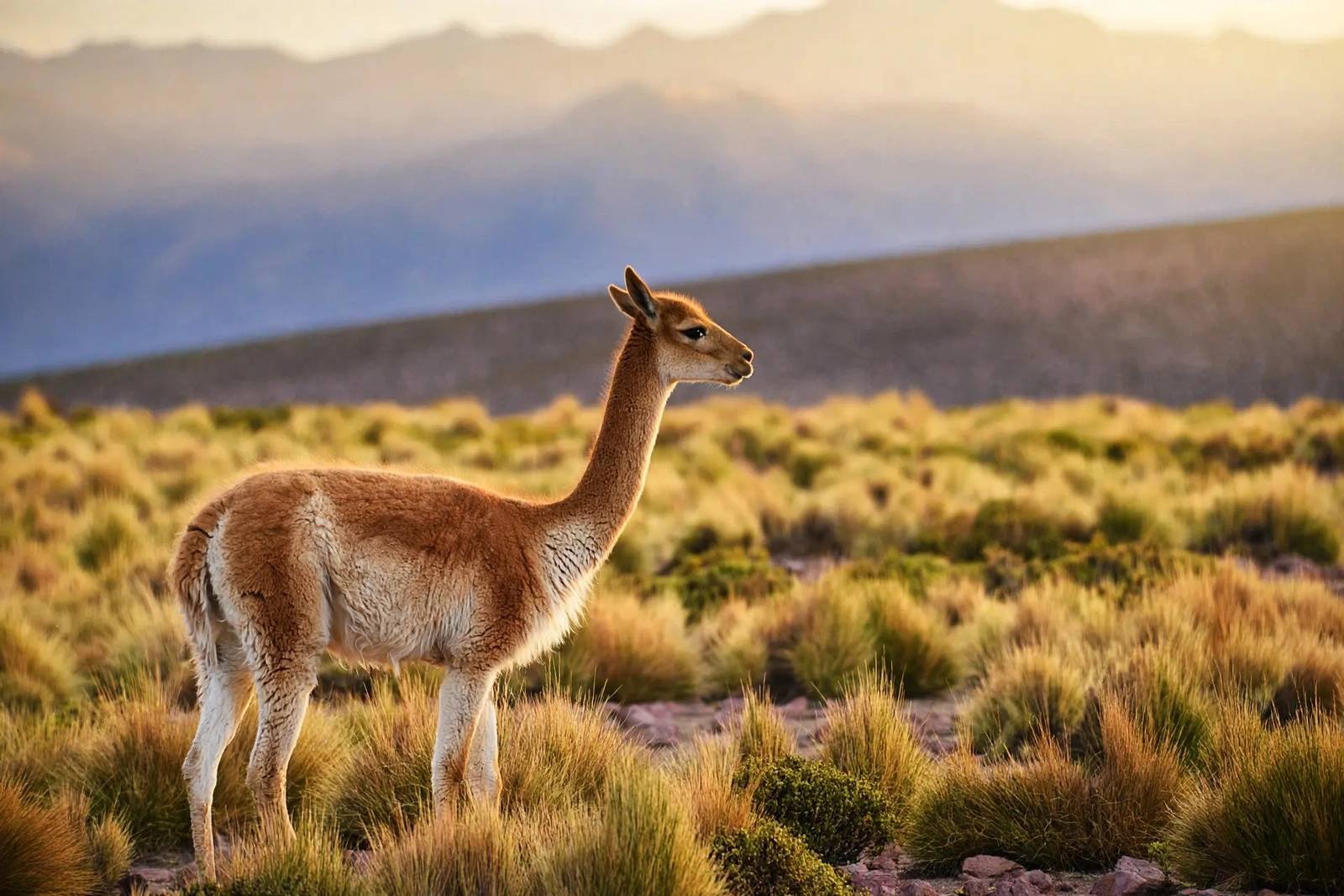
- Vicuna — A wild South American camel relative that lives high in the Andes and produces one of the finest natural fibres in the world.
- Viper — A venomous snake with hinged fangs that fold back when its mouth closes, found across Europe, Asia, Africa and the Americas.
- Vole — A small, stocky rodent that looks like a short-tailed mouse and is a key prey animal for owls, foxes and weasels.
- Vulture — A scavenging bird of prey with a bare head and a powerful stomach that can safely digest carrion other animals cannot.
- Vervet monkey — A small African monkey with a grey-green coat and a black face that lives in large, noisy troops.
- Vizsla — A Hungarian hunting dog breed known for its golden-rust coat, speed and close bond with its owners.
- Velvet worm — A soft-bodied, caterpillar-like animal that squirts sticky slime from its head to trap small prey.
- Vaquita — The world’s smallest porpoise, found only in the northern Gulf of California and now critically endangered.
- Vanga — A group of birds found only in Madagascar, ranging from the sickle-billed vanga to the helmet vanga.
- Vireo — A small, plain-coloured songbird of the Americas known for its persistent, questioning song.
- Viscacha — A chinchilla relative from the Andes with long ears and a bushy tail that lives in rocky colonies.
- Vietnamese mossy frog — A tree frog whose green, mottled skin looks exactly like moss, hiding it from predators in Vietnam.
- Viperfish — A deep-sea fish with needle-like teeth, a hinged jaw and a light-producing organ used to lure prey.
- Velvet crab — A fast-swimming crab with red eyes and velvety hairs on its shell, common around the coasts of Britain and Ireland.
- Vulture bee — A stingless bee from Central and South America that feeds on carrion instead of nectar and pollen.
- Virginia opossum — North America’s only marsupial, famous for playing dead when threatened and for carrying its young in a pouch.
- Volpino — A small Italian spitz dog with a thick white coat, pointed ears and a lively, alert nature.
- Viceroy butterfly — An orange and black butterfly that closely mimics the monarch, a resemblance that helps deter predators.
- Venezuelan poodle moth — A small, fluffy white moth from Venezuela that became famous for its unusually furry appearance.
- Violet-backed starling — A glossy African starling whose males shine metallic purple and green in sunlight.
- Volcano rabbit — A tiny rabbit found only on the slopes of four volcanoes near Mexico City, and one of the world’s smallest rabbits.
- Vulturine guineafowl — A striking East African guineafowl with a bare blue head, a black chest and long, striped neck feathers.
- Violet sea snail — A small marine snail that floats upside down on the ocean surface, held up by a bubble raft it builds itself.
V Animals Compared: Size, Habitat and Diet
The table below compares six of the most recognisable V animals, showing how little they have in common beyond their first letter.

| Animal | Where it lives | Main diet | Size |
|---|---|---|---|
| Vampire bat | Central and South America | Blood from mammals and birds | About 9 cm long |
| Vicuna | High Andes, South America | Grasses and shrubs | About 80 cm at the shoulder |
| Vulture | Most continents except Australia and Antarctica | Carrion | Wingspan up to 3 metres |
| Viper | Europe, Asia, Africa and the Americas | Small mammals, birds and frogs | Usually 30 to 90 cm long |
| Vaquita | Northern Gulf of California | Small fish and squid | About 1.5 metres long |
| Vervet monkey | Sub-Saharan Africa | Fruit, leaves and insects | About 50 cm long, plus tail |
Table: Six well-known animals that start with V compared by habitat, diet and size.
The contrast between the vaquita and the vicuña is a good example of why habitat matters. One lives only in a single small area of sea, while the other roams high mountain grassland across several countries. That difference also explains their conservation stories: the vaquita is critically endangered, while the vicuña recovered after hunting controls. Readers interested in how animals survive in harsh places can learn more from our guide to animal adaptations.
Which V Animal Should You Learn About First?
Not every V animal suits every reader. The notes below help you pick a starting point, whether you are choosing a topic for a school project, a quiz round or simple curiosity.
- Best for a school project: vampire bat. It is famous, well studied and full of surprising facts, from its heat-sensing nose to its habit of sharing blood meals with hungry roost-mates.
- Best for a nature quiz: vaquita. Few people have heard of it, yet it is the rarest marine mammal in the world, which makes it a strong answer and a memorable talking point.
- Best for a younger readers: vervet monkey. It is social, expressive and easy to picture, and its troops offer a clear way to talk about how animals live in groups.
- Best for a wildlife photo: vicuña. Its fine golden-brown coat and high mountain setting make it one of the most elegant animals on this list.
- Best for a deep-sea topic: viperfish. Its glowing lure and oversized teeth show how animals adapt to life where almost no light reaches.
- Best for a dog lover: vizsla. This breed is active and affectionate, with a clear history as a Hungarian hunting dog.
Our lists of forest animals and grassland animals show where many of them fit. The vicuña and viscacha belong to open mountain grassland, while vireos and voles are at home in woodland and forest edges.
How to Use This List: A Quick Checklist
Use this checklist before reusing the list for homework, a quiz or a classroom display.
- Check the spelling. Vicuña takes an ñ, vaquita ends in “ita”, and vervet is often confused with velvet.
- Match the animal to its habitat. A viperfish lives in the deep sea, not a river, and a volcano rabbit lives only near Mexico City.
- Separate breeds from species. The vizsla and volpino are dog breeds, while the vicuña and vaquita are wild species.
- Watch for lookalikes. The viceroy butterfly mimics the monarch, and the violet-backed starling looks different in males and females.
- Note the conservation status. The vaquita and volcano rabbit are both at serious risk, so check current figures before quoting numbers.
- Pick one fact per animal. A single clear fact is easier to remember and harder to get wrong than a long paragraph.
Frequently Asked Questions
What is the most famous animal that starts with V?
The vampire bat is probably the most famous, thanks to its unusual diet and its place in folklore. The vulture and the viper are close behind, since both appear often in nature documentaries.
What is the rarest animal that starts with V?
The vaquita is the rarest, with only a small number left in the northern Gulf of California. It is listed as critically endangered, and fishing nets are restricted in its remaining habitat.
Are there any V animals in Norway?
Norway has voles, vipers and vultures in the broad sense, though the common adder is the viper most people meet. The country has no wild vicuñas, vaquitas or vervet monkeys. For a fuller picture of local wildlife, see our guide to animals in Norway.
Is a vizsla a wild animal?
No, the vizsla is a domestic dog breed from Hungary, bred for hunting and pointing game birds. It belongs on a V list as a breed name, just as the volpino does, but it is not a wild species.
What animal that starts with V is a bird?
Several are birds, including the vulture, the vanga, the vireo, the violet-backed starling and the vulturine guineafowl. The vulture is the largest, while the vireo is one of the smallest and hardest to spot.
Do vampire bats really drink blood?
Yes, but they lap it up rather than sucking it. They make a small bite, keep the blood flowing with their saliva, and usually feed without waking the animal they feed on.
A Letter Worth Remembering
V may be a short list, but it is a strong one. It holds a bat that feeds on blood, a bird that cleans up carrion, a snake with folding fangs, a camel relative that lives above the clouds and a porpoise found nowhere else on Earth. Together, they show how much variety a single letter can hold when you look past the obvious names.
Continue through the alphabet with our guides to animals that start with B and F, or explore the wider wildlife lists for forests and grasslands linked above. Pick one V animal, learn its habitat and diet, and you will have a fact ready for the next quiz or nature walk.