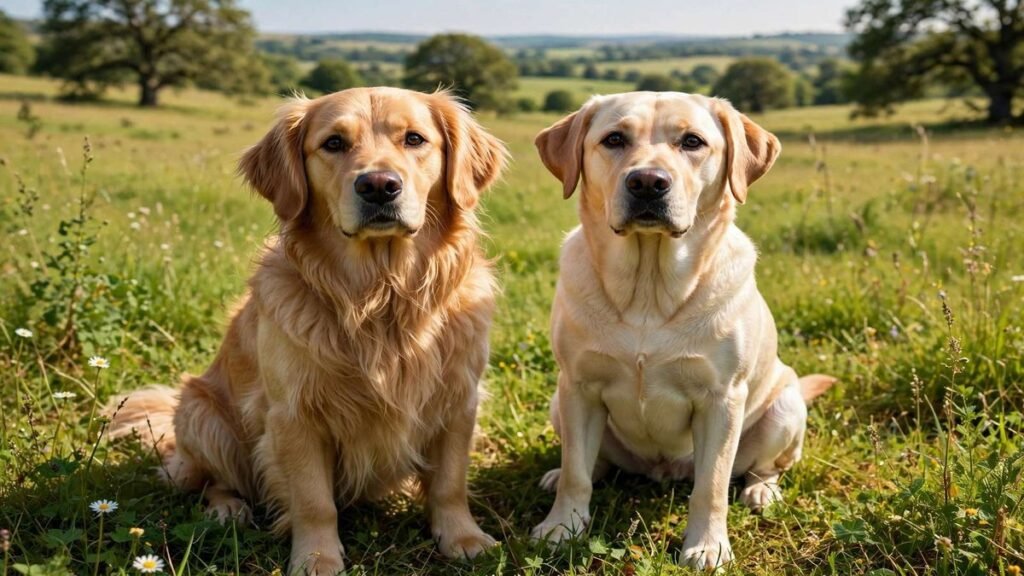
Golden dog breeds are among the most popular dogs in the world, and the golden retriever is the best-known of them all, famous for its friendly nature and its rich golden coat. The question most people ask is which golden dog is right for them, because the breeds that carry a golden coat are more different than they look. The answer is that they share a warm, people-loving nature, but they differ in size, energy, grooming and training needs, and choosing well means matching the dog to your home, your time and your lifestyle.
Key takeaways
- The golden retriever is the best-known golden dog breed, but yellow Labradors, Tollers, golden Cockers and Irish Setters also carry golden coats.
- Most golden breeds are friendly, intelligent and keen to please, which makes them popular family dogs.
- They differ in size and energy: a Toller needs far more work than a golden Cocker, and a Labrador needs more exercise than many owners expect.
- All golden coats need regular brushing, and most of these breeds shed heavily.
- The right golden dog depends on your home, your daily time, and how much training and exercise you can give.
What Makes a Dog a “Golden” Breed?
There is no official group called golden dog breeds. The phrase usually means one of two things: a breed whose name includes golden, such as the golden retriever, or a breed that commonly comes in a golden colour, such as the yellow Labrador retriever. Some breeds, like the golden retriever, are golden in every case. Others, like the English cocker spaniel, come in several colours, and golden is one of them.
Coat colour alone is not a reliable guide to temperament. A golden cocker spaniel and a golden retriever may look alike in colour, but one is a small, busy spaniel and the other is a large, steady retriever. The breed matters far more than the colour, and the sections below take each breed on its own terms.
Golden Retriever
The golden retriever is the classic golden dog, and it is popular for good reason. It was developed in Scotland in the nineteenth century as a gundog, bred to retrieve game on land and in water, and it is still used for that work today. It is also one of the most common choices as a family dog, a guide dog and a therapy dog.
A golden retriever is a large dog, usually standing 51 to 61 centimetres at the shoulder and weighing about 25 to 34 kilograms. Its coat is dense, wavy or straight, and ranges from pale cream to deep gold. It sheds heavily, especially in spring and autumn, and needs brushing several times a week to keep the coat in good order and to reduce loose hair around the house.
In temperament, the golden retriever is friendly, patient and keen to please. It is usually good with children and other dogs, it likes company, and it does not do well left alone for long hours. It is intelligent and easy to train, but it stays puppy-like for longer than many breeds, and it needs plenty of exercise — usually at least an hour a day — plus swimming, retrieving games and training to keep it happy. It loves water, and it will find a pond, a stream or a puddle if one is nearby.
Labrador Retriever (Yellow)
The Labrador retriever is the world’s most popular dog breed, and the yellow Labrador is one of its three recognised colours, alongside black and chocolate. Yellow Labradors range from pale cream to a rich fox-red gold, and the colour makes no difference to the dog’s nature.
Labradors were developed in Newfoundland as working dogs for fishermen, retrieving nets and fish, and they were later refined in England as gundogs. That history explains their love of water, their strong swimming ability, and their habit of carrying things in their mouths. A Labrador is a medium to large dog, standing about 55 to 62 centimetres at the shoulder and weighing roughly 25 to 36 kilograms.
The Labrador’s temperament is famously friendly, outgoing and steady. It is tolerant with children, usually good with other animals, and eager to work with its owner. It is also famously food-driven, which makes training easier but also means it can put on weight quickly if it is overfed or under-exercised. Labradors need at least an hour of exercise a day, and they thrive on retrieving games, swimming and scent work.
Nova Scotia Duck Tolling Retriever
The Nova Scotia duck tolling retriever, usually called the Toller, is the smallest of the retrievers, and it is also the most energetic. It was developed in Nova Scotia, Canada, to lure ducks within range of hunters by playing at the water’s edge, a behaviour called tolling. It is a medium-sized dog, standing about 45 to 54 centimetres at the shoulder and weighing roughly 17 to 23 kilograms.
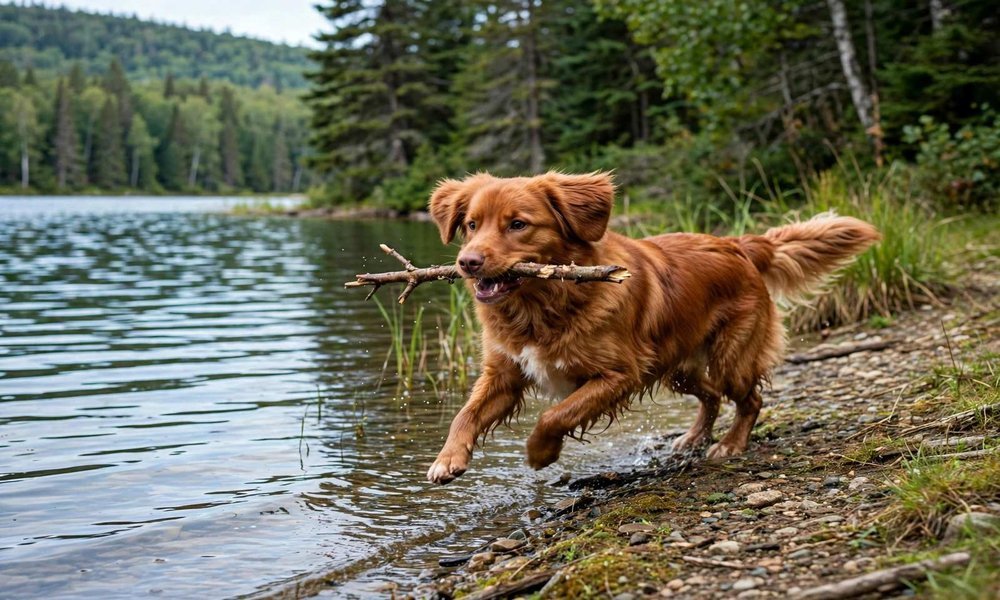
The Toller’s coat is a rich golden-red, often with white markings on the chest, feet and tail tip, and it is medium-length and water-resistant. It needs brushing a few times a week, and it sheds seasonally. In looks it resembles a small golden retriever, but in nature it is quite different: it is quicker, sharper and more intense, and it needs far more mental and physical work.
A Toller is intelligent, alert and devoted to its owner, but it is not a dog for a quiet household. It needs long walks, training, dog sports or working tasks every day, and it can become restless and destructive if it is bored. Owners who love an active, clever dog will adore a Toller; owners who want a calm family pet will be better with a golden retriever or a Labrador.
Golden Cocker Spaniel and Other Golden Dogs
The English cocker spaniel comes in many colours, and golden is one of the most popular. A golden cocker is a small to medium dog, standing about 38 to 41 centimetres at the shoulder and weighing roughly 13 to 15 kilograms. Its coat is silky and feathered on the ears, chest, belly and legs, and it needs regular brushing and trimming to keep it free of tangles.
Cockers are merry, busy little dogs with a wagging tail and a keen nose. They were bred as flushing spaniels, working through cover to push game birds into the air, and they still love to sniff, explore and follow scent.
The Irish setter is another golden-coated breed, although its coat is usually described as chestnut or mahogany red rather than gold. It is a large, elegant gundog, standing 63 to 69 centimetres at the shoulder and weighing about 27 to 32 kilograms, with a long silky coat that needs regular grooming. Irish setters are friendly, playful and full of energy, and they stay young at heart for years. They need long daily exercise and patient training, and they suit active owners.
Golden Dog Breeds Compared
The table below compares the main golden breeds side by side, so you can see how they differ at a glance.
| Breed | Size and weight | Energy and exercise | Coat and grooming |
|---|---|---|---|
| Golden retriever | Large, 25–34 kg | High, at least an hour a day | Long golden coat, heavy shedding, brush several times a week |
| Labrador retriever (yellow) | Large, 25–36 kg | High, at least an hour a day | Short dense coat, heavy shedding, brush weekly |
| Nova Scotia duck tolling retriever | Medium, 17–23 kg | Very high, needs work and training daily | Medium golden-red coat, brush a few times a week |
| English cocker spaniel (golden) | Small to medium, 13–15 kg | High, needs walks and play daily | Silky feathered coat, brush and trim regularly |
| Irish setter | Large, 27–32 kg | Very high, needs long daily exercise | Long chestnut coat, regular grooming |
Table: The main golden dog breeds compared by size, energy and grooming needs.
Choosing the Right Golden Dog
Choosing a dog is a long commitment, so it is worth taking time over the decision. A large retriever needs space and an hour or more of exercise every day, while a cocker spaniel fits a smaller home better but still needs walks, play and company.
The animal facts collection is a useful reminder that every breed was shaped by the work it was bred to do, just as wild animals are shaped by their habitats. A retriever that carries, a spaniel that flushes and a setter that ranges wide are all doing what their ancestors were bred for, and the happiest dogs are the ones whose owners give them a version of that work.
Checklist: Are You Ready for a Golden Dog?
- You can give at least an hour of exercise every day, in all weathers.
- Someone is at home for most of the day, or you can arrange daytime care.
- You are happy with regular brushing and heavy shedding around the house.
- You have space for a medium or large dog, and a garden if possible.
- You are ready to train every day, using kind, reward-based methods.
- You can afford food, veterinary care, insurance and grooming for ten years or more.
- You have chosen a responsible breeder with health-tested parents, or a rescue centre.
- You have picked a breed that fits your energy and your home, not just the colour.
Frequently Asked Questions
Which golden dog breed is best for families?
The golden retriever and the yellow Labrador are the most popular family choices, because they are friendly, patient and easy to train. Both need plenty of exercise and company, and both shed heavily.
Do golden dog breeds shed a lot?
Yes. Golden retrievers, Labradors, Tollers and setters all shed, and golden retrievers shed the most because of their long coat. Regular brushing helps, but no golden breed is low-shedding.
How much exercise does a golden retriever need?
At least an hour a day of walking, play and training, plus swimming or retrieving games when possible. A bored golden retriever can become restless and destructive.
What is the difference between a golden retriever and a yellow Labrador?
A golden retriever has a long, wavy golden coat and a gentler, more sensitive nature. A yellow Labrador has a short, dense coat, is usually a little stockier, and tends to be more food-driven and boisterous. Both are friendly retrievers, but the golden needs more grooming.
Is a Toller a good first dog?
Usually not. Tollers are intelligent and intense, and they need a lot of exercise, training and mental work. First-time owners are usually happier with a golden retriever or a Labrador.
Conclusion
Golden dog breeds share a warm coat and a warmer nature, but they are not interchangeable. The golden retriever is the steady family favourite, the yellow Labrador is the outgoing all-rounder, the Toller is the clever athlete, the golden cocker is the small busy companion, and the Irish setter is the elegant, high-energy gundog. The right choice depends on your home, your time and how much work you are ready to put in.
The next step is simple. Decide how much exercise, grooming and training you can honestly give every day, then meet the breeds in person — at a breed show, a training class or a rescue centre — before you commit. A dog is a ten-year promise, and the best golden dog is the one whose needs match your life. If you want to understand how breeding shapes behaviour, start with our guides to animal adaptations and forest animals, which show how form follows function in the wild as well as in the home.