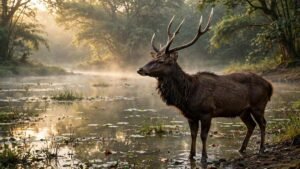
Italy animals are more varied than most visitors expect. Italy animals include wolves in the Apennines, brown bears in Abruzzo, ibex in the Alps, and dolphins off the Mediterranean coast — and the central question is how a country famous for art and food also holds such rich wildlife. The answer is its shape: Italy runs from the Alps to the Mediterranean, with mountains, forests, wetlands and islands, so northern, central and southern species all share one long peninsula.
Italy is home to thousands of animal species, and its wildlife has recovered remarkably in recent decades. Wolves and bears, once close to disappearing, now live in the mountains again, and the national parks of the Apennines are among the best places in Europe to see large wild animals. For a wildlife watcher, Italy is one of the most rewarding countries in Europe.
Key takeaways
- Italy animals include wolves, Marsican brown bears, ibex, chamois and dolphins.
- The Apennines and the Alps are the two great wildlife regions.
- The Marsican brown bear lives only in central Italy and is critically endangered.
- Abruzzo National Park is the best place in Italy to see wolves and bears.
- Wolves and bears have recovered in recent decades, thanks to protection and national parks.
Why Italy Has So Much Wildlife
Italy’s diversity comes from its geography. It is a long, narrow peninsula that runs from the Alps in the north to the Mediterranean in the south, with the Apennine mountains running down its spine. That range of latitude and altitude creates many habitats: alpine meadows, beech forests, oak woodland, Mediterranean scrub, wetlands and a long, varied coastline.
The Alps in the north hold animals of cold mountains — ibex, chamois, marmots and golden eagles — while the Apennines in the centre hold wolves, bears, deer and wild boar. The south has drier, warmer habitats, with Mediterranean scrub, cliffs and islands. Offshore, the Mediterranean Sea holds dolphins, whales and sea turtles.
Italy also has a large network of national parks and nature reserves. Abruzzo, Gran Paradiso, the Dolomites and the Gargano are among the best known, and they protect the habitats that wolves, bears and eagles need. Many animals that were hunted to the edge of extinction in the past century now live in these parks, and their numbers are growing.
Iconic Italy Animals
The Italian wolf is the most famous animal in Italy. It is a subspecies of the grey wolf, smaller than its northern cousins, with a grey-brown coat. It lives mainly in the Apennines, hunting deer, wild boar and smaller animals, and it is most active at dawn and dusk. Like the lynx of northern forests, it is a shy hunter that avoids people, and most sightings come from tracks and camera traps rather than from people.

The Marsican brown bear is Italy’s rarest large animal. It is a subspecies of the brown bear that lives only in the central Apennines, mainly in Abruzzo National Park and the surrounding mountains. It is smaller than other European brown bears, with a dark brown coat and a pale muzzle, and it eats mainly plants, fruit and insects, with meat only now and then. Very few remain — only a few dozen — and it is one of the most endangered bears in the world.
The Alpine ibex is a mountain goat with huge curved horns, found in the Alps and reintroduced to the Apennines. Males carry horns that can grow to nearly a metre long, and they clash in the autumn rut. Ibex were hunted almost to extinction in the nineteenth century, surviving only in Gran Paradiso, and they have since been reintroduced across the Alps.
Italy Animals by Region
Italy’s wildlife changes from north to south. The table below gives an overview.
| Region | Key animals | Best place to see them |
|---|---|---|
| Alps | Ibex, chamois, marmot, golden eagle | Gran Paradiso, Dolomites |
| Apennines | Wolf, Marsican bear, deer, wild boar | Abruzzo National Park |
| Central hills and coast | Hoopoe, bee-eater, wild boar, porcupine | Maremma, Gargano |
| South and islands | Loggerhead turtle, flamingo, Eleonora’s falcon | Sardinia, Sicily, Puglia |
| Mediterranean Sea | Bottlenose dolphin, fin whale, sperm whale | Ligurian Sea, Pelagos Sanctuary |
The Alps are the best place for mountain animals. Gran Paradiso National Park, the oldest in Italy, is the home of the ibex, and its high meadows also hold marmots, chamois and golden eagles. The Dolomites have dramatic rock peaks, with chamois on the cliffs and eagles overhead.
Endemic Species: Found Only in Italy
Italy has many species found nowhere else. The Marsican brown bear is the best known, but there are many more. The Apennine chamois lives only in the central Apennines. The Italian hare lives only in central and southern Italy and Sicily. The Sardinian deer, a subspecies of red deer, lives only in Sardinia and Corsica. The spectacled salamander lives only in the Apennines, and many frogs, lizards and fish live in a single valley or a single spring.
Many of Italy’s endemic animals are small and little known. The Apennines hold several species of frog and salamander found nowhere else, and the islands of Sardinia, Sicily and Corsica each have their own endemic birds, lizards and mammals.
Threats and Conservation
Italy’s wildlife faces serious pressure. Habitat loss is the largest threat: forests are cleared, wetlands are drained, and roads and towns cut through wild land. The Marsican bear’s habitat is broken into fragments, and bears are killed on roads or in conflict with farmers. Wolves are still killed illegally in some areas, and poaching remains a problem for birds and other animals.
The sea faces its own threats. Dolphins and whales are harmed by boat traffic, fishing nets and pollution, and loggerhead turtles are threatened by beach development and by plastic in the sea. The monk seal is nearly gone from Italian waters, and it survives only in a few remote places.
There is also good news. Wolves have recovered from fewer than a hundred animals to several thousand, and they now live across much of Italy. Ibex have been reintroduced across the Alps, and griffon vultures have been brought back to several areas. Abruzzo National Park has become a model for large-carnivore conservation, with local people working alongside rangers to protect bears and wolves.
Where to See Italy Animals
The best place to see wolves and bears is Abruzzo National Park, especially in spring and autumn, when animals are active and the forests are at their best. Guided walks at dawn and dusk give the best chances, and a good guide is essential: wolves and bears are shy, and most sightings come from tracks, droppings and patient watching.
For ibex and chamois, Gran Paradiso National Park in the Alps is the best choice, with walks in summer when the animals are on the high meadows. The Dolomites offer chamois, marmots and golden eagles, with well-marked trails and mountain huts.
For birds, the Po Delta and the wetlands of the Maremma are the best places, with herons, flamingos and many migrating birds in spring and autumn. For sea life, boat trips from the Ligurian coast give the best chances of seeing dolphins and whales, especially in summer. Loggerhead turtles nest on beaches in Calabria and Sicily in summer, with guided night walks during the nesting season.
Checklist: Wildlife Watching in Italy
- Travel with a licensed local guide, who knows the animals and the rules.
- Visit in the right season: Abruzzo in spring and autumn, the Alps in summer.
- Keep your distance from all wildlife, and never feed wild animals.
- Do not approach bears or wolves, and never walk between a mother and her young.
- Bring binoculars, water, sun protection and insect repellent.
- Book guided walks and boat trips with operators that follow wildlife rules.
- Leave no litter, and stay on marked paths in forests and reserves.
- Do not buy souvenirs made from animals, shells or coral.
Frequently Asked Questions
What is the most famous animal in Italy?
The Italian wolf is the most famous land animal, the Marsican brown bear is the rarest, and the Alpine ibex is the most famous mountain animal. All three are symbols of Italy’s wildlife.
Where is the best place to see wolves in Italy?
Abruzzo National Park in the central Apennines, especially in spring and autumn, on guided walks at dawn and dusk. Wolves are shy, so a good guide is essential.
Are there bears in Italy?
Yes. The Marsican brown bear lives in the central Apennines, mainly in Abruzzo National Park, and brown bears also live in the Alps. Both are shy and avoid people.
Is the Marsican bear endangered?
Yes, it is critically endangered, with only a few dozen animals left. It lives only in the central Apennines, and it is one of the most endangered bears in the world.
Which animals live only in Italy?
Many, including the Marsican brown bear, the Apennine chamois, the Italian hare and the spectacled salamander. Italy has many endemic species, especially in the Apennines and on the islands.
When is the best time to visit Italy for wildlife?
Spring and autumn are best for the Apennines, summer is best for the Alps and for whale watching, and spring and autumn are best for bird migration in the wetlands.
Conclusion
Italy animals are a reminder that wildlife can recover. Wolves were close to extinction in the 1970s, and now they live across the Apennines and the Alps. Ibex were saved in one valley, and now they live across the mountains. The Marsican bear still needs help, but it survives because its forests are protected.
The next step is to plan a visit with the animals in mind. Choose one region and one season — wolves and bears in Abruzzo in spring, or ibex in Gran Paradiso in summer — and go with a local guide who knows the wildlife. If you want to compare Italy’s wildlife with what lives closer to home, start with our guide to animals in Norway and the forest animals of northern Europe. The wild is worth the journey, and the best sightings come to those who travel with patience and respect.
Safety disclaimer: This guide is for general information only. Wolves and bears are wild animals: keep your distance, never approach one, and never walk between a mother and her young. If you meet a large wild animal, stay calm, face it, and back away slowly. Do not run. Follow local guidance and the advice of your guide at all times.