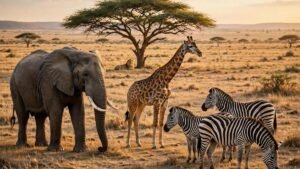
Savanna animals live in one of the most open and demanding habitats on Earth. How do so many large animals survive heat, drought and long dry seasons with so little cover? The answer lies in a balance between grazers, predators, scavengers and smaller specialists.
A savanna is not a desert and it is not a forest. It is mainly grassland with scattered trees and shrubs, and its seasons turn on rain. In the wet season grass grows fast, while the dry season thins the grass and shrinks waterholes.
Key takeaways
- Savannas are open grasslands with scattered trees, shaped by wet and dry seasons.
- Grazers turn grass into food for predators.
- Lions, cheetahs, hyenas and leopards hunt in different ways and at different times.
- Elephants, giraffes, rhinos and hippos each solve heat and water differently.
- Migration, mixed herds, burrows and night activity all help animals survive.
What Makes a Savanna Different From Other Grasslands?
A savanna sits between forest and desert. Trees are present, often acacias, but they do not form a closed canopy. Rainfall is seasonal, with a short wet season followed by months with very little rain. For a wider look at open-country animals, see our guide to grassland animals.
The Grazers That Keep the Savanna Moving
Grazers are the engine of the savanna. They eat grass and leaves, stay in groups for safety, and provide food for predators and scavengers.
Zebra
Zebras are built for open ground. Zebras eat mainly grass and need regular water.
Wildebeest
Wildebeest move in huge herds, following rain and fresh grass across the plains. Young wildebeest are born during a short calving season, and most can stand and run within minutes. Sheer numbers help: when thousands move together, the risk to any one animal falls.
Antelope and Gazelle
Antelope is a broad name for horned grazers, from tiny dik-diks to large elands. Gazelles are among the lighter and faster members, built for speed and sharp turns. They feed on grass, leaves and shoots, and many can go for long periods with little water when their food holds moisture.
Giraffe
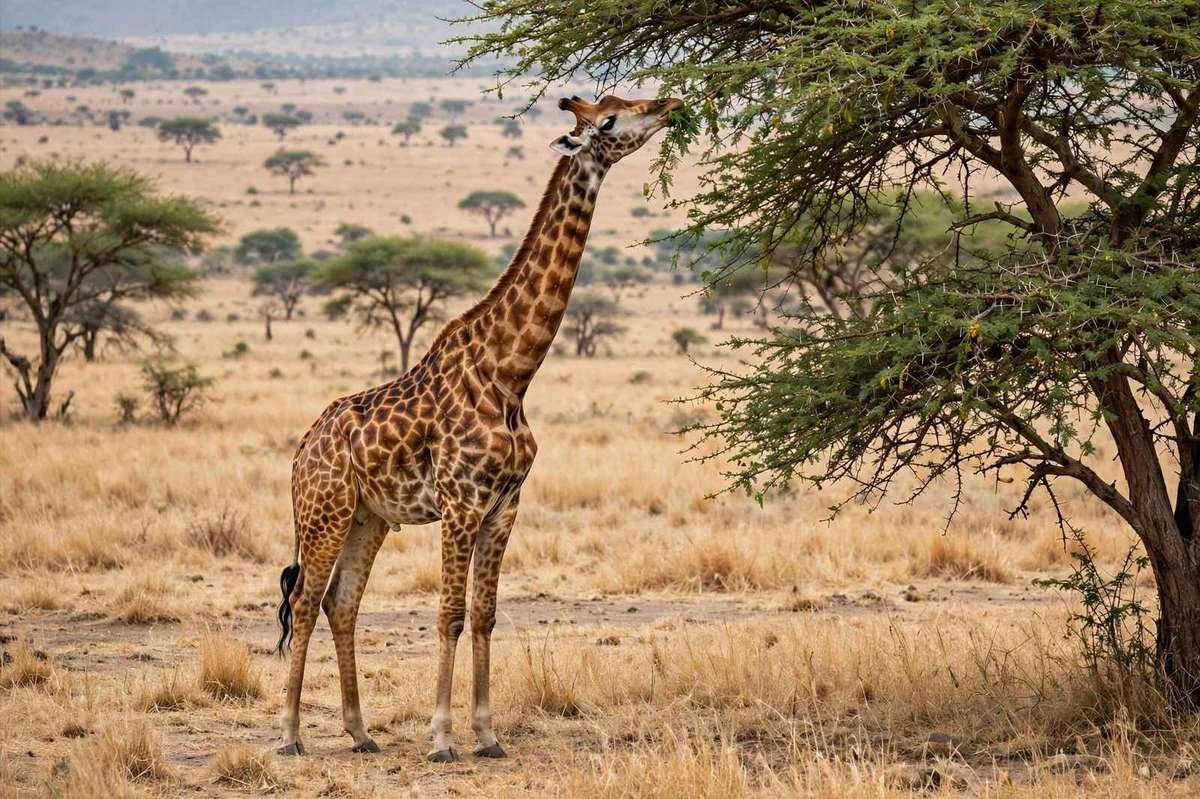
Giraffes feed where almost no other grazer can reach. A giraffe does not need to drink every day, but drinking is awkward, so giraffes stay alert at waterholes.
Elephants, Rhinos and Hippos: The Heavyweights
The largest savanna animals shape the landscape as much as they live in it. They push over trees, dig for water and create mud wallows other animals later use.
African Elephant
The African elephant is the largest land animal, and its size brings both strength and a constant demand for food. Elephants are social and remember water sources over long distances.
White and Black Rhino
Rhinos are powerful grazers and browsers with thick skin, poor eyesight, and a sharp sense of smell and hearing. White rhinos are mainly grazers with a wide, flat mouth suited to short grass, while black rhinos are browsers that use a pointed upper lip to pull leaves from shrubs. Rhinos also use mud wallows to cool the body and guard against insects.
Hippopotamus
Hippos spend much of the day in water, which keeps their skin moist and their bodies cool under strong sun. Their skin needs moisture, and without water or mud they can dry out and overheat. Hippos are strongly territorial in the water.
Predators of the Open Plains
Predators keep grazer numbers in check and remove weak or sick animals, which helps keep herds healthier over time. Each hunts in its own way.
Lion
Lions are the most social of the large cats. They live in prides, with females often doing much of the hunting and males defending territory and the group. A pride rests for much of the day in shade.
Cheetah
Cheetahs are built for speed rather than strength. They are the fastest land animals over a short sprint, with a light body, long legs and a flexible spine. A cheetah usually stalks close before a short chase, then trips its prey off balance. It often loses its kill to lions or hyenas.
Leopard
Leopards are quiet, powerful and adaptable. They hunt alone, often at night, and they can climb trees with a carcass to keep it away from lions and hyenas. That flexible diet helps them survive where larger predators dominate.
Spotted Hyena
Spotted hyenas are often described only as scavengers, but they are skilled hunters in their own right. They hunt in clans, run long distances without tiring, and use strong jaws to break bone and eat almost the whole carcass. Hyenas compete directly with lions, and they also clean up carcasses, which reduces waste and disease.
Smaller Animals, Birds and Hidden Lives
Not every savanna animal is large. Many live at ground level, in burrows, in trees or in the air.
Meerkat
Meerkats live in groups in dry, open country, often in the southern African savanna and desert edges. They dig burrows with several entrances, which offer shelter from heat, cold and predators. They share pup care and use clear alarm calls for different threats.
Ostrich
The ostrich is the largest bird in the world and cannot fly, but it can run fast and for a long distance. Its long legs, strong feet and keen eyesight help it spot danger early and escape across open ground. They often feed near grazing animals.
Other Birds and Small Mammals
Oxpeckers ride on large grazers and pick off ticks and other parasites, a partnership that helps both the bird and its host. Secretary birds hunt snakes on foot, while hares live close to burrows where they can vanish quickly.
How Savanna Animals Cope With Heat and Drought
Heat and water shape almost every savanna adaptation. Animals cannot change the climate, so they change their behaviour, their bodies or their timing to fit it. Some animals pant, some wallow in mud, and some rest through the hottest hours and feed at dawn, dusk or night. Some drink daily and stay near rivers, while others get most of their water from food. Oryx and some gazelles cope with very little drinking water, and burrowing animals avoid the worst heat by staying underground during the day. For more on how bodies and behaviour change to fit a habitat, see our guide to animal adaptations.
Migration: Following Rain and Fresh Grass
Migration is driven by food and water rather than by a calendar alone. When rain falls in one area, grass grows quickly, and herds move towards it. When that grass dries, the herds move on again, often crossing rivers and open plains where predators wait. River crossings expose animals to crocodiles and strong currents. To understand the wider pattern, see our guide to animal migration.
| Animal group | Main food | Key survival trait | Main risk |
|---|---|---|---|
| Zebra and wildebeest | Grass | Herd safety and long-distance movement | Lions and river crossings |
| Giraffe | Tree leaves | Height for food and early warning | Lions at waterholes |
| Elephant | Grass, leaves and bark | Memory of water and feeding grounds | Drought and habitat loss |
| Lion and leopard | Grazers and smaller prey | Strength, stealth and night hunting | Injury and competition |
Table: Savanna animal groups, their food, survival traits and main risks.
A Practical Checklist for Watching Savanna Wildlife
Seeing savanna animals well takes patience and respect for the animals and the land. This checklist helps you watch without disturbing the wildlife you came to see.
- Choose the right time: Dawn and dusk are often best, when animals feed and predators become active.
- Look for mixed herds: Zebra, wildebeest and gazelle often feed together, and their alarm behaviour can point to a predator nearby.
- Watch water carefully: Waterholes attract many species, but animals are alert there, so keep distance and stay quiet.
- Keep a safe distance: Use binoculars or a long lens, follow local guidance, and leave space for animals to move away.
FAQs About Savanna Animals
What animals live in the savanna?
The savanna is home to grazers such as zebra, wildebeest, antelope, giraffe and elephant, predators such as lion, leopard, cheetah and hyena, and smaller animals and birds, including meerkats, ostriches, vultures and mongooses. The exact mix changes by continent.
Why do wildebeest migrate?
Wildebeest migrate to follow rain, fresh grass and water. When grass in one area dries out, the herd moves to where grazing is better, often in a large circuit that repeats with the seasons. Migration also spreads grazing pressure.
How do savanna animals survive without much water?
Some drink regularly and stay near water, while others get most of their moisture from food. Gazelles, oryx and giraffes can go for long periods with little drinking water when their food is moist, and burrowing animals avoid heat underground during the day.
Are lions the only predators in the savanna?
No. Lions are the best known, but leopards, cheetahs, hyenas, jackals, wild dogs, eagles and crocodiles also hunt in savanna habitats. Each hunts in a different way or at a different time.
What is the difference between a savanna and a grassland?
A savanna is a type of grassland with scattered trees and shrubs and a strong wet-and-dry season. Other grasslands may have fewer trees, colder winters or more even rainfall. The open grass, seasonal rain and mix of grazers and predators give the savanna its distinctive character. See our guide to animal facts.
Do savanna animals live in Norway?
No, savanna animals such as lions, elephants and giraffes do not live wild in Norway. Norway has its own wildlife, including moose, lynx, wolves and many forest and coastal species, shaped by a colder climate and different habitats. They are best seen in their native regions.
Why the Savanna Still Works
The savanna works because its animals are not all doing the same job. Grazers turn grass into energy, predators keep herds in balance, scavengers clean up what remains, and smaller animals use the gaps that larger species leave behind. That balance is delicate. Drought, habitat loss and pressure on water sources can tip it quickly, and recovery takes time. Protecting migration corridors and water sources has a large effect.