United Kingdom animals include red deer on the Highland moors, badgers in the woodlands, otters along the rivers, grey seals on the coasts and red kites over the valleys. If you are wondering which animals live in the UK and where to see them, the short answer is this: the islands hold no native large predators, but they are rich in deer, seabirds, seals, and smaller mammals that thrive in woodland, wetland and coast.
The United Kingdom is made up of England, Scotland, Wales and Northern Ireland, and its wildlife ranges from the mountains of the Highlands to the chalk downs of the south. This guide covers the species you are most likely to meet, where each one lives, the best seasons, and how to watch them safely.
Key takeaways
- The UK’s most iconic land animals are the red deer, roe deer, badger, otter, red fox, red squirrel and pine marten.
- Grey seals and harbour seals breed on the coasts, and the UK holds large colonies of both species.
- Red kites, white-tailed sea eagles and ospreys have returned to the UK through reintroduction programmes.
- The Highlands are the land of red deer, golden eagles and pine martens, while the south holds badgers, deer and rich birdlife.
- Early morning and late evening are the best times to spot large mammals, and spring is the best season for seabirds.
What makes the UK’s wildlife special
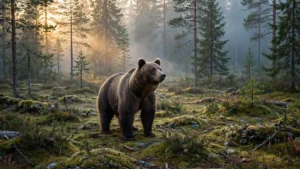
The UK is an island group, separated from mainland Europe by the sea, and its wildlife reflects that history. Large predators such as wolves and bears died out centuries ago, and the animals that remain are those that could live alongside people in a farmed, wooded landscape. The result is a wildlife of deer, badgers, foxes and otters, plus seabirds that nest on cliffs and islands in large numbers.
The climate is mild and wet, with few extremes, so many animals are active all year. The coasts are long and varied, from the cliffs of Cornwall to the sea lochs of Scotland, and they support seals, seabirds and waders.
Deer of the United Kingdom
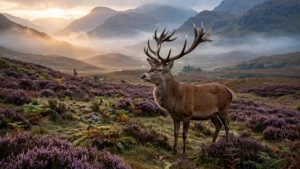
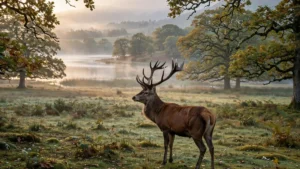
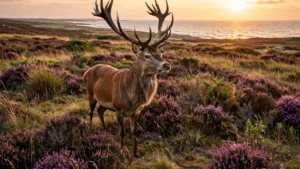
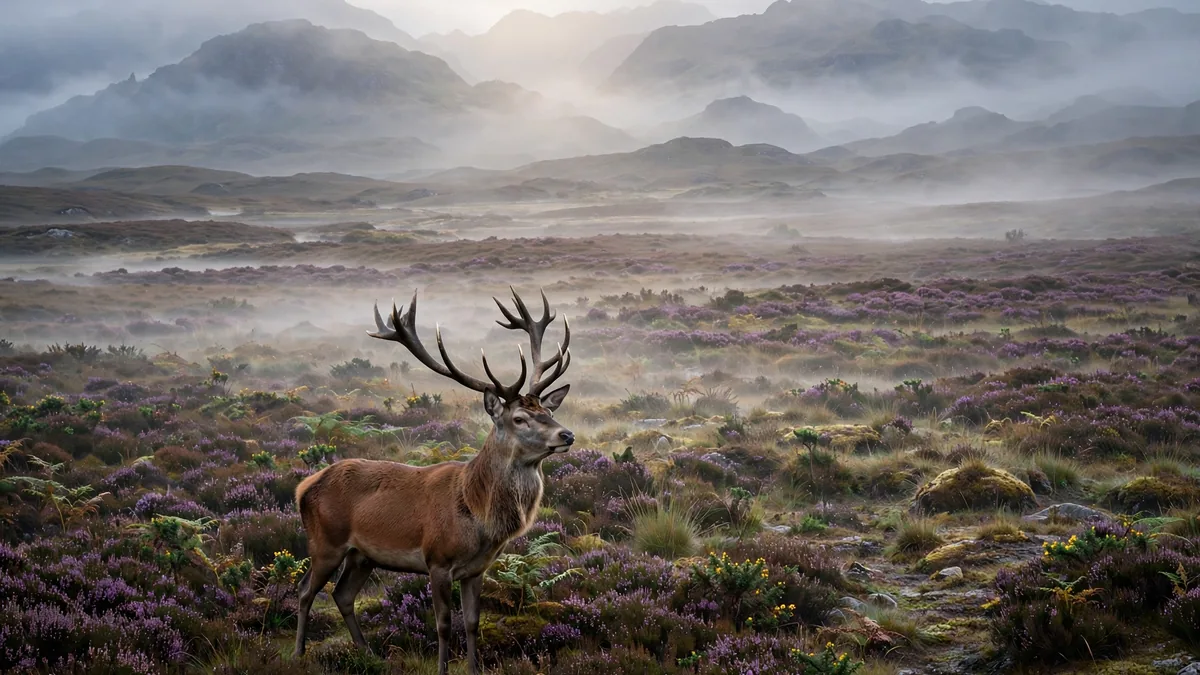
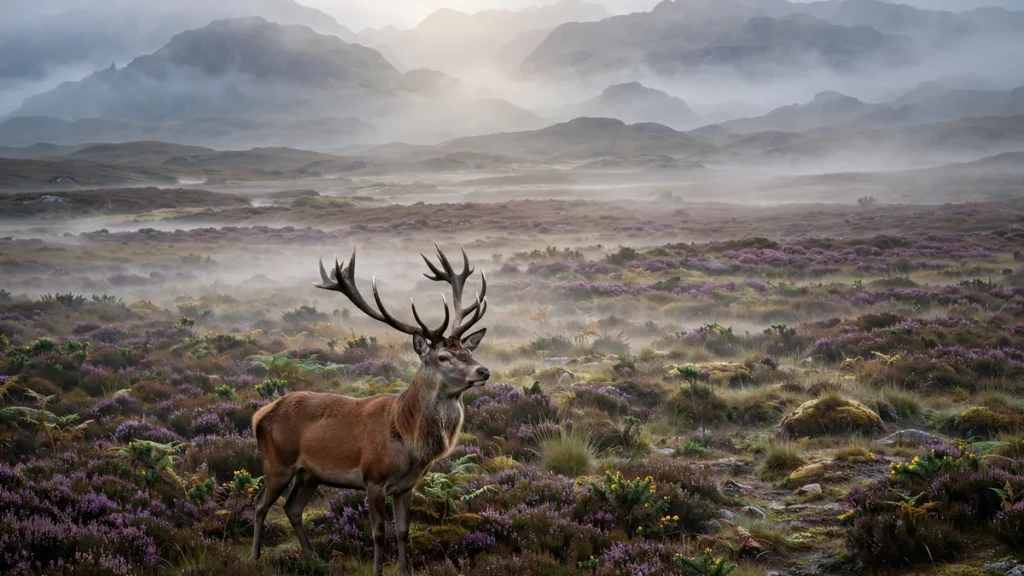
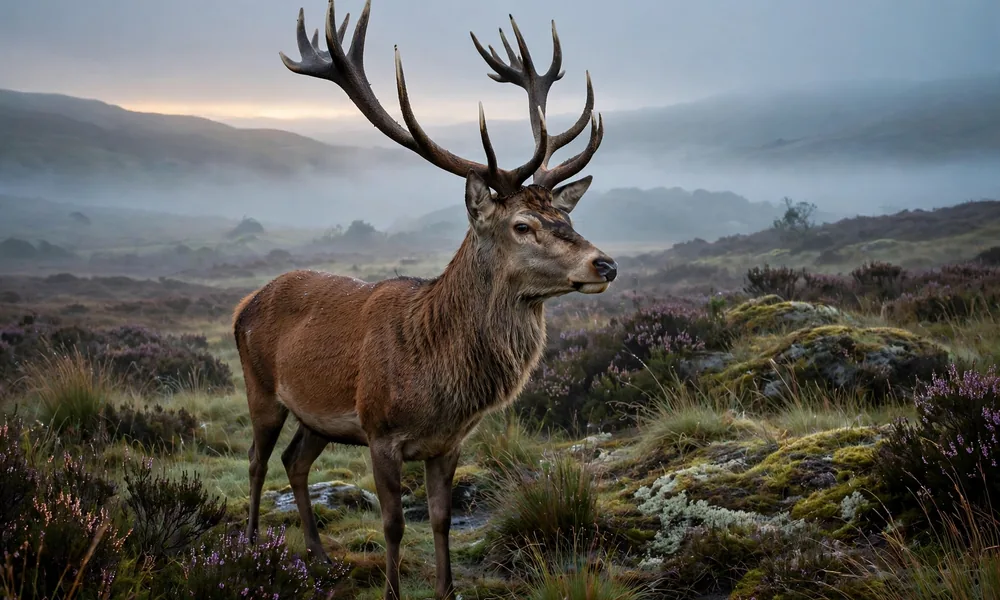
Red deer are the UK’s largest land mammals, and the Highlands of Scotland hold the largest numbers. Stags with broad antlers graze the open moors, and in autumn the rut fills the glens with roaring. Red deer are also found in the south-west of England, in Exmoor and the New Forest, where they live in woodland and heath. Roe deer are smaller and far more widespread, and like other herbivores, deer shape the landscape by grazing and browsing.
Badgers, otters and other mammals
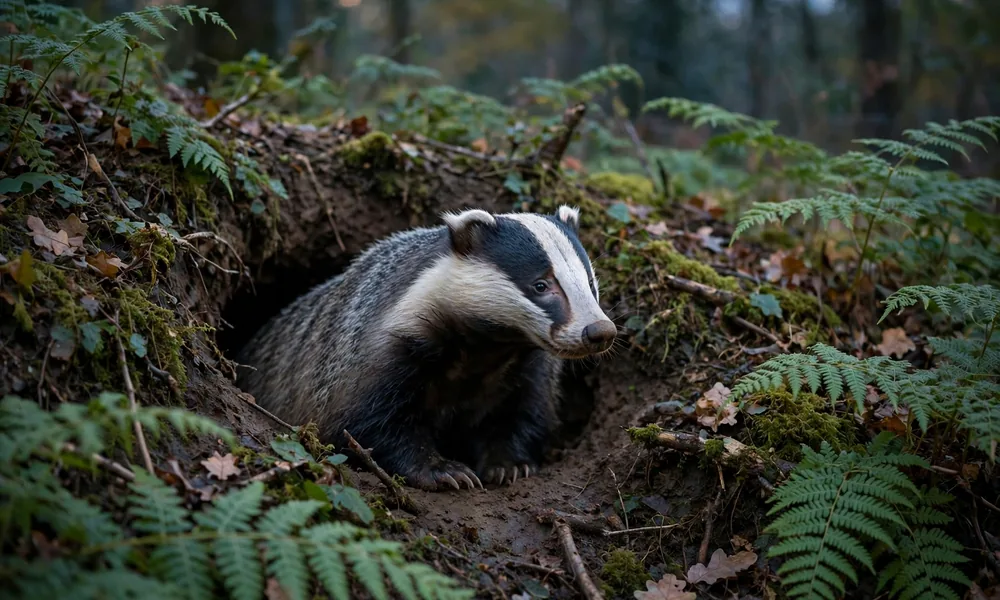
The badger is one of the UK’s best-loved animals, a nocturnal woodland mammal with a bold black-and-white striped face. Badgers live in family groups in setts, underground burrows dug into woodland banks, and they emerge at dusk to forage for earthworms, fruit and small animals. Badger watches, run by wildlife trusts and local groups, are the best way to see them, because badgers are shy and rarely seen by chance.
Otters have returned to rivers across the UK after years of decline, and they now live on rivers, lakes and coasts from Cornwall to the Highlands. They are most often seen at dawn, hunting fish in quiet stretches of river, and the coasts of Scotland, especially Mull and Shetland, are among the best places to watch them. Otters are shy and quick, so a still, patient wait at a riverbank is the best approach.
Red foxes are the UK’s most widespread wild carnivore, living in woodland, farmland and towns. They are most active at night, and they are often seen in gardens and parks. Red squirrels, once common across the UK, now survive mainly in Scotland, the Lake District, the Isle of Wight and parts of Wales, where grey squirrels, introduced from North America, have not taken over. Pine martens, sleek woodland hunters, have returned to Scotland and are spreading into northern England and Wales.
Birds of prey and the great returns
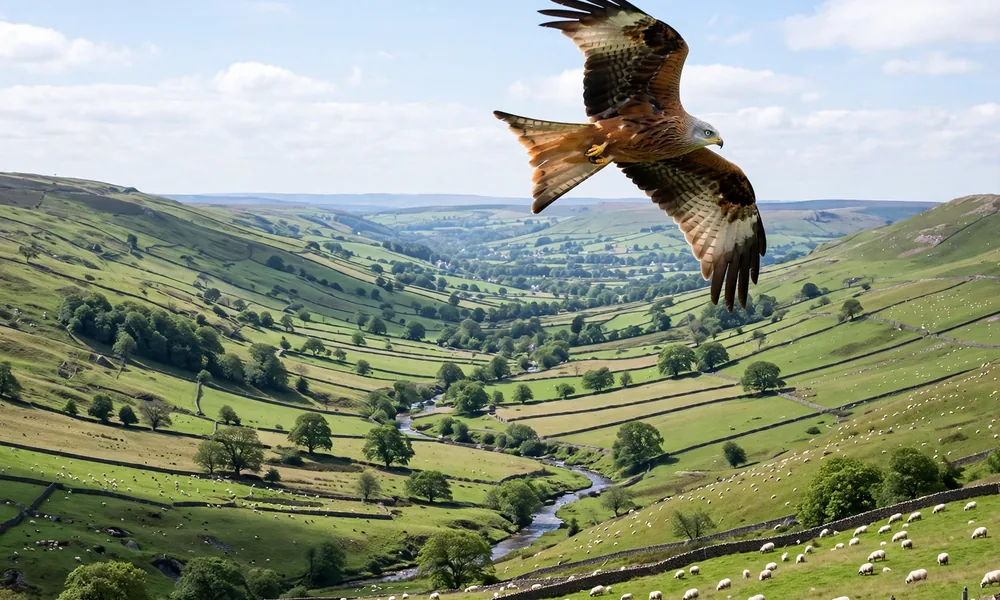
The red kite is one of the UK’s great conservation successes. Once reduced to a handful of birds in Wales, it has been reintroduced across England and Scotland, and it is now a common sight over valleys and farmland, soaring on long, forked tails. The Chilterns, the Yorkshire Dales and the Welsh valleys are among the best places to see them, often from a roadside viewpoint.
White-tailed sea eagles, the UK’s largest birds of prey, were reintroduced to Scotland and have spread to the Isle of Mull and the east coast. Golden eagles hunt over the mountains of the Highlands, and ospreys, which return each spring from Africa, nest on lochs in Scotland and Wales. Buzzards are now common across the country, and kestrels hover over motorway verges and farmland. These birds are the UK’s great predators of the sky, and the peregrine falcon, the fastest animal on earth in a dive, nests on cliffs and on city buildings.
Seals, seabirds and life on the coast
The UK holds large colonies of grey seals and harbour seals, and its coasts are among the best places in Europe to see them. Grey seals breed in autumn, and the Farne Islands off Northumberland, the Pembrokeshire coast and the Norfolk coast hold large colonies. Harbour seals, smaller and shyer, haul out on sandbanks in estuaries and sea lochs, especially in Scotland.
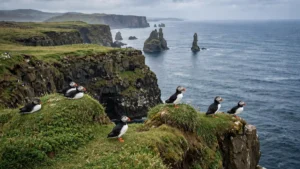
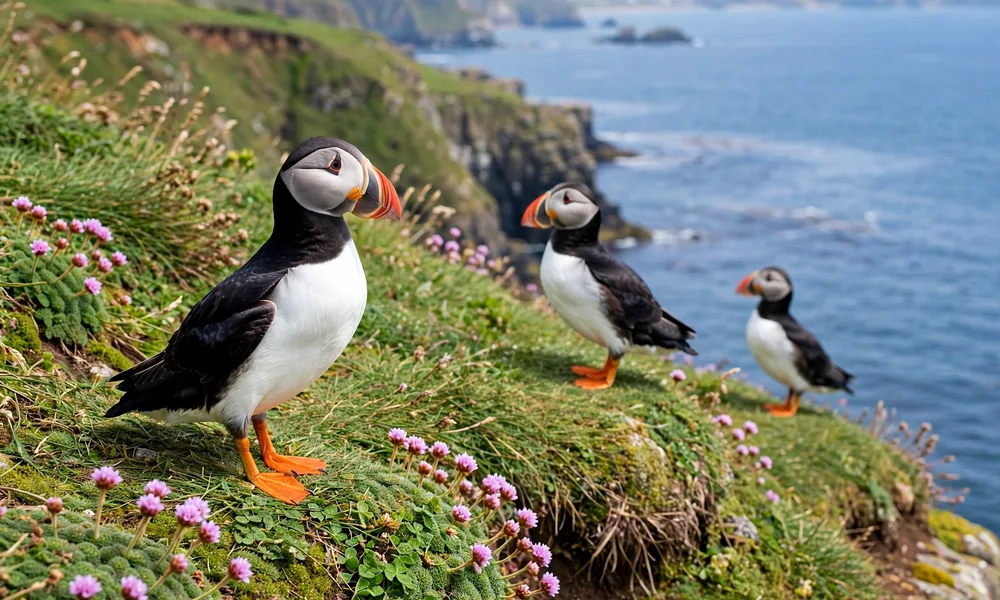
Seabird colonies crowd the cliffs in summer. Puffins nest on the Farne Islands, Skomer Island off Pembrokeshire and the Isle of May in the Firth of Forth, while gannets nest on Bass Rock, the world’s largest northern gannet colony. Guillemots, razorbills and kittiwakes fill the ledges, and Manx shearwaters return to the islands of Skomer and Skokholm at night.

Smaller animals and the animals of the night
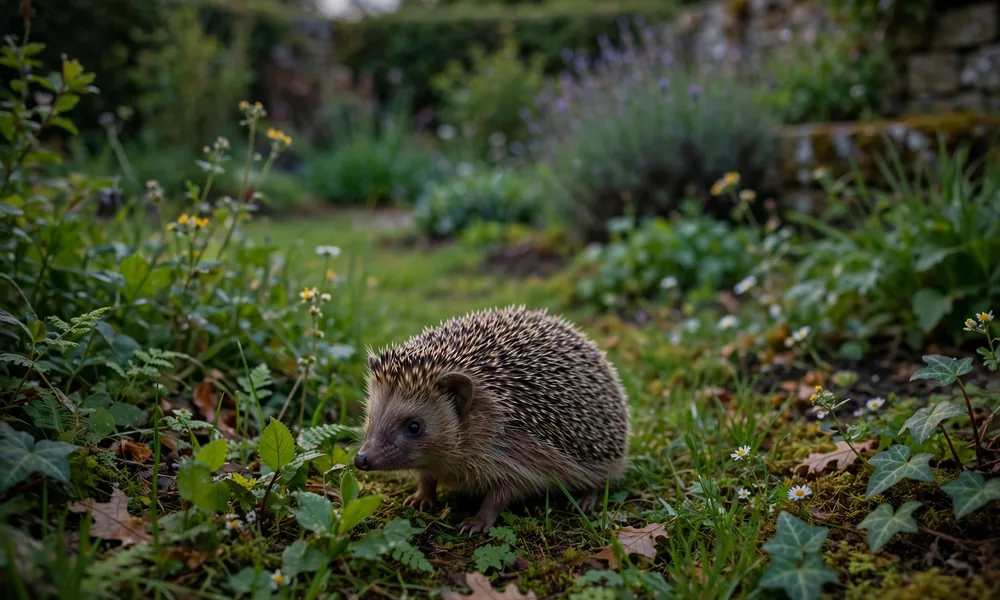
Not all of the UK’s wildlife is large. Hedgehogs, once a common garden animal, now need help from gardeners who leave gaps in fences and piles of leaves for them to nest in. Water voles, the animal behind Ratty in The Wind in the Willows, live along riverbanks and ditches, and they are best seen in the early morning, feeding on waterside plants.
Bats are the UK’s only flying mammals, and seventeen species live here. Pipistrelles, the smallest, flit around gardens and streetlights at dusk, while noctules fly high over woodland and water. Bats are protected, and bat walks run by wildlife trusts are the best way to see and hear them with a detector. Adders, the UK’s only venomous snake, bask on heaths and moors in spring, and they should be given space and never handled.
Endemic species and animals found nowhere else
The UK has few animals found nowhere else, because it was joined to mainland Europe until the sea rose after the last ice age. The animals that are unique to the UK are mostly small and local: the Scottish crossbill, a bird found only in the pine forests of the Highlands, is the UK’s only endemic bird species. It feeds on pine cones, and its crossed bill is adapted to prise the seeds out. The red grouse, a bird of the northern moors, is found only in Britain and Ireland, and the mountain hare, which turns white in winter, lives on the high moors of Scotland and the Peak District.
Where to see the UK’s wildlife
The best place depends on the species. Red deer are easiest in the Highlands, around Glen Coe and the Cairngorms, while badgers are best seen on a badger watch in woodland. Otters are best on the Isle of Mull and in Shetland, and red kites are best in the Chilterns and the Welsh valleys.
For seabirds, Skomer Island and the Farne Islands are the classic summer destinations, and Bass Rock is the place for gannets. For seals, the Farne Islands, the Norfolk coast and the Pembrokeshire coast are best visited by boat in summer and autumn.
| Species | Where to look | Best season | How likely is a sighting |
|---|---|---|---|
| Red deer | Highlands, Glen Coe and the Cairngorms | Autumn for the rut | Good |
| Badger | Woodland badger watches | Spring to autumn, at dusk | Good on a watch |
| Otter | Isle of Mull and Shetland | All year, at dawn | Fair |
| Red kite | Chilterns and Welsh valleys | All year | Good |
| Grey seal | Farne Islands and Norfolk coast | Autumn for breeding | Good |
| Puffin | Skomer Island and Farne Islands | May to July | Good in season |
Best seasons for wildlife watching
Summer is the easiest season. The days are long, the seabirds are at their colonies, the puffins are on Skomer and the Farne Islands, and the deer are out on the moors. It is also the busiest season, so book boat trips and island visits in advance.
Staying safe around the UK’s wildlife
The UK’s animals are usually calm, but they deserve respect. Keep your distance from deer, seals and nesting birds, never approach a seal pup or a badger sett, and never try to feed or touch any wild animal. Adders bask on heaths in spring, so watch where you step and never handle one. If you meet a deer, back away slowly and give it room to leave.
Wildlife watching checklist
- Book a badger watch or a boat trip to Skomer or the Farne Islands in advance — both sell out in summer.
- Go out at dawn or dusk for deer, badgers and otters, and plan seabird trips for May to July.
- Bring binoculars, warm layers and waterproofs, even in summer — British weather changes fast.
- Keep at least 50 metres from seals, nesting birds and grazing deer, and far more from stags in the rut.
- Never feed wild animals, and never use food or calls to lure them closer for a photograph.
- Leave no trace: take your rubbish home and keep to marked paths in sensitive habitats.
Frequently asked questions
What is the largest land animal in the UK?
The red deer is the largest land mammal in the UK, and the Highlands of Scotland hold the largest numbers. Stags are most visible in autumn, during the rut.
Are there wolves or bears in the UK?
No. Wolves and bears died out in the UK centuries ago, and there are no native large predators left. The largest wild carnivores are the badger, the otter and the fox.
When is the best time to see puffins in the UK?
Puffins are at their colonies from May to July, with June the best month. Skomer Island and the Farne Islands are the best places to see them.
Do I need a guide to see wildlife in the UK?
Not for common species such as deer, red kites and seals. For badgers, otters and pine martens, a local guide or a wildlife trust watch greatly improves your chances and keeps you safe.
Conclusion
The UK’s wildlife rewards patience: red deer in the Highlands, puffins on Skomer and grey seals on the Norfolk coast are all within reach if you plan around the seasons and keep your distance.
The next step is to pick one species and one season — an autumn deer rut in the Highlands, a summer boat trip to the Farne Islands, or a red kite watch in the Chilterns — and plan your visit around it.