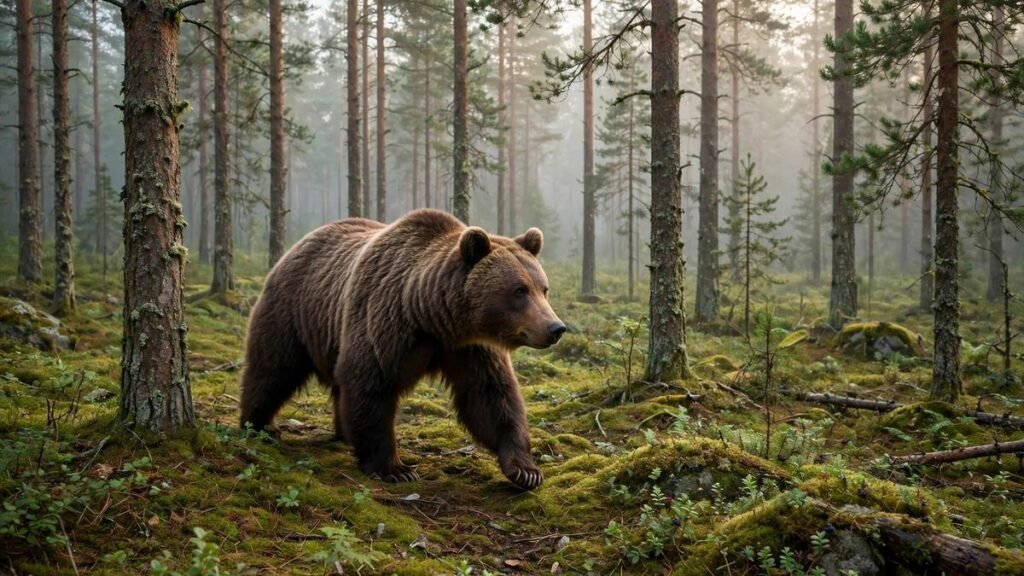
Sweden animals range from moose in the southern forests to reindeer on the mountains of Lapland, and the country holds one of Europe’s largest moose populations. If you are wondering which animals live in Sweden and where to see them, the short answer is this: moose, reindeer, red deer, roe deer and wild boar roam the forests and farmland, bears, wolves, lynx and wolverines survive in the wilder north and centre, and the coasts, lakes and archipelagos host white-tailed sea eagles, cranes, seals and harbour porpoises.
Sweden is one of the best places in Europe to watch large mammals and birds, because so much of the country is forest, lake and mountain, thinly settled across a long land. This guide covers the species you are most likely to meet, where each one lives, the best seasons, and how to watch them safely.
Key takeaways
- Sweden’s most iconic land animals are the moose, reindeer, red deer, roe deer, wild boar, brown bear, grey wolf, Eurasian lynx and wolverine.
- Sweden has one of Europe’s largest moose populations, and the moose is the animal most visitors hope to see.
- The north is the land of reindeer, Arctic foxes and wolverines, while the south holds wild boar, deer and rich birdlife.
- Early morning and late evening are the best times to spot large mammals, and spring is the best season for cranes.
- Keep your distance, never feed wild animals, and follow local rules in national parks and nature reserves.
What makes Sweden’s wildlife special
Sweden stretches from the temperate farmland of Skåne in the south to the Arctic mountains of Lapland in the north. That range covers temperate forest, boreal forest, high mountains, wetlands and thousands of lakes, so the country holds species from several climate zones at once.
The population is small for the size of the land, and more than half of Sweden is covered in forest. That space and protection is why large predators still survive here, even if their numbers are low and they are hard to see.
The great mammals of Sweden
The moose, known as the elk in Sweden, is the animal most visitors hope to see. It is the largest deer in the world, and Sweden has one of Europe’s largest moose populations, spread across the whole country. Moose are most active at dawn and dusk, often appearing beside roads and in clearings. Look for them in the forests of Dalarna in central Sweden.
Reindeer are the other great deer of the north. Semi-domesticated herds are kept by Sami herders across Lapland, and wild reindeer live in the mountains, including around Sarek and Abisko. Like other tundra animals, reindeer are built for cold and open ground, with broad hooves that work like snowshoes.
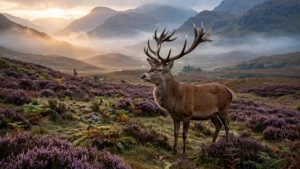
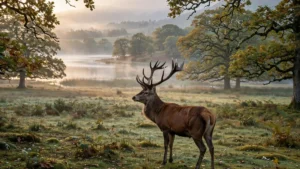
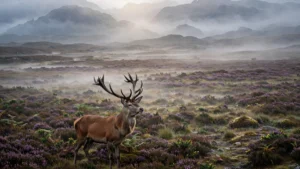
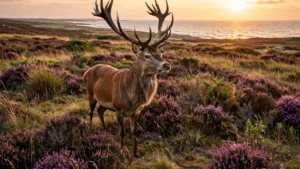
Red deer are Sweden’s largest deer after the moose, most numerous in the south and along the west coast. Roe deer are smaller and far more widespread, living in farmland and forest edges across the whole country. Both are easiest to spot at field edges in the early morning. Wild boar are a southern species, common in Skåne and around Stockholm, and most often seen at night, rooting for roots, acorns and insects.
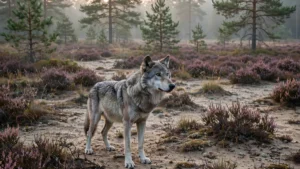
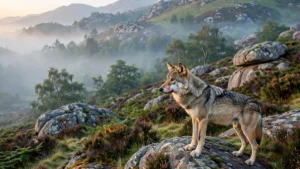
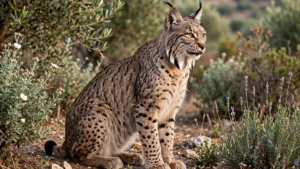
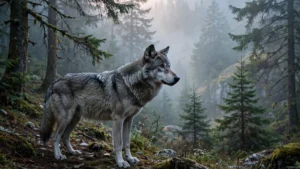
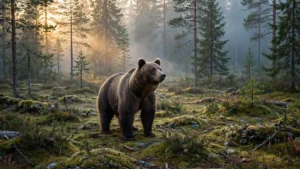
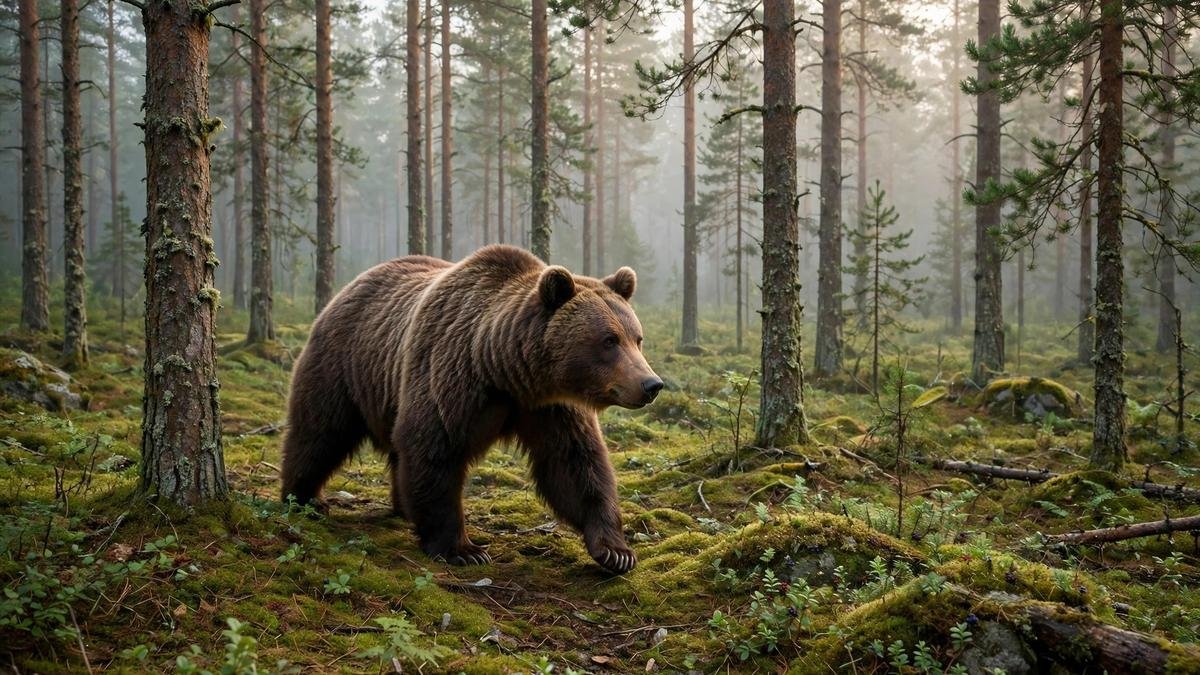
Among the predators, the Eurasian lynx is the most widespread, hunting roe deer in the forests of the centre and north. Grey wolves live in small numbers in central Sweden, and they are rarely seen. Wolverines live in the mountains of the north. Brown bears are Sweden’s largest predator, most numerous in the north and centre, feeding on berries, ants and roots.
Birds of the Swedish forests, lakes and mountains
The white-tailed sea eagle is Sweden’s largest bird of prey, with a wingspan of up to two and a half metres. It breeds along the coasts and around the big lakes, and the Stockholm archipelago and Lake Vänern, Sweden’s largest lake, are among the best places to see it, often from a boat. Golden eagles hunt over the mountains of the north instead, taking hares and grouse.
The capercaillie is the great bird of the northern forests, a large grouse that gathers at spring leks, where the males display with fanned tails and strange clicking calls. It is shy and hard to see outside the lekking season.
Each spring, tens of thousands of common cranes stop at Lake Hornborga in southern Sweden on their way north to breed. The cranes arrive in March and April, and the lake is one of the best-known places in Europe to watch them. Cranes also breed across the wetlands of the north.
Seals, porpoises and life in the lakes and archipelagos
Sweden’s long coastline and the thousands of islands in its archipelagos support a rich marine world. Grey seals and harbour seals haul out on skerries and rocky islets along the west coast and in the Stockholm archipelago, and the largest colonies are on the outer islands. Harbour seals are smaller and shyer, while grey seals are larger, with long faces.
The harbour porpoise is Sweden’s only native whale species, a small, shy relative of the dolphins that lives in the waters off the west coast and in the Baltic. It is rarely seen, usually only as a brief roll at the surface. Porpoises are protected in Sweden, and their numbers in the Baltic are low.
Inland, the big lakes hold their own wildlife. Lake Vänern and Lake Vättern hold otters, beavers and rich birdlife, and their rivers hold salmon and trout. Beavers have returned to many Swedish rivers and lakes, and their dams now shape wetlands for frogs, dragonflies and water birds.
Smaller animals and the Arctic fox
Not all of Sweden’s wildlife is large. The Arctic fox is one of the country’s most precious species, small, tough and now the focus of a major conservation programme. It lives in the mountains of Lapland, changing from white in winter to brown-grey in summer. The population fell sharply in the last century because of hunting and the decline of lemmings, its main prey, and it is now bred in captivity and released into the wild.
Lemmings themselves are a key species. In good lemming years, predators raise more young, and in poor years they struggle. This boom-and-bust cycle drives much of the ecology of the Swedish mountains. Otters hunt along the coast and in rivers. Badgers, pine martens and hares are common in the forests, and the mountain hare turns white in winter.

Where to see Sweden’s wildlife
The best place depends on the species. Moose are easiest in the forests of Dalarna and the lake districts of central Sweden. Reindeer are best in Lapland, around Sarek and Abisko, where the herds graze the mountain valleys. Red deer and wild boar are southern species, and the forests and farmland of Skåne are a good place to start.
For birds, Lake Hornborga is the classic spring destination for cranes, while the Stockholm archipelago and Lake Vänern are the best places for white-tailed sea eagles. The mountains around Abisko are a good base for Arctic foxes, wolverines and golden eagles. For seals, the outer islands of the Stockholm archipelago and the west coast are best visited by boat in summer.
| Species | Where to look | Best season | How likely is a sighting |
|---|---|---|---|
| Moose | Dalarna forests and central lake districts | May to September, dawn and dusk | Good |
| Reindeer | Sarek and Abisko in Lapland | Summer | Good in the north |
| Brown bear | Forests of the north and centre | May to September | Low |
| White-tailed sea eagle | Stockholm archipelago and Lake Vänern | All year | Good from a boat |
| Common crane | Lake Hornborga in the south | March to April | Good in season |
| Arctic fox | Mountains of Lapland | Winter for white coat | Low |
Best seasons for wildlife watching
Summer is the easiest season. The days are long, the seabirds are at their colonies, the moose are out in the clearings and the mountains are open for walking. The midnight sun in the north means you can watch wildlife late into the evening.
Autumn brings the deer rut, when red deer stags roar in the valleys and moose bulls are at their most visible and most bad-tempered. It is also the season when bears feed hard on berries before they den for the winter.
Spring is the season of return. Cranes arrive at Lake Hornborga and the bears leave their dens. It is also the most sensitive season, so keep to paths, keep dogs on a lead and give every animal more space than you think it needs.
Staying safe around Sweden’s wildlife
Sweden’s large animals are usually calm, but they deserve respect. Keep your distance from moose, bears and wolves, never approach a moose calf or walk between a cow and her calves, and never try to feed or touch any wild animal. If you meet a bear, back away slowly, speak calmly and never run.
Wildlife watching checklist
- Book a local guide for large predators, seals and Lapland — they know where the animals are.
- Go out at dawn or dusk for mammals, and plan crane trips for March to April at Lake Hornborga.
- Bring binoculars, warm layers and waterproofs, even in summer — Swedish weather changes fast.
- Keep at least 50 metres from seals, nesting birds and grazing deer, and far more from bears, moose with calves and wolves.
- Never feed wild animals, and never use food or calls to lure them closer for a photograph.
- Leave no trace: take your rubbish home and keep to marked paths in sensitive habitats.
Frequently asked questions
What is the most common large animal in Sweden?
The moose is the most common large mammal, and Sweden has one of Europe’s largest moose populations, across the forests of the whole country. Roe deer are also widespread, and red deer are numerous in the south.
Are there bears and wolves in Sweden?
Yes. Brown bears live mainly in the forests of the north and centre, and grey wolves in small numbers in central Sweden. Both are shy, rarely seen, and avoid people whenever they can.
When is the best time to see cranes in Sweden?
The crane season runs from March to April, when tens of thousands of cranes stop at Lake Hornborga on their way north to breed.
Is it safe to see moose in Sweden?
Moose are usually calm, but they are large and powerful, and a cow with calves or a bull in the rut can charge. Keep your distance, never walk between a cow and her calves, and never approach a bull in the rut.
Can I see reindeer in Sweden?
Yes. Semi-domesticated herds are kept by Sami herders across Lapland, and wild reindeer live around Sarek and Abisko. Summer is the best season to see them.
Do I need a guide to see wildlife in Sweden?
Not for common species such as moose, deer and cranes. For bears, wolves, Arctic foxes and seals, a local guide greatly improves your chances and keeps you safe.
Conclusion
Sweden’s wildlife rewards patience: moose in the forests of Dalarna, cranes at Lake Hornborga and reindeer in the mountains of Lapland are all within reach if you plan around the seasons and keep your distance.
The next step is to pick one species and one season — an evening moose safari, a spring crane trip, or a summer visit to Abisko — and plan your visit around it.