What Makes a Shepherd Dog?
Different types of shepherd dogs share a working past, yet they differ widely in size, coat, energy and temperament. Which type suits your home depends less on looks and more on instinct, because a herding dog wants to move stock, a livestock guardian wants to watch over it, and a versatile farm dog wants a job that changes through the day.
Some breeds gather and drive animals with eye contact, movement and barking. Others live with the flock and protect it, using size, presence and a calm, watchful nature.
Key takeaways
- Shepherd dogs fall into three groups: herders, livestock guardians and versatile all-rounders.
- Herders are quick and responsive, and need mental work as well as exercise.
- Livestock guardians are calm, independent and protective, and need space and clear boundaries.
- Choose by temperament and lifestyle, not appearance alone.
- Early socialisation, consistent training and a daily job keep most shepherd breeds settled.
Herding Dogs
Herding breeds work in partnership with a handler. They read small signals, change direction fast and use controlled pressure to move animals. That sensitivity makes them rewarding to train, but they also notice everything around them.
The Border Collie is the best-known herding dog, famous for focus, stamina and a willingness to work for long periods. It learns quickly, thrives on training, agility and scent work, and needs daily activity. For a closer look, see the guide to the Border Collie.
The Australian Shepherd is another agile herder, with a medium-length coat, a strong work ethic and a lively, affectionate nature. It suits active owners who enjoy outdoor life, dog sports or farm work. You can read more in the profile of the Australian Shepherd.
The German Shepherd is the most versatile of the herding group. It was developed as a herding and farm dog, then became widely used for police, search and service work because of its intelligence and trainability. It needs early socialisation, firm and fair training, and regular work.
Other herders include the Shetland Sheepdog, a smaller, gentler dog, and the Belgian Malinois, a lean, intense working dog that needs an experienced handler.
Livestock Guardian Dogs
Livestock guardians take a different approach. Instead of moving animals, they live with them and place themselves between the flock and danger. They are usually large, heavily coated and independent, and they make decisions on their own rather than waiting for constant direction.
The Great Pyrenees is one of the best-known guardians. It is large, calm and patient, with a thick white coat that protects it in cold and mountain weather. It bonds closely with the animals and people it guards. Learn more in the profile of the Great Pyrenees.
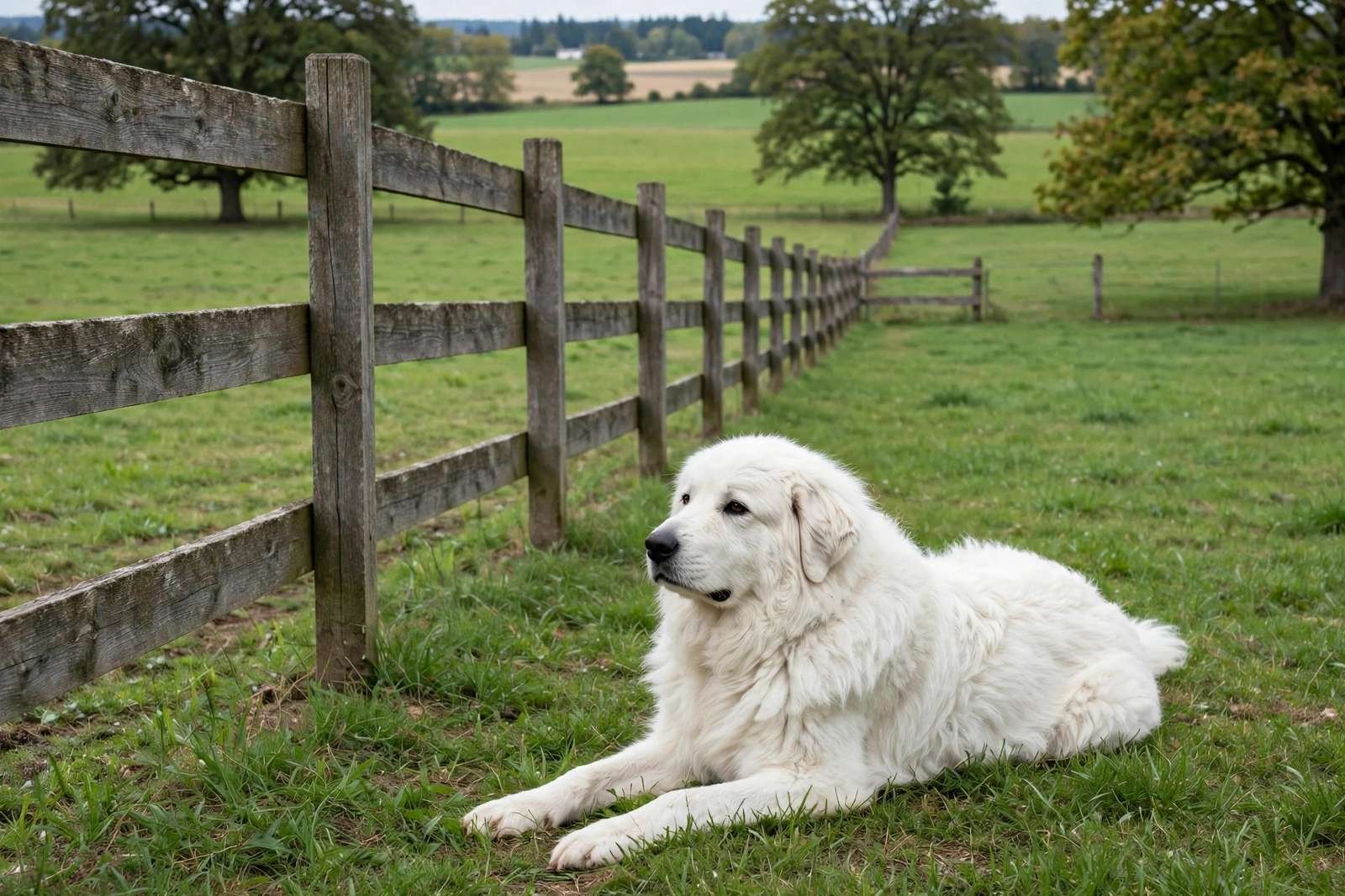
The Anatolian Shepherd is a powerful guardian, bred to protect flocks from wolves and other predators. It is loyal, watchful and reserved with strangers, and it needs a confident owner and a large secure area. The Maremma Sheepdog is similar but often a little softer, while the Caucasian Shepherd is larger and more formidable, suited only to experienced owners.
Guardians are not usually the best choice for obedience competitions or fast-paced dog sports. If you want a dog that follows every cue, a herder will suit you better. If you need a steady presence that watches over land and livestock, a guardian may be the right fit.
Versatile and Lesser-Known Shepherd Types
Between the pure herders and the pure guardians sits a group of versatile shepherd dogs that adapt to several roles. The Australian Cattle Dog is tough, compact and determined, bred to move cattle over long distances in harsh conditions. It is loyal and hardworking, but it can be wary of strangers and needs firm, consistent handling.
The Dutch Shepherd and the Belgian Shepherd family, which includes the Malinois, Tervuren and Laekenois, are athletic working dogs with strong drive. They excel in sport and service work, but they need an owner who trains every day. The White Swiss Shepherd, closely related to the German Shepherd, is often a little softer and more social.
Some shepherd types are rare outside their home country. The Pyrenean Shepherd is small, quick and energetic. The Icelandic Sheepdog is a friendly herder that does well in a family home with regular exercise, and the Norwegian Buhund is another compact farm dog that thrives when it has a job and company.
Shepherd Dogs Compared
| Type | Examples | Size and coat | Energy and drive | Best for |
|---|---|---|---|---|
| Herding dogs | Border Collie, Australian Shepherd, German Shepherd | Medium to large, varied coats | High, needs daily mental work | Active owners, training, sport and farm work |
| Livestock guardians | Great Pyrenees, Anatolian Shepherd, Maremma Sheepdog | Large to very large, thick coats | Moderate, steady and watchful | Farms, large secure land and livestock protection |
| Versatile farm dogs | Australian Cattle Dog, Dutch Shepherd, White Swiss Shepherd | Medium to large, short to medium coats | High, needs a clear daily job | Experienced owners who want a working partner |
| Smaller herders | Shetland Sheepdog, Pyrenean Shepherd, Icelandic Sheepdog | Small to medium, medium to long coats | Moderate to high, bright and quick | Active families with time for training and play |
Table: A simple comparison of shepherd dog groups, showing how size, energy and best use differ across types.
Herders and versatile farm dogs ask for the most interaction, while guardians ask for the most space. No group is low maintenance: even the calmest guardian needs grooming and boundary training, and even the smallest herder needs a job to keep its mind busy.
Temperament
Most shepherd dogs are intelligent, loyal and sensitive to their owner’s mood and routine. They often form a strong bond with one person or family, and they can be reserved with strangers. That reserve is useful in a working dog, but it needs socialisation from an early age.
Herders tend to be the most responsive and the most easily stressed by chaos. Loud homes, unpredictable schedules and long hours alone can unsettle them. Guardians tend to be calmer and more independent, but they can be territorial and slow to accept new people or animals on their ground.
All shepherd types benefit from a predictable routine: regular feeding times, a set training slot, a daily walk and a quiet resting place. Children and shepherd dogs can get on well when the dog has been socialised, but supervision and training matter.
Care
Exercise needs vary, but no shepherd dog thrives on a short walk alone. Herders need a mix of physical activity and mental work, such as training, scent games, agility or herding practice. Guardians need space to patrol and regular walks, but less high-intensity exercise.
Grooming depends on coat type. Double-coated breeds, including the German Shepherd, Australian Shepherd and Great Pyrenees, shed through the year and more heavily in spring and autumn. Regular brushing keeps the coat healthy, and long-coated breeds need more frequent grooming to prevent mats.
Training should start early and stay consistent. Shepherd dogs learn quickly, which means they also learn bad habits quickly if training is unclear. Short, positive sessions work better than long, repetitive ones, and working dogs should also learn recall and a reliable settle cue.
Health care follows the same basics as for any dog: regular veterinary checks, vaccinations, parasite control, dental care and a balanced diet suited to size and activity. Large guardian breeds can be prone to joint problems, while some herding breeds can carry inherited eye or drug-sensitivity issues, so ask a vet or breeder about health screening.
Choosing the Right Shepherd Dog
Choosing well starts with an honest look at your day. How much time can you give to training, exercise and grooming? How much space do you have? Do you want a dog that works closely with you, or one that works independently? Do you have livestock to protect, or do you want a companion for walks, sport and family life?
A first-time owner often does better with a Shetland Sheepdog, an Australian Shepherd from a calm line, or a White Swiss Shepherd. A Belgian Malinois, Anatolian Shepherd or Caucasian Shepherd is best left to experienced owners with a clear working role for the dog.
Thick-coated guardians cope well with cold and mountain weather. In Norway, where farms and homes often sit close to forest and open land, a dog’s recall and its response to wildlife both matter. For a wider view of that landscape, see the guide to animals in Norway.
A reputable breeder will health-test breeding dogs, raise puppies with early socialisation and ask about your home and routine. Rescue organisations can also be a good route, especially for adult dogs whose temperament is already clear.
Checklist: Is a Shepherd Dog Right for You?
- Time: Can you give at least an hour a day to exercise and training, plus grooming and play?
- Space: Do you have a secure garden or yard, and a quiet place where the dog can rest?
- Work: Can you offer a daily job, such as training, scent work, sport or farm work?
- Experience: Are you ready to train consistently, or can you get help from a trainer who understands working breeds?
- Household: Will children, other pets and visitors be introduced carefully, with supervision?
- Long term: Are you ready for a large, active dog for its whole life, including vet care and grooming?
- Breed fit: Have you matched the breed’s instincts to your life, rather than choosing on appearance?
If you can answer yes to most of these points, a shepherd dog may be a good fit. If several answers are no, it may be worth waiting, choosing a calmer breed, or speaking to a trainer or rescue centre before you decide.
Frequently Asked Questions
Are shepherd dogs good family pets?
Many make loyal family pets when well socialised, trained and given enough exercise. The key is matching the breed to the family’s routine and giving the dog a daily job.
Do shepherd dogs shed a lot?
Many do, especially double-coated breeds such as the German Shepherd, Australian Shepherd and Great Pyrenees. Regular brushing helps, and shedding is often heavier in spring and autumn.
Which shepherd dog is best for a first-time owner?
A calmer herder, such as a Shetland Sheepdog, often suits a committed first-time owner who can offer training and exercise.
Can shepherd dogs live in a flat or small home?
Some smaller herders can, if the owner provides several outings, training and mental work each day. Large guardians and high-drive herders usually need more space and a secure garden.
A Working Dog First, a Companion Second
Different types of shepherd dogs offer a wide choice, from the quick and focused Border Collie to the calm and watchful Great Pyrenees. Each type was shaped by a job, and each still carries the instincts that made it good at that job. The best choice is not the most popular breed, but the dog whose energy, independence and training needs fit the life you can actually offer.
Start by deciding what you need the dog to do, how much time you can give each day, and how much space and experience you have. Then meet breeders, trainers and rescue centres, and take time to choose.
If you are ready to take the next step, speak to a reputable breeder or rescue organisation, arrange to meet a few dogs of the type you are considering, and plan the training, exercise and care you will offer from the first week.
Safety note: Always supervise dogs around children and livestock, keep working dogs on a lead near roads and unfamiliar animals, and seek veterinary advice promptly if a dog shows signs of pain or illness.