Norway animals range from moose in the southern forests to polar bears on Svalbard, and the country packs an unusual amount of wildlife into a long, mountainous coastline. If you are wondering which animals live in Norway and where to see them, the short answer is this: moose, reindeer, red deer and roe deer roam the forests and mountains, lynx, wolves, wolverines and brown bears survive in smaller numbers, and the coasts and fjords host puffins, sea eagles, seals and whales.
Norway is one of the best places in Europe to watch large mammals and seabirds, because so much of the country is wild, thinly populated and protected. This guide covers the species you are most likely to meet, where each one lives, the best seasons for seeing them, and how to watch them safely.
Key takeaways
- Norway’s most iconic land animals are the moose, reindeer, red deer, roe deer, Eurasian lynx, grey wolf, wolverine and brown bear.
- Svalbard, in the high Arctic, is the only part of Norway with polar bears, and they are protected and dangerous.
- The coast is famous for Atlantic puffins, white-tailed sea eagles, seals and whales, including orcas and humpbacks in the far north.
- Early morning and late evening are the best times to spot large mammals, and summer is the best season for seabirds.
- Keep your distance, never feed wild animals, and follow local rules in national parks and on Svalbard.
What makes Norway’s wildlife special
Norway stretches from the temperate south at 58 degrees north to Svalbard at 81 degrees north, deep inside the Arctic. That span covers temperate forest, boreal forest, high mountains, tundra and Arctic desert, so the country holds species from several climate zones at once. Few European countries offer that range in a single border.
The population is small for the size of the land, and large areas are mountain, forest or fell with almost no settlement. Animals have room to move, and Norway’s national parks and protected areas cover a large share of the mainland and almost all of Svalbard. That combination of space and protection is why large predators still survive here, even if their numbers are low and they are hard to see.
The great mammals of Norway
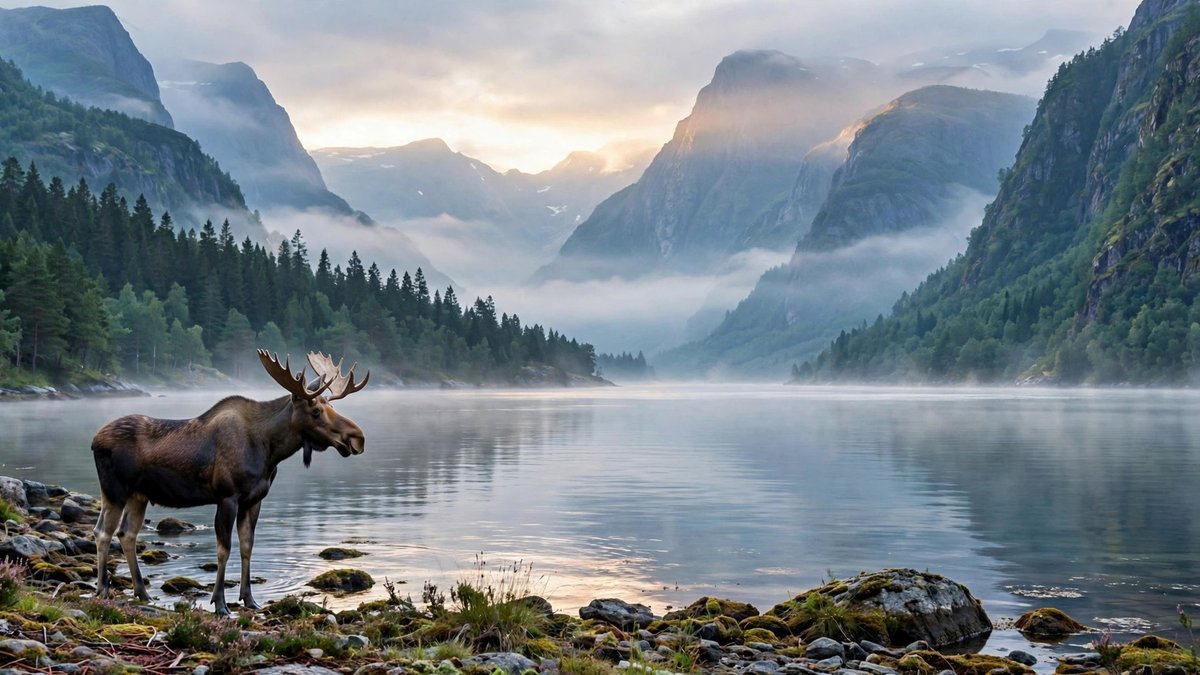
The moose, known as the elk in Norway, is the animal most visitors hope to see. It is the largest deer in the world, standing up to two metres at the shoulder, and it is common across the forests of southern and central Norway. Moose are most active at dawn and dusk, and they often appear beside roads and in clearings where young birch and willow grow.
Reindeer are the other great deer of Norway. Wild reindeer live on the high mountain plateaus of the south, including Hardangervidda, the largest mountain plateau in northern Europe, while semi-domesticated herds are kept by Sami herders across the north. Like other tundra animals, reindeer are built for cold and open ground, with broad hooves that work like snowshoes.
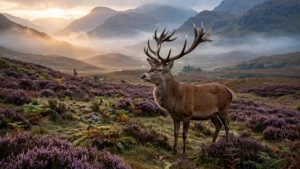
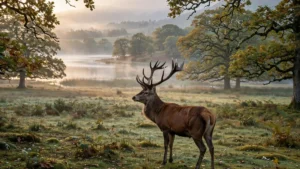
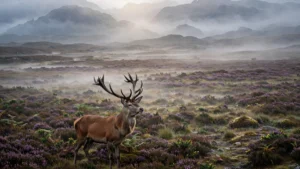
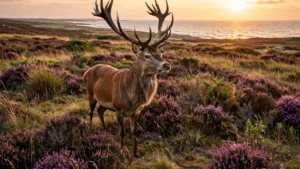
Red deer are Norway’s largest deer after the moose, and they are most numerous along the west coast, where mild winters and rich grazing suit them. Roe deer are smaller and far more widespread, living in farmland, gardens and forest edges across the south. Both are easiest to spot at the edges of fields in the early morning, when they come out to feed.
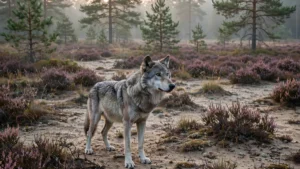
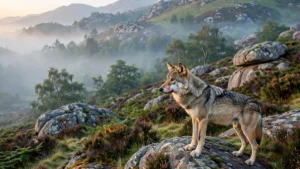
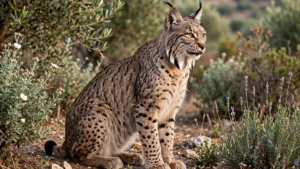
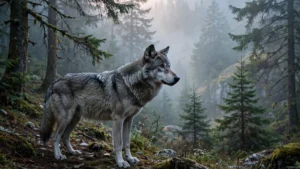
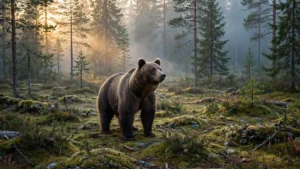
Among the predators, the Eurasian lynx is the most widespread, hunting roe deer in the forests of the south and east. Wolves are present in small numbers, mainly along the Swedish border, and wolverines live in the mountains of the north and centre. Brown bears are the rarest of all, with only a small population in the forests of the far east.
Birds of the Norwegian coast and mountains
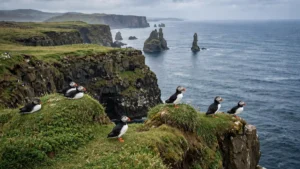
Norway’s seabird colonies are among the largest in the world. The Atlantic puffin is the best known, breeding on islands such as Røst in Lofoten, Runde off the west coast and the cliffs of northern Norway. Puffins come ashore in spring, raise a single chick in a burrow, and leave in late summer, so the season for seeing them runs roughly from May to August.
The white-tailed sea eagle is Norway’s largest bird of prey, with a wingspan of up to two and a half metres. It was once close to extinction in Norway and is now a success story, breeding along the whole coast. Lofoten and the northern fjords are the best places to see it, often from a boat, where the eagles swoop down to snatch fish from the surface. Golden eagles hunt over the mountains and open moorland instead, taking hares, grouse and the occasional young reindeer.
Inland, the mountains and forests hold capercaillie and black grouse, ptarmigan that turn white in winter, and a wide range of owls, woodpeckers and songbirds.
Whales, seals and life in the fjords
Norway’s cold, deep fjords and the rich waters off the north coast support a remarkable marine world. Humpback whales and orcas gather off the coast of Troms and Finnmark in winter, following shoals of herring into the fjords. Whale watching from Tromsø is now one of Norway’s best-known wildlife experiences, and the season runs roughly from November to January, when the light is low and the whales are close to shore.
In summer, minke whales, sperm whales and pilot whales are seen off the coast, and the waters around Andøya, in the Vesterålen islands, are famous for sperm whale watching. Harbour porpoises are common in the fjords all year, though they are small and shy and usually seen only as a brief roll at the surface. Seals are easier: grey seals and harbour seals haul out on skerries and beaches along the whole coast, and the largest colonies are in the north.
Smaller animals and the Arctic fox
Not all of Norway’s wildlife is large. The Arctic fox is one of the country’s most precious species, small, tough and now the focus of a major conservation programme. It lives on the high mountain plateaus and on Svalbard, changing from white in winter to brown-grey in summer. The mainland population fell sharply in the last century because of hunting and the decline of lemmings, its main prey, and it is now bred in captivity and released into the wild in a long-running recovery effort.
Lemmings themselves are a key species. In good lemming years, foxes, owls and other predators raise more young, and in poor years they struggle. This boom-and-bust cycle drives much of the ecology of the Norwegian mountains.
Beavers have returned to many Norwegian rivers after being hunted almost to extinction, and their dams now shape wetlands that support frogs, dragonflies and water birds. Otters hunt along the coast and in rivers, and they are a sign of clean water.

Where to see Norway’s wildlife
The best place depends on the species. Moose are easiest in the forests of the south and east, especially around Elverum, Trysil and the lake districts, where evening moose safaris run in summer. Reindeer are best on Hardangervidda and in the national parks of the central mountains. Red deer are a west coast species, and the islands and fjords of Møre og Romsdal are a good place to start.
For seabirds, the Lofoten islands, Runde and the Varanger peninsula in the far north-east are the classic destinations.
Svalbard is a world apart. It is the only place in Norway where you can see polar bears, walrus, Arctic foxes and vast seabird cliffs in a single trip, but it is also the most demanding. Polar bears are protected and dangerous, and anyone travelling outside the settlements must carry a rifle or travel with an armed guide.
| Species | Where to look | Best season | How likely is a sighting |
|---|---|---|---|
| Moose | Southern and eastern forests | May to September, dawn and dusk | Good — the most seen large mammal |
| Reindeer | Hardangervidda and central plateaus | Summer | Fair — shy and wide-ranging |
| Atlantic puffin | Røst, Runde, northern cliffs | May to August | Good in season |
| White-tailed sea eagle | Lofoten and northern fjords | All year | Good from a boat |
| Orca and humpback whale | Troms and Finnmark fjords | November to January | Good on a whale safari |
| Arctic fox | High mountains and Svalbard | Winter for white coat | Low — rare and elusive |
Best seasons for wildlife watching
Summer is the easiest season. The days are long, the seabirds are at their colonies, the moose are out in the clearings and the mountains are open for walking. The midnight sun in the north means you can watch wildlife late into the evening.
Autumn brings the deer rut, when red deer stags roar in the valleys and moose bulls are at their most visible and most bad-tempered.
Spring is the season of return. Puffins and other seabirds come back to their cliffs, the bears leave their dens, and the first calves appear. It is also the most sensitive season: nesting birds and newborn animals are easily disturbed, so keep to paths, keep dogs on a lead and give every animal more space than you think it needs.
Wildlife watching checklist
- Book a local guide for large predators, whales and Svalbard — they know where the animals are and the rules that protect them.
- Go out at dawn or dusk for mammals, and plan seabird trips for the May to August season.
- Bring binoculars, warm layers and waterproofs, even in summer — Norwegian weather changes fast.
- Keep at least 50 metres from seals, nesting birds and grazing deer, and far more from bears, moose with calves and whales.
- Never feed wild animals, and never use food or calls to lure them closer for a photograph.
- Leave no trace: take your rubbish home and keep to marked paths in sensitive habitats.
Frequently asked questions
What is the most common large animal in Norway?
The moose is the most common large mammal, with a population estimated in the tens of thousands across the southern and central forests. Roe deer are also widespread, and red deer are numerous along the west coast.
Are there polar bears in mainland Norway?
No. Polar bears live only on Svalbard and the surrounding sea ice, not on the Norwegian mainland. The mainland’s largest predator is the brown bear, which is rare and lives mainly in the forests near the Swedish and Finnish borders.
When is the best time to see puffins in Norway?
The puffin season runs roughly from May to August, when the birds are at their breeding colonies on islands such as Røst and Runde. They arrive in spring, raise one chick in a burrow, and leave for the open sea in late summer.
Is it safe to see moose in Norway?
Moose are usually calm, but they are large and powerful, and a cow with calves or a bull in the autumn rut can charge. Keep your distance, never walk between a cow and her calves, and never approach a bull in the autumn rut.
Can I see whales in Norway in winter?
Yes. Orcas and humpback whales gather in the fjords off Troms and Finnmark from roughly November to January, following shoals of herring.
Do I need a guide to see wildlife in Norway?
Not for common species such as moose, deer and seabirds, which you can find with patience and local advice.
Conclusion
Norway’s wildlife rewards patience: moose in the southern forests, puffins on the northern cliffs and polar bears on Svalbard are all within reach if you plan around the seasons, keep your distance and travel with local knowledge.
The next step is to pick one species and one season — an evening moose safari, a summer puffin trip, or a winter whale safari from Tromsø — and plan your visit around it.