
The rainbow trout species is the pink-striped cold-water fish that lives in mountain streams and clear lakes across the world. If you are asking what a rainbow trout is, the short answer is Oncorhynchus mykiss, a member of the salmon family that grows to about 30 to 60 centimetres, hunts insects drifting on the current, and wears a rosy band down its flank that gives it its name. The same fish can also live a double life: the sea-run form, called steelhead, swims out to the Pacific Ocean and returns to spawn, growing far bigger than its stay-at-home cousins.
Most people meet a rainbow trout on the end of a fly rod, and the meeting is usually a lively one. You cast a fly onto a clear mountain stream on a cool spring morning, and the water boils as the trout takes it, leaps into the air and runs for the nearest deep pool. That is the heart of this guide: how a single species of trout became the most famous freshwater fish in the world, and why it thrives in so many waters far from the place it came from.
Key takeaways
- The rainbow trout species is Oncorhynchus mykiss, a member of the salmon family Salmonidae, native to the Pacific coast of North America and north-east Asia.
- It is named for the rosy pink band down its flank, and it commonly grows to about 30 to 60 centimetres, with the world record standing at 19.1 kilograms.
- Rainbow trout are drift feeders that hold in the current and take insects, crustaceans and small fish as the water brings them past.
- Each spring the female digs a redd in clean gravel, lays 700 to 4,000 eggs, and the young hatch in three to four weeks.
- They are listed as Least Concern, are stocked and farmed around the world, and are mostly caught and released by anglers.
The rainbow trout species and their relatives
Rainbow trout belong to the family Salmonidae, the salmon family, a group of cold-water fish that live in the rivers, lakes and seas of the northern hemisphere. The family holds around 200 species, from small whitefish of about 20 centimetres to Atlantic salmon of about 150 centimetres, and it includes the salmon, the trout, the char and the grayling, some of the most famous fish in the world. The genus that holds the rainbow trout is Oncorhynchus, the Pacific salmon and trout, a name that comes from the Greek words for hooked and snout. Within the genus there are several species, and the rainbow trout is the most widespread and best known of them all. National Geographic keeps a short profile of the rainbow trout, and it covers the broad strokes well, but it leaves the detail to the imagination, and this guide fills the gaps it leaves behind, from the steelhead double life to the gravel redds and the record catch.
The rainbow trout, Oncorhynchus mykiss, is the lead species of this guide, and it is a good ambassador for the whole genus. It is a streamlined, silver-sided fish with a rosy band down its flank and a back speckled with black spots, and it is found in cold, clear rivers and lakes from Alaska to California in its native range, and in stocked waters on every continent except Antarctica today. It grows to about 30 to 60 centimetres in most waters, it is most active in cool water between about 10 and 16 degrees Celsius, and it is the fish that made fly fishing a sport in its own right, with rods, flies and river lodges built around it. If you have fished a cold mountain stream anywhere in the world, the fish that took your fly may well have been a rainbow trout.
| Type | Animal | Where it lives | Best-known food | Length or Weight |
|---|---|---|---|---|
| Family | Salmonids (Salmonidae) | Cold rivers, lakes and seas of the northern hemisphere | Insects, crustaceans and small fish | About 20 cm to 150 cm long |
| Genus | Pacific salmon and trout (Oncorhynchus) | Pacific rivers, lakes and seas | Insects, crustaceans and small fish | About 30 cm to 150 cm long |
| Species | Rainbow trout (Oncorhynchus mykiss) | Cold rivers and lakes worldwide | Insects, crustaceans and small fish | About 30 cm to 60 cm long |
| Species | Brown trout (Salmo trutta) | Rivers and lakes of Europe and Asia | Insects, crustaceans and small fish | About 30 cm to 60 cm long |
| Species | Atlantic salmon (Salmo salar) | North Atlantic rivers and seas | Small fish, crustaceans and insects | About 60 cm to 150 cm long |
| Species | Chinook salmon (Oncorhynchus tshawytscha) | Pacific rivers and seas | Small fish, crustaceans and squid | About 60 cm to 150 cm long |
The closest relative of the rainbow trout is the cutthroat trout, and the two are often confused by anglers who are new to the sport. Like the rainbow trout, the cutthroat is a member of the genus Oncorhynchus, but it is a fish of the high mountain streams of western North America, and it is marked by two red slashes under its jaw, which is how it got its name. The cutthroat is smaller, usually 20 to 40 centimetres, and its colours are softer, with a paler body and fewer spots than the rainbow trout. Like the salmon, the rainbow trout is a fish that changes with the season, but the salmon changes its whole body as it moves from river to sea and back again, while the rainbow trout changes only its colours, the pink band deepening to red in the breeding season, a shift that helps it win a mate rather than survive a migration.
Within the genus, the species sort themselves by the water they like. The rainbow trout is the cool-water fish of clear streams and lakes, at home from Alaska to California and in stocked waters worldwide. The Chinook salmon is the giant of the genus, a fish of the Pacific that grows to about 60 to 150 centimetres and is the largest salmon of all. The brown trout is the European cousin, a fish of about 30 to 60 centimetres that lives in rivers and lakes from Europe to Asia, and the Atlantic salmon is the traveller, a fish of about 60 to 150 centimetres that feeds in the North Atlantic and returns home to spawn.
What a rainbow trout looks like
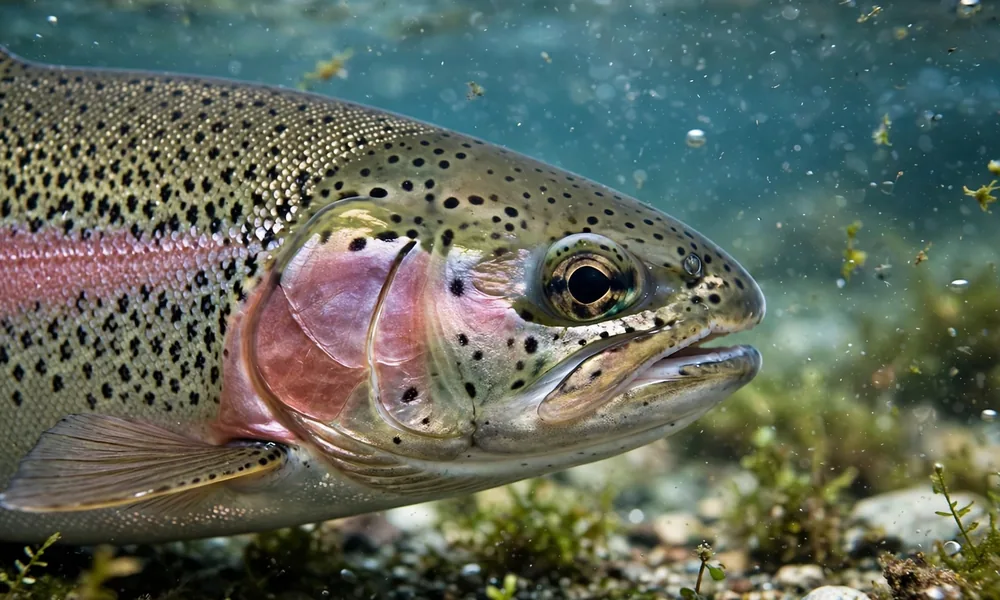
A rainbow trout is a streamlined, powerful fish, built for holding in fast water rather than for long chases. Most adults measure between 30 and 60 centimetres from snout to tail, and a good fish weighs 0.5 to 2 kilograms, though a lake fish of 3 or 4 kilograms is a prize, and the world record of 19.1 kilograms has stood since 2009. The body is torpedo-shaped, deepest just behind the head, and it tapers to a broad, square tail that gives the fish its sudden, driving power. The back is dark green or blue-grey, fading to a silvery belly, and a rosy pink band runs along the flank from the gill to the tail, broken in places into a row of black spots that cover the back, the sides and the tail fin.
The head is small and pointed, and the mouth is the feature that tells you the fish is a hunter of small prey. The jaws are lined with small, sharp teeth, and when the fish opens its mouth it can take in insects, crustaceans and small fish that drift past on the current. The teeth are there to grip rather than to cut, and they are backed by a small adipose fin on the back, a fleshy fin with no rays that marks the fish as a member of the salmon family. The dorsal fin is set halfway along the back, and the tail fin is broad and slightly forked, giving the fish its balance in fast water.

The colours change with the water the fish lives in. Fish in clear streams are brighter, with a vivid pink band and bold black spots, while fish in deep lakes are paler, with a silvery body and a fainter band, and sea-run steelhead are almost entirely silver, with the pink band faded to a faint blush. Young fish are paler still, with a row of dark bars down their sides, called parr marks. Males and females look much alike outside the breeding season, though the males grow a hooked jaw, called a kype, and a deeper red band when they are ready to spawn, and the biggest trout in any river are almost always female.
Compared with its cousins, the rainbow trout is easy to tell apart once you know what to look for. The brown trout has a browner body with red and black spots, and no pink band, and the cutthroat trout has red slashes under its jaw and a paler body. Like the Atlantic cod, the rainbow trout is a cold-water fish that sits near the top of its food chain, but the cod is a sea fish that roams cold northern waters in schools, while the rainbow trout is a river fish that holds a patch of current and waits for its food to come to it.
Where rainbow trout live
Rainbow trout live in the cold, clear waters of the world, and they are at home in mountain streams, rivers and lakes where the water is cool and rich in oxygen. Their native range runs along the Pacific slope of North America, from the Kuskokwim River in Alaska in the north, down through British Columbia and the western United States, to the Otay River in California in the south, with a second native population in north-east Asia, in Kamchatka. They favour cold water, usually between about 10 and 16 degrees Celsius, and they are rarely found in warm, slow rivers, where the oxygen is low. Wherever there is cold water, clean gravel and something to eat drifting on the current, there is a good chance a rainbow trout is nearby.
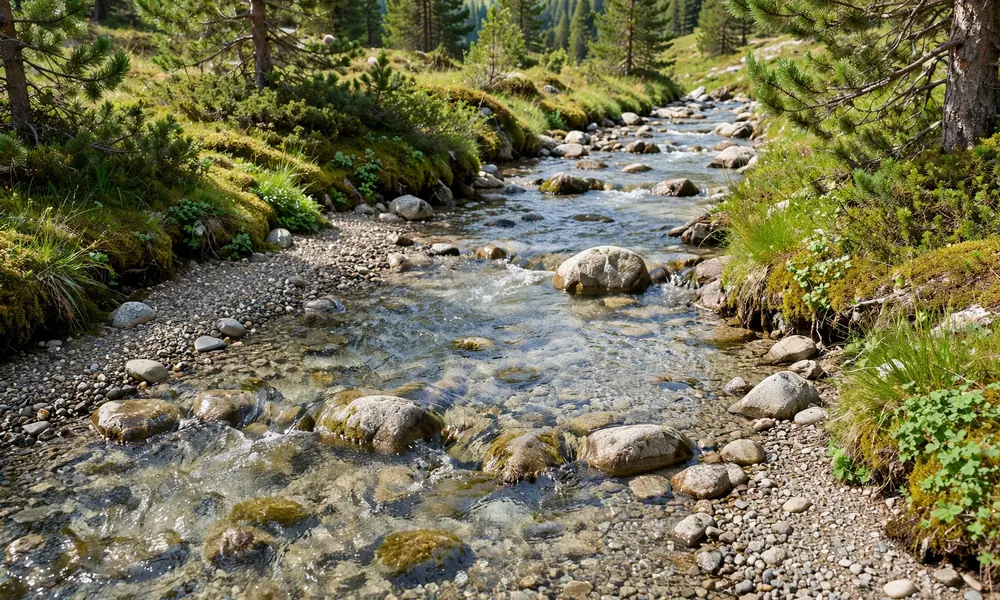
The habitat they choose is the moving water, and they are rarely found far from the current. Most trout live in water between 0.5 and 3 metres deep, in the runs and pools of a river, where the food is richest and the shelter is thickest. They favour places with plenty of cover, undercut banks, boulders and fallen trees, which give them both a place to hide from the herons and ospreys that hunt them from above, and a break from the current where they can rest. A rainbow trout spends much of its life within a small stretch of river, sometimes no larger than a few hundred metres, and it knows every boulder and deep pool in that stretch.
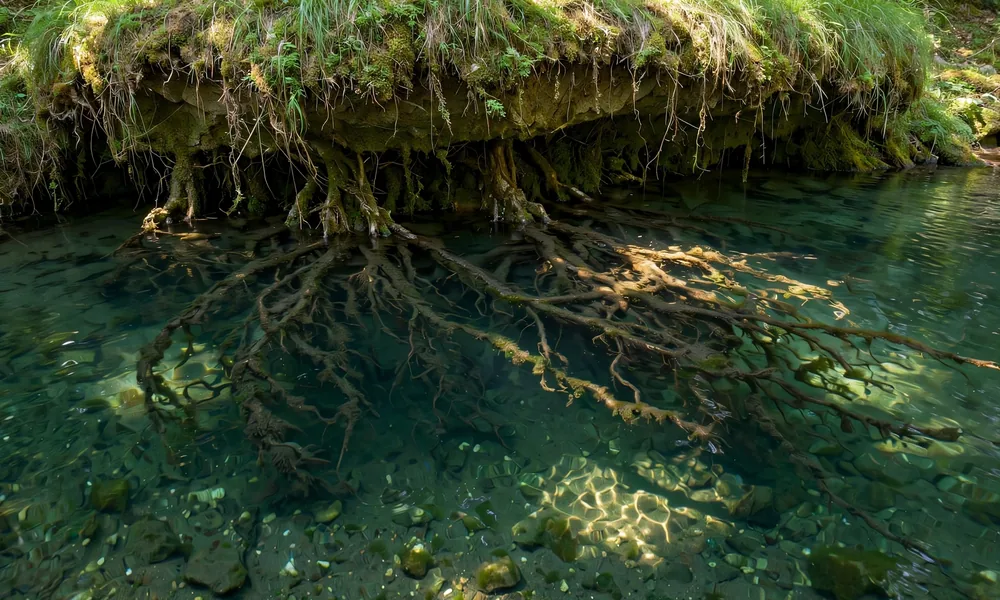
Depth matters, but not in the way it does for a deep-water fish. Rainbow trout are shallow-water animals in rivers, and most of them stay above 3 metres, where the sunlight reaches the gravel and the insects are richest. In lakes they may move deeper, to 10 or 20 metres, where the water is cooler in summer, and in the sea the steelhead roam down to 200 metres, feeding on fish and squid. The water temperature matters too: rainbow trout need cold, oxygen-rich water, and they are stressed when the water rises above 20 degrees Celsius, and they are absent from warm lowland rivers altogether, except where they have been stocked and the water stays cool.
The rainbow trout has travelled far beyond its native range, and it now lives on every continent except Antarctica, carried there by anglers and fish farmers. It has settled in rivers and lakes from New Zealand to Chile to South Africa, and it is one of the most widely stocked fish in the world. In some of those places it has become a problem, eating native fish and insects that have no defence against it, and in others it is a valued sport fish and a farmed food fish. Like the largemouth bass, the rainbow trout is a freshwater predator that has been moved around the world by people, but the bass is a warm-water fish of weedy lakes that hunts by ambush, while the rainbow trout is a cold-water fish of clear streams that hunts by drift, and it is the drift feeder, not the ambush hunter, that has spread so far.
What rainbow trout eat
Rainbow trout are drift feeders, not grazers, and their diet is written on the river itself. The everyday food is insects, and a trout will eat almost any insect it can find, from mayflies and caddisflies to stoneflies and midges, both the larvae that live on the river bed and the adults that fall onto the surface. They also eat crustaceans, small fish, fish eggs and terrestrial insects that fall into the water, and a big trout will take a small fish or a crayfish without a second thought. A river full of trout keeps the numbers of smaller insects in check, which is one reason they are stocked in so many waters.
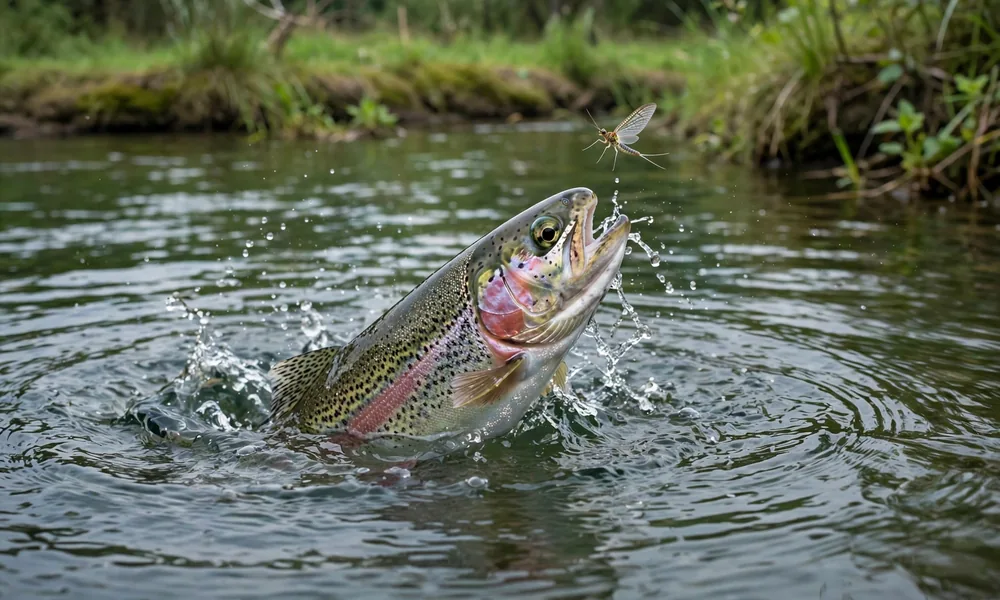
What sets the rainbow trout apart is how it hunts. It does not chase its prey across open water, and it does not hunt in a pack. It holds in the current, facing upstream, and it watches for food to drift down towards it. When the moment comes, it darts forward, takes the insect in its mouth and returns to its place in the current, and the whole strike takes a fraction of a second. Like the goldfish, the rainbow trout is a fish that feeds on what the water brings it, but the goldfish is a slow, pond fish that picks at food on the bottom, while the rainbow trout is a fast, river fish that wins its meals in the current, and it is the current, not the pond, that feeds it.
Feeding follows the rhythm of the day and the season, and it is busiest at dawn and dusk. Rainbow trout feed most actively in the early morning and the late evening, when the light is low and the insects are hatching on the surface, and they rest in the heat of midday, holding in the shade of an undercut bank or a deep pool. In spring and autumn, when the water is cool and the insects are plentiful, they feed hard. In winter they feed little, and a trout in cold water may go days without eating, holding near the bottom and waiting for the spring.
How rainbow trout behave
Rainbow trout are daytime fish, and their day is a quiet round of holding, rising and moving to a new patch of current. They wake at dawn, leave the deep pool where they spent the night, and move into the runs to feed, and they spend the day working the current in a slow, unhurried way, never rushing, never chasing far. They are strong swimmers over distance, and they need to be: their life is lived in moving water, and speed matters when the current is strong and the food is drifting past. When a larger fish passes, a rainbow trout will often turn sideways and spread its fins, and if that fails it will dart into the nearest deep pool and wait.

The most famous behaviour in the rainbow trout is the leap. When a trout takes a fly, it often jumps clear of the water, shaking its head from side to side, trying to throw the hook. The leap is a burst of pure power, and it is the moment every trout angler waits for, the fish silver-pink in the air, water flying from its gills, before it crashes back into the river and runs for the deep pool. The leap is not a trick, but a defence, and a trout that has been caught before will sometimes run deeper instead, which is why the biggest trout in a river are often the hardest to catch.
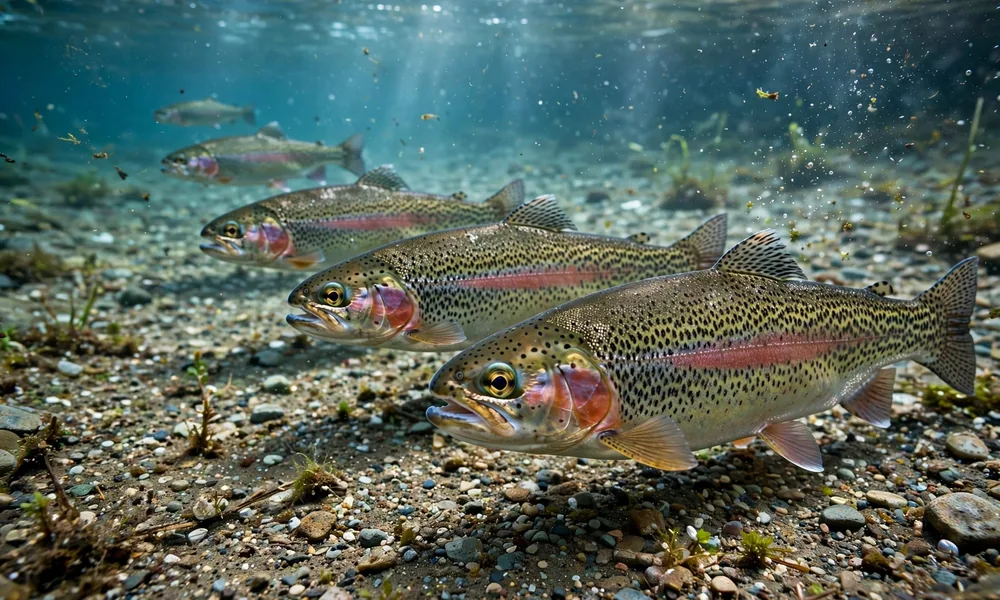
When a rainbow trout is threatened, its first response is to freeze, relying on its silvery back and broken band to break up its outline against the gravel, and if that fails it will dart into the nearest deep pool and stay there until the danger passes. Rainbow trout have no venom and no bite that matters to a person. A trout handled roughly loses the slime that protects its skin, which is why anglers who release their fish wet their hands first.
Breeding and life cycle
Rainbow trout breed in spring, when the water warms to around 6 to 12 degrees Celsius, and the timing is set by the temperature rather than the calendar. The female arrives first at the spawning gravel, and she digs a redd in the clean gravel, turning on her side and beating her tail against the stones until she has scooped out a shallow hollow. The redd is a round pit, usually 30 to 60 centimetres across, in water 0.3 to 1 metre deep, and it sits in a riffle where the current is steady, so the water will flow over the eggs and keep them supplied with oxygen. A female that has dug a good redd will guard it fiercely, chasing away other fish that come too close.

The male arrives when the redd is ready, and the female lays her eggs in the hollow while the male releases his milt over them. A large female can lay 700 to 4,000 eggs in a single spawning, and she may dig more than one redd, leaving the eggs to the river once they are covered with gravel. The eggs are small and orange, and they settle into the gravel, where the current keeps the water moving over them. The eggs hatch in three to four weeks, depending on the temperature, and the young alevins stay in the gravel, living off their yolk sacs, until they are ready to swim up and feed.

Growth is fast in the first year, and a young trout can reach 10 to 15 centimetres by the end of its first summer, feeding on tiny insects and crustaceans before it turns to larger prey. It reaches breeding size in its second or third year, when it is close to 30 centimetres long, and the lifespan in the wild is often 4 to 6 years, with the oldest steelhead living up to 11 years. The young are independent from the day they leave the gravel, and the sea-run steelhead leave the river as two-year-olds, spend two to three years in the ocean, and return to the stream where they were born to spawn.
Conservation status
The rainbow trout is listed as Least Concern by the International Union for Conservation of Nature, and the reasoning is straightforward: it has a huge range, it is still common in most of its waters, and it breeds well enough to replace itself. That broad picture hides a more worrying local one, and it is worth understanding both sides, because the rainbow trout is one of the freshwater fish most tied to the fate of the rivers it lives in. A fish that spawns in clean gravel cannot live where the gravel is choked with silt.
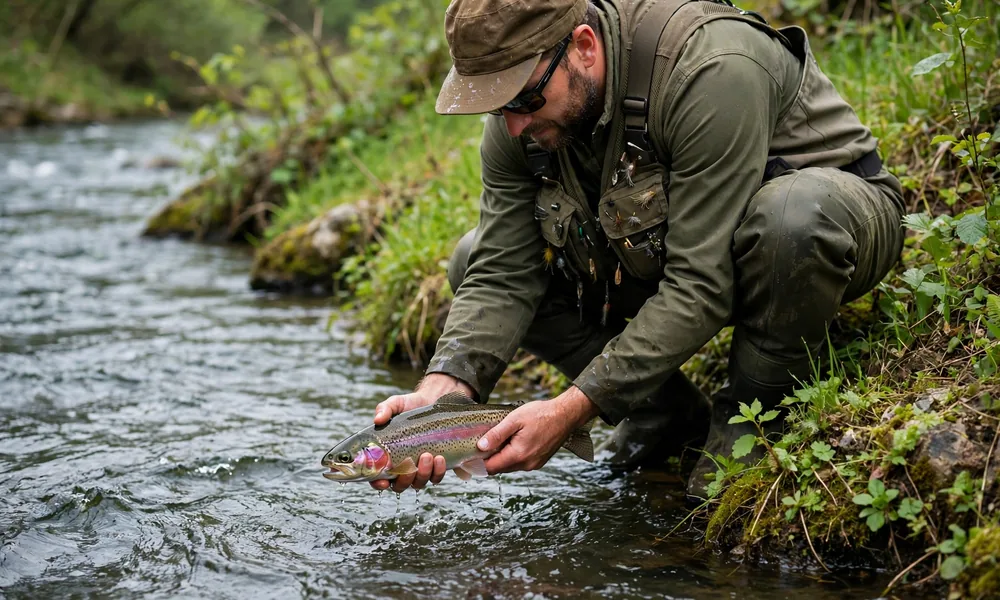
The main pressure is the loss of habitat. When a river is dammed, or its banks are cleared of trees, or its gravel is choked with silt from farming and building, the trout lose the cold water they need and the clean gravel they spawn in. Stocking the trout outside its native range is a second pressure, as it eats native fish and insects that have no defence against it. Fishing is a third, and a river that loses its biggest females loses its best breeders, which is why so many fisheries set size limits and encourage anglers to release the largest fish.
The most useful conservation work is practical, and it is the same work that helps the whole river. Protecting the river banks and planting trees keeps the water cool and shaded, and protecting the gravel from silt keeps the spawning beds clean for the fish that use them. Catch-and-release fishing, with size limits that protect the biggest females, gives the trout a safe patch to feed and breed in. Some native subspecies, such as the California golden trout, are threatened or endangered, and they are a reminder that a fish with a worldwide range can still be in trouble at home.
Best seasons for rainbow trout watching
The best time to look for a rainbow trout is the spring and the early summer, when the water is warming and the fish are moving into the shallows to spawn. In the northern United States that usually means the months from about April to June, when the water reaches 6 to 12 degrees Celsius and the females are digging redds in gravel you can see from the bank. In the south the season starts earlier, from about March, and the fish are active for longer, feeding hard through the cool months. Rainbow trout are present in the river all year round, except for the steelhead, but a cool, calm day in spring will show you far more fish than a hot day in midsummer, when the water is warm and the trout are holding deep.
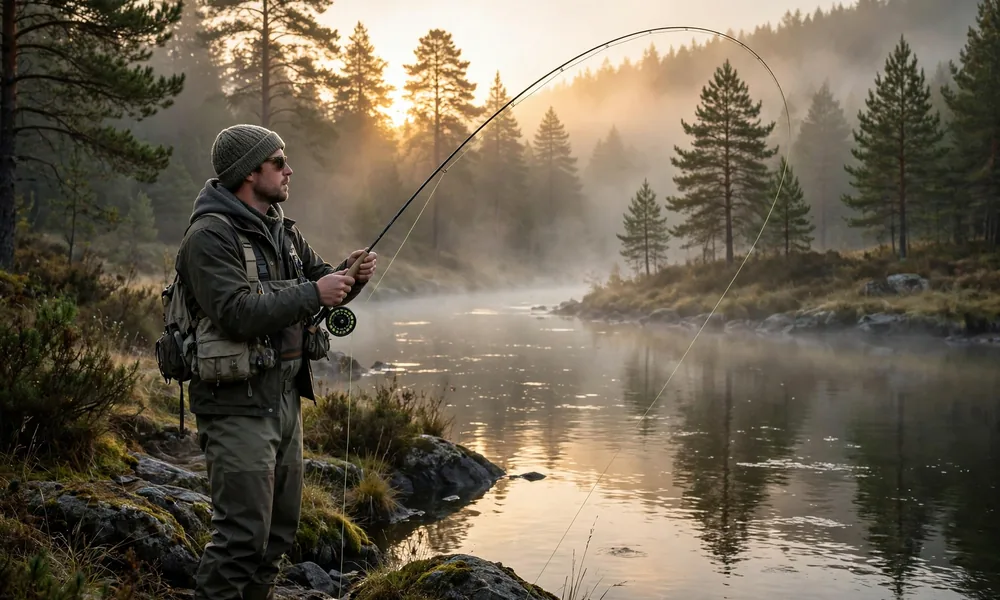
The best hours are the dawn and the dusk, when the rainbow trout are feeding actively and the light is good for seeing them. From about six o’clock until nine in the morning, and again from about five until eight in the evening, the trout are out in the runs, rising to insects on the surface, and they are at their most approachable then. A slow walk along the bank, with the sun behind you and a pair of polarised sunglasses, is all you need, and the fish will often come close enough to see the pink band clearly, if you move gently.
Staying safe around rainbow trout
A rainbow trout is not dangerous to people, and there is no safety warning that belongs to the fish itself. It has no venom, it does not bite, and it will not chase or threaten a swimmer. The safety rules for watching rainbow trout are the rules of the river and the water: watch the water, watch the weather, and respect the fish that you came to see. Never wade into deep water without knowing what is under your feet, never fish alone from a boat without a life jacket, and never handle a fish with dry hands, because a dry hand strips the slime that protects its skin.
There are a few practical points for the water itself. Fish with a buddy, stay within your depth, and keep an eye on the weather, which can change fast on a mountain river, with rain and rising water in minutes. Wear a life jacket when you are in a boat, and keep clear of the propeller when the engine is running. If you are wading, watch for slippery rocks and sudden drop-offs, and wear shoes that grip. A rainbow trout will not hurt you, but the water can, and the sensible approach is to enjoy the fish and respect the river they live in.
Rainbow trout watching checklist
A little preparation turns a morning on the river into a real chance of seeing rainbow trout at their best, rising to insects in clear, cold water.
- A visit in spring or early summer, when the water is cool and the trout are moving into the shallows to spawn.
- A dawn or dusk trip, when the rainbow trout are out feeding and the light is good.
- A clear mountain stream with clean gravel, undercut banks and deep pools, where the fish hold and feed.
- A slow walk along the bank, watching for a dark shape holding in the current or a rise on the surface.
- Polarised sunglasses that cut the glare, so you can see into the water and spot the fish.
- A life jacket and a buddy, so that a day on the water stays safe from start to finish.
- Respect for the fish and the river, keeping your distance, wetting your hands before handling a trout, and leaving the bank as you found it.
Frequently asked questions
How big do rainbow trout get?
Most rainbow trout measure between 30 and 60 centimetres from snout to tail, and a good fish weighs 0.5 to 2 kilograms. A lake fish of 3 or 4 kilograms is a prize, and the world record stands at 19.1 kilograms, a fish of 42 pounds 2 ounces caught in Lake Diefenbaker in Saskatchewan in 2009 that has never been beaten.
What do rainbow trout eat?
A rainbow trout eats insects, crustaceans, small fish, fish eggs and terrestrial insects that fall into the water. It is a drift feeder that holds in the current, facing upstream, and takes food as the water brings it past. The strike takes a fraction of a second, and the trout then returns to its place in the current to wait for the next mouthful.
What is a steelhead?
A steelhead is the sea-run form of the rainbow trout, and it is the same species, Oncorhynchus mykiss, living a different life. The young steelhead leaves its home river as a two-year-old, swims out to the Pacific Ocean and spends two to three years feeding on fish and squid, growing far bigger than its stay-at-home cousins, to 50 to 100 centimetres. It then returns to the stream where it was born to spawn, and its silver body colours up with a pink band.
Are rainbow trout dangerous?
No, rainbow trout are not dangerous to people. They have no venom, they do not bite, and they will not chase or threaten a swimmer. Their whole defence is built on being hard to see, hard to catch and hard to hold, and their first response to a threat is to freeze or to dart into the nearest deep pool. The safety rules for watching them are the rules of the river itself: watch the water, watch the weather, and wear a life jacket in a boat.
Can you keep a rainbow trout in an aquarium?
You can, but it is hard, and most people should not try. A rainbow trout grows to 30 to 60 centimetres, it needs a very large tank with cold, well-oxygenated water, and it eats live insects and small fish, which makes it expensive and demanding to keep. It is also illegal to keep one in some places without a permit, and a trout that outgrows its tank must never be released into a river where it does not belong. A trout belongs in a river, not in a living room.
How is this guide different from the pufferfish guide?
This guide covers the rainbow trout, a cold-water river fish of 30 to 60 centimetres that hunts by drift feeding in mountain streams and spawns in gravel redds each spring, while our pufferfish guide covers a round tropical reef fish that defends itself by inflating into a spiky ball and carries tetrodotoxin in its skin. One is a fast, silver fish you watch from the bank at dawn; the other is a slow, round fish of the coral reef you watch from a respectful distance.
Conclusion
The rainbow trout species is a reminder that a fish does not need to live in the sea to be unforgettable. A pink band, a leap clear of the water and a female that digs her redd in clean gravel have made the rainbow trout the most famous freshwater fish in the world.
If you go looking for one, go on a cool, calm day in spring, go at dawn or dusk, and walk slowly along a clear river bank with the sun behind you. Find the deep pool, watch for a silver shape holding in the current, and you will have met the rainbow trout that turns a quiet river into a place of sudden, silver-pink excitement.














