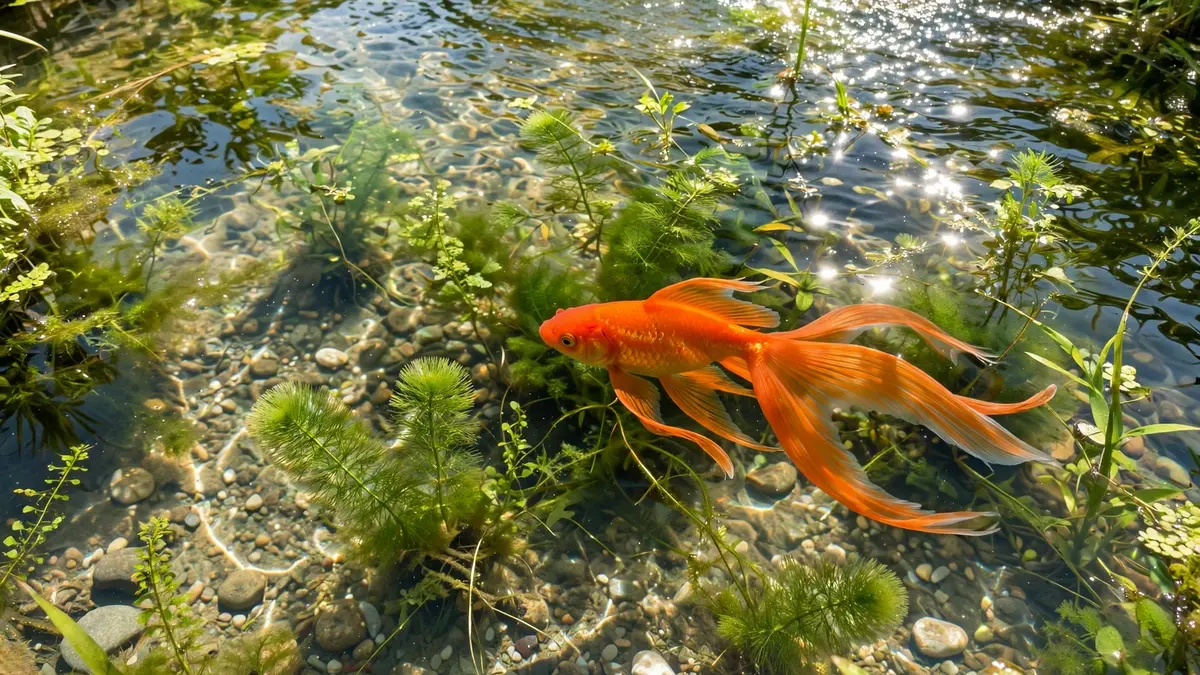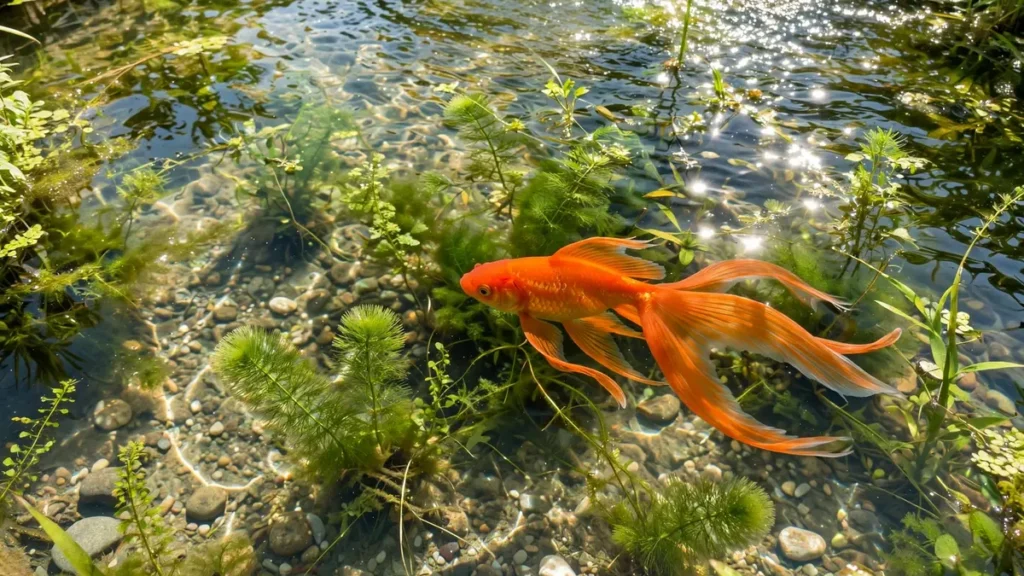
The goldfish species is a single species, Carassius auratus, an orange pond fish of China, and the most popular pet fish in the world. If you are asking how many goldfish species there are, the answer is one: there is only one goldfish species in the world, though it has been bred into more than a hundred breeds, and every goldfish alive today belongs to it.
The goldfish belongs to the family Cyprinidae, the carp family, and it comes from the slow rivers and lakes of East Asia, where wild goldfish are olive green. Its bright orange colour, its flowing fins and its calm nature make it one of the most recognisable fish on Earth.
Key takeaways
- There is only one goldfish species, Carassius auratus, and it has been bred into more than a hundred breeds, from the common goldfish to the oranda and the ranchu.
- Goldfish were first bred in China more than 1,000 years ago, making them one of the oldest domesticated fish.
- Goldfish can remember things for months, and the old story of a three-second memory is a myth.
- Goldfish are omnivores that eat plants, insects and tiny crustaceans, and they have no true stomach.
- Goldfish are listed as Least Concern, though released pet goldfish have become invasive in lakes around the world.
What makes a goldfish a goldfish
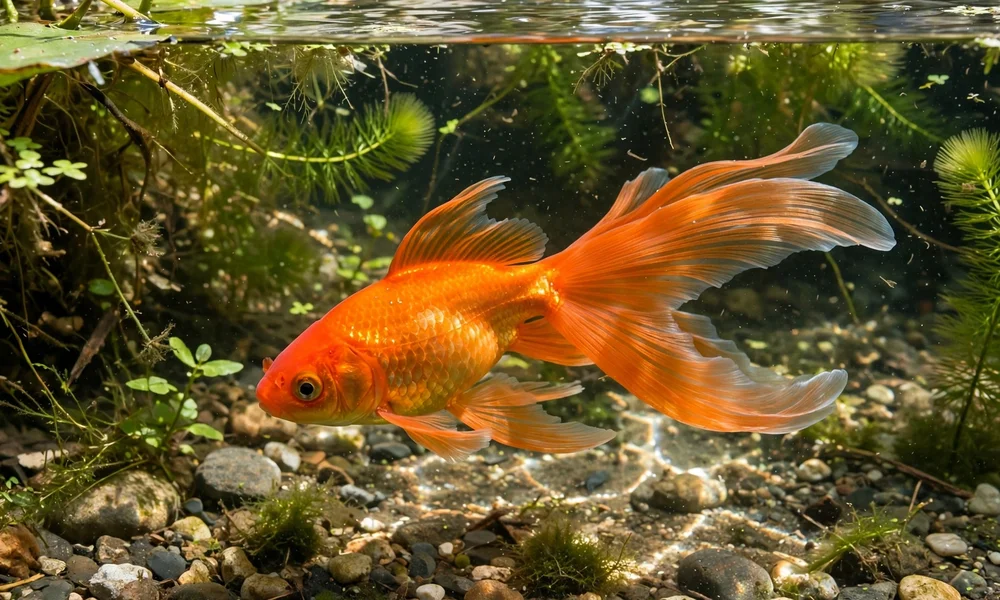
A goldfish is a small deep-bodied carp with a blunt head, a forked tail, and bright orange, red, white or black colours, and it measures roughly 15 to 30 centimetres long and usually weighs up to 1 kilogramme, depending on the breed. The common goldfish is the plainest breed, while the fancy breeds have double tails, bubble eyes or head growths.
The colour defines the goldfish: wild goldfish are olive green and bronze, and the orange colour was bred by Chinese fish keepers more than 1,000 years ago, who kept the rare orange fish in ponds and bred them together. Like other clownfish, the goldfish is a small colourful fish, but it is a freshwater fish, not a reef fish, and it lives in ponds and slow rivers instead of the sea.
The goldfish species and their relatives
There is one goldfish species, Carassius auratus, and it has been bred into more than a hundred breeds. The common goldfish is the plainest breed, closest to the wild fish, and the comet goldfish is a fast swimmer with a long forked tail. The fantail goldfish has a double tail, the oranda has a raspberry-like growth on its head, and the ranchu has a curved back and no dorsal fin.
The common carp is the goldfish’s most famous relative, a large carp of the rivers of Europe and Asia, while the crucian carp is a small carp of the ponds of Europe. The koi is a colourful breed of the common carp, bred in Japan, and the Prussian carp is a small carp of Europe and Asia. The tench is a green carp of the lakes of Europe, and the bitterling is a tiny carp that lays its eggs inside freshwater mussels.
| Type | Animal | Where it lives | Best-known food | Length or Weight |
|---|---|---|---|---|
| Species | Goldfish (Carassius auratus) | Ponds and slow rivers of East Asia | Plants, insects and crustaceans | 15 to 30 cm, up to 1 kg |
| Close relative | Common carp | Rivers and lakes of Europe and Asia | Plants, insects and crustaceans | 30 to 80 cm, 2 to 14 kg |
| Close relative | Crucian carp | Ponds and lakes of Europe | Plants, insects and crustaceans | 15 to 25 cm, up to 1.5 kg |
| Close relative | Koi carp | Ponds of Japan and worldwide | Plants, insects and pellets | 30 to 90 cm, 2 to 10 kg |
| Close relative | Prussian carp | Slow rivers of Europe and Asia | Plants, insects and crustaceans | 15 to 30 cm, up to 3 kg |
| Close relative | Tench | Lakes and slow rivers of Europe | Snails, insects and plants | 20 to 70 cm, up to 7.5 kg |
| Close relative | Bitterling | Slow rivers of Europe and Asia | Plants and tiny animals | 5 to 9 cm, up to 10 g |
How goldfish live
Goldfish are creatures of the still pond. A goldfish lives in a small group, swimming slowly through the water plants by day and resting near the bottom by night, and it can live in a pond for decades if the water stays clean. Like other seahorses, it is a small fish that eats almost constantly, but it is a strong swimmer, and it can dart away from danger in a flash of orange.
Plants, insects and tiny crustaceans make up most of the diet, along with algae and detritus from the pond floor, and a goldfish eats by rooting in the mud with its mouth, sucking up food and spitting out the gravel. It has no true stomach, so it must eat little and often, grazing all day, and it can survive the winter under the ice, slowing down and barely eating until spring.
Breeding happens in spring, when the water warms, and the female lays hundreds of eggs on water plants, where the male fertilises them. The eggs hatch in a few days, and the tiny fry hide among the plants, eating microscopic animals until they are big enough to eat like adults. The young grow fast in their first year, and they take on their orange colour as they grow, though some stay olive green. Goldfish live for around 10 to 15 years in a pond, and up to 40 years or more in a good pond.
Where goldfish live
The goldfish lives in the slow rivers and lakes of East Asia, from China to Japan, and it is most common in the ponds and rice fields of China, where it was first bred more than 1,000 years ago. Pet goldfish now live in ponds and tanks all over the world, and feral goldfish live in lakes and rivers on every continent except Antarctica.
Still water is the key requirement. A goldfish needs calm water with plants to hide in and spawn on, and plenty of insects and algae to eat, so it stays in the shallows of ponds and slow rivers, and when the water warms in spring the goldfish spawn among the plants. It depends on the water staying clean, and it suffers when ponds are overcrowded or the water turns green with algae.
The species is listed as Least Concern, and wild goldfish are still common in East Asia. The main pressures are the loss of wetlands to farming and building, and the release of pet goldfish, which have become invasive in lakes around the world, where they stir up the mud, eat native plants and spread disease to wild fish.
Best seasons for goldfish watching
There is no closed season, because goldfish are active all year, but the best time to look for them depends on where you go. In garden ponds the best months are often May to September, when the water is warm and the goldfish feed near the surface. In wild lakes the best months are often April to June, when the goldfish spawn among the plants.
Staying safe around goldfish
A goldfish is a wild animal with delicate fins and a fragile body, and it can be killed by a single rough touch, though goldfish cannot hurt people at all. Keep your distance, never pick up a goldfish, and never try to touch or feed one in the wild, because a goldfish that is handled may lose its protective slime coat and die of infection. If you see goldfish in a pond, watch from the bank, and never release a pet goldfish into a lake, because released goldfish become invasive and harm native fish.
Goldfish watching checklist
A little preparation turns a pond visit into a real chance of seeing a goldfish, so pack for sun, still water and long quiet hours.
- Polarised sunglasses, for cutting the glare and seeing into the water.
- A camera with a zoom lens, because goldfish should always be watched from a distance.
- Sun cream and a hat, because the best watching is in the bright midday sun.
- A booked visit to a garden or park with ponds where goldfish are kept.
- A plan to be out in the morning, when the goldfish are most active and feeding.
- Patience and silence, because goldfish are shy animals and a noisy group will send them to the bottom.
- A field guide to freshwater fish, for telling a goldfish from a crucian carp at a glance.
Frequently asked questions
How many goldfish species are there?
There is one goldfish species, Carassius auratus. It has been bred into more than a hundred breeds, from the plain common goldfish to the fancy oranda and ranchu, but they are all the same species, and wild goldfish are olive green.
Do goldfish really have a three-second memory?
No. The three-second memory is a myth, and goldfish can remember things for months. Experiments have shown that goldfish can learn to find food in a maze, remember feeding times, and recognise the people who feed them.
How long do goldfish live?
Goldfish live for around 10 to 15 years in a pond, and up to 40 years or more in a good pond with clean water and plenty of space. The oldest recorded goldfish lived to 43 years, and goldfish in small bowls live much shorter lives than goldfish in ponds.
Can you keep a goldfish as a pet?
Yes. Goldfish are the most popular pet fish in the world, and they have been kept in ponds and tanks for more than 1,000 years. A pet goldfish needs clean water, plenty of space and a filter, and it should never be kept in a small bowl or released into a lake.
How is this guide different from the seahorse species guide?
This guide covers the single goldfish species, an orange pond fish bred in China into more than a hundred breeds, while our seahorse species guide covers more than forty seahorse species, tiny upright fish that cling to seagrass and whose males carry the babies. The goldfish is up to 30 centimetres long and lives in ponds, and the seahorse is up to 35 centimetres long and lives in the sea.
Are goldfish endangered?
Goldfish are listed as Least Concern, so they are not classed as endangered. Wild goldfish are still common in East Asia, though released pet goldfish have become invasive in lakes around the world, where they harm native fish.
Conclusion
The goldfish species shows how much beauty one fish can hold: a single species of pond carp, bred into more than a hundred breeds, with flowing fins and bright colours, living in the ponds of the world.
If you go looking for one, go in the summer to a garden pond, go quietly, and go with patience. Watch a goldfish glide through the water plants and you will understand why it has earned its place as the most loved fish on Earth, and why keeping its water clean matters most.