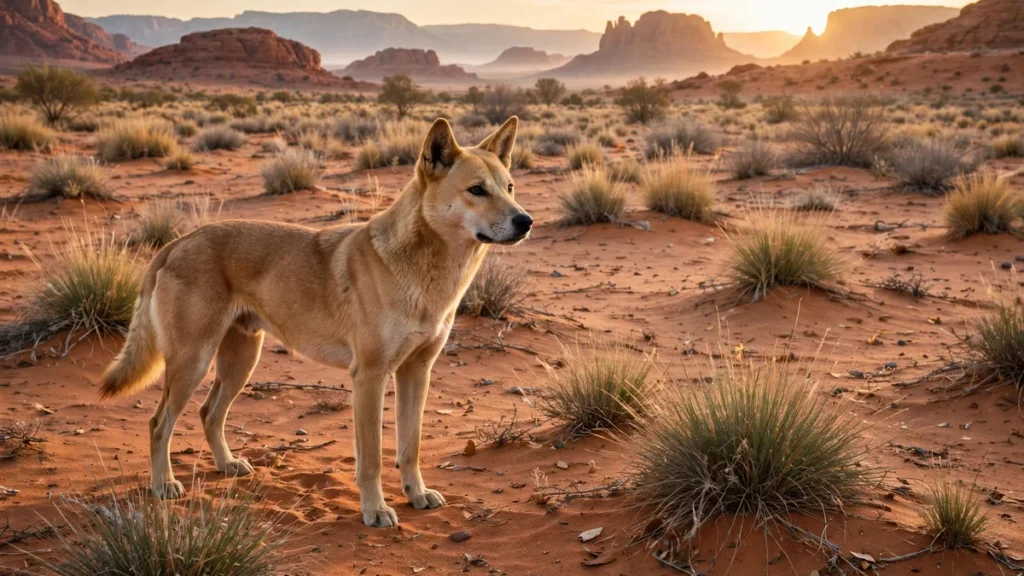
The dingo species is a single species, Canis dingo, a wild dog of the Australian outback, and the largest land predator on the continent. If you are asking how many dingo species there are, the answer is one: there is only one dingo species in the world, and every dingo alive today belongs to it, though scientists still debate whether the dingo is its own species or a subspecies of the wolf.
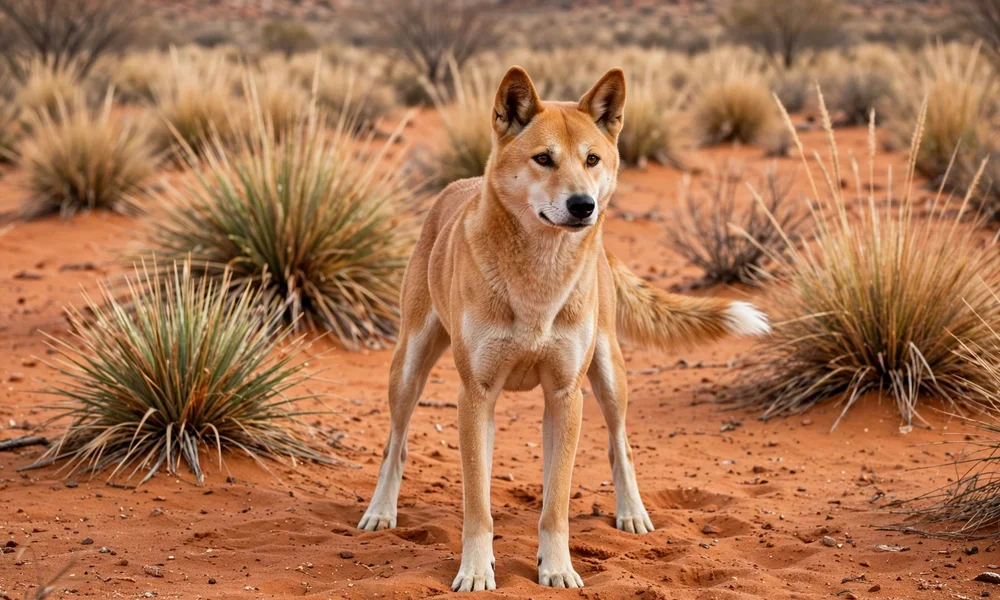
The dingo belongs to the family Canidae, the dog family, and it lives across mainland Australia, from the deserts of the centre to the forests of the east. Its sandy ginger coat, its white paws and tail tip, its pointed ears and its haunting howl make it one of the most famous animals of the outback.
Key takeaways
- There is only one dingo species, Canis dingo, and it arrived in Australia around 4,000 years ago with seafaring people from Asia.
- Dingoes live in packs of 3 to 12 animals, led by an alpha pair, and they howl to keep in touch across the desert.
- Dingoes hunt kangaroos, wallabies, rabbits and rodents, and they can hunt alone or in a pack.
- Dingoes are mostly nocturnal in the desert, resting in shady dens by day and hunting in the cool of the night.
- Dingoes are listed as Vulnerable, and interbreeding with domestic dogs is the main threat to pure dingoes.
What makes a dingo a dingo
A dingo is a medium-sized wild dog with a sandy ginger coat, white paws and tail tip, pointed ears, a narrow muzzle and a bushy tail, and it measures roughly 72 to 111 centimetres long and usually weighs between 13 and 24 kilogrammes, with males larger than females. Desert dingoes are smaller and paler than the dingoes of the eastern forests, which are larger and darker.
The howl defines the dingo: a long rising and falling howl that carries for kilometres across the desert, used to call the pack together and to warn other packs away. Dingoes rarely bark like domestic dogs, and they howl instead, often at dusk and dawn. Like other wolves, the dingo has a powerful sense of smell and excellent hearing, and it can hear a kangaroo moving in the dark from hundreds of metres away.
The dingo species and their relatives
There is one dingo species, Canis dingo, and it is the only wild dog of Australia. Dingoes in different parts of Australia form separate packs, from the deserts of the centre to the forests of the east, but they are all the same species, and the packs defend territories of up to 100 square kilometres. The New Guinea singing dog is the dingo’s closest relative, a wild dog of the New Guinea highlands that sings in chorus.
The grey wolf is the dingo’s most famous relative, the ancestor of the domestic dog and the largest wild dog in the world, while the coyote is a smaller dog of North America that hunts in pairs. The red fox is a small dog of the northern hemisphere that has spread to Australia, and the African wild dog is a pack hunter of the African savanna. The dhole is a pack hunter of the forests of Asia, and the domestic dog is the dingo’s tame cousin, descended from wolves thousands of years ago.
| Type | Animal | Where it lives | Best-known food | Length or Weight |
|---|---|---|---|---|
| Species | Dingo (Canis dingo) | Mainland Australia | Kangaroos, wallabies and rabbits | 72 to 111 cm, 13 to 24 kg |
| Close relative | Grey wolf | Northern hemisphere | Deer, elk and moose | 1 to 1.6 m, 30 to 50 kg |
| Close relative | Coyote | North and Central America | Rabbits, rodents and deer | 81 to 94 cm, 7 to 21 kg |
| Close relative | Red fox | Northern hemisphere | Rabbits, rodents and birds | 45 to 90 cm, 3 to 14 kg |
| Close relative | African wild dog | Savanna of sub-Saharan Africa | Antelopes and small mammals | 76 to 102 cm, 18 to 36 kg |
| Close relative | Dhole | Forests of South and Southeast Asia | Deer and wild pigs | 88 to 113 cm, 12 to 20 kg |
| Close relative | Domestic dog | Worldwide, with people | Meat and dog food | 15 cm to 1.1 m, 1 to 90 kg |
How dingoes live
Dingoes are creatures of the outback. A dingo lives in a pack, a group of 3 to 12 animals that hunt, rest and raise pups together, and the pack defends a territory of up to 100 square kilometres. Like other coyotes, the dingo is a clever hunter, and it works with its pack to bring down prey much larger than itself.
Kangaroos, wallabies and rabbits make up most of the diet, along with rodents, birds, lizards and carrion, and a dingo eats by chasing its prey in relays, with fresh pack members taking over the chase as the first tire. It hunts mostly at night in the desert, when the air is cool, and it rests in a shady den or a hollow log by day.
Breeding happens once a year, in the winter, and after a gestation of about two months the female gives birth to a litter of one to ten pups, usually four to six, in a den under a rock or in a hollow log. The pups are born blind and helpless, and they stay in the den for their first weeks, opening their eyes at about two weeks and leaving the den at about three weeks. The whole pack helps to raise the pups, bringing them food and guarding the den, and the young leave to find their own territories at about a year old. Dingoes live for around 10 years in the wild, and up to 18 years or more.
Where dingoes live
The dingo lives across mainland Australia, from the deserts of the centre to the forests of the east and the grasslands of the north, and it is most common in the remote outback of central Australia, where there are few people and few domestic dogs. It is seen regularly in the Simpson Desert and the Flinders Ranges, where the dingoes hunt kangaroos at dawn and dusk.
Open country is the key requirement. A dingo needs open space to hunt in, with plenty of kangaroos and rabbits to eat, and a den to raise its pups in, so it follows the prey as it moves with the rains, and when the drought comes the dingoes gather around the remaining waterholes. It depends on the kangaroos staying plentiful, and it hunts the same country year after year, returning to the same dens.
The species is listed as Vulnerable, and its numbers are falling in the settled south-east. The main pressures are interbreeding with domestic dogs, which dilutes the pure dingo, persecution by farmers, and the dingo fence, the longest fence in the world, which keeps dingoes out of the sheep country of the south-east. Pure dingoes are now rare in the south-east, and they survive best in the remote centre and north.
Best seasons for dingo watching
There is no closed season, because dingoes are active all year, but the best time to look for them depends on where you go. In central Australia the best months are often April to September, the cooler dry season, when the dingoes hunt in the mornings and evenings. In the eastern forests the best months are often May to August, when the dingoes are out in the winter sun.
Staying safe around dingoes
A dingo is a wild animal with sharp teeth and strong jaws, and it can bite hard enough to injure a person, though dingoes almost never attack adults. Keep your distance, never approach a dingo den, and never try to touch or feed a dingo, because a dingo that learns to take food from people is more likely to approach campsites and bite. If you see a dingo, stay calm, make yourself look big, make noise, and back away slowly, and never run, because a dingo can outrun a person.
Dingo watching checklist
A little preparation turns an outback visit into a real chance of seeing a dingo, so pack for heat, dust and long quiet hours.
- Binoculars with good low-light performance, for picking a sandy shape out of the spinifex at dawn.
- A camera with a zoom lens, because dingoes should always be watched from a distance.
- Sun cream and a hat, because the best watching is in the bright outback sun.
- A booked tour with a guide who knows the dingo packs and the safe routes.
- A plan to be out at dawn or dusk, when the dingoes are most active and hunting.
- Patience and silence, because dingoes are shy animals and a noisy group will send them away.
- A field guide to Australian mammals, for telling a dingo from a domestic dog at a glance.
Frequently asked questions
How many dingo species are there?
There is one dingo species, Canis dingo. Scientists still debate whether the dingo is its own species or a subspecies of the wolf, Canis lupus dingo, but there is only one kind of dingo, and it is the only wild dog of Australia.
When did dingoes arrive in Australia?
Dingoes arrived in Australia around 4,000 years ago, brought by seafaring people from Asia. They spread across the whole mainland, and they became the largest land predator on the continent, taking the place once held by the thylacine, the Tasmanian tiger, on the mainland.
Do dingoes howl like wolves?
Yes. Dingoes howl to keep in touch with their pack across the desert, and their howls rise and fall in long choruses at dusk and dawn. Dingoes rarely bark like domestic dogs, and a barking dingo is often a sign of interbreeding with domestic dogs.
Can you keep a dingo as a pet?
No. A dingo is a wild animal that needs the outback, hunts in packs, and is fully protected by law in most of the places where it lives. Dingoes in rescue centres are there to recover from injury, and they are not pets, though some people keep dingo hybrids under permit.
How is this guide different from the Canada lynx species guide?
This guide covers the single dingo species, a wild dog that hunts kangaroos in packs in the Australian outback, while our Canada lynx species guide covers the single Canada lynx species, a snowshoe-footed cat that hunts hares alone in the boreal forest of Canada. The dingo weighs up to 24 kilogrammes and howls across the desert, and the lynx weighs up to 14 kilogrammes and walks on snow.
Are dingoes endangered?
Dingoes are listed as Vulnerable, so they are not classed as endangered, but their numbers are falling in the settled south-east. Interbreeding with domestic dogs is the main threat to pure dingoes, and the dingo fence keeps them out of the sheep country of the south-east.
Conclusion
The dingo species shows how much wildness one dog can hold: a single species of desert hunter, with a ginger coat and a haunting howl, and a life spent roaming the Australian outback in packs.
If you go looking for one, go in the dry season to central Australia, go quietly, and go with patience. Watch a dingo trot across the red sand at dawn and you will understand why it has earned its place as the wild dog of the outback, and why keeping its desert matters most.