The koi species is the bright, patterned carp that turns an ordinary garden pond into a living picture, and if you are asking what a koi is, the short answer is a domesticated carp bred in Japan for its colour. A koi is not a wild fish that happens to be pretty. It is the result of centuries of careful breeding, starting with the plain, mud-coloured carp of East Asia and ending with a fish that can wear white, red, black, yellow and gold in patterns so prized that a single fish can sell for more than a car. Most pond koi are between 60 and 70 centimetres long, they live for decades, and they learn to recognise the person who feeds them, rising to the surface with their mouths open like dogs waiting for dinner.
People keep koi for the colour, but they stay for the character. A pond of koi is calm to watch and oddly companionable: the fish follow you along the bank, they gather when you appear with food, and over time they will take pellets from your fingers. This guide covers the whole story, from the wild Amur carp that started it all to the named varieties that collectors argue about, and it explains how koi live, what they eat, how they breed, and what a pond needs to keep them healthy for thirty years or more.
Key takeaways
- The koi species is a domesticated form of the Amur carp, Cyprinus rubrofuscus, bred in Japan as Nishikigoi, which means brocaded carp.
- Most pond koi grow to between 60 and 70 centimetres long, and a well-kept fish can live for 25 to 35 years, with some reaching 40 years or more.
- Koi are recognised by their bold colour patterns, and the best-known varieties are Kohaku, Sanke and Showa, all of which combine white, red and black in different ways.
- They are omnivores that eat pond pellets, insects, worms, algae and plant matter, and they feed most eagerly in warm water between 15 and 25 degrees Celsius.
- Koi are harmless, social pond fish, and they need clean, well-oxygenated water, a good filter and room to swim if they are to stay healthy.
The koi species and their relatives
Koi belong to the carp family, Cyprinidae, the largest family of freshwater fish in the world, and their wild ancestor is the Amur carp, Cyprinus rubrofuscus, a sturdy river and lake fish of East Asia. Carp were first kept for food in China more than a thousand years ago, and farmers noticed that some fish carried patches of red, white or yellow. Those odd-coloured fish were kept apart and bred together, and over generations the colours grew stronger and the patterns clearer. The work reached its height in the mountains of Niigata in Japan, in the village of Yamakoshi, where rice farmers kept carp in ponds through the winter and, in the nineteenth century, began to breed them for beauty rather than for the table.
The Japanese name for the fish is Nishikigoi, which means brocaded carp, a name that compares the patterned scales to rich brocade cloth. The fish were first shown to the wider world at an exhibition in Tokyo in 1914, and from there they spread to Europe and America, where koi keeping grew into a hobby with its own shows, judges and breeding farms. Today there are more than a hundred named varieties, grouped into around a dozen main families, and new varieties still appear when a breeder spots an unusual pattern in a young fish and decides to keep it.

| Type | Animal | Where it lives | Best-known food | Length or Weight |
|---|---|---|---|---|
| Family | Carp family (Cyprinidae) | Fresh water worldwide | Plants, insects and small animals | Most species under 1 m long |
| Genus | Carp (Cyprinus) | Rivers and lakes of Europe and Asia | Plants, insects and small animals | Usually 40 to 90 cm long |
| Species | Amur carp (Cyprinus rubrofuscus) | Rivers and lakes of East Asia | Plants, insects and small animals | Usually 60 to 90 cm long |
| Variety | Kohaku | Garden ponds in Japan and worldwide | Pond pellets, insects and plants | Usually 60 to 70 cm long |
| Variety | Sanke | Garden ponds in Japan and worldwide | Pond pellets, insects and plants | Usually 60 to 70 cm long |
| Variety | Showa | Garden ponds in Japan and worldwide | Pond pellets, insects and plants | Usually 60 to 70 cm long |
Like the goldfish, the koi is a domesticated carp, and the two share the same family and much of the same history. The goldfish was bred in China from a different carp, and it stayed small, while the koi was bred in Japan from the larger Amur carp, and it kept the size and strength of its wild ancestor. Most carp species grow to less than a metre long, and the genus Cyprinus holds the larger carp, usually 40 to 90 centimetres long, feeding on plants, insects and small animals. A goldfish fits in a small tank, but a koi needs a pond, and that difference in size is the difference between a pet you keep on a shelf and a pet you build a garden around.
The carp family is a freshwater family, and it is worth remembering how different that world is from the sea. The Atlantic cod belongs to a quite different, cold-water marine family, and the two fish have little in common beyond the shape of a fish. The cod hunts in the dark depths of the North Atlantic, while the koi cruises a sunny garden pond, and the comparison is a useful reminder that the word fish covers animals that live in very different worlds.
Within the koi themselves, the varieties sort by colour and pattern, and the differences are worth knowing. Kohaku is white with red markings, and it is the oldest and simplest of the great varieties. Sanke adds black spots to the white and red, while Showa is mostly black, with red and white laid over it. Beyond those three, there are solid metallic fish called Ogon, blue-grey fish called Asagi, and spotted black-and-white fish called Utsurimono, and each variety has its own standard that judges use at shows. A good Kohaku has clean white skin, deep red patches with sharp edges, and a balanced pattern that looks right from above, because koi are judged from above, as they are seen in a pond.
What a koi looks like
A koi is a large, deep-bodied carp, usually 60 to 70 centimetres long in a good pond, with a broad back, a blunt head and a tail that carries it through the water with slow, powerful sweeps. The largest pond koi can pass 90 centimetres. The body is covered in large, even scales, and the skin between them is smooth and bright, which is why a healthy koi seems to shine in the sun. The fins are broad and rounded, and in the long-finned varieties they trail behind the fish like ribbons.
The colours are the whole point of a koi, and they are unmistakable once you have seen them. A Kohaku is white with patches of deep, even red, and the best fish have red that stops in clean lines, with no smudging into the white. A Sanke keeps the white and red and adds small black spots on the back, while a Showa starts from black and adds red and white on top. There are also solid gold fish, solid white fish, and fish with blue-grey scales edged in white, and the colour of a young koi can change as it grows, with red deepening, black spreading or fading, and white clearing. A breeder watches a young fish for years before knowing what it will finally look like.
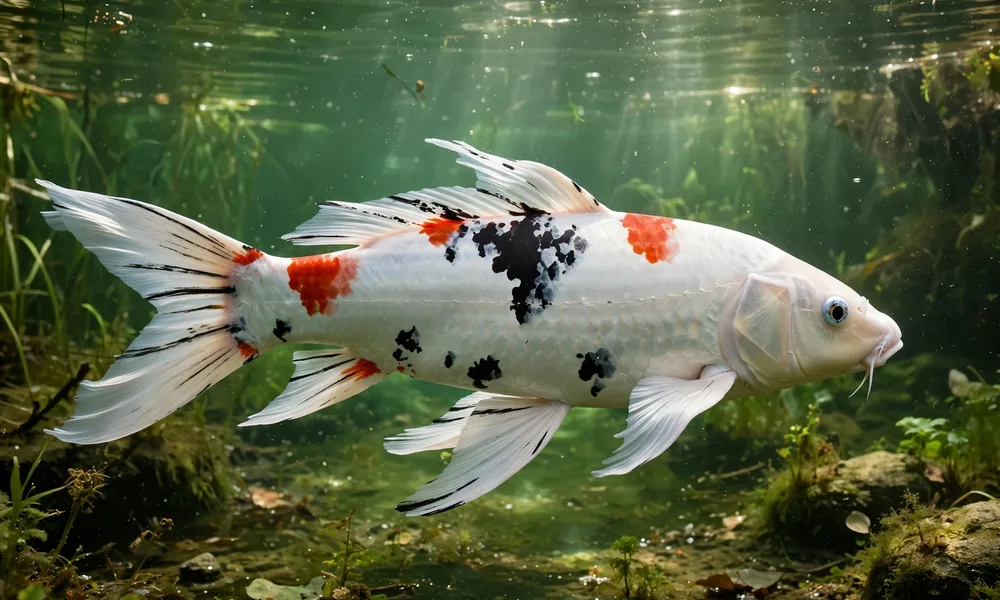
The mouth sits low on the head, and it is made for rooting and picking rather than for chasing. Around it are two pairs of short barbels, the whisker-like feelers that carp use to taste the pond bottom, and a koi will often be seen nosing at the stones or the plants, feeling for food. The eyes are set high on the head, which suits a fish that is usually seen from above, and they are dark and bright in a healthy fish. The gills are large and strong, which a koi needs, because a big fish in warm pond water needs a lot of oxygen, and still water can run short of it on a hot day.
Males and females look much alike, and telling them apart by eye is hard for most keepers. Females tend to be fuller in the body, especially in spring when they are carrying eggs, and males tend to be slimmer, with rougher skin on the gill covers and the leading edge of the pectoral fins during the breeding season. Those rough patches are called breeding tubercles, and they help the male hold his place beside the female during spawning. Young koi are often duller than adults, and their colours sharpen as they grow, which is why breeders are patient, and why a plain-looking young fish can turn into a show winner.
Where koi live
Koi live in garden ponds, and that is the honest answer to where they live, because the koi is a domesticated fish and its home is the pond that people build for it. The wild Amur carp still lives in the rivers and lakes of East Asia, in slow water with muddy bottoms and plenty of plants, and the koi keeps the same tastes: still or slow-moving water, a soft bottom to root in, plants at the edges, and shade to hide under. A good koi pond is deep enough that the water stays cool in summer and does not freeze solid in winter, and it is large enough that a fish of 60 to 70 centimetres can turn and swim without bumping the walls.

The habitat a koi needs is shaped by the seasons. In spring the water warms, the fish wake from their winter rest and begin to feed again, and the pond plants start to grow. In summer the water is warm, the fish are hungry and active, and the filter works hardest, because warm water holds less oxygen and the fish produce more waste. In autumn the fish feed heavily to build up strength for winter, and in winter they sink to the bottom of the pond, where the water is a little warmer, and rest. A pond that is less than a metre deep can freeze through in a hard winter, which is why serious keepers dig deep.
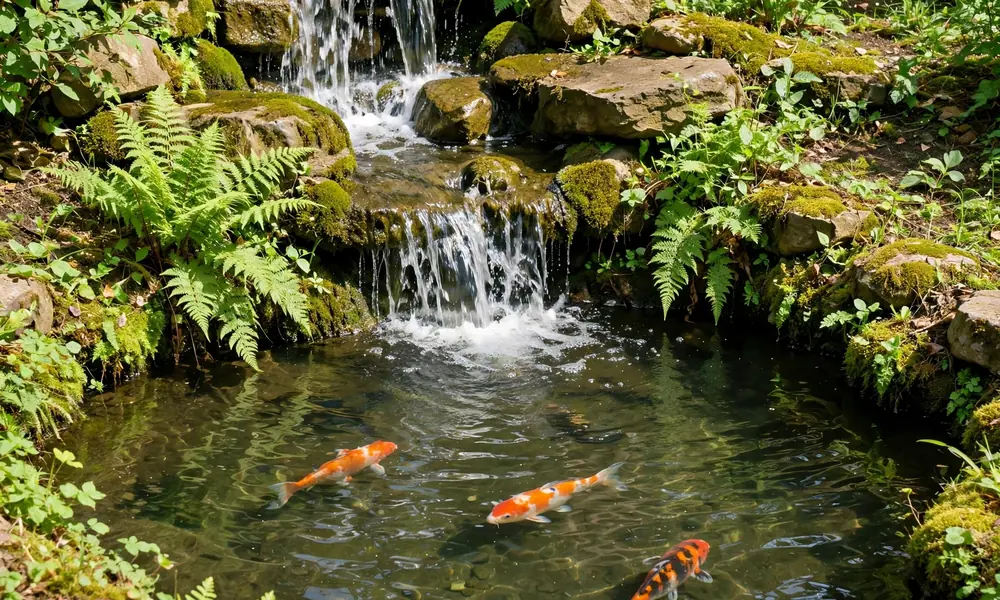
Water quality is the heart of koi keeping, and it matters more than anything else in this guide. Koi need clean water with plenty of oxygen, a steady temperature, and very low levels of ammonia and nitrite, which are the waste products that build up when fish are fed. A good pond has a filter that turns the whole volume of water over regularly, and it has plants that take up nutrients, and a keeper who tests the water and changes part of it when the tests say so. The fish themselves are the best test of all: a healthy koi swims steadily, eats eagerly and holds its fins out, while a koi in bad water hangs at the surface, gasps, or clamps its fins to its body.
What koi eat
Koi are omnivores, and they will eat almost anything that fits in their mouths, which is why they are easy to feed and easy to overfeed. In a pond they eat the pellets their keeper gives them, and they also pick at algae on the walls, insects that fall on the water, worms and larvae in the mud, and the soft shoots of pond plants. In the wild, the Amur carp eats much the same mix, rooting in the mud for snails and insect larvae and grazing on plants, and the koi has kept that habit. A koi will spend much of the day nosing along the bottom, stirring up the mud and picking out what it can find.
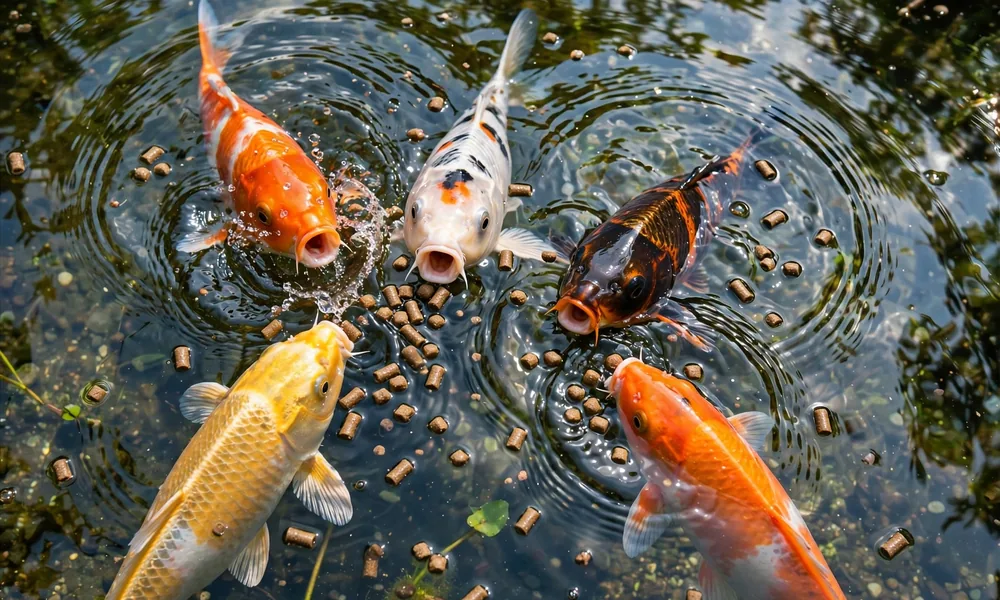
The feeding changes with the temperature, and a good keeper feeds by the thermometer rather than by the calendar. In warm water between 15 and 25 degrees Celsius, koi are hungry and can be fed several times a day, in amounts they finish within a few minutes. As the water cools in autumn, feeding slows, and when the water drops below about 10 degrees, most keepers stop feeding altogether, because a cold koi cannot digest food properly and uneaten food rots in the gut and in the pond. In spring, feeding starts again slowly, with small amounts of easy food, while the fish and the filter wake up together.
There is one mistake that new keepers make more than any other, and it is feeding too much. Uneaten pellets sink, rot and foul the water, and a pond that is overfed will turn green with algae, grow short of oxygen and make the fish ill. The rule that experienced keepers live by is simple: feed little and often, watch the fish finish it, and stop while they are still hungry. A hungry koi is a healthy koi, and a pond with clear water and eager fish is worth more than a pond where the fish are fed until they are full.
How koi behave
Koi are social fish, and they are at their best in a group. A single koi in a pond will survive, but it will be shy and dull, while a group of six or more will swim together, feed together and follow each other around the pond, and they will be bolder with people. They do not fight over food the way some fish do, and they do not defend territories, and a pond of koi is a peaceful place. The fish learn the routine of the pond quickly, and they learn to come to the same spot at the same time each day, which is why feeding time feels like a small ceremony.
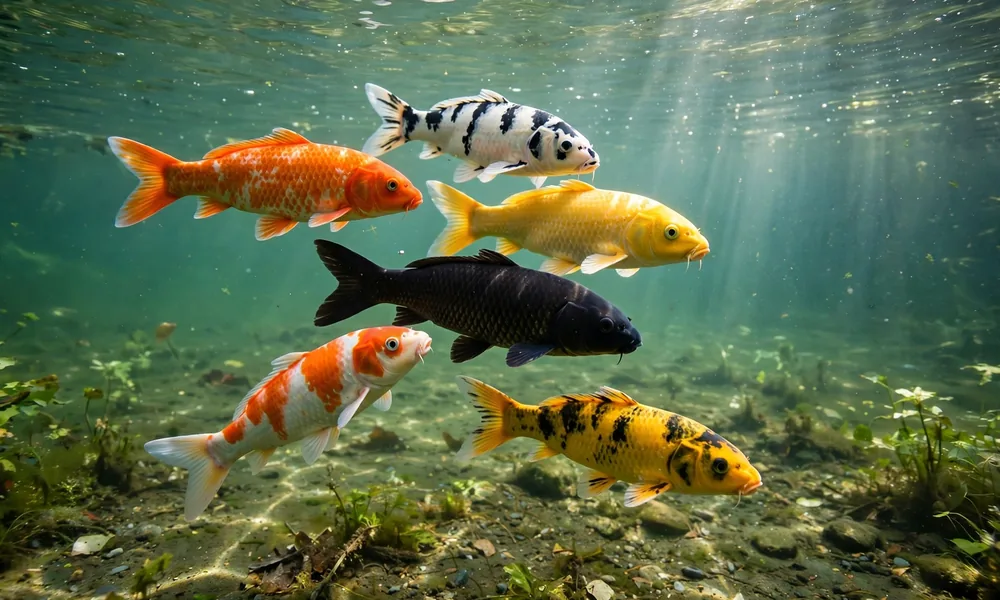
The most charming part of koi behaviour is how tame they become. A koi that is fed by hand will learn to recognise its keeper, and it will rise to the surface when that person appears, even before any food is offered. Some fish will take pellets from the fingers, and a few will let themselves be touched, and keepers talk about their fish the way other people talk about dogs, with names, favourites and small histories. The fish are not clever in the way a dog is clever, but they are good at learning, and they remember where food comes from and who brings it.
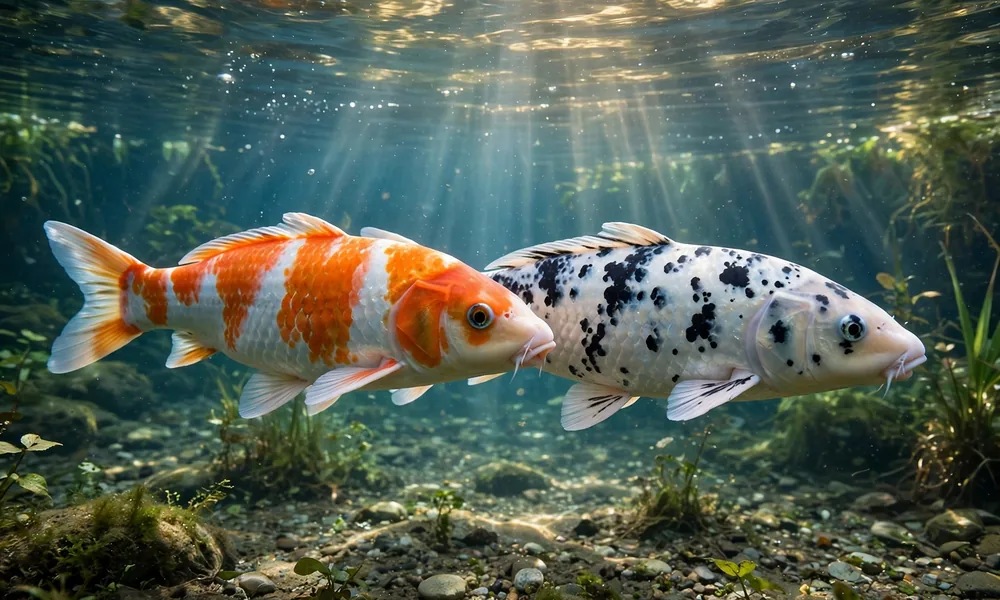
Like the angelfish, a koi can be a graceful fish to watch, but the two live very different lives. The angelfish is a tropical reef fish that lives in warm salt water and guards a small patch of coral, while the koi is a freshwater pond fish that lives in a group and follows its keeper around the garden. One is a reef fish you watch through glass, and the other is a pond fish you watch from a bench in the sun, and the pleasure of the two could hardly be more different.
How koi breed
Koi breed in late spring and early summer, when the water warms to around 20 degrees Celsius, and the spawning is a noisy, splashing affair that can go on for hours. The males chase the female around the pond, bumping her sides and nudging her towards the shallow water at the edges, where the plants grow. The female releases her eggs among the plants, and the males release their milt over them, and the whole pond seems to boil with fish. A large female can release tens of thousands of eggs in a season, and the eggs are small, sticky and pale, and they cling to the plant stems and the pond walls.
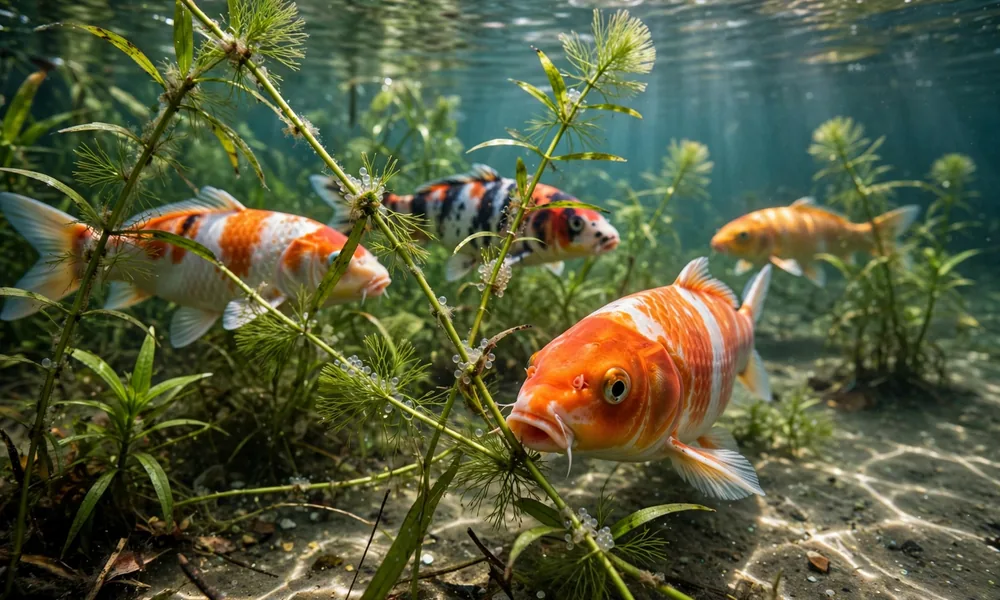
The eggs hatch in four to seven days, depending on the temperature, and the young fish that come out are tiny, transparent and helpless. They cling to the plants for a day or two, living on the yolk sac they were born with, and then they start to swim and to feed on the smallest life in the pond, the tiny animals and algae that drift in the water. The fry grow quickly in warm water, and within a few weeks they are small, recognisable fish, a few centimetres long, and their colours begin to show. Most breeders move the fry to a separate pond, because adult koi will eat their own eggs and young without a second thought.

Breeding koi well is a slow business, and it is where the art of the hobby shows. A breeder chooses the parents for colour, pattern, body shape and size, and then raises thousands of fry, culling most of them and keeping only the few with the best patterns. The work takes years: a fish is not judged properly until it is three or four years old, and a breeder may raise a thousand fish to find one that is worth showing. The result is a fish that carries the work of generations in its pattern, and a hobby that rewards patience more than money.
For the ordinary keeper, breeding is usually an accident rather than a plan. The fish spawn in the pond, the eggs are eaten or the fry are eaten, and a few may survive among the plants. If you want to raise fry, the practical steps are simple: give the fish plants to spawn on, move the eggs or the fry to a separate tank or pond, feed them tiny food several times a day, and keep the water clean. The fry that survive will be a mix of colours, and most will be plain, but now and then a keeper finds a fish among them that is worth keeping, and that is how many breeders begin.
Koi and conservation
Koi are not a wild species, and they are not on any list of threatened animals, because they are a domesticated fish that exists in ponds and farms rather than in the wild. That does not mean they are free of conservation questions, because the fish that people keep have effects on the world outside the pond. Koi that escape or are released into rivers and lakes can live there, and they can stir up the mud, eat the plants and compete with native fish, and in some places released koi have become a problem. The rule for every keeper is simple: never release a koi into the wild, and find another keeper or a dealer if you can no longer keep your fish.
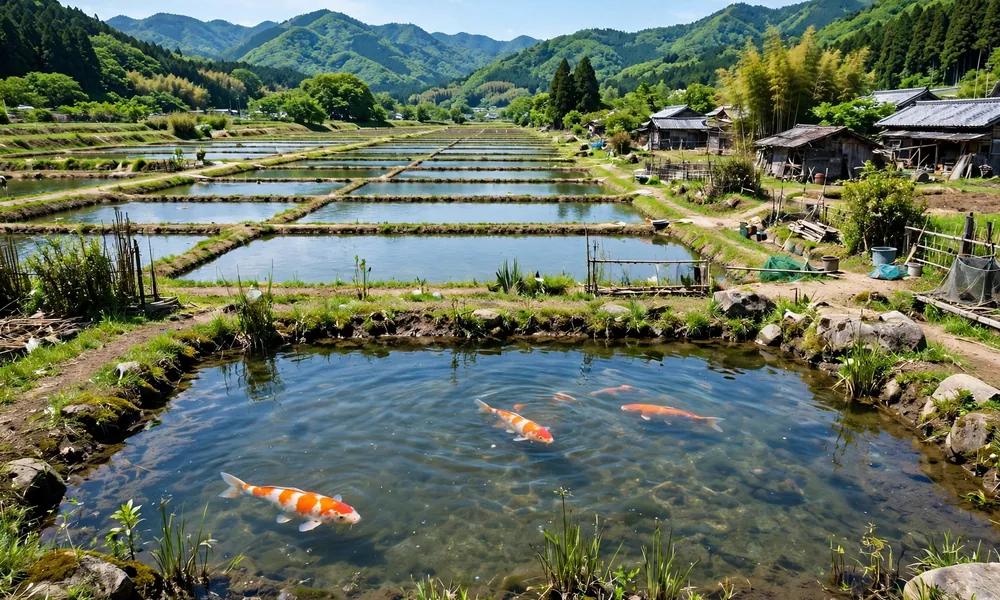
The wild ancestor of the koi, the Amur carp, still lives in the rivers and lakes of East Asia, and it is a sturdy fish that is not in danger. The concern for the wild carp is the same concern that faces many river fish: dams that block the rivers, pollution that fouls the water, and the loss of the shallow, plant-filled places where carp spawn. The koi itself is safe, because millions of them live in ponds around the world, but the rivers that made the koi deserve the same care that a keeper gives to a pond.
The best thing a keeper can do for conservation is to keep fish well and to buy from breeders who keep their fish well. A healthy pond does not need to be emptied into a river, and a fish bought from a good breeder is less likely to carry disease into a pond. Koi can carry parasites and diseases, and a new fish should be kept apart from the pond for a few weeks, in a separate tank, until it is clear that it is healthy. That simple habit protects the pond, the fish in it, and the rivers beyond it.
The best seasons for koi
The best season to enjoy koi is spring, when the pond wakes up and the fish return to the surface after their winter rest. The water is clear, the fish are hungry and bright, and the garden is coming back to life around the pond, and a morning spent watching the fish feed is hard to beat. Autumn is the other great season, when the fish are at their fattest and their colours are at their deepest, and the leaves turn around the pond. Summer is the season for feeding and growth, but the water can turn green with algae in the heat, and the fish can be harder to see.

If you are buying koi, the best time is late spring or early summer, when the breeders have harvested their young fish and the water is warm enough for a new fish to settle. A fish bought in winter will be sluggish and hard to judge, and a fish bought in the heat of summer will be stressed by the move. When you visit a dealer, look for fish that swim steadily, hold their fins out, eat eagerly and show no sores or clamped fins, and ask to see the fish from above, because that is how you will see them in your own pond.
The worst season for koi is a hard winter, and it is the season that tests a pond. A pond that is too shallow can freeze through, and a pond with no hole in the ice can run short of oxygen. Keepers in cold places use a pond heater or an air pump to keep a hole open in the ice, and they stop feeding long before the cold arrives.
Staying safe around koi ponds
Koi themselves are harmless. They have no teeth to bite with, no venom, and no reason to hurt a person, and the worst a koi can do is splash you when it takes food from your hand. The safety questions around koi are the safety questions of the pond itself, and they are worth taking seriously, because a garden pond is deep water in a place where children play. A pond should have a fence or a cover if small children use the garden, and children should never be left alone beside deep water, even water that looks calm and shallow.
There are a few practical points for the keeper as well. Pond edges are slippery when wet, and a fall into a pond can be dangerous, especially for an older person on their own. The pumps and filters that keep a pond clean run on electricity, and they should be fitted with proper outdoor wiring and a safety switch, and the cables should be kept out of the water and out of the way. Wash your hands after working in the pond, because pond water carries bacteria, and keep any cuts covered while you work. None of this is hard, and all of it is the ordinary care that a garden with water in it asks for.
Koi watching checklist
A little preparation turns a visit to a koi pond into a real chance of seeing the fish at their best, feeding in clear water in the morning sun.
- A visit in late spring or early autumn, when the water is clear and the fish are feeding well.
- A morning visit, when the koi rise to the surface and feed most eagerly.
- A pond with clear water, plants at the edges and shade for the fish to rest under.
- A handful of koi pellets, offered a few at a time, so the fish come to the surface.
- A quiet approach, standing still at the edge of the pond while the fish gather.
- A camera ready for the moment the fish turn sideways in the sun and show their colours.
- Respect for the pond and its fish, keeping hands clean, never tapping the glass, and leaving the pond as you found it.
Frequently asked questions
How big do koi get?
Most pond koi grow to between 60 and 70 centimetres long, and a well-kept fish in a large pond can pass 90 centimetres. A fish of that size weighs several kilograms, and it needs a pond of several thousand litres to live well. Koi grow fastest in their first three years, when the water is warm and the food is plentiful, and they grow more slowly after that, adding size gradually for many years.
How long do koi live?
A koi in a good pond commonly lives for 25 to 35 years, and many reach 40 years or more. The fish need clean water, a good filter, room to swim and sensible feeding to reach those ages, and a pond that is overcrowded or poorly kept will shorten their lives badly. There are stories of a koi living for 226 years, but those stories have never been verified, and no keeper should plan on a fish living that long.
What do koi eat?
Koi eat pond pellets, insects, worms, larvae, algae and soft pond plants, and they will take almost anything that fits in their mouths. In warm water between 15 and 25 degrees Celsius they feed eagerly, several times a day, and in cold water below about 10 degrees they stop feeding altogether. Feed little and often, in amounts the fish finish within a few minutes, and never leave uneaten food to rot in the pond.
Are koi dangerous?
No, koi are not dangerous to people. They have no venom, they do not bite, and they will not chase or threaten a swimmer or a keeper. Their whole defence is to swim away, and their first response to a fright is to sink to the bottom of the pond and wait. The safety rules for koi are the safety rules of the pond itself: watch the deep water, watch the slippery edges, and keep children away from the pond unless an adult is with them.
Can you keep a koi in an aquarium?
You can keep a young koi in a large aquarium for a while, but it is not a good home for a grown fish. A koi grows to 60 or 70 centimetres, and it needs a pond of several thousand litres, with a strong filter and plenty of oxygen, to live well. Like the betta fish, a koi is a popular pet fish, but the betta lives happily in a small warm tank, while the koi needs a whole pond to do well, and a tank that suits a betta will never suit a koi.
How is this guide different from the humphead wrasse guide?
This guide covers the koi, a freshwater pond carp of 60 to 70 centimetres that lives in a garden pond and eats pellets and insects, while our humphead wrasse guide covers a huge reef fish that lives on coral reefs in the Indo-Pacific and can grow to more than two metres long. One is a tame pond fish you feed by hand in your garden; the other is a wild reef giant you watch from a boat, and the two could hardly live more different lives.
Conclusion
The koi species is a reminder that a fish can be a garden, a hobby and a companion all at once. A domesticated carp, bred for colour in the mountains of Japan, has become a fish that people build ponds for, travel to see, and keep for decades, and the best of them carry patterns so fine that they are judged like works of art.
If you go looking for koi, go in late spring or early autumn, go in the morning, and stand quietly at the edge of a clear pond with a handful of pellets. Wait for the fish to rise, watch them turn sideways in the sun, and you will have met the koi that turns an ordinary garden into a place worth sitting in.