The atlantic cod species is a single fish, Gadus morhua, and it is one of the most important fish in human history, a cold-water hunter of the North Atlantic that fed whole nations for centuries. If you are asking how many atlantic cod species there are, the answer is one: a single species, Gadus morhua, one of several cod species in the family Gadidae, living on both sides of the North Atlantic, from Greenland and Newfoundland to Iceland, Norway and the Barents Sea.
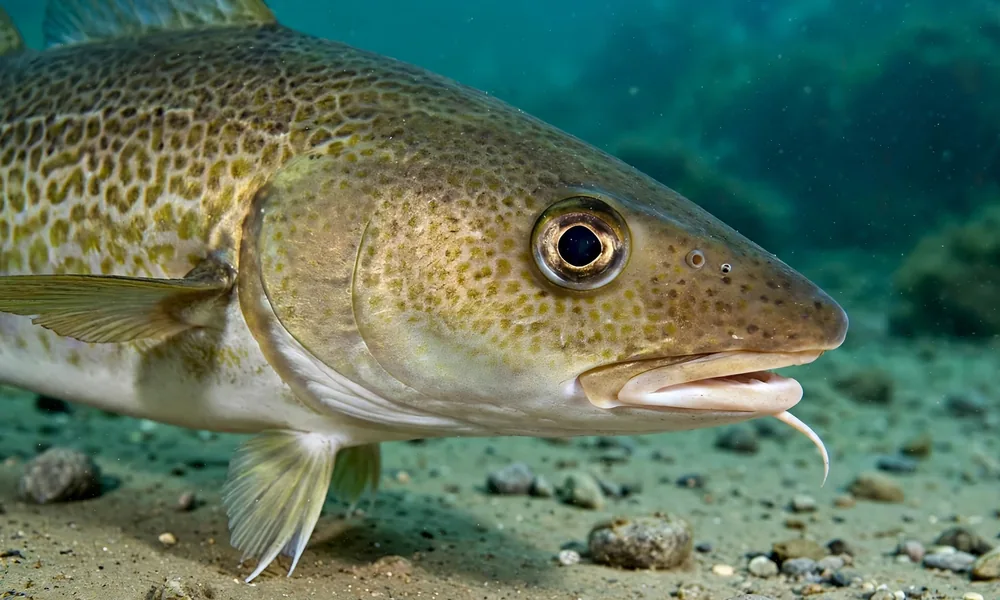
An Atlantic cod is easy to recognise: a heavy body, mottled green-brown skin with a pale belly, three separate dorsal fins, two anal fins, a pale lateral line and a single barbel hanging from its chin. It is a bottom fish that also rises into midwater to hunt, and it can live for 25 years and grow to more than a metre long.
Key takeaways
- There is one atlantic cod species, Gadus morhua, one of several cod species in the family Gadidae.
- Atlantic cod typically grow to 100 to 140 centimetres long, but the largest recorded fish reached nearly 200 centimetres and 96 kilograms.
- Atlantic cod live on both sides of the North Atlantic, from Greenland and Newfoundland to Iceland, Norway, the North Sea and the Barents Sea.
- They eat fish such as herring and capelin, along with crabs, molluscs, worms and other animals from the seabed.
- Atlantic cod are listed as Vulnerable on the IUCN Red List, after the collapse of the Newfoundland stock in 1992, though the Barents Sea stock has since recovered strongly.
What makes an Atlantic cod an Atlantic cod
An Atlantic cod has three features that separate it from almost every other fish in its waters. The first is its fins: three soft dorsal fins along its back and two anal fins underneath. The second is its barbel, a short fleshy whisker on the chin that tastes the seabed, helping it find crabs, worms and shellfish hidden in the sand. The third is its colour: a mottled back in shades of green, brown or grey, fading to a pale belly, which breaks up its outline against the seabed.
Atlantic cod are bigger than their close relatives. A typical adult measures 100 to 140 centimetres, and fish of 40 kilograms or more were once common, though most cod caught today are much smaller. They grow slowly in cold northern water and faster in warmer water, and females grow slightly longer and heavier than males. Like clownfish, a cod is tied to its own stock and spawning ground, and fish from different stocks rarely mix.
The Atlantic cod species and their relatives
There is one atlantic cod species, Gadus morhua, and it belongs to the family Gadidae, the cod family, which also holds the haddock, the whiting and the pollocks. Its closest relative is the Pacific cod, Gadus macrocephalus, of the North Pacific, and the two were once thought to be the same species.
The wider cod family shows how one body plan can suit many cold seas. The haddock is smaller and has a dark thumbprint on its flank and a black lateral line. The Alaska pollock is a midwater fish of the North Pacific and one of the most heavily fished species on Earth. All share the same family traits: soft fins without spines, a chin barbel, and a taste for cold water and the seabed.
| Type | Animal | Where it lives | Best-known food | Length or Weight |
|---|---|---|---|---|
| Family | Cod family (family Gadidae) | Cold waters of the North Atlantic and North Pacific | Fish and crustaceans | About 30 to 200 cm long |
| Species | Atlantic cod (Gadus morhua) | Both sides of the North Atlantic | Herring, capelin and crabs | Typically 100 to 140 cm long |
| Species | Pacific cod (Gadus macrocephalus) | North Pacific, from Alaska to Japan | Fish, crabs and shrimps | Up to about 120 cm long |
| Species | Greenland cod (Gadus ogac) | Arctic waters around Greenland and Canada | Fish and crustaceans | Up to about 80 cm long |
| Species | Haddock (Melanogrammus aeglefinus) | North Atlantic, North Sea and Barents Sea | Worms, molluscs and small fish | About 35 to 100 cm long |
| Species | Alaska pollock (Gadus chalcogrammus) | North Pacific, Bering Sea and Gulf of Alaska | Krill, small fish and squid | Up to about 91 cm long |
| Species | Whiting (Merlangius merlangus) | North-east Atlantic and Mediterranean | Shrimps, small fish and worms | Up to about 70 cm long |
How Atlantic cod live
Atlantic cod are hunters that feed mostly at dawn and dusk, when the light is dim. Young cod feed near the bottom on small crustaceans, hiding among seagrass, gravel and rocks in shallow water. As they grow, they shift to bigger prey: crabs, molluscs, worms, squid and other fish, above all herring and capelin, and large cod will even eat young cod of their own species. They hunt in loose shoals, swimming above the bottom by day and spreading out to feed at night, finding food by taste with the chin barbel.
Spawning is the great event of a cod’s year. A large female can release several million eggs in a single season, in batches over several weeks, and the eggs float near the surface, drifting with the currents for two or three weeks before they hatch. The larvae feed on plankton and drift for months before settling to the seabed as juveniles. So many eggs are laid because so few survive. Cod mature at between two and eight years old, depending on the stock, and they can live for 25 years.
Cod also migrate, and some stocks travel long distances between feeding and spawning grounds. The most famous migration is that of the Barents Sea cod, known in Norway as skrei, which swims each winter to the Lofoten Islands off northern Norway to spawn, a journey of hundreds of kilometres. Like the angelfish, a cod’s life is shaped by the seasons and the water it swims in.
Where Atlantic cod live
Atlantic cod live in the cold continental shelf waters of the North Atlantic, between about 40 and 80 degrees north, in water from minus 1 to about 20 degrees Celsius. On the western side, they range from Greenland and Labrador south past Newfoundland and Nova Scotia to around Cape Hatteras. On the eastern side, they live from the Barents Sea, around Iceland and the Faroe Islands, through the North Sea and around Britain and Ireland, and into the Baltic Sea.
Cod are demersal fish, which means they live close to the seabed, usually over coarse sand, gravel and rock, from the shoreline down to about 600 metres, though most live between 50 and 200 metres. Juveniles prefer shallow, sheltered water, while adults move into deeper, colder water. Temperature draws the map: northern stocks are comfortable near freezing, while southern stocks live at the warm edge of the range and suffer first when the sea warms.
Atlantic cod are listed as Vulnerable on the IUCN Red List, on the basis of a 1996 assessment that the IUCN itself notes is due for an update. The story differs by stock. The northern cod off Newfoundland, once one of the largest fish populations on Earth, collapsed in the early 1990s after decades of heavy fishing, and in 1992 Canada closed the fishery. The Barents Sea stock tells a brighter story: strict catch limits helped it grow into the largest cod population in the world.
Best seasons for Atlantic cod watching
The best time to see Atlantic cod is winter and early spring, from January to April, when the great spawning gatherings form. In Norway, the skrei arrive off the Lofoten Islands in February and March. In summer, cod move offshore and north into deeper water, and they are harder to find. Divers can see cod year-round around rocky reefs and kelp beds, but winter is when the species is at its most spectacular.
Staying safe around Atlantic cod
An Atlantic cod is harmless to a swimmer or diver: it has no venom, no sharp spines and no interest in people, and it will move away rather than approach. The safety rules are about the sea, not the fish. Cold North Atlantic water can chill a diver quickly, so wear a proper drysuit and dive with a buddy. If you fish for cod, check the rules for the exact area first, because catch limits, closed seasons and minimum sizes differ from stock to stock, and some stocks are still rebuilding. Never take more than the limit.
Atlantic cod watching checklist
A little preparation turns a cold-water dive or a winter boat trip into a real chance of seeing Atlantic cod, so pack for cold water and long waits.
- A drysuit and warm underlayers, because North Atlantic water is cold even in summer.
- A dive buddy and a local guide, for safe diving around reefs and currents.
- A winter trip to the Lofoten Islands, when the skrei gather to spawn in February and March.
- A dawn or dusk dive, when cod rise from the seabed to feed.
- An underwater torch, for seeing the mottled skin and barbel in dim light.
- Patience and a slow approach, because cod move away from sudden movement and noise.
- A fish identification guide, for telling Atlantic cod from haddock and pollock.
Frequently asked questions
How many atlantic cod species are there?
There is one atlantic cod species, Gadus morhua. Its closest relative is the Pacific cod of the North Pacific.
How big do Atlantic cod get?
Atlantic cod typically grow to 100 to 140 centimetres long, and most fish caught today weigh well under 10 kilograms. The largest recorded fish reached nearly 200 centimetres and 96 kilograms, but fish that big are now very rare.
What does an Atlantic cod eat?
Atlantic cod eat fish such as herring, capelin and sand eels, along with crabs, molluscs, worms and squid. Young cod feed mostly on small crustaceans, while large cod feed mostly on fish.
Why did the Newfoundland cod fishery collapse?
Decades of heavy fishing, with bigger boats catching more fish than the stock could replace, drove the northern cod off Newfoundland to a tiny fraction of its former size. In 1992 Canada closed the fishery, and the stock has recovered only slowly.
How is this guide different from the chameleon species guide?
This guide covers the Atlantic cod, a single cold-water fish that lives on the seabed of the North Atlantic, hunts herring and crabs and spawns millions of eggs in winter, while our chameleon species guide covers the chameleon, a family of about 228 colour-changing lizards that live in trees in Madagascar and Africa and hunt insects with a tongue longer than their body. Cod swim in cold northern seas, and chameleons sway along branches in warm forests.
Are Atlantic cod endangered?
Atlantic cod are listed as Vulnerable on the IUCN Red List, on the basis of a 1996 assessment that is due for an update. The picture differs by stock: the Barents Sea stock has recovered strongly under strict catch limits, while the Newfoundland stock is still rebuilding.
Conclusion
The atlantic cod species shows how completely one fish can shape the history of the North Atlantic: a single species, Gadus morhua, that fed whole nations for centuries, built ports and fleets, and then, fished too hard, collapsed.
If you go looking for one, go to the Lofoten Islands in February, go in a drysuit, and go at dawn. Watch the cod gather below the boat, and remember that the Barents Sea stock came back because people set limits and kept them.