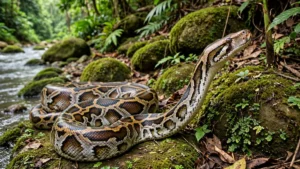
The boa constrictor species is a single snake, Boa constrictor, one of the largest snakes in the Americas, and it is a heavy-bodied, non-venomous constrictor of the tropical forests and savannas of South America. If you are asking how many boa constrictor species there are, the answer is one: there is a single boa constrictor species, Boa constrictor, a snake that most adults reach 2 to 3 metres long, and that kills its prey by coiling around it and squeezing, not with venom.
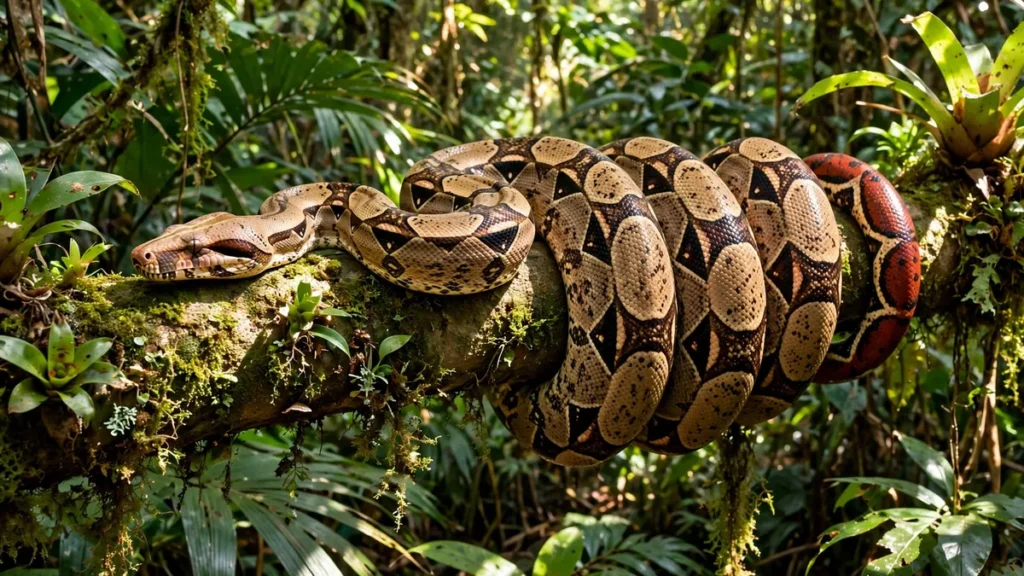
The boa constrictor is one of the very few animals whose common name is the same as its scientific name: the Swedish naturalist Carl Linnaeus called it Boa constrictor in 1758, and the name has stuck ever since. Its body is tan, green, red or yellow, with dark saddle-shaped blotches and a reddish tail, and it is as much at home in a tree as on the forest floor.
Key takeaways
- There is one boa constrictor species, Boa constrictor, a single great snake of South America that was named by Carl Linnaeus in 1758.
- Most adults are 2 to 3 metres long and weigh about 10 to 15 kilograms, with females larger than males.
- Boa constrictors are non-venomous and kill by constriction, squeezing their prey so tightly that its blood stops flowing.
- They eat rodents, birds, bats, opossums and larger mammals such as monkeys and wild pigs, and after a large meal they may not need to eat again for weeks.
- Boa constrictors are listed as Least Concern, though they are hunted for their skin and for the pet trade.
What makes a boa constrictor a boa constrictor
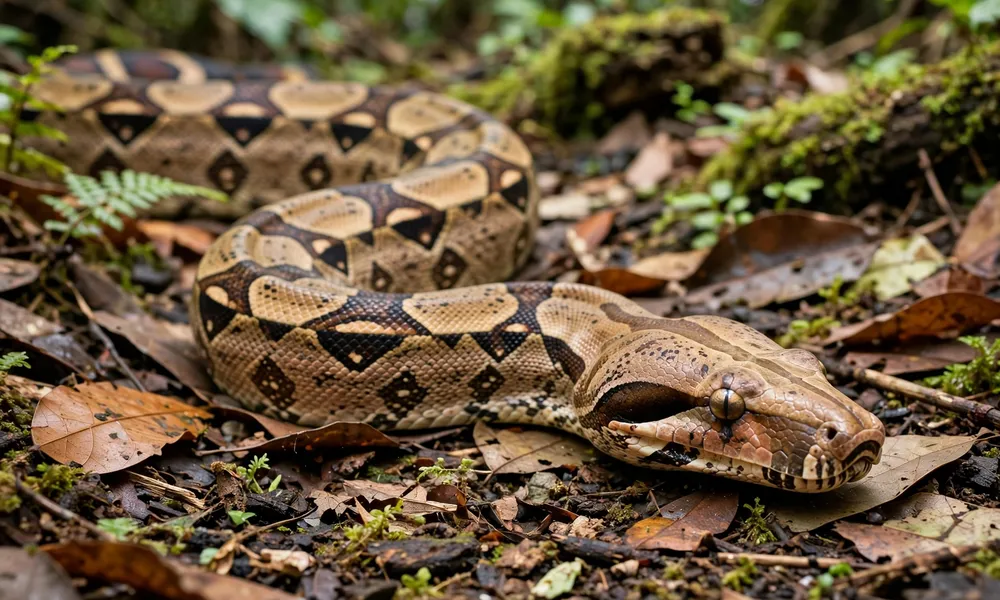
A boa constrictor is a thick, muscular snake with a broad head, a blunt snout and a body patterned with dark brown saddle-shaped blotches on a tan, grey or yellowish background. The blotches grow redder towards the tail, which is why the snake is often called the red-tailed boa, and the pattern breaks up its outline among leaves and branches. It has vertical pupils and heat-sensitive pits that help it find warm-blooded prey in the dark.
The boa constrictor has no venom and no fangs. Its jaws are lined with small, hooked teeth that grab and hold prey while the snake wraps its powerful body around the animal, and its jaws can stretch wide to swallow large prey whole. Strong stomach acids then digest bone, fur and feathers. Like the ball python, another heavy-bodied constrictor, the boa constrictor relies on strength and patience rather than speed or venom.
The boa constrictor species and their relatives
There is one boa constrictor species, Boa constrictor, and it belongs to the family Boidae, the boas, a family of non-venomous constrictors found in the Americas, Africa, Asia and the Pacific islands. The boa constrictor’s closest relative is the Central American boa, Boa imperator, which lives in Mexico and Central America and was once treated as a subspecies of the boa constrictor but is now usually recognised as its own species. So the true boa constrictor lives only in South America, east of the Andes.
The wider boa family is full of giants and specialists. The green anaconda of the Amazon and Orinoco basins is the heaviest snake in the world, the rainbow boa of the Amazon rainforest shimmers with rainbow colours in sunlight, and the rosy boa of the south-western United States is a small, gentle desert snake barely a metre long. The Argentine boa is the southern subspecies, living in the dry woodlands of Argentina, Paraguay and Bolivia, and it is protected under CITES Appendix I.
| Type | Animal | Where it lives | Best-known food | Length or Weight |
|---|---|---|---|---|
| Family | Boas (family Boidae) | Americas, Africa, Asia and Pacific islands | Small mammals, birds and lizards | About 1 to 4 m long |
| Species | Boa constrictor (Boa constrictor) | South America east of the Andes | Rats, opossums and birds | About 2 to 3 m long |
| Species | Central American boa (Boa imperator) | Mexico and Central America | Rodents, birds and bats | About 1.5 to 3 m long |
| Species | Argentine boa (Boa constrictor occidentalis) | Argentina, Paraguay and Bolivia | Small mammals and birds | About 2 to 3 m long |
| Species | Green anaconda (Eunectes murinus) | Amazon and Orinoco basins | Fish, birds and mammals | About 3 to 5 m long |
| Species | Rainbow boa (Epicrates cenchria) | Amazon rainforest | Rodents, birds and bats | About 1.5 to 2 m long |
| Species | Rosy boa (Lichanura trivirgata) | South-western United States and Mexico | Small mammals and lizards | About 60 to 90 cm long |
How boa constrictors live
Boa constrictors are carnivores, and they eat almost anything they can catch. Young boas, which spend more time in trees, eat lizards, frogs, small birds and mice, while adults take rats, opossums, agoutis, bats, birds, monkeys and wild pigs.
Boa constrictors are mainly nocturnal and crepuscular, which means they hunt at night and at dusk and dawn, and they are ambush hunters that wait in silence for prey to come close. They hunt both on the ground and in trees, and although they are excellent swimmers, they prefer to stay on dry land, living in hollow logs and abandoned mammal burrows. They are solitary, coming together only to mate, and they can live 20 to 30 years in the wild.
Female boa constrictors give birth to live young rather than laying eggs, incubating the eggs inside their bodies and giving birth to as many as 60 live babies at a time. The babies are about 35 to 50 centimetres long at birth and can hunt at once. A boa constrictor kills by constriction, and new research has shown that it does not suffocate its prey: instead, the coils squeeze so tightly that the prey’s blood stops flowing, and the animal dies quickly. Like the American alligator, another great reptile predator of the Americas, the boa constrictor is a patient hunter that waits for its meal to come to it.
Where boa constrictors live
Boa constrictors live in tropical and subtropical South America, east of the Andes, from Colombia, Venezuela and the Guianas through Brazil, Ecuador, Peru and Bolivia to Paraguay and northern Argentina, and on the islands of Trinidad and Tobago. They live in humid lowland rainforest, gallery forest, savanna, dry forest, mangroves and the edges of farmland and towns, and they are mostly lowland snakes, common below about 1,000 metres.
Boa constrictors are at home in many kinds of country. In the Amazon they live in rainforest and along rivers, in Brazil’s Cerrado and Pantanal in savanna and wetlands, and in Argentina’s dry Chaco in thorn scrub. They also hunt rats around farms and villages. Like the king cobra, another great snake that lives close to people, the boa constrictor is often found where farms meet the forest.
Boa constrictors are listed as Least Concern, because they are widespread, occur in many protected areas and are thought to have a large population. They are hunted for their fine, ornate skin and for sale in the exotic pet trade, and international trade in them is controlled under CITES Appendix II. The Argentine boa is more strictly protected under CITES Appendix I, and they also lose forest habitat to farming and mining.
Best seasons for boa constrictor watching
The best time to watch boa constrictors is in the dry season, when the forest floor is easier to walk and the snakes are easier to find, and at dusk and after dark, when they leave their daytime shelters to hunt. A guided night walk is the best way to spot one, coiled on a branch or resting on the leaf litter.
Staying safe around boa constrictors
A boa constrictor is non-venomous, but it is a large and powerful snake that should always be watched from a safe distance. Never try to handle a wild boa, never corner one, and never walk alone at night in boa country without a guide. A big boa can give a serious bite, so keep children and pets well away, and give any boa you meet plenty of room.
Boa constrictor watching checklist
A little preparation turns a night walk in the rainforest into a real chance of seeing a boa constrictor.
- A guided night walk in the dry season, when boa constrictors are out hunting after dark.
- A torch with a red filter, for spotting a coiled boa without dazzling it.
- Long trousers and sturdy boots, for walking forest trails in the dark.
- A local guide who knows where boas rest and hunt, and who can keep the group at a safe distance.
- Quiet voices and slow steps, because a boa will slip away at the first heavy footstep.
- A camera with a good flash, for a clear photograph of the snake’s saddle pattern.
- A field guide to South American snakes, for telling a boa constrictor from a rainbow boa.
Frequently asked questions
How many boa constrictor species are there?
There is one boa constrictor species, Boa constrictor, a single great snake of South America. Its closest relative, the Central American boa, Boa imperator, was once treated as a subspecies of the boa constrictor but is now usually recognised as its own species.
Are boa constrictors venomous?
No. Boa constrictors are non-venomous snakes with no fangs and no venom. They kill by constriction, wrapping their muscular bodies around their prey and squeezing so tightly that the prey’s blood stops flowing.
What does a boa constrictor eat?
Boa constrictors are carnivores that eat a wide range of prey, from lizards, frogs and mice when they are young to rats, opossums, bats, birds, monkeys and wild pigs as adults.
How big does a boa constrictor get?
Most adult boa constrictors are 2 to 3 metres long and weigh about 10 to 15 kilograms, with females larger than males. The largest animals can reach about 4 metres, and the largest boa constrictor ever found measured 18 feet, according to National Geographic.
How is this guide different from the blue-tongued skink species guide?
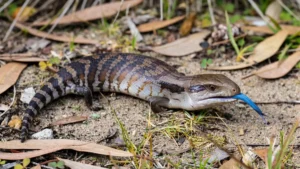
This guide covers the boa constrictor, a single species of large non-venomous snake from South America that hunts at night, kills by constriction and gives birth to live young, while our blue-tongued skink species guide covers the blue-tongued skink, about eight species of slow, ground-dwelling lizards from Australia that eat snails and fruit and flash a vivid blue tongue when threatened. Boa constrictors coil around their prey in the rainforest, and blue-tongued skinks bask on warm rocks in the Australian sun.
Are boa constrictors endangered?
No. Boa constrictors are listed as Least Concern, because they are widespread and occur in many protected areas. They are hunted for their skin and for the pet trade, and trade in them is regulated under CITES Appendix II.
Conclusion
The boa constrictor species shows how completely one snake can master the tropics: a single species, Boa constrictor, that lives from the Amazon rainforest to the dry Chaco and takes prey from mice to wild pigs without a drop of venom.
If you go looking for one, go on a guided night walk in the dry season, go quietly, and watch the leaf litter and the low branches. Look for the saddle pattern, the reddish tail and the broad head, and you will see why this great constrictor has been feared and admired for centuries.