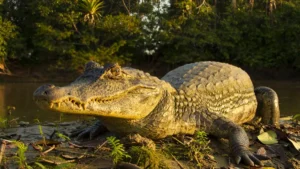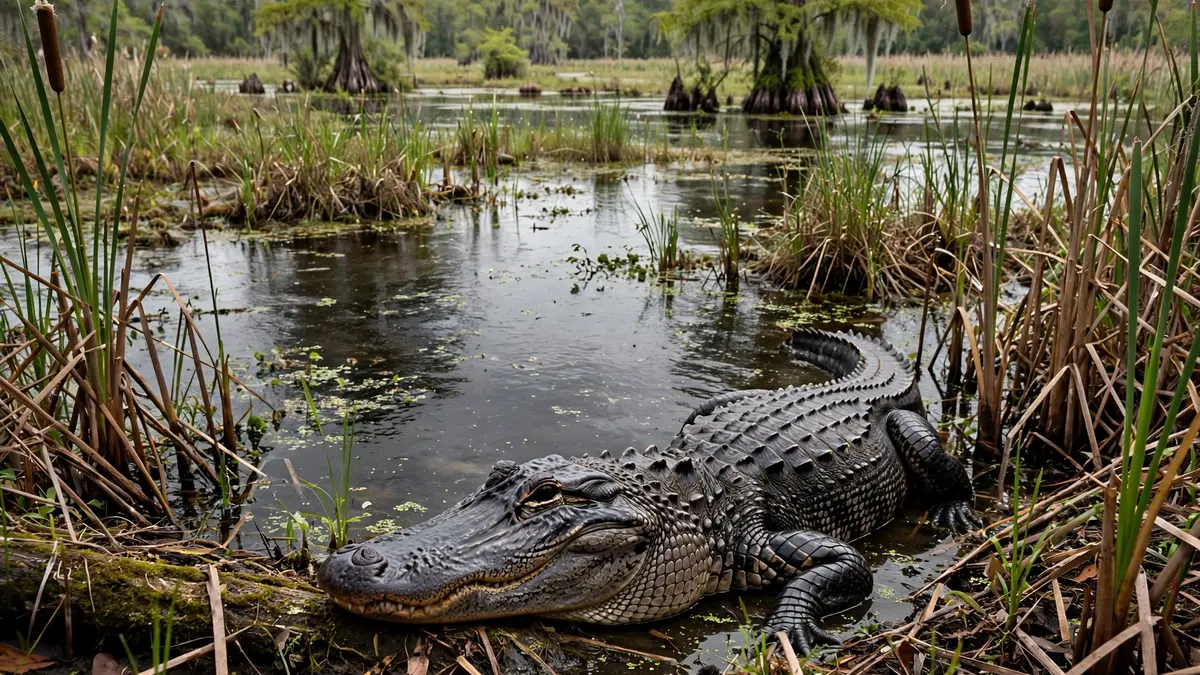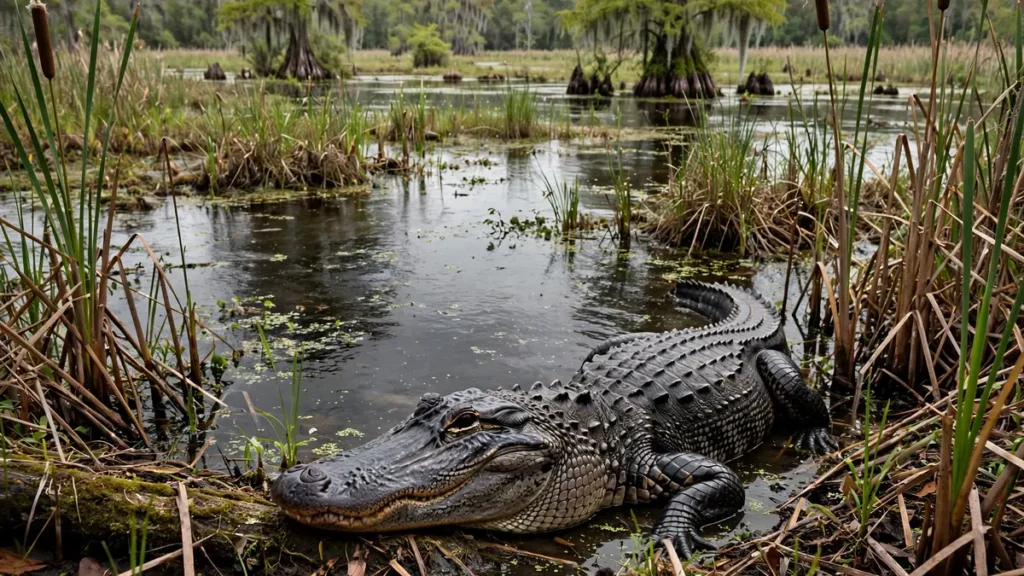
The American alligator species number one, a single species called Alligator mississippiensis, and it is the armoured reptile of the south-eastern swamps, the largest reptile in North America. If you are asking how many American alligator species there are, the answer is one: there is one recognised American alligator species in the world, and every American alligator alive today belongs to it.
The American alligator lives in the swamps, marshes, rivers and bayous of the south-eastern United States, from North Carolina to Texas, and it is one of only two alligator species in the world. Its broad snout, its armoured back, its powerful tail and its habit of digging water holes make it one of the most important animals in the wetlands.
Key takeaways
- There is one American alligator species, Alligator mississippiensis, a reptile of the south-eastern United States.
- American alligator males measure 3.4 to 4.6 metres and weigh 200 to 450 kilogrammes, while females rarely pass 3 metres.
- American alligators lay 35 to 50 eggs in a mound nest, and the nest temperature decides the sex of the young.
- American alligators eat fish, turtles, birds and mammals, and they dig gator holes that keep wetlands alive in the dry season.
- There are about five million American alligators, and the species is listed as Least Concern.
What makes an American alligator an American alligator
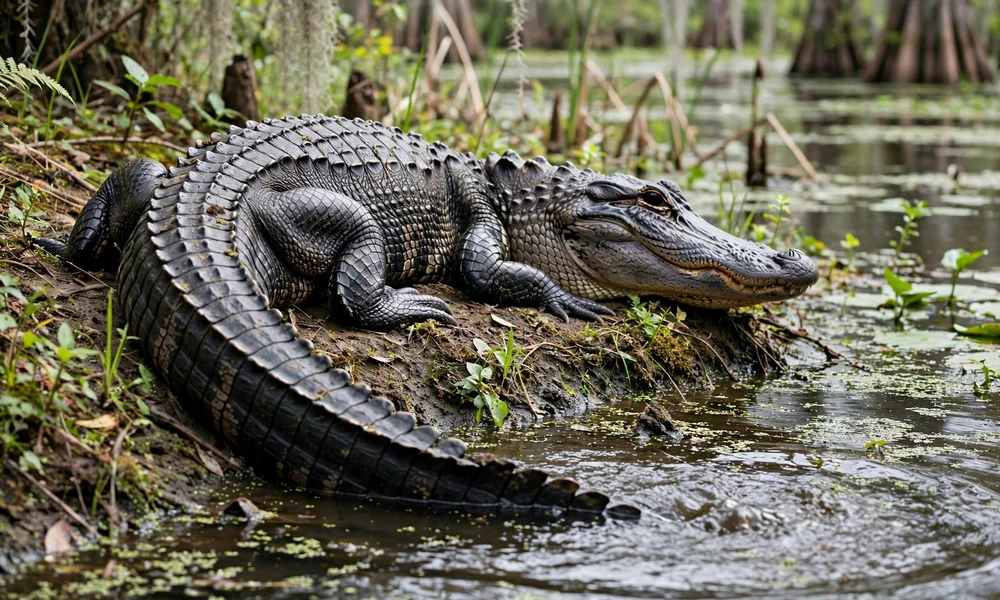
An American alligator is a large armoured reptile with a broad U-shaped snout, a dark almost black back covered in bony plates, a long powerful tail, and short legs with webbed feet, and it measures 3.4 to 4.6 metres long in the male and 2.6 to 3 metres in the female, and usually weighs between 200 and 450 kilogrammes in the male and under 100 kilogrammes in the female. The young are yellow-banded, and the bands fade as they grow.
The snout defines the American alligator: broad and U-shaped, with peg-like teeth for crushing turtle shells, and a bite force of about 2,960 pounds, one of the strongest bites of any animal. Like other Komodo dragons, the American alligator is a large predatory reptile, but it is an alligator, not a monitor lizard, and it lives in water, not on dry land, and it hunts by ambush, not by chasing.
The American alligator species and their relatives
There is one American alligator species. It belongs to the genus Alligator, of which there are only two species in the world, and it is the larger of the two, living in the south-eastern United States. The American alligator is a living archosaur, a cousin of the dinosaurs, and it has changed little in millions of years.
The Chinese alligator is the American alligator’s closest relative, a much smaller alligator of the Yangtze River that grows to about 2 metres long, while the Nile crocodile is a large crocodile of Africa with a narrow V-shaped snout. The American crocodile is a crocodile of the Florida coast with a narrow snout and a tooth that shows when its mouth is closed, and the caiman is a small crocodile-like reptile of Central and South America.
| Type | Animal | Where it lives | Best-known food | Length or Weight |
|---|---|---|---|---|
| Species | American alligator (Alligator mississippiensis) | South-eastern United States wetlands | Fish, turtles, birds and mammals | 3.4 to 4.6 m long, 200 to 450 kg |
| Close relative | Chinese alligator | Yangtze River in China | Fish, snails and crustaceans | About 2 m long, 30 to 45 kg |
| Close relative | American crocodile | Florida coast and the Caribbean | Fish, birds and mammals | 3 to 4.5 m long, 200 to 400 kg |
| Close relative | Nile crocodile | Rivers of Africa | Fish, birds and mammals | 3.5 to 5 m long, 225 to 750 kg |
| Close relative | Spectacled caiman | Central and South America | Fish, crabs and snails | 1.4 to 2.5 m long, 7 to 40 kg |
| Close relative | Gharial | Rivers of India and Nepal | Fish | 3.5 to 5 m long, 160 to 250 kg |
| Close relative | Komodo dragon | Indonesian islands | Deer, pigs and carrion | 2 to 3 m long, 70 to 90 kg |
How American alligators live
American alligators are creatures of the warm wetland. An American alligator lives alone or in small groups in swamps, marshes, rivers, lakes and bayous, and it spends most of its day basking on the bank or floating in the water with only its eyes and nostrils above the surface. Like other king cobras, the American alligator is a large predatory reptile, but it is an alligator, not a snake, and it hunts by ambush in the water, not by chasing on land.
Fish make up much of the diet, along with turtles, snails, birds, raccoons and deer, and an American alligator eats by waiting motionless in the water, then lunging at anything that comes within reach. It feeds mostly at night, when the fish are active and the birds are roosting, and it can go for weeks without eating, living off the fat stored in its tail.
Breeding is a spring affair, and the males bellow in choruses, slapping the water with their heads and making the surface dance with low sounds that people can feel in their chests. The female builds a mound nest of mud and plants near the water in June or July, and lays 35 to 50 eggs. The rotting plants keep the eggs warm for about 65 days, and the temperature decides the sex: about 30 degrees or less makes females, and about 34 degrees makes males. The mother opens the nest when the young chirp, and carries them to the water in her mouth, guarding them for a year or more. American alligators live for about 35 to 50 years in the wild, and for 60 to 80 years in captivity.
Where American alligators live
The American alligator lives in the south-eastern United States, from North Carolina south through Florida and west along the Gulf Coast to Texas, with smaller populations in Arkansas and south-eastern Oklahoma, and in swamps, marshes, rivers, lakes, bayous and ponds, and it is most common in Louisiana, with more than two million animals, and Florida, with about 1.3 million. It is one of the great conservation success stories of America.
Slow fresh water is the key requirement. An American alligator needs a swamp or a marsh where it can bask, hunt and nest, with fish to eat and mud to build its nest, so it returns to the same wetlands year after year, generation after generation, and when the dry season comes it digs gator holes that hold water for fish, birds and other animals, keeping the whole wetland alive.
American alligators are listed as Least Concern, and there are about five million of them, after they were hunted almost to extinction for their skins and then protected in 1967. The main pressures are the loss of wetlands, the killing of nuisance animals, and road deaths, though American alligators are protected by law and regulated hunting is allowed under strict quotas.
Best seasons for American alligator watching
There is no closed season, because American alligators are active all year, but the best time to look for them depends on where you go. In Florida the best months are often December to April, when the dry season draws the alligators to the remaining water and the Everglades trails are at their best. In Louisiana the best months are often March to June, when the alligators are bellowing and nesting in the bayous.
Staying safe around American alligators
An American alligator is a wild animal with a powerful bite and great strength, and it can injure or kill a person who comes too close, though attacks are rare, with about seven or eight bites a year in Florida. Keep your distance, never feed an alligator, and never swim in water where alligators live, because an alligator that is fed by people loses its fear and becomes a danger. If you see American alligators while visiting a swamp, stay calm, stay on the boardwalk, and let them come to you, because alligators that are chased may become aggressive.
American alligator watching checklist
A little preparation turns a swamp visit into a real chance of seeing an American alligator, so pack for heat, rain and long quiet hours.
- Binoculars, because the alligators float low in the water and are best watched from a distance.
- A camera with a zoom lens, for the broad snout and the armoured back without getting close.
- A booked airboat tour with a guide who knows the alligator holes and the safe routes.
- A boardwalk trail through the Everglades, where the alligators bask in the dry season.
- A plan to be out in the morning, when the alligators are most active and basking.
- Patience and silence, because alligators are shy animals and a noisy group will send them away.
- A field guide to crocodilians, for telling an alligator from a crocodile at a glance.
Frequently asked questions
How many American alligator species are there?
There is one American alligator species, Alligator mississippiensis. There are only two alligator species in the world, the American and the Chinese, and the American is the larger of the two, with about five million animals in the wild.
How does nest temperature decide the sex?
The temperature of the nest decides the sex of the young alligators, a system called temperature-dependent sex determination. Eggs kept at about 30 degrees or less hatch as females, and eggs kept at about 34 degrees hatch as males, with mixed broods in between.
What do American alligators eat?
American alligators eat fish, turtles, snails, birds, raccoons, deer and feral hogs, and they will scavenge too. The young eat insects, snails, crayfish and small fish, and the adults eat almost anything they can catch.
Are American alligators dangerous?
They can be, but attacks are rare. Florida has recorded about 487 unprovoked bites since 1948, with 27 fatal, and the chance of being seriously injured is about one in three million. Never feed an alligator, and never swim where alligators live.
How is this guide different from the bighorn sheep species guide?
This guide covers the single American alligator species, an armoured reptile of the south-eastern swamps that eats fish and turtles, while our bighorn sheep species guide covers the single bighorn sheep species, a curl-horned sheep of the Rocky Mountains that eats grass. The American alligator male measures 3.4 to 4.6 metres and lives in water, and the bighorn sheep weighs 73 to 113 kilogrammes and climbs cliffs.
Are American alligators endangered?
No. American alligators are listed as Least Concern, with about five million animals, after being brought back from near extinction by protection in 1967. The loss of wetlands is the main threat to watch.
Conclusion
The American alligator species shows how much power one wetland animal can hold: a single species of armoured reptile, with a broad snout, a crushing bite, and a life spent between the swamp bank and the warm water.
If you go looking for one, go in the dry season to the Everglades, go quietly, and go with patience. Watch an American alligator float in the black water with only its eyes above the surface and you will understand why it has earned its place as the king of the south-eastern swamps, and why keeping its wetlands wet matters most.