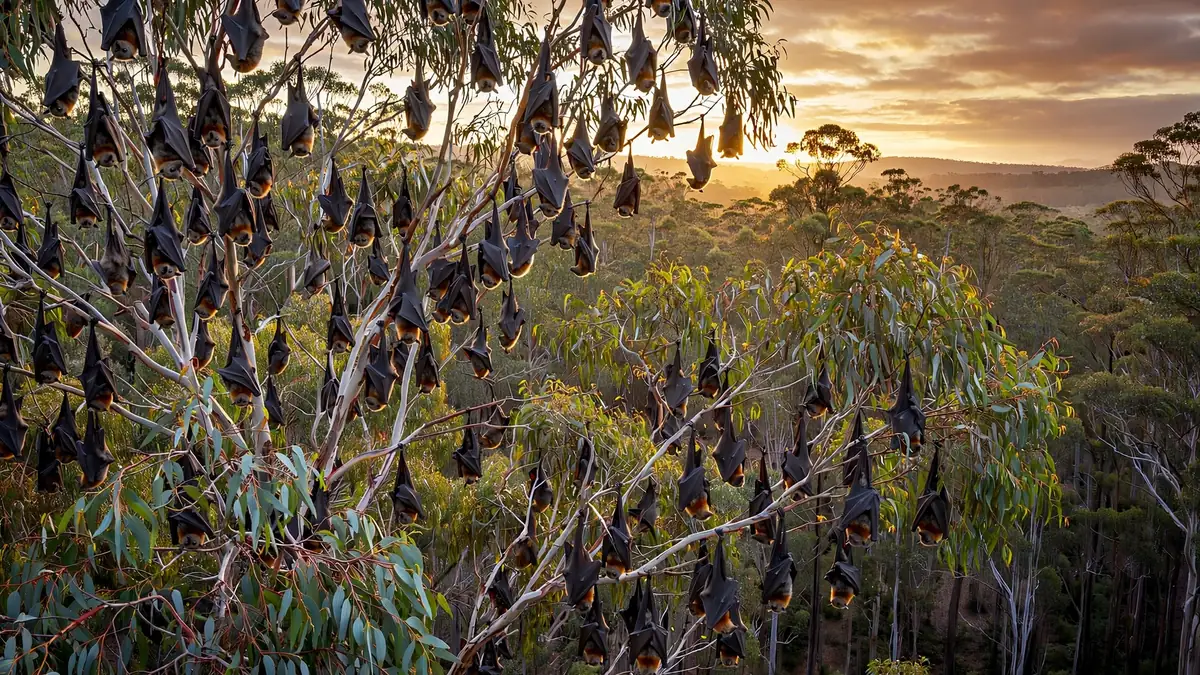
The flying fox species are the large fruit bats of the genus Pteropus, about 60 living species with fox-like faces, large eyes and wingspans that can reach about 1.5 metres, making them the largest bats in the world. If you are asking how many there are, the answer is about 60, and they live across South Asia, South-East Asia, Australia and the Pacific islands, roosting in noisy colonies and feeding on fruit, nectar and flowers.
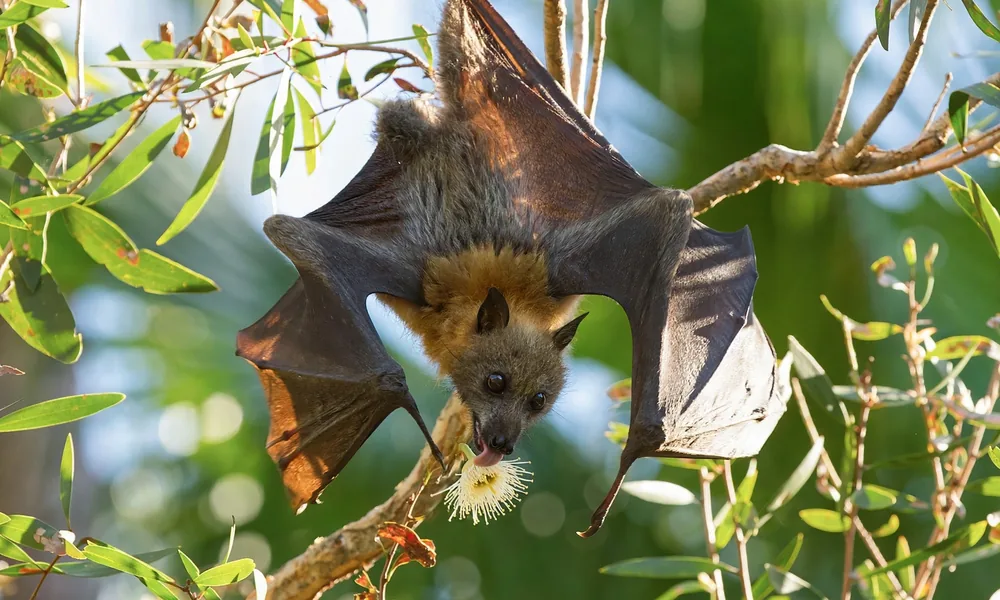
A flying fox looks more like a small fox with wings than like the bats most people picture, with a long muzzle, pointed ears, dense fur and no tail, and it finds food by sight and smell rather than by echolocation. By day it hangs upside down in a crowded roosting camp, wings wrapped around its body like a cloak, and at dusk the whole camp lifts off at once.
Key takeaways
- There are about 60 living flying fox species in the genus Pteropus, with the total rising to about 65 in lists that count recently extinct species.
- Flying foxes are the largest bats in the world, with the large flying fox reaching a wingspan of about 1.5 metres and a weight of up to about 1.1 kilograms.
- Flying foxes do not use echolocation; they navigate and find food with large eyes and a keen sense of smell.
- They eat fruit, nectar, flowers, pollen and leaves, and they pollinate trees and spread seeds, including durian, figs and mangoes.
- Most flying foxes roost in camps of hundreds or thousands of bats, and females usually give birth to a single pup each year.
What makes a flying fox a flying fox
A flying fox is a megabat, a member of the fruit bat family Pteropodidae, and its face gives it its name: a long muzzle, large dark eyes and upright pointed ears. The fur is usually dark on the back, with a paler golden or russet mantle around the neck and shoulders, and the wings are broad membranes stretched between greatly lengthened finger bones. There is no tail, and a clawed thumb stays free of the wing for climbing and pulling fruit within reach.
Size is the other giveaway. The smallest flying foxes are about the size of a rat, but the largest are the biggest bats on Earth: the large flying fox, Pteropus vampyrus, is about 27 to 32 centimetres long with a wingspan of up to about 1.5 metres. Like owls, which also hunt by night, flying foxes have large eyes built for seeing in low light, but a flying fox relies on eyesight and smell alone, with no echolocation to fall back on.
The flying fox species and their relatives
The genus Pteropus holds about 60 living species, making it the largest genus in the fruit bat family Pteropodidae, a family of about 200 species. The count varies, because a handful of species have died out in recent centuries, so some lists give 65 or 66 including the extinct ones. They are grouped into about 17 species groups.
The best known are the large flying fox of South-East Asia, the Indian flying fox of South Asia, the grey-headed flying fox of eastern Australia, the spectacled flying fox of Queensland and New Guinea, and the little red flying fox. Island species are often the most threatened, including the Mauritian flying fox and the critically endangered Christmas Island flying fox. Their closest relatives are other fruit bats, such as the golden-capped fruit bat of the Philippines, with a wingspan of up to about 1.7 metres.
| Type | Animal | Where it lives | Best-known food | Length or Weight |
|---|---|---|---|---|
| Family | Fruit bats (family Pteropodidae) | Tropical Africa, Asia, Australia and the Pacific | Fruit, nectar and flowers | Wingspans from about 20 cm to 1.7 m |
| Species | Large flying fox (Pteropus vampyrus) | South-East Asia | Figs, mangoes and durian flowers | Wingspan up to about 1.5 m |
| Species | Grey-headed flying fox (Pteropus poliocephalus) | Eastern Australia | Eucalyptus nectar and fruit | Wingspan up to about 1 m |
| Species | Indian flying fox (Pteropus giganteus) | South Asia | Mangoes, figs and nectar | Wingspan of about 1 to 1.5 m |
| Species | Spectacled flying fox (Pteropus conspicillatus) | Queensland and New Guinea | Rainforest fruit and nectar | Wingspan up to about 1 m |
| Species | Little red flying fox (Pteropus scapulatus) | Northern and eastern Australia | Eucalyptus blossom nectar | Wingspan of about 60 to 90 cm |
| Relative | Golden-capped fruit bat (Acerodon jubatus) | Philippines | Figs and rainforest fruit | Wingspan up to about 1.7 m |
How flying foxes live
Flying foxes eat mostly fruit, nectar, flowers, pollen and leaves, and they are among the most important pollinators and seed dispersers of tropical forests. Feeding on a flower, a flying fox picks up pollen on its fur and carries it to the next tree, and seeds from the fruit it eats pass through unharmed and fall far from the parent tree. Durian, one of South-East Asia’s most valuable fruits, is pollinated largely by flying foxes, and figs, mangoes and bananas depend on them too. A large flying fox can eat about half its own body weight in fruit in a single night, and it may fly up to 50 kilometres between its roost and its feeding trees.
By day flying foxes gather in roosting camps that can hold a few hundred bats or tens of thousands, and grey-headed flying fox camps average about 20,000 animals. The bats hang upside down by their hind feet, wings wrapped around their bodies, and spend the day grooming and squabbling over the best branches. Like colobus monkeys, which also feed in the treetops, flying foxes are social animals, and the camp is the centre of their social world.
Flying foxes breed slowly, which makes them slow to recover when numbers fall. Females usually give birth to a single pup each year, after a pregnancy of about five to six months, and the mother carries the pup when she flies out to feed until it is big enough to be left in the camp. A large flying fox can live for about 15 years in the wild and up to 30 years in captivity.
Where flying foxes live
Flying foxes live across the tropics and subtropics, from Madagascar and the western Indian Ocean, through South Asia and South-East Asia, to New Guinea, Australia and the Pacific islands. They live in rainforest, mangroves, swamps and open woodland, and follow the flowering and fruiting of trees, moving between camps as the seasons change. Some species live only on a single island.
A roosting camp needs tall trees near water and near food, and many camps have been used for generations. In Australia, large camps now stand in city parks and along urban rivers in Sydney, Melbourne and Brisbane, where the bats feed on street trees and garden fruit as well as native blossom. Thousands of bats streaming out over a city at dusk is now a familiar wildlife spectacle in eastern Australia.
Many flying fox species are in trouble, and about half are considered threatened. The large flying fox is listed as Near Threatened and is hunted for food across much of its range. The grey-headed flying fox is Vulnerable in Australia, and the spectacled flying fox is Endangered. The main pressures are the loss of forests and roosting trees, hunting, and heatwaves, which can kill thousands of bats in a day when temperatures climb past 42 degrees.
Best seasons for flying fox watching
The best time to watch flying foxes is at dusk, when the camp empties in a long stream of bats heading out to feed, and the best season in Australia is the warmer months from late spring to autumn, when the camps are fullest and the eucalyptus trees are in flower. In the tropics the timing follows the fruiting seasons. Arrive before sunset and watch the sky rather than the trees.
Staying safe around flying foxes
A flying fox is a wild animal and should never be handled, even one that looks sick or injured, because bats can carry diseases that pass to people, including Hendra virus in Australia and Nipah virus in Asia. Keep your distance from a camp, keep dogs on a lead, and never touch a bat on the ground. If you find an injured flying fox, call a local wildlife rescue service.
Flying fox watching checklist
A little preparation turns a dusk visit to a flying fox camp into one of the great wildlife spectacles of the tropics, so pack for warm evenings, a long wait and a sky full of bats.
- Binoculars, because the bats are high in the trees and best watched from a distance.
- A visit at dusk, when the whole camp lifts off together to feed.
- A spot downwind of the camp, so the sound and smell of thousands of bats drift away from you.
- A red-filter torch, for finding your way home without dazzling the bats.
- Warm layers, because the temperature drops quickly after sunset.
- Patience and silence, because a noisy crowd will keep the bats in the trees.
- A local wildlife guide or rescue group contact, for advice on the nearest camp and what to do if you find an injured bat.
Frequently asked questions
How many flying fox species are there?
There are about 60 living flying fox species in the genus Pteropus. Some lists count about 65, but that total includes species that have died out in recent centuries.
Do flying foxes drink blood?
No. Despite the name Pteropus vampyrus, the large flying fox feeds only on fruit, nectar and flowers, like every other flying fox. True vampire bats live in Central and South America and are much smaller.
How far can a flying fox fly in a night?
A flying fox can fly up to about 50 kilometres between its roosting camp and its feeding trees in a single night. Young bats leaving their birth camp may fly hundreds of kilometres before they settle.
Why do flying foxes hang upside down?
Their hind feet lock onto a branch with tendons that hold tight under the bat’s own weight, so hanging costs them almost no effort. The position also lets them drop straight into flight, and folded wings keep them warm while they rest.
How is this guide different from the fisher species guide?
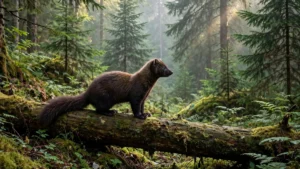
This guide covers the flying fox, a group of about 60 species of large fruit-eating bats that roost in trees and pollinate tropical forests, while our fisher species guide covers the fisher, a single species of forest mammal that hunts in the trees and on the ground in North America and can catch a porcupine. Flying foxes live on fruit and nectar, and the fisher lives on meat.
Are flying foxes endangered?
Many are. About half of all flying fox species are considered threatened, including the spectacled flying fox, listed as Endangered, and the Christmas Island flying fox, listed as Critically Endangered. The large flying fox is Near Threatened, and the grey-headed flying fox is Vulnerable in Australia.
Conclusion
The flying fox species show how much a bat can do for a forest: about 60 species of large, fox-faced fruit bats, flying up to 50 kilometres a night to pollinate durian and fig trees and spread seeds across whole landscapes.
If you go looking for them, go to a camp at dusk in the warm months, go quietly, and watch the sky as the bats stream out. Keep your distance, never handle a bat, and you will see why keeping their forests and roosting trees standing matters far beyond the bats themselves.