The frigatebird species are five great seabirds in a single family, Fregatidae, and they are among the most aerial birds on Earth, with wings so long they can soar for weeks over tropical oceans without landing. If you are asking how many frigatebird species there are, the answer is five: there are five frigatebird species, all in the genus Fregata, and they live over the warm oceans of the tropics, hunting flying fish at the surface and stealing food from other seabirds in mid-air.
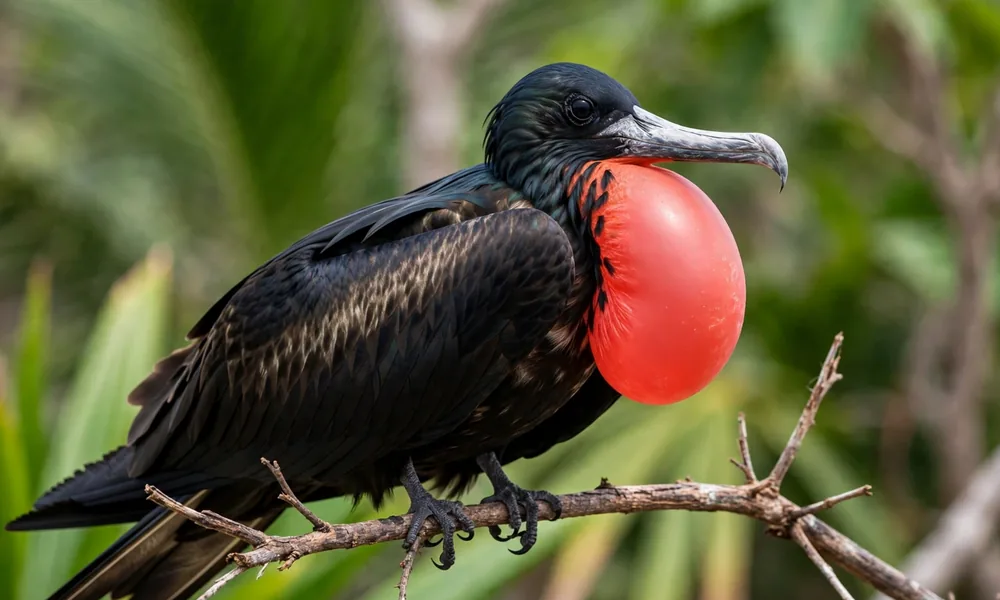
A frigatebird is unmistakable in flight: a black bird with long, narrow, pointed wings, a deeply forked tail and a long hooked bill, gliding for hours without a wingbeat. Males carry a bright red throat pouch that they inflate like a balloon to attract a mate, and the birds can even sleep on the wing, yet they never land on the water, because their feathers are not waterproof and would soak through.
Key takeaways
- There are five frigatebird species, all in the genus Fregata and the family Fregatidae.
- Frigatebirds are about 75 to 112 centimetres long, weigh up to about 1.5 kilograms, and have a wingspan of about 176 to 244 centimetres.
- Frigatebirds have the largest wing area to body mass ratio of any bird, and one great frigatebird tracked by satellite stayed aloft for two months.
- They eat flying fish and squid snatched from the ocean surface, and they steal food from other seabirds, a habit called kleptoparasitism.
- Two of the five species are at risk: the Christmas Island frigatebird is Critically Endangered and the Ascension frigatebird is Vulnerable.
What makes a frigatebird a frigatebird
A frigatebird is built for the sky and little else. Its wings are long, pointed and swept back, its tail is deeply forked for steering, and its body is light, with almost half its weight made up of breast muscle and feathers. The result is the largest wing area to body mass ratio of any bird, which lets a frigatebird ride thermals and ocean winds for days with barely a flap, and even climb above 4,000 metres into freezing air.
Males are mostly black, with a glossy green or purple sheen, and in the breeding season they inflate a bright red gular pouch on the throat to attract a female flying overhead. Females are larger than males and have white breasts and bellies. The long hooked bill is made for snatching prey from the surface, and the small webbed feet are almost useless for walking. Like cormorants, their closest relatives, frigatebirds are seabirds of the order Suliformes, but where cormorants dive and swim, frigatebirds almost never touch the water at all.
The frigatebird species and their relatives
There are five frigatebird species, all in the genus Fregata, and they are the only members of the family Fregatidae. Three of the five are widespread: the magnificent frigatebird of the tropical Atlantic and the Americas, and the great and lesser frigatebirds of the tropical Indian and Pacific Oceans. The other two breed on a single small island each: the Christmas Island frigatebird in the eastern Indian Ocean and the Ascension frigatebird in the South Atlantic.
The family is most closely related to the cormorants, darters, gannets and boobies, a group called Suloidea, and frigatebirds are the sister group to them all. The boobies are especially important in a frigatebird’s life, because they are the birds it most often robs, chasing them until they drop or regurgitate their catch, then scooping the falling fish out of the air. The great and Christmas Island frigatebirds are a close pair, as are the magnificent and Ascension frigatebirds, while the lesser frigatebird is an early offshoot.
| Type | Animal | Where it lives | Best-known food | Length or Weight |
|---|---|---|---|---|
| Family | Frigatebirds (family Fregatidae) | Tropical and subtropical oceans | Flying fish, squid and stolen fish | About 75 to 112 cm long |
| Species | Magnificent frigatebird (Fregata magnificens) | Tropical Atlantic, Caribbean and Galapagos | Flying fish, squid and menhaden | About 89 to 114 cm long |
| Species | Great frigatebird (Fregata minor) | Tropical Indian and Pacific Oceans | Flying fish and squid | About 85 to 105 cm long |
| Species | Lesser frigatebird (Fregata ariel) | Tropical Indian and Pacific Oceans | Flying fish and small squid | About 75 to 81 cm long |
| Species | Christmas Island frigatebird (Fregata andrewsi) | Christmas Island, eastern Indian Ocean | Flying fish and squid | About 89 to 100 cm long |
| Species | Ascension frigatebird (Fregata aquila) | Ascension Island, South Atlantic | Flying fish and squid | About 89 to 96 cm long |
How frigatebirds live
Frigatebirds eat mostly flying fish and squid, caught at the surface of the ocean. They do not dive or land on the water, because their feathers are only lightly oiled and quickly become wet and heavy. Instead they glide low over the waves and snatch prey with their hooked bills, often taking fish chased to the surface by tuna and dolphinfish, and catching flying fish in the air above the sea. They also eat jellyfish, crustaceans and carrion, and they snatch seabird chicks from the nest.
Frigatebirds are famous as kleptoparasites, thieves of the sky. They chase boobies, tropicbirds and terns, harassing them until they disgorge the fish in their throats, then catch the falling meal in mid-air. This stealing is only part of the diet, but the habit has earned them the names pirate bird and man-of-war bird. They spend most of the day in flight, hunting over the open sea, and roost on trees or cliffs at night, though they can also sleep on the wing while they glide.
Breeding is slow, and the care of the young is among the longest of any bird. Frigatebirds nest in colonies on remote tropical islands, and the female lays a single egg each breeding season. Both parents share the incubation for about 50 to 60 days, but after about three months only the mother keeps feeding the chick, for up to a year in all. Because raising one chick takes so long, frigatebirds can usually breed only every other year, and they are long-lived birds, with individuals known to be more than 40 years old.
Where frigatebirds live
Frigatebirds live over the tropical and subtropical oceans of the world, wherever the water is warm and flying fish are abundant. The magnificent frigatebird ranges through the tropical Atlantic, from Florida and the Gulf of Mexico through the Caribbean to Brazil, and around the Galapagos Islands. The great and lesser frigatebirds range across the tropical Indian and Pacific Oceans, from East Africa and Australia to the islands of the Pacific, while the Christmas Island and Ascension frigatebirds breed only on their single islands.
Frigatebirds come ashore only to breed and roost, and they need remote islands free of predators and disturbance, because their nests are rough platforms of twigs in low trees and their single chick takes so long to raise. They may forage hundreds of kilometres from the colony, and one great frigatebird tracked by satellite stayed aloft for two months without landing. Like common swifts, which also spend months on the wing, frigatebirds are birds of the air first and of the land only when they must be.
Two of the five species are at serious risk. The Christmas Island frigatebird is Critically Endangered, with only about 1,200 breeding pairs counted in 2003, after breeding habitat was cleared and dust from phosphate mining polluted the island. The Ascension frigatebird is Vulnerable, with a population estimated at around 12,500 birds. The three widespread species are far more secure, though all five are threatened by overfishing, plastic in the sea and disturbance at their colonies.
Best seasons for frigatebird watching
The best time to watch frigatebirds is the breeding season, when the males gather at the colony with their red pouches inflated and the birds are easiest to find. In the Galapagos this is roughly from December to April, and on Christmas Island breeding peaks in the dry months. At sea, frigatebirds can be seen all year over warm tropical water, often following fishing boats and tuna schools, and they are most active in the morning and late afternoon.
Staying safe around frigatebirds
A frigatebird is a wild seabird with a long hooked bill, and it should never be handled or approached closely, especially at a breeding colony where a disturbed bird may abandon its single egg or chick. Keep well back from nesting trees, move quietly, and never feed frigatebirds. On the water, give roosting birds space and watch from a distance with binoculars, and take care on island paths, since frigatebirds nest low in trees and shrubs.
Frigatebird watching checklist
A little preparation turns a visit to a tropical island colony into a real chance of seeing a male frigatebird inflate his red pouch, so pack for hot sun and long hours watching the sky.
- Binoculars, because frigatebirds soar high and are best watched against the sky.
- Sun protection, a hat and plenty of water, for long hours in tropical heat.
- A visit to a breeding colony in season, when the males display with inflated red pouches.
- A boat trip over warm tropical water, for watching frigatebirds hunt flying fish at the surface.
- A plan to be out in the morning or late afternoon, when frigatebirds hunt most.
- Patience and silence at the colony, because a noisy group will disturb nesting birds.
- A field guide to seabirds, for telling a magnificent frigatebird from a great frigatebird.
Frequently asked questions
How many frigatebird species are there?
There are five frigatebird species, all in the genus Fregata and the family Fregatidae: the magnificent, great, lesser, Christmas Island and Ascension frigatebirds. Three are widespread and two breed on a single small island each.
Why do male frigatebirds have a red pouch?
Male frigatebirds have a red gular pouch on the throat that they inflate like a balloon during the breeding season to attract females flying overhead.
What does a frigatebird eat?
Frigatebirds eat flying fish and squid snatched from the ocean surface, along with jellyfish, crustaceans, young turtles and carrion. They also steal food from other seabirds such as boobies and tropicbirds.
Can frigatebirds sleep while flying?
Yes. Frigatebirds can sleep on the wing while they glide, and they can stay aloft for days or even weeks. One great frigatebird tracked by satellite stayed in the air for two months.
How is this guide different from the european starling species guide?
This guide covers the frigatebirds, a family of five great seabirds that live over tropical oceans, soar for weeks without landing and steal fish from other seabirds, while our european starling species guide covers the European starling, a single small songbird that lives in fields, gardens and towns, feeds on insects and seeds, and gathers in huge murmurations at dusk. Frigatebirds rule the open ocean sky, and starlings rule the farmland and the garden.
Are frigatebirds endangered?
Two of the five species are at risk: the Christmas Island frigatebird is Critically Endangered, with only about 1,200 breeding pairs counted in 2003, and the Ascension frigatebird is Vulnerable. The magnificent, great and lesser frigatebirds are widespread and far more secure, though all five are threatened by overfishing, plastic and disturbance at their colonies.
Conclusion
The frigatebird species show how completely a bird can belong to the air: five species in the family Fregatidae, with the largest wings for their weight of any bird, a red pouch for courtship and a life spent soaring over warm oceans for weeks at a time.
If you go looking for one, go to a tropical island colony in the breeding season, go quietly, and go with patience. Watch a male inflate his scarlet pouch and a frigatebird glide low over the waves to snatch a flying fish, and you will understand why keeping its islands safe and its oceans full of fish matters most.