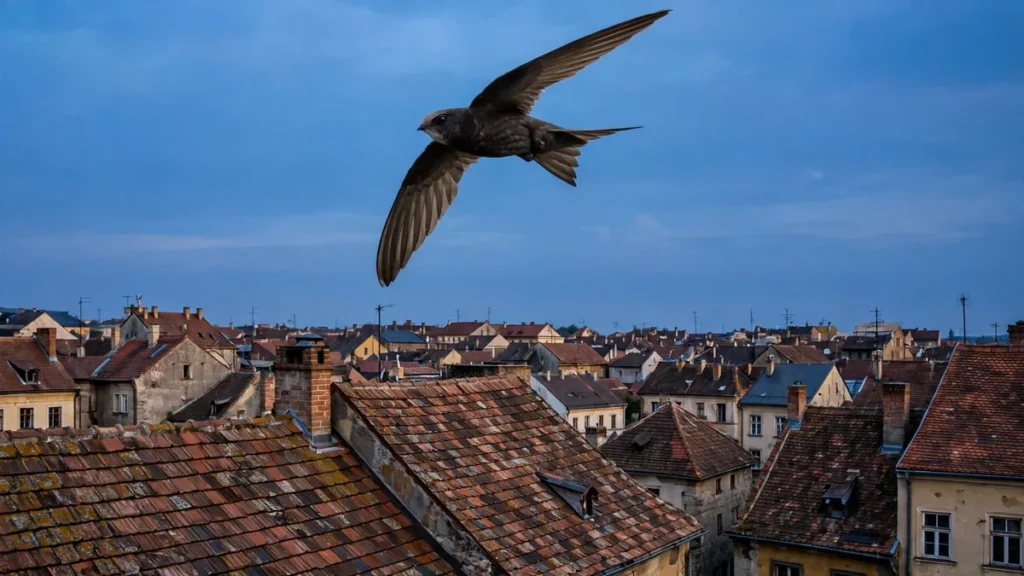
The common swift species is a single bird, Apus apus, and it is one of the most aerial animals on Earth, a dark, sickle-winged bird that spends almost its whole life in the air. If you are asking how many common swift species there are, the answer is one: there is a single common swift species, Apus apus, one of about 20 species in the genus Apus, and it breeds across Europe and Asia before migrating to Africa for the winter.
A common swift eats, drinks and even sleeps on the wing, and a young bird leaving the nest may not land again for two or three years. It nests in crevices in buildings and cliffs, catches all its food in mid-air, and fills summer evenings with fast, screaming parties chasing each other around the rooftops.
Key takeaways
- There is one common swift species, Apus apus, one of about 20 species in the genus Apus.
- Common swifts are about 16 to 17 centimetres long, with a wingspan of about 38 to 40 centimetres.
- Swifts eat, drink, mate and even sleep on the wing, and some stay airborne for up to ten months without landing.
- They feed only on flying insects and spiders caught in mid-air, and can fly at up to about 111 kilometres per hour.
- Common swifts are listed as Least Concern, though their numbers are falling as old buildings are sealed up.
What makes a common swift a common swift
A common swift is a dark, sooty-brown bird with very long, narrow, sickle-shaped wings, a short forked tail, and a small pale patch on the chin that is hard to see from a distance. Its body is slim and streamlined, its bill is short and wide for scooping insects out of the air, and its tiny feet are built for clinging to vertical surfaces rather than for walking or perching. In flight it looks like a flying crescent or boomerang, and it is often mistaken for a swallow or a martin, though the two are only distantly related.
Apus comes from the Greek for without feet, because the feet are so small they are barely visible in flight, though the swift does have feet, and it uses them to cling to walls and nest holes. Like bee-eaters, which also hunt insects in the air, a swift lives by its wings, but it takes the aerial life further than almost any other bird.
The common swift species and their relatives
There is one common swift species, Apus apus, and it belongs to the family Apodidae, the swifts, a family of about 100 species found around the world. The genus Apus holds about 20 of them, mostly dark, sickle-winged birds of Europe, Asia and Africa that nest in cliffs and buildings. The common swift is the best known of the genus, and the only one that breeds widely across Europe, from Ireland and Portugal in the west to Siberia and China in the east.
The other members of the genus include the alpine swift, a much larger bird with a white belly that breeds in the mountains of southern Europe; the pallid swift of the Mediterranean, which looks like a paler common swift; the little swift of Africa and Asia, which nests in colonies under bridges and in buildings; and the white-rumped swift of Africa. The chimney swift of North America is a close cousin in a different genus.

| Type | Animal | Where it lives | Best-known food | Length or Weight |
|---|---|---|---|---|
| Family | Swifts (family Apodidae) | Worldwide, except the coldest regions | Flying insects and spiders | About 9 to 25 cm long |
| Species | Common swift (Apus apus) | Europe and Asia, winters in Africa | Flies, beetles, aphids and moths | About 16 to 17 cm long |
| Species | Alpine swift (Tachymarptis melba) | Southern Europe, Africa and Asia | Flying insects | About 20 to 23 cm long |
| Species | Pallid swift (Apus pallidus) | Mediterranean and the Middle East | Flying insects | About 16 to 18 cm long |
| Species | Little swift (Apus affinis) | Africa and southern Asia | Flying insects | About 12 cm long |
| Species | White-rumped swift (Apus caffer) | Sub-Saharan Africa | Flying insects | About 14 to 15 cm long |
| Species | Chimney swift (Chaetura pelagica) | North America, winters in South America | Flying insects | About 12 to 15 cm long |
How common swifts live
Common swifts feed only on insects and other small creatures caught in the air, including flies, beetles, aphids, mayflies, moths and spiders carried up on the wind. They hunt in fast, twisting flight, often high above the ground, though they fly lower in poor weather or where insects gather near water and trees. Parents gather food into a ball bound with saliva to carry back to the chicks, and swifts drink by skimming the surface of lakes and rivers in flight, never landing to drink.
Breeding is the one time a swift comes down to earth. The pair nests in a hole or crevice, most often under the eaves or tiles of a building, in a gap beneath a window sill, or in a cliff or old wall, and the nest is a shallow cup of feathers and plant material glued together with saliva. The female usually lays two or three white eggs, and both parents share the incubation for about three weeks. Young swifts can survive a few days without food in cold weather by dropping their body temperature and slowing down until their parents return.
On summer evenings swifts gather in screaming parties, when groups of ten or twenty birds chase each other fast around their nesting area, calling with high-pitched screams answered by the birds sitting in the nests. The purpose of these parties is not fully understood, but they may be linked to the birds rising to sleep on the wing, while breeding adults spend the night in the nest. Non-breeding swifts can stay airborne for up to ten months without landing, sleeping in short bursts while gliding, with one half of the brain resting at a time.
Where common swifts live
Common swifts breed across a huge range, from Portugal and Ireland in the west across the whole of Europe to China and Siberia in the east, and as far north as Norway, Finland and sub-Arctic Russia. They also breed in Morocco and Algeria in North Africa and in parts of the Middle East. They are birds of the open sky over towns, villages, farmland and cliffs, and they nest wherever there are high crevices, so old towns with tall roofs and church towers are among the best places to see them.
When the breeding season ends, common swifts migrate to Africa, travelling thousands of kilometres to spend the winter in equatorial and sub-Saharan Africa. Birds breeding in Sweden have been tracked wintering in the Congo region, and swifts spend about three to three and a half months in Africa and a similar time breeding, with the rest of the year spent on the wing. During migration they can cover 570 to 800 kilometres in a single day.
Common swifts are listed as Least Concern, because they are still widespread and common across Europe and Asia, though their population trend is falling. The main problem is the loss of nest sites: when old buildings are renovated, roof spaces are sealed and crevices are filled, and swifts that return to the same nest site year after year find their home gone. Like eagles, swifts are faithful to a place, and a nest box on a wall can give a returning pair a new home.
Best seasons for common swift watching
The best time to look for common swifts is from May to July, when the birds are breeding and the screaming parties fill the sky over towns in the evening. In Britain and Ireland they usually arrive from April onwards and leave during August, and a warm, still evening an hour before sunset is the best moment, when the swifts sweep low around rooftops and church towers in noisy groups.
Staying safe around common swifts
A common swift is a wild bird that almost never comes near people, and it is not dangerous, but it is fragile if it is found on the ground. A grounded swift cannot easily take off from a flat surface, so if you find one, pick it up gently, keep it in a ventilated box in a quiet, dark place, and contact a wildlife rescue centre rather than trying to feed it yourself. Never disturb a nest, and never block a nest hole during the breeding season.
Common swift watching checklist
A little preparation turns a warm summer evening into a real chance of seeing a screaming party of swifts, so pack light and look up.
- Binoculars, because swifts fly high and fast and are best watched from below.
- A visit to an old town with tall roofs and a church tower, where swifts nest under the eaves.
- A plan to be out an hour before sunset, when the screaming parties are at their loudest.
- A warm summer evening in May to July, when the birds are breeding and most active.
- A comfortable seat or a patch of open ground, for watching the sky without straining your neck.
- Patience and a quiet spot, because swifts come and go in bursts and a noisy group will miss them.
- A field guide to birds, for telling a common swift from a pallid swift or a swallow at a glance.
Frequently asked questions
How many common swift species are there?
There is one common swift species, Apus apus. It is one of about 20 species in the genus Apus, which also includes the pallid swift, the little swift and the white-rumped swift.
Do common swifts really sleep on the wing?
Yes. Non-breeding swifts can stay airborne for up to ten months without landing, and they sleep in short bursts while gliding, resting one half of the brain at a time. Breeding adults spend the night in the nest instead.
What does a common swift eat?
Common swifts eat only flying insects and spiders caught in mid-air, including flies, beetles, aphids, mayflies, small moths and spiders carried up on the wind. They never land to feed or drink.
Where do common swifts go in winter?
Common swifts migrate to equatorial and sub-Saharan Africa for the winter, travelling thousands of kilometres from their breeding grounds in Europe and Asia. Birds breeding in Sweden have been tracked wintering in the Congo region.
How is this guide different from the common loon species guide?
This guide covers the common swift, a single small bird species that lives almost entirely in the air, eats insects on the wing and migrates from Europe to Africa, while our common loon species guide covers the common loon, a large diving bird that lives on northern lakes and coasts, hunts fish underwater and calls with a yodel and a wail. Swifts rule the sky above the rooftops, and loons rule the water below.
Are common swifts endangered?
No. Common swifts are listed as Least Concern, because they are still widespread and common, though their numbers are falling. The main threat is the loss of nest sites in old buildings, and swift nest boxes help returning pairs.
Conclusion
The common swift species shows how far a bird can take life in the air: a single species, Apus apus, that eats, drinks and sleeps on the wing, flies thousands of kilometres to Africa and back each year, and comes down to earth only to raise its young in a crevice under the eaves.
If you go looking for one, go to an old town on a warm summer evening, go just before sunset, and look up. Watch a screaming party of swifts sweep around the rooftops at speed, and you will understand why keeping a nest hole open matters most.