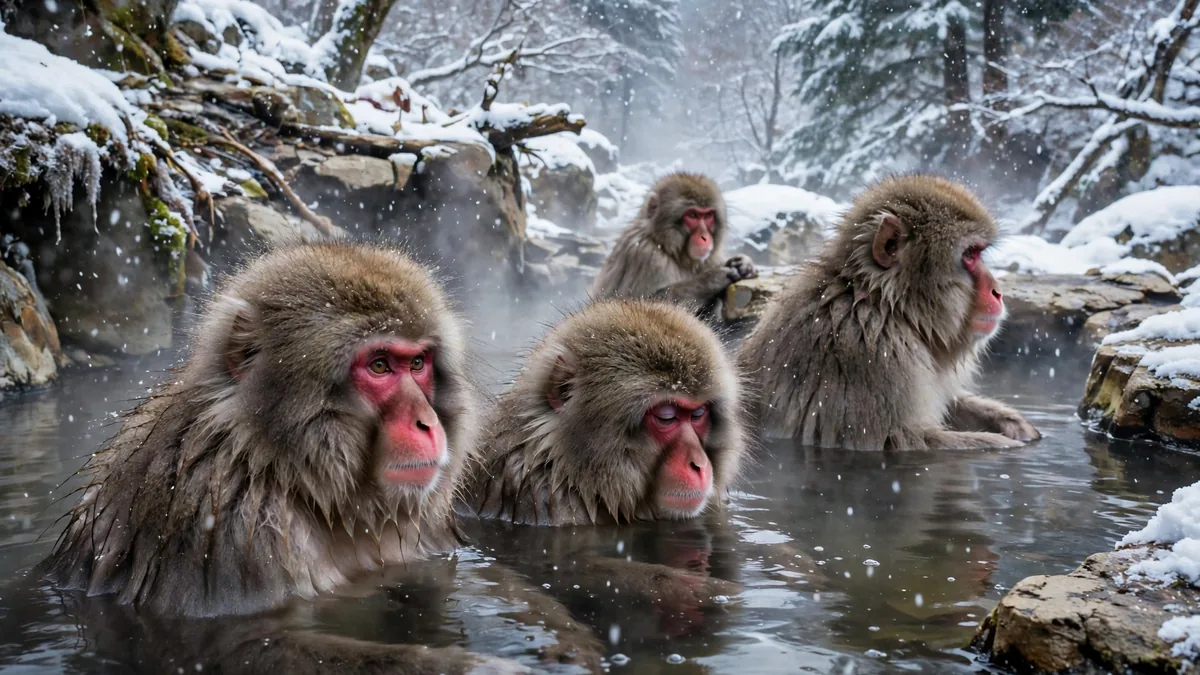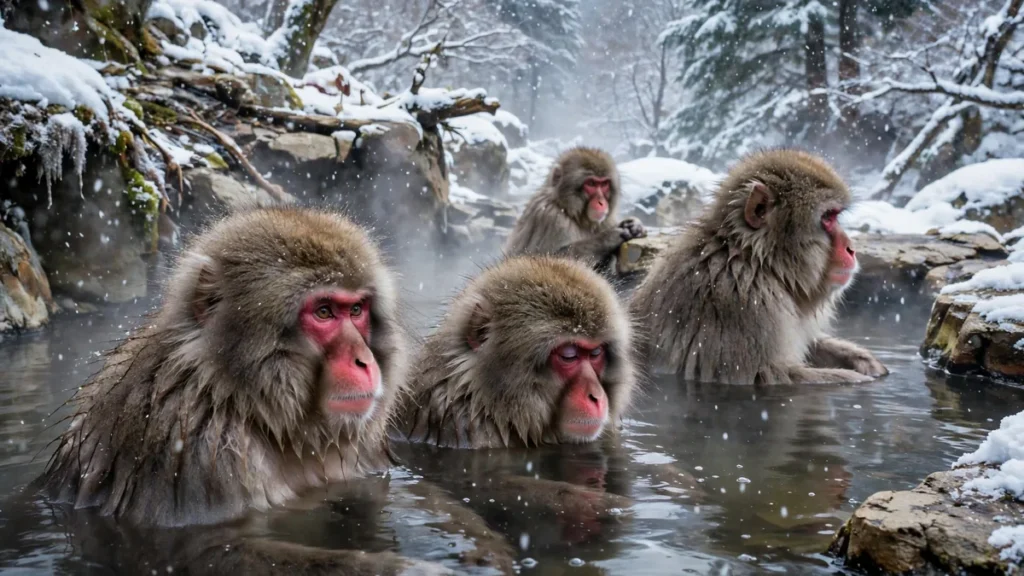
The japanese macaque species is a single species, Macaca fuscata, also known as the snow monkey, and it is the only monkey native to Japan. If you are asking how many japanese macaque species there are, the answer is one, and it is the northernmost-living non-human primate in the world, surviving winters of deep snow and temperatures down to minus 20 degrees Celsius.
Japanese macaques are stocky monkeys with thick grey-brown fur, pink faces and short stubby tails, famous for sitting shoulder-deep in steaming hot springs while snow falls around them. They live in large, close-knit troops, learn new habits from each other, and range from warm subtropical forests in the south to snowy mountain forests in the north.
Key takeaways
- There is only one japanese macaque species, Macaca fuscata, also known as the snow monkey, and it is the only monkey native to Japan.
- Japanese macaques are the northernmost-living non-human primates, reaching the Shimokita Peninsula in northern Honshu and coping with temperatures as low as minus 20 degrees Celsius.
- Adult males weigh about 11.3 kilograms and females about 8.4 kilograms, with thick grey-brown fur, pink faces and a tail only about 9 centimetres long.
- Japanese macaques are omnivores that eat fruit, leaves, seeds, bark, fungi and insects, and they are famous for bathing in hot springs and washing sweet potatoes.
- The Japanese macaque is listed as Least Concern, with a population estimated at roughly 155,000 animals, though some troops clash with farmers over crops.
What makes a Japanese macaque a Japanese macaque
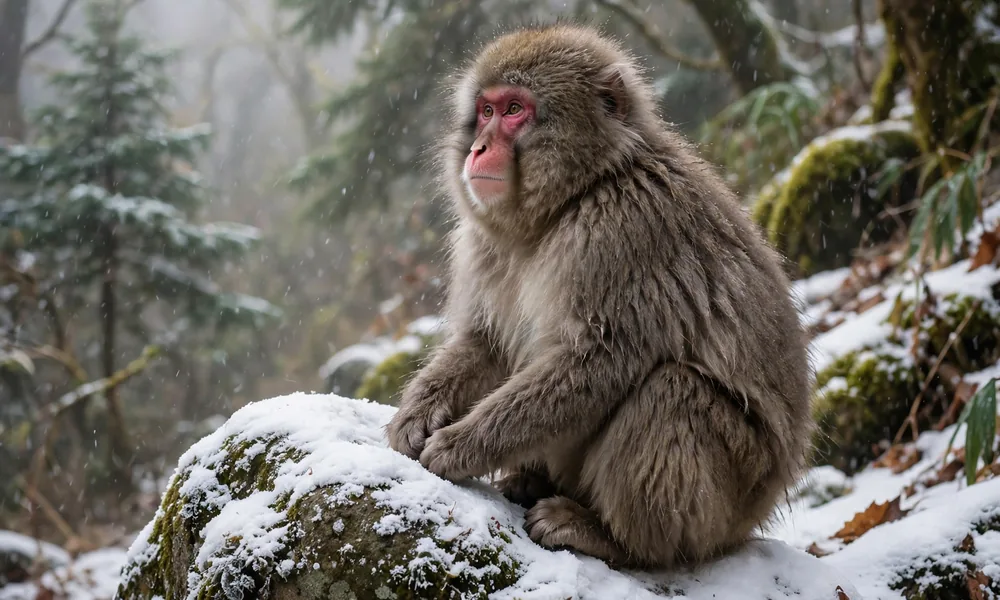
A Japanese macaque is a stocky monkey built for cold weather. Its coat is thick and brownish grey, growing denser as temperatures fall, and its face and rump are bare and pinkish red, flushing deeper red in the breeding season. Males average about 57 centimetres in head-and-body length and 11.3 kilograms, while females average about 52 centimetres and 8.4 kilograms, and animals from colder northern areas tend to weigh more than those from warmer southern ones.
The tail is a short stump of only about 9 centimetres, and the monkey moves mostly on all fours, though it climbs and leaps well and is a strong swimmer, reported to swim more than half a kilometre. Its thick winter coat lets the snow monkey stay active through months of snow and freezing wind. Like the colobus monkey, another Old World monkey, the Japanese macaque is a daylight animal that spends much of its day feeding, travelling and grooming.
The Japanese macaque species and their relatives
The Japanese macaque belongs to the genus Macaca, which holds 23 species of macaques spread across Asia and North Africa, and it is the only member of the genus that lives in Japan. Two subspecies are recognised: the mainland form, Macaca fuscata fuscata, of Honshu, Shikoku and Kyushu, and Macaca fuscata yakui, which lives only on Yakushima, a small island south of Kyushu, where it lives in warm subtropical forest.
Its closest relatives include the rhesus macaque of South and Central Asia, the long-tailed macaque of South-East Asia and the Barbary macaque of North Africa and Gibraltar, the only macaque that lives outside Asia. All macaques are robust, social Old World monkeys with cheek pouches for carrying food, but the Japanese macaque is the hardiest of them all, the only one that has learned to live in snow. Like the capuchin monkey of the Americas, it is clever, though the two belong to different families on different continents.
| Type | Animal | Where it lives | Best-known food | Size or Weight |
|---|---|---|---|---|
| Species | Japanese macaque (Macaca fuscata) | Japan | Fruit, leaves and insects | About 8 to 11 kg |
| Species | Rhesus macaque (Macaca mulatta) | South and Central Asia | Fruit, seeds and insects | 5 to 12 kg |
| Species | Long-tailed macaque (Macaca fascicularis) | South-East Asia | Fruit, crabs and insects | 5 to 9 kg |
| Species | Barbary macaque (Macaca sylvanus) | North Africa and Gibraltar | Leaves, fruit and seeds | 10 to 16 kg |
| Species | Lion-tailed macaque (Macaca silenus) | Western Ghats, India | Fruit, leaves and insects | 5 to 10 kg |
| Species | Bonnet macaque (Macaca radiata) | Southern India | Fruit, leaves and insects | 5 to 9 kg |
How Japanese macaques live
Japanese macaques are omnivores with a strongly seasonal diet. In spring they eat flowers, buds and young leaves, in summer and autumn they feast on fruit, seeds and nuts, and in winter they fall back on bark, buds and fungi. More than 213 plant species have been recorded in their diet, along with insects, and they carry food in their cheek pouches as they move through the forest.
Japanese macaques live in troops of 20 to 100 animals, built around the females of a family line. Females stay in the troop where they were born for life and inherit their rank from their mothers, while males leave before maturity and join other troops. Grooming is the glue of troop life: monkeys pick through each other’s fur for hours, which keeps coats clean, calms tempers and strengthens friendships, and in warm habitats it takes up more than a quarter of the day.
Japanese macaques are famous for learning new habits from each other. At Jigokudani in Nagano, troops bathe in natural hot springs in winter, a habit that began in the 1960s when monkeys were fed there to lure them away from crops, and research shows the warm baths lower stress, especially in higher-ranking females. On Koshima Island in 1953, a young female called Imo began washing sand off sweet potatoes in a stream, and later in the sea, and the habit spread through her troop, becoming one of the best-known examples of animal culture. They have also been seen rolling snowballs for fun, and troops only a few hundred miles apart can have different pitches in their calls, like regional accents. Breeding is seasonal, with mating in autumn and winter and births in spring and summer after a pregnancy of about 173 days, and females usually give birth to a single infant. Females can live for up to 32 years and males for up to 28 years.
Where Japanese macaques live
Japanese macaques live only in Japan, on the three main islands of Honshu, Shikoku and Kyushu, along with several smaller islands, but not on Hokkaido in the far north. Their range runs from the subtropical forests of Yakushima in the south to the Shimokita Peninsula at the northern tip of Honshu, around 41 degrees north, the farthest north any non-human primate lives in the wild. In between they occupy warm broadleaf forest, cool temperate deciduous forest and cold subalpine forest, from sea level up to about 3,000 metres.
In the south, on Yakushima, macaques live in warm, wet forest where fruit and leaves are available all year, while in the north, on the Shimokita Peninsula, snow can lie for months and temperatures approach minus 20 degrees Celsius, so the monkeys huddle together on sleeping grounds and dig for food beneath the snow. They sleep in trees, on rocks and on the ground, and in winter they crowd together for warmth. Like the squirrel monkey, another highly social monkey, Japanese macaques are rarely alone.
The Japanese macaque is listed as Least Concern, because it is widespread, lives in many protected areas and shows no serious range-wide decline, and its population is estimated at roughly 155,000 animals. Numbers have grown in many places, and that success brings its own problems: troops raid farms for fruit, vegetables and rice, and around 10,000 macaques are killed by farmers every year to protect crops. The species is also on CITES Appendix II, which regulates international trade in macaques.
Best seasons for Japanese macaque watching
The best time to watch Japanese macaques is in winter, from December to February, when the snow monkeys of Jigokudani bathe in the hot springs and the snow-covered forest makes them easy to spot. Mornings are best, when the monkeys come down to the pools. In spring and summer the monkeys are easier to see feeding in the forests, and autumn brings the noisy breeding season.
Staying safe around Japanese macaques
Japanese macaques are wild animals, and although they look calm in the hot springs, they can bite if they feel cornered or if food is involved. Never feed them, never try to touch one, and keep food and shiny objects out of sight, because a bold monkey may snatch them. Keep a respectful distance, stay on the marked paths at Jigokudani, and follow the instructions of the park staff.
Japanese macaque watching checklist
A little preparation turns a winter visit to the snow monkeys into a real chance of watching them bathe in the hot springs.
- A winter visit between December and February, when the snow monkeys bathe in the hot springs at Jigokudani.
- Warm clothing, waterproof boots and gloves, because the monkey park is cold and snowy.
- An early morning start, when the macaques come down to the pools and the steam is thickest.
- Binoculars, for watching troops feeding and grooming in the trees without disturbing them.
- A camera with a zoom lens, for close views of the monkeys in the water without getting close.
- A visit to Jigokudani Monkey Park in Nagano, reached on foot along the snowy forest trail.
- Patience and quiet feet, because the monkeys relax when visitors move slowly and speak softly.
Frequently asked questions
How many Japanese macaque species are there?
There is only one japanese macaque species, Macaca fuscata, also known as the snow monkey. Two subspecies are recognised: the mainland form of Honshu, Shikoku and Kyushu, and a smaller form that lives only on Yakushima island.
Why are Japanese macaques called snow monkeys?
They are called snow monkeys because some of them live where snow covers the ground for months each year, and no other non-human primate lives farther north or in a colder climate. Macaques in the south live in warm subtropical forest and rarely see snow.
What does a Japanese macaque eat?
Japanese macaques are omnivores that eat fruit, leaves, seeds, bark, fungi, flowers and insects, with more than 213 plant species recorded in their diet. They eat whatever the season offers, from spring buds and summer fruit to bark and fungi in winter.
Do Japanese macaques really bathe in hot springs?
Yes. Japanese macaques at Jigokudani in Nagano bathe in natural hot springs in winter, a habit that began in the 1960s when monkeys were fed there to lure them away from crops. Research shows the warm baths lower stress, especially in higher-ranking females.
How is this guide different from the Indian rhinoceros species guide?
This guide covers the Japanese macaque, a single species of clever, social monkey that lives in troops in the forests of Japan and bathes in hot springs in winter, while our Indian rhinoceros species guide covers the Indian rhinoceros, a huge, solitary, one-horned grazer that wallows in the floodplain grasslands of India and Nepal. Japanese macaques live in noisy family troops, and Indian rhinoceroses live alone.
Are Japanese macaques endangered?
No, the Japanese macaque is listed as Least Concern, with a population estimated at roughly 155,000 animals and a stable trend. Its main problem is conflict with farmers, because troops raid crops, and around 10,000 macaques are killed every year.
Conclusion
The japanese macaque species shows how much a single monkey can do with a cold climate and a clever mind: one species, from subtropical Yakushima to the snowy Shimokita Peninsula, washing sweet potatoes, bathing in hot springs and rolling snowballs for fun.
If you go looking for one, go in winter, go early, and walk quietly along the snowy trail to the hot springs. Watch the steam rise as a pink-faced monkey closes its eyes in the warm water, and you will see why the snow monkey is one of the most loved animals in Japan.