The indian rhinoceros species is a single species, Rhinoceros unicornis, also called the greater one-horned rhinoceros, and it is the only rhinoceros in Asia with just one horn. If you are asking how many indian rhinoceros species there are, the answer is one, and about 4,075 of them were counted in the wild in March 2025, most of them in the grasslands of Assam in north-eastern India and in the lowlands of Nepal.
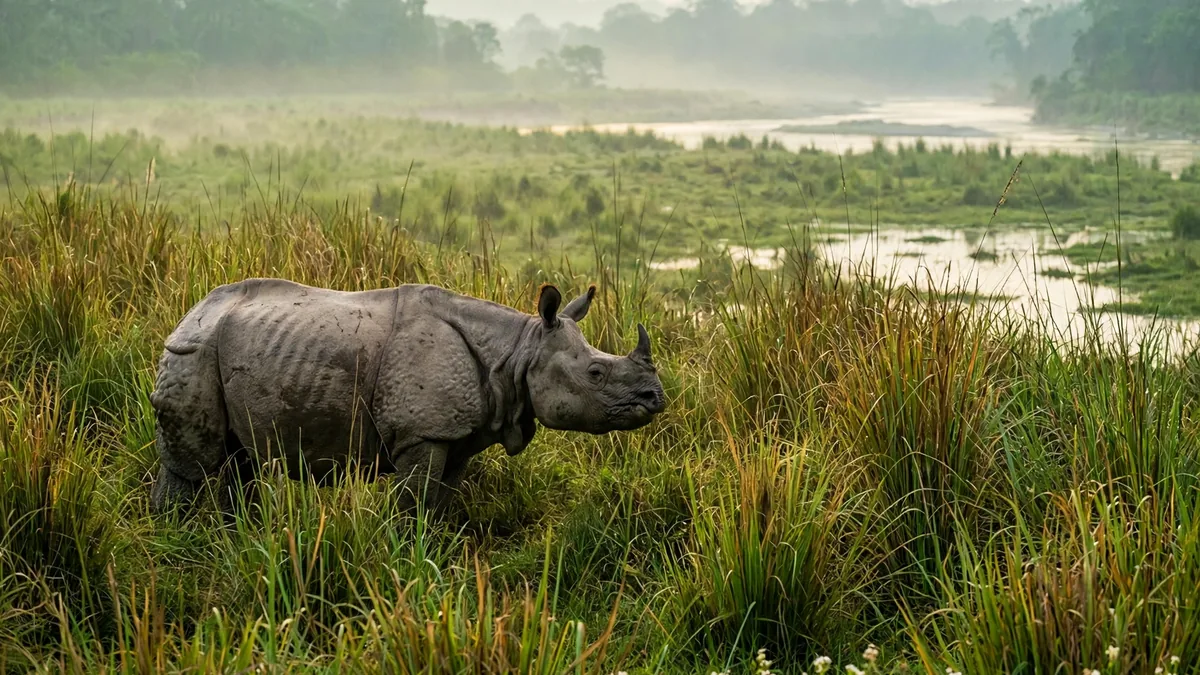
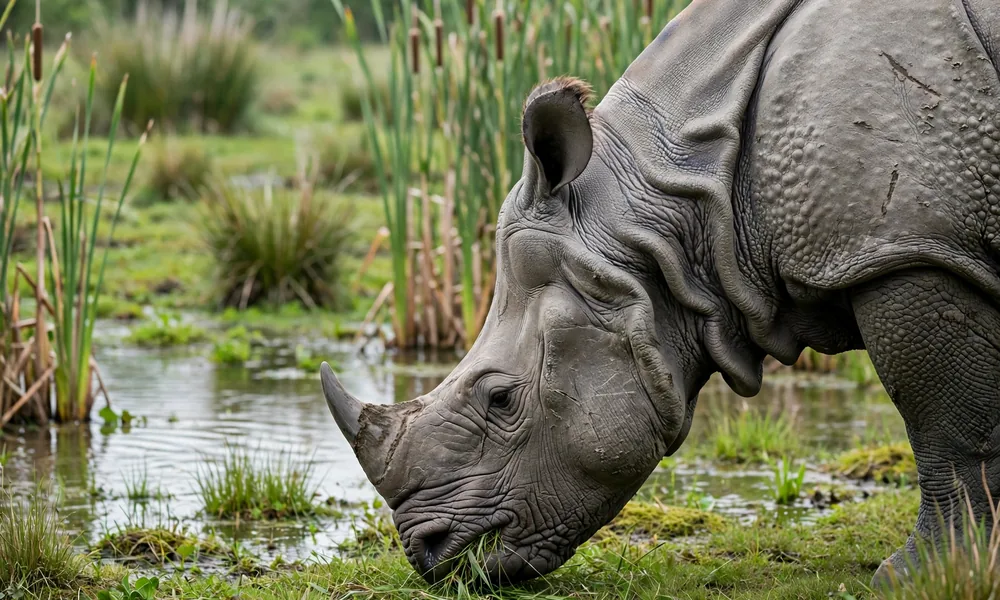
Indian rhinoceroses are huge, grey, nearly hairless animals with thick skin folded into plates like armour, and they spend their days grazing in tall grass and wallowing in muddy pools. They are the second largest living rhinoceros in the world and the largest land animal in Asia after the elephant, yet they are gentle grazers that live mostly alone.
Key takeaways
- There is only one indian rhinoceros species, Rhinoceros unicornis, also called the greater one-horned rhinoceros.
- About 4,075 Indian rhinoceroses were counted in the wild in March 2025, up from as few as about 100 animals in the early 1900s.
- Adult males weigh about 2,070 to 2,200 kilograms and females about 1,600 kilograms, and both sexes carry a single horn made of keratin.
- Indian rhinoceroses are grazers that eat mostly grasses, along with leaves, branches, fruit and aquatic plants, and they love to wallow in mud and water.
- The Indian rhinoceros is listed as Vulnerable, with most of the population in Kaziranga National Park in Assam and the rest in a handful of reserves in India and Nepal.
What makes an Indian rhinoceros an Indian rhinoceros
An Indian rhinoceros is easy to recognise. Its skin is grey-brown, thick and almost hairless, folded into deep plates across the shoulders, flanks and hindquarters, with pinkish skin showing in the folds, and the upper legs and shoulders are covered in wart-like bumps. It has a single black horn on its nose, present in both males and females but missing on newborn calves, and the horn is made of keratin, the same material as human fingernails.
The horn usually grows to about 25 centimetres long in most adults, though the longest ever recorded reached 61.6 centimetres, and it starts to show after about six years of age. An adult male stands 163 to 193 centimetres at the shoulder and measures 368 to 380 centimetres from head to tail, while a female is smaller. The Indian rhinoceros is the second largest living rhinoceros, after the white rhinoceros of Africa, and among land mammals native to Asia it is second in size only to the Asian elephant.
The Indian rhinoceros species and their relatives
The Indian rhinoceros belongs to the genus Rhinoceros, which it shares with the Javan rhinoceros, its closest relative, and it is one of only five rhinoceros species left alive in the world. The other three are the white and black rhinoceros of Africa, which both carry two horns, and the Sumatran rhinoceros of South-East Asia, the smallest and hairiest of the five. The Indian rhinoceros is the largest of the three Asian rhinoceroses and the only one with a single horn and such deeply folded, armour-like skin.
All five living rhinoceroses have poor eyesight and a sharp sense of smell, but the Indian rhinoceros is the most water-loving of them all. It spends much of the day in and around rivers, lakes and mud wallows, and it is a strong swimmer that will happily cross deep water. Its prehensile upper lip helps it grasp grasses, and unlike the browsing black rhinoceros it is mainly a grazer, feeding on the tall grasses of the floodplain.
| Type | Animal | Where it lives | Best-known food | Size or Weight |
|---|---|---|---|---|
| Species | Indian rhinoceros (Rhinoceros unicornis) | India and Nepal | Grasses and aquatic plants | 1,600 to 2,200 kg |
| Subspecies | Southern white rhinoceros (Ceratotherium simum simum) | Southern Africa | Grasses | 1,800 to 2,400 kg |
| Subspecies | Northern white rhinoceros (Ceratotherium simum cottoni) | Two females left in Kenya | Grasses | About 1,800 kg |
| Species | Black rhinoceros (Diceros bicornis) | Eastern and southern Africa | Leaves, twigs and shrubs | 800 to 1,400 kg |
| Species | Javan rhinoceros (Rhinoceros sondaicus) | Ujung Kulon, Java | Leaves, shoots and fruit | 900 to 2,300 kg |
| Species | Sumatran rhinoceros (Dicerorhinus sumatrensis) | Sumatra and Borneo | Leaves, twigs and fruit | 500 to 1,000 kg |
How Indian rhinoceroses live
Indian rhinoceroses are grazers, and grasses make up most of what they eat. They feed mainly in the early morning and late afternoon, tearing up mouthfuls of grass with their prehensile upper lip, and they also eat leaves, branches, fruit and aquatic plants such as water hyacinth. They drink plenty of water, often feeding close to the rivers and lakes of their grassland home.
Wallowing is a big part of an Indian rhinoceros’s day. It spends hours lying in muddy pools and shallow water, which cools its body, protects its skin from biting insects and helps it shed parasites. It is an excellent swimmer, and it can also run at surprising speed over short distances when startled. Despite its size, it moves quietly through the tall grass, and its hearing and sense of smell are far sharper than its eyesight.
Indian rhinoceroses are mostly solitary. Adult males live alone and defend a home range, marking it with dung piles and sprays of urine, while females live alone or with a calf at foot. A female gives birth to a single calf after about 15 to 16 months, and the calf weighs about 60 to 70 kilograms at birth, with no horn, only a small bump on its nose. The calf stays with its mother for two to three years, and females usually have their first calf at about six years old in the wild. Indian rhinoceroses can live for 35 to 40 years in the wild, and captive animals have lived to 47 years.
Where Indian rhinoceroses live
Indian rhinoceroses live on the floodplains of the Indo-Gangetic Plain, in about a dozen protected areas in northern India and southern Nepal. Their home is the tall grassland of the Brahmaputra and Ganges river valleys, where grasses grow up to 7 metres tall by the end of the monsoon in October, mixed with riverine forest, marshes and oxbow lakes. More than half of the world’s population lives in a single place, Kaziranga National Park in Assam, where about 2,400 animals were counted.
The other strongholds are smaller but important. Pobitora Wildlife Sanctuary in Assam holds one of the densest rhino populations in the world, while Manas, Orang and Dudhwa hold smaller groups, and in Nepal the main populations live in Chitwan and Bardia National Parks. Together these parks protect nearly all of the roughly 4,075 animals counted in March 2025, with about 3,323 in India and 752 in Nepal.
The Indian rhinoceros has come back from the edge of extinction. In the early 1900s only about 100 animals were left, and Kaziranga itself held as few as 12, after decades of hunting for sport and for the horn trade. Strict protection, armed anti-poaching patrols and the creation of national parks allowed numbers to climb, from about 2,577 in 2006 to 4,014 in 2022 and 4,075 in 2025. The species is still listed as Vulnerable, because its population is fragmented and more than half of it lives in one park, where a single flood, disease outbreak or poaching surge could do great harm.
Best seasons for Indian rhinoceros watching
The best time to watch Indian rhinoceroses is in the dry season, from November to April, when the tall grass has been cut back or burned and the animals are easier to see. Early mornings are best, when rhinos graze before the heat builds, and late afternoons are good too. Kaziranga closes during the monsoon, roughly from May to October, when much of the park floods.
Staying safe around Indian rhinoceroses
An Indian rhinoceros weighs more than two tonnes, and it can charge at speed if it feels threatened, especially a mother with a calf. Never approach one on foot, always stay inside the vehicle on a safari, keep a respectful distance, and follow the instructions of your guide and the park guards. If a rhino turns towards you with its ears up and its head raised, back away calmly and give it plenty of space.
Indian rhinoceros watching checklist
A little preparation turns a morning safari into a real chance of watching a greater one-horned rhinoceros grazing in the open.
- A dry-season visit between November and April, when the grass is short and the parks are open.
- A jeep safari or elephant safari in Kaziranga National Park, booked through the park or a licensed operator.
- An early morning start, when Indian rhinoceroses are out grazing before the heat of the day.
- Binoculars, for picking out a rhino half-hidden in the tall grass at a safe distance.
- A camera with a zoom lens, for close views without getting close enough to disturb the animal.
- Sun protection, a hat and drinking water, because the grassland is open and the sun is strong.
- A licensed guide, who knows where the rhinos feed and how to keep visitors safe around them.
Frequently asked questions
How many Indian rhinoceros species are there?
There is only one indian rhinoceros species, Rhinoceros unicornis, also called the greater one-horned rhinoceros. It is one of five living rhinoceros species in the world, and it is the only Asian rhinoceros with a single horn.
Why does the Indian rhinoceros have only one horn?
The Indian rhinoceros has a single horn because that is how its species evolved, and both males and females carry one. The horn is made of keratin, the same material as human fingernails, and it grows to about 25 centimetres in most adults, though the longest recorded reached 61.6 centimetres.
What does an Indian rhinoceros eat?
Indian rhinoceroses are grazers that eat mostly grasses, along with leaves, branches, fruit and aquatic plants such as water hyacinth. They feed mainly in the early morning and late afternoon, and they use their prehensile upper lip to grasp and pull up food.
Where can you see an Indian rhinoceros in the wild?
The best place to see an Indian rhinoceros is Kaziranga National Park in Assam, which holds more than half of the world’s population, about 2,400 animals. Smaller numbers live in Pobitora, Manas, Orang and Dudhwa in India, and in Chitwan and Bardia National Parks in Nepal.
How is this guide different from the impala species guide?
This guide covers the Indian rhinoceros, a single species of huge, solitary, one-horned grazer that wallows in the floodplain grasslands of India and Nepal, while our impala species guide covers the impala, a swift, herd-living antelope of the African savanna that grazes and browses in groups and leaps to escape predators. Indian rhinoceroses live alone in tall grass and mud, and impalas live in herds on open plains.
Are Indian rhinoceroses endangered?
No, the Indian rhinoceros is listed as Vulnerable, not Endangered, and its population has grown from about 100 animals in the early 1900s to about 4,075 in 2025. It is still at risk, because most of the population lives in one park and poaching for its horn remains a threat.
Conclusion
The indian rhinoceros species shows how a single animal can come back from almost nothing: one species, one horn, and a population that fell to about 100 animals and has climbed back to about 4,075, most of them in the tall grasslands of Kaziranga.
If you go looking for one, go in the dry season, go early, and look for a great grey shape moving slowly through the grass towards the water. Watch it graze and wallow, and you will see why this armoured giant has become the symbol of wildlife conservation in India and Nepal.