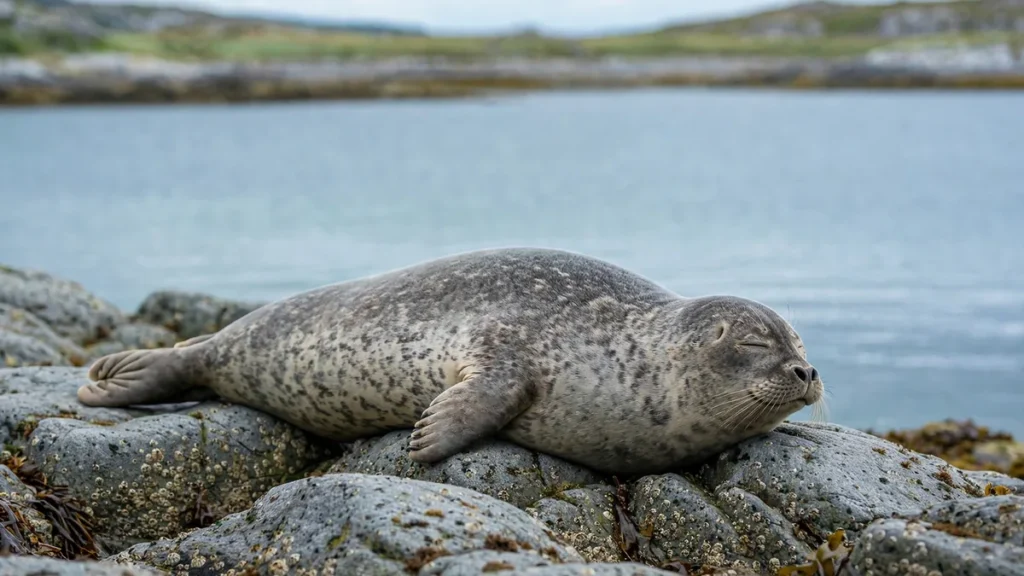
The harbor seal species is a single species, Phoca vitulina, also called the common seal, a spotted true seal of the temperate and Arctic coasts of the Northern Hemisphere. If you are asking how many harbor seal species there are, the answer is one, and it is one of the most widespread seals in the world, with about 350,000 to 500,000 animals hauling out on rocky shores from Alaska to Scotland and from California to Japan.
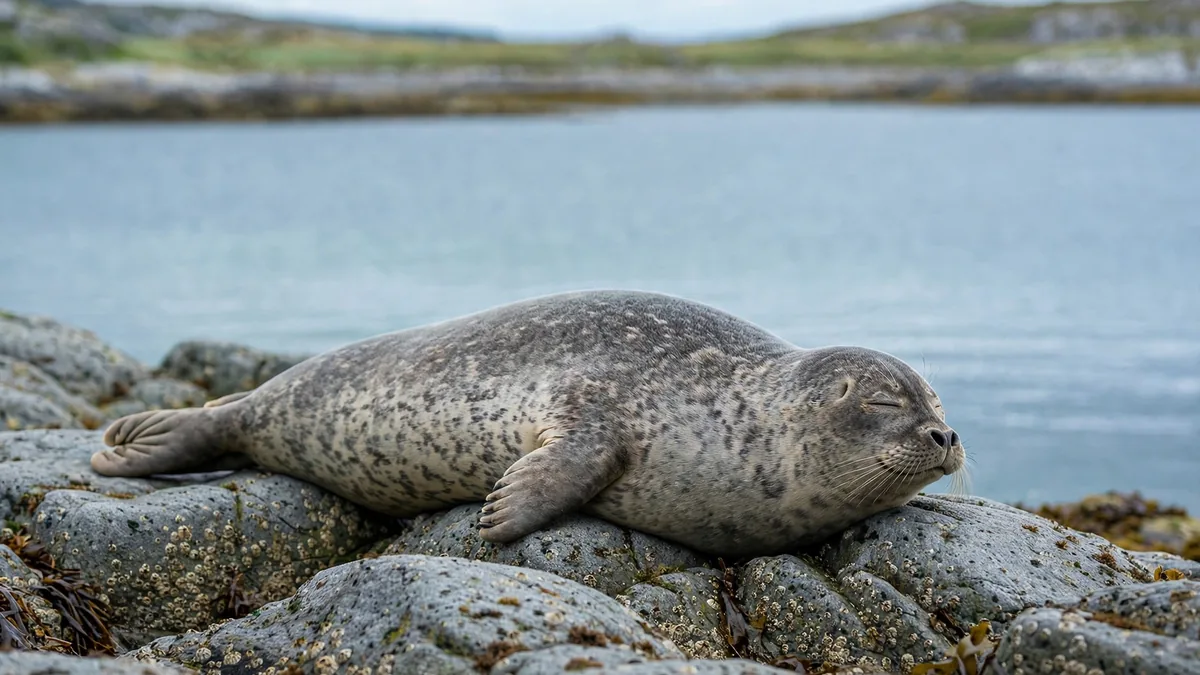
Harbor seals are easy to recognise: a round head with no visible ears, large dark eyes, a short muzzle with whiskers, V-shaped nostrils, and a grey, brown or tan coat marked with dark spots. They are true seals, with no external ear flaps, and they cannot turn their hind flippers forward, so on land they move by wriggling on their bellies, while in the water they are fast and graceful.
Key takeaways
- There is one harbor seal species, Phoca vitulina, also called the common seal, with three recognised subspecies.
- An adult can reach about 1.85 metres long and weigh 55 to 168 kilograms, males slightly larger than females.
- They eat fish such as herring, cod and sand eels, as well as squid, octopus and crustaceans, and they can stay underwater for up to 30 minutes.
- A female gives birth to a single pup after about nine months, and the pup can swim within hours of birth, weaned after four to six weeks.
- It is listed as Least Concern, with about 350,000 to 500,000 animals worldwide, though the freshwater Ungava seal subspecies is Endangered.
What makes a harbor seal a harbor seal
A harbor seal is built for life in cold water. Its body is torpedo-shaped, its coat is short and dense, and a thick layer of blubber keeps it warm in seas that would chill a human in minutes. Its foreflippers are short and clawed, and its hind flippers trail behind, steering it like a rudder. On land it looks clumsy, but in the water it is quick and agile.
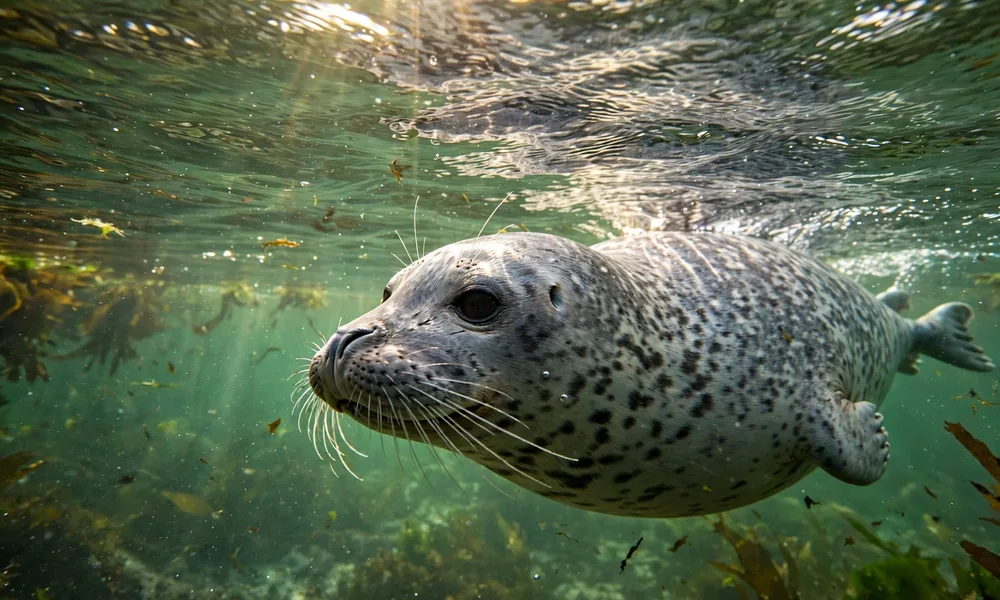
The harbor seal’s face is one of its most distinctive features: a short, dog-like muzzle, large dark eyes and long pale whiskers, which are not just decoration, since they sense tiny movements in the water and help the seal find fish in murky water or in the dark. Its V-shaped nostrils close tightly when it dives. Unlike the elephant seal, which is enormous and has a trunk-like nose, the harbor seal is modest in size, with a gentle, almost cat-like face.
The harbor seal species and their relatives
The harbor seal belongs to Phoca, a genus of true seals in the family Phocidae, and one of its most widespread members. There are three recognised subspecies: the Atlantic common seal, Phoca vitulina vitulina, of Europe and north-western Asia; the Pacific harbor seal, Phoca vitulina richardii, of western North America and eastern Asia; and the Ungava seal, Phoca vitulina mellonae, of a few lakes and rivers in northern Quebec. Two more forms have been proposed, the western Atlantic common seal and the insular seal of eastern Asia, but they are not currently recognised as separate subspecies.
Its closest relatives are the other true seals of the northern seas, including the grey seal, the ringed seal and the spotted seal. The walrus is another northern pinniped, but it is far bigger, with tusks and a moustache of bristles. Harbor seals are sometimes confused with grey seals, but grey seals are larger, with a longer, more dog-like face.
| Type | Animal | Where it lives | Best-known food | Length or Weight |
|---|---|---|---|---|
| Genus | Harbor seals (genus Phoca) | Northern Hemisphere coasts | Fish, squid and crustaceans | Up to about 1.85 m long |
| Species | Harbor seal (Phoca vitulina) | North Atlantic and North Pacific | Herring, cod and sand eels | 55 to 168 kg |
| Subspecies | Atlantic common seal (P. v. vitulina) | Europe and north-western Asia | Cod, herring and flatfish | Up to about 1.85 m long |
| Subspecies | Pacific harbor seal (P. v. richardii) | Western North America | Herring, salmon and squid | Up to about 1.9 m long |
| Subspecies | Ungava seal (P. v. mellonae) | Lakes of northern Quebec | Fish and crustaceans | About 1.4 to 1.7 m long |
How harbor seals live
Harbor seals are hunters of the shallow coastal seas. Fish are the mainstay of the diet, especially herring, cod, sand eels and flatfish, along with squid, octopus, crabs and shrimps, and they take whatever is most common near their haul-outs. They hunt by sight and by whisker, usually diving for only a few minutes at a time, though they can stay down for up to 30 minutes. They feed mostly at high tide, when fish come in close to shore, and rest on land at low tide.
Harbor seals are mostly solitary in the water, but gregarious on land, gathering at favoured haul-out sites on rocks, sandbanks and beaches. They do not form the huge colonies of some other seals, each keeping a small space around itself. They moult in summer, shedding their old coat and growing a new one, and spend more time out of the water during the moult.
A female harbor seal gives birth to a single pup after a gestation of about nine months, and she raises it alone. The pup is born on land, weighing about 8 to 16 kilograms, and can swim and dive within hours of birth, which is unusual among seals. The mother feeds it on rich, fatty milk, and the pup can double its weight before weaning after four to six weeks. Pups shed a white coat before birth, so they are born with their spotted adult coat in place. Females live for about 30 to 35 years, males for about 20 to 25 years, and females breed from three to five years, males from four to six.
Where harbor seals live
Harbor seals live along the temperate and Arctic coasts of the Northern Hemisphere, in the North Atlantic and the North Pacific, and in the seas around them, including the North, Baltic and Bering Seas. In Europe they range from northern Portugal and Brittany around the British Isles and Scandinavia to Svalbard and the Barents Sea, and in North America from the mid-Atlantic states to the Canadian Arctic and Greenland. In the Pacific they range from Baja California up the west coast of North America to Alaska, and across to Japan and eastern Asia.
Harbor seals use shallow waters close to shore, including estuaries, bays, rocky coasts and sandy beaches, and haul out on rocks, sandbanks and mudflats at low tide to rest, moult and give birth. The Ungava seal is the exception: it lives only in fresh water, in a few lakes and rivers in northern Quebec that drain into Hudson and James Bays. Like the sea otter, another animal of the cold northern coasts, the harbor seal depends on clean, productive shallow seas, and suffers when they are polluted or overfished.
The harbor seal is listed as Least Concern on the IUCN Red List, because it is widespread and its population of about 350,000 to 500,000 animals is stable, though some local populations are in trouble. The Greenland, Hokkaido and Baltic Sea populations are exceptions, and the Ungava seal is listed separately as Endangered. Harbor seals face entanglement in fishing gear, disturbance at haul-out sites, pollution and disease, including phocine distemper virus, which has killed thousands in the North Sea. Sealing was once common, but it is now illegal in many countries in its range.
Best seasons for harbor seal watching
The best time to watch harbor seals is summer, from about June to September, when the seals haul out in large numbers to moult. Low tide is the best time of day, when the rocks and sandbanks appear and the seals come ashore to rest. The pupping season, in late spring and early summer, is also good, but keep your distance then, because mothers and pups are easily disturbed.
Staying safe around harbor seals
A harbor seal is a wild animal and should be watched from a distance, never approached or fed. A seal that looks friendly is still a wild animal with sharp teeth, and a frightened seal can bite, while one chased into the water loses its rest. Never get between a seal and the sea, and keep dogs on a lead near haul-outs. If you find a pup alone on a beach, do not touch it: the mother is usually nearby, and she will return once people have left.
Harbor seal watching checklist
A little preparation turns a low-tide walk along a rocky shore into a real chance of seeing seals on the rocks.
- A rocky shore, sandbank or estuary at low tide, when the haul-out sites appear.
- Binoculars, because seals rest on rocks and sandbanks well away from the shore path.
- Quiet feet and patience, because a seal will slip into the water at the first sign of approach.
- A camera with a zoom lens, for close views of the spotted coat without disturbing the seals.
- A tide table, so you can plan your visit for low tide.
- Warm, windproof clothing and waterproof footwear, because the best seal shores are exposed.
- A field guide to seals, for telling a harbor seal from a grey seal.
Frequently asked questions
How many harbor seal species are there?
There is one harbor seal species, Phoca vitulina, also called the common seal, with three recognised subspecies: the Atlantic common seal, the Pacific harbor seal and the freshwater Ungava seal of northern Quebec. Two more forms have been proposed but are not recognised.
What is the difference between a harbor seal and a grey seal?
Harbor seals are smaller than grey seals, with a shorter, more cat-like face and V-shaped nostrils, while grey seals are larger, with a longer, more dog-like face and parallel nostrils. They also have a more rounded head and a more spotted coat.
What does a harbor seal eat?
Harbor seals eat fish such as herring, cod, sand eels and flatfish, plus squid, octopus, crabs and shrimps. They hunt by sight and by whisker, taking whatever prey is most common near their haul-out.
How long can a harbor seal stay underwater?
Most harbor seal dives last only a few minutes, but a harbor seal can stay underwater for up to 30 minutes. They hunt in shallow coastal waters, so most of their dives are short and close to shore.
How is this guide different from the golden lion tamarin guide?
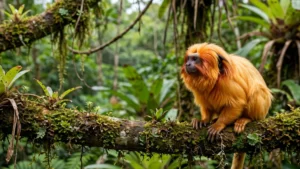
This guide covers the harbor seal, one species of spotted seal that lives in the cold coastal seas of the Northern Hemisphere and eats fish and squid, while our golden lion tamarin species guide covers the golden lion tamarin, a small golden-orange monkey of the Atlantic Forest of Brazil that eats fruit and insects. Harbor seals haul out on rocks in cold seas, and golden lion tamarins leap through the forest canopy in family groups.
Are harbor seals endangered?
No. The harbor seal is listed as Least Concern on the IUCN Red List, with about 350,000 to 500,000 animals worldwide and a stable population. The exception is the freshwater Ungava seal of northern Quebec, listed separately as Endangered.
Conclusion
The harbor seal species shows how one animal can make a living on almost every cold coast of the Northern Hemisphere: one species, Phoca vitulina, from the beaches of California to the shores of Scotland, from the Baltic to the lakes of northern Quebec.
If you go looking for one, go at low tide, go quietly, and look for a spotted head in the shallows or a row of seals resting on the rocks. Watch it slip into the water and disappear, and you will see why this quiet, spotted seal is one of the most familiar faces of the northern shore.