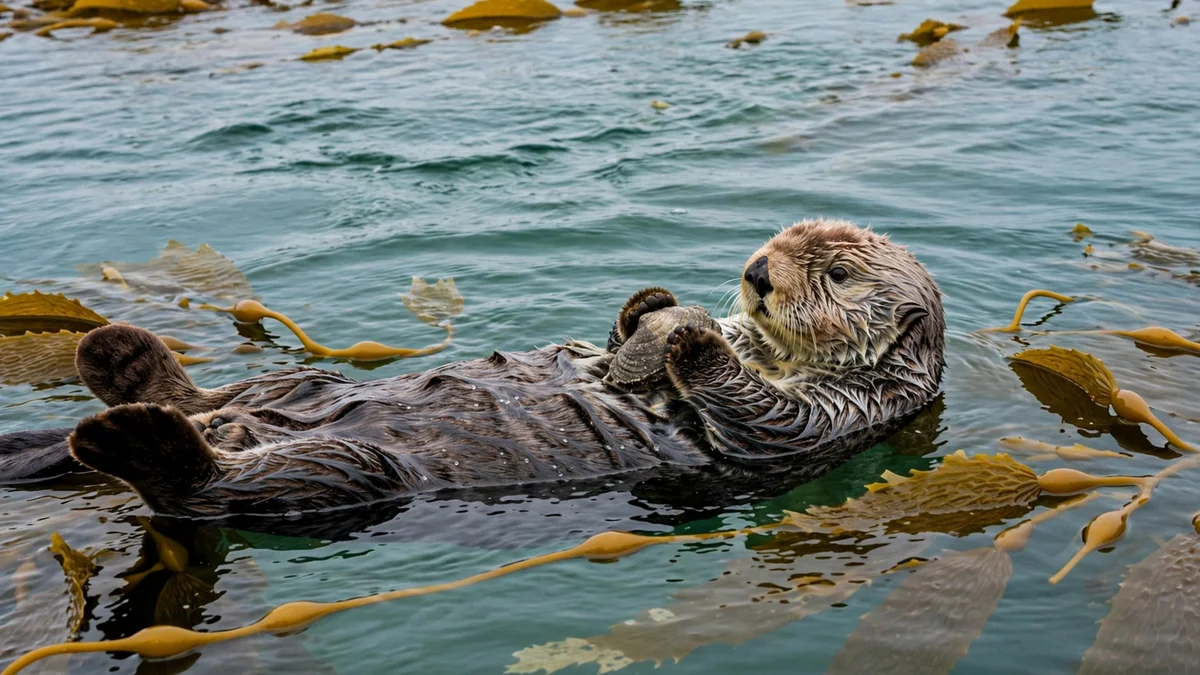
The sea otter species is a single species, Enhydra lutris, a tool-using otter of the North Pacific kelp forests, and the heaviest member of the weasel family. If you are asking how many sea otter species there are, the answer is one: there is only one sea otter species in the world, though it is split into three subspecies, and every sea otter alive today belongs to it.
The sea otter belongs to the family Mustelidae, the weasel family, and it lives along the rocky coasts of the North Pacific, from Alaska and British Columbia to California, and across to Russia and Japan. Its dense brown fur, its habit of floating on its back, and its stone tools make it one of the most recognisable animals of the sea.
Key takeaways
- There is only one sea otter species, Enhydra lutris, and it is split into three subspecies: northern, southern and Asian.
- Sea otters have the densest fur of any mammal, with up to one million hairs per square inch, and they stay warm with fur alone, not blubber.
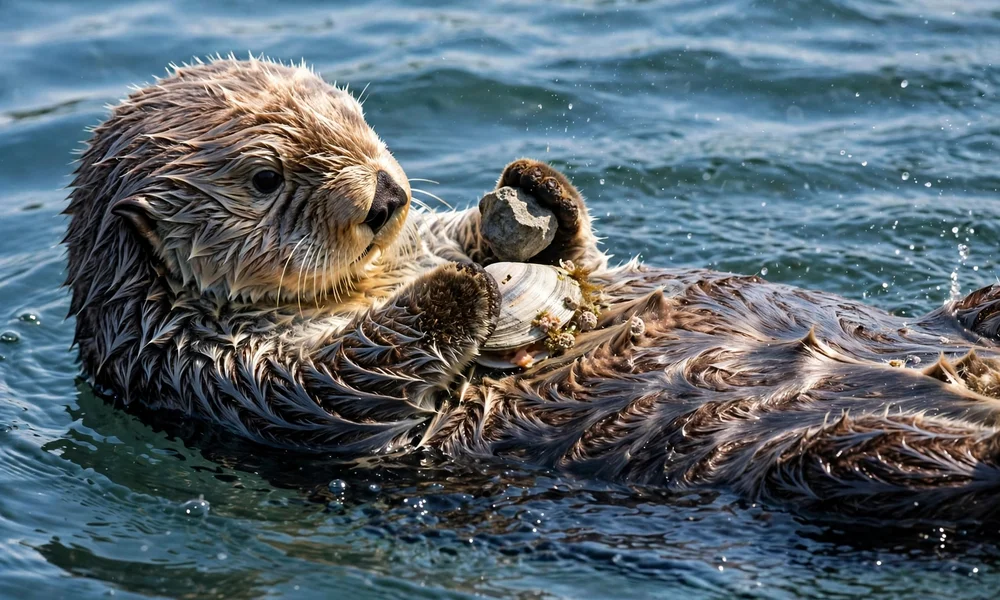
- Sea otters are famous tool users, cracking shellfish open with rocks balanced on their chests.
- Sea otters are keystone animals of the kelp forest, keeping sea urchin numbers down so the kelp can grow.
- Sea otters are listed as Endangered, with roughly 100,000 animals left, after being hunted almost to extinction for their fur.
What makes a sea otter a sea otter
A sea otter is a stocky marine mammal with dense brown fur, a blunt face, small ears, webbed hind feet and a short muscular tail, and it measures roughly 1 to 1.5 metres long and usually weighs between 14 and 45 kilogrammes, with males larger than females. The southern sea otter of California is the smallest of the three subspecies, while the northern sea otter of Alaska is the largest.
The fur defines the sea otter: the densest fur of any mammal, with up to one million hairs per square inch, which traps a layer of air against the skin and keeps the animal warm in freezing water. Unlike other whales and seals, the sea otter has no blubber, so it must groom its fur constantly to keep it clean and waterproof, and it burns so much energy staying warm that it eats a quarter to a third of its own body weight every day.
The sea otter species and their relatives
There is one sea otter species, Enhydra lutris, and it is split into three subspecies. The northern sea otter lives along the coasts of Alaska, British Columbia and Washington, and it is the most numerous of the three. The southern sea otter lives only along the coast of California, where about 3,000 animals remain, and the Asian sea otter lives around Russia, the Kuril Islands and Japan, where it is the rarest of the three.
The North American river otter is the sea otter’s closest freshwater relative, a playful otter of the rivers and lakes of North America, while the Eurasian otter is the otter of the rivers of Europe and Asia. The giant otter is a huge otter of the Amazon rivers, the marine otter is a small otter of the rocky coasts of South America, and the Asian small-clawed otter is the smallest otter in the world. The spotted-necked otter is an otter of the lakes and rivers of Africa, and the smooth-coated otter is an otter of the rivers of South and Southeast Asia.
| Type | Animal | Where it lives | Best-known food | Length or Weight |
|---|---|---|---|---|
| Species | Sea otter (Enhydra lutris) | North Pacific coasts | Sea urchins, clams and crabs | 1 to 1.5 m, 14 to 45 kg |
| Close relative | North American river otter | Rivers and lakes of North America | Fish, frogs and crayfish | 0.9 to 1.3 m, 5 to 14 kg |
| Close relative | Eurasian otter | Rivers of Europe and Asia | Fish, crabs and frogs | 0.9 to 1.3 m, 7 to 12 kg |
| Close relative | Giant otter | Amazon and Pantanal rivers | Fish, especially catfish | 1.5 to 1.8 m, 22 to 32 kg |
| Close relative | Marine otter | Rocky coasts of South America | Crabs, shellfish and fish | 0.9 to 1.2 m, 3 to 5 kg |
| Close relative | Asian small-clawed otter | Wetlands of South and Southeast Asia | Crabs, molluscs and fish | 0.6 to 0.9 m, 2.7 to 5.4 kg |
| Close relative | Spotted-necked otter | Lakes and rivers of Africa | Fish, frogs and crabs | 0.9 to 1.2 m, 3 to 6.5 kg |
How sea otters live
Sea otters are creatures of the kelp forest. A sea otter lives alone or in a group called a raft, floating on its back in the kelp by day and diving for food in the shallows, and it wraps itself in kelp while it rests. Like other otters, it is a playful animal, and it slides, rolls and juggles stones for fun as well as for food.
Sea urchins, clams, mussels, crabs and abalone make up most of the diet, along with snails, octopus and the occasional fish, and a sea otter eats a quarter to a third of its body weight every day. It dives for up to five minutes at a time, gathering food in the loose skin under its forelegs, then floats on its back and cracks the shells open with a rock balanced on its chest, keeping a favourite stone in an armpit pocket.
Breeding happens all year round, and after a gestation of about six months the female gives birth to a single pup, usually in the water, where the pup floats on its mother’s chest because it cannot swim or dive at first. The mother carries the pup everywhere, wraps it in kelp when she dives, and nurses it for six to eight months. Sea otters live for around 15 to 20 years in the wild, with females living longer than males.
Where sea otters live
The sea otter lives along the rocky coasts of the North Pacific, from the Aleutian Islands and Alaska through British Columbia and Washington to California, and across to the Kuril Islands, Kamchatka and Japan, and it is most common in the kelp forests of Alaska, where about 100,000 animals live. The southern sea otter lives only along the central coast of California, around Monterey Bay and Big Sur, where about 3,000 animals remain.
Kelp forest is the key requirement. A sea otter needs shallow rocky water with thick kelp to rest in, and plenty of shellfish to eat, so it follows the kelp as it grows with the seasons, and when the kelp disappears the otters have nowhere to live. It depends on the urchins staying in check, and by eating them it protects the kelp, which shelters fish, seals and seabirds.
The species is listed as Endangered, and its numbers are still far below their historic levels. The main pressures are oil spills, entanglement in fishing gear, shark bites in California, and the loss of kelp forest to warming seas and urchin barrens. Hunters reduced sea otters to fewer than 2,000 animals by 1911, before protection began, and recovery has been slow, with the California population still far below its recovery target.
Best seasons for sea otter watching
There is no closed season, because sea otters are active all year, but the best time to look for them depends on where you go. In California the best months are often September to November, when the seas are calm and the otters raft close to shore in Monterey Bay. In Alaska the best months are often June to August, when the otters feed in the kelp in the early morning.
Staying safe around sea otters
A sea otter is a wild animal with sharp teeth and strong jaws, and it can bite hard enough to break a finger, though sea otters almost never attack people. Keep your distance, never approach an otter raft, and never try to touch or feed an otter, because an otter that learns to approach people is more likely to be hit by a boat or caught in a net. If you see otters from a kayak, keep well back, stay quiet, and watch with binoculars, because otters that are disturbed may leave their kelp forest.
Sea otter watching checklist
A little preparation turns a coast visit into a real chance of seeing a sea otter, so pack for cold wind, bright glare and long quiet hours.
- Binoculars with good low-light performance, for picking a dark head out of the kelp.
- A camera with a zoom lens, because otters should always be watched from a distance.
- Warm clothes and a windproof jacket, because the best watching is on cold coastal mornings.
- A polarised pair of sunglasses, for cutting the glare and seeing into the water.
- A booked boat tour with a guide who knows the otter rafts and the safe routes.
- A plan to be out in the morning, when the otters are most active and feeding.
- Patience and silence, because otters are shy animals and a noisy group will send them away.
Frequently asked questions
How many sea otter species are there?
There is one sea otter species, Enhydra lutris. It is split into three subspecies, the northern, southern and Asian sea otters, but they are all the same species, and the sea otter is the only fully marine member of the otter family.
Why do sea otters use tools?
Sea otters use tools because their food comes in hard shells that teeth alone cannot open. An otter floats on its back, balances a rock on its chest, and smashes a clam or an abalone against it, and some otters keep a favourite stone for years in a pocket under the foreleg.
How do sea otters stay warm without blubber?
Sea otters stay warm with fur alone, the densest fur of any mammal, with up to one million hairs per square inch. The fur traps a layer of air against the skin, and the otter grooms constantly to keep the fur clean and full of air.
Can you keep a sea otter as a pet?
No. A sea otter is a wild animal that needs the cold sea, eats a quarter of its body weight in shellfish every day, and is fully protected by law in every country where it lives. Sea otters in rescue centres are there to recover from injury, and they are not pets.
How is this guide different from the bluefin tuna species guide?
This guide covers the single sea otter species, a tool-using mammal that floats in kelp forests and eats shellfish, while our bluefin tuna species guide covers three bluefin tuna species, giant fish that swim the open oceans at more than 70 kilometres per hour. The otter weighs up to 45 kilogrammes and cracks clams with a rock, and the tuna weighs up to 680 kilogrammes and hunts fish in the deep sea.
Are sea otters endangered?
Sea otters are listed as Endangered, so they are not classed as extinct, but their numbers are still far below historic levels. Roughly 100,000 animals remain, most of them in Alaska, and oil spills, fishing gear and the loss of kelp forest are the main threats.
Conclusion
The sea otter species shows how much character one animal can hold: a single species of tool-using otter, with the densest fur on Earth, and a life spent floating in the kelp forests of the North Pacific.
If you go looking for one, go in the autumn to Monterey Bay, go quietly, and go with patience. Watch a sea otter crack a clam on its chest and you will understand why it has earned its place as the gardener of the kelp forest, and why keeping its cold coastal water clean matters most.