The bluefin tuna species number three, giant tunas of the open ocean, and they are among the largest and fastest fish in the sea, able to cross entire oceans and dive to depths of 1,000 metres. If you are asking how many bluefin tuna species there are, the answer is three: there are three recognised bluefin tuna species in the world, the Atlantic bluefin, the Pacific bluefin and the Southern bluefin, and every bluefin tuna alive today belongs to one of them.
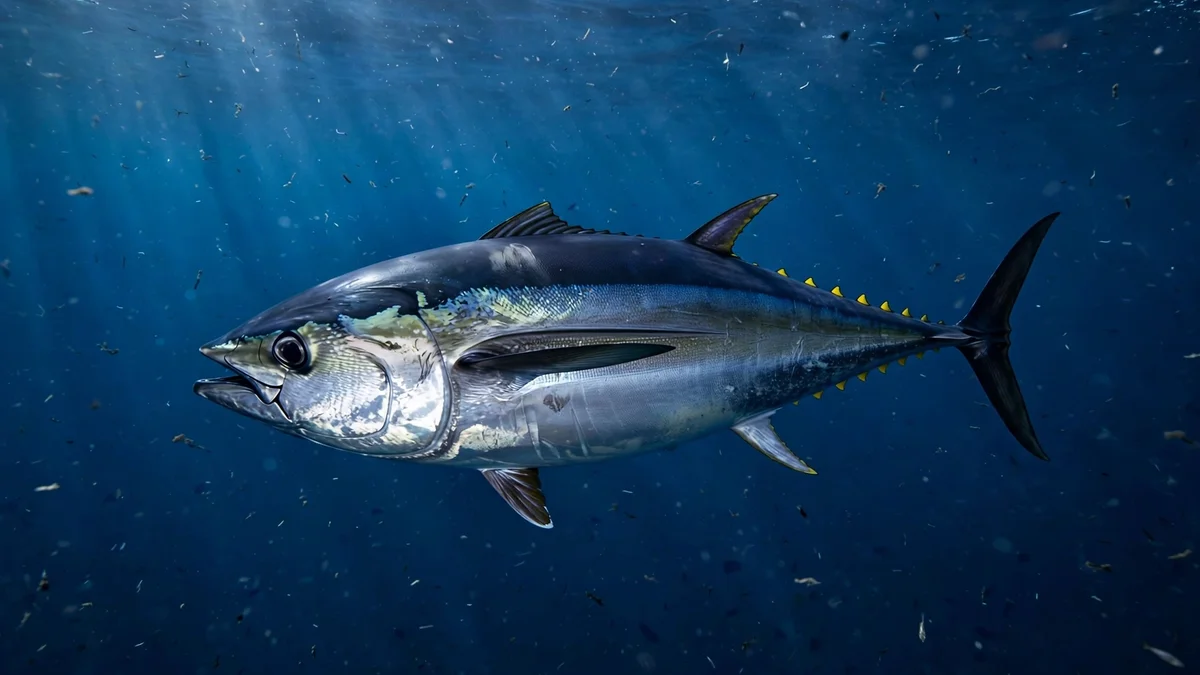
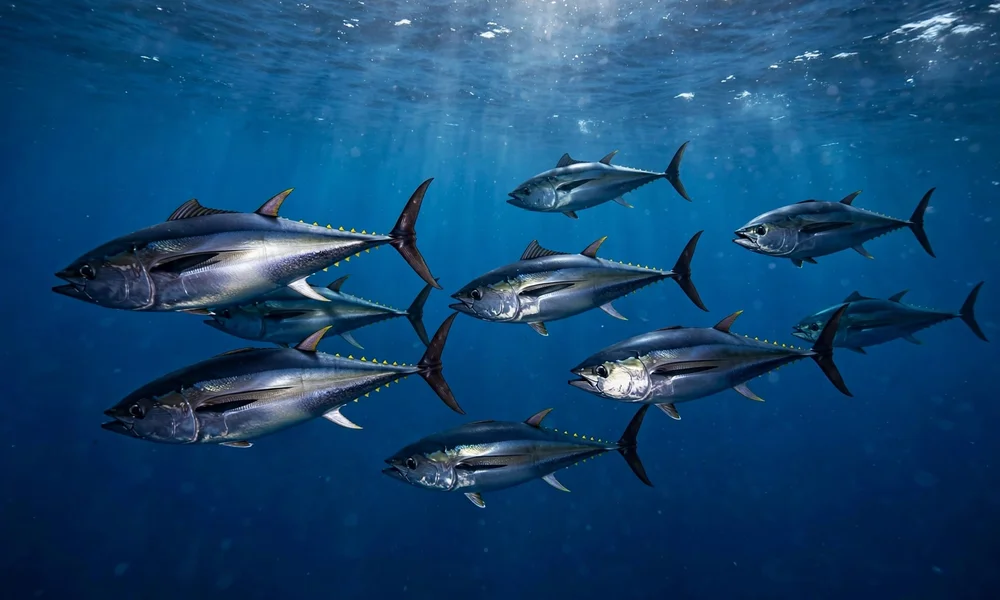
The bluefin tuna belongs to the family Scombridae, the mackerel and tuna family, and it lives in the open oceans of the world, in temperate and tropical seas, from the coasts of Europe to the waters off Japan and Australia. Its dark blue back, its silver belly and its huge torpedo-shaped body make it one of the most recognisable fish in the world.
Key takeaways
- There are three bluefin tuna species, and the Atlantic bluefin is the largest and best known of them.
- Bluefin tunas are among the fastest fish in the sea, able to reach speeds of more than 70 kilometres per hour in short bursts.
- Bluefin tunas are warm-blooded, with muscles that stay warmer than the water around them, which lets them hunt in cold seas.
- Bluefin tunas can grow to more than 3 metres long and weigh up to 680 kilogrammes, and they live for more than 40 years.
- Bluefin tunas are prized as food, and all three species have been overfished, though the Atlantic bluefin is now recovering.
What makes a bluefin tuna a bluefin tuna
A bluefin tuna is a huge torpedo-shaped fish with a dark blue back, a silver belly and a tail built for speed, and it measures roughly 2 to 3 metres long and usually weighs between 200 and 680 kilogrammes, depending on the species. The Atlantic bluefin is the largest, reaching up to 3 metres and 680 kilogrammes, while the Pacific bluefin and the Southern bluefin are slightly smaller.
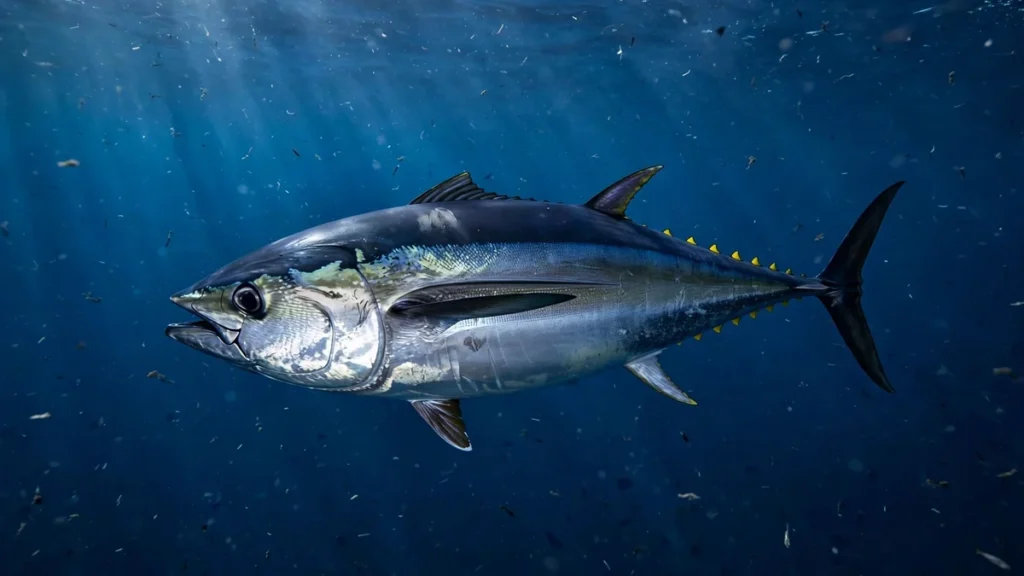
The body defines the bluefin tuna: a streamlined torpedo with a retractable finlet system and a tail that beats so fast it can reach more than 70 kilometres per hour in short bursts, making it one of the fastest fish in the sea. Its muscles are warm-blooded, staying warmer than the water around them, which lets it hunt in cold seas and dive to 1,000 metres in search of food. Like other tunas, the bluefin has small yellow finlets along its back and belly, and its eyes are large, for hunting in the dim light of the deep sea.
The bluefin tuna species and their relatives
There are three bluefin tuna species. The Atlantic bluefin lives in the Atlantic Ocean, from the coasts of Europe and North America to the Mediterranean Sea, and it is the largest and best known, once fished almost to collapse but now recovering. The Pacific bluefin lives in the Pacific Ocean, from Japan to Mexico, and it is smaller, though still a giant, reaching up to 3 metres. The Southern bluefin lives in the southern oceans, from the waters off Australia and New Zealand to the South Atlantic, and it is the rarest of the three.
The yellowfin tuna is the bluefin tuna’s closest relative, a fast tuna of warm seas with bright yellow fins, while the albacore is a smaller tuna with long pectoral fins. The bigeye tuna is a tuna with large eyes for hunting in deep water, the skipjack is a small tuna that is the most-caught tuna in the world, and the bonito is a small tuna-like fish of coastal waters. The mackerel is a small silver fish of the same family, and the swordfish is a huge billfish that hunts the same open seas.
| Type | Animal | Where it lives | Best-known food | Length or Weight |
|---|---|---|---|---|
| Species | Atlantic bluefin tuna (Thunnus thynnus) | Atlantic Ocean and Mediterranean Sea | Mackerel, herring and squid | Up to 3 m, up to 680 kg |
| Close relative | Pacific bluefin tuna | Pacific Ocean, Japan to Mexico | Sardines, anchovies and squid | Up to 3 m, up to 450 kg |
| Close relative | Southern bluefin tuna | Southern oceans, Australia to South Atlantic | Squid, krill and small fish | Up to 2.5 m, up to 260 kg |
| Close relative | Yellowfin tuna | Tropical seas worldwide | Small fish, squid and crustaceans | Up to 2.4 m, up to 200 kg |
| Close relative | Albacore tuna | Temperate seas worldwide | Small fish, squid and crustaceans | Up to 1.4 m, up to 60 kg |
| Close relative | Bigeye tuna | Tropical and temperate seas worldwide | Small fish, squid and crustaceans | Up to 2.5 m, up to 210 kg |
| Close relative | Skipjack tuna | Tropical seas worldwide | Small fish, squid and crustaceans | Up to 1.1 m, up to 35 kg |
How bluefin tunas live
Bluefin tunas are creatures of the open ocean. A bluefin tuna lives in a school, a group of hundreds of fish that swim, feed and migrate together, and the schools travel thousands of kilometres each year, following the seasons and the food. Like other ocean fish, it follows the currents, moving north in summer and south in winter, and it can cross an entire ocean in a matter of weeks.
Mackerel and herring make up most of the diet, along with squid, sardines and anchovies, and a bluefin tuna eats by chasing its prey at high speed and swallowing it whole. It hunts by sight, using its large eyes to spot fish in the dim light, and it can eat up to 5 per cent of its body weight in a single day when food is plentiful.
Breeding happens in warm seas, in the Mediterranean for the Atlantic bluefin and in the western Pacific for the Pacific bluefin, and the females lay millions of tiny eggs, of which only a handful survive to adulthood. The eggs hatch in about two days, and the young grow fast, reaching a metre in their first year. Bluefin tunas live for more than 40 years in the wild, and they keep growing all their lives.
Where bluefin tunas live
The bluefin tuna lives in the open oceans of the world, in temperate and tropical seas, and it is most common in the Atlantic, Pacific and southern oceans, where the water is cool and the food is plentiful. The Atlantic bluefin lives in the Atlantic Ocean and the Mediterranean Sea, the Pacific bluefin lives in the Pacific Ocean from Japan to Mexico, and the Southern bluefin lives in the southern oceans around Australia, New Zealand and South Africa.
Open ocean is the key requirement. A bluefin tuna needs deep water to dive in, strong currents to follow and shoals of fish to hunt, so it follows the food as it moves with the seasons, and when the fish are overfished the tunas have nothing to eat.
The species have been overfished for decades, and all three were once in trouble. The Atlantic bluefin was listed as Endangered in 2011, but strict quotas have let it recover, and it is now listed as Least Concern, one of the great conservation comebacks. The Southern bluefin was listed as Critically Endangered, and it is now Endangered, while the Pacific bluefin was listed as Vulnerable, and it is now Near Threatened. All three are still fished, and their recovery depends on the quotas holding.
Best seasons for bluefin tuna watching
There is no closed season, because bluefin tunas are active all year, but the best time to look for them depends on where you go. In the Mediterranean the best months are often June to September, when the tunas gather to breed and feed near the surface. In Japan the best months are often the winter, when the tunas come close to the coast to feed, and in Australia the best months are often the summer, when the Southern bluefin gathers in the Great Australian Bight.
Staying safe around bluefin tunas
A bluefin tuna is a wild fish with a powerful tail and sharp fins, and it can hurt a person, though tunas almost never attack people. Keep your distance, never approach a tuna school, and never try to catch a tuna without a licence, because the fish are fully protected by quotas in every ocean where they live. If you see tunas feeding, stay in the boat and watch with binoculars, because tunas that are disturbed may dive and leave the area for good.
Bluefin tuna watching checklist
A little preparation turns an ocean visit into a real chance of seeing a bluefin tuna, so pack for sun, spray and long hours on the water.
- Binoculars with good low-light performance, for picking a huge fish out of the open sea.
- A camera with a long lens, because tunas should always be watched from a distance.
- Sun cream and a hat, because the best watching is in the bright sun on open water.
- Water and snacks for long days, because the best sightings come after hours of waiting.
- A field guide to tunas, for telling a bluefin from a yellowfin at a glance.
- A plan to be out in the morning, when the tunas feed near the surface.
- Patience and silence, because tunas are shy fish and a noisy boat will send them away.
Frequently asked questions
How many bluefin tuna species are there?
There are three bluefin tuna species: the Atlantic bluefin, the Pacific bluefin and the Southern bluefin. The Atlantic bluefin is the largest and best known, reaching up to 3 metres and 680 kilogrammes, while the Pacific and Southern bluefins are slightly smaller.
How fast can a bluefin tuna swim?
A bluefin tuna can reach more than 70 kilometres per hour in short bursts, making it one of the fastest fish in the sea. It swims at a steady 5 to 10 kilometres per hour when migrating, and it can cross an entire ocean in a matter of weeks.
What do bluefin tunas eat?
Bluefin tunas eat mackerel, herring, sardines, anchovies and squid. They hunt by sight, chasing shoals of fish at high speed and swallowing them whole, and they can eat up to 5 per cent of their body weight in a single day when food is plentiful.
Can you keep a bluefin tuna as a pet?
No. A bluefin tuna is a wild fish that needs the open ocean, eats fish by the kilogramme, and is fully protected by quotas in every ocean where they live. Bluefin tunas in aquariums need huge tanks with strong currents, and they are not pets.
How is this guide different from the African grey parrot species guide?
This guide covers three bluefin tuna species, giant fish that swim the open oceans at more than 70 kilometres per hour, while our African grey parrot species guide covers two African grey parrot species, talking birds that live in flocks in the African rainforest. The tuna is a warm-blooded fish that dives to 1,000 metres, and the parrot is a bird that mimics human speech.
Are bluefin tunas endangered?
The Atlantic bluefin was listed as Endangered in 2011, but strict quotas have let it recover, and it is now listed as Least Concern. The Southern bluefin is Endangered, and the Pacific bluefin is Near Threatened, and their recovery depends on the quotas holding.
Conclusion
The bluefin tuna species show how much power one fish can hold: three species of giant tuna, with bodies built for speed, muscles warmer than the sea, and lives spent crossing entire oceans in search of food.
If you go looking for one, go in summer to the Mediterranean or the Great Australian Bight, go quietly, and go with patience. Watch a school of bluefin tunas breaking the surface and you will understand why it has earned its place as the king of the tunas, and why keeping its oceans matters most.