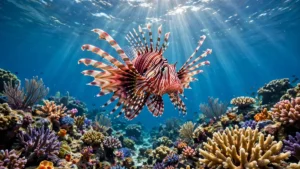
Freshwater fish are the fish of rivers, lakes, ponds and streams, the animals that live their lives in water with almost no salt in it, and they make up one of the great surprises of the natural world. If you are asking what a freshwater fish is, the short answer is any fish that spends some or all of its life in fresh water, from the trout of a cold mountain stream to the carp of a warm lowland lake, and about 40 percent of all known fish species live in fresh water, even though rivers and lakes cover less than 1 percent of the surface of the Earth. That is the freshwater paradox, and it is why a walk along almost any river in the world can put you within a few metres of more kinds of fish than a whole day on the open sea.
Most people meet freshwater fish at the end of a fishing rod, in a fish tank, or on a dinner plate, and they think of them as ordinary. They are anything but. The group runs from fish barely longer than a fingernail to giants of 3 metres, from the salmon that swims thousands of kilometres out to sea and back to the stream where it was born, to the catfish that lives its whole life in one deep pool of one river.
Key takeaways
- Freshwater fish are the fish of rivers, lakes, ponds and streams, and about 40 percent of all known fish species live in fresh water, though rivers and lakes cover less than 1 percent of the surface of the Earth.
- The group runs from tiny minnows a few centimetres long to giants of 3 metres, including the Mekong giant catfish at 293 kilograms and the arapaima of the Amazon at 3 metres and 200 kilograms.
- Freshwater fish breathe through gills, but some, like the arapaima, also breathe air at the surface, which lets them live in warm, low-oxygen water where other fish cannot survive.
- Many freshwater fish migrate, and the Atlantic salmon swims thousands of kilometres out to sea and returns to the very stream where it was born to spawn.
- Nearly one in three freshwater fish species is threatened with extinction, and populations of freshwater species have fallen by an average of 83 percent since 1970.
Freshwater fish and their relatives
Freshwater fish are not one family, and they are not one branch of the fish tree. They are a way of life that fish have reached again and again, from many different marine ancestors, and the group holds thousands of species spread across dozens of families on every continent except Antarctica. The word freshwater itself is a definition, not a bloodline: water with a salt content below about 1 percent, found in rivers, lakes, ponds, streams and wetlands, and any fish that spends some or all of its life in that water counts. Some never leave it, some move between fresh and salt water as part of their breeding cycle, and a few can switch between the two as the season demands.
The largest family of all is the carp family, Cyprinidae, the carps and minnows, which holds more species than any other fish family in the world. The cichlids run it close, with at least 1,760 species described, and new ones are still being found every year in the great lakes of Africa, where a single lake can hold hundreds of kinds of cichlid found nowhere else on Earth. The catfish order, Siluriformes, holds thousands of species of its own, from the tiny Corydoras of South American streams to the Mekong giant catfish, and the characins of South America hold the piranhas, the tetras and the pacu.
| Type | Animal | Where it lives | Best-known food | Length or Weight |
|---|---|---|---|---|
| Family | Carps and minnows (Cyprinidae) | Rivers and lakes worldwide | Plants, insects and crustaceans | A few centimetres to about 1 m long |
| Genus | Trout (Salmo) | Cold rivers and lakes of Europe and western Asia | Insects, small fish and crustaceans | About 25 cm to 80 cm long |
| Group | Atlantic salmon (Salmo salar) | North Atlantic rivers and coasts | Small fish, crustaceans and insects | Up to 1.5 m long |
| Group | Common carp (Cyprinus carpio) | Rivers and lakes of Europe and Asia | Plants, insects and crustaceans | Up to 1 m long |
| Group | Mekong giant catfish (Pangasianodon gigas) | Mekong River basin of South-East Asia | Algae and plant matter | Up to 3 m long |
| Group | Arapaima (Arapaima gigas) | Amazon River basin of South America | Fish, small animals and fruit | Up to 3 m long |
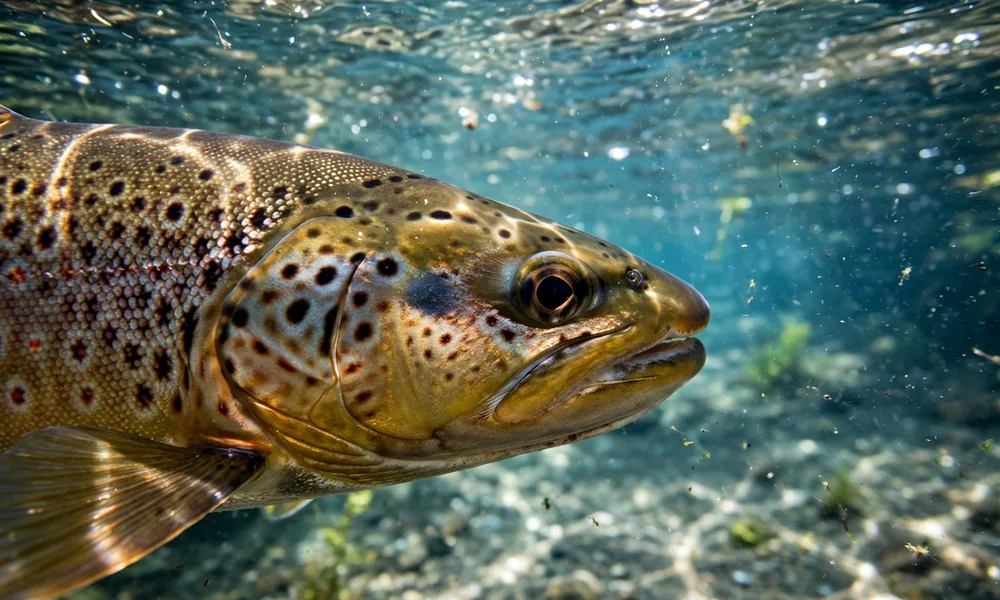
The trout are the fish most people picture when they think of fresh water, and the genus Salmo holds the brown trout, Salmo trutta, the fish of cold, clear rivers and lakes across Europe and western Asia. A brown trout is usually 25 to 80 centimetres long, depending on where it lives, and a big one in a rich lake can weigh several kilograms, though most river fish are far smaller. The rainbow trout, Oncorhynchus mykiss, is a cousin from North America that has been carried to rivers on every continent, and it is now one of the most widely spread freshwater fish in the world, a fish of fast, cold, well-oxygenated water that will take a fly at the surface on a summer evening.
The Atlantic salmon, Salmo salar, is the great traveller of the group, and it is the fish that shows what freshwater fish are capable of. It is born in a river, swims out to sea to grow fat on small fish and crustaceans, and then returns, years later, to the very stream where it was born, swimming hundreds of kilometres upstream against the current to spawn. It can reach 1.5 metres long, and the largest ever recorded weighed 47 kilograms, though most returning salmon are far smaller. Like the sturgeon, the salmon is a fish that lives in two worlds, fresh water and salt water, but the sturgeon is an armoured river giant that can live for a century and reach 7.2 metres, while the salmon is a silver traveller that lives fast, spawns once or twice, and dies young by comparison.
What freshwater fish look like
A freshwater fish looks like a fish built for moving water, and the shape tells you where it lives before anything else does. The body is usually streamlined, deep enough to turn quickly and narrow enough to cut through a current, and it is covered in scales that shine in the colours of the water it swims in: the olive back and spotted flanks of a trout, the gold of a carp, the silver of a salmon fresh from the sea. The fins are the steering gear, and the tail is the engine, broad and powerful in a fish that fights a current all day, smaller and more delicate in a fish that drifts through still water. The eyes are set high on the head, made for watching the surface and the water ahead, and the mouth sits where the food is, at the front for a hunter, underneath for a fish that feeds on the riverbed.
The size range is the first thing that stops people in their tracks, because there is no single freshwater fish shape. A minnow may be no longer than your little finger, and a whole school of them can live in a pool the size of a bath, while a Mekong giant catfish can reach 3 metres and weigh 293 kilograms, and a beluga sturgeon, the largest freshwater-associated fish of all, was measured at 7.2 metres and 1,571 kilograms in the Volga estuary in 1827. Between those two ends sits almost every size you can imagine: the common carp at up to 1 metre, the northern pike at up to 1.3 metres, the arapaima at up to 3 metres and 200 kilograms. The giants are the ones that make the news, but the small fish are the ones that make the rivers work.

Compared with their saltwater cousins, freshwater fish carry a few quiet differences that matter. Their gills work harder to hold on to salt, because fresh water is always trying to wash it out of them, and their kidneys work harder to get rid of the water that floods in through those same gills. That is why a freshwater fish dropped into the sea will die, and a sea fish dropped into a river will die too: each one is tuned to the water it was made for. The barbels of a catfish are another freshwater mark, fleshy whiskers around the mouth that taste the muddy riverbed in water too dark to see through, and the armoured plates of a sturgeon are a third, a reminder that some freshwater fish are older than the rivers they swim in.
Where freshwater fish live
Freshwater fish live wherever fresh water runs or stands, and that means almost everywhere on land. Their range runs from the cold mountain streams of the Himalayas to the warm, slow rivers of the Amazon, from the great lakes of Africa to the tiny ponds of an English village, and from the Arctic rivers where the water barely rises above freezing to the desert springs where a fish may live its whole life in a pool no bigger than a room. The only continent without native freshwater fish is Antarctica, and the only waters they cannot live in are the ones that dry up entirely, freeze solid, or run too hot or too salty for gills to work.
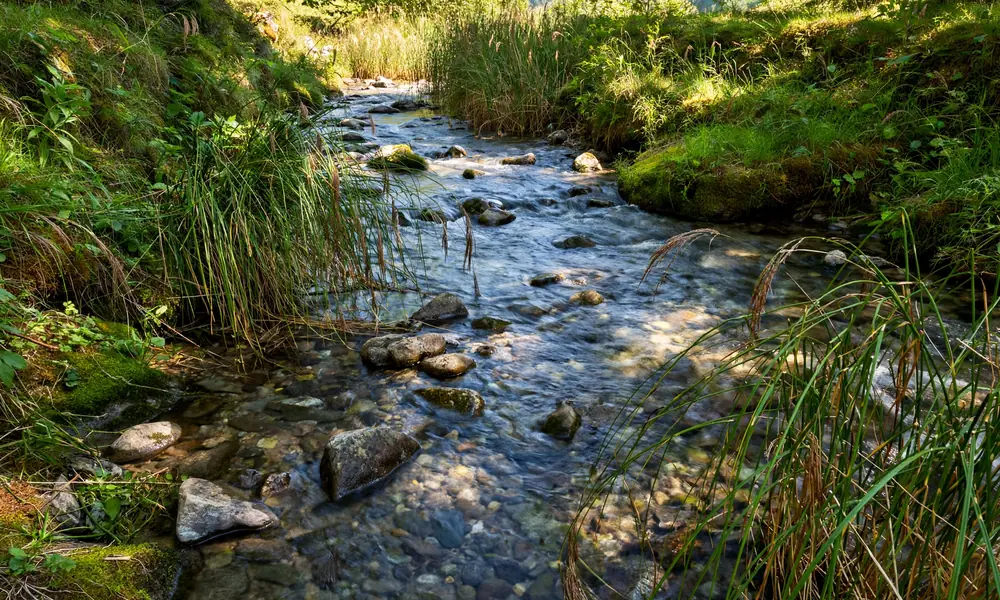
The habitat a freshwater fish chooses depends on the species, and the group covers almost every kind of water that stays fresh. Trout and salmon live in cold, fast, well-oxygenated rivers, carp and tench live in warm, still, weedy lakes, catfish live in deep, slow rivers where the water runs brown with silt, and cichlids live in the rocky shallows of great lakes where each species keeps to its own patch of stone. The arapaima lives in the flooded forests of the Amazon, swimming between the trees when the river rises, and the mudskippers of the mangroves live half out of the water altogether. A river is not one habitat but many, and a single stretch of water can hold a dozen kinds of fish, each in its own depth, its own current and its own corner.
Depth matters, and so does the season, and the fish move between the two as the year turns. In summer the trout hold in the deep pools where the water stays cool, and in winter they drop into the slowest water they can find, holding behind boulders and in the lee of the banks. In spring the carp move into the warm shallows to spawn, and in autumn the salmon push upstream through water that would stop almost any other fish.
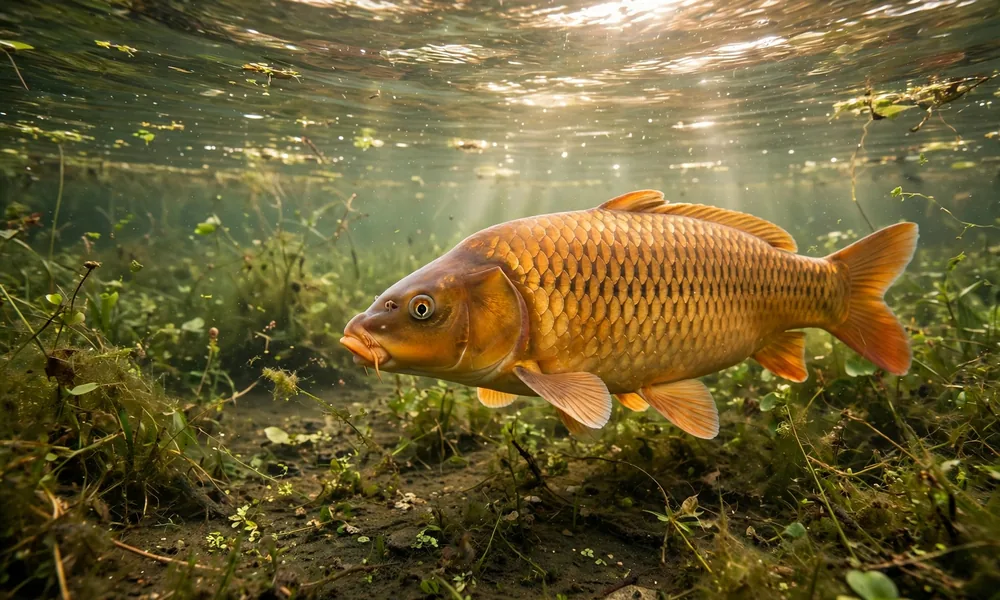
Freshwater fish have also travelled far beyond their native ranges, and not always by choice. Carp from Asia now live in rivers on every continent, tilapia from Africa are farmed in ponds across Asia and the Americas, and the Nile perch, carried into Lake Victoria in the 1950s, grew into a giant that ate its way through hundreds of kinds of native cichlid. In some of those places the newcomers are a valued food fish, and in others they are a disaster for the fish that were there first. Like the rainbow trout, which was carried from North America to rivers on every continent and now thrives in waters it never knew, the carp is a fish that people moved and that stayed, but the trout is a fish of cold, fast water that needs oxygen, while the carp is a fish of warm, still water that can live almost anywhere.
What freshwater fish eat
Freshwater fish eat almost everything a river or a lake can offer, and the diet of any one species is written on the water it lives in. The everyday food is insects, and a trout will take mayflies, caddisflies and midges from the surface, a carp will root through the mud for insect larvae and snails, and a whole school of minnows will pick plankton from the open water. Larger fish eat smaller fish, and a pike will take a roach without a second thought, a catfish will take a fish half its own length, and an arapaima will take fish, frogs, birds and anything else that comes within reach of its great mouth. A river full of freshwater fish keeps the numbers of insects and small fish in check, which is one reason they matter to the whole waterway.

What sets freshwater fish apart is how many different ways they feed. Some are hunters, chasing their prey through open water, some are grazers, scraping algae from stones, some are filter feeders, sieving plankton from the water as they swim, and some are scavengers, cleaning up whatever dies and sinks to the bottom. The Mekong giant catfish is a grazer, an adult with no teeth at all that lives on algae and plant matter scraped from the riverbed, while the piranha is a hunter with teeth like blades. The carp is a rooter, pushing its snout into the mud and sifting out what it can eat, and the mud it stirs up clouds the water for every other fish in the lake.
Feeding follows the rhythm of the day and the season, and it is busiest at dawn and dusk. Trout feed most actively in the early morning and the late evening, when the insects are hatching and the light is low, and they rest in the heat of midday, holding in the shade of a bank or a bridge. In spring and summer, when the water is warm and the insects are plentiful, freshwater fish feed hard, putting on weight for the spawning season, and in winter they feed little, and a trout in cold water may go days without eating, holding in a deep pool and waiting for the spring. Young fish eat plankton, insects and small crustaceans, and they grow fast on that rich food, doubling in size in their first summer.
How freshwater fish behave
Freshwater fish are daytime animals for the most part, and their day is a quiet round of holding station, feeding and moving between the pool and the riffle. They wake at dawn, leave the deep water where they spent the night, and move onto the feeding lies, the seams where fast water meets slow and the food drifts past in a steady line, and they spend the day there, rising to a fly, darting at a passing insect, and drifting back to the same lie. They are not strong swimmers over distance, and they do not need to be: their life is lived within a few hundred metres of river, and they know every stone and every current in that stretch.
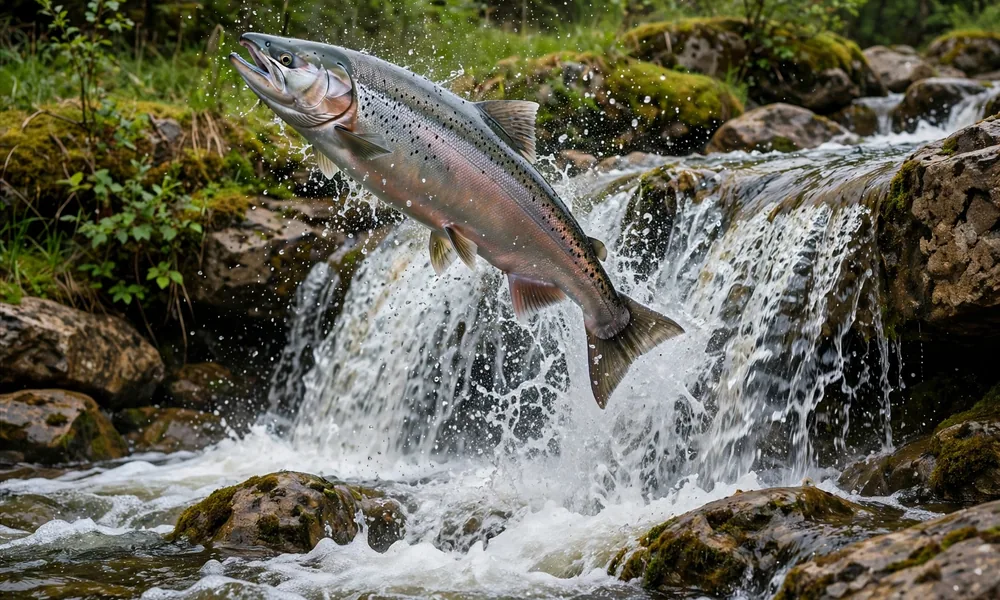
The most famous behaviour in freshwater fish is the migration, and the salmon is the fish that made it famous. A salmon leaves its home river as a young smolt, swims out to sea, grows fat on the rich food of the open ocean, and then, years later, returns to the very stream where it was born, finding its way by smell across thousands of kilometres of sea and then swimming hundreds of kilometres upstream, leaping waterfalls and fighting currents that would stop almost any other animal.
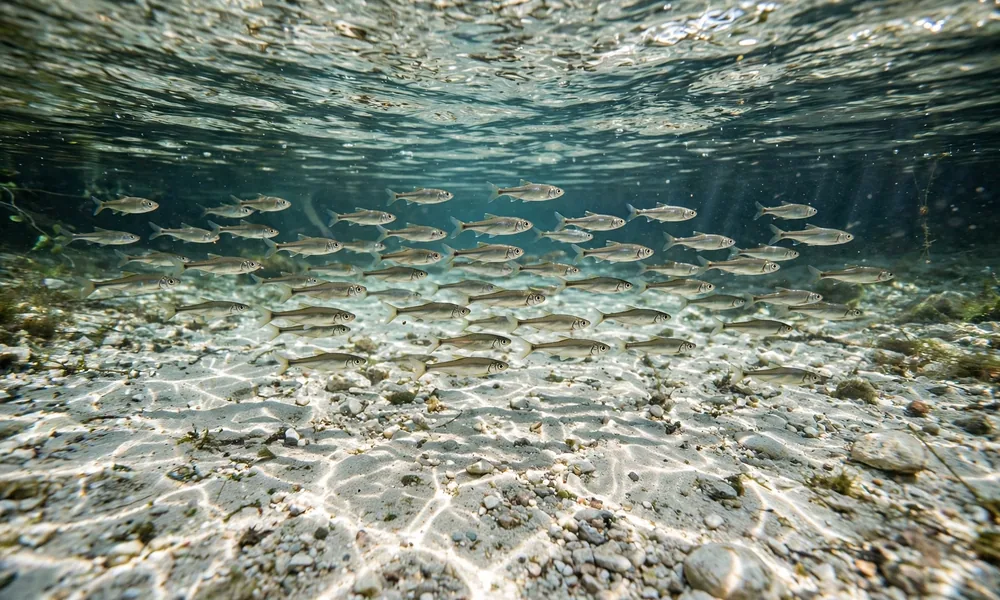
When a freshwater fish is threatened, its first response is usually to flee, relying on speed and on the cover of the water to break away, and if that fails it will dive for the weeds or the deep pool and stay there until the danger passes. Many species school for safety, and a school of minnows will turn as one fish, flashing silver in the sun, confusing the heron or the pike that hunts them. Freshwater fish have no venom and no bite that matters to a person, though a big pike has teeth that can cut a careless finger, and a catfish has spines on its fins that can give a painful sting. Like the northern pike, which waits in ambush among the weeds and strikes in a single rush, the trout is a hunter of cold water, but the pike is a fish that lies still and waits for its prey to come to it, while the trout is a fish that holds in the current and takes what the river brings to it.
Breeding and life cycle
Freshwater fish breed in spring and early summer for the most part, when the water is warming and the food is plentiful, and the timing is set by the temperature and the length of the day rather than the calendar. The adults gather on the spawning grounds, and the males defend their patches of gravel or weed against rivals, chasing away any fish that comes too close, while the females choose the best ground they can find. A female carp may lay hundreds of thousands of eggs in a single spawning, and a salmon may lay thousands, and the eggs are scattered over gravel or weed and left to the water.
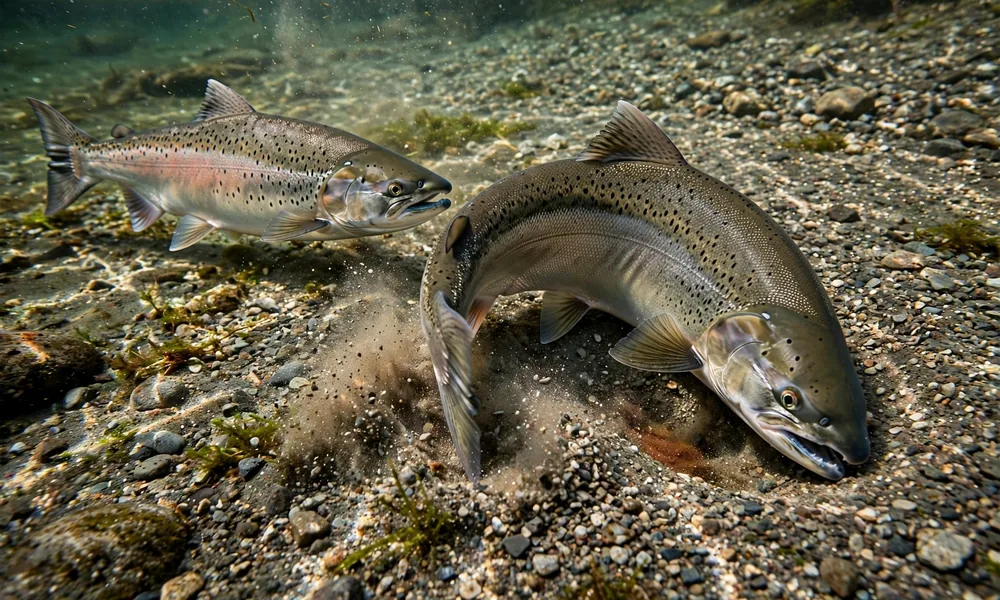
The female arrives at the spawning ground and releases her eggs into the water while the male releases his milt over them, and the eggs sink into the gravel or stick to the weed, where they lie for weeks or months until they hatch. A salmon digs a nest, called a redd, in clean gravel, and lays her eggs in it before covering them with stones, and the eggs lie there through the winter, hatching in spring when the water warms. A carp scatters its eggs among the weeds in the shallows, and a cichlid guards its eggs and its young, carrying them in its mouth when danger comes, which is why so many cichlids survive where other fish fail.
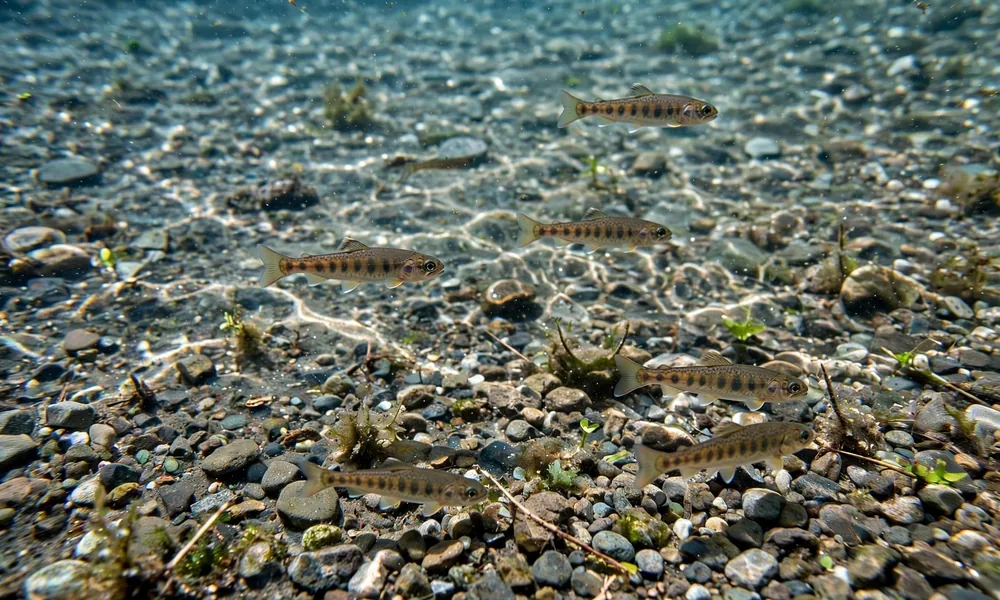
Growth is fast in the first year, and a young trout can reach 10 centimetres or more by the end of its first summer, feeding on plankton and tiny insects before it turns to larger prey. It reaches breeding size in its second or third year, and the lifespan in the wild is often 10 years or more, with the oldest fish aged at more than 20 years in a rich lake. The young are independent from the day they hatch, able to feed and hide within hours, but most of them will never reach adulthood, eaten by fish and birds in their first weeks.
Conservation status
Freshwater fish are the most threatened group of vertebrates on Earth, and the numbers are stark. Nearly one in three freshwater fish species is threatened with extinction, and populations of freshwater species have fallen by an average of 83 percent since 1970, a decline twice as fast as that of land or marine animals. Eighty species have already been declared extinct, and the great migratory fish have fared worst of all, with their populations down by 76 percent since 1970 and the largest species, the megafish, down by a catastrophic 94 percent.

The main pressure is the loss of habitat. When a river is dammed, the fish cannot reach their spawning grounds, and when a wetland is drained or a river is straightened, the fish lose the shallow water where their young grow up. The Mekong giant catfish is listed as Critically Endangered by the International Union for Conservation of Nature, and its numbers have fallen by at least 80 percent in a few generations, a decline driven by overfishing and by dams that block its migration. The largest ever weighed, a female of 2.7 metres and 293 kilograms caught in Thailand in 2005, was reported by National Geographic as possibly the largest freshwater fish ever recorded at the time, and it held that record until a giant freshwater stingray of 300 kilograms was caught in Cambodia in 2022. Pollution is a second pressure, and a river that loses its clean water loses the insects the fish feed on, while overfishing is a third, and a river that loses its biggest females loses its best breeders.
The most useful conservation work is practical, and it is the same work that helps the whole river. Removing old weirs and building fish passes lets salmon and trout reach their spawning grounds again, protecting the wetlands and the gravel beds keeps the nursery and the feeding grounds in place, and cleaning up the water brings back the insects that the fish depend on. Catch-and-release fishing, with rules that keep the fish in the water, gives the big breeders a safe patch to feed and spawn in, and it gives the river a chance to hold its fish from one season to the next.
Best seasons for freshwater fish watching
The best time to look for freshwater fish is the spring and the early summer, when the water is warming and the fish are moving onto the shallows to spawn. In Britain that usually means the months from about April to June, when the water reaches 10 to 15 degrees Celsius and the trout are rising to the mayfly hatch in numbers you can see from the bank. In the tropics the season is set by the rains rather than the temperature, and the fish are most active as the rivers rise and flood the forests.

The best hours are the dawn and the dusk, when the fish are feeding actively and the light is good for seeing them. From about six o’clock until nine in the morning, and again from about five until eight in the evening, the trout are out on the feeding lies, rising to flies and moving from pool to pool, and they are at their most approachable then. A slow walk along the bank, with the sun behind you and a pair of polarised sunglasses to cut the glare, is all you need, and the fish will often rise close enough to see the spotted flank and the splash clearly, if you move gently and keep your distance.
Staying safe around freshwater fish
Freshwater fish are not dangerous to people, and there is no safety warning that belongs to the fish themselves. They have no venom, they do not bite, and they will not chase or threaten a swimmer. The safety rules for watching freshwater fish are the rules of the river and the water: watch the water, watch the weather, and respect the fish that you came to see. Never wade into deep water without knowing what is under your feet, never fish alone from a boat without a life jacket, and never handle a fish with dry hands, because a dry hand strips the slime that protects its skin.
There are a few practical points for the water itself. Fish with a buddy, stay within your depth, and keep an eye on the weather, which can change fast on a big river, with rain upstream raising the level in minutes. Wear a life jacket when you are in a boat, and keep clear of the propeller when the engine is running. If you are wading, watch for slippery rocks and sudden drop-offs, and wear shoes that grip. A pike has sharp teeth and a catfish has sharp spines, so handle any big fish with care.
Freshwater fish watching checklist
A little preparation turns a morning on the river into a real chance of seeing freshwater fish at their best, rising to the hatch in clear, cool water.
- A visit in spring or early summer, when the water is warming and the fish are moving onto the shallows to feed and spawn.
- A dawn or dusk trip, when the fish are out feeding and the light is good.
- A clear river or lake with gravel beds, weed beds and deep pools, where the fish feed and shelter.
- A slow walk along the bank, watching for a rise on the surface or a shadow moving in the shallows.
- Polarised sunglasses that cut the glare, so you can see into the water and spot the fish.
- A life jacket and a buddy, so that a day on the water stays safe from start to finish.
- Respect for the fish and the river, keeping your distance, keeping the fish in the water, and leaving the bank as you found it.
Frequently asked questions
How many freshwater fish species are there?
There are well over 13,000 described species of freshwater fish, and about 40 percent of all known fish species live in fresh water. New species are described every year, often from a single river or a single lake, so the count keeps climbing, and thousands more are still waiting to be named.
What is the largest freshwater fish?
The largest freshwater-associated fish is the beluga sturgeon, with a record female of 7.2 metres and 1,571 kilograms caught in the Volga estuary in 1827. Among fish that spend their whole lives in fresh water, the largest ever weighed is a giant freshwater stingray of 300 kilograms caught in Cambodia in 2022, just ahead of the Mekong giant catfish of 293 kilograms caught in Thailand in 2005.
Do freshwater fish drink water?
They do not need to drink the way we do, because water is always flooding into them through their gills. A freshwater fish spends its life getting rid of water, not taking it in, and its kidneys work hard to pump the extra water out while holding on to the salt. That is the opposite of a sea fish, which must drink seawater all day to replace the water it loses.
Can freshwater fish live in salt water?
Most cannot, and a freshwater fish dropped into the sea will die, because its gills and kidneys are tuned to hold on to salt, not to get rid of it. A few species can move between the two, and the salmon, the eel and the sturgeon all spend part of their lives in the sea and part in fresh water, but they are the exception, and each one changes its body chemistry to make the switch.
Why are freshwater fish in trouble?
Nearly one in three freshwater fish species is threatened with extinction, and the causes are habitat loss, dams that block migration, pollution, overfishing and invasive species. Populations of freshwater species have fallen by an average of 83 percent since 1970, which is twice the rate of decline seen on land or in the sea, and 80 species have already been declared extinct.
How is this guide different from the electric eel guide?
This guide covers freshwater fish as a whole group, thousands of species from trout and carp to catfish and cichlids that live in rivers and lakes across the world, while our electric eel guide covers a single extraordinary fish of the Amazon that can deliver a shock of hundreds of volts and breathes air at the surface. One is a guide to the fish of every river; the other is the story of one fish that turned itself into a living battery.
Conclusion
Freshwater fish are a reminder that a fish does not need to live in the sea to be extraordinary. A trout rising to a mayfly, a salmon leaping a waterfall, a catfish the size of a man in a brown river and a cichlid guarding its young in a rocky lake are all part of the same group, the fish of the rivers and lakes that hold 40 percent of all fish species in less than 1 percent of the surface of the Earth.
If you go looking for them, go on a warm, calm day in spring, go at dawn or dusk, and walk slowly along a riverbank with the sun behind you. Find the pool, watch for a rise on the surface, and wait for the water to break, and you will have met the fish that turn a quiet river into a place of sudden, silver excitement.