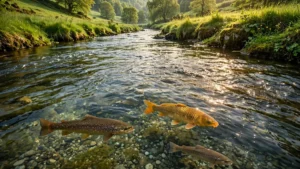
The sturgeon species are the oldest fish still swimming in the rivers of the Northern Hemisphere, armoured giants that were already ancient when the dinosaurs were young. If you are asking what a sturgeon is, the short answer is a member of the family Acipenseridae, a group of 27 species that range from the dwarf sturgeon of Central Asia, barely 27 centimetres long, to the beluga of the Caspian Sea, whose accepted record stands at 7.2 metres and 1,571 kilograms. They have no scales, no teeth as adults, and a skeleton of cartilage rather than bone, yet they have outlasted nearly every other fish family on earth, and they are now among the most endangered animals in the water.
Most people meet a sturgeon through its eggs rather than the fish itself, because the salted roe of the female is caviar, and caviar has been the most valuable fish product in the world for centuries. That appetite nearly destroyed them. Over 85 percent of sturgeon species are now at risk of extinction, and 17 of the 25 assessed by the International Union for Conservation of Nature are Critically Endangered. This guide follows the whole family: how they look, where they live, what they eat, how they breed, and what is being done to keep them in the rivers at all.
Key takeaways
- The sturgeon species belong to the family Acipenseridae, 27 species in five genera, all of them found in the fresh and coastal waters of the Northern Hemisphere.
- The beluga is the largest freshwater fish on earth, with an accepted record of 7.2 metres and 1,571 kilograms, caught in the Volga estuary in 1827.
- Sturgeon have no scales and no teeth as adults; their bodies are armoured with five rows of bony plates called scutes, and they find food with four barbels under the snout.
- Most sturgeon are anadromous, living in the sea or in large lakes and swimming far upriver to spawn, and the females may take 15 to 25 years to mature.
- More than 85 percent of sturgeon species are at risk of extinction, driven by the caviar trade, poaching and dams that block their spawning runs.
The sturgeon species and their relatives
Sturgeon belong to the family Acipenseridae, a family so old that its fossils reach back some 200 million years, to the early Jurassic, and the fish have changed so little since then that they are often called living fossils. The family holds 27 living species in five genera: Acipenser, Huso, Scaphirhynchus, Sinosturio and Pseudoscaphirhynchus. Eight of those species occur naturally in North America, and the rest are spread across Europe and Asia, from the rivers of Siberia to the Yangtze in China. Every one of them lives in the Northern Hemisphere, and none of them is found naturally south of the equator.
The beluga sturgeon, Huso huso, is the lead species of this guide, and it is the fish that defines the whole family in most people’s minds. It lives in the Caspian and Black Sea basins, it grows to 7.2 metres, and its roe is the beluga caviar that has been prized above every other kind for centuries. A mature beluga of the kind caught today is more often 1.4 to 3.3 metres long and 19 to 264 kilograms, and the giants of the old records are almost gone, but even a modern beluga is a fish the size of a small car, and it is still the largest freshwater fish in the world.
| Type | Animal | Where it lives | Best-known food | Length or Weight |
|---|---|---|---|---|
| Family | Sturgeons (Acipenseridae) | Rivers, estuaries and coasts of the Northern Hemisphere | Small fish, crustaceans and worms | About 27 cm to 7.2 m long |
| Genus | Great sturgeons (Huso) | Caspian and Black Sea basins and the Amur River | Fish, crustaceans and molluscs | About 2 m to 7.2 m long |
| Species | Beluga sturgeon (Huso huso) | Caspian and Black Sea basins | Fish, crustaceans and molluscs | Up to 7.2 m long |
| Species | White sturgeon (Acipenser transmontanus) | Pacific coast rivers of North America | Fish, crustaceans and clams | Up to 6.1 m long |
| Species | Atlantic sturgeon (Acipenser oxyrinchus) | Atlantic coast rivers and coastal waters | Crustaceans, worms and small fish | Up to 4.3 m long |
| Species | Lake sturgeon (Acipenser fulvescens) | Great Lakes and rivers of North America | Crustaceans, worms and insect larvae | Up to 2.4 m long |
The closest relative of the beluga is the kaluga, Huso dauricus, the only other member of the genus Huso, and a fish of the Amur River on the border of Russia and China that can reach 5.6 metres and 1,000 kilograms. Like the beluga, the kaluga is a great river fish that feeds largely on other fish, and like the beluga it is Critically Endangered, hunted for its roe and cut off from its spawning grounds by dams. The two Huso species are the giants of the family, and every other sturgeon is smaller than they are, some of them much smaller.
Within the family, the species sort themselves by the water they like and the size they reach. The white sturgeon of the Pacific coast is the largest freshwater fish in North America, with historical records of fish 6.1 metres long, and it is the fish that anglers on the Fraser and Columbia rivers dream of hooking. The Atlantic sturgeon grows up to 4.3 metres and once swam up the rivers of the eastern seaboard in numbers so great that people said you could walk across the Hudson on their backs. The lake sturgeon, up to 2.4 metres, is the gentle giant of the Great Lakes, a bottom feeder that has lived in those waters since the glaciers melted. Like the salmon, the sturgeon is a fish that travels between the sea and the river, but the salmon races upstream in a single furious season and dies after spawning, while the sturgeon takes its time, lives for decades, and may spawn many times in a long life.
What a sturgeon looks like
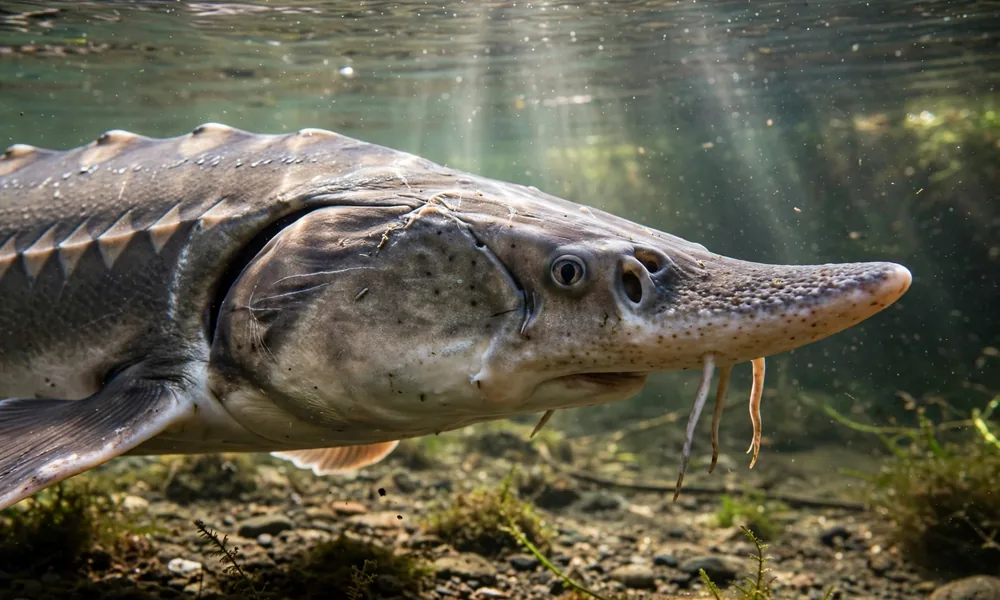
A sturgeon looks like no other fish in the river, and once you have seen one you will never mistake it for anything else. The body is long and torpedo-shaped, broad at the shoulders and tapering to a tail that sweeps upward, with the upper lobe longer than the lower, a shape called heterocercal that the sturgeon shares with the sharks. The back is covered not with scales but with five rows of bony plates, the scutes, one row along the back, one along each side, and two along the belly, and the skin between them is rough and leathery. The colour is usually grey-brown or olive on the back, fading to a pale, almost white belly, which is where the beluga gets its name, from the Russian word for white.
The head is the most distinctive part of the fish. The snout is long and pointed, like a shovel, and underneath it hang four barbels, fleshy feelers that taste and touch the riverbed as the fish swims, and behind the barbels sits a mouth that can shoot forward like a tube to suck up food from the mud. Adult sturgeon have no teeth at all, and the young lose theirs as they grow, which is why a sturgeon can only eat food small enough to swallow whole. The eyes are small and set high on the head, and the fish finds its food far more by touch, taste and smell than by sight. Like the lungfish, the sturgeon is a fish that has kept the shape of a much older world, but the lungfish survives in warm southern swamps by breathing air, while the sturgeon survives in cold northern rivers by being armoured, patient and very, very long-lived.
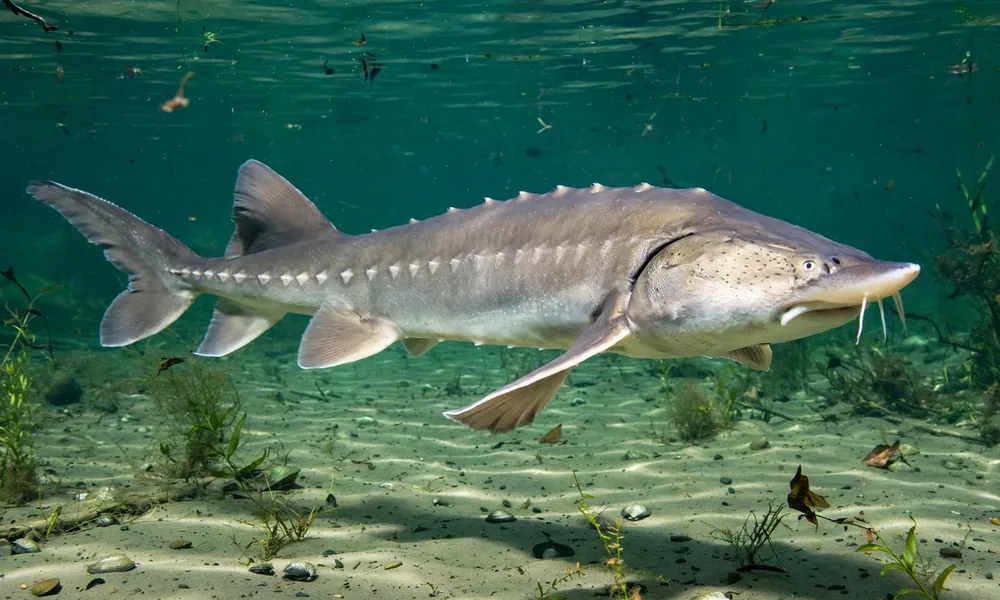
The size of a sturgeon depends on the species, and the range is enormous. The smallest, the dwarf sturgeon of the rivers of Central Asia, barely reaches 27 centimetres, a fish you could hold in one hand, while the beluga reaches 7.2 metres, longer than a family car. Most sturgeon fall between the two, and the common species are big fish by any measure: a white sturgeon of 6.1 metres, an Atlantic sturgeon of 4.3 metres, a lake sturgeon of 2.4 metres, and a sterlet of about 1.2 metres. The females grow larger than the males in almost every species, and the biggest sturgeon in any river is almost always a female, heavy with eggs.
Compared with other fish, the sturgeon is easy to tell apart once you know what to look for. No other freshwater fish has five rows of scutes, no other has four barbels under a shovel snout, and no other combines a cartilaginous skeleton with a body that can reach the size of a small boat. The paddlefish is the only close relation with a similar build, and it has a long flat paddle for a snout and no scutes at all, so the two are easy to separate even at a glance.
Where sturgeon live
Sturgeon live in the great rivers, estuaries and coastal waters of the Northern Hemisphere, and they are fish of big water. Their range runs from the rivers of the Pacific coast of North America to the Atlantic seaboard, from the Danube and the Volga in Europe to the rivers of Siberia and the Yangtze in China, and every species is tied to a river system it returns to again and again. They favour water that is cool and well oxygenated, and they are rarely found in small streams or warm shallow ponds, where there is too little food and too little room for a fish of their size.
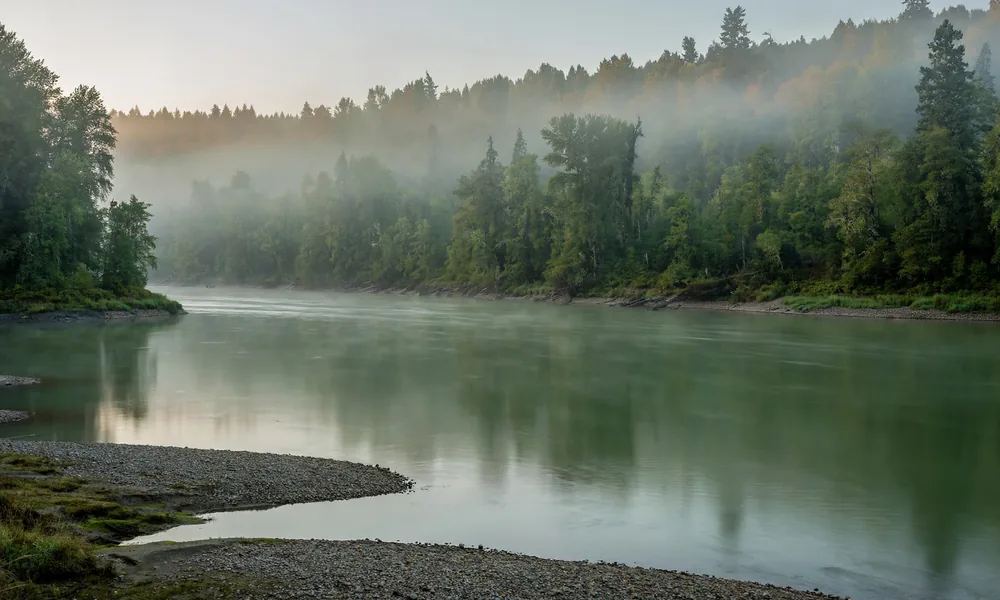
The habitat they choose is the bottom of the water, and they are rarely found far from it. Most sturgeon live in water between 2 and 20 metres deep, along the riverbed, the estuary floor and the coastal shallows, where the food is richest and the current is steady. They favour places with a soft bottom of sand, mud or gravel, which they probe with their barbels for crustaceans and worms, and they are less common over hard rock, where there is little to eat. A sturgeon spends much of its life in a small stretch of river or estuary, sometimes no larger than a few kilometres, and it knows every deep hole and every gravel bar in that stretch the way you know the rooms of your own house.
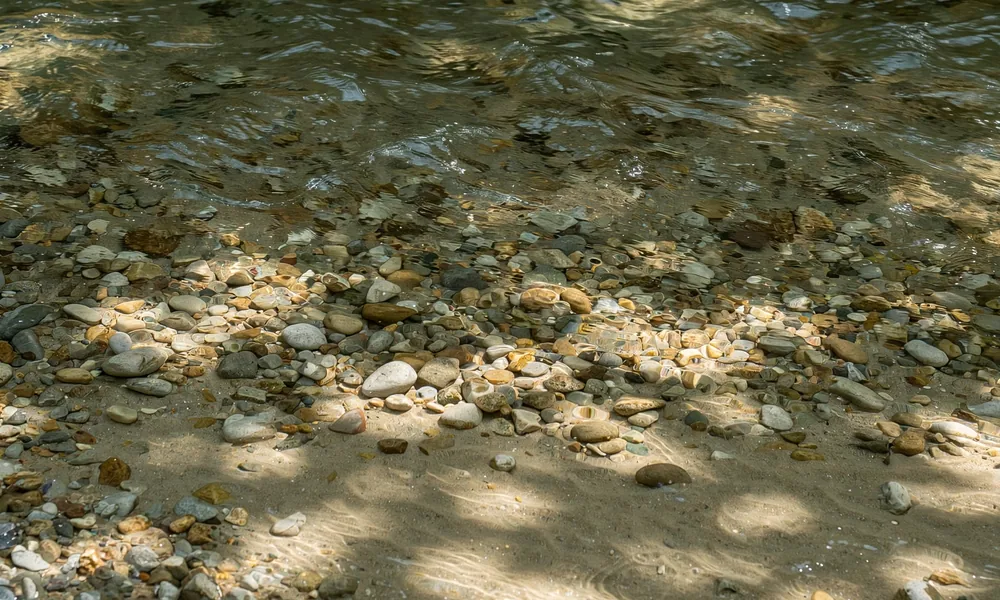
Depth matters, but not in the way it does for a deep-water fish. Sturgeon are bottom fish, and most of them stay in the lower half of the water column, where the current is slower and the food settles. In the heat of summer they may move deeper, to 20 metres or more, where the water is cooler, and in winter they drop deeper still, holding near the bottom in the warmest water they can find, sometimes gathering in deep holes in groups of dozens. The water temperature matters too: sturgeon need cool water, usually below 20 degrees Celsius to feed well, and they are absent from warm tropical rivers altogether.
The sturgeon has travelled far beyond its native range, but not by choice, and it now lives in rivers where it was never meant to be. Siberian sturgeon have been farmed in France, Italy and China, and escapees have settled in rivers from the Danube to the Rhone. In some of those places they have become a problem, competing with native fish, and in others they are a valued farmed fish. Like the Atlantic cod, the sturgeon is a fish whose numbers have been shaped by people for centuries, but the cod is a sea fish that was fished down in the open ocean, while the sturgeon was fished down in its own rivers, at the very moment it swam upstream to spawn.
What sturgeon eat
Sturgeon are bottom feeders, and their diet is written on the riverbed itself. The everyday food is small animals that live in the mud and gravel: crustaceans, worms, molluscs, insect larvae and small fish, and a sturgeon will eat almost anything it can find with its barbels and suck up with its tube-like mouth. They also eat the eggs of other fish, and the beluga, the largest of them all, is a true predator that hunts other fish, from herring and shad to smaller sturgeon. A single sturgeon may spend hours cruising the bottom, vacuuming up food as it goes, and a river full of sturgeon can keep the numbers of bottom animals in check, which is one reason they matter to the whole river.
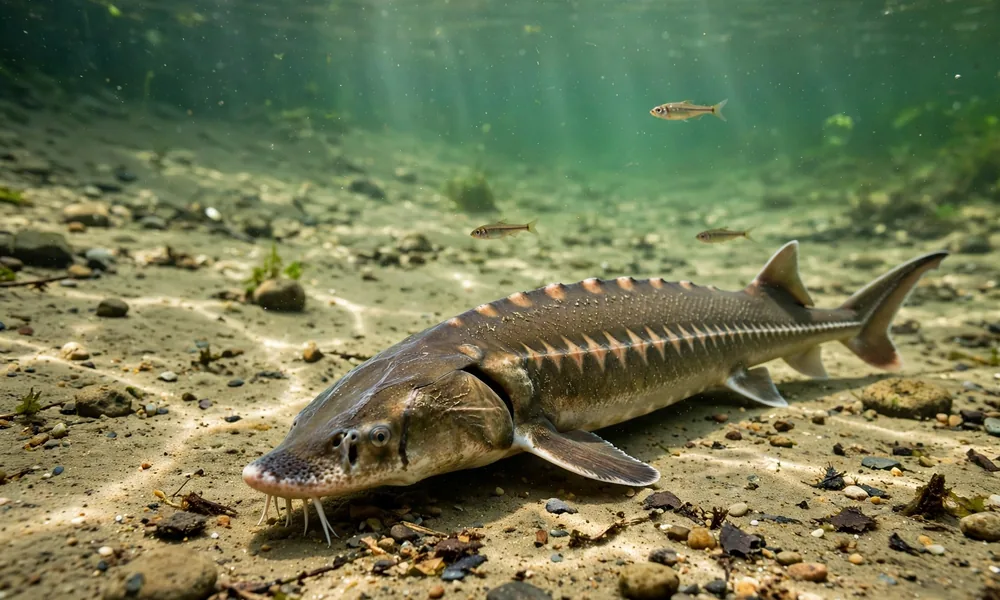
What sets the sturgeon apart is how it hunts. It does not chase its prey across open water, and it does not hunt in a pack. It cruises slowly along the bottom, sweeping its barbels through the mud, and when it finds something edible it extends its mouth and sucks it in, in a rush of water. The whole strike is quiet and unhurried, and the sturgeon then moves on to the next patch of riverbed, feeding steadily for hours. Like the alligator gar, the sturgeon is an ancient fish with an armoured body and a patient hunting style, but the gar is a fish of warm southern rivers that snaps at its prey with long jaws, while the sturgeon is a fish of cold northern rivers that wins its meals by vacuuming the riverbed.
Feeding follows the rhythm of the day and the season, and it is busiest in the cooler months. Sturgeon feed most actively in spring and autumn, when the water is cool and the river is full of food, and they feed less in the heat of summer, when the water warms and the oxygen drops. In winter they feed little, and a sturgeon in cold water may go weeks without eating, holding near the bottom and waiting for the spring. Young sturgeon eat tiny crustaceans and insect larvae, and they grow fast on that rich food, reaching 30 centimetres or more in their first year.
How sturgeon behave
Sturgeon are quiet fish, and their day is a slow round of cruising the bottom, feeding and resting in the deep holes. They are not strong swimmers over distance in the way a tuna is, but they are tireless travellers, and a sturgeon on its spawning run may swim hundreds of kilometres upriver, against the current, over weeks. They are not social fish in the way schooling fish are, but they gather in deep holes in winter, sometimes in groups of dozens, lying close together in the slow water, and they gather again at the mouths of rivers in spring, waiting for the signal to run upstream.
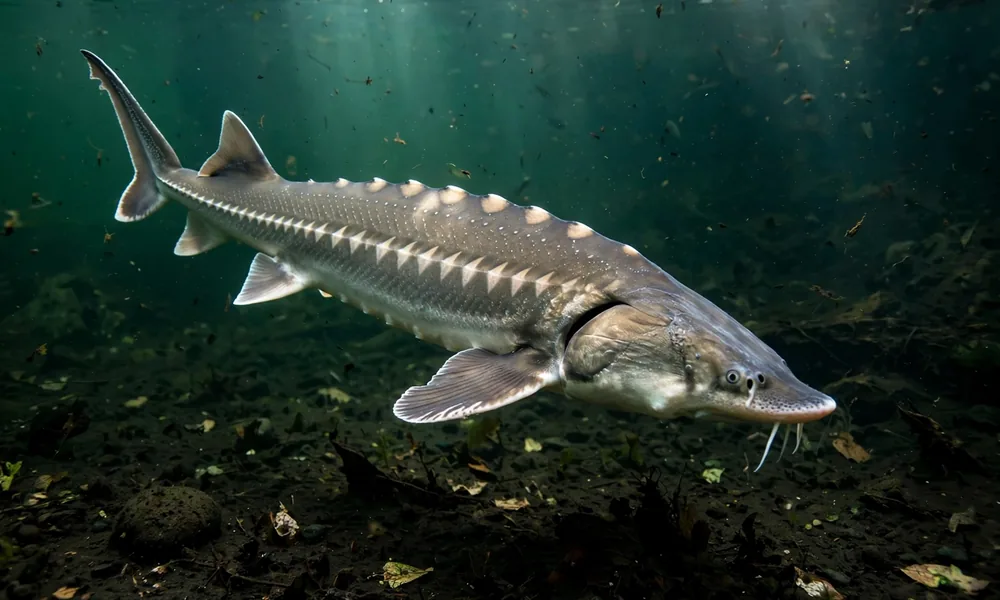
The most famous behaviour in the sturgeon is the breach. On warm summer evenings, sturgeon will sometimes leap clear of the water, their whole armoured body rising out of the river and crashing back down with a sound like a gunshot, and nobody is quite sure why they do it. Some say it is to shake off parasites, some say it is part of courtship, and some say it is simply the joy of being alive, but whatever the reason, it is a sight that stops everyone on the riverbank, and it is one of the few times a sturgeon shows itself at the surface at all.

When a sturgeon is threatened, its first response is to dive, relying on its armour and its size to protect it, and if that fails it will swim hard for deep water and stay there until the danger passes. Sturgeon have no venom and no bite that matters to a person. A sturgeon that is handled roughly will lose the slime that protects its skin, which is why anglers who release their fish wet their hands first and keep the fish in the water, and why the biggest sturgeon are never lifted out of the river at all.
Breeding and life cycle
Sturgeon breed in spring and early summer, when the water warms and the rivers run high, and the timing is set by the flow of the river rather than the calendar. The adults leave the sea or the large lake where they have spent the winter and swim far upstream, sometimes hundreds of kilometres, to the gravel bars where they were born, and the journey can take weeks. A female beluga may not breed until she is 15 to 25 years old, and she may then breed only once every few years, which is why the loss of a single large female is a blow the population takes decades to recover from.
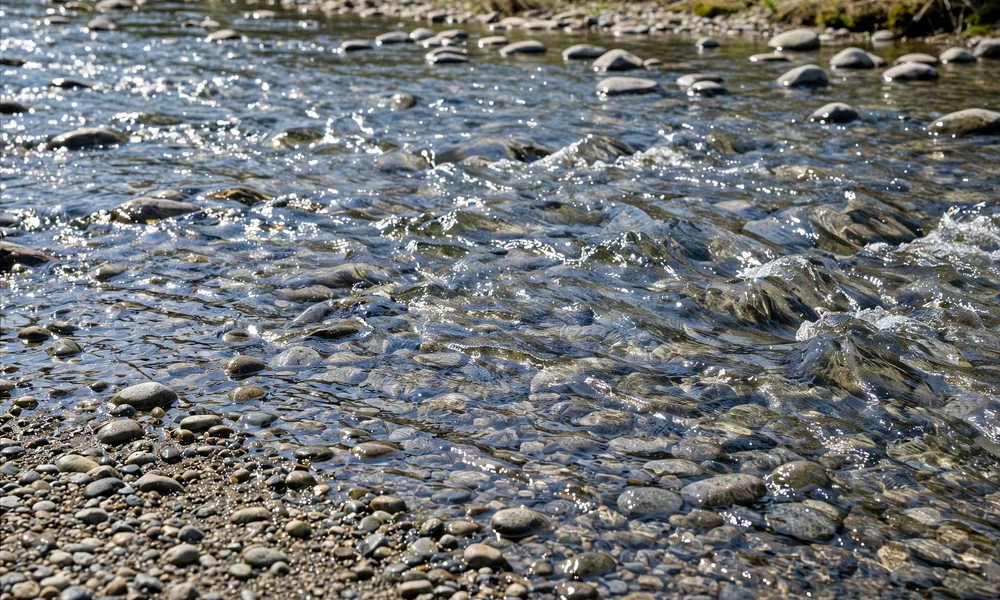
The female arrives at the spawning ground and lays her eggs in the gravel while the male releases his milt over them, and a large female can lay hundreds of thousands of eggs in a single spawning. The eggs are small and sticky, dark grey or black, and they settle into the gravel, where the current keeps them clean and oxygenated. The eggs hatch in 4 to 10 days, depending on the temperature, and the young fry drift downstream, feeding on tiny crustaceans as they go, until they reach the estuary or the lake where they will spend their first years.
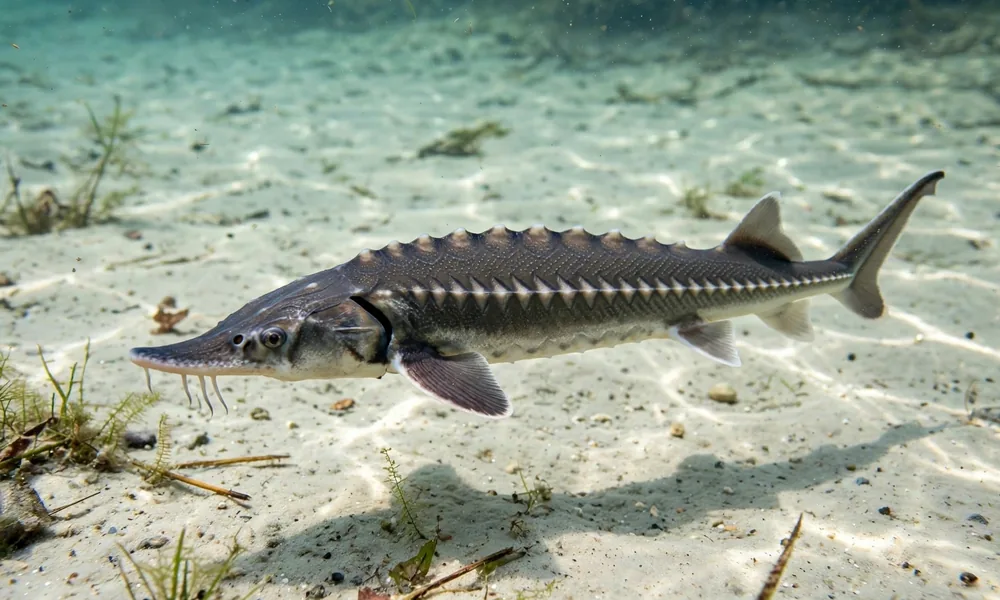
Growth is slow in the first years, and a young sturgeon may reach only 30 centimetres by the end of its first summer, feeding on tiny crustaceans and insect larvae before it turns to larger food. It reaches breeding size only after many years, when it is well over a metre long, and the lifespan in the wild is often 50 to 100 years or more. The beluga can live to 118 years, and the white sturgeon to 104 years, and the lake sturgeon has been aged at more than a century, with the oldest fish reaching 152 years. The young are independent from the day they hatch, able to feed and hide within hours, but most of them will never reach adulthood, eaten by fish and birds in their first weeks.
Conservation status
The sturgeon is the most endangered group of fish on earth, and the reasoning is straightforward: more than 85 percent of sturgeon species are at risk of extinction, and 17 of the 25 species assessed by the International Union for Conservation of Nature are Critically Endangered, the highest level of threat short of extinction in the wild. That broad picture hides a more hopeful local one, and it is worth understanding both sides, because the sturgeon is one of the fish most tied to the fate of the rivers it lives in. A fish that must swim hundreds of kilometres upstream to spawn cannot live where a dam blocks the river, and a river that loses its sturgeon loses a part of its history that nothing else can replace.
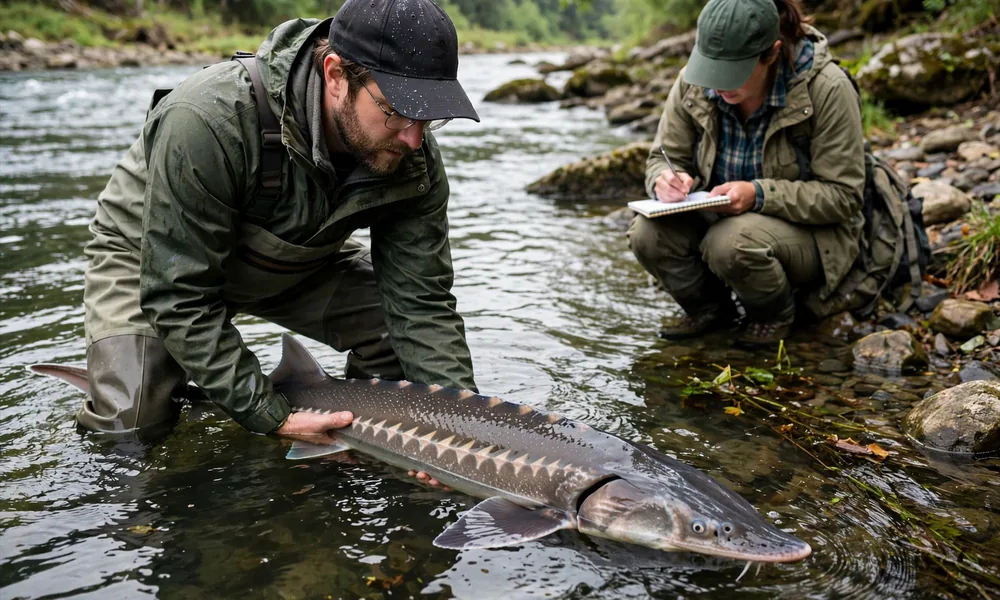
The main pressure is the caviar trade. When a female sturgeon is caught for her roe, she is killed, and because she may take 15 to 25 years to mature and may breed only once every few years, the loss of a single large female is a loss the population cannot quickly replace. Poaching is a second pressure, and a river that loses its biggest females loses its best breeders, which is why so many fisheries now ban the taking of large sturgeon altogether. Dams are a third pressure, and a dam that blocks a spawning run cuts the fish off from the gravel bars where it has bred for thousands of years.
The most useful conservation work is practical, and it is the same work that helps the whole river. Protecting the spawning gravel and the deep winter holes keeps the breeding grounds and the resting places in place, and removing or bypassing dams lets the fish reach the gravel bars again. Hatcheries now raise young sturgeon and release them into rivers where the wild fish have gone, and nearly all caviar today comes from farmed fish rather than wild ones, which takes the pressure off the rivers. Catch-and-release fishing, with rules that keep the biggest fish in the water, gives the sturgeon a safe patch to feed and breed in, and it gives the river a chance to hold its fish from one season to the next.
Best seasons for sturgeon watching
The best time to look for a sturgeon is the spring and the early summer, when the water is warming and the fish are moving upstream to spawn. In the northern rivers that usually means the months from about April to June, when the rivers run high with snowmelt and the sturgeon gather at the mouths of their spawning tributaries. In the south the season starts earlier, from about March, and the fish are active for longer, feeding hard through the cool months. Sturgeon are present in the river all year round, and they do not leave the system, so there is no wrong season in the strict sense, but a warm, calm evening in spring will show you far more fish than a cold day in midwinter.

The best hours are the dawn and the dusk, when the sturgeon are feeding actively and the light is good for seeing them. From about six o’clock until nine in the morning, and again from about five until eight in the evening, the sturgeon are out on the riverbed, moving from hole to hole, and they are at their most approachable then. A slow walk along the bank, with the sun behind you and a pair of polarised sunglasses to cut the glare, is all you need, and the fish will sometimes breach clear of the water, if you are patient and keep your distance.
Staying safe around sturgeon
A sturgeon is not dangerous to people, and there is no safety warning that belongs to the fish itself. It has no venom, it does not bite, and it will not chase or threaten a swimmer. The safety rules for watching sturgeon are the rules of the river and the water: watch the water, watch the weather, and respect the fish that you came to see. Never wade into deep water without knowing what is under your feet, never fish alone from a boat without a life jacket, and never handle a fish with dry hands, because a dry hand strips the slime that protects its skin.
There are a few practical points for the water itself. Fish with a buddy, stay within your depth, and keep an eye on the weather, which can change fast on a big river, with wind and waves rising in minutes. Wear a life jacket when you are in a boat, and keep clear of the propeller when the engine is running. If you are wading, watch for slippery rocks and sudden drop-offs, and wear shoes that grip. A sturgeon will not hurt you, but the water can, and the sensible approach is to enjoy the fish and respect the river they live in.
Sturgeon watching checklist
A little preparation turns a morning on the river into a real chance of seeing sturgeon at their best, feeding on the riverbed in clear, cool water.
- A visit in spring or early summer, when the water is warming and the sturgeon are moving upstream to spawn.
- A dawn or dusk trip, when the sturgeon are out feeding and the light is good.
- A wide river with deep holes, gravel bars and a soft bottom, where the fish feed and rest.
- A slow walk along the bank, watching for a dark shape on the riverbed or a breach at the surface.
- Polarised sunglasses that cut the glare, so you can see into the water and spot the fish.
- A life jacket and a buddy, so that a day on the water stays safe from start to finish.
- Respect for the fish and the river, keeping your distance, wetting your hands before handling a sturgeon, and leaving the shore as you found it.
Frequently asked questions
How big do sturgeon get?
Most sturgeon measure between 1 and 3 metres from snout to tail, and a good fish weighs 20 to 100 kilograms. The beluga is the giant of the family, with an accepted record of 7.2 metres and 1,571 kilograms, caught in the Volga estuary in 1827, and the white sturgeon has historical records of 6.1 metres. Claims of sturgeon 10 or 12 metres long and weighing 2,000 kilograms or more are disputed and unconfirmed, and they should be treated as stories rather than facts. Females grow larger than males, and the biggest sturgeon in any river are almost always female.
What do sturgeon eat?
A sturgeon eats crustaceans, worms, molluscs, insect larvae and small fish, which it finds by sweeping its barbels through the mud and sucking the food up with its tube-like mouth. The beluga is the exception, a true predator that hunts other fish, from herring and shad to smaller sturgeon. Adult sturgeon have no teeth at all, so they can only eat food small enough to swallow whole, and they feed most actively in the cool water of spring and autumn.
How old can a sturgeon get?
Sturgeon are among the longest-lived fish in fresh water. The beluga can live to 118 years, the white sturgeon to 104 years, and the lake sturgeon has been aged at more than a century, with the oldest fish reaching 152 years. They grow slowly and mature late, with females taking 15 to 25 years to breed for the first time, which is why the loss of a single large female takes a population decades to replace.
Are sturgeon dangerous?
No, sturgeon are not dangerous to people. They have no venom, they do not bite, and they will not chase or threaten a swimmer. Their whole defence is built on being hard to see, hard to catch and hard to hold, and their first response to a threat is to dive for deep water. The safety rules for watching them are the rules of the river itself: watch the water, watch the weather, and wear a life jacket in a boat.
Is caviar still made from wild sturgeon?
Almost never, and that is good news for the fish. Nearly all caviar today comes from farmed sturgeon, raised in ponds and tanks, because the wild fish are too rare and too protected to fish. The trade in wild caviar is controlled by international law, and the beluga and other species are listed under the Convention on International Trade in Endangered Species, which limits how their roe can be bought and sold. Farmed caviar has taken the pressure off the rivers, and it is the reason the wild fish have a chance at all.
How is this guide different from the sea lamprey guide?
This guide covers the sturgeon, an armoured bottom feeder of up to 7.2 metres that swims upriver to spawn in gravel and lives for a century, while our sea lamprey guide covers a jawless, eel-like fish that fastens itself to other fish with a round sucking mouth and spends its adult life feeding on their blood. One is a giant that vacuums the riverbed; the other is a parasite that rides on the backs of bigger fish.
Conclusion
The sturgeon species are a reminder that a fish does not need to be fast or colourful to be unforgettable. Five rows of scutes, four barbels, a snout like a shovel and a life that can span a century have made the sturgeon the oldest fish still swimming in the rivers of the north, at home in the Volga, the Danube, the Fraser and the Great Lakes alike.
If you go looking for one, go on a warm, calm day in spring, go at dawn or dusk, and walk slowly along a wide river with the sun behind you. Find the deep hole, watch for a dark shape on the riverbed, and wait for the water to erupt, and you will have met the sturgeon that turns a quiet river into a place of sudden, ancient excitement.