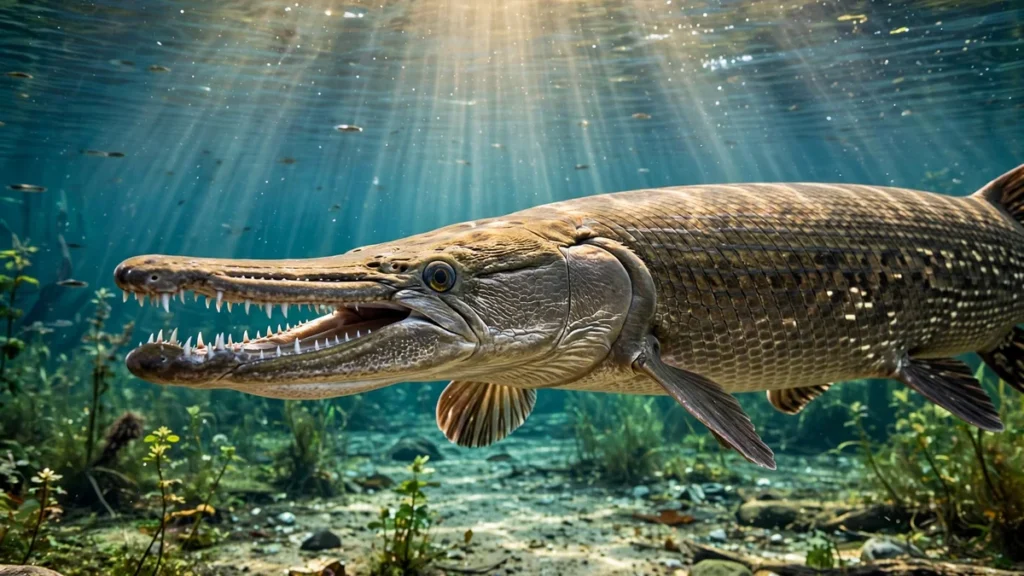
The alligator gar species number one, a single species called Atractosteus spatula, and it is the largest freshwater fish in North America, a living fossil with a long broad snout full of sharp teeth and a body armoured in hard diamond-shaped scales. If you are asking how many alligator gar species there are, the answer is one: every alligator gar alive today belongs to it.
The alligator gar lives in the slow rivers, bayous and reservoirs of the south-central United States, a patient ambush hunter that can grow to about 3 metres long and breathe air at the surface in warm low-oxygen water where other fish would suffocate.
Key takeaways
- There is one alligator gar species, Atractosteus spatula, the largest freshwater fish in North America.
- Alligator gars grow to about 2.5 to 3 metres long and weigh 100 to 140 kilogrammes.
- They have a long broad snout full of sharp teeth and a body covered in hard ganoid scales like armour.
- Alligator gars breathe air with their swim bladder and can survive in warm water low in oxygen.
- They are ambush predators that eat fish, their eggs are toxic, and they can live for more than 50 years.
What makes an alligator gar an alligator gar
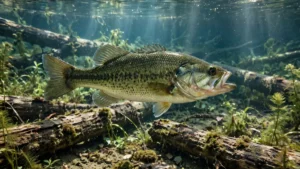
An alligator gar is a huge olive-brown fish with a long broad snout, two rows of sharp teeth in the upper jaw, and a torpedo-shaped body covered in interlocking ganoid scales that feel like armour plate, and an adult usually measures about 2 to 2.5 metres long, with the largest reaching about 3 metres and 100 to 140 kilogrammes. The snout is the feature that gives the fish its name: it is wide and flat like an alligator’s, and it is armed with teeth that are built for grabbing slippery fish and holding them fast.
The scales are the feature that sets it apart from every other freshwater fish in its range. Each ganoid scale is a hard diamond-shaped plate coated in a shiny enamel-like substance, and the scales lock together so tightly that a gar is almost impossible for a predator to bite through. The fins sit far back on the body, close to the tail, the shape of an ambush hunter built for a sudden burst of speed.
The alligator gar species and their relatives
There is one alligator gar species. It belongs to the family Lepisosteidae, the gars, a family of seven species that has changed very little in more than 100 million years, and it is the largest of them all.
The longnose gar is the alligator gar’s most widespread relative, a slender fish with a needle-thin snout that lives across much of eastern North America, while the spotted gar is a smaller spotted fish of the slow waters of the south-central United States. The shortnose gar is a small gar of the Mississippi basin, the Florida gar lives in the swamps and canals of Florida, and the Cuban gar and the tropical gar are the southern members of the family, living in Cuba and in the rivers of Central America. The bowfin is not a gar, but it is a fellow ancient fish of the same slow warm waters that also breathes air at the surface.

| Type | Animal | Where it lives | Best-known food | Length or Weight |
|---|---|---|---|---|
| Species | Alligator gar (Atractosteus spatula) | Rivers of the south-central United States, Mississippi basin and Texas | Fish, especially shad and buffalo fish | About 2.5 to 3 m, 100 to 140 kg |
| Close relative | Longnose gar | Rivers and lakes of eastern North America | Fish and crustaceans | About 1.2 to 1.8 m |
| Close relative | Spotted gar | Slow waters of the south-central United States | Fish and crustaceans | About 0.6 to 0.9 m |
| Close relative | Shortnose gar | Mississippi River basin and Great Lakes | Fish and insects | About 0.6 m |
| Close relative | Florida gar | Swamps, canals and rivers of Florida | Fish and crustaceans | About 0.6 to 0.9 m |
| Close relative | Cuban gar | Rivers and lakes of Cuba and the Isle of Youth | Fish and crustaceans | About 1 to 2 m |
| Close relative | Tropical gar | Rivers of Mexico and Central America | Fish and crustaceans | About 1 to 1.25 m |
How alligator gars live
Alligator gars are creatures of slow warm water. An alligator gar spends much of its day lying still just below the surface of a river, a bayou or a reservoir, and when the water is warm and low in oxygen it rises to the surface and takes a gulp of air into its swim bladder, which works like a lung. It can survive in water that would suffocate most fish, and that is why it thrives in the hot shallow backwaters of the south.
Fish make up most of the diet, especially shad, buffalo fish, carp and other slow-swimming fish, and an alligator gar hunts by ambush, waiting in the weeds or in the shadow of a log until a fish swims close, then lunging forward with a sideways snap of its jaws. The teeth trap the prey, and the gar turns the fish head-first and swallows it whole, though it feeds mostly at dawn and dusk and can go for days without eating. Unlike salmon, which travel long distances to spawn, the alligator gar stays in its home river for life, and unlike the piranha of South American rivers, which hunts in shoals, the alligator gar hunts alone.
Spawning takes place in spring, when the rivers rise and flood the low land along their banks, and the female lays thousands of sticky eggs among the flooded plants, where they hatch in a few days. The eggs are toxic to people and to other animals, a defence that protects them while they lie unguarded in the shallows, and the young grow quickly, feeding on small fish and insects. Alligator gars grow slowly once they are large, and they can live for more than 50 years.
Where alligator gars live
The alligator gar lives in the rivers of the south-central United States, from the Mississippi River basin and the Gulf Coast of Texas and Louisiana to the rivers of Oklahoma, Arkansas and south-eastern Mexico, and it is most common in the big slow rivers, the oxbow lakes, the bayous and the reservoirs of that region. It was once found further north, up the Mississippi as far as Illinois, but its range has shrunk as rivers were dammed.
An alligator gar needs a river or a lake with shallow weedy backwaters for spawning, deep pools for shelter in summer, and plenty of fish to eat, so it is most often found where the river spreads out into a floodplain. It can also live in brackish water near the coast, where the rivers meet the Gulf of Mexico.
Alligator gars are not listed as endangered across their whole range, but their numbers have fallen sharply in many rivers, and they are protected in several states, with limits on how many may be caught and rules against taking the largest fish. The main pressures are the dams that block the spring floods they need for spawning, the loss of floodplain habitat, and years of culling driven by the belief that gars are pests.
Best seasons for alligator gar watching
Alligator gars are active all year in the warm waters of their range, but the best time to look for them depends on where you go. In Texas and Louisiana the best months are often April to June, in the spring spawning season, when the rivers rise and the gars gather in the flooded shallows.
Staying safe around alligator gars
An alligator gar is a wild fish with a mouth full of sharp teeth, and it can give a painful bite to a person who handles it carelessly, though alligator gars almost never attack people and they usually swim away when they are approached. Keep your distance, never wade in murky water where large gars are known to live, and never handle a gar without gloves and a firm grip behind the head. If you catch one while fishing, stay calm, keep it in the water if you can, and release it quickly.
Alligator gar watching checklist
Pack for heat, sun and long quiet hours by the water.
- Binoculars, because gars lie just below the surface and are best watched from the bank.
- Polarised sunglasses, for cutting the glare on the water and seeing the fish below.
- Sun protection, including a hat, sunscreen and plenty of water, for hours in the southern sun.
- A guided boat trip on a Texas or Louisiana river.
- An early morning or late evening start, when the gars are feeding and surfacing.
- Patience and silence, because gars are shy animals and a noisy group will send them away.
- A field guide to the fishes of North America.
Frequently asked questions
How many alligator gar species are there?
There is one alligator gar species, Atractosteus spatula. It is the largest of the seven gar species and the largest freshwater fish in North America, and it lives in the rivers of the south-central United States.
How big do alligator gars get?
Alligator gars grow to about 2.5 to 3 metres long and weigh 100 to 140 kilogrammes, though most fish caught today are smaller, at about 1.5 to 2 metres. The largest ever recorded weighed more than 130 kilogrammes.
What do alligator gars eat?
Alligator gars eat mostly fish, especially shad, buffalo fish and carp. They are ambush hunters that wait in the weeds and lunge at prey that swims close, and they swallow their catch whole.
Can alligator gars breathe air?
Yes. Alligator gars have a swim bladder that works like a lung, and they rise to the surface to gulp air when the water is warm and low in oxygen. This lets them survive in hot shallow backwaters where other fish would suffocate, and you can often see their snouts breaking the surface on a summer day.
How is this guide different from the American crocodile species guide?
This guide covers the single alligator gar species, a huge freshwater fish that lives in the rivers of the south-central United States and eats other fish, while our American crocodile species guide covers the single American crocodile species, a large salt-tolerant reptile of the mangroves and lagoons of Florida and the Caribbean. The alligator gar grows to about 3 metres and breathes air through its swim bladder, and the American crocodile grows to about 4.5 metres and breathes air through its lungs.
Are alligator gar eggs poisonous?
Yes. Alligator gar eggs are toxic to people and to other animals, and they should never be eaten. The poison protects the eggs while they lie unguarded in the shallows.
Conclusion
The alligator gar species shows how an ancient fish can still rule a modern river: one species of huge armoured gar, with a broad toothy snout, a body like plate armour, and a lung-like swim bladder, lying patiently in the warm backwaters of the American south.
If you go looking for one, go in spring to a Texas or Louisiana river, go quietly, and go with patience. Watch one rise to the surface, take a gulp of air, and sink back into the weeds without a ripple, and you will understand why it has earned its place as the greatest freshwater fish in North America, and why keeping its rivers free to flood matters most.