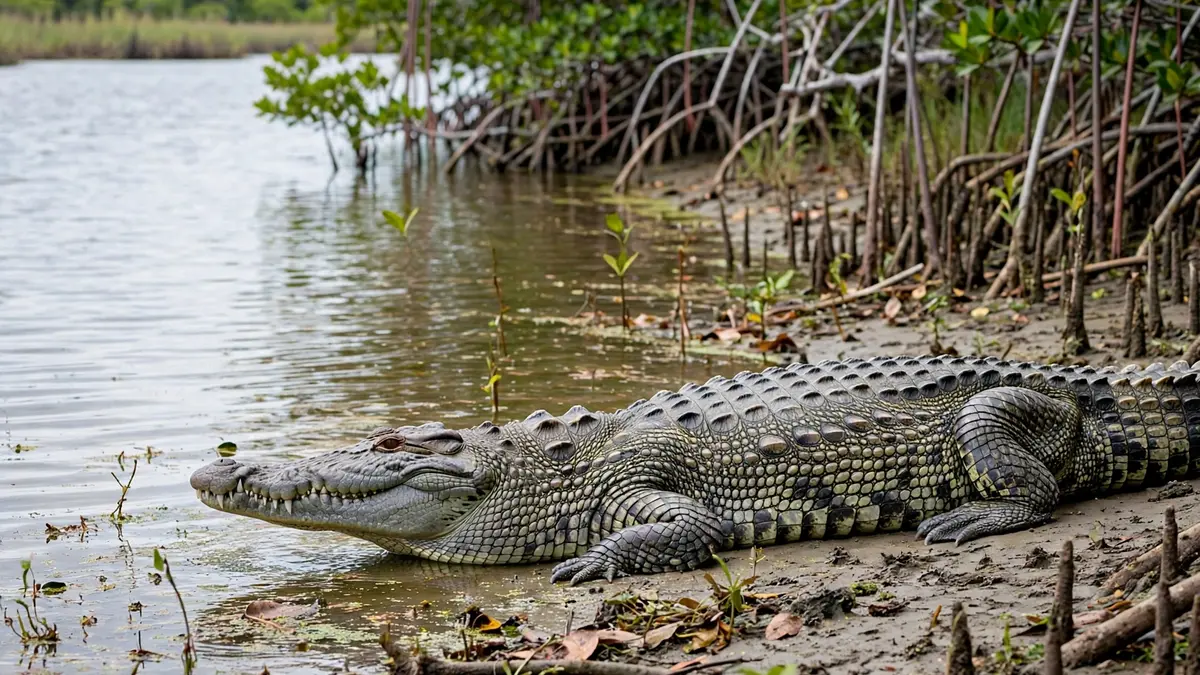
The American crocodile species number one, a single species called Crocodylus acutus, and it is the only crocodile that lives naturally in the United States, a grey-green reptile of the mangrove coasts and brackish lagoons of Florida, Mexico, Central America and the Caribbean. If you are asking how many American crocodile species there are, the answer is one: every American crocodile alive today belongs to it.
The American crocodile is a patient hunter of warm coastal waters that can swim out to sea, bask for hours on a muddy bank, and slip silently back into the water at the first sign of danger. Its narrow snout, its visible fourth tooth and its tolerance for salt water set it apart from the alligator that shares its Florida home.
Key takeaways
- There is one American crocodile species, Crocodylus acutus, the only crocodile native to the United States.
- American crocodiles grow to about 3 to 4.5 metres long, rarely to 6 metres, and have a narrow V-shaped snout.
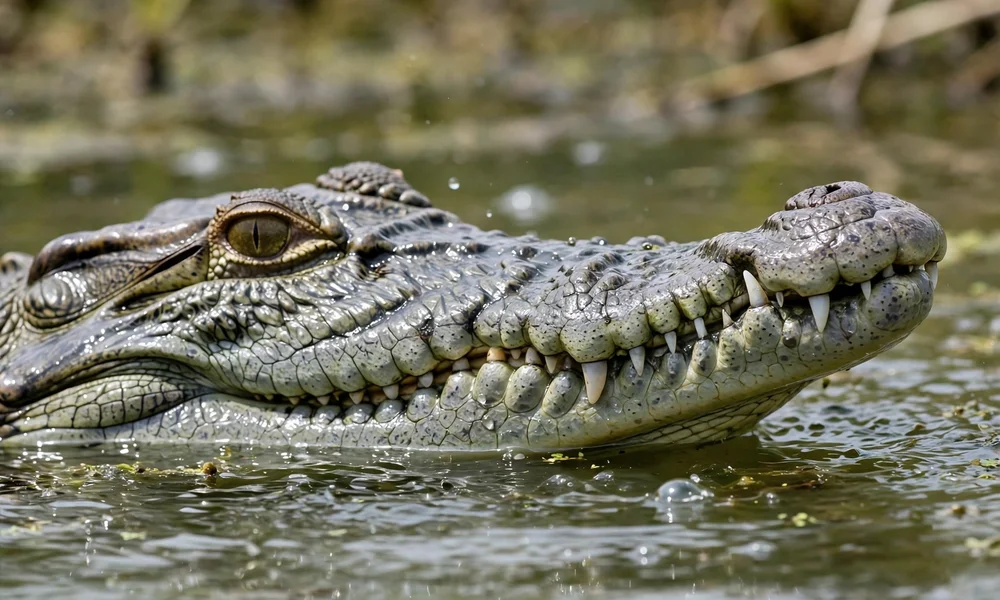
- The fourth tooth of the lower jaw shows when the mouth is closed, which is the quickest way to tell a crocodile from an alligator.
- American crocodiles are salt-tolerant, using salt glands to live in coastal waters, mangroves and brackish lagoons.
- They eat fish, birds and mammals, are listed as Vulnerable, and number about 2,000 in Florida.
What makes an American crocodile an American crocodile
An American crocodile is a large grey-green reptile with a long narrow V-shaped snout, a heavy armoured body, and a tail flattened from side to side for swimming, and an adult male usually measures about 3 to 4.5 metres, though a very large old male can rarely reach 6 metres. Females are smaller, usually about 2.5 to 3 metres long.
The snout is the feature that matters most. Unlike the broad rounded snout of the American alligator, the crocodile has a pointed snout that tapers to a narrow tip, and when the mouth closes, the large fourth tooth of the lower jaw slots into a notch in the upper jaw and stays visible, so a crocodile always seems to be showing a tooth.
The American crocodile species and their relatives
There is one American crocodile species. It belongs to the genus Crocodylus, the true crocodiles, and it shares that genus with more than a dozen other crocodiles around the world, from the Nile crocodile of Africa to the saltwater crocodile of Asia and Australia.
The American alligator is the crocodile’s closest neighbour in Florida, a broader-snouted reptile that prefers fresh water and hides its lower teeth when its mouth is closed, while the saltwater crocodile is the largest living reptile in the world and the Nile crocodile is the great river hunter of Africa. The Morelet’s crocodile lives in the fresh waters of Mexico and Central America, the Orinoco crocodile haunts the rivers of Venezuela and Colombia, and the Cuban crocodile is a small fierce crocodile found only on the island of Cuba. The Komodo dragon is not a crocodile, but it is a fellow giant reptile that hunts in the same patient way.
| Type | Animal | Where it lives | Best-known food | Length or Weight |
|---|---|---|---|---|
| Species | American crocodile (Crocodylus acutus) | Florida, Mexico, Central America, the Caribbean and northern South America | Fish, birds and mammals | About 3 to 4.5 m, rarely to 6 m |
| Close relative | American alligator | South-eastern United States, mainly Florida and Louisiana | Fish, turtles and small mammals | About 3 to 4.5 m |
| Close relative | Saltwater crocodile | Coasts and rivers of Asia and northern Australia | Fish, birds and large mammals | About 4 to 6 m, males to 7 m |
| Close relative | Nile crocodile | Rivers and lakes of sub-Saharan Africa | Fish, birds and mammals | About 4 to 5 m |
| Close relative | Morelet’s crocodile | Fresh waters of Mexico, Belize and Guatemala | Fish, birds and small mammals | About 2 to 3 m |
| Close relative | Orinoco crocodile | Orinoco River basin of Venezuela and Colombia | Fish, birds and mammals | About 3 to 5 m |
| Close relative | Cuban crocodile | Zapata Swamp and the Isle of Youth, Cuba | Fish, turtles and small mammals | About 2 to 3.5 m |
How American crocodiles live
American crocodiles are creatures of the coast. An American crocodile spends much of its day basking on a muddy bank or a low mangrove root, warming its body in the sun, and when the heat grows too strong it slides into the water to cool down. It is most active at dawn and dusk, and at night its eyes shine red in a torch beam as it floats with only the top of its head above the surface.
Fish make up most of the diet, along with crabs, birds and small mammals, and an American crocodile hunts by waiting, holding still at the edge of a lagoon or a river mouth until prey comes within reach, then lunging forward with a snap of its jaws. Crocodiles are shy animals by nature and usually avoid people, slipping away into the water long before a person gets close.
In the dry season the female digs a nest in a sandy bank close to the water, laying 30 to 70 eggs that she covers and guards for about 80 days. When the eggs are ready to hatch, the young call from inside the shells and the mother digs them out, carrying the hatchlings gently in her mouth down to the water. Young crocodiles grow quickly, but many are eaten by herons, raccoons and larger crocodiles, and only a few survive to adulthood. American crocodiles can live for 50 to 70 years in the wild.
Where American crocodiles live
The American crocodile lives along the warm coasts of the Americas, from the southern tip of Florida through Mexico and Central America to the Caribbean islands of Cuba, Jamaica and Hispaniola, and down the Pacific and Atlantic coasts of northern South America to Ecuador and Venezuela. In Florida it is found mainly in the Everglades, Florida Bay and the Keys.
Salt water is the key to its range. An American crocodile has salt glands on its tongue that let it get rid of excess salt, so it can live in brackish lagoons, mangrove swamps, estuaries and even the open sea. It also uses fresh water and is often found in the canals and ponds of southern Florida, but it is the salt tolerance that lets it travel where the alligator cannot follow.
American crocodiles are listed as Vulnerable, and there are about 2,000 of them in Florida, a population that has grown steadily since the species was protected in the 1970s. The main pressures are the loss of mangrove habitat, building along the coast, and the disturbance of nesting beaches, though the crocodile is protected by law in the United States and in most of the countries where it lives.
Best seasons for American crocodile watching
American crocodiles are active all year in the warm climate of their range, but the best time to look for them depends on where you go. In Florida the best months are often November to April, in the dry season, when falling water levels gather the crocodiles in the remaining pools and lagoons and the cooler mornings bring them out to bask.
Staying safe around American crocodiles
An American crocodile is a wild predator with powerful jaws and sharp teeth, and it can be dangerous to a person who comes too close, though attacks are rare and it is far shyer than its Nile and saltwater cousins. Keep your distance, never swim where crocodiles are known to live, and never feed a crocodile, because a fed crocodile loses its fear of people. If you see one while walking in the Everglades, stay calm, stay on the path, and let it slide away, because a cornered crocodile may defend itself.
American crocodile watching checklist
Pack for heat, sun and long quiet hours by the water.
- Binoculars, because crocodiles bask on distant banks.
- A camera with a zoom lens, for the narrow snout and the visible fourth tooth.
- Sun protection, including a hat, sunscreen and plenty of water, for hours in the Florida sun.
- A guided boat tour of the Everglades or Florida Bay.
- An early morning start, when the crocodiles are basking and the light is best.
- Patience and silence, because crocodiles are shy animals and a noisy group will send them away.
- A field guide to the reptiles of Florida.
Frequently asked questions
How many American crocodile species are there?
There is one American crocodile species, Crocodylus acutus. It is the only crocodile that lives naturally in the United States, and it ranges from Florida through Mexico and Central America to the Caribbean and northern South America.
How can you tell an American crocodile from an American alligator?
Look at the snout and the teeth. The crocodile has a narrow V-shaped snout and its fourth lower tooth shows when its mouth is closed, while the alligator has a broad rounded snout and hides its lower teeth, and the crocodile is also grey-green and more at home in salt water.
What do American crocodiles eat?
American crocodiles eat mostly fish, along with crabs, birds and small mammals. They hunt by waiting at the edge of a lagoon or river mouth and lunging at prey that comes within reach.
Can American crocodiles live in salt water?
Yes. American crocodiles have salt glands on their tongues that let them get rid of excess salt, so they can live in brackish lagoons, mangrove swamps, estuaries and even the open sea. This lets them travel between islands along the Caribbean coast.
How is this guide different from the aardwolf species guide?
This guide covers the single American crocodile species, a large salt-tolerant reptile of the mangroves and lagoons of Florida and the Caribbean, while our aardwolf species guide covers the single aardwolf species, a small striped mammal that lives in the grasslands of Africa and eats termites. The American crocodile grows to about 4.5 metres and swims in coastal waters, and the aardwolf weighs about 10 kilogrammes and forages on land at night.
Are American crocodiles endangered?
American crocodiles are listed as Vulnerable, with about 2,000 living in Florida, though the population has grown steadily since the species was protected in the 1970s. The loss of mangrove habitat and the disturbance of nesting beaches remain the main threats to watch.
Conclusion
The American crocodile species shows how a single reptile can master the edge between land and sea: one species of grey-green crocodile, with a narrow snout, a showing tooth, and a body built for salt water, basking on the banks of the Everglades and the lagoons of the Caribbean.
If you go looking for one, go in the dry season to Florida Bay or the Everglades, go quietly, and go with patience. Watch one slip from its bank into the mangrove water without a ripple and you will understand why it has earned its place as the shy ruler of the warm American coast, and why keeping its mangroves standing matters most.