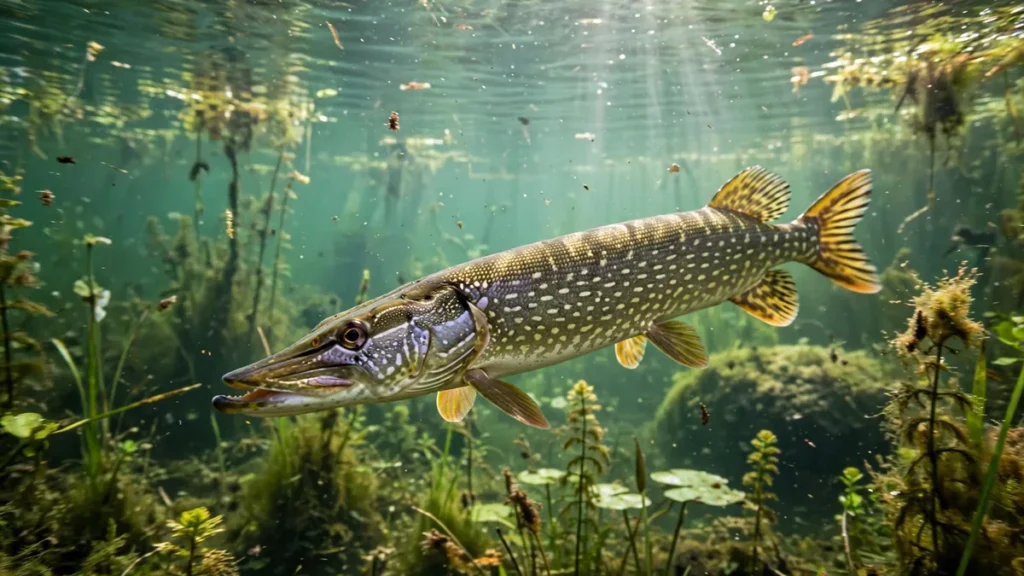
The northern pike species is the long, green ambush predator that rules the weedy shallows of lakes and slow rivers across the whole Northern Hemisphere. If you are asking what a northern pike is, the short answer is Esox lucius, a freshwater hunter with a duck-billed snout full of sharp teeth, a body built for one explosive lunge, and a habit of lying perfectly still in the weed until a fish swims too close. Most adults measure 40 to 55 centimetres, a good fish passes a metre, and the longest reliably recorded reached 150 centimetres, while the rod-caught world record stands at 25 kilograms, a fish of 55 pounds 1 ounce taken from Greffern Lake in Germany in 1986.
Most people meet a northern pike the same way I did, on a quiet lake on a grey morning, when a lure that has been swimming back through the weed suddenly stops dead and the rod doubles over. There is no polite take and no warning. One moment the water is calm, the next a long green shape is shaking its head at the surface, and you are very aware that the fish on the other end has a mouth full of teeth and no intention of giving up. That is the heart of this guide: how a single species of pike became the most feared freshwater hunter of the north, how it lives, hunts and breeds in the cold, weedy water it calls home, and why anglers cross whole countries for the chance of one big fish.
Key takeaways
- The northern pike species is Esox lucius, a member of the pike family Esocidae, native to the fresh waters of the Northern Hemisphere.
- It is named for its long, duck-billed snout and its habit of lying in ambush, and most adults measure 40 to 55 centimetres, with the rod-caught world record standing at 25 kilograms.
- Northern pike are solitary ambush hunters that wait motionless in weed beds and flooded shallows, then strike in a single explosive lunge at fish, frogs and ducklings.
- Each spring they spawn in shallow, flooded vegetation, scattering thousands of sticky eggs that hatch within a few weeks.
- They are listed as Least Concern, are widely stocked as a sport fish, and are mostly caught and released by anglers.
The northern pike species and their relatives
Northern pike belong to the family Esocidae, the pikes, a small family of freshwater predators found only in the Northern Hemisphere. The family holds seven living species, all of them in the single genus Esox, and every one of them shares the same long body, the same flat snout and the same set-back fins that mark a fish built for ambush. They range in size from the small pickerels of about 20 centimetres to the muskellunge of about 180 centimetres, so the family as a whole spans about 20 cm to 180 cm long, and the northern pike sits near the top of that range as one of the largest and most widespread of them all.
The northern pike, Esox lucius, is the lead species of this guide, and it is a good ambassador for the whole genus. It is a long, torpedo-shaped fish with an olive-green back, pale spots along its flanks and a belly that fades to white, and it is found in lakes, slow rivers, marshes and reservoirs from Alaska and Canada across Europe and deep into Siberia. It grows to about 150 centimetres at the very largest, it is most active in cool water, and it is the pike that anglers mean when they simply say pike, a fish with a reputation for aggression that has followed it from the lakes of Ireland to the rivers of Russia. If you have fished a weedy northern lake, there is a fair chance the long green shape holding in the weed was a northern pike, or one of its close cousins in the same genus.
| Type | Animal | Where it lives | Best-known food | Length or Weight |
|---|---|---|---|---|
| Family | Pikes (Esocidae) | Fresh waters of the Northern Hemisphere | Fish, frogs and small mammals | About 20 cm to 180 cm long |
| Genus | Pikes (Esox) | Lakes and rivers of the Northern Hemisphere | Fish, frogs and crayfish | About 20 cm to 180 cm long |
| Species | Northern pike (Esox lucius) | Lakes and slow rivers of the Northern Hemisphere | Fish, frogs and crayfish | About 40 cm to 150 cm long |
| Species | Muskellunge (Esox masquinongy) | Great Lakes and rivers of North America | Fish and crayfish | About 70 cm to 180 cm long |
| Species | Chain pickerel (Esox niger) | Weedy ponds and swamps of eastern North America | Small fish and frogs | About 30 cm to 60 cm long |
| Species | Amur pike (Esox reichertii) | Rivers of north-east Asia | Fish and frogs | About 60 cm to 115 cm long |
The closest relative of the northern pike, and the one it is most often confused with, is the muskellunge, Esox masquinongy, the giant of the North American pikes. Like the northern pike, the muskellunge is a member of the genus Esox, but it is a bigger, heavier fish, usually 70 to 120 centimetres and reaching about 180 centimetres at the largest, with dark bars or spots on a pale background where the pike has pale spots on a dark background. The quickest way to tell them apart is under the jaw, where the muskellunge has seven or more sensory pores on each side and the northern pike never has more than six. Like the largemouth bass, the northern pike is a hunter that sits near the top of its food chain, but the bass is a warm-water fish of weed beds and lily pads that guards a nest each spring, while the pike is a cold-water fish that scatters its eggs in flooded shallows and never looks back.
Within the genus, the species sort themselves by size and by the water they like. The muskellunge is the giant of the Great Lakes and the big rivers. The chain pickerel, Esox niger, is the pike of the eastern swamps and ponds, a smaller fish of about 30 cm to 60 cm long that hunts in warm, tea-coloured water. The Amur pike, Esox reichertii, lives in the rivers of north-east Asia, a fish of about 60 cm to 115 cm long with dark spots on a silvery background, the mirror image of the northern pike. The little pickerels, the redfin and the grass pickerel, stay under 30 centimetres and live in creeks so small that a northern pike would barely turn around in them.
What a northern pike looks like
A northern pike is a long, lean fish, built like a torpedo with a set of fins pushed right back towards the tail. Most adults measure between 40 and 55 centimetres from snout to tail, and a good fish weighs 2 to 4 kilograms, though a fish of 7 or 9 kilograms is a fine catch, and the world record of 25 kilograms has stood since 1986. The body is round in cross-section and deepest just behind the head, and it tapers to a broad, powerful tail that gives the fish its sudden, driving lunge. The back is olive green, fading to a pale, almost white belly, and the flanks carry rows of pale, bean-shaped spots that break up the outline of the fish against the weed.
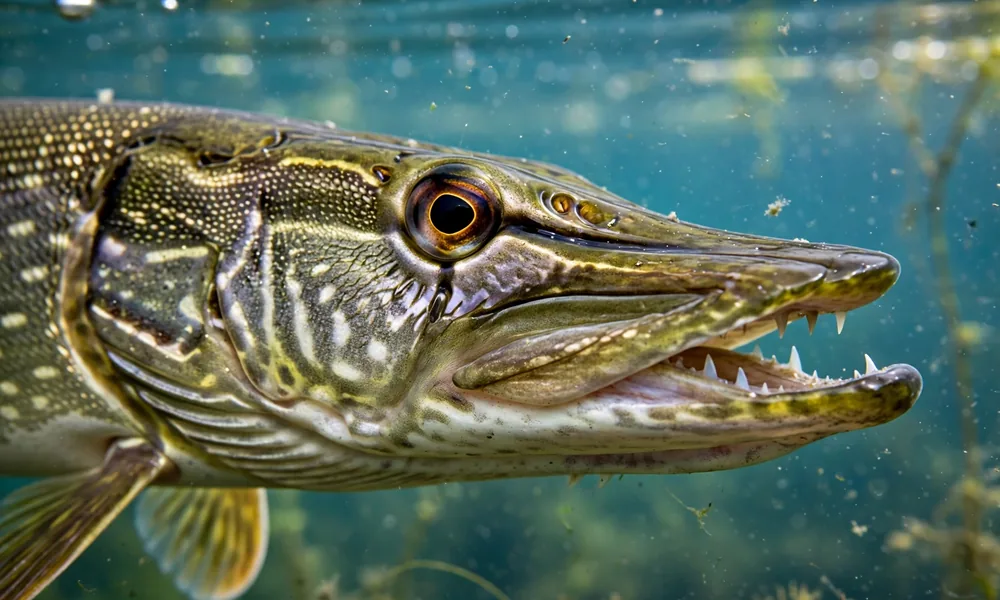
The head is long and flat, and the snout is the feature that gives the fish its look. It is broad and duck-billed, with the lower jaw jutting slightly forward, and when the fish opens its mouth you can see why anglers treat it with respect. The jaws carry hundreds of sharp, needle-like teeth that point backwards, so that anything grabbed is very hard to let go of, and the teeth are replaced through the life of the fish as they wear or break. Under the jaw sit five or six sensory pores on each side, small pits that help the fish sense the movement of prey in murky water, and it is the count of those pores that separates a pike from a muskellunge. The dorsal fin and the anal fin sit far back on the body, directly opposite each other, and the tail is broad and forked, giving the fish its burst of speed.
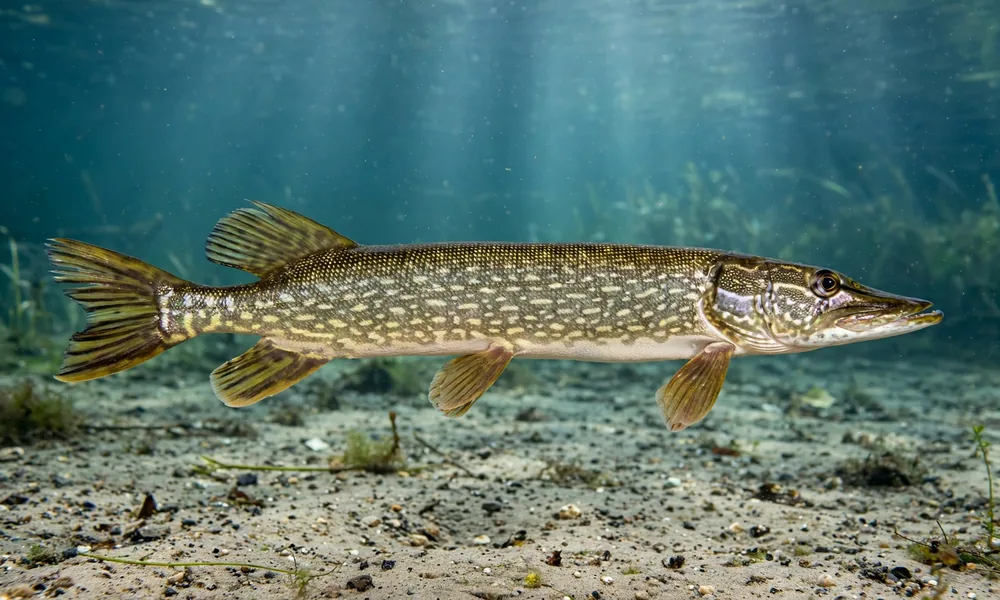
The colours change with the water the fish lives in. Fish in clear water are brighter, with a vivid green back and clear pale spots, while fish in dark, peaty water are darker, sometimes almost black along the back, with spots that are hard to pick out. Young fish are paler still, with a bolder pattern and a dark stripe through the eye that fades as they grow. Males and females look much alike, though the females grow much larger, and the biggest pike in any lake are almost always female, a pattern that holds from the smallest pond to the largest lake in the north.
Compared with its cousins, the northern pike is easy to tell apart once you know what to look for. The muskellunge has dark markings on a pale background, the reverse of the pike, and it grows far larger. The chain pickerel has a dark bar below the eye and a chain-like pattern of dark lines on its sides. Like the salmon, the northern pike is a fish that changes with the season, but the salmon changes its whole body as it moves from river to sea and back again, while the pike changes only its colour, darkening in the weed and paling in open water, a shift that helps it blend into the place it is hunting.
Where northern pike live
Northern pike live in the cool, still fresh waters of the Northern Hemisphere, and they are at home in lakes, ponds, reservoirs, marshes and slow rivers. Their native range runs right around the top of the world, from Alaska and Canada across to Europe and through Siberia to the Pacific coast, and they are one of the most widely spread freshwater fish on Earth. They favour water that is cool, usually 15 to 18 degrees Celsius in summer, and they are rarely found in fast, warm rivers, where other fish take their place. Wherever there is cool water, weed and something to hide behind, there is a good chance a northern pike is nearby.
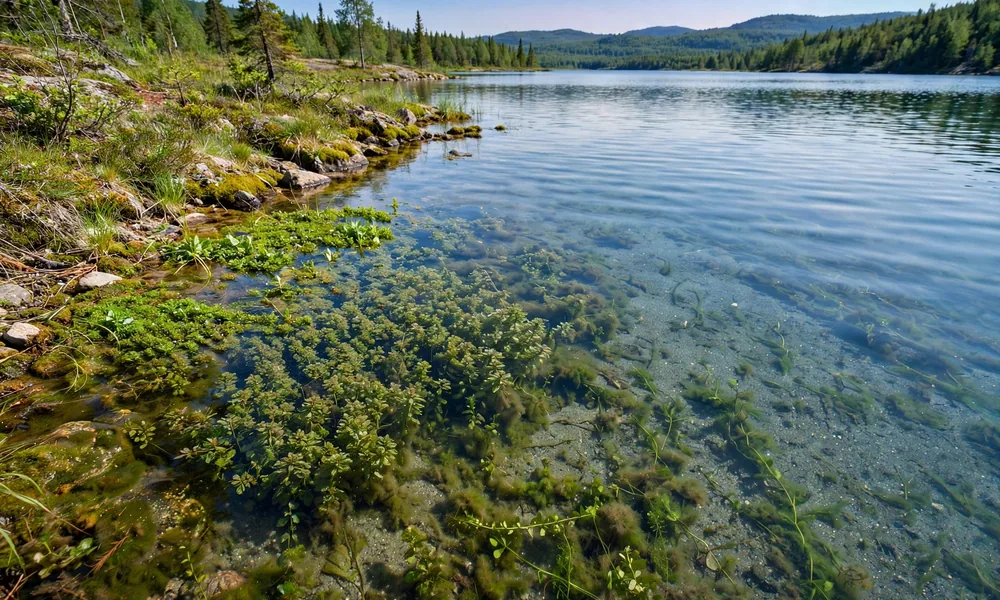
The habitat they choose is the edge of the water, and they are rarely found far from cover. Most pike live in water between 1 and 3 metres deep, along the weed edge, the reed beds, the fallen trees and the flooded shallows, where the food is richest and the shelter is thickest. They favour places with plenty of submerged plants, which give them both hunting cover and a place to hide from the ospreys and herons that hunt them from above, and they are less common in open water, where there is little to eat and nowhere to hide. A northern pike spends much of its life within a small stretch of shoreline, sometimes no larger than a few dozen metres, and it knows every weed bed and every sunken log in that stretch the way you know the rooms of your own house.
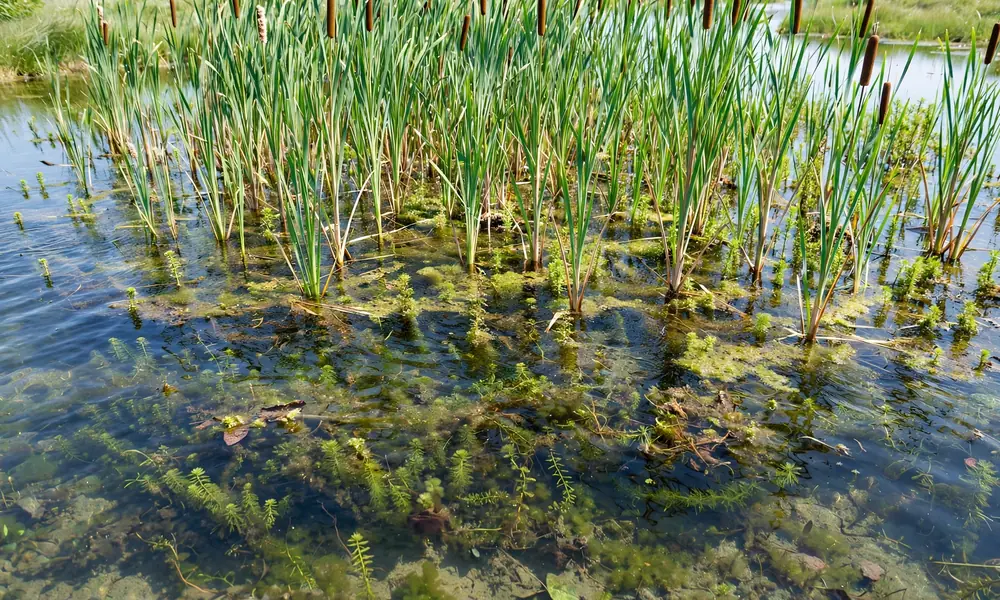
The northern pike has travelled far beyond its native range, and it now lives in waters from Spain to the southern United States, carried there by anglers and fish farmers. It has settled in lakes and reservoirs where it never lived before, and in some of those places it has become a problem, eating native fish that have no defence against it. Like the piranha, the northern pike is a freshwater predator that has been moved around the world by people, but the piranha is a river fish of the Amazon that hunts in groups, while the northern pike is a lake fish that hunts alone, and it is the lone hunter that has spread so far.
What northern pike eat
Northern pike are hunters, not grazers, and their diet is written on the lake itself. The everyday food is other fish, and a pike will eat almost any fish it can fit in its mouth, from perch and roach to minnows, suckers and young pike. They also eat frogs, crayfish, large insects and the occasional small mammal or bird that falls into the water, and a big pike will take a duckling or a water vole without a second thought. A single pike may eat several small fish in a day, and a lake full of pike can keep the numbers of smaller fish in check, which is one reason they sit at the top of the food chain in so many northern waters.
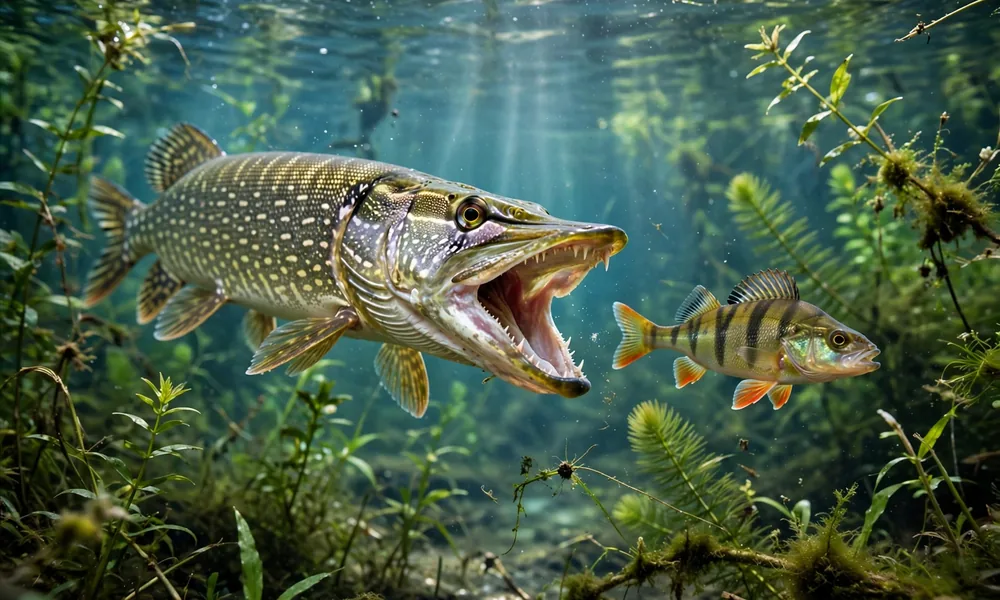
What sets the northern pike apart is how it hunts. It does not chase its prey across open water, and it does not hunt in a pack. It waits, hidden in the weed or behind a sunken log, holding perfectly still for minutes at a time, and it watches for a fish to come within range. When the moment comes, it fires forward in a burst of speed that is hard to believe from a fish that looked asleep a second before, and the prey is taken in jaws that close like a trap. The whole strike takes a fraction of a second, and the pike then turns and swims back to cover, holding the prey in its mouth until it can turn it and swallow it head first. Young pike start life on tiny water creatures and insects, and they switch to fish when they are only a few centimetres long, which is why even a small pike is a hunter from the start.
How northern pike behave
Northern pike are daytime fish, and their day is a quiet round of waiting, striking and moving to a new patch of cover. They wake at dawn, leave the deeper water where they spent the night, and move into the shallows to feed, and they spend the day working the weed edge in a slow, unhurried way, never rushing, never chasing far. They are not strong swimmers over distance, and they do not need to be: their life is lived within a few hundred metres of shoreline, and speed matters less than knowing every weed bed and every hiding place. When a larger fish passes, a northern pike will often turn sideways and spread its fins, making itself look larger and harder to swallow, and if that fails it will dart into the nearest weed and wait.
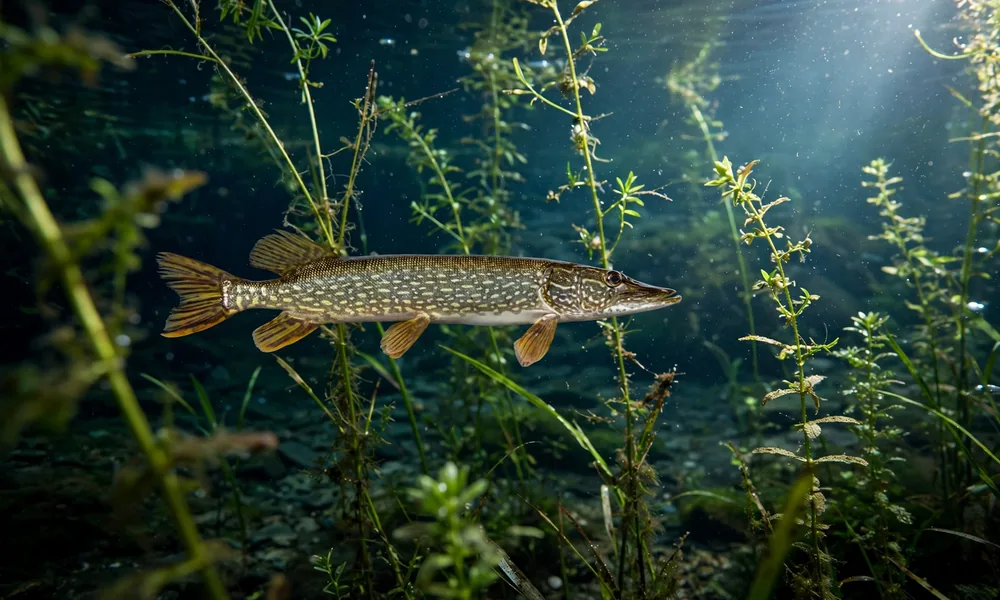
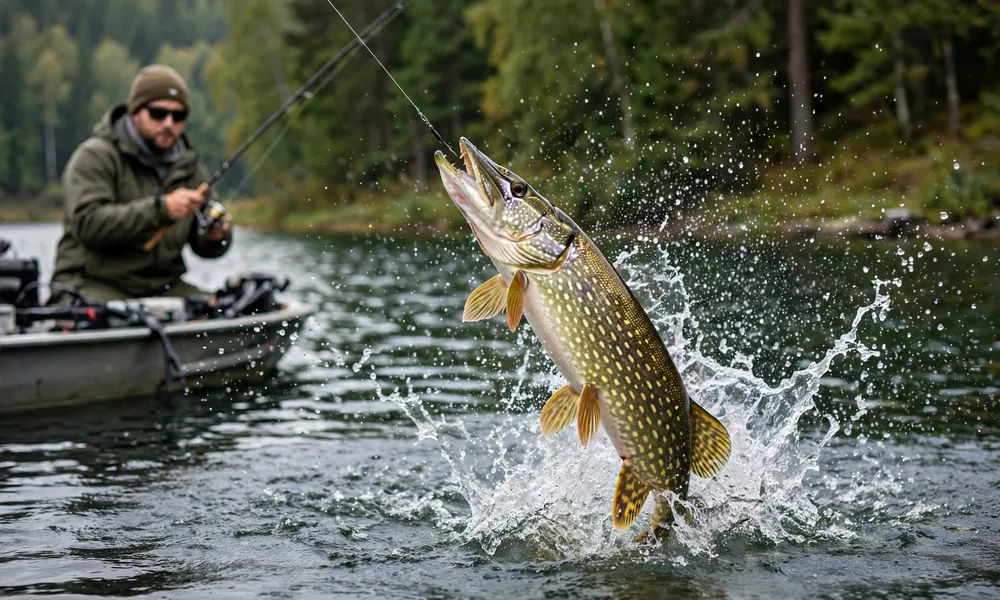
The most famous behaviour in the northern pike is the strike itself, and it is worth watching for. A pike that has been holding still in the weed will suddenly explode into life, and the water boils as it takes a lure or a fish, shaking its head from side to side and running hard for the nearest cover. The fight is a burst of pure power, and it is the moment every pike angler waits for, the long green fish silver in the air, water flying from its gills, before it turns and runs for the weed. The strike is not a trick, but a way of life, and a pike that has been caught before will sometimes strike less boldly, and run deeper instead, which is why the biggest pike in a lake are often the hardest to catch.
Breeding and life cycle
Northern pike breed in spring, as soon as the ice leaves the lake, when the water is still cold, often 4 to 10 degrees Celsius, and the timing is set by the temperature rather than the calendar. The fish move into the shallowest water they can find, the flooded marshes, the reed beds and the weedy bays where the water is only a few centimetres deep, and they scatter their eggs among the plants. There is no nest and no guarding, and the male and female simply release eggs and milt over the vegetation, leaving the eggs to stick to the stems and settle where they fall. A large female can lay tens of thousands of eggs in a single spawning, and she may spawn with more than one male, which spreads the eggs across a wide patch of weed.
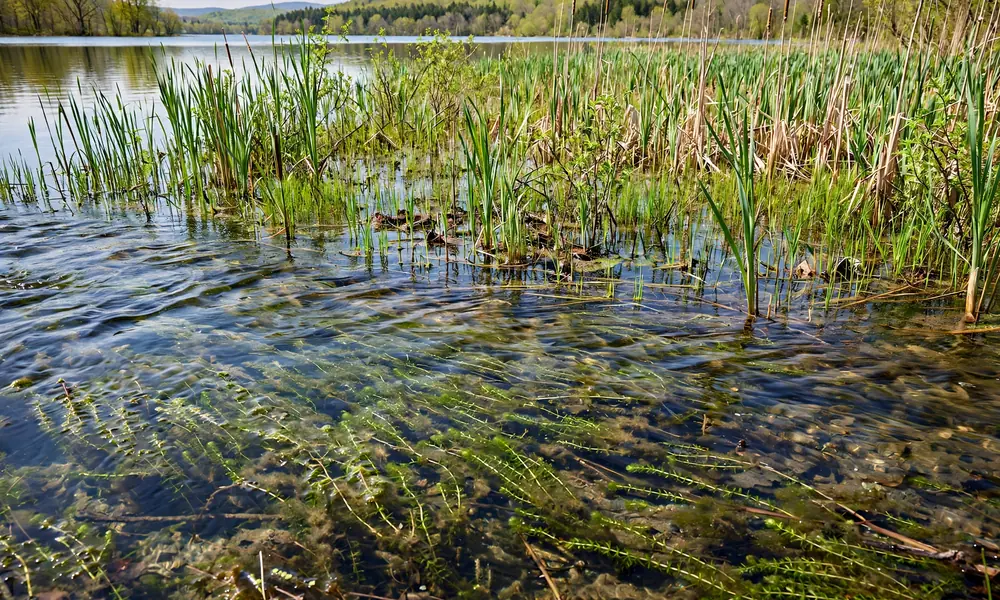
The eggs are small and sticky, and they hatch in one to three weeks, depending on the temperature, with cold water slowing them down and warm water speeding them up. The young fry are tiny when they hatch, only a few millimetres long, and they hang from the plants by a thread on their heads for a few days, living off the yolk sac they were born with. Once the yolk is gone they start to feed, first on tiny water creatures and then on insects, and they grow fast, reaching 15 centimetres or more by the end of their first summer. The young are on their own from the day they hatch, able to feed and hide within hours, and they must hide well, because a bigger pike will eat a smaller one without a second thought.

Growth is fast in the first few years, and a young pike can reach 30 centimetres by the end of its second summer, feeding on small fish from the time it is only a few centimetres long. It reaches breeding size in its second or third year in warm waters, and later in the cold north, and the lifespan in the wild is often 10 to 15 years, with some fish living to 25 years in the coldest lakes. The females grow faster and live longer than the males, which is why the biggest pike in any water are almost always old females that have survived many winters.
Conservation status
The northern pike is listed as Least Concern by the International Union for Conservation of Nature, and the reasoning is straightforward: it has a huge range, it is still common in most of its waters, and it breeds well enough to replace itself. That broad picture hides a more worrying local one, and it is worth understanding both sides, because the northern pike is one of the freshwater fish most tied to the fate of the lakes it lives in. A fish that hunts in weed beds cannot live where the weed has been cleared, and a lake that loses its shallow cover loses its pike within a season or two.
The main pressure is the loss of habitat. When a shoreline is cleared of weed and timber, or a marsh is drained, or a lake is dredged or drawn down, the pike lose the cover they hunt from and the shallows they spawn in. Stocking the pike outside its native range is a second pressure, as it eats native fish that have no defence against it. Fishing is a third, and a lake that loses its biggest females loses its best breeders, which is why so many fisheries set size limits and encourage anglers to release the largest fish.
Best seasons for northern pike watching
The best time to look for a northern pike is the spring and the autumn, when the water is cool and the fish are feeding hard in the shallows. In the northern lakes that usually means the weeks just after the ice leaves, from about March to May, when the pike move into the flooded shallows to spawn and can be seen from the bank, and again from about September to November, when they feed hard before the winter. Northern pike are present in the lake all year round, and they do not migrate, so there is no wrong season in the strict sense, but a cool, calm day in spring will show you far more fish than a hot day in midsummer, when the pike have moved deep and gone quiet.
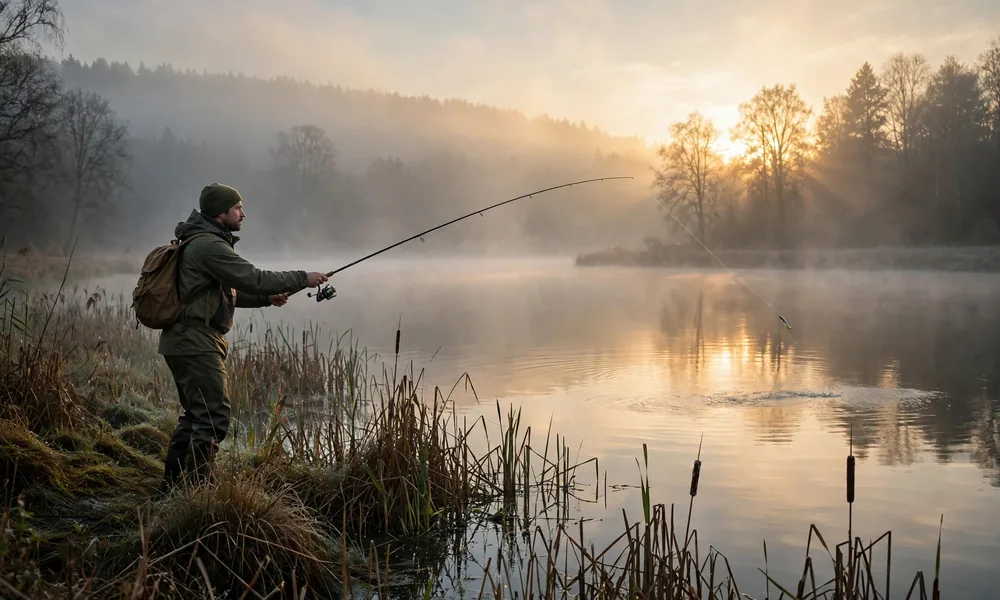
The best hours are the dawn and the dusk, when the northern pike are feeding actively and the light is good for seeing them. From about six o’clock until nine in the morning, and again from about five until eight in the evening, the pike are out on the weed edge, moving from cover to cover, and they are at their most approachable then. A slow walk along the bank, with the sun behind you and a pair of polarised sunglasses to cut the glare, is all you need, and the fish will often come close enough to see the spots and the long snout clearly, if you move gently and keep your distance.
Staying safe around northern pike
A northern pike is not dangerous to people in the water, and there is no safety warning that belongs to the fish itself when you are swimming or watching from the bank. It has no venom, it does not chase swimmers, and it will not threaten a person who leaves it alone. The safety rules for watching northern pike are the rules of the lake and the water, and the rules of handling a fish with a mouth full of teeth: watch the water, watch the weather, and respect the fish that you came to see. Never wade into deep water without knowing what is under your feet, never fish alone from a boat without a life jacket, and never put your fingers inside a pike’s mouth, because the teeth point backwards and a pike that closes its jaws can give a deep cut.
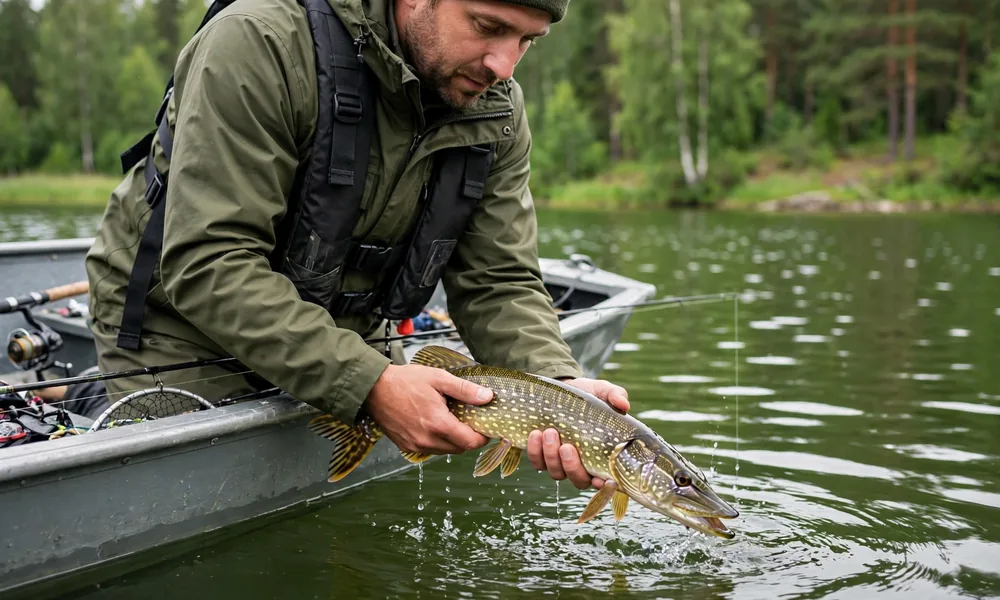
There are a few practical points for handling a pike. Use long-nosed pliers or a hook remover to take the hook out, and keep the fish in the water or on a wet mat while you do it. Wet your hands before you touch a pike, because a dry hand strips the slime that protects its skin. Hold the fish firmly behind the gill covers, never by the gills themselves, and never lift a big pike by the jaw alone, because the weight can injure it. If you are wading, watch for slippery rocks and sudden drop-offs, and wear shoes that grip. A northern pike will not hurt you if you treat it with care, but the water can, and the sensible approach is to enjoy the fish and respect the lake they live in.
Northern pike watching checklist
A little preparation turns a morning on the lake into a real chance of seeing northern pike at their best, feeding in the shallows in clear, cool water.
- A visit in spring just after the ice leaves, or in autumn, when the water is cool and the pike are feeding hard in the shallows.
- A dawn or dusk trip, when the northern pike are out hunting and the light is good.
- A weedy lake edge with reed beds, fallen timber and submerged plants, where the fish hunt and shelter.
- A slow walk along the bank, watching for a long shape holding in the weed or a swirl on the surface.
- Polarised sunglasses that cut the glare, so you can see into the water and spot the fish.
- Long-nosed pliers and a wet mat, so that a hooked pike can be unhooked safely and returned to the water.
- Respect for the fish and the lake, keeping your distance, wetting your hands before handling a pike, and leaving the shore as you found it.
Frequently asked questions
How big do northern pike get?
Most northern pike measure between 40 and 55 centimetres from snout to tail, and a good fish weighs 2 to 4 kilograms. A fish of 7 or 9 kilograms is a fine catch, and the rod-caught world record stands at 25 kilograms, a fish of 55 pounds 1 ounce caught in Greffern Lake in Germany on 16 October 1986 by Lothar Louis that has never been beaten. Females grow larger than males, and the biggest pike in any lake are almost always female.
What do northern pike eat?
A northern pike eats other fish, frogs, crayfish, large insects and the occasional small mammal or bird that falls into the water. It is an ambush hunter that waits motionless in weed beds and flooded shallows, then fires forward in a single explosive lunge and takes the prey in jaws full of sharp teeth. The strike takes a fraction of a second, and the pike then swims back to cover to turn its meal and swallow it head first.
Do northern pike attack people?
No, northern pike do not attack people. They have no venom, they do not chase swimmers, and they will not threaten a person who leaves them alone. Their whole defence is built on being hard to see, hard to catch and hard to hold, and their first response to a threat is to freeze or to dart into the nearest weed. The danger in a pike is its teeth, and only when it is handled, so the safety rules are simple: never put your fingers in its mouth, use pliers to remove the hook, and keep the fish wet.
How can you tell a northern pike from a muskellunge?
The easiest test is the colour: a northern pike has pale spots on a dark green back, while a muskellunge has dark bars or spots on a pale background. The second test is under the jaw, where the muskellunge has seven or more sensory pores on each side and the northern pike never has more than six. The third test is size, as the muskellunge grows far larger, usually 70 to 120 centimetres and reaching about 180 centimetres, while most northern pike measure 40 to 55 centimetres.
Can you keep a northern pike in an aquarium?
You can, but it is hard, and most people should not try. A northern pike grows to 40 to 55 centimetres and often much larger, it needs a very large tank with cool, clean, well-oxygenated water, and it eats live fish, which makes it expensive and demanding to keep. It is also illegal to keep one in some places without a permit, and a pike that outgrows its tank must never be released into a lake where it does not belong. A pike belongs in a lake, not in a living room.
How is this guide different from the mudskipper guide?
This guide covers the northern pike, a freshwater fish of 40 to 55 centimetres that hunts by ambush in cold, weedy lakes and scatters its eggs in flooded shallows each spring, while our mudskipper guide covers a small fish that climbs out of the water altogether, walks on mud with its fins and breathes air on tropical mudflats. One is a lake fish you watch from the bank at dawn; the other is a creature of the shoreline that spends half its life out of the water.
Conclusion
The northern pike species is a reminder that a fish does not need to live in the sea to be unforgettable. A long green body, a duck-billed snout full of teeth, a strike that comes out of nowhere and a spring spawning in the flooded shallows have made the northern pike the most feared freshwater hunter of the north, at home in a weedy lake in Canada, a marsh in Ireland and a slow river in Siberia alike.
If you go looking for one, go on a cool, calm day in spring, go at dawn or dusk, and walk slowly along a weedy bank with the sun behind you. Find the weed edge, watch for a long shape holding in the shade, and wait for the water to erupt, and you will have met the northern pike that turns a quiet lake into a place of sudden, green excitement.