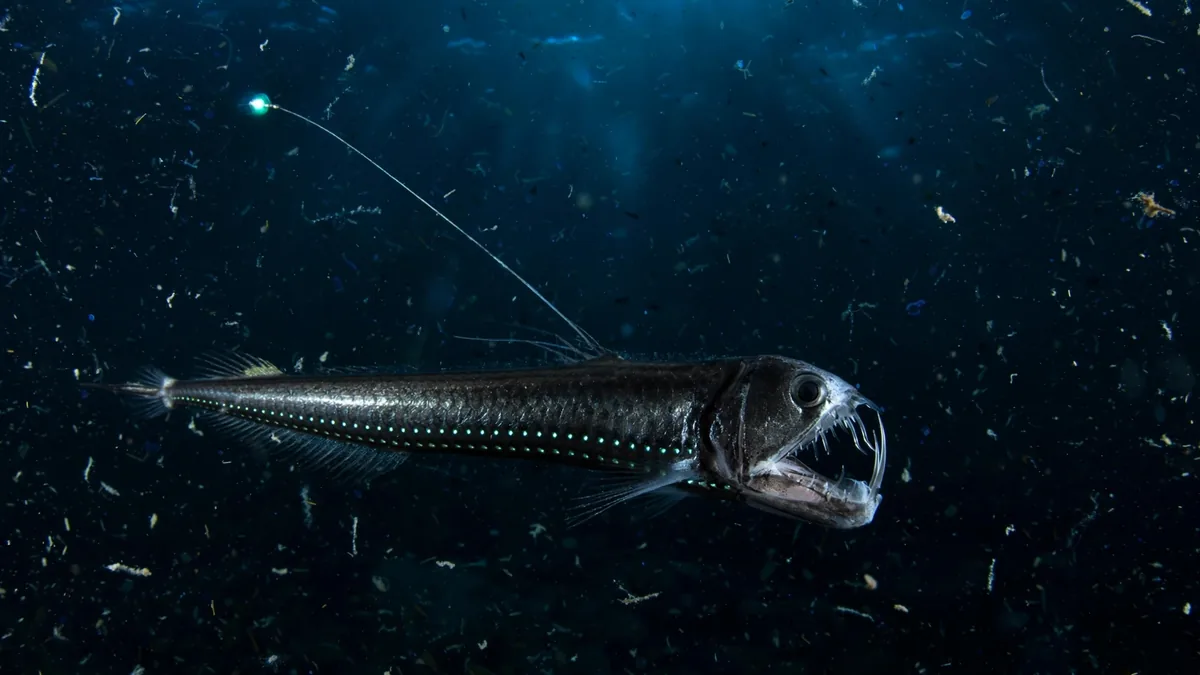
The viperfish species are the deep sea’s most frightening-looking small fish, slender hunters with needle teeth too long to fit inside their own mouths and rows of glowing lights along their bellies. If you are asking what a viperfish is, the short answer is a member of the genus Chauliodus, a group of nine living species that grow to about 35 centimetres at most, live in the twilight waters of the tropical and temperate oceans between roughly 200 and 1,500 metres down, and hunt in the dark with a glowing lure dangled in front of their fanged jaws. They are not big, they are not fast, and they will never be seen by most people alive.
Most of what we know about the viperfish comes from specimens hauled up in deep trawls and from the cameras of submersibles, because no one can simply go and watch one. The best-known species, Sloane’s viperfish, Chauliodus sloani, is found in oceans all around the world, and it is listed as Least Concern by the International Union for Conservation of Nature, not because it is common in any place you could count, but because its range is so vast and no fishery targets it. This guide follows the whole genus: how the fish look, where they live, what they eat, how they hunt in the dark, and why their teeth are the way they are.
Key takeaways
- The viperfish species belong to the genus Chauliodus, in the dragonfish family Stomiidae, with nine living species recognised, the best known being Sloane’s viperfish, Chauliodus sloani.
- Sloane’s viperfish grows to 35 centimetres at most, and most adults are far smaller, with a sampled mean length of about 12 centimetres and a mean weight of only 5.66 grams.
- Rows of photophores along the belly glow blue-green to hide the fish from below, a trick called counter-illumination, while a glowing lure on a long dorsal ray dangles in front of the mouth.
- The fangs are so long, up to 5 centimetres, that they curve outside the closed mouth and past the eyes, and the hinged lower jaw swings open to swallow prey up to half the viperfish’s own weight.
- Viperfish rise hundreds of metres towards the surface each night to feed and sink back into the deep by day, a daily vertical migration that shapes their whole life.
The viperfish species and their relatives
Viperfish belong to the family Stomiidae, the dragonfishes, a family of deep-sea predators that includes the loosejaws, the snaggletooths and the scaleless dragonfishes, all of them hunters of the dark middle waters of the ocean. The genus is Chauliodus, a name that comes from the Greek words for open and tooth, and it holds nine living species, each of them built on the same plan: a long, slender body, a huge mouth, fangs like needles and light organs along the belly. The family sits in the order Stomiiformes, alongside the hatchetfishes and the bristlemouths, and it is one of the great families of the deep sea, with species in every ocean on Earth.
Sloane’s viperfish, Chauliodus sloani, is the lead species of this guide, and it is the fish that defines the whole genus in most people’s minds. It lives in tropical and temperate waters all around the world, from about 63 degrees north to 50 degrees south, and it grows to 35 centimetres at most, though most of the fish caught in nets are far smaller. A large study of the species found specimens between 64 and 260 millimetres long, with a mean length of 120.3 millimetres and a mean weight of 5.66 grams, which tells you that the typical Sloane’s viperfish is about the length of your hand and weighs about as much as a coin.

| Type | Animal | Where it lives | Best-known food | Length or Weight |
|---|---|---|---|---|
| Family | Dragonfishes (Stomiidae) | Tropical and temperate oceans worldwide | Fish, crustaceans and squid | About 15 cm to 35 cm long |
| Genus | Viperfishes (Chauliodus) | Tropical and temperate oceans worldwide | Fish, crustaceans and squid | About 15 cm to 35 cm long |
| Species | Sloane’s viperfish (Chauliodus sloani) | Tropical and temperate oceans worldwide | Lanternfish and other small fish | Up to 35 cm long |
| Species | Pacific viperfish (Chauliodus macouni) | North Pacific Ocean | Fish and shrimp | Up to 30 cm long |
| Species | Dana viperfish (Chauliodus danae) | Atlantic and south-east Pacific Oceans | Crustaceans and small fish | Up to 15 cm long |
| Species | Stoplight loosejaw (Malacosteus niger) | Oceans worldwide | Lanternfish and shrimp | Up to 25.6 cm long |
The closest relative of Sloane’s viperfish in size and fame is the Pacific viperfish, Chauliodus macouni, a fish of the North Pacific that grows to 30 centimetres. It lives from the Bering Sea south to Baja California and Japan, and it eats fish and shrimp in the same twilight waters, rising at night and sinking by day.
Within the genus, the viperfish sort themselves by the ocean they live in and the size they reach. The Dana viperfish, Chauliodus danae, is a fish of the Atlantic and the south-east Pacific that grows to 15 centimetres, a smaller fish that feeds mainly on crustaceans rather than on other fish. The stoplight loosejaw, Malacosteus niger, is not a viperfish at all but a cousin in the same dragonfish family, a fish of the oceans worldwide that grows to 25.6 centimetres and hunts with a red light under its eyes that most prey cannot see. Like the oarfish, the viperfish is a deep-sea fish that most people only ever meet as a photograph, but the oarfish is a long, ribbon-like fish of the open ocean that drifts vertically in the water, while the viperfish is a compact hunter that hangs in the dark and waits for prey to come to its light.
What a viperfish looks like
A viperfish looks like a fish that was drawn by someone who had never considered compromising on teeth. The body is long and slender, almost eel-like in its proportions, and it is covered in silvery scales arranged in five lengthways rows, with a dark blue, green or black back fading to a silver belly. The head is large for the body, the eyes are large and dark, and the mouth is enormous, opening far wider than the head looks able to manage.
The mouth is the most distinctive part of the fish, and it is built for a life in which a meal may not come for days. The lower jaw is hinged, and it swings down and forward to open a mouth that can take in prey up to half the viperfish’s own weight, and the first and second teeth of the lower jaw are so long, up to 5 centimetres, that they curve upward past the eye sockets when the mouth is closed. The teeth are so long that they would pierce the brain of the fish if they were misaligned, and they sit outside the jaw even when the mouth is shut, which is why a dead viperfish in a net looks as if it is grinning. The upper jaw carries rows of smaller needle teeth, and the whole mouth is a trap: once prey is inside, the teeth fold back and hold it fast.

The lights are the second thing you notice, and they are the reason the fish can live where it does. Rows of 24 or more photophores, light-producing organs, run along the sides and the belly of the fish, and they glow a dim blue-green that matches the faint sunlight filtering down from above. The first ray of the dorsal fin is long and thin, hinged at its base so that it can swing forward, and it carries a light organ at its tip, a lure that can be dangled in front of the mouth like a fishing rod. The dorsal fin itself sits just behind the head, the tail is forked, and there is a small adipose fin on the back, a soft, fleshy fin with no rays that many deep-sea fish carry.
The size of a viperfish depends on the species, and the range is narrow, because none of them is big. Sloane’s viperfish grows to 35 centimetres at most, and most adults are between 12 and 26 centimetres long, while the Pacific viperfish grows to 30 centimetres and the Dana viperfish grows to 15 centimetres. The females and males are much the same size, and the fish show no obvious difference between the sexes in the specimens that have been caught, which are rarely sexed at all. A typical Sloane’s viperfish of about 12 centimetres weighs 5.66 grams, which is less than a sheet of paper folded in half.
Compared with other deep-sea fish, the viperfish is easy to tell apart once you know what to look for. No other fish of the twilight zone combines fangs that stick out of a closed mouth with a glowing lure on a long dorsal ray and rows of belly lights, and no other fish has scales arranged in such clear lengthways rows. The stoplight loosejaw is the fish most often confused with a viperfish in a photograph, and it has a hinged jaw with no floor, a red light under its eye and no long dorsal lure, so the two are easy to separate once you have seen them side by side.
Where viperfish live
Viperfish live in the twilight zone of the ocean, the mesopelagic zone, and they are fish of the open water, far from any coast. Their range runs through the tropical and temperate oceans of the world, from about 63 degrees north to 50 degrees south, through the Atlantic, the Indian and the Pacific, and into the Mediterranean and its adjoining seas. They favour water that is cold and dark, and they are rarely found where the water is warmer than 12 to 15 degrees Celsius, which sets the upper limit of their depth in warm seas and keeps them deep in the tropics.

The habitat they choose is the water column itself, and they are rarely found near the sea floor or near the surface. Most viperfish spend the day between 600 and 1,500 metres down, where the sunlight is a memory and the pressure is crushing, and they rise at night to between 200 and 600 metres, where the food is richest. They have been recorded as deep as 4,700 metres, and Sloane’s viperfish has been collected from a maximum depth of 2,800 metres, but the fish are most commonly found between 494 and 1,000 metres, which is the heart of the twilight zone.
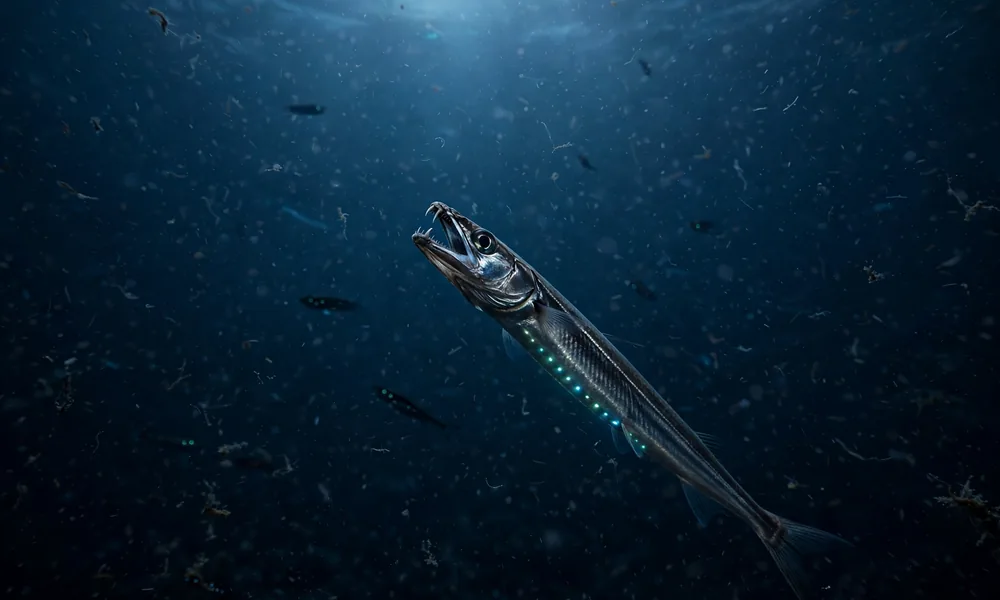
Depth matters, but not in the way it does for a fish of the shallows. Viperfish are animals of the middle water, and most of them stay below 200 metres, where less than one per cent of the sunlight reaches, and where the temperature is low and steady. In the tropics they tend to stay deep and migrate little, because the warm surface water is a barrier they cannot cross, while in temperate waters they migrate more actively and may even meet predators from the sunlit waters above. Smaller viperfish are found in shallower water, and larger ones are found deeper, below 500 metres.
The viperfish has been found in places that seem impossibly remote, and it now turns up in waters where few fish can live at all. Viperfish have been recorded in the Italian waters of the western Mediterranean, in the Adriatic, in the Greek waters of the Aegean and in the Turkish waters of the Levant Sea, and they have been found in the submarine caldera of the Kurose Hole, which holds the highest density of Chauliodus known anywhere in the world.
What viperfish eat
Viperfish are hunters, and their diet is written on the twilight zone itself. The everyday food is lanternfish, the small, glowing myctophids that rise towards the surface each night in their millions, and a viperfish will eat almost any lanternfish it can fit in its mouth. They also eat other small bony fish, crustaceans such as krill and shrimp, and squid, and a viperfish that has fed well may not need to eat again for days.

What sets the viperfish apart is how it hunts. It does not chase its prey, and it does not hunt in a pack. It hangs almost motionless in the dark, head down or head up, and it dangles its glowing lure in front of its mouth, moving the long dorsal ray around like a fishing rod while it flashes the light on and off. When a curious fish comes close to look at the light, the viperfish opens its hinged jaw in a fraction of a second, the head rotates upward, and the prey is taken in a rush, and the whole strike is over before the prey has time to turn. Like the bluefin tuna, the viperfish is a fish that eats other fish for a living, but the tuna is a fish of the sunlit open ocean that chases its prey at speed for hours, while the viperfish is a fish of the dark that waits in one place and lets the light do the work.
Feeding follows the rhythm of the day and the night, and it is busiest after dark. Viperfish feed most actively at night, when they have risen into the richer water between 200 and 600 metres and the lanternfish are all around them, and they rest in the day, holding in the deep water where the food is thin. An average Sloane’s viperfish probably eats at least one lanternfish every twelve days, and there is no sign that bigger fish eat more often than smaller ones. In some cases a viperfish has been found with prey up to half its own body weight in its stomach, a meal that lets it feed rarely and still survive, and that is the whole point of the huge mouth and the folding teeth.
How viperfish behave
Viperfish are night fish, and their day is a quiet round of sinking, waiting and rising in the dark. They spend the daylight hours deep down, holding almost still in the cold water, saving energy, and they rise at dusk towards the food-rich water above, and they spend the night hunting in the twilight, never rushing, never chasing far. They are not strong swimmers over distance, and they do not need to be: their life is lived within a few hundred metres of water, up and down, and the whole ocean is their hunting ground. When a larger fish passes, a viperfish will often go dark, switching off its photophores, and sink away into the black, and if that fails it will dart into the dark and wait.
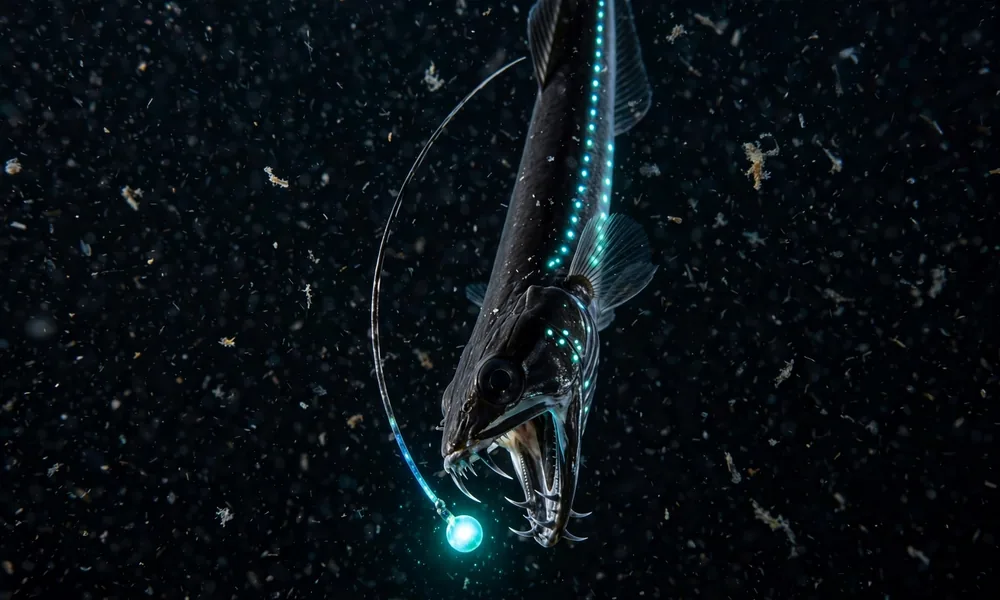
The most famous behaviour in the viperfish is the vertical migration, the daily journey up and down through the water. Each evening, as the light fades above, the viperfish rise from their daytime depths of 600 to 1,500 metres towards the food-rich water at 200 to 600 metres, a climb of hundreds of metres through water that grows warmer and brighter as they go, and each morning they sink back down again. The migration is not a trick, but a way of life, and a viperfish that does not migrate will go hungry, because the food is in the shallow water at night and the safety is in the deep water by day. In tropical waters the fish migrate less, held deep by the warm surface water, and in temperate waters they migrate more.

When a viperfish is threatened, its first response is to go dark and sink, relying on its black back and its counter-illumination to vanish from view, and if that fails it will dart away into the dark and stay there until the danger passes. Viperfish have no venom and no bite that matters to a person, and a viperfish brought to the surface in a net will rarely live more than a few hours, and in captivity specimens have survived only 12 to 18 hours. The fish is a prey item itself, and it is eaten by the orange roughy, a commercially important deep-sea fish, as well as by larger dragonfishes and by the sharks that hunt the twilight zone. The viperfish’s whole defence is built on being hard to see, hard to find and hard to catch, and its first response to a threat is to disappear into the black water that is its home.
Breeding and life cycle
Viperfish breed all year round, so far as anyone can tell, and the timing is set by nothing more precise than the slow rhythm of the deep sea. The adults are widely spread through the ocean, and finding a mate in the dark is a real problem, which is why the photophores are thought to matter for more than camouflage: the pattern and the flashing of the lights may be how one viperfish recognises another, and how a male and a female find each other in water where they cannot see more than a few metres. A female Sloane’s viperfish reaches maturity between 133 and 191 millimetres long, while the males probably mature at a slightly smaller size, and the fish are not known to be sexually dimorphic, which means the males and females look the same to us.
The female releases her eggs into the open water while the male releases his milt over them, and the fertilisation happens outside the body, in the water column itself. Viperfish are oviparous, which means they lay eggs, and they are low-fecundity fish, which means they lay relatively few eggs for a fish of their size. Spawning probably happens all year, though the larvae are found in the highest numbers between January and March, which suggests a peak in the winter months. The eggs are tiny and transparent, and they drift with the current, hatching into larvae that look nothing like the adult at all.

Growth is slow and little understood, and a young viperfish can take a long time to become an adult. The larvae hatch at about 6 millimetres long, and they look like the ribbon-like larvae of eels, transparent and delicate, and when they double in size their pectoral and tail fins begin to develop. It is not known how long a Sloane’s viperfish takes to grow from the larval stage to the adult form, and the young are independent from the day they hatch, able to feed and hide within hours, but most of them will never reach adulthood, eaten by fish and other predators in their first weeks. How long a viperfish lives is not known for certain, because the fish are so hard to study where they live.
Conservation status
Sloane’s viperfish is listed as Least Concern by the International Union for Conservation of Nature, and the reasoning is straightforward: it has a huge range, it is found in oceans all around the world, and no fishery targets it. That broad picture hides a more uncertain local one, because the viperfish is tied to the fate of the deep water it lives in. A fish that lives between 200 and 1,500 metres down cannot live where the deep water is damaged, and a deep sea that loses its lanternfish loses its viperfish soon after.
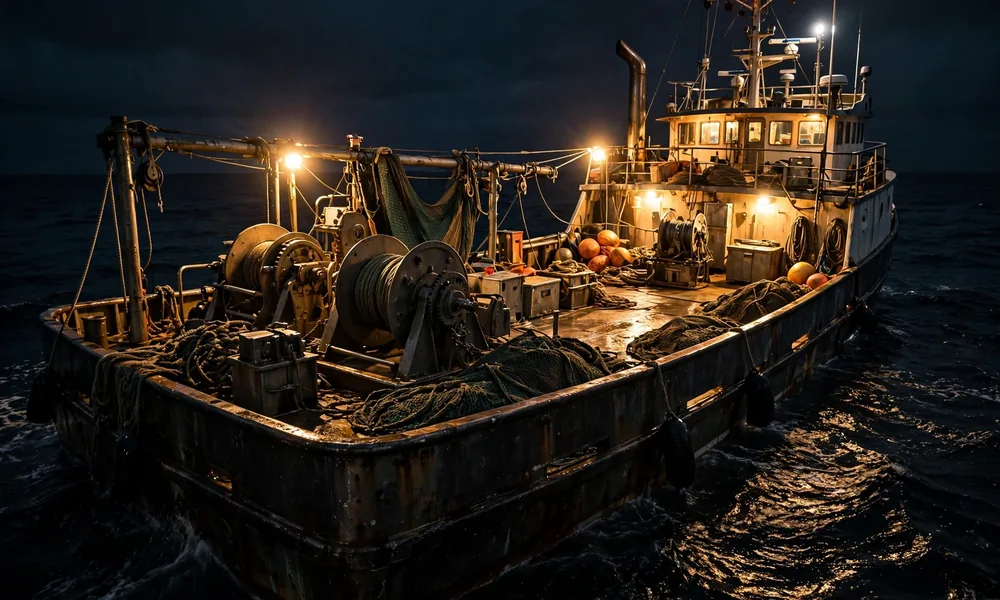
The main pressure is bycatch. When a deep trawl is dragged through the twilight zone, the viperfish is caught with everything else, and it is thrown back dead, because a fish built for the pressure of 1,000 metres cannot survive at the surface. The catch is not a major threat to the species as a whole, because the range is so vast and the numbers are so large, but it is the only direct pressure that has been measured, and it is the reason the fish turns up in nets at all. Deep-sea mining and the warming of the oceans are newer pressures, and a sea that warms at the surface may push the viperfish deeper, into water where the food is thinner.
The most useful conservation work is practical, and it is the same work that helps the whole deep sea. Protecting the deep water from destructive trawling keeps the twilight zone intact, and protecting the lanternfish and the krill that the viperfish eats keeps the food web in place. There are no species-specific conservation measures for Sloane’s viperfish, and none are needed yet.
Best seasons for viperfish watching
The best time to look for a viperfish is the winter, when the larvae are at their most numerous and the deep trawls bring up the most fish, though no season will show you one from the shore. Viperfish are present in the deep water all year round, so there is no wrong season in the strict sense, but a research cruise in the winter months, from about January to March, is the time when the young are most often caught in nets. In temperate waters the fish migrate more actively, and a submersible dive in the autumn or the winter will show you more fish than a dive in the high summer.

The best hours are the night, when the viperfish are rising towards the surface to feed and the submersible cameras can find them in the water between 200 and 600 metres. From about dusk until dawn, the fish are out hunting in the twilight zone, and they are at their most active then, flashing their lures and taking lanternfish in the dark. A slow dive in a submersible, with the lights dimmed and the cameras running, is all you need, and the fish will often hang in the light long enough to see the silver body and the glowing belly clearly, if you move gently and keep your distance.
Staying safe around viperfish
A viperfish is not dangerous to people, and there is no safety warning that belongs to the fish itself. It has no venom, it does not bite, and it will not chase or threaten a swimmer, because it lives a kilometre down and it will never meet one. The safety rules for watching viperfish are the rules of the deep sea and the research boat: watch the water, watch the weather, and respect the fish that you came to see. Never lean over the side of a boat in rough water, never handle a deep-sea fish with dry hands, and never keep a viperfish out of the water longer than you must, because a fish built for the pressure of the deep will die quickly at the surface.
There are a few practical points for the water itself. Work with a buddy, stay within your depth, and keep an eye on the weather, which can change fast on a big ocean. Wear a life jacket when you are in a boat, and keep clear of the winches and the trawl wires when the nets are coming in. A viperfish will not hurt you, but the sea can, and the sensible approach is to enjoy the fish and respect the deep water they live in.
Viperfish watching checklist
A little preparation turns a night on a research boat into a real chance of seeing a viperfish at its best, hanging in the dark with its lure glowing.
- A research cruise or a submersible dive in winter, when the larvae are most numerous and the fish are most often caught.
- A night dive, when the viperfish are rising towards the surface to feed and the lights can find them.
- Deep open ocean over water at least 1,000 metres deep, where the twilight zone is at its richest.
- A slow descent through the water column, watching for a silver body and a row of glowing lights in the dark.
- A camera that works in low light, so you can record the photophores without blinding the fish.
- A life jacket and a buddy, so that a night on the water stays safe from start to finish.
- Respect for the fish and the deep sea, keeping your distance, keeping the fish in the water, and leaving the ocean as you found it.
Frequently asked questions
How big do viperfish get?
Most viperfish measure between 12 and 26 centimetres from snout to tail, and a good fish weighs only a few dozen grams. A typical Sloane’s viperfish is about 12 centimetres long and weighs 5.66 grams, and the largest Sloane’s viperfish ever measured reached 35 centimetres. The Pacific viperfish grows to 30 centimetres, and the Dana viperfish grows to 15 centimetres, so no viperfish is ever a big fish, whatever its teeth may suggest.
What do viperfish eat?
A viperfish eats lanternfish, other small bony fish, crustaceans such as krill and shrimp, and squid, which it takes in the dark with its glowing lure and its hinged jaw. The everyday food is the lanternfish, and an average Sloane’s viperfish probably eats at least one lanternfish every twelve days. Young viperfish eat smaller prey, and they grow slowly on that thin food, taking years to reach the size of an adult.
Why do viperfish glow?
Viperfish glow for two reasons, and both of them are about survival in the dark. The photophores along the belly glow blue-green to match the faint sunlight from above, hiding the fish from predators looking up from below, a trick called counter-illumination. The light on the tip of the dorsal ray is a lure, dangled in front of the mouth to draw curious prey close enough to catch, and the flashing of the lights may also help one viperfish find another in the dark.
Are viperfish dangerous?
No, viperfish are not dangerous to people. They have no venom, they do not bite, and they will not chase or threaten a swimmer, because they live hundreds of metres down and they will never meet one. Their whole defence is built on being hard to see, hard to find and hard to catch, and their first response to a threat is to go dark and sink away into the black water. The safety rules for watching them are the rules of the sea itself: watch the water, watch the weather, and wear a life jacket in a boat.
Can you keep a viperfish in an aquarium?
You can, but only for a few hours, and most people should not try. A viperfish needs cold, dark water under crushing pressure, it needs live lanternfish to eat, and it dies quickly at the surface, with specimens in captivity surviving only 12 to 18 hours. It is also impossible to keep one without a research aquarium and a submersible to catch it, and a viperfish that outgrows its tank must never be released into waters where it does not belong. A viperfish belongs in the deep sea, not in a living room.
How is this guide different from the tarpon guide?
This guide covers the viperfish, a deep-sea hunter of up to 35 centimetres that glows in the dark, dangles a lure in front of its fanged jaws and rises hundreds of metres each night to feed, while our tarpon guide covers a silver coastal fish of up to 2.5 metres that leaps clear of the water, breathes air at the surface and grows up in the mangroves. One is a fish you meet only from a submersible in the black water a kilometre down; the other is a fish you watch rolling on the flats at dawn.
Conclusion
The viperfish species are a reminder that a fish does not need to be big to be unforgettable. Needle teeth too long for its own mouth, a hinged jaw that opens like a trap, rows of glowing lights along its belly and a lure dangled in the dark have made the viperfish the most famous small predator of the deep sea, at home in the twilight waters of every ocean on Earth.
If you go looking for one, go on a research boat in winter, go at night, and descend slowly through the dark water with the lights dimmed and the cameras running. Find the twilight zone, watch for a silver body and a row of blue-green lights, and wait for the lure to flash, and you will have met the viperfish that turns a black, empty stretch of ocean into a place of sudden, glowing excitement.