
The catfish species are the whiskered bottom-feeders of the world’s rivers, a group of nearly 3,000 kinds of fish that live on every continent except Antarctica and range from tiny creatures barely longer than a fingernail to river giants heavier than a motorbike. If you are asking what a catfish is, the short answer is a scaleless freshwater fish of the order Siluriformes, recognised by the fleshy barbels around its mouth that look like a cat’s whiskers, by skin that carries no scales at all, and by a taste for the riverbed, where it finds its food by touch and by taste in water too dark or muddy for eyes to be much use. From the channel catfish of North America to the Mekong giant catfish of South-East Asia, they are one of the most successful groups of fish on the planet, and one in every twenty vertebrates alive today is a catfish.
Most people meet a catfish on a plate before they meet one in a river, because the channel catfish is the most farmed fish in North America and the fish behind countless fish suppers. Yet the group is far stranger and far more varied than the dinner table suggests. Some catfish walk across land on stiffened fins, some breathe air, some carry armour plates instead of skin, and one small Amazonian species, the candiru, is a parasite that lives by feeding on the blood of other fish. This guide follows the group as a whole, led by the channel catfish, and looks at how they look, where they live, what they eat, how they breed, and why a fish with whiskers has done so well in rivers all over the world.
Key takeaways
- The catfish species number nearly 3,000, all in the order Siluriformes, and they live in fresh water on every continent except Antarctica, with a few kinds venturing into the sea.
- Catfish have no scales, and most carry fleshy barbels around the mouth that work as feelers, tasting and touching the riverbed in dark or muddy water where eyes are little use.
- The channel catfish is the lead species of this guide, and it is the most farmed fish in North America, growing to about 1.3 metres, while the blue catfish reaches about 1.65 metres.
- The Mekong giant catfish is one of the largest freshwater fish ever recorded, with a 2.7-metre female weighing 293 kilograms caught in Thailand in 2005, and it is listed as Critically Endangered.
- The wels catfish of Europe is the longest catfish on record, reaching 2.9 metres, and most catfish are nocturnal bottom-feeders that hunt by taste and smell rather than by sight.
The catfish species and their relatives
Catfish belong to the order Siluriformes, a group of ray-finned fish that holds nearly 3,000 described species, which makes it one of the two or three most diverse orders of vertebrates on Earth. About one fish in ten is a catfish, and about one vertebrate in twenty, and new species are still being described every year, mostly from the rivers of South America, Africa and Asia, where remote tributaries hold kinds of catfish that science has never seen. The order is divided into dozens of families, and the members range from the tiny pygmy catfish of South America, barely 2.5 centimetres long when fully grown, to the Mekong giant catfish at 3 metres, a span of size wider than in almost any other group of fish.
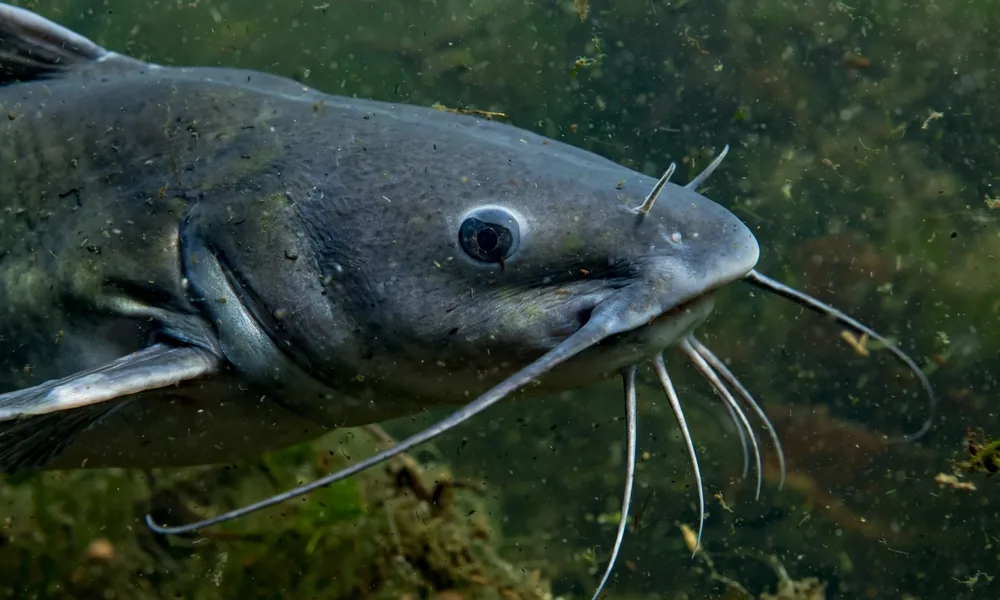
The channel catfish, Ictalurus punctatus, is the lead species of this guide, and it is the catfish most people know best. It lives in the rivers, lakes and ponds of North America, from southern Canada to Mexico, and it grows to about 1.3 metres long, though most adults are between 40 and 60 centimetres and weigh between 1 and 4 kilograms. The world record is a 58-pound fish, about 26.3 kilograms, caught in South Carolina in 1964, and that fish has held the record for more than sixty years. The channel catfish is the most farmed fish in North America, raised in ponds across the southern United States, and it is also the most fished catfish in the world, which is why so many people have eaten one without ever having seen one alive.
| Type | Animal | Where it lives | Best-known food | Length or Weight |
|---|---|---|---|---|
| Family | North American catfishes (Ictaluridae) | Rivers and lakes of North America | Fish, insects and crayfish | About 5 cm to 1.65 m long |
| Genus | North American catfishes (Ictalurus) | Rivers and lakes of North America | Fish, insects and crayfish | About 40 cm to 1.65 m long |
| Species | Channel catfish (Ictalurus punctatus) | Rivers and lakes of North America | Fish, insects and crayfish | Up to 1.3 m long |
| Species | Blue catfish (Ictalurus furcatus) | Large rivers of the Mississippi basin | Fish, crayfish and mussels | Up to 1.65 m long |
| Species | Wels catfish (Silurus glanis) | Rivers and lakes of Europe and western Asia | Fish, frogs and water birds | Up to 2.9 m long |
| Species | Mekong giant catfish (Pangasianodon gigas) | Mekong River basin, South-East Asia | Algae and plants | Up to 3 m long |
The family that holds the channel catfish is Ictaluridae, the North American catfishes, and its members range from about 5 centimetres, in the smallest madtoms, to 1.65 metres in the blue catfish, the largest catfish in North America. The genus Ictalurus, the North American catfishes in the narrower sense, holds the channel catfish and the blue catfish together, and its species grow to between about 40 centimetres and 1.65 metres. The blue catfish is the heavyweight of the genus, a fish of the big rivers of the Mississippi basin that grows to about 1.65 metres, and the heaviest ever caught on rod and line was a 143-pound fish, about 64.9 kilograms, taken by Richard Anderson at Buggs Island Lake in Virginia on 18 June 2011. It is a fish built for deep, fast water, and it has spread far beyond its native rivers, thriving in reservoirs and estuaries where it was introduced.
The two great giants of the group live on opposite sides of the world, and they could hardly be more different in how they live. The wels catfish, Silurus glanis, is the longest catfish on record, a fish of the rivers and lakes of Europe and western Asia that grows to 2.9 metres, and the longest reliably measured in recent years was a 2.92-metre fish caught in the Rybnik Reservoir in Poland in October 2025, just beating a 2.85-metre fish caught in the River Po in Italy in May 2023. Most wels are far smaller, usually 1.2 to 1.6 metres, and they can live for decades, with some northern fish estimated at around seventy years old. The Mekong giant catfish, Pangasianodon gigas, is the heaviest, growing to 3 metres, and the largest ever weighed was a 2.7-metre female of 293 kilograms caught in the Mekong River in Thailand in May 2005, a fish that held the record for the largest freshwater fish ever caught for seventeen years. Like the sturgeon, the catfish is a bottom-feeder of big rivers that can live for decades and grow to an extraordinary size, but the sturgeon is an armoured fish of northern rivers that swims hundreds of kilometres upstream to spawn, while the catfish is a soft-skinned fish of warm and temperate rivers that finds its food by taste and touch on the riverbed.
What a catfish looks like
A catfish looks like a fish that has given up on scales and eyes and put everything into touch and taste instead. The body is smooth and scaleless, covered in a thick layer of mucus that protects the skin and lets the fish slide through mud and between stones without injury, and the skin itself is often mottled in browns, greys and olive greens that break the outline up against the riverbed. The head is broad and flat, the mouth is wide and set low, and around it sit the barbels, usually two pairs on the upper jaw and two on the lower, though the number varies from family to family. The barbels are packed with taste buds, and a catfish sweeps them across the bottom like a pair of hands, tasting everything they touch before it decides whether to eat it.
The sense of taste in a catfish is extraordinary, and it is spread across the whole body rather than confined to the mouth. A large channel catfish can carry well over 100,000 taste buds, scattered over its skin, its fins and its barbels, so the fish can taste the water around it with its entire body, and it can tell whether food is near without ever seeing it. The eyes are small in most species, and they are of little use in the muddy water where many catfish live, though in clear water the fish can see well enough to find its way. The fins carry the other defences: the first ray of the dorsal fin and of each pectoral fin is a sharp, stiff spine, and in many species the spine is serrated and can lock upright, so a predator that tries to swallow a catfish gets a mouthful of spikes, and an angler who handles one carelessly gets a painful sting.
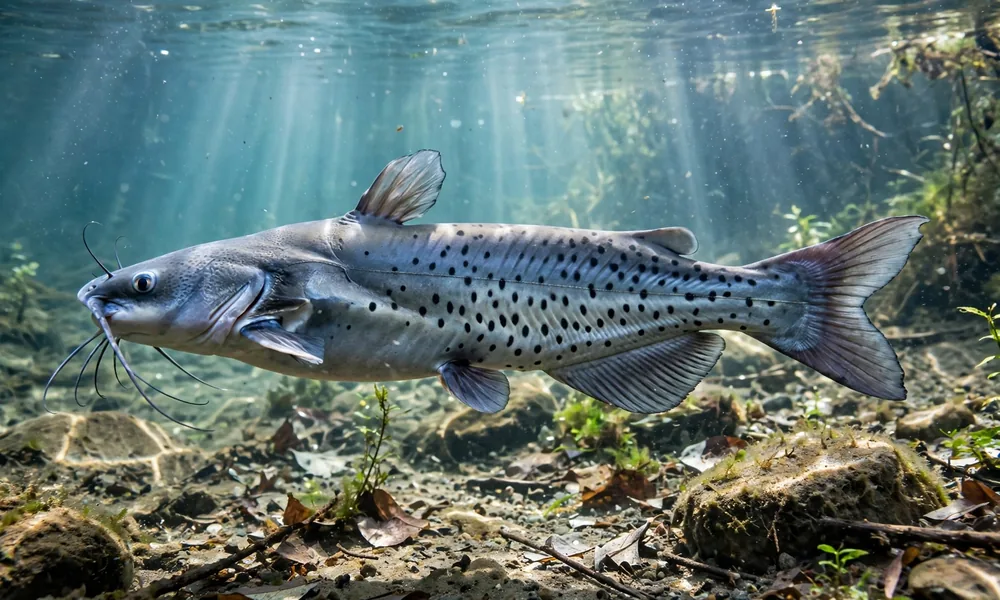
The size of a catfish depends on the species more than on almost any other group of fish, and the range is hard to believe until you see it laid out. At one end sit the tiny pygmy catfish of South America, barely 2.5 centimetres long when fully grown, small enough to sit on a coin, and the banjo catfish, which are less than a few centimetres as adults. In the middle sit the everyday river fish: the channel catfish at up to 1.3 metres, the flathead catfish at up to about 1.5 metres, and the redtail catfish of the Amazon at about 1.2 metres. At the other end sit the giants: the blue catfish at up to 1.65 metres, the wels catfish at up to 2.9 metres, and the Mekong giant catfish at up to 3 metres and 293 kilograms, a fish heavier than a motorbike and longer than a man is tall.
Where catfish live
Catfish live in fresh water on every continent except Antarctica, and they are fish of the river, the lake, the pond and the swamp. Their range runs through the great river systems of the world: the Mississippi and the Amazon in the Americas, the Nile and the Congo in Africa, the Danube and the Po in Europe, the Ganges and the Mekong in Asia, and the Murray-Darling in Australia, where introduced catfish now live alongside the native kinds. They favour water that is warm, usually between 20 and 30 degrees Celsius, and they are rarely found in cold mountain streams, where the water is too fast and too clear for a bottom-feeder that hunts by taste.
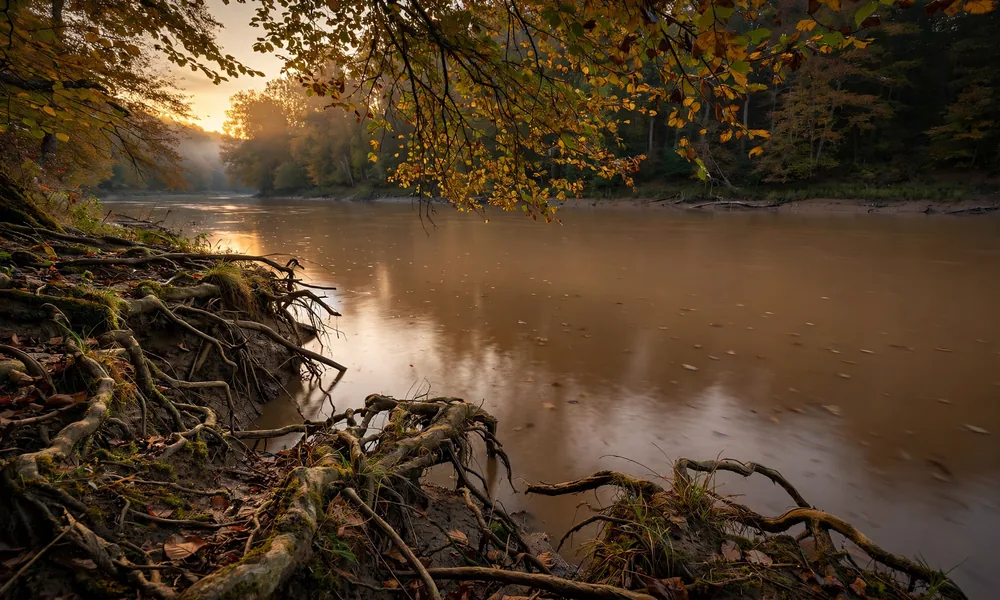
The habitat they choose is the bottom of the water, and they are rarely found far from it. Most catfish live in water between 1 and 10 metres deep, along the riverbed, the lake floor and the deep pools, where the food settles and the current is slowest. They favour places with plenty of cover, such as fallen trees, undercut banks, rock piles and deep holes, which give them both hunting ground and a place to hide from the otters and the birds that hunt them from above, and they are less common in open water, where there is little to eat and nowhere to hide. A catfish spends much of its life within a small stretch of river, and it knows every hole and every snag in that stretch, returning to the same shelter day after day.

The catfish has travelled far beyond its native range, and not always by choice, and it now lives in waters where it was never meant to be. Channel catfish have been farmed and introduced across Europe, Asia, Africa and South America, and in many of those places they have escaped into rivers and become established, eating native fish and competing with them for food. The wels catfish has done the same in Spain, France and Italy, where anglers travel to catch fish of more than 2 metres in the River Ebro and the River Po. Like the northern pike, the catfish is a top predator of fresh water that moves with the seasons, but the pike is a fish of clear northern lakes that hunts by sight and strikes from ambush in the weeds, while the catfish is a fish of warm, muddy rivers that hunts by taste and smell along the bottom.
What catfish eat
Catfish are omnivores, and their diet is written on the riverbed itself. The everyday food is whatever the river drops: dead fish, crayfish, mussels, snails, insects, worms and the small fish that swim too close to the bottom. A channel catfish will eat almost anything it can fit in its mouth, from a mayfly to a dead shad, and a big flathead catfish will take a live fish half its own length. A river full of catfish keeps the bottom clean, which is one reason they matter to the whole river, and a river without them soon fills with dead matter that nothing else will touch.

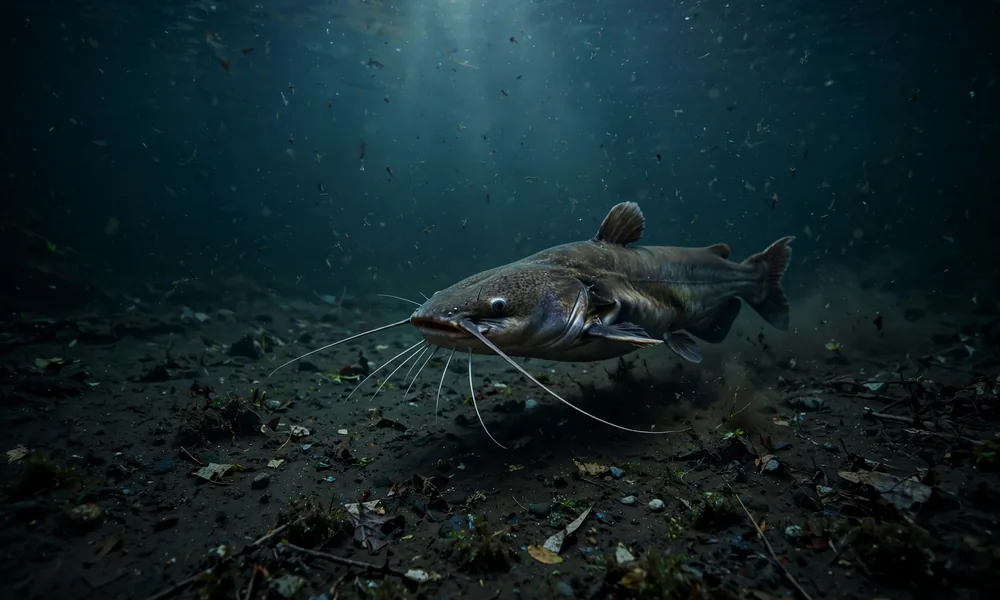
What sets the catfish apart is how it finds its food. It does not wait in ambush, and it does not chase prey through open water. It cruises slowly along the bottom, sweeping its barbels across the mud and the leaves, tasting as it goes, and when the barbels find something edible, the mouth opens wide and the food is sucked in with a rush of water, and the whole strike takes a fraction of a second. Like the bluefin tuna, the catfish is a powerful fish that eats other fish, but the tuna is a fish of the open ocean that hunts in the blue water far from land at speeds of 70 kilometres an hour, while the catfish is a fish of the riverbed that hunts in the dark, at a walking pace, by taste and touch.
How catfish behave
Catfish are night fish, and their day is a quiet round of resting, hiding and feeding along the bottom. They wake at dusk, leave the deep holes and the snags where they spent the day, and move onto the flats and the shallows to feed, and they spend the night working the riverbed in a slow, unhurried way, never rushing, never chasing far. They are not strong swimmers over distance, and they do not need to be: their life is lived within a few kilometres of river. When danger passes overhead, a catfish will often freeze on the bottom and rely on its mottled skin to hide it, and if that fails it will dart into the nearest snag and wait.
The most famous behaviour in the catfish is the sound it makes. Many catfish can grunt, croak and drum, rubbing the spines of their pectoral fins against their shoulder bones or vibrating the swim bladder, and the sound carries through the water for a surprising distance. The calls mark territory, warn off rivals and attract mates, and each species has a sound of its own, so a listener who knows the calls can tell which catfish are in the river without ever seeing one. A catfish that is grabbed will often croak loudly, a sound that startles a predator and sometimes wins the animal a second to escape.
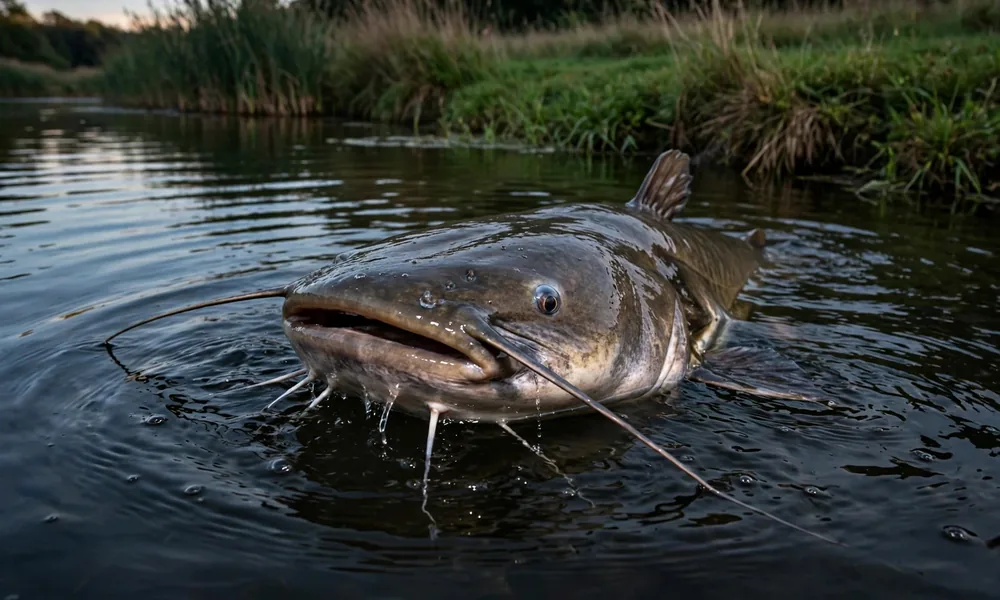
When a catfish is threatened, its first response is to hide, relying on its camouflage and its spines to keep it safe, and if that fails it will run for cover and stay there until the danger passes. Catfish have no venom that matters to a person, though the spines of some species can give a painful sting, and a big catfish can give a strong bite if it is handled carelessly. A catfish that is handled roughly will lose the mucus that protects its skin, which is why anglers who release their fish keep them in the water and hold them gently, and why a fish that is lifted by the gills or dropped on dry ground rarely survives the experience.
Breeding and life cycle
Catfish breed in late spring and early summer, when the water is warmest, and the timing is set by the temperature rather than the calendar. The adults gather in the shallow water near the banks, and the male finds a sheltered spot, a hollow log, an undercut bank or a hole under a rock, and clears it out for the nest. A female channel catfish may not breed until she is three or four years old, when she is about 40 centimetres long, and she may then lay several thousand eggs in a single spawning, more than most river fish of her size.
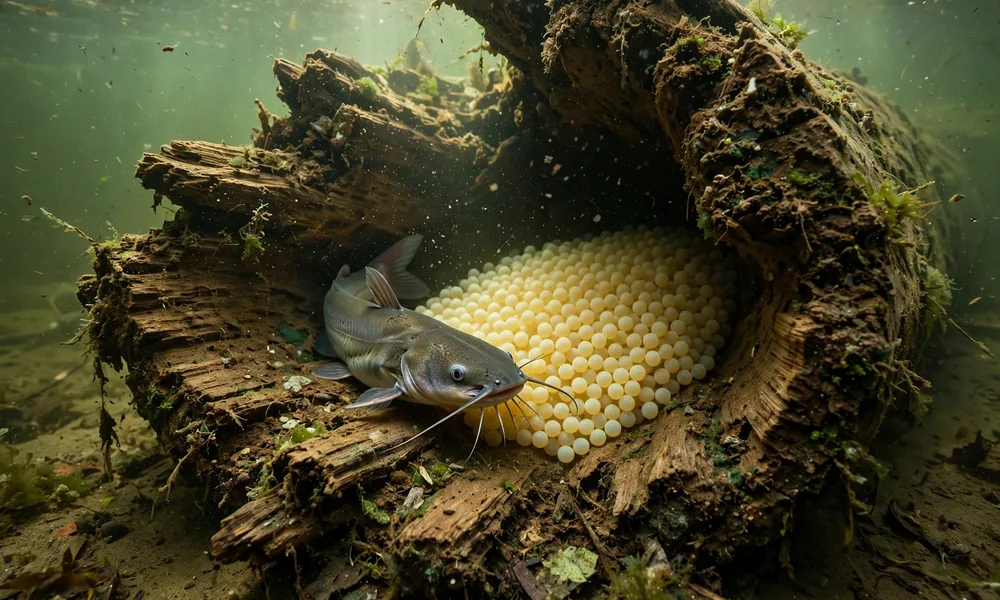
The female arrives at the nest and lays her eggs in a sticky mass on the underside of the log or the roof of the hollow, while the male fertilises them, and a large female can lay up to 10,000 eggs at once. The eggs are small and yellow, and they stick together in a clump the size of a fist, and they hatch in five to ten days depending on the temperature. The male stays with the nest the whole time, fanning the eggs with his fins to keep them supplied with oxygen and driving off crayfish, turtles and other fish that would eat them, and he does not feed while he guards, living off his own reserves until the eggs hatch.
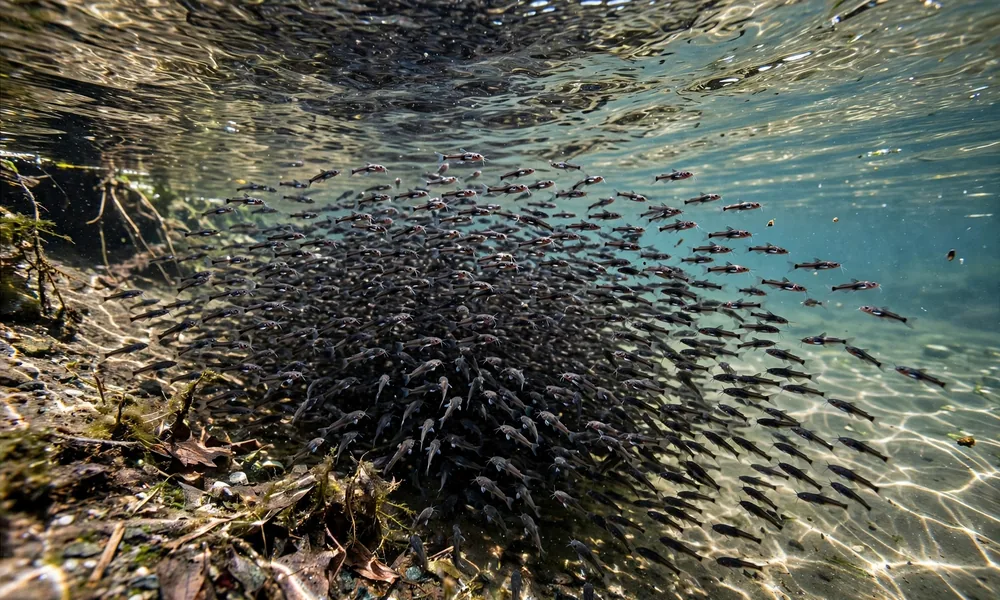
Conservation status
Most catfish species assessed by the International Union for Conservation of Nature are listed as Least Concern, and the reasoning is the same in each case: a large range, stable populations across most of it, and a way of life that lets the animals live alongside people. The channel catfish, the blue catfish and the wels catfish are still widespread and common in suitable habitat, and they occur in many protected areas, from national parks to nature reserves, where their rivers are safe from development.

That does not mean the group is free of pressure, and the giants are the ones at risk. The Mekong giant catfish is listed as Critically Endangered, the last category before extinction in the wild, and its numbers have fallen sharply as dams have blocked the river paths it swims along to spawn, and as fishing has taken the big breeding fish faster than they can be replaced. The giant catfish of the Mekong is caught when it runs upstream to its spawning grounds in April and May, and a fish that takes years to mature cannot survive a fishery that takes it before it has bred.
The main pressure is the loss of the rivers themselves. When a river is dammed, the catfish loses the long run to its spawning grounds, and the deep pools where it feeds and the shallow banks where it breeds are drowned or dried out. Fishing is a second pressure, and a river that loses its biggest females loses its best breeders, which is why so many fisheries now require the big fish to be released, and why the Mekong giant catfish is protected by law in Thailand. Water quality is a third pressure, and a river that loses its clean water to pollution loses the insects, the crayfish and the small fish the catfish feeds on.
Best seasons for catfish watching
The best time to look for a catfish is the summer, when the water is warmest and the fish are feeding hardest. From about June to September, when the water reaches 20 to 30 degrees Celsius, the catfish are out on the riverbed in numbers you can find if you know where to look, and they are feeding through the night. In the southern United States the season starts earlier, from about April, and the fish are active for longer, feeding hard through the warm months. Catfish are present in the rivers all year round, so there is no wrong season in the strict sense, but a warm, calm night in July will show you far more fish than a cold day in midwinter.
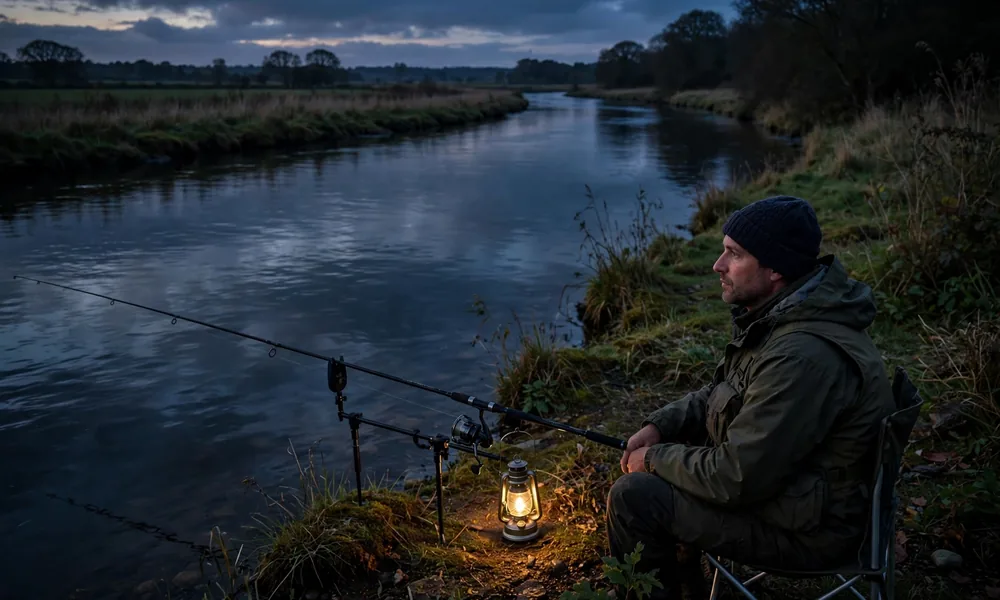
The best hours are the dusk and the night, when the catfish are feeding actively and the light is low. From about eight o’clock in the evening until two in the morning, the catfish are out on the riverbed, sweeping their barbels across the mud and taking whatever they find, and they are at their most approachable then. A slow walk along a riverbank with a torch, watching for a broad flat head in the shallows or a swirl on the surface, is all you need, and the fish will often feed close enough to see the barbels clearly, if you move gently and keep your distance.
Staying safe around catfish
A catfish is not dangerous to people, and there is no safety warning that belongs to the fish itself beyond its spines. It has no venom that matters to a person, it does not chase swimmers, and it will not threaten anyone who leaves it alone. The safety rules for watching catfish are the rules of the river and the water: watch the water, watch the weather, and respect the fish that you came to see. Never wade into deep water without knowing what is under your feet, never fish alone from a boat without a life jacket, and never handle a fish with dry hands, because a dry hand strips the mucus that protects its skin.
There are a few practical points for the fish itself. Hold a catfish by the lower jaw or with a wet hand under its belly, and keep clear of the sharp spines on the dorsal fin and the pectoral fins, which can give a painful sting if they catch your hand. A big catfish can thrash hard when it is lifted, so keep it low over the water and return it quickly. If you are wading, watch for slippery rocks and sudden drop-offs, and wear shoes that grip. A catfish will not hurt you, but the water can, and the sensible approach is to enjoy the fish and respect the river they live in.
Catfish watching checklist
A little preparation turns an evening on the river into a real chance of seeing catfish at their best, feeding on the bottom in warm, dark water.
- A visit in summer, when the water is warm and the catfish are feeding hardest through the night.
- A dusk or night trip, when the catfish leave their daytime holes and come out to hunt along the bottom.
- A slow river or lake with deep pools, fallen trees and undercut banks, where the fish shelter and feed.
- A slow walk along the bank, watching for a broad flat head in the shallows or a swirl on the surface.
- A torch with a dim setting, so you can watch a catfish without dazzling it and sending it into cover.
- A life jacket and a buddy, so that a night on the water stays safe from start to finish.
- Respect for the fish and the river, keeping your distance, handling any fish with wet hands, and leaving the bank as you found it.
Frequently asked questions
How many catfish species are there?
There are nearly 3,000 recognised catfish species, all in the order Siluriformes, spread across dozens of families, and new species are described every year, mostly from remote rivers in South America, Africa and Asia. About one fish in ten is a catfish, and about one vertebrate in twenty, which makes the group one of the most diverse orders of vertebrates on Earth.
What are the whiskers on a catfish for?
The whiskers are barbels, fleshy feelers around the mouth that are packed with taste buds, and they work as hands and a tongue at once. A catfish sweeps them across the riverbed in dark or muddy water, tasting everything they touch, and it can tell whether food is near without ever seeing it. A large channel catfish can carry well over 100,000 taste buds over its whole body, so it tastes the water around it with its skin as well as with its mouth.
How big do catfish get?
Most catfish measure between 40 and 60 centimetres from snout to tail, and a good channel catfish weighs 1 to 4 kilograms. The blue catfish grows to about 1.65 metres, and the heaviest ever caught on rod and line was a 143-pound fish, about 64.9 kilograms, taken in Virginia in 2011. The wels catfish grows to 2.9 metres, and the Mekong giant catfish grows to 3 metres, with a 2.7-metre female of 293 kilograms caught in Thailand in 2005.
Are catfish dangerous?
No, catfish are not dangerous to people. They have no venom that matters to a person, they do not chase swimmers, and they will not threaten anyone who leaves them alone. Their defence is built on camouflage, on hiding in deep holes and snags, and on the sharp spines of their fins, which can give a painful sting if a fish is handled carelessly. The safety rules are simple: hold a catfish with wet hands, keep clear of the spines, and return it to the water quickly.
Can you keep a catfish in an aquarium?
You can, but it depends on the species, and most people should choose a small one. A pygmy catfish or a small Corydoras grows to only a few centimetres and does well in a community tank, eating algae and leftover food from the bottom. A channel catfish or a redtail catfish grows to more than a metre, it needs a very large tank with clean, well-filtered water, and it eats other fish, which makes it expensive and demanding to keep. A catfish that outgrows its tank must never be released into waters where it does not belong, because released catfish have become a problem in rivers all over the world.
How is this guide different from the arapaima guide?
This guide covers the catfish, a group of nearly 3,000 scaleless bottom-feeders with barbels that taste the riverbed, that hunt by night and grow from a few centimetres to 3 metres, while our arapaima guide covers a single giant of the Amazon that grows to 3 metres, breathes air at the surface and guards its young in the flooded forest. One is a family of whiskered fish you meet on a muddy riverbed at night; the other is a single armoured giant you meet breaking the surface of an Amazon lake.
Conclusion
The catfish species are a reminder that a fish does not need bright colours or open water to be unforgettable. A smooth, scaleless body, a set of whiskers that taste the riverbed, and a habit of feeding in the dark have carried catfish to every warm river on Earth, from the Mississippi to the Mekong, and kept them there on a diet of whatever the river drops, from a dead shad to a crayfish in the mud.
If you go looking for one, go on a warm summer night, go after dark, and walk slowly along a riverbank with a torch, watching for a broad flat head in the shallows and a swirl on the surface. Find the deep pool, watch for the barbels sweeping the mud, and wait for the water to move, and you will have met the catfish that turns a quiet river into a place of hidden, whiskered life.














