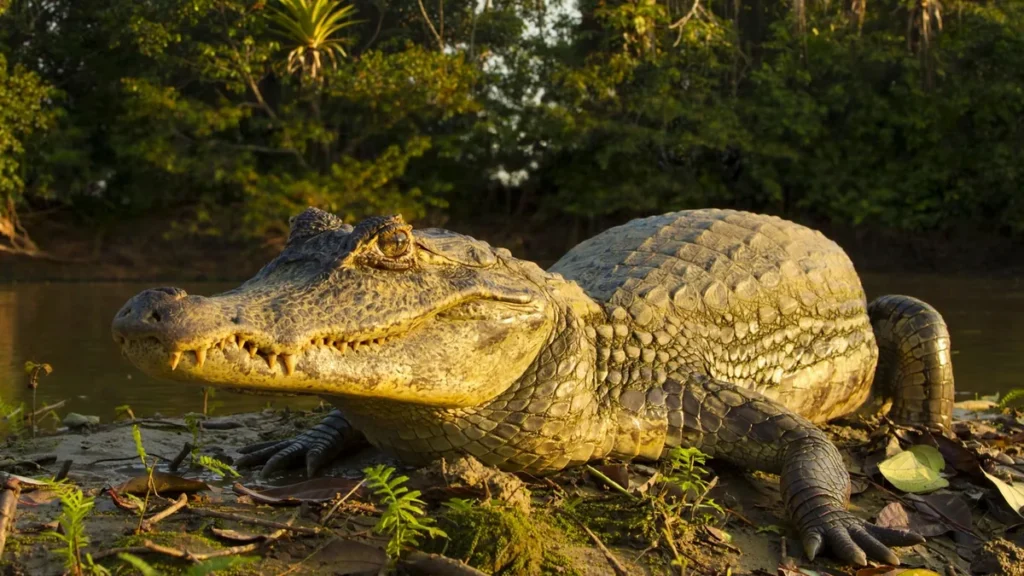
The caiman species are six living crocodilians, and they are the small cousins of the alligator, armoured river hunters that range from the dwarf caiman, barely longer than a walking stick, to the black caiman, a giant of the Amazon that can grow longer than a car. If you are asking how many caiman species there are, the answer is six: six caiman species in three genera, all members of the alligator family, and all of them native to the rivers, lakes and wetlands of Central and South America.
A caiman looks like a small crocodile at first glance, with a broad snout, a body plated in bony armour and a long, powerful tail. Look closer and the differences appear: the spectacled caiman wears a bony ridge between its eyes like the bridge of a pair of glasses, the broad-snouted caiman has the widest snout of any crocodilian, and the black caiman is almost entirely dark, with pale bands around its jaw.
Key takeaways
- There are six caiman species, in three genera: Caiman, with the spectacled, yacare and broad-snouted caimans; Melanosuchus, with the black caiman; and Paleosuchus, with the two dwarf caimans.
- Caimans range from Cuvier’s dwarf caiman, about 1.2 to 1.5 metres long and the smallest living crocodilian, to the black caiman, which can pass 5 metres and 400 kilograms.
- Caimans eat mostly fish, and also crabs, snails, frogs, birds and mammals, with the diet growing larger as the animal grows.
- Female caimans build mound nests of vegetation, lay 14 to 65 eggs depending on the species, and guard the nest until the young hatch.
- All six caiman species are now listed as Least Concern, after a long recovery from the hunting of the twentieth century.
What makes a caiman a caiman
A caiman is a crocodilian of the alligator family, and it shares the alligator’s broad, rounded snout. The upper jaw is wider than the lower jaw, so when the mouth is closed the lower teeth fit inside the upper teeth and are hidden from view, while in a crocodile the fourth lower tooth shows outside the mouth. The eyes and nostrils sit high on the head, so the animal can see and breathe while almost all of its body stays underwater.
The body is covered in heavy armour. Bony plates called osteoderms lie under the skin of the back and belly, and in caimans the belly armour is especially thick. The tail is long and flattened sideways, and it drives the animal through the water with slow sweeps, while the short legs are used for walking on land and for hauling the body out to bask. Like American alligators, their closest large relatives, caimans are strong swimmers and patient ambush hunters.
The caiman species and their relatives
There are six caiman species, and they fall into three genera. The genus Caiman holds three species: the spectacled caiman, the yacare caiman and the broad-snouted caiman. The genus Melanosuchus holds one, the black caiman, and the genus Paleosuchus holds two, Cuvier’s dwarf caiman and the smooth-fronted caiman. All six belong to the subfamily Caimaninae, within the alligator family Alligatoridae, which also holds the two true alligators.
The spectacled caiman is the most widespread of them all, ranging from southern Mexico through Central America to the Amazon, and it is the most common crocodilian in the world, with more than a million mature animals. The yacare caiman rules the Pantanal, the great wetland of Brazil, Paraguay and Bolivia, where more than 10 million animals form the largest single crocodilian population on Earth. The broad-snouted caiman lives furthest south, down to Argentina and Uruguay. The black caiman is the giant of the group and the largest member of the alligator family, while the two dwarf caimans are small, heavily armoured animals of forest streams.
| Type | Animal | Where it lives | Best-known food | Length or Weight |
|---|---|---|---|---|
| Family | Alligators and caimans (family Alligatoridae) | The Americas and China | Fish, birds and mammals | About 1.2 to 5 m long |
| Species | Spectacled caiman (Caiman crocodilus) | Southern Mexico to the Amazon | Fish, crabs and snails | About 2 to 2.5 m long |
| Species | Yacare caiman (Caiman yacare) | The Pantanal and the Parana basin | Piranhas and other fish | About 2 to 2.5 m long |
| Species | Broad-snouted caiman (Caiman latirostris) | Eastern South America | Snails, crabs and fish | About 2 to 3.5 m long |
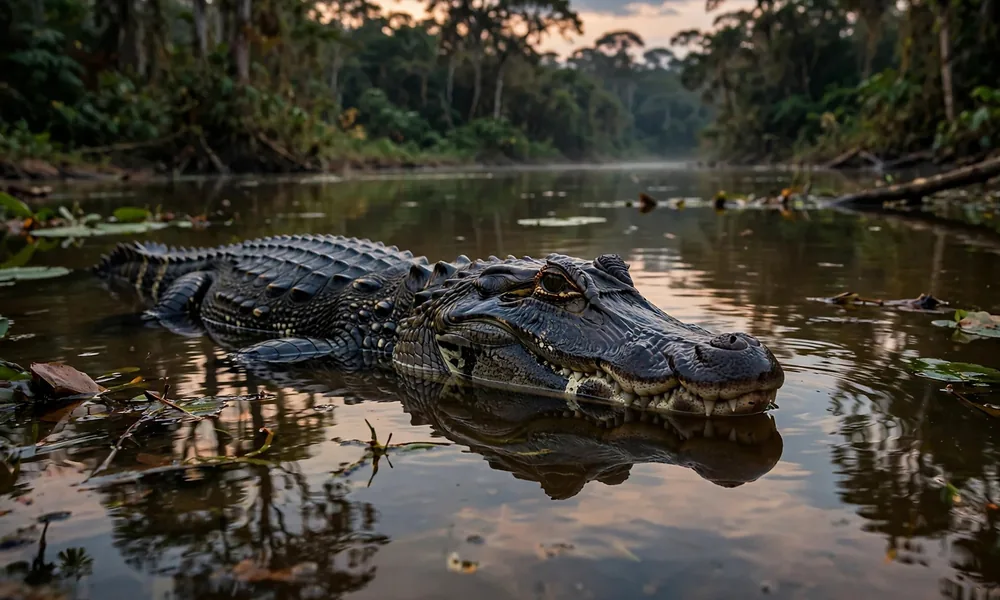
| Species | Black caiman (Melanosuchus niger) | The Amazon basin | Fish, capybaras and deer | Up to about 5 m long |
| Species | Cuvier’s dwarf caiman (Paleosuchus palpebrosus) | Forest streams of northern South America | Fish, frogs and crabs | About 1.2 to 1.5 m long |
| Species | Smooth-fronted caiman (Paleosuchus trigonatus) | The Amazon and Orinoco basins | Fish and crabs | About 1.5 to 2.3 m long |
How caimans live
Caimans are carnivores, and fish make up the largest part of the diet for most species. Young caimans eat insects, freshwater shrimps, snails and small fish, and as they grow they add crabs, frogs, birds and small mammals. The yacare caiman of the Pantanal is famous for eating piranhas, and the broad-snouted caiman crushes snails and mussels with its broad, blunt teeth. The black caiman, the largest of them all, takes catfish and piranhas as well as capybaras, deer, turtles and snakes, and it is the apex predator of the Amazon basin.
They hunt mostly at night, lying almost still at the surface with only their eyes and nostrils above the water, waiting for prey to come within reach. The strike is a sudden sideways snap of the jaws, and the teeth grip the prey while the caiman drags it under.
Breeding follows the seasons. The female builds a mound nest of soil and vegetation near the water, lays her eggs inside, and guards the nest for two to three months until they hatch. Clutches range from about 14 to 40 eggs in the spectacled caiman to 30 to 65 in the black caiman. The temperature inside the nest decides the sex of the young: cooler nests produce females and warmer nests produce males. When the young call from inside their eggs, the mother opens the nest and carries the hatchlings to the water in her mouth.
Where caimans live
Caimans live in the fresh waters of Central and South America, from southern Mexico through the Amazon and the Pantanal to northern Argentina. The spectacled caiman is the most adaptable of them all, living in rivers, lakes, swamps, flooded grassland and even drainage ditches, and it tolerates disturbed habitats better than any other crocodilian. The yacare caiman dominates the Pantanal and the Paraguay and Parana rivers, the broad-snouted caiman lives in marshes and lagoons further south, and the black caiman prefers the slow rivers, lakes and flooded forests of the Amazon.
The two dwarf caimans live a quieter life in the forest. Cuvier’s dwarf caiman and the smooth-fronted caiman hide in small rocky streams under the forest canopy, where they can tolerate cooler and faster water than other caimans, and they rarely bask in the open sun.
Caimans were hunted by the millions for their skins through the twentieth century, and the black caiman was nearly wiped out in the 1950s and 1970s, when its dark hide was prized for leather. Protection, trade controls and the recovery of wetland habitats have turned the story around, and all six caiman species are now listed as Least Concern by the International Union for Conservation of Nature. The black caiman was reassessed as Least Concern in 2025 after its recovery, though local populations still face pressure from habitat loss and illegal hunting.
Best seasons for caiman watching
The best time to watch caimans is the dry season, from May to October, when water levels fall and the animals gather in shrinking rivers, lakes and pools. In the Pantanal the dry season runs from about May to September, and the caimans are easy to see at dawn and dusk, basking on muddy banks or floating at the surface with only their eyes showing.
Staying safe around caimans
A caiman is a wild predator and should always be watched from a distance, from a boat or a raised bank, never from the water’s edge at night. Most caimans are shy and will slip into the water if you approach, but the black caiman is large enough to be dangerous to people, and it has been involved in attacks. Never swim where caimans live, never feed them, and keep children and dogs away from the bank.
Caiman watching checklist
A little preparation turns a dawn boat trip on a Pantanal river into a real chance of seeing caimans at close range, so pack for heat, water and long quiet hours on the water.
- Binoculars, because a basking caiman is best watched from the far bank.
- Light clothing, a hat, sunscreen and plenty of water, for hot days on the river.
- A boat trip on a Pantanal or Amazon river in the dry season, from May to October.
- A plan to be on the water at dawn or dusk, when caimans bask and hunt.
- A torch with a red filter, for spotting the red shine of caiman eyes at night.
- Patience and silence, because a caiman will sink below the surface at the first loud noise.
- A field guide to South American reptiles, for telling a spectacled caiman from a yacare caiman.
Frequently asked questions
How many caiman species are there?
There are six caiman species, in three genera: the spectacled, yacare and broad-snouted caimans in the genus Caiman, the black caiman in the genus Melanosuchus, and Cuvier’s dwarf caiman and the smooth-fronted caiman in the genus Paleosuchus. All six are members of the alligator family.
What is the difference between a caiman and an alligator?
Caimans and alligators are close relatives in the same family, but caimans are generally smaller, more heavily armoured, and found only in Central and South America, while alligators live in the south-eastern United States and in China.
What does a caiman eat?
Caimans eat mostly fish, and also crabs, snails, frogs, birds and small mammals. Young caimans eat insects, shrimps and snails, and as they grow they take larger prey, with the black caiman eating capybaras, deer, turtles and snakes as well as fish.
How big is the biggest caiman?
The black caiman is the biggest caiman. Adult males average about 4 metres long, and old males can pass 5 metres and weigh more than 400 kilograms.
How is this guide different from the burmese python species guide?
This guide covers the caimans, six crocodilian species that live in the rivers and wetlands of Central and South America, hunt fish at night and guard mound nests of eggs, while our burmese python species guide covers the Burmese python, a single giant snake of Southeast Asia that kills by constriction and swallows deer and alligators whole. Caimans are armoured river hunters with legs and teeth, and pythons are legless constrictors.
Are caimans endangered?
No. All six caiman species are now listed as Least Concern by the International Union for Conservation of Nature, after a long recovery from the hunting of the twentieth century. The black caiman was nearly wiped out in the 1950s and 1970s, but it has recovered and was reassessed as Least Concern in 2025.
Conclusion
The caiman species show how one family of river hunters can fill a whole continent: six species in three genera, from the tiny dwarf caiman of forest streams to the black caiman, the apex predator of the Amazon.
If you go looking for one, go to a Pantanal river in the dry season, go at dawn, and go by boat. Watch the eyes break the surface as the sun rises, listen for the splash of a hunting caiman, and you will understand why keeping South America’s wetlands wet matters most.